China’s tax windfall on DPRK border

August 7th, 2008

In the last several months the Daily NK has reported on North Korea’s anti-corruption campaigns, particularly in Sinuiju and Hyesan, major DPRK/China trade hubs. Additionally, we have seen stories of how the Chinese are making life harder for resident North Koreans in the run up to the Olympics.

These measures, both of which should have an adverse impact on trade volume between the two coutries—and thus on tax revenues—made this recent report in the Daily NK all the more surprising. China’s Yanji Customs House (along the North Korean border) has reportedly seen a 226% increase in tax revenue this year from trade with North Korea.

How can China and the DPRK make life difficult for traders/entrepreneurs and still see an increase in the value of traded goods and corresponding tax revenue?  According to the article:

Jilin Newspaper in China reported on the 4th that “[…]For the first half of this year, tax revenues vis a vis North Korea totaled 34.22 million Yuan, up 226.2 percent from the year before.

The newspaper continued, “During this period, entrepreneurs in Yanji imported 64 thousand tons of iron ore from North Korea; that is a 2.3 percent increase from the same period a year ago. Accordingly, the tax amount of collected was 29.13 million Yuan, which is 66.1 percent of the total tax revenue derived from North Korea.”

The Yanji Custom House covers seven border gateways with North Korea, such as Juanhe-Wonjeongri, Shazi-Saebyul, Tumen-Namyang, Sanhe-Hoiryeong, Kaishantun-Sambong, Naping-Musan, and Guchengli-Samjangri.

According to the Yanji Custom House statistics, the Naping-Musan border gateway, where iron ore collected from the Musan mine enters China, is the first ranked for commercial traffic, and Guchengli-Samjangri, the gateway for North Korean timber, is second.

Tonghua Steel Group, Yanbian Tianchi Trade Incorporated Compay, and Zhonggang Group purchased 50-year mining rights for North Korea’s Musan mine in 2005. Since late 2007 they had been discussing a seven billion Yuan additional investment in it but that failed due to conflicting views on cooperative investment rate proportions, methods of withdrawing invested funds and other issues. As a consequence of the stalled investment, the Musan mine’s exports to China have not grown relative to last year’s figures.

So most of the trade that goes through Yanji is in raw natural resources, particularly iron ore and timber, and trade in these resources seems to be carried out by Chinese companies and is probably supported (protected) by senior policy makers on both sides of the border.  Rather than looking at politics as an explanation, it might simply be another result of rising global commodities prices.

The tax windfall could come from one of two sources: A volume (unit) import tax (ex: $1 for each ton of iron) or an ad valorem import tax (ex: tax on the monetary value of the goods).  It is not likely they impose much of an export tax to make a difference.

If China imposed a unit tax, the revenue gains would have to come from surging imports.  In this case, it would be likely that the Chinese companies had fixed-price contracts with their North Korean suppliers, and that  the increase in global commodity prices simply made DPRK iron ore comparatively very cheap.  When (if?) global iron prices fell, we would expect to see China decrease imports from North Korea.  But according to the article, iron imports are up only 2.3%—not enough to explain the surge in revenue.

It is more likely that China imposes an ad valorem tax on North Korean imports and the contracts between the Chinese companies and North Korean suppliers are set at (near) market prices.  Simply put, taxing the monetary value of increasingly valuable imports has been beneficial for the Chinese government.  Even though production at the Musan Mine has not increased much, revenues are probably way up.

Given the status of the Musan Mine as the DPRK’s largest, it is likely that funds raised from this mine are firmly under control.  It would be interesting to know the customs receipts in Dandong, Laioning Province, across the river from North Korea’s Sinuiju.  Sinuiju seems to have suffered the brunt of the DPRK’s anti-corruption drive, and it is the main railway and trade artery between North Korea China.  Most of the companies targeted for inspection were in Sinuiju.  Have Chinese tax collections/trade rebounded there?

Read the full story here:
226% Rise in Tax Revenues at Yanji Custom House
Daily NK
Lee Sung Jin
8/6/2008

Share

North Korean posters: the book

August 6th, 2008

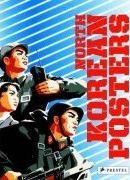
nkposters.jpgNorth Korean Posters is a colorful and engaging book for those interested in North Korean, communist, or socialist-realism art. Portraying over 250 North Korean posters from the past fifty years, along with English and German translations, the book is the most comprehensive collection of North Korean political art of which I am aware.

Each page offers vivid images of the values and goals the regime has tried, and continues to try, to instill in its own people.  In order to help readers, particularly those who did not grow up under socialism, get a sense of the themes highlighted in communist political propaganda, the art work is grouped into categories: Constructing the People’s Paradise, Undeterred Defiance (military), Loyalty and Devotion, Defending the Revolution, and United We Stand.

This colleciton was put together by a gentleman named David Heather, who according to Forbes:

… first encountered such work […] when he met a North Korean painter exhibiting at an art fair in Harare, Zimbabwe in 2000. They kept in touch, and in 2004 Heather accepted his friend’s invitation to visit the North Korean capital, Pyongyang, and to get a tour of his atelier: the state-run Mansudae Art Studio. In truth it’s more factory than studio. The complex, says Heather, covers 30 acres and houses around 1,000 artists making paintings, posters and other artwork, including nonideological pottery. Their output is used to decorate public buildings and subways, or is given as gifts to state officials.

While some posters are reproduced as prints, most are copied up to 100 times each by hand. Rarely are two such copies identical; each qualifies as an original artwork. North Koreans, says Heather, are used to doing many tasks by hand. On public lawns, for example, he has seen people cutting grass with scissors.

“I looked around the studios and had certain ideas,” says Heather, whose previous ventures include a child care business in the U.K. that failed in the 1990s. Before leaving Pyongyang he signed a contract with the studio to find markets for its artwork outside Asia.

Starting in 2004 he began shipping hundreds of works of art to London. He rented a gallery in Pall Mall and hoisted a North Korean flag outside. In 2007 he unveiled a public exhibition of his collection–the biggest ever of North Korean art outside Korea. “I was expecting demonstrations outside, people camping out, protests.” Instead he sold–from this exhibit and from a second, smaller one at London’s Foyles bookshop–some 100 propaganda posters, 30 paintings and 5 or 6 pieces of pottery. Most buyers were American. He says he hauled in a total of $220,000 for pieces he had bought for $50,000.

A few posters in the book will be familiar to DPRK visitors, since they often appear at prominent locations.  I commissioned two paintings in Pyongyang, and they are both in this book.  A few others can be seen in travelers’ photos. If you are interested in ordering the book, click here.  To learn a little more about how North Korean art is produced, order Art Under Control in North Korea here.  If you are interested in buying authentic North Korean paintings, contact the Pyongyang Art Studio.

UPDATE: Here are some exapmles from the BBC.

Share

DPRK tightening the reigns in order to secure public finance

August 5th, 2008

Institute for Far Eastern Studies (IFES)
(NK Brief No. 08-8-5-1)
8/5/2008

The latest edition (2008, no. 2) of North Korea’s quarterly economic publication “Economic Research” urged for further regulation of public finance in order to ensure that the public finances necessary for the construction of an ‘Economically Powerful State’ are available.

The journal, which was brought into South Korea on July 29, contained an article titled, “Further Strengthening of Public Finance Regulations at the Present Time [will serve as] Important Collateral to Completely Guarantee the Capital Necessary for Socialist Economic Construction.” In the article, it stressed, “Public finance regulation is one form of state regulation through the monetary sector,” and, “Public financial security for the construction of an economically powerful state varies considerably according to how regulation and distribution functions are carried out.

North Korea has set the goal of construction of a ‘Strong and Prosperous State (Ideologically, Militarily, and Economically Powerful State) by 2012, the 100th anniversary of the birth of the country’s founder, Kim Il Sung. In light of that goal, Pyongyang has prioritized economic prosperity for this year, the 60th anniversary of the DPRK government, calling for a ‘full-scale offensive’ by all the people of the North.

“Economic Research” stresses the following three points for strengthening public finance: 1) further strengthening the coordination of the state’s guidance for economic enterprises, 2) ensuring the utility of economic enterprises, and, most importantly, 3) strictly establishing public finance regulations.

In particular, the establishment of public finance regulations was defined as, “guaranteeing efficient use of capital through the protection and endless expansion of the country’s public financial resources, as well as the complete protection of the capital necessary for state and business operations and efficient elimination of all current misappropriation.” This type of statement makes it appear as if diversion and misappropriation of North Korean finances are regular occurrences.

The journal called for strengthening of management and organization for the financial offices of public finance centers, businesses, and organizations in order to effectively enforce public finance regulations, and for the creation of auditing committees at enterprises and organizations to ensure this takes place.

Share

East German and North Korean husband reunited

August 5th, 2008

UPDATE 3 (2014-12-16): A documentary has been made about the Hong family reunion. You can see it here.

UPDATE 2: I added video of the family reunion to Youtube. You can see it here. 

UPDATE 1 (2008-8-5): Herald Tribune/Joong Ang have update and photo of reunion.

In February 2007 the Joong Ang Daily reported the sad story of Renate Hong, and East German citizen who married a North Korean student at Jena University named Hong Ok-geun.  Shortly after their marriage, Mr. Hong was called back to the DPRK in 1961, and the couple eventually lost touch.

Early last year, North Korea verified that Mr. Hong was still alive in Hamhung, though remarried and with a new family.   Ms. Hong, still in Germany with two children born of the short relationship, never remarried.

The couple was finally able to exchange letters with the help of German authorities. When the first arrived from Mr. Hong, it was the first time in 44 years that Renate had heard from her husband since her last letter came back with an “address unknown” stamp in 1963.

The DPRK government initially denied requests for a reunion, but this week the couple, as well as their children, were allowed to meet in Pyongyang.  According to the Hong family and diplomatic sources in Germany, Renate Hong, 71, and her two sons arrived in Pyongyang on July 25.  This will be the first time the two sons, now 47 and 48, will see their father.

Read more here:
Joong Ang Daily
Ryu Kwon-ha
2/13/2007

North Korea allows a separated couple to reunite after 47 years
Joong Ang Daily
Ryu Kwon-Ha and Ser Myo-ja
8/5/2008

German travels to NKorea to reunite with husband
Associated Press(Via Huffington Post)
8/5/2008

Share

DPRK humanitarian relief update

August 3rd, 2008

NKeconWatch blogged earlier about the US-based organizations permitted to enter the DPRK and distribute US humanitarian relief.  A list of those organizations can be found here.

Number three on the list, Samaritan’s Purse, is headed by “US religionist” Franklin Graham, son of Rev. Billy Graham, who just arrived in Pyongyang for a 4-day humanitarian relief tour.  Franklin visited the DPRK once before, in 2000 according to KCNA, and met with Kang Yong Sop, chairman of the central committee of the Korean Christian Federation, Paek Nam Sun, Minister of Foreign Affairs, Kim Kye Gwan, vice-Minister of Foreign Affairs, and Kim Yong Dae, vice-president of the presidium of the Supreme People’s Assembly, and delivered a sermon at Pyongyang’s Pongsu Protestant Church. 

Since Franklin’s mother spent 1934 living in Pyongyang, the family seems to have taken a special interest in the DPRK.  In addition to the relief they are distributing now, Samaritan’s Purse chartered a 747 cargo jet from Charlotte to deliver $8.3 million in medicine and other emergency supplies in August of 2007. It was the first private flight directly from the U.S. to North Korea since the Korean War.

Graham’s organization has been posting information on his trip here and here.  Greta Van Sustern has been posting video here: hospital visit (the most informative), monument 1, monument 2, Grand People’s Study House, Mass Games (most inaccurate), Mr. Graham’s work, taking off from Sunan Airport (interesting), Franklin Graham video 1, Video 2, and interview transcript.

Read more here:
Evangelist Franklin Graham to preach in North Korea
McClatchy Newspapers
Tim Funk
7/31/2008

Share

The USA’s first naturalized North Korean

August 1st, 2008

I had never heard of fellow American Zang Gi Hong, the first US citizen naturalized from the DPRK, until a few days ago when a colleague relayed his story to me.  I have been unable to find much information on him via the Internet, except from one article (here) and the Google archive version (here). 

Excerpts from the article:

It was Vienna, Austria, in late December of 1956. Two months earlier, heroic Hungarians next door to the east had erupted against their Soviet oppressors, and for ten glorious days Hungary was in Hungarian hands.

The Kremlin feared that one satellite turned into a shooting star could infect and unravel their whole communist empire. The Red Army rolled back into Hungary with 200,000 troops and 2,000 tanks and flattened the uprising. Hordes of Hungarians fled west to freedom in Austria.

After two years at the University of Budapest this young “enemy” soldier began to view communism not as a submissive North Korean but more as a repressed Western European. When the fighting started, he and 200 other North Koreans helped the Freedom Fighters.

Hungarian youths had not yet had military training. The North Koreans knew how to work every piece of captured and donated communist ordnance, from a hand grenade to a tank!

After the Soviet putdown of the uprising, special squads of Soviet troops helped the Hungarian communist police round up every Korean in Budapest. It’s hard to disguise a Korean in Budapest. Of the 200 young Koreans, only four made it to freedom. The others were shipped back to certain doom in North Korea.

When he and I and a young Hungarian woman interpreter went to the American Embassy the next day, I would have bet even money that President Eisenhower would send the Columbine (His presidential plane, before they thought of Air Force One) over to Vienna to take him and me both back to America. I was stomp-down certain they’d find a quick way to let him into America.

We were led into an upstairs office at the Embassy and I started telling the story to the official behind the desk. Do you know how a comic feels when the laughter doesn’t come through early in the act? Or when the young woman arranges for her hand to be unholdable when you reach out? That’s the feeling I got early in the narrative.

The Embassy official looked on like a zombie. No comments. No questions. If there’d been a little strip-screen across his forehead, it would have read “Non-Reacting!”

Even absent the euphoria of the Hungarian Revolution, as you read this I expect you to feel what I felt. When I finished this incredibly fortunate story for our side, the diplomat-zombie impassively opened his desk drawer and pulled forth a little booklet.

“Your friend can’t come to America as a Hungarian refugee,” he intoned, leafing to a page of rules, “because he’s not Hungarian. And he can’t come in as a North Korean because we’re at war and there’s no quota!”

At least the 200,000 Hungarian refugees in Vienna would be processed and admitted to a free country. My Korean friend was now diplomatically stateless and weightless.

Thanks to the subsequent intervention of broadcaster Tex McCrary and the supposedly villainous immigrant-hating Congressman Francis E. Walter of Pennsylvania, we got that young man into America with a scholarship to Syracuse from which he graduated with honors and became a millionaire architect and builder.

Share

Kim Jong il asserts control of border regions

July 31st, 2008

As reported earlier this year by the Daily NK, Kim Jong il’s brother in law, Jang Song Taek, was leading an anti-corruption campaign in North Korea’s northern provinces along the Chinese border. Aside from controlling financial leakages, these efforts could be interpreted as attempts by Kim to gain control over military-owned trade companies.

According to a past report:

The inspection group withdrew all trade certificates with exception of those certificates belonging to the families of anti-Japanese guerrilla fighters, and those certificates issued by the Ministry of Finance or the Shinuiju Municipal Administrative Committee.  Therefore, presently at Shinuiju Customs, all import items without trade certificates issued by the above mentioned three groups have to be sent back to China.

Jang’s efforts, though seemingly effective at reasserting financial control of the region, had apparently taken their toll on local commerce:

In Hyesan, Yangkang Province, markets have been significantly reduced in size and scope recently, due to the anti-socialist group’s inspections[.]

[T]he merchants were at unease when under inspection by the National Security Agency (NSA) and other governmental organizations which govern the jangmadang [markets].

For example, transportation of goods by traders has withered away since last year, as the authority of the People’s Safety Agency (PSA) [controlled by Jang] rose and [it] launched [] a strict crackdown on traders’ belongings.

The source explained the situation in Hyesan, that “Hyesan had become the city where Chinese goods were traded for the cheapest value because Chinese goods [enter the country] at Hyesan[.] [During] the (PSA) inspection period [goods] could not be transported inland due to the inspection of trains and cars. Lives of the common people became even tougher than before, since goods could not be circulated through the jangmadang in spite of their low prices.”

“The more stringent the regulation became, the more bribes cadres received and worsened were the lives of people,” the source added.

(NKeconWatch: I have “cleaned up” some of the grammar here to make it more readable.  If you want to see the original version, click here.)

And in Sinuiju:

The intensive inspection of Shinuiju, in which over 70% of Chinese-North Korean commercial traffic occurs, caused several aftereffects inside North Korea: commercial traffic passing through Shinuiju and Dandong decreased by half compared to the past, and the aftermath of the inspections in Shinuiju added fuel to the fire of price rises in jangmadang goods across the country.

For instance, sugar, which is a raw material for doughnuts or candies that are consumed the most by average civilians in the jangmadang, carried a price of around 1,500 won per kilogram before the inspections, but in mid-May, it rose to 2,100 won and vegetable oil hiked from 5,500 to 7,500 won per kilogram. Such an increase in prices also caused a significant threat to the survival of citizens who made a living off the jangmadang trade.

But the final result of the evaluation of the Shinuiju inspection, which caused quite a stir externally, has purportedly been negligible.

The source said, “The volume of trade has decreased over several months and the number of visitors to China has also been reduced by half. The results of the inspection have not produced too much difference, except for the execution of 14 corrupt officials.”

The source further noted, “The only change which has been visible to the eye is the rise in the cost of bribes offered to North Korean customs from 40 to 80 dollars per hundred kilograms of goods. There was a rumor that the loading volume carried into the North would be fixed at 120kg, from 360kg, but this has not been done yet.”(Daily NK)

The Daily NK now reports that in the wake of these developments, Kim Jong il’s National Defense Commission (NDC) has moved in and directly taken over the inspections—and economic conditions have improved:

[Markets] have become lively again in the past few days as inspections by the National Defense Commission (NDC) have gotten underway.

A source in North Korea reported to Daily NK on Friday that “Merchants in Hyesan these days are fish in water. They say that they would not mind at all going through such inspections for an entire the year!”

Part of the reason for the turn around has been a change in focus.  Whereas Jang’s work hit many “ordinary” North Koreans (particularly those working for the wrong trading companies), NDC inspections are focused on controlling the mid- to upper-level cadres.  It is entirely speculatory to ask whether Kim’s strategy was to unleash Jang to get control of the region and afterwards assert direct control himself, or whether complaints from locals forced the NDC to end Jang’s campaign.

Of course this is all unverified information from inside North Korea, so who knows how much of it is correct!

Share

A Dangerous Opportunity in North Korea

July 31st, 2008

United Methodist Church: Kentucky Annual Conference
Dr. Bill Moore
7/31/2008

Dr. Bill Moore, the pastor of Southern Hills United Methodist Church in Lexington, was in North Korea May 14-29.  The son of United Methodist missionaries, he is a member of a humanitarian aid group called Christian Friends of Korea.  He offers a perspective on a deepening crisis.

I traveled to North Korea during the last two weeks of May as a member of a six-person delegation from a non-government organization (NGO) called Christian Friends of Korea. We flew into the capital city of Pyong Yang to confirm the arrival and proper distribution of donated goods, to deliver donors lists and greetings, and to build relationships and trust. The Board of Directors for this group, of which I am a member, is composed of former missionaries to Korea, the children of missionaries, and others with a concern to relieve the suffering and hardships of the people of this grim Communist dictatorship called the Democratic People’s Republic of Korea.  It is often hard to see the suffering faces of the 23 million North Koreans hidden behind the headlines of international diplomatic struggle and nuclear intrigue.  Famine, floods (two devastating events in 2007), and mismanagement have left the nation in economic ruin. Christian Friends of Korea (CFK) has been quietly working in the DPRK for 13 years, meeting some of the most basic needs of thousands of people struggling with the life-threatening, but curable disease of tuberculosis. CFK’s efforts to show love and compassion to people who continue to endure food shortages, poverty, disease, and oppression are building trust and chipping away at long-standing hostility.   
 
North Korea is a beautiful place in May.  Everything had greened up nicely.  The cottonwood trees had deposited wind-blown piles of downy fluff in the roadways, blanketing the bushes and spider webs.  The guest house on the banks of the Taedong River near Pyong Yang where our Christian Friends of Korea Team stayed for most of the visit had a dense backdrop of vegetation, populated by ring neck pheasant, which appeared unfazed by the foreigners nearby and sounded off regularly.  The acacia trees were in full bloom.

As we moved through the countryside, the workers on the collective farms were transplanting rice plants into the paddy fields.  This is a critical phase of life in the north, and everyone is expected to take part.  Backs bent, barefooted workers move slowly across the fields.  On the mud dikes of the water-filled paddies there are often patriotic slogans on placards, revolutionary red flags flying, and even sound trucks playing inspirational songs.  This idyllic picture of a worker’s paradise belies a truth that is not readily apparent.  The coming fall harvest, which is vital to a nation where one-third of the people suffer from malnutrition, is already in jeopardy.  Previous large shipments of fertilizer from South Korea have been withheld this year for political reasons.  China has pledged to fill the gap, but nothing has arrived yet.  Aid workers from other countries told us that the potato crop is already stunted, and predicted that the rice crop will be twenty-five percent less this year.  Even in years of good harvests, North Korea still falls about 1 million metric tons short of food, out of an estimated 5 million tons needed.    This year the shortfall is expected to exceed 1.6 million metric tons.  For those receiving rations, the daily government ration of grain per person was reduced from 250 grams to 150 grams in June.  Uncertain food aid, coupled with poor food security (effective agricultural production) means an increase among the populace in susceptibility to disease, particularly tuberculosis, which afflicts an estimated five percent of the North Korean people.  In fact, since last year, the registered cases of TB have risen from 52,000 to 100,000 cases.

This was the backdrop for our journey to the Democratic People’s Republic of Korea as an NGO working to provide medicine (specifically tuberculosis treatment drugs), medical equipment, farm machinery, vehicles, construction materials and food for the people of the DPRK.  The needs are real, and the urgency is intensifying. The Chinese character for “crisis” is composed of two other characters: “danger” and “opportunity.” As we traveled to fourteen different medical facilities, we could see that there is a “dangerous opportunity’ to make a difference in this land, and bring hope to many lives.

Our team was a diverse, ecumenical mix of six people.  Our Executive Director, Heidi Linton, grew up in Alaska, married into a famous Presbyterian missionary family, and has effectively immersed herself in the work of Christian Friends of Korea for the last 13 years.  By her indomitable spirit, genuine integrity, and meticulous attention to detail for providing aid and assistance, she has endeared herself to the North Korean leaders assigned to us through the Ministry of Public Health and forged a working relationship which is highly effective.  Dr. John Somerville, retired Presbyterian missionary, was our official Korean speaker on the trip.  A Harvard graduate in Asian studies, Dr. Somerville spent many years teaching in South Korea, and has visited the north on 10 previous visits.  Paul Moffett, a pastor at Lighthouse Christian Center in Puyallup, WA, is the great-grandson of pioneer Presbyterian missionary Samuel Moffett, who came to Pyong Yang in 1905.  Lee Wheeler is an agricultural engineer from Hesston, KS, representing the Mennonite Central Committee, a CFK partner.  He is a greenhouse expert who has also made 10 trips to the DPRK.   Terry Smith, Heidi’s able assistant, came from Memphis, TN and now lives in Black Mountain (headquarters of CFK).  I rounded out the team.  I’m the son of United Methodist missionaries, James and Margaret Moore.  My grandfather, Dr. Stanley Martin, was a Canadian Presbyterian medical missionary in China and Korea.  I grew up in Seoul, South Korea.

Our purpose in traveling to North Korea for Christian Friends of Korea was to make a “confirming” visit, checking to make sure that the supplies and equipment (more than three million dollars worth sent since January) had been properly received, inventoried and distributed; to present lists of donors to the facility directors; and to build relationships and trust with everyone with whom we had contact.  We were accompanied at all times by young government officials who were both personable and efficient, and escorted us to every location.  They shared with us a passion and concern for the welfare of their people.  Part of this work was to visit two warehouse locations to make sure supplies were moving out to the facilities.  This is important also to make way for incoming shipping containers.  It is noteworthy that our North Korean counterparts in the Ministry of Public Health value the aid assistance of CFK and a similar NGO so much that they actually built a spacious warehouse just for receiving shipments to be distributed to CFK ministry sites.  A forklift sent by CFK donors was in use there. The other main task of confirming was to visit the actual facilities, interview directors, staff, and patients, and assess the priorities and needs of each place.  These visits were the heart of our schedule.

A typical trip to one of the hospitals or TB rest homes began with a convoy of vehicles traveling to the locations scheduled for the day.  The road surface usually began with paved roads of varying quality that soon gave way to a washboard gravel road, a muddy track snaking up into the hills, or even a rocky stream bed that had to be forded.  Once we arrived, we were greeted by the director, doctors, nurses, and various local officials.  We would be seated around a table with refreshments provided for the visitors (strawberries, peanuts, tea), introductions would be made, the donor list presented in Korean with an explanation, and Heidi Linton would begin the process of inquiry.  What is the current situation in this place?  How many TB patients are there?   How did the devastating floods of 2007 affect the facility and patients?  What are your priorities here?  Is there enough food for the patients?  Local Communist party officials who attended the meetings were visibly uncomfortable about discussions of flood damage or food shortages.  Furtive glances were sometimes exchanged before hospital staff would answer such questions.  The stock answer: “The government provides us with food.” 

Questions would be asked about the arrival of vitamins, health kits, bedding, laundry soap, Pedialyte, doctor’s kits, hospital beds, and TB medicine.  Food shipments of canned meat, soy beans and dry vegetable soup mix were checked on.  A list of donors was presented to the directors at each location.  New equipment was sometimes delivered, including new electronic microscopes and a “Lab in a Suitcase,” a sophisticated package of diagnostic equipment to identify infected TB patients.  Some sites had cargo tri-motorcycles to transport supplies slated for delivery.  A new kind of greenhouse, which does not require an additional heat source even in frigid temperatures, was offered at each place.  A tour of the facilities meant a chance to meet the patients, to inquire about their health, and to offer best wishes and prayers for swift recovery.  Outside, the greenhouses, which are so important for supplementing meager government rations, would be inspected. Walking tractors and bicycles provided by CFK were noted.

One of the highlights of the journey was to see the wonderful progress that has been made in the construction of modern surgical facilities at both the North Hwangae TB Hospital in Sariwon and the South Hwangae TB Hospital in Haeju.  The surgical suites, built with the expertise and direction of CFK Technical Teams, feature new anti-microbial tile on the walls, non-skid floor tiles, power conditioners and new electrical wiring, heating/AC, lighting, and new surgical equipment and supplies enabling more complicated procedures and greatly improved surgical outcomes.  One patient, who had been brought to Sariwon for an operation from a TB rest home, remarked when he saw the gleaming facility, “I feel like I am cured already!”  The result of the renovations is stronger confidence among patients that healing will occur, and the number of patients willing to undergo surgery has tripled.  Because of the sterile conditions, post-operative infection has been greatly reduced.  Eighty percent of the patients used to have post-op infections.  Now it is down to 1 in 5 patients.  We also saw the preparations for a similar renovation at the Kaesong Provincial Pediatric Hospital (serving 144,000 children) where the surgery area has been stripped to the bare stones in preparation for the $200,000 make-over made possible by a CFK donor.  In earlier days this was a Methodist mission hospital, visited by my grandfather who installed x-ray equipment there in the early 1920’s.  At Hwangju TB Rest Home construction is under way to build new facilities that will house150 or more patients.  The buildings will replace two others that were destroyed in last year’s floods.  They need a roof right away, followed by windows and doors.  This is a critical need, and participation from United Methodist Churches would be most welcome in raising funds for this vital construction need.

While there are very encouraging signs of progress at CFK projects, there are specific needs that must be immediately addressed.  There is an expected shortfall in TB medicine, especially in terms of DOTS (Directly Observed Treatment Short Course) drugs which, when given under supervision, are very effective.  Because of a loss of funding by the World Health Organization, CFK is being asked to provide 12,000 treatments in our regions (North and South Hwanghae and Kaesong) which will cost in excess of $245,000.  In response to the deepening food crisis, two 40-foot containers of canned meat will be shipped before the end of the year in a joint effort with the Mennonite Central Committee, who generously provides $500,000 worth of this commodity to CFK projects annually.

Everywhere the CFK Team went on this confirming visit there were expressions of gratitude.  When one director was asked what further assistance he needed for his facility, he exclaimed, “You have already sent a lot!”  Heidi Linton responded that God in His love had provided these things.  The director’s response: “Please send thanks to our Christian friends in America.”

You might be asking: what does the work of Christian Friends of Korea have to do with The United Methodist Church?  It is difficult to do any kind of Christian ministry in North Korea since traditional denominational mission work is not allowed, but an effort through a non-government organization makes it possible.  When needs are critical, we must find mission partners wherever we can.  The mission of CFK also addresses two of the priorities coming out of General Conference: engaging ministry with the poor (preventing starvation) and making the world malaria free, AIDS-free, and tuberculosis free.  Here’s a piece of good news—the US government is in the process of shipping a total of 500,000 tons of food to North Korea as a result of some movement in the nuclear negotiations.  The United Nations World Food Program will distribute 400,000 tons throughout the DPRK.  As a part of this initiative, on June 30 it was announced that the U.S. Agency for International Development’s (USAID) office of Food for Peace will work with 5 aid agencies to distribute 100,000 metric tons of food to 550,000 people at risk, mostly children, elderly and nursing mothers, in two North Korean provinces.  The agencies involved in this effort are World Vision, Mercy Corps, Global Resource Services, Samaritan’s Purse, and Christian Friends of Korea.

Share

North Korean Currency Sovereignty Diminishing

July 31st, 2008

Daily NK
Lee Sung Jin
7/31/2008

As the circulation of the Chinese Yuan in the North Korean markets increases, it is suggested that the value of the North Korean won will continue to fall.

A source from North Korea said in a phone conversation with the Daily NK on the 29th, “In the jangmadang nowadays, there is nothing one cannot buy with Chinese currency. There is no longer even the need to convert into our own money (the North Korean won).”

The source added, “In Chosun (North Korea) nowadays, one can buy a kilogram of rice anywhere for 5 Yuan. Merchants, in particular, like the Chinese currency.”

According to the source, direct transactions in the PRC’s currency began in the fall of last year. In a significant part of the border regions (in North Hamkyung, Yangkang, Jagang Provinces, and Shinuiju) 50 and 100 Yuan notes began to circulate, usually in residential deals and in the sales of furniture and electronic goods.

However, since the first half of this year, with the rapid rise in general food prices in the country, the source elaborated that 5, 10, and 20 Yuan notes began to appear in the purchase of daily necessities in public markets.

According to the Daily NK’s research, the exchange rate for one Yuan in North Korea at the end of June was 435 won in Pyongyang, 440 won in Wonsan, 435 won in Shinuiju, 430 won in Hamheung, 450 won in Hoiryeong, and 445 won in Chongjin. When compared to the Daily NK’s research last December, it can be seen that the value of the North Korean won has declined 5 to 20 won in each region.

The source added, “In Hoiryeong, and other border cities, the price of a kilogram of rice being equivalent to 5 Yuan is engrained in the people’s minds.”

He explained, “Among ordinary citizens, the fact that a yardstick for the price of food is changing to the Yuan symbolizes “disobedience” towards our (North Korean) currency. With the devaluing of the North Korean currency, people are flocking to the dollar or to the Yuan.”

Additionally, the source noted, “Average citizens do not know the market exchange rate of the Yuan, which is constantly changing, so the merchants believe that they can gain from dealing in the Yuan.”

He explained, “Until now, only money changers in the border region had Chinese money and in major cities of the southern provinces, the merchants usually dealt in the dollar or in the euro. However, nowadays, with those in the southern regions trading frequently with China, the Yuan is often exchanged for the dollar in the border area.”

One source in Yangkang Province said in a phone conversation with the Daily NK on the 28th, “Smugglers have also played a big role in the growth of Yuan exchange. These days, people in their 20s carry several tens of Yuan to gain acceptance.”

The source explained, “It is a trend among the wives of officials to deal in the Yuan in the jangmadang even when they have North Korean currency. Using Chinese money is seen as a symbol of a person’s wealth and power.”

He added, “People in the border region try not to carry around North Korean money if they can. Even until just a few years ago, only the rich had access to the Yuan, but these days everyone is trying to get a hold of the Chinese currency.”

Finally, the source predicted, “As long as the state fails to resume normal food distribution and the state-operated stores do not sell products, the Yuan will soon take over as the standard currency for all transactions.”

Share

Next Mass Games in 2012?

July 31st, 2008

I received a Koryo Tours email update this morning about the status of future Mass Games performances:

We have just been told by our partners in the DPRK that there is a chance there will be no mass games next year – possibly not even until 2012 which is the next big anniversary (Juche 100 – the 100th birthday of Kim Il Sung!!!). For Americans this year’s mass games may be the last opportunity to visit the country.

Nothing has been set in stone but we wanted to give you all pre-warning. This year there are 2 different performances – ARIRANG and PROSPER THE MOTHERLAND! – the latter has never been seen before so it really is a once-in-a-lifetime opportunity.

Historically the Mass Games are performed on special anniversary holidays (those in years divisible by 5 or 10).  Since 2005 (60th anniversary of victory over Japanese imperialism) they have been held annually.  This change could mark a return to the original schedule.

You can subscribe to the Koryo Tours email list here.

Share
