DPRK symphony’s London concert postponed

September 4th, 2008

UPDATE 2:  Soprano Suzannah Clarke, the first Briton to perform in the DPRK, has been working to bring North Korea’s state symphony to perform in London.  Unfortunately, she has had to postpone the Sept. 17 perforance until next year:

Although a bank has withdrawn its sponsorship for the tour because of the credit crunch, organiser Suzannah Clarke said the concerts could have gone ahead with another backer but concerns over the venue in London had forced a rethink.

“We could have still run the tour with the sponsorship that was promised to us but we felt it would have been a squeeze and that is not the way to do things properly,” Clarke, a British opera singer, told AFP.

“We were not 100 percent sure about the venue in London. It is a very large orchestra which needs a very big stage and we were trying to fit them into a very small space.” (AFP)

It will cost at least 400,000 pounds (US$720,000) to fund the trip (Yonhap).

UPDATE 1: Fingers crossed that NK orchestra will visit UK in September
by Michael Rank

Fingers are tightly crossed that North Korea’s State Symphony Orchestra will visit Britain as planned in September as planned even though a key sponsor has withdrawn its support due to the credit crisis.

Soprano Suzannah Clarke, who is something of a superstar in Pyongyang, has been greatly frustrated in her battle hard to bring the 160-member orchestra to London by the decision of the bank to drop out, and fears she could be pipped to the post by a visit by the orchestra to the U.S. instead.

She said that with just a few weeks to go plans are uncertain, but “We are still working to make it happen in September.” But if the visit does go ahead the orchestra will perform in Methodist Central Hall, close to the Houses of Parliament, rather than the bigger and more glamorous Royal Festival Hall or Royal Albert Hall as originally planned.

Not that Central Hall is lacking in political or historical significance–far from it. As Clarke noted, it hosted the 1946 inaugural meeting of the General Assembly of the United Nations, which would make it a highly appropriate venue for the first visit by a North Korean orchestra to the west.

She said one of London’s prestigious concert halls had told her the orchestra could not play any North Korean music, which she found surprising and shocking as the visit is aimed at promoting peace and understanding and is not political in nature.

Clarke said she was, to her consternation, in competition with American efforts to bring the orchestra to the U.S. in October, and although she had little definite information about this it appeared that the Bush administration was eager for the visit to go ahead before the end of the Bush presidency following the recent nuclear agreement. It would of course be a fitting return visit following the historic visit by the New York Philharmonic to Pyongyang in January.

She said raising money for the planned visit had been an enormous headache. “There isn’t a good feeling around for the DPRK for funding,” she added.

She was hoping that the orchestra would follow its visit to the U.K. with a visit to the U.S. and that it would all be part of a “world peace initative”,  but the State Department, Korea Society and New York Philharmonic were keeping their cards close to their chests and it was hard to tell what their plans were. “They are being very difficult, they want to go it alone,” she added.

Apart from visiting London, she hopes the orchestra will perform in her native Middlesbrough in northeast England, which has enormous significance in North Korea as that’s where the North Korean football team sensationally beat Italy in the quarter finals of the World Cup in 1966.

Clarke has performed every year since 2003 in North Korea, where she has sung everything from Mozart to Gershwin and from Verdi to Andrew Lloyd Webber. But she is unlikely to be going this year as she gave birth to her first child in January.

Mr. Rank wrote about Ms. Clark last October as well.

ORIGINAL POST:  The Times of London reports on Suzannah Clarke’s continuing efforts to bring North Korea’s state symphony to the West for the first time.  No word on whether “ordinary” people will be able to attend.  Excerpts below:

Children more used to singing When the Saints go Marching in are now being taught North Korean anthems in preparation for the state orchestra’s first visit outside the world’s most secretive nation.

The unprecedented tour is part of a mission by a former steel worker turned operasinger to bring the 160-piece orchestra beyond the last Cold War frontier to Britain for a one-off performance in Middlesbrough. As one of the few Westerners to be invited to North Korea, the celebrated soprano Suzannah Clarke has been given permission by Kim Jong Il to bring the ensemble on tour to Britain.

The first stop will be the unlikely location of the Teesside town, which has shared a strange bond with Pyongyang ever since the North Korean football team delivered one of sport’s most surprising results when they beat Italy during the 1966 World Cup at the local stadium.

and…

Clarke said: “I have deliberately chosen non-political songs, including the Arirang, which is enjoyed by both North and South Koreans as a celebration of their culture.” She added that military propaganda would not feature in the repertoire.

The tour, scheduled for this September or May next year, depending on the level of American involvement, will be the first time that the orchestra has been allowed to perform outside the reclusive Stalinist state.

Read the full article here:
Children sing for peace as North Korean musicians make historic visit
Times of London
Lucy Banneerman
7/5/2008

Share

DPRK statute smorgasbord

September 3rd, 2008

On this page, I will keep a list of DPRK statutes and summaries:

1. Foreign Investment Law
2. Free Economic and Trade Zone Law
3. Equity Joint Venture Law
4. Contractual Joint Venture Law
5. Foreign Enterprises Law
6. Taxation of Foreign Invested Enterprises
7. Relevant Labor Laws
8. Leasing Land 
9. Dispute Resolution
10. Domestic Sales Tax Regulations
11. Manufacturing & Export Operations
12. External Economic Arbitration Law
13. Commercial Joint Venture Law
14. Constitutions (x2)
15. Customs Law
16. Law on Economic Plans
17. Fisheries Law
18. Foreigners in FEZs
19. Intellectual Property

Click “read the rest of this entry” below to see summaries and statute text.

Read the rest of this entry »

Share

UN World Food Program launches DPRK emergency relief – solicits support

September 2nd, 2008

The UN World Food Program has announced a new emergency relief measure in the DPRK.  The WFP claims to need more than 1.5 million tons food for North Korea and $503 million to maintain adequate operations until November 2009—$60 million of it now.  Below are highlights from the UNWFP and various media outlets:

According to the WFP:

The immediate negative impact on food security was confirmed by a comprehensive “Rapid Food Security Assessment” conducted jointly by WFP and the Food and Agricultural Organization (FAO) in June. More than three quarters of all households had reduced their food intake, over half were eating only two meals per day and more malnourished and ill children were being admitted to hospitals and institutions.

“All in all, operations are progressing well and we have been able to expand assistance to reach over 4 million hungry and vulnerable North Koreans.”

WFP is deploying 59 international staff members to support the new programme. More than 20 of them will be working in six newly-established field offices to monitor and track food distributions – and for the first time ever, the international staff will include Korean-speakers, in accordance with the new agreement between WFP and the DPRK government.

WFP monitors have already visited county warehouses and beneficiary institutions in 125 of the 131 targeted counties and have accounted for all WFP food assistance distributed so far.

As an aside, “two meals a day” is a scientifically meaningless measure.  At the bare minimum, it would be far more helpful to detail the number of calories the mean/median North Korean consumes per day along with the total necessary calories needed to maintain health.

The Christian Science Monitor printed a few more details: 

Citizens eligible for food rations have seen their allocation cut from 500 grams a day to 150 grams, Banbury reported. Few North Koreans eat meat except on major national holidays when the government distributes it, he added.

What are the roles of South Korea, USA and China in all this?

South Korea
South Korea, which provided more than half the North’s food aid last year, has suspended shipments of food and fertiliser this year in a tougher policy towards Pyongyang from new President Lee Myung-bak.(Financial Times)

On Tuesday, [South Korean] Unification Ministry spokesman Kim Ho-nyeon said Seoul is still considering the appeal and will make a decision based on its assessment of the North’s food situation while monitoring “various situations.” He did not elaborate.(AP via the Herald Tribue)

US
The US promised in May to donate 400,000 tonnes of food aid to North Korea through the WFP and a further 100,000 tonnes through private US organisations. That would nearly double the amount donated last year by China, which has in past said its relationship with Pyongyang was as close as “lips and teeth”. (Financial Times)

China
China is North Korea’s leading source of food and fuel aid. But difficulties in obtaining food export licenses from China have hampered the WFP’s efforts to procure food to be sent to North Korea as well as to Myanmar, the agency said, adding it was in talks with Chinese officials. It has asked the Chinese government to allow the agency to buy 50,000 tons of cereals and export it to their operations in either country. (AP via the Herald Tribune)

Share

DPRK defections to South likely to reach all time high this year

September 2nd, 2008

According to the Choson Ilbo:

The number of North Korean refugees to the South is expected to exceed 3,000 for the first time in history this year. The Unification Ministry on Monday said 1,748 North Korean defectors made their way south in the first half of this year, up 42.1 percent from 1,230 a year ago. At this rate, the figure is expected to exceed 3,000 by the end of this year.

A mere 71 North Korean defectors came to the South in 1998, but numbers had broken the 1,000 mark by 2002 and exceeded 2,000 in 2006. The total as of the end of June stood at 13,996.

According to Yonhap, there were 2,544 DPRK defectors admitted to the South in 2007.

The news that defections are up is interesting in its own light, however, the demographic composition of these defectors could tell us much more about what is happening inside the DPRK.  If these numbers come from poor or remote provinces, they are likely a predictable result of increasing economic hardship, and their departure is inconsequential to regime stability.  If these populations represent a “brain drain” of educated or politically connected cadres, then this could be a signal of expected political turmoil.  Of course after last week’s discovery that DPRK intelligence agents have infiltrated the South’s DPRK defector community, information of this type will become scarcer than ever, at least for the general public. 

According to the CIA World Fact Book, North Korea’s population stands at 23,479,089 (as of July 2008).  I think this is an overstatement, however, this means that at a minimum, .012% of the population emigrated this year alone.

Read the full article here:
More Than 3,000 N.Koreans to Defect South This Year
Choson Ilbo
9/2/2008

Share

China designates DPRK as official tourist destination

September 2nd, 2008

I have seen plenty of Chinese tourists in the DPRK, all gambling in Stanley Ho’s casino in the basement of the Yangakdo Hotel, but apparently China has eased regulations on traveling to the DPRK. 

According to Reuters:

China has officially recognized North Korea as a tourist destination for Chinese tour groups, the Xinhua News agency said on Tuesday, quoting Chinese tourism authorities.

North Korean tourism agencies will also be allowed to open representative offices in the northeastern Chinese city of Shenyang, it said.

Chinese individuals were allowed to travel to North Korea on tourism visas as recently as four years ago, but regulations were subsequently changed. However, Chinese tourists have continued to visit North Korea in small groups.

China is the main trading partner with North Korea, whose closed economy faces the risk of famine in the next 14 months following several years of poor harvests.

In 2009, the two countries will celebrate their 60th year of mutual diplomatic recognition.

Read the full article here:
China designates North Korea a tourist destination
Reuters
Lucy Hornby
9/2/2008

Share

Korean Computer Center software

September 1st, 2008

The enterprising team at NOKO Jeans, who are trying to manufacture and export blue jeans from the DPRK, posted some information from the Korean Computer Center‘s Samilpo Information Center.

The KCC’s PDF flyer (available here: samilpo_sample.pdf), promotes the company’s software and media products. 

Share

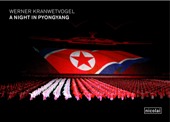
A Night in Pyongyang (mass games picture book)

August 29th, 2008

From the book’s web page (translated from German): Werner Kranwetvogel has travelled to the DPRK and had the opportunity to visit the Arirang Mass Games on two evenings. At these occasions he produced a spectacular series of pictures, which shows exactly this dualism: on the one hand there are tremendous and most impressing wide shots with thousands of synchronized performers. But on the other hand he firstly shows close ups of the dancers, isolates them, jumps close to several groups, shows their passion and the total devotion of the performers to that very moment. This outstanding series of pictures shows the ambivalent fascination of the mass aesthetics in a unique way and comments itself without words.

The book’s web page has an impressive number of pictures, as well as many video clips of the games (with the original music). 

(hat tip to Klaus-Martin Meyer)

Share

DPRK real estate advice: Know your chairman

August 28th, 2008

According to the Daily NK, the chairpersons of the DPRK’s “People’s Units” (the smallest administrative population unit) are elected by the local membership through a show of hands.  Since the chairperson is in a position of some power, the political and economic dynamics that take place are pretty interesting.  The Daily NK notes how a chairperson’s skill at protecting his constituents from inspections by other departments is now factored into local (unofficial) real estate prices:

Quoting from the article:

“When the inspection group comes, the chairpersons of the People’s Units contact each other in advance, so inspections can be avoided. Nowadays, how a People’s Unit chairperson acts affects the price of housing.”

“People who buy homes now cannot distinguish between good and bad homes, but pay great attention to the People’s Unit in the neighborhood. If the People’s Unit chairperson is not so sophisticated, then the neighborhood cannot come together, so people tend to avoid such neighborhoods and the price of housing tends to fall as well.”

“If an inspection unit comes suddenly, the People’s Unit chairperson tends to alert every household through the children in the village, which has been described as ‘the pastime of the People’s Unit.’ The more a People’s Unit chairperson excels at this, the less damage to the people of the unit.”

“Officials or big-time merchants pay careful attention to their relationship with the chairpersons. No matter what the type of inspection is, the citizens’ attitude can be assumed via the words of the chairperson of the People’s Unit, so the fate of a household depends on the words of the chairperson.”

And if the chairperson is not good at his job?

“Depending on the extent of the damage to the People’s Unit during the inspections, people distinguish whether or not the People’s Unit chairperson is smart and experienced or not. If the chairperson is judged to be not smart, then he or she has to relinquish his or her position.”

It is interesting that the chairpersons take such an interest in protecting their constituents from outside authorities, however, it is naïve to think that local elections are responsible for this behavior.  The reality is that these chairpersons probably know a good deal of information about their residents and collect some form of direct payment, or “taxes”, for their services.  The quote above, “big-time merchants pay careful attention to their relationship with the chairpersons,” is just a more polite way of saying this.  If the chairperson position was not profitable in some way, why would anyone want it?

Read the full Daily NK story here:
Who Is the Chairperson of the People’s Unit?
Daily NK
Moon Sung Hwee
8/18/2008

Share

DPRK-PRC trade shoots up 25%

August 28th, 2008

Instutite for Far Eastern Studies (IFES)
NK Brief No. 08-8-28-1
8/28/2008

Recently published Chinese customs statistics reveal that trade between North Korea and China in the first half of 2008 was 1.151 billion USD, 25 percent higher than in the same period last year.

Exports were up 13.5 percent at 330 million USD, while imports grew by 31.1 percent to 820 million USD. This means that the trade deficit for this period, 491 million USD, was 44.1 percent greater than the first half of 2007.

Mining topped the list of North Korean export industries, with 118 million USD worth of ores exported to China making up 36.2 percent of all goods sent across the border. Exports included 71 million USD worth of fossil fuel, 39 million USD worth of steel, 30 million USD in clothing, and 9 million USD in aluminum. On the other hand, Chinese goods imported by the North included 302 million USD in fossil fuels, making up 36.9% of all imports. 68 million USD in machinery, 37 million USD in electronics, 30 million USD in food, and 30 million USD worth of vehicles (excluding trains) were also brought in.

Mining exports were up 69.4 percent over the first half of 2007, making up the largest part of the increase in exports. The rising international price on natural resources was a factor in the North’s increase in exports of iron ore. The 68.1 percent rise in the import of fossil fuels, on the other hand, made up the largest share of the increase in imports, and this can also be attributed to the increase in global fuel prices. 

Share

DPRK diverts aid….again.

August 27th, 2008

According to the Choson ilbo:

Following a request from the North in July 2005, the Unification Ministry and the Korea Tourism Organization bought 8,000 tons of asphalt pitch and subsidiary materials with about W4.9 billion from the Inter-Korean Cooperation Fund to repair Mt. Baekdu runway.

But inspection by the KTO in December 2005 showed construction to be shoddy because an insufficient amount of asphalt had been used. The Unification Ministry and the KTO bought another 8,000 tons of asphalt pitch and other materials with W4.4 billion from the fund in January 2006 and delivered them to the North.

But an inspection in 2007 by the Korea Expressway Corporation found that the paving was no different from that in December 2005, and that 3,497 tons of asphalt pitch had not been used to repair the runway, the BAI said.

The BAI presumes that W2 billion worth of aid materials were diverted illegally for other purposes.

And how did the South Korean’s respond?

The [Board of Audit and Inspection] said agencies including the Unification Ministry “made no preparations to deal with shoddy construction or illegal diversion of the fund.” They took “no action even when a senior North Korean cabinet counselor publicly said in 2006 the North would use a shipment to Nampo Port out of the aid materials to pave the runway of Sunan International Airport in Pyongyang” rather than Mt. Baekdu Airport.

As discussed before (here and here), South Korean development efforts (as conducted via the Ministry of Unification) have been poorly administered.   There is little transparency and less accountability for poor decision making and results.  Given this institutional environment, we can predict that resources will continue to be frequently diverted. 

An alternative, and I believe more effective, economic development strategy which South Korea could adopt towards the DPRK is simply to end MoU structural development programs and allow South Korean businessmen to directly negotiate business opportunities with North Korean counterparts (as the Chinese, European, and others currently undertake).  In this way, business persons risk their own capital and they are fully incentivized to make sure their efforts are properly administred.  Even if some graft is necessary to get things done, at least it does not come from the South Korean Treasury.

Comments welcome.

Read the full article here:
N.Korea Diverted W2 Billion in Aid: BAI
Choson ilbo
8/26/2008

Share
