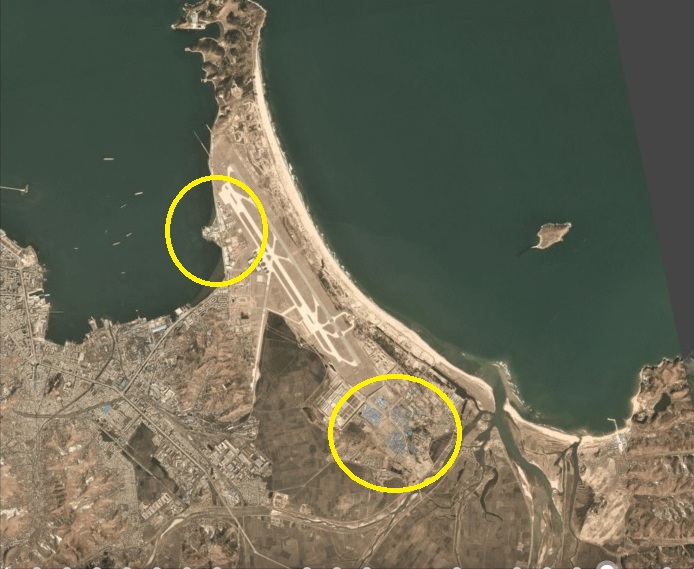
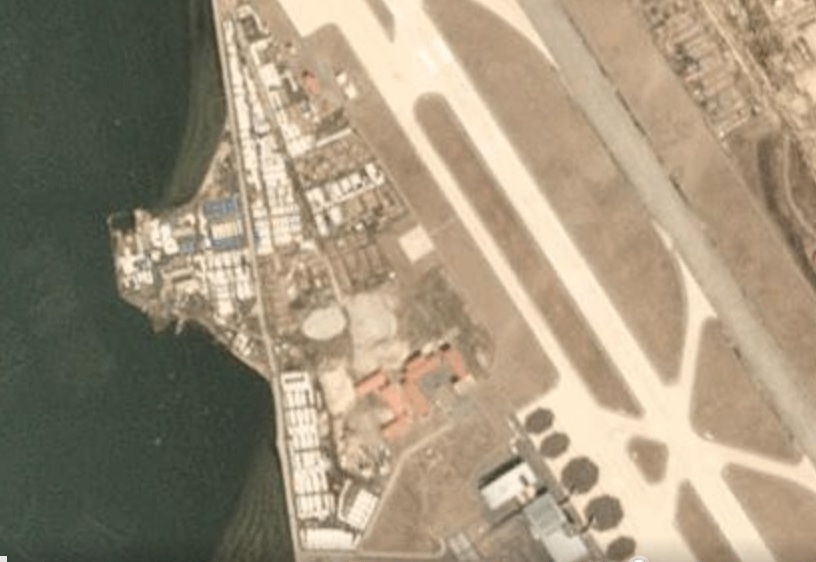
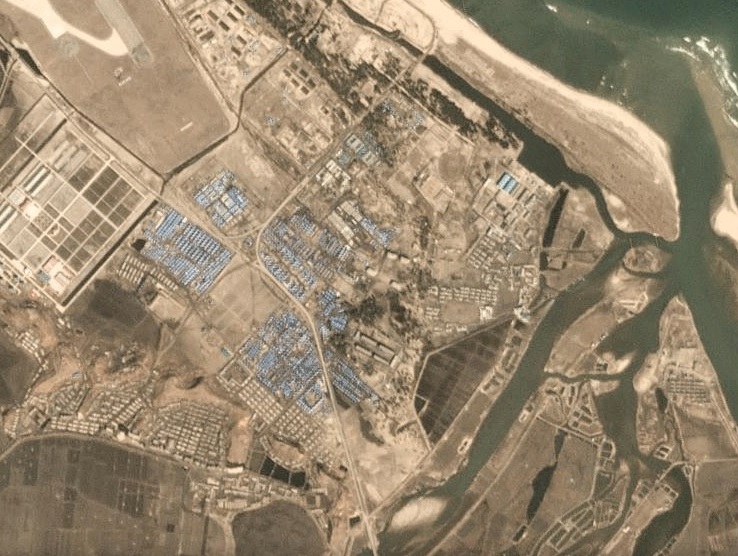
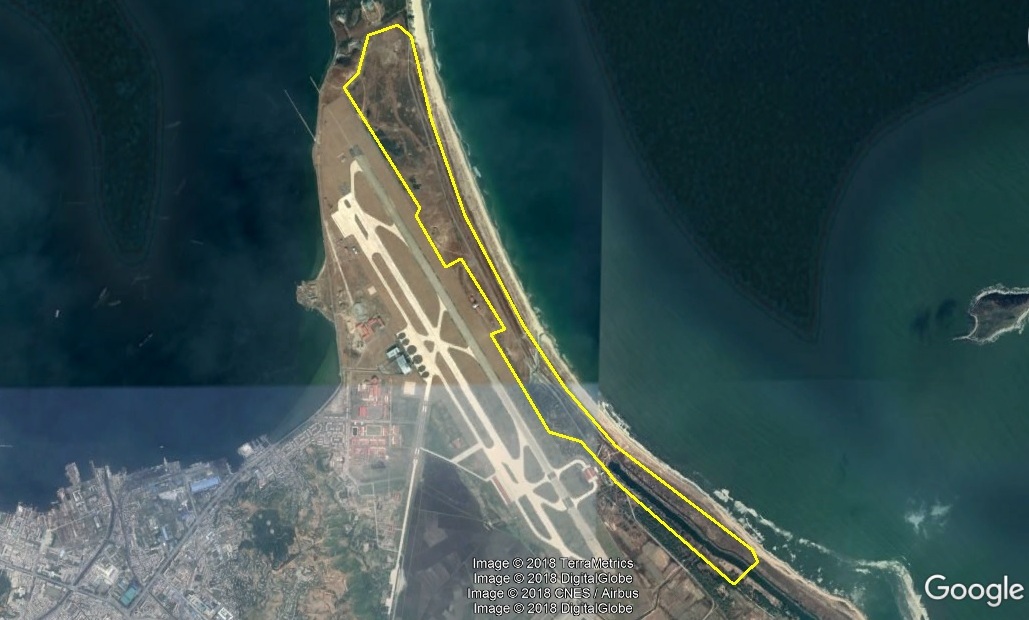
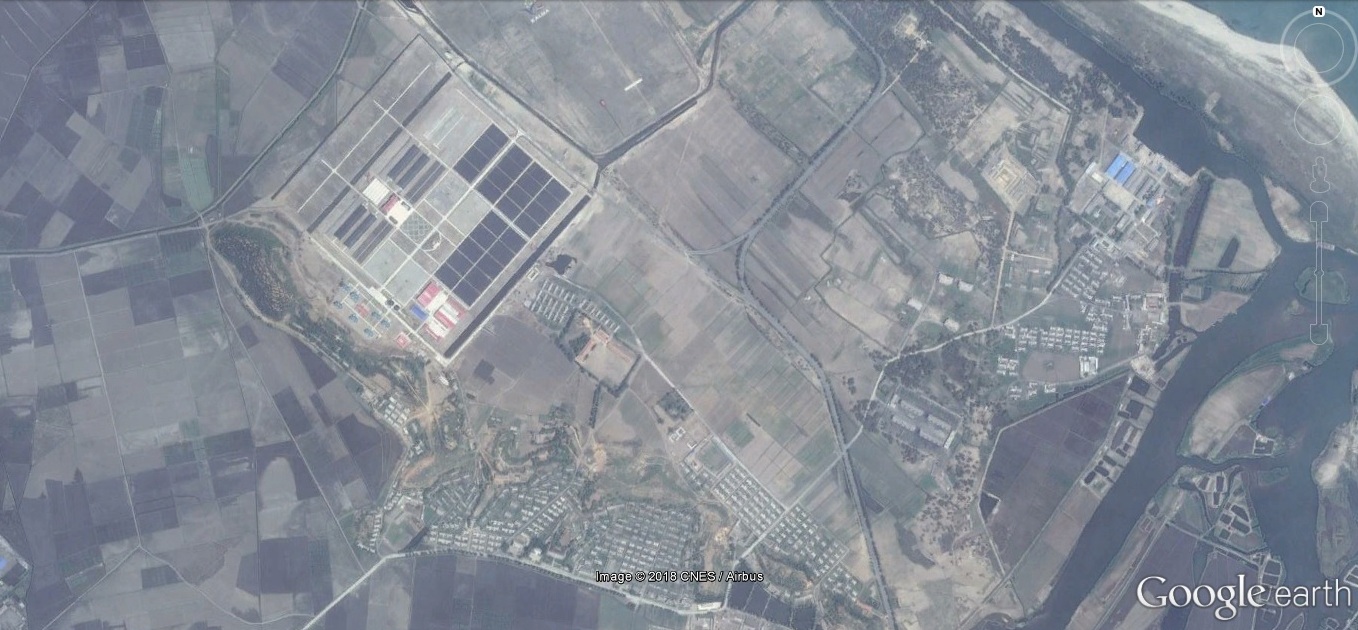
Guomenwan Trade Zone

August 25th, 2015

guowenman-trade-zone-2016-3-30

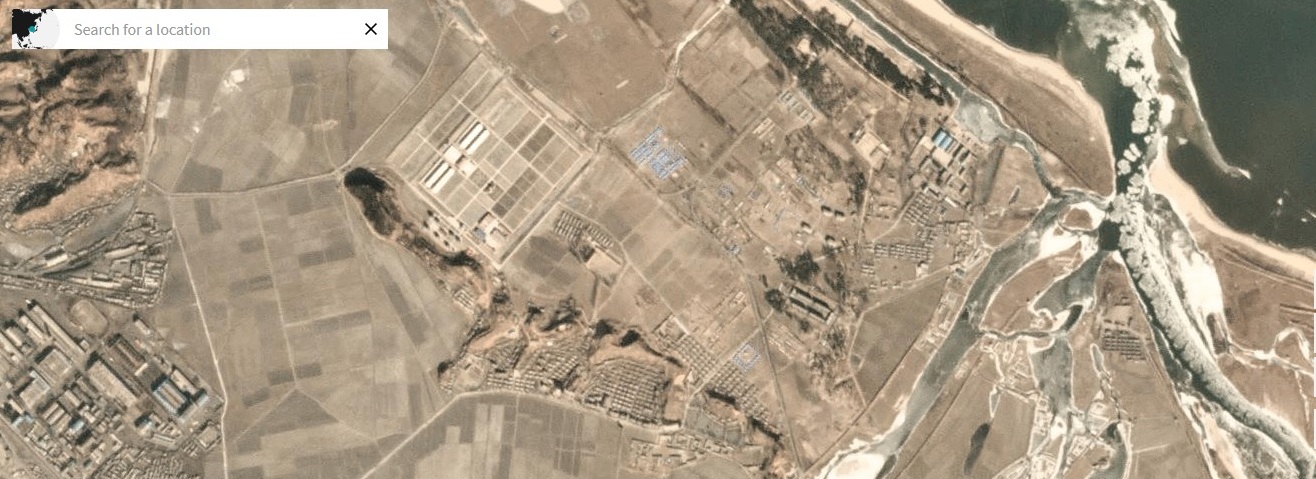
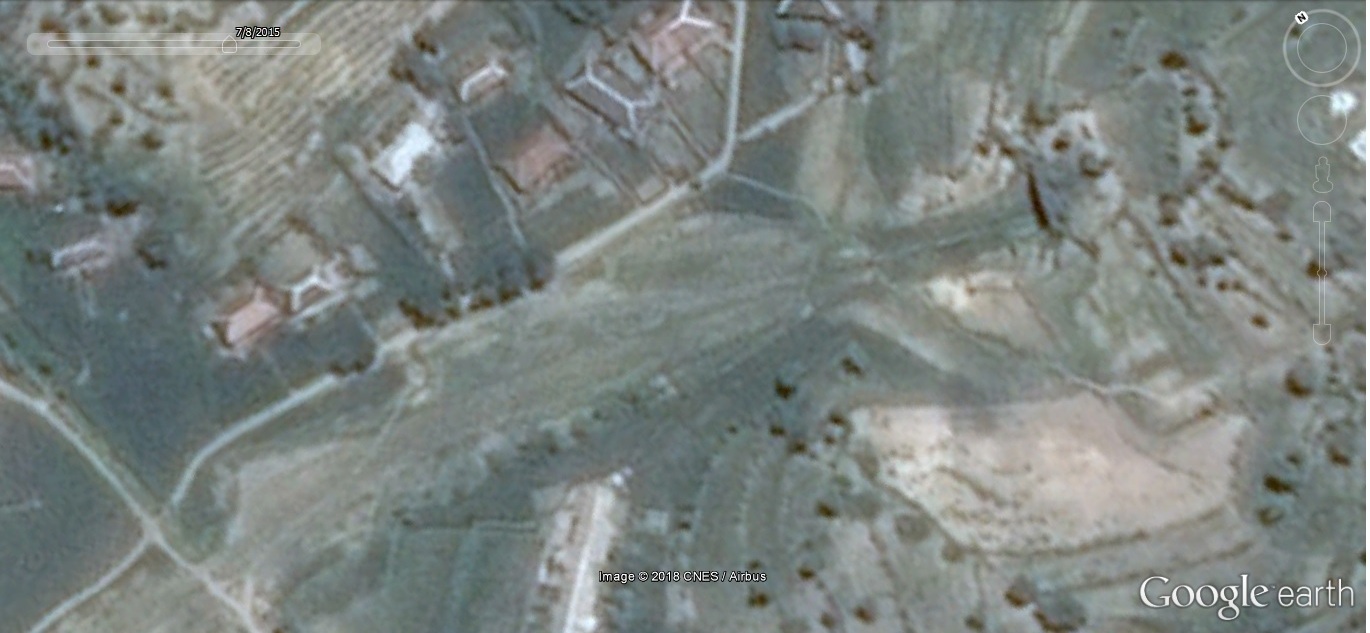
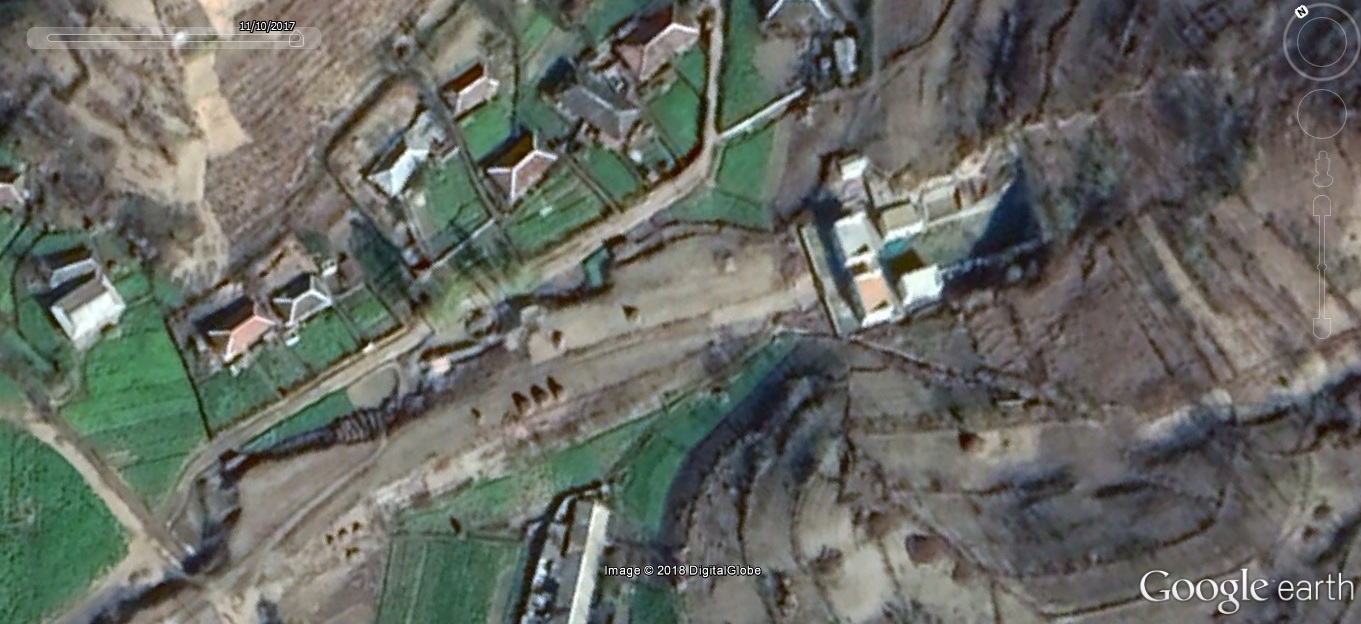
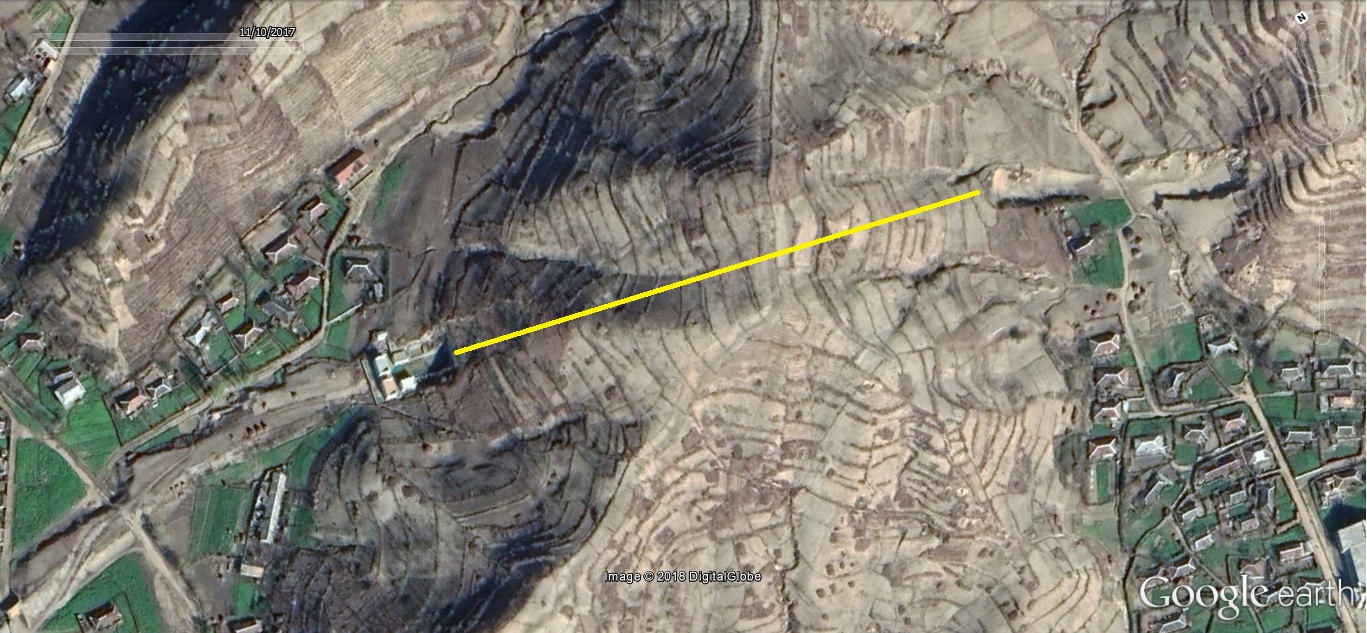
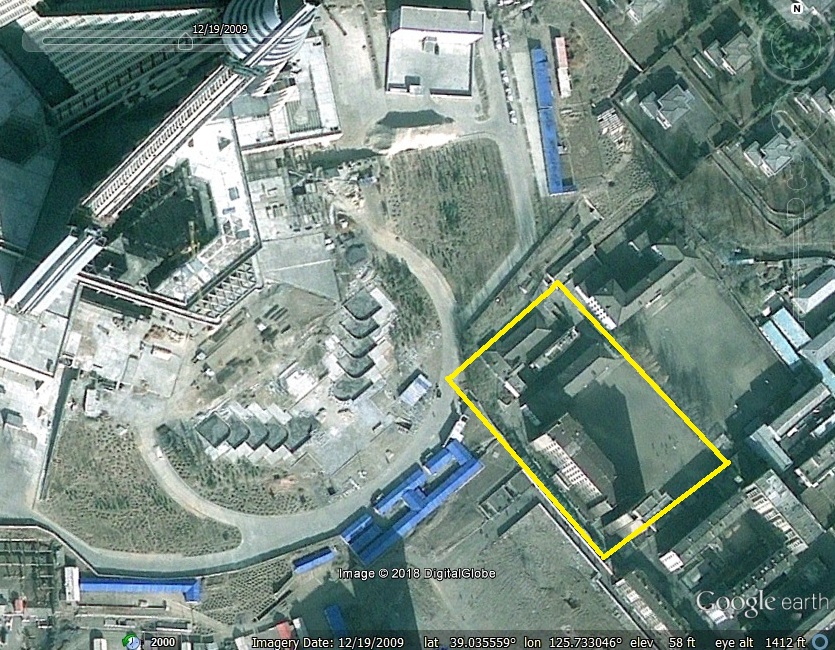
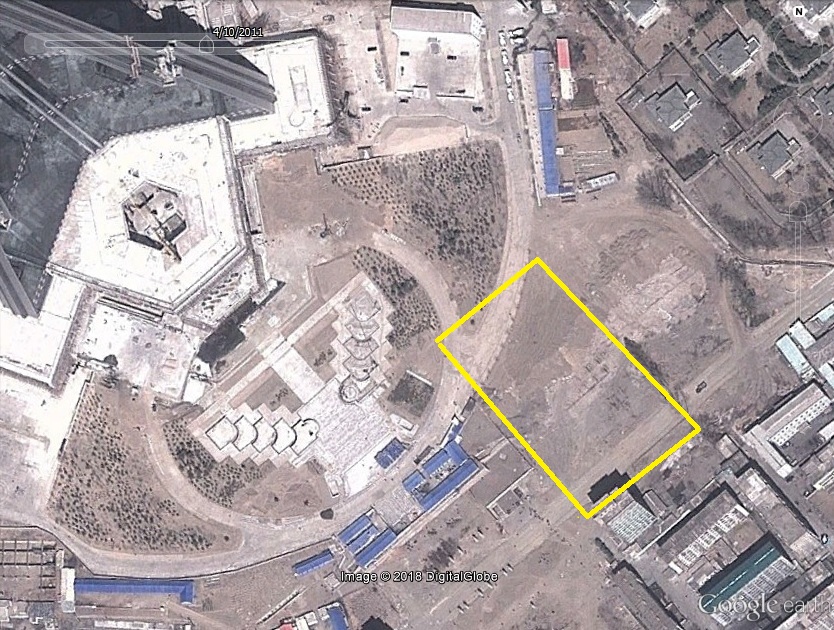
Pictured above (Google Earth): Guomenwan Trade Zone

UPDATE 3 (2016-7-1): NK News translates this article from China News Online:

First goods cleared for trade in China-North Korea border zone

On July 1, the Dandong Sino-North Korea border trade zone reported that the first goods imported from North Korea had cleared customs. The shipment totaled 12 tons with 26 different types of products, including matsutake dried mushrooms, honey, Codnopsis grass and other North Korean specialties. The trade zone’s customs entered trial operation on June 26. There are currently 10 Dandong trading enterprises active in the zone, and the North Korean side is also preparing to become more actively involved. The zone plans to eventually feature 300 North Korean goods for sale. Under zone regulations, residents within 20 kilometers of the China-North Korea border at Dandong will be able to trade commodities with North Koreans living 20 kilometers or less from the border after it enters official operation. Up to 8,000 RMB worth of merchandise is exempt from duties and import taxes per individual per day. According to a representative of the zone’s service center, anyone 18 and older can apply for certification of residence within the zone. In the future, after making their selections, those with this documentation will then submit a list of goods purchased to the service center before making payment; the trader then applies for the tax exemption. All imported North Korean goods will require approval by the China Customs Administration.

UPDATE 2 (2016-1-5): Leo Byrne reports in NK News:

nk-news-guowenman-zone-675x360

“Only the first line of the zone is opened … (The rest) will open this April, according to an official there,” Lee Chang-ju, a PhD candidate at Fudan University, who studies the Sino-North Korea border area and who spoke with people at the tax free zone told NK News.

Lee added the new zone will be open to North Korean companies, but not individuals. As previously reported there will be no tax on transactions there providing they amount to less than 8000 Yuan ($1227).

Photos of the new zone also indicate that it will be divided into numerous areas, each selling different categories of products.

Zones A and B will sell machinery, industrial equipment and electrical equipment, whereas Zone C will be more geared towards North Korean touristic products, seafood, health care products, as well as traditional DPRK items.

“When I went to there, there was nothing to sell, but they said ‘you can general goods just like cosmetics,’” Lee added.

UPDATE 1 (2015-12-30): According to Euro News:

It is supposed to be a key economic gateway to reclusive North Korea.

But two months after its opening, business activity in a trade zone of the Chinese border city of Dandong is flat.

Shops lie empty and customers are in seriously short supply.

Why? The duty-free zone manager is vague.

“Nothing has been decided yet. The space could be rented out…” the manager told reporters.

Dandong is a stopover for North Korean traders and officials travelling between North Korea and northeast China.

It is also a magnet for foreign reporters seeking information on one of the most isolated countries in the world.

This slow start to the new development there is not altogether a surprise.

Previous attempts to set up free trade zones, part of Chinese efforts to coax North Korea into economic reforms, have mostly foundered due to lack of investor interest and fears over doing business with a country under UN sanctions.

China though continues to improve infrastructure on its side of the border.

The opening of a new bridge however is said to have been delayed over North Korea’s failure to build connecting roads.

North Korea’s isolated and small economy has few links with the outside world apart from China, which has been a key partner for decades.

But ties have been strained by North Korea’s banned nuclear programme, which has triggered the UN sanctions on the North.

As relations between China and North Korea have become strained in recent years, China has grown closer to South Korea, Asia’s fourth-largest economy and the North’s main rival.

ORIGINAL POST (2015-8-25): According to Xinhua:

Authorities in northeast China’s Liaoning Province are preparing to open a border trade zone with the Democratic People’s Republic of Korea (DPRK).

After an unveiling ceremony, the Guomenwan trade zone in the city of Dandong is expected to open during the China-DPRK Economic, Trade, Cultural and Tourism Expo in October, the provincial government said on Tuesday.

The trade zone, with a total investment of 1 billion yuan (156 million U.S. dollars), has a floor area of 24,000 square meters.

Residents living within 20 km of the border will be able to exchange commodities at the marketplace with people from the DPRK and enjoy a duty-free policy if spending less than 8,000 yuan (1,250 U.S. dollars) per day.

Dandong is the key hub for trade, investment and tourism between China and the DPRK. There are more than 600 border trade enterprises in the city, and trade with the DPRK accounts for 40 percent of the city’s total trade turnover.

I have written about the new trade zone and its location in this 38 North article.

Share

DPRK visitors to China drops in H1 2015

August 20th, 2015

According to the Daily NK:

The number of North Koreans who visited China through legal means has dipped this year.

Data on the number of foreigners who went to China in the first half of this year indicate roughly 89,700 North Koreans crossed into the country, according to figures from China’s National Tourist Office cited by the Voice of America [VOA] on Wednesday.

This a 2.2 percent drop from the 91,800 visitors who were there during the same period last year, indicating the numbers are heading toward a two-year decline, it reported.

The figures from this report are only limited to those who visit through legal means and do not reflect illicit trips or defectors who enter the country.

Roughly 52 percent of North Koreans traveling to China reportedly went looking for jobs at restaurants or factories. The number of job-seekers inched up by 3,300 on-year, according to the VOA.

Men outweighed the number of women from the North, making up roughly 85 percent at 76,500. Only 13,200 were female visitors.

The total number of foreigners who went to China in the first six months of the year was at roughly 12.3 million. The greatest number of travelers came from South Korea at slightly over 2.1 million, while North Korea placed 20th on the list.

Read the full story here:
N. Koreans on visas to China drops
Da
Lee Dong Hyuk
2015-8-20

Share

In Pyongyang, it’s “out with the old, in with the TBD”…

August 18th, 2015

Pyongyang’s construction boom is taking its toll on some of the city’s most historic landmarks. Recently while perusing on Google Earth I noticed one of central Pyongyang’s most unique (and old) buildings had been torn down.

Pyongyang-apartment-2014-9-21

Pyongayang-apartment-2015-5-20

Here is what the building looked like before it was torn down (Source: Kernbeisser):

Apartment-building-Kernbeisser

At the time it was torn down, it housed the Taedongmun Restaurant (대동문식당), Student Library (학생도서관), Fishing Tackle Shop (낚시도구전문상점), and allegedly some kind of driving offenses office.

This was one of the first buildings to be constructed in Pyongyang following the Korean War. Images of the new building can be found in North Korea Caught in Time by Chris Springer (p80):

11807281_10206041463728383_1474674465549001891_o

11794217_10206041467288472_9218262147638546058

It appears to have been built even before most of the buildings on Kim Il-sung Square.

A fellow North Korea enthusiast was able to provide some (actual) rare images of the building being torn down:

11247083_10152924178411507_88925032327597937_o 11754585_10152924183201507_4773798076994450175_o

I was also able to dig up a declassified CIA report published on 1959-5-14 (Slightly edited to improve reading experience) that contained some information on the building when it was constructed:

11755823_10206056133095108_412057655502746669_n

Obviously the “D” wing was torn down sometime between 1959 and 2000. After the elimination of the original “D” wing, newer construction gave the building a distinct “L” shape.

Many apartment buildings in Pyongyang are being torn down. To see what will replace them, we will have to wait and see.

Share

A closer look at Kim Jong-un’s forestry speech

August 18th, 2015

By Benjamin Katzeff Silberstein 

Vice-premier Choe Yong-gon was reportedly executed because he criticized Kim Jong-un’s reforestation policy initiative. It is interesting to look in more depth at what these policies actually are.

The forestry issue is tightly connected and reinforced both to the lack of food and energy, and to flooding damage. (I have laid out some of these connections in an earlier post.) There can be little doubt that Kim Jong-un is justified in focusing attention to the forestry issue.

The best (and only?) official guide I have seen so far to the policies underlying the reforestation drive of the past few months – which, again, Choe was reportedly executing for criticizing – is a speech delivered by Kim Jong-un to “senior officials of the party, the army and the state economic organs on February 26, Juche 104 (2015).” To understand the reforestation policies and their pitfalls, this speech is an interesting piece of information. Here are a few interesting things to note from the speech:

First, Kim is quite frank about describing the core problem. In the beginning of the speech, he talks openly about how the “arduous march” (the famine of the 1990s) has led people to cut down trees on a large scale across the country. He also mentions the reasons: to “obtain cereals and firewood”, and talks about how this causes landslides and flooding. Perhaps this is part of an overall pattern in recent years where North Korean authorities are less prone to deny the extent of problems and sometimes even exaggerate them, as may have been the case with the drought impact warnings of the early summer.

But it is also interesting to speculate about whether this says something about the way that information is treated in the uppermost echelons of North Korea. Some have claimed that Kim Il-sung might not have been informed of the extent of the country’s economic problems in the late 1980s and early 1990s, and that this might have been the case for Kim Jong-il as well. In this context, the frank way in which Kim Jong-un describes the results of the lack of food and fuel is striking.

Earlier official narratives of the impacts of natural disasters, like those in the mid-1990s, have often blamed the impacts on nature rather than on politics. Kim Jong-un seems to see it the other way around (which of course makes all the sense in the world).

Second, Kim seems to criticize politicized forestry management. In one sentence, he says that trees shouldn’t just be planted on official days and ceremonial “tree-planting days” (my emphasis):

Forest planting should not be done in such a way as planting some trees ceremoniously on tree­-planting days or transplanting fully­ grown trees, as was done in the past. It should be done in the way of raising young trees in large numbers and enlisting all the people in transplanting and cultivating them.

Maybe I am reading too much into this, but this can be read as a criticism of the North Korean practice of honoring various occasions by economic measures, like doling out extra rations on the leader’s birthdays et cetera. At least in forestry, Kim seems to be advocating pragmatism at the expense of ideological rigour. He also gives an anti-formalism shoutout later on, saying that

The plan for forest restoration should not remain in figures or charts on a piece of paper.

Third, Kim indicates that tree-felling will become more severely punished. He calls unauthorized felling of trees an act of “treachery” (my emphasis):

Random felling of trees in mountains must be prohibited. Now some people climb mountains and cut down trees to obtain firewood or timber without permission as they do not care a bit about the country’s forests. Unauthorized felling of trees is tantamount to treachery. All the people on this land should treasure and protect even a blade of grass and a tree of their country.

Later on, he says that

Random felling should be made a serious issue of whatever the unit concerned is and whoever the person concerned is.

This might speak against the sense of pragmatism mentioned above. Of course, people aren’t cutting down trees for fun or to ruin things for the state. It’s part of the coping-behavior that has been developed since the famine, where people do what they can to get by.

The state has expanded the scope for what is allowed in other areas, such as private market trade, in order to better align with the reality on the ground. Here, in contrast, Kim seems to suggest that cutting down trees must be punished more harshly, even though the core reasons why people cut down trees to begin with – lack of fuel and food – remain. Implementing harsher punishments would probably be a difficult task for local authorities.

Kim does mention that the fuel problem needs to be solved that that trees should be planted specifically for firewood. But almost in passing: he basically says that the fuel problem should be solved and moves on (I don’t imagine that most North Korean localities have the resources necessary to replace firewood with biogas at the moment):

In order to conserve forest resources, we should solve the people’s problem of fuel. Positive measures should be taken to solve this problem, including creating forests for firewood in every place and increasing the production and supply of coal for the people’s living. There are several units which have solved the fuel problem with biogas, fly ash or ultraanthracite. By actively popularizing their experience, we should ensure that all regions solve the fuel problem on any account by their own effort.

The strategy outlined isn’t all that impressive, and the forestry issue highlights politics as a battle for scarce resources: on the one hand, the state needs to prevent the floods and landslides that keep coming back every summer. On the other hand, people on the ground need a way to access firewood and space to grow food as the state isn’t providing these things. The problem won’t be solved by just saying that everyone should have access to fuel and all will be well. Nevertheless, it’ll be interesting to follow how this all plays out, and how the policies that Kim has outlined will be implemented (or not implemented) on the ground.

Share

DPRK insurance market updates

August 17th, 2015

UPDATE 2 (2015-10-23): The Institute for Far Eastern Studies (IFES) reports on additional developments in the DPRK’s insurance industry:

North Korean Insurance Company to Expand Insurance Offerings

On October 14, 2015, the state-owned North Korean insurance company, Korean National Insurance Corporation (KNIC), promoted its ongoing insurance programs at the Kaesong Industrial Complex, revealing that it will offer more types of insurance if North-South economic cooperation expands in the future.

As North Korea’s market economy has expanded under the Kim Jong Un regime, insurance aimed at the ‘protection of assets’ has also increased.

“In order to actively ensure joint economic development projects between the North and South using the economic space of insurance, in 2005 we started insuring the assets of businessmen from the South who come to the Kaesong Industrial Region,” KNIC announced on its homepage on October 14.

The company explained, “The types of insurance currently implemented are fire insurance, car insurance, and gas accident liability insurance […] In the future several insurance sectors will grow further commensurate with the increasing variety and expansion of North-South economic cooperation projects.”

The company emphasized that in the future it will offer insurance programs more practical for South Korean businesses at the Kaesong Industrial Complex.

KNIC has also recently introduced new insurance products covering things like cell phones and fruit orchards.

However, Kaesong companies have reportedly not been enthusiastic about the products offered by KNIC. Not only is it difficult to trust the ability of North Korean insurance companies to pay out insurance money in the case of an insurance claim, but the insurance money itself is small. As a result, South Korean companies at Kaesong have been reluctant to enroll.

Meanwhile, KNIC revealed that it is strengthening its fire insurance services in accordance with North Korea’s recent construction of a number of new buildings such as the Masikryong Ski Resort, the Mirim Horse Riding Club, and the Pyongyang Sunan International Airport terminal.

“As we work to realize fire insurance guarantees of newly built or remodeled buildings in a timely manner, we are ensuring that insured companies are equipped with fire alarms and fire extinguishing facilities and experience improvements in risk management,” the insurance company declared.

It added, “We are also bringing in internationally recognized appraisal companies along with domestic appraisers to make sure that risk assessments of new insurance subjects proceed normally on-site.”

UPDATE 1 (2015-8-20): The Institute for Far Eastern Studies (IFES) reports on developments in the DPRK’s insurance market:

New Insurance Products Appearing in North Korea

All sorts of insurance products, such as cell phone insurance and insurance against damage to fruit farms, are starting to appear in North Korea.

The Korea National Insurance Corporation (the state insurance company representing North Korea), revealed on its website on August 12, 2015 that the issue of cell phone insurance was discussed at the annual general meeting of provincial governors held in Pyongyang in February 2015.

“At last year’s meeting, provincial governors from all over, including Pyongyang, North Hamgyong Province, Yanggang Province, and Jagang Province, met and introduced new areas of business such as cell phone insurance. They discussed increasing the number of insurance policy holders and expanding coverage to raise insurance premium revenue,” the insurance company reported.

Recently, as the number of cell phone owners shoots up, the instances of lost or damaged phones have also risen. It appears that this new form of insurance is being offered against this backdrop to compensate cell phone owners for such incidents. As in South Korea, it is not yet mandatory for North Korean cell phone owners to purchase cell phone insurance.

Currently, North Korea’s primary mobile carrier, the Egyptian firm Orascom, owns a 75% share in North Korea’s mobile communications company Koryo Link. As of the end of June 2014, the company had 2.4 million cell phone subscribers in North Korea.

The Korea National Insurance Corporation is also preparing to offer insurance for fruit trees in order to compensate owners of fruit farms for damage caused by natural disasters or other events.

The company explained the background behind offering this insurance product on their homepage. According to the website, since Kim Jong Un came to power, a lot of effort has been put into the development of agriculture and fruit farms, but due to recent abnormal climate phenomena like El Niño, these fields have experienced a lot of difficulties.

The website reveals, “Based on experience accumulated in the testing phase, we plan on offering insurance coverage within several years for modern, large-scale fruit farms like Taedong River Integrated Fruit Farm and Kangwon Province’s Kosan Fruit Farm.”

In order to do this, the company has been performing risk appraisals since 2013 with international damage appraisers for each of the fruit farms. This suggests that it is keeping foreign reinsurance companies and contracts in mind.

The company offers fruit farms insurance coverage for a variety of calamities and natural disasters. It covers fruit trees in the event of drought, landslides, or fire; fruit in the event of hail, drought, excessive moisture, extreme heat, or fire; and the quality of fruit in the event of hail, heavy rain, or storms.

The provision of insurance for fruit farms is seen as an extension of North Korea’s ongoing efforts to earn foreign currency through insurance companies.

The fact that various insurance products are appearing in North Korea has attracted attention in the context of North Korea’s recent economic developments. Since Kim Jong Un came to power, the regime has tried to recognize and protect private property as the market economy has expanded through the growth of companies’ independent management rights and the expansion of private profits. Especially in the case of insurance companies, it is believed that the regime is trying to maximize profits by generating additional income through insurance premiums.

ORIGINAL POST (2015-8-17): Elizabeth Shim reports the following at UPI:

On Tuesday, Pyongyang’s Korea National Insurance Corp. posted on its website information on annual meetings held in each province. Issues of mobile phone insurance were discussed during the meetings, South Korean news agency Yonhap reported.

The North Korean insurance firm said in statement that new businesses were being introduced to meet the increased demand for mobile phone insurance in Pyongyang and the provinces, South Korean television network SBS reported.

The mobile phone is becoming a central component of everyday life for many North Koreans, particularly for merchants who are on the road to sell wares around the country – but damage or loss of phones are raising the demand for insurance in the country.

Egyptian firm Orascom owns a 75 percent stake in North Korea’s main network, Koryolink, and offers services to 2.4 million North Koreans.

Other insurance mentioned include new policies for agriculture and protection plans for large-scale fruit farms by the Taedong River and in Kangwon province are being assembled, according to North Korea. The plans would provide protection against weather effects like “El Nino,” that is resulting in increased drought, torrential rain, high temperatures and other factors that are hurting crops.

The Korea National Insurance Corporation web page is here. Here are the two specific reports mentioned in the article:

Annual conference of provincial KNIC branches held

The annual conference of provincial branches of Korea National Insurance Corporation was held in Pyongyang on February 25th and 26th.

It was attended by head-office officials concerned and branch managers, and accountants thereof, of different provinces.

Its agenda involved review of last year’s insurance operations conducted by the provincial branches, and determination of their goals to be reached this year.

Great appreciation was shown in the conference for the branches including the ones in Pyongyang, North Hamgyong Province, Ryanggang and Jagang Provinces, all of which, last year, introduced new insurance products, like mobile phone insurance, into sale, and brought an increase in the number of the insureds and objects to result a rise in premium income, and made prompt indemnifications on a scientific basis thus contributing to the stabilization of operation, production of the insureds concerned and people’s lives, as well.

Stress was laid on adoption and development of effective business strategies plus further improvement and intensification of insurance operation upholding the slogan reading “ Let us all turn out in the general offensive to hasten final victory in the revolutionary spirit of Paektu!”, thus enhancing the role of insurance in line with the development of national economy and improvement of the livelihood of the people as befitting the significance of the year marking the 70th founding anniversary of the Workers’ Party of Korea.

Lectures were given on business practices involving accountancy and some insurance accounts during the conference.

Fruit Crop Insurance to be introduced in future

According to a far-reaching plan of Chairman Kim Jong Il and supreme leader Kim Jong Un to supply the people with fresh fruit in and out of season, Taedonggang Combined Fruit Farm had been built as the best integrated base for fruit production, keeping production going on a high level, and furthermore, Kosan Fruit Farm has been expanded as a large-scale fruit farm with the introduction of scientific, intensive and modernized methods into fruit production.

At present, the farms have boosted production by applying the densely planting method of dwarf fruit trees following the world-wide trend of fruit farming development and growing several kinds of fruit trees including high-grade apple, pear and peach as befits the specific conditions of our country.

They grow apple trees of Korean original varieties such as Hwangju, Pukchong and Unryul together with dwarf apple trees of more than a hundred of varieties including Granny Smith, Fuji and Golden Delicious,and meet their own demand for young saplings by growing them on their own.

However, there have frequently occurred abnormal weather phenomena due to El Nino in recent years, causing negative effects on agriculture and fruit farming in our country and its surrounding countries.

As far as fruit farming is so greatly influenced by the nature and terrain and weather conditions as agriculture, Korea National Insurance Corporation (KNIC) has intention of newly underwriting insurance contracts with fruit farms in our country so as to put production on a normal basis under the adverse weather conditions recently occurred.

The subject matter insured under Fruit Crop Insurance shall be fruit and fruit trees cultivated by fruit farms in DPRK, and the covered risks are as follows;

– Yield Loss Coverage

Drought, freezing, landslide, fire,

– Fruit Tree Loss Coverage

Hail, drought, excessive moisture, extreme heat, fire,

– Quality Loss Coverage

Hail, torrential rainfall and windstorm.

In 2013, KNIC conducted a risk survey on some fruit farms in our country in cooperation with international loss adjusters, and since then KNIC has underwritten insurance contracts with those farms.

KNIC, on the basis of practical experience gained at that pilot stage, shall cover against the risks mentioned above modernized and large-scale fruit farms including Taedonggang Combined Fruit Farm and Kosan Fruit Farm within a few years to come.

Although KNIC has a dubious history, today the group still posts regular financial information which (if accurate) would make it one of the most financially transparent organizations in the DPRK (Congrats to them for at least trying). See tables here, here, and here.

Previous posts on the Korean National Insurance Corporation here.

Once they figure out crop insurance, the next step should be a commodity futures market!

Read the full UPI story here:
North Korea to provide insurance for drought, lost phones
UPI
Elizabeth Shim
2015-8-12

Share

Wonsan Kalma Airport imagery (UPDATED)

August 17th, 2015

UPDATE 1 (2015-8-17): Kim Jong-un visited the Wonsan Airport (Kalma Airport) for an air force demonstration reported in Rodong Sinmun on July 30. You can see a video of that event here. A second official video claims that the demonstration took place on July 28. A satellite image of the facility was taken just the day before (July 27) and we can see some of the new facilities and preparation for Kim Jong-un’s arrival. I have already reported on most of this material at Radio Free Asia (새단장 갈마비행장…활주로에 광고도).

First, Google Earth imagery shows thousands of soldiers on the new runway practicing for Kim Jong-un’s arrival at the observation building. They can also be seen in the official images:

Wonsan-runway-soldiers-2015-7-27

wonsan-runway-soldiers-2015-7-30

We can also see the completed (on the outside) Wonsan Airport terminal building:

Wonsan-terminal-2015-7-27

Also unveiled is the new logo for the airport which reminds visitors that (despite the heavy military presence) the new airport welcomes civilian vacation travelers. We can see this design at both ends of the runway:

Wonsan-Kalma-airport-logo

We can also see what appears to be a (fifth!) runway for Kim Jong-un. This runway contains similar facilities to the new Kim Jong-il runway built in Taesong District for use of the individuals that live in the Kim Family’s Ryongsong Complex:

Kalma-kim-jong-un-runway

Pictured above: The probable Kim Jong-un light aircraft runway at the Wonsan Kalma Airport

Taesong-Kim-Jong-un-runway

Pictured above: Kim Jong-un’s runway in Taesong district of Pyongyang which bears a close resemblance to the facilities at the Wonsan Kalma Airport.

ORIGINAL POST (2015-5-1): New Google Earth imagery shows continued development of the new civilian airport in Wonsan. The airport is presumably intended to support the Wonsan-Mt. Kumgang International Tourist Zone.

2015-3-26 (Google Earth)

Wonsan-Airport-2015-3-26

2015-2-10 (Google Earth)

Wonsan-Airport-2015-2-10

2014-12-25 (Google Earth)

Wonsan-Airport-2014-12-25

Share

It all comes together: North Korea’s floods, forests and the rumored execution

August 15th, 2015

By Benjamin Katzeff Silberstein

Two of the main news stories on North Korea right now – the rumored execution of Choe Yong-gon and the summer floods that have washed away thousands of hectares of farmland, and thus far killed 21 people (as reported on August 5th) – have something in common. They both show the politically sensitive and dire nature of North Korea’s forestry problem.

For decades, North Korea has had a big problem with its trees being cut down at a large scale.

There are two main reasons for this: 1) trees being cleared for farmland, and 2) wood becoming an increasingly important source of energy as other ones have waned. (I recall reading about cutting down trees for hillside farming as an edict from Kim Il-sung, which could explain why it’s taken so long for the policy to become openly questioned, but I cannot find the source for this at the moment.)

According to research by the World Resources Institute, forests about 18 times the size of Manhattan have been destroyed in the country for over ten years. Another institute has concluded that forest cover in the country dropped by 17 percent between 1970 and the late 1990s. Presumably it has become even worse since private hillside farming has increased.

The effect of this is visible for anyone who visits North Korea’s border either from South Korea or China. While North Korea’s hills are barren, the landscape is usually lush and green on the other side.

This is visible on Google Earth as well. Below is a picture showing Ganghwa island on the South Korean side. Its landscape is significantly more green than that in North Korea, north of the light yellow line.

Screen Shot 2015-08-15 at 14.15.30

Image credit: Google Earth

As has long been known, this creates immense problems when the summer rains come. Without tree roots to soak  up the water, hills become too heavy and collapse, taking down much of the crops with them. So far, this year’s rains do not seem to have had as bad of an impact on the crops as in previous years, but the rainy season still isn’t over.

As Curtis has previously pointed out on this blog, this is a classical example of the tragedy of the commons. Since the state owns the forests, people have no direct incentive to treat them in a long-run beneficial way.

This is where the recently reported execution comes in. According to news reports, Choe Yong-gon was executed because he criticized Kim Jong-un’s forestry policies. What were these policies, and why was Choe supposedly critical of them?

It was in a speech on February 26th this year that Kim Jong-un outlined new plans for reforestation of the country. In the speech that was later printed in full in Rodong SinmunKim laid out the problem in a relatively frank way (emphasis added):

However, as people have felled trees at randomsince the days of the Arduous March on the plea of obtaining cereals and firewood and, worse still, as no proper measures have been taken to prevent forest fire, the precious forest resources of the country have decreased to a great extent. As the mountains are sparsely wooded, even a slightly heavy rain in the rainy season causes flooding and landslides and rivers dry up in the dry season; this greatly hinders conducting economic construction and improving people’s standard of living. Despite this, our officials have confined themselves to reconstructing roads or buildings damaged by flooding, failing to take measures for eliminating the cause of flood damage by planting a large number of trees on the mountains.

I haven’t been able to find information on the specific nature of Choe’s supposed criticism, but one can make some reasonable inferences. As is often the case with central bureaucracies, not least with that of North Korea, management and command at the central level seems out of touch with the reality on the ground. While forestry management authorities, according to news reports, have said that the tree species required to suit local conditions would take up to three years to produce, they have come under strong pressure to meet the planning goals and time frame stipulated by the central government. This problem is classical to planned economies. North Korea, of course, is by no means an exception.

Maybe Choe had pointed out the obvious: fundamentally, Kim’s forestry initiative makes little sense. When Kim says that “Unauthorized felling of trees is tantamount to treachery”, it almost sounds like people continuing to cut down trees to cope and muddle through, as has been done for decades, will be punished much harder in the past.

North Korea’s forest issues embodies many of its other problems. As long as other sources of energy don’t grow drastically, and as long as the leadership doesn’t find a way to better manage its food supply, forests will continue to be destroyed. The forestry policy does not seem feasible in practice, and the policy sequencing is problematic to say the least.

Share

Friday fun: It’s “out with the old” at some Kim family residencies

August 14th, 2015

This story has already gotten some traction in the media, but some things end up getting cut–and this is why we have blogs. As reported in the media, a residential component of the Kim Family’s Ryongsong Housing Compound has been renovated.

Ryongsong-2014-9-21

Image date: 2014-9-21

Ryongsong-2014-10-27

Image date: 2014-10-27

Ryongsong-2014-4-28

Image date: 2015-4-28

I am unsure who now lives here or how much the project cost, but it was completed in about seven months (on the outside). It is hard to say if work is continuing on the inside because, unlike other construction sites in the DPRK, the workers are being bused in to work for the day and then bused out. There are no barracks or equipment next to the construction site. So security was pretty tight for this particular project.

Another interesting change is the destruction of the compound pool and water-slide:

Ryongsong-Pool-2013-2-22

Image date: 2013-2-22

Ryongsong-Pool-2013-3-5

Image date: 2013-3-5

Ryongsong-Pool-2013-5-3

Image date: 2013-5-3

It is unclear when this water-slide and pool were built (pre-2000), but it is highly probable that Kim Jong-un used to enjoy it when he was younger. We all grow up, however. Now he has nicer toys to play with.

But the compound did not go without a pool. Just before the above pool was destroyed, somebody in the Kim family built the most phallic-looking pool/pool house I have ever seen (admittedly a small sample size). This large mansion in the Ryongsong Family Compound underwent significant renovations in the spring of 2012 (Just a few months after the death of Kim Jong-il).

Ryongsong-house-2012-4-4

Image date: 2012-4-4

Ryongsong-house-2013-2-22

Image date: 2013-2-22

Renovations, at least on the outside, appear to have been completed by 2013-2-22. The new phallic-looking pool cover/pool house can be seen in front of the house. At the risk of ruining my career by pandering to an adolescent sense of humor, here it is (the world should know):

Ryongsong-phallus

No doubt the revolutionary new “our-style” pool cover is very functional. It offers the bather coverage from both the sun and imperialist-controlled spy satellites–all while maintaining exposure to the invigorating forces of the outdoors.

I would like to say that this is Kim Jong-un’s pool, but I cannot. However, I am confident that is belongs to someone very close to him. Not many people in North Korea get to enjoy homes like this.

Share

Lankov issues warning on North Korea’s economic reforms

August 13th, 2015

According to Yonhap:

North Korean leader Kim Jong-un’s reformatory policy is highly likely to spark political instability in the country, a Russian professor said Thursday, stressing the need to prepare for a potential volatile situation there.

“Kim Jong-un’s policy has a high possibility to destabilize North Korea’s local situation, therefore preparations are necessary for a sudden change there,” Andrei Lankov, a professor at Kookmin University, said during a forum co-hosted by Yonhap News Agency and the Presidential Committee for Unification Preparation.

Under the reform-seeking young leader, North Korea is less secure than under the previous Kim Jong-il era when the country had experienced no changes, the professor said.

Under the new leadership, North Korea has shown signs of adopting a developmental dictatorship, the professor noted.

Kim is aware that he cannot hold on to his power for the next several decades without a reform.

Kim’s predecessor and father Kim Jong-il was different. In his 60s, he knew that even without the reform, which has the potential of thwarting the regime, his power grip could be sustained until his death, Lankov added.

Even though the North chooses to follow the footsteps of the Chinese economic reform, the reclusive country may have to be careful about opening up the country to the outside world, because after seeing South Korea’s incomparable affluence, North Koreans may become very discontented with the North Korean system, the professor said.

“It will be something tantamount to an act of political suicide,” he noted.

If North Korea happens to succeed in the reform drive, the result will better help the two Koreas peacefully coexist over the long term, he said, adding that it will cut down the costs of unification.

Touching on North Korea’s nuclear ambition, he said the communist country will never even dream of giving up its nuclear arsenal.

“Any reward, any pressure will be of no avail,” because nuclear weapons are irreplaceable means of deterrence and threats for the Kim regime.

The North Korean government knows that Gaddafi is the only leader who gave up nuclear arms in international political history and he was killed, according to the professor.

Read the full story here:
Preparations needed for potential volatile situation in N. Korea: Lankov
Yonhap
2015-8-13

Share

Sports tourism business active in North Korea

August 13th, 2015

Institute for Far Eastern Studies (IFES)

North Korea’s Choson International Tourism Agency [AKA Korea International Tourism Company (KITC)] is receiving favorable reviews from tourists for its hospitable services and various tourism offerings (mainly sports tourism), the Choson Sinbo reported on August 5, 2015.

According to the Japan-based newspaper, the travel agency is building ties with Asian and European travel agencies and is satisfying the demands of numerous tourists who want to see North Korea’s famous sites in person.

The agency’s vice-president, Choi Dong Un, revealed in a press conference with the Korean Central News Agency (KCNA), “We are currently organizing a variety of services, including sports activities like marathons, hiking, golf, bowling, shooting, swimming, skiing, and bicycle tours, as well as opportunities to view domestic and international sporting events.”

In particular, “Tourists enjoy experiencing the customs of the Choson people, such as pounding dduk [Korean rice cake] or making kimchi or noodles,” the newspaper highlighted.

“The travel agency is also actively working with tourists who are interested in investing in tourist attractions or hotel development and tourism infrastructure, helping them meet with the relevant companies and agencies and arranging visits to the site,” the Choson Sinbo added.

The Choson International Tourism Agency was established in January 1997. One of North Korea’s big travel agencies, it is headquartered in Pyongyang’s Mangyongdae District.

Meanwhile, Experience North Korea, an online travel agency based in Shanghai, China, offers tourists the opportunity to participate in the marathon held at North Korea’s Masikryong Ski Resort in Wonsan. Tourists interested in this experience can choose from several tourism packages this year. They can depart from Shanghai on October 2, 2015 and spend either three days and two nights or seven days and six nights in the country; likewise, they can choose a four-day, three-night package that departs from Beijing on the same day.

With statements like, “Discover North Korea’s beauty and breathe its fresh air while running in the slopes of Masikryong Ski Resort,” the company’s website tries to lure tourists. According to the website, four different courses are offered: a 5 km course, 10 km course, half marathon, and full marathon.

The construction of the Masikryong Ski Resort was a project of special interest to North Korean leader Kim Jong Un. Its doors were opened on January 1, 2014.

Share

An affiliate of 38 North