Sangyon e-commerce system introduced (and Jonsong Card)

September 8th, 2015

KCNA issued a story today that raised some eyebrows:

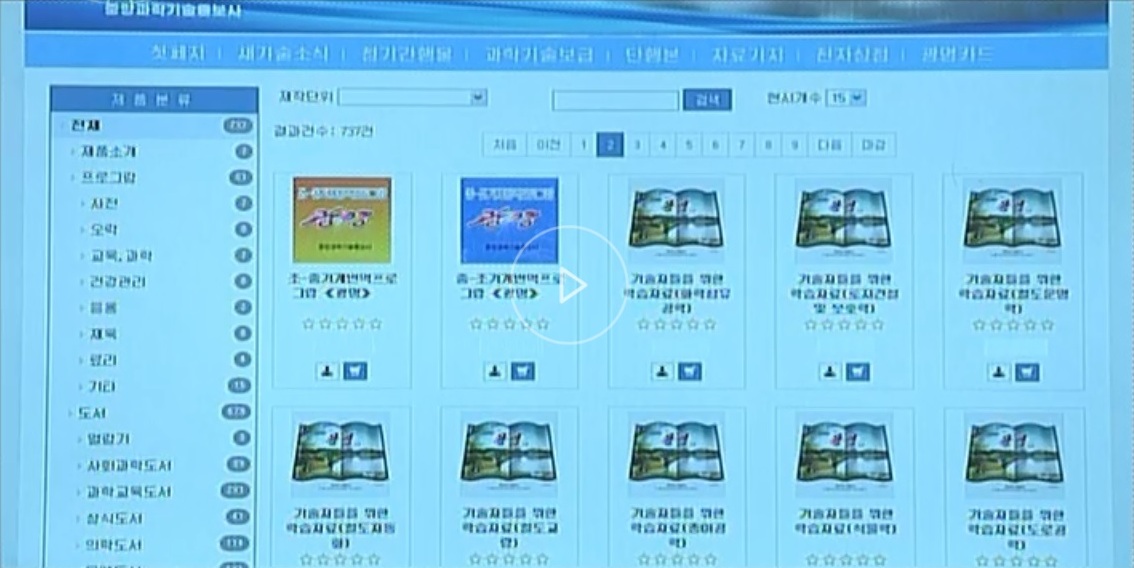
Electronic Commerce System ‘Sangyon’ Introduced in DPRK

Pyongyang, September 8 (KCNA) — The Institute of the Commercial Science in the DPRK developed “Sangyon”, an electronic commerce system.

The system makes it possible to ensure business through local network with credit card issued by the Central Bank.

This 24-hour service system has already been introduced to the West Pyongyang Department Store and many other commercial units, winning popularity among its users.

The reason this story raised eyebrows was the mention of a “credit card”. I had to go to the original Korean article to see if the word “credit card” was ever used.  Here is the original Korean:

(평양 9월 8일발 조선중앙통신)

조선에서 전자상업체계 《상연》이 개발되여 봉사활동에 도입되고있다.

상업과학연구소에서 내놓은 이 체계는 국가콤퓨터망을 통하여 상품소개 및 판매,상업정보소개를 진행하는 전자결제방식의 상업봉사체계이다.

이 체계는 중앙은행에서 발행하는 《전성》카드를 리용하여 손님들이 상점에 가지 않고도 필요한 상품에 대한 검색과

주문,카드를 리용한 전자결제와 송달을 받을수 있게 한다.

손님들의 상품수요를 실시간적으로 장악하여 생산단위들에 맞물려준다.

전국적범위에서 상업발전추세에 맞게 무현금류통을 늘이고 상품구입의 편리성을 도모해주는 전자상업체계는 24시간 봉사하고있다.

서평양백화점을 비롯한 많은 단위에 도입되여 사용자들로부터 호평을 받고있는 전자상업체계는 계속 확대도입되고있다.(끝)

The Korean report is quite different from the English version. It says that they have developed an e-commerce system called Sangyong 《상연》. On this system, available 24-hours a day no less, companies can list products, provide information, and consumers can actually make purchases for delivery. This system accepts the Jonsong card [《전성》카드] (a pre-pay card issued by the Central Bank in local currency) for payment.

UPDATE (2016-3-10): Simon Cockerell has posted a photo of a Jonsong Card to his Instagram Account:

Jonsong-Card

The Institute for Far Eastern Studies (2015-8-28) had this to say about the Jonsong Card:

Use of electronic payment cards expands in North Korea

It appears that the use of electronic payment cards in North Korea is spreading as North Korea’s central bank releases a new payment card. Photos of the card (called ‘Jonsong’) have been uploaded to social networking sites like Instagram and Facebook by foreigners currently in North Korea. The card is issued by the Central Bank of the Democratic People’s Republic of Korea (hereafter ‘North Korea Central Bank’).

Until now, North Korean’s primary credit cards have been the ‘Narae’ card, issued by the North Korea Foreign Trade Bank in 2010, and the ‘Koryo’ card, issued by Koryo Bank in 2011. ‘Narae,’ a foreign currency debit card, can be used at locations like hotels or foreign currency shops after card-owners load it with foreign currency at a bank; the affiliate card ‘Koryo’ can be used when paying for services or products at shops that have a payment system and deal in foreign currency.

Recently, Yonhap News released a photo of the electronic payment card ‘Sonbong,’ reporting that the card is now in use. The card is issued by the Golden Triangle Bank and can be used in the Rason Special Economic Zone. Both the Sonbong and Narae cards feature a yellow electronic chip on the front of the card. In contrast, North Korea Central Bank’s recently confirmed Chonsong card does not display such a chip and contains a red and blue diamond-shaped design in the lower right-hand corner.

It has not yet been confirmed whether this is a general electronic payment card or if it is intended for specific purposes. In a February 2015 interview with the Japan-based Choson Sinbo, the president of North Korea Central Bank revealed, “North Korea Central Bank is focusing on satisfying the capital requirements that arise in a country’s economic construction by turning over domestic funds more smoothly […] As part of that effort, it is pushing forward the development of new financial products as well as the use of cards in people’s daily lives.”

It is estimated that approximately 4 billion dollars are circulated and held privately by North Korean citizens. As a step to legalize that currency, it is widely known that North Korea implemented the ‘cooperative currency system’ (effective March 1, 2013), inducing individuals and agencies to open and use foreign currency accounts and actively encouraging the use of cards.

These days, foreigners visiting North Korea pay for hotel rooms, taxi fares, and other products with the Narae card after charging it with foreign currency.

Share

Why won’t North Korean trees grow like Kim Jong-un told them to?

September 4th, 2015

By Benjamin Katzeff Silberstein

The forestry campaign that Kim Jong-un launched in a speech earlier this year continues. According to a new brief by IFES, North Korean state media has criticized certain nurseries for poor management.

North Korea has once again come out on broadcast television criticizing the poor management of tree nurseries at some of its Forest Management Centers. This public criticism of the forest restoration effort comes after the emergence of Kim Jong Un’s sister, Kim Yeo Jong, as an influential figure in the Department of Propaganda and Agitation.

On August 26, 2015, Korean Central Television (KCTV) aired a program entitled, Let’s Go Forward in Patriotism and Strength in the Forest Restoration Battle. The broadcast criticized several Forest Management Centers, including one in North Hwanghae Province’s Songnim. “They set up sun shades carelessly and then do not even water saplings properly. As a result saplings have become withered and yellow,” the program alleged.

The broadcast went on to a scathing critique of the tree nursery’s poor management: “The spraying equipment also does not properly work […] No more than 30% of the trees are alive […] The soil is overgrown with weeds […] One of the trees still has not sprouted.”

It also condemned the management of the Kangdong County tree nursery. “Because they do not properly conduct fertilizer management and also do not follow water guarantee measures, the saplings turn yellow and wither away. In the vegetable gardens there is so much seaweed that it is difficult to tell whether they are fields of saplings or meadows.”

“The fact that saplings can not grow properly is not due to unfavorable climate conditions but the defeatist and ‘non-owner’ work attitudes of the Forest Management Center workers and tree nursery work groups, who half-heartedly do their work and quit,” the broadcast added.

It went on to say, “When the workers use their heads creatively and engage in the work enterprisingly, great results are achieved in the expansion of the country’s permanent assets […] If all combatants in the forest restoration work sincerely, the Party’s forest restoration plans will be moved forward.”

One could of course argue that the issues described might result from the disconnect between political orders and constraints on the ground. For example, it has been reported that tree species that would suit local conditions in certain parts of the country would take at least three years to produce, but that the central government authorities want things to proceed immediately anyway. I am no forestry expert but it seems like a difficult task for even the most stern of political orders to make trees grow properly in the wrong conditions.

The full text of the IFES brief is available here:

North Korean Broadcast Criticizes Forest Restoration Results

The Institute for Far Eastern Studies at Kyungnam University

2015-09-03

Share

Phoenix Commercial Ventures terminates its association with Hana

September 3rd, 2015

According to the PCV web page:

As a result of irreconcilable differences between the board of Phoenix and the local management, Phoenix Commercial Ventures Ltd has terminated its association with Hana Electronics JVC with immediate effect.

Hana Electronics JVC was a 50/50 joint venture between Phoenix Commercial Ventures Ltd and the trading department of The Ministry of Culture.

Phoenix has no further connection with Hana or any interests (direct or indirect) in its operations.

Share

Inter-Korean trade returns to pre- May 24 sanctions levels

September 3rd, 2015

According to Yonhap:

Inter-Korean trade in the first seven months of this year recovered to levels before Seoul imposed blanket sanctions against the North for the sinking of its naval ship, government data showed Thursday, thanks to increased exchange via a joint industrial complex.

According to the Korea Customs Service (KCS) data, the value of cross-border trade reached US$1.53 billion in the January-July period, which is roughly on par with $1.56 billion reported for January-July of 2009. The total also marks a 22.4 percent increase from $1.25 billion worth of goods traded in 2014.

In the seven-month period, South Korea shipped some $716 million worth of intermediate goods and components to the North and brought in $816.5 million in assembled products.

The increase was attributed to a rise in the unit cost of products traded through the joint industrial park in the North’s border city of Kaesong.

Two months after the North’s deadly torpedoing of the Navy ship Cheonan in March 2010, Seoul slapped the sanctions on Pyongyang, severing almost all exchanges with the communist North.

In 2010, trade between the two Koreas plunged to just over $1.14 billion, while in the following year, the figure fell to just under $11.2 billion. Trade figures rose to around $1.27 billion in 2012, but nosedived again to $604 million in the following year after Pyongyang pulled out its workers from Kaesong, effectively shutting down the complex for five months.

Almost all of the trade during the seven-month period centered around the Kaesong industrial complex just north of the demilitarized zone that separates the two Korea.

The zone, which was excluded from the sanctions, is home to more than 120 South Korean companies that employ about 55,000 North Korean workers. It was created following the landmark 2000 inter-Korean summit and first churned out products in late 2004.

Besides the exchange via Kaesong, the KCS said there is no other meaningful trade between the two sides, since the sanctions cut off most exchanges with the North, including tourism, commercial transactions and private aid. Even the Kaesong complex is affected because no new investments are permitted.

Related to the rise in trade, Chung Ki-sup, the chairman of the Kaesong Industrial Complex Companies Association, which represents the interests of local firms operating in the North Korean complex, said he wants the two Koreas to hold talks that would ease restrictions.

“Despite the increase in trade, it is fundamentally impossible to expect any real change under the present circumstances,” the entrepreneur said. He pointed out that more trade with the North can benefit the South Korean economy in a period of slow growth.

Read the full story here:
Inter-Korean trade returns to pre-sanctions levels
Yonhap
2015-9-3

Share

North Korean Broadcast Criticizes Forest Restoration Results

September 3rd, 2015

Institute for Far Eastern Studies (IFES)
2015-9-3

North Korea has once again come out on broadcast television criticizing the poor management of tree nurseries at some of its Forest Management Centers. This public criticism of the forest restoration effort comes after the emergence of Kim Jong Un’s sister, Kim Yeo Jong, as an influential figure in the Department of Propaganda and Agitation.

On August 26, 2015, Korean Central Television (KCTV) aired a program entitled, Let’s Go Forward in Patriotism and Strength in the Forest Restoration Battle. The broadcast criticized several Forest Management Centers, including one in North Hwanghae Province’s Songnim. “They set up sun shades carelessly and then do not even water saplings properly. As a result saplings have become withered and yellow,” the program alleged.

The broadcast went on to a scathing critique of the tree nursery’s poor management: “The spraying equipment also does not properly work […] No more than 30% of the trees are alive […] The soil is overgrown with weeds […] One of the trees still has not sprouted.”

It also condemned the management of the Kangdong County tree nursery. “Because they do not properly conduct fertilizer management and also do not follow water guarantee measures, the saplings turn yellow and wither away. In the vegetable gardens there is so much seaweed that it is difficult to tell whether they are fields of saplings or meadows.”

“The fact that saplings can not grow properly is not due to unfavorable climate conditions but the defeatist and ‘non-owner’ work attitudes of the Forest Management Center workers and tree nursery work groups, who half-heartedly do their work and quit,” the broadcast added.

It went on to say, “When the workers use their heads creatively and engage in the work enterprisingly, great results are achieved in the expansion of the country’s permanent assets […] If all combatants in the forest restoration work sincerely, the Party’s forest restoration plans will be moved forward.”

KCTV aired a similar broadcast on April 2015 called, Let’s Honor the Noble Wishes of the Party and Make the Whole Country a Primeval Forest. This broadcast said that the forest restoration work had run into some snags and berated people connected to the Forest Management Center.

Share

U.S. imposes sanctions on 2 N. Korean trading firms

September 2nd, 2015

According to Yonhap:

The United States has imposed sanctions on two North Korean trading firms under a law banning the transfer of materials related to weapons of mass destruction, according to the State Department.

Polestar Trading Company, Ltd., a North Korean entity in China, and RyonHap-2, a trading firm in the North, were among a total of 22 entities sanctioned by the State Department under the Iran, North Korea, and Syria Nonproliferation Act, the department said in a Federal Register notice.

Affiliated with the North’s Second Academy of Natural Sciences, Pyongyang’s main weapons development agency, RyonHap-2 is believed to be involved in weapons exports and parts procurements.

The State Department notice, published Wednesday, did not provide specific violations committed by the two firms. The sanctions will remain in place for two years, it said.

The addition of the two North Korean firms brought to 18 the total number of North Korean entities and individuals that remain under active sanctions under the State Department’s Iran, North Korea, and Syria Nonproliferation Act.

But the U.S. Treasury Department maintains more comprehensive sanctions on counties like North Korea and Iran. About 70 North Korean individuals agencies, entities, and vessels are on the department’s Specially Designated Nationals’ list.

Here is the notice in the Federal Register.

Read the full story here:
U.S. imposes sanctions on 2 N. Korean trading firms
Yonhap
2015-9-5

Share

A new defector survey about market trade in North Korea, and what it says (maybe) about Kim Jong-un

August 28th, 2015

By Benjamin Katzeff Silberstein 

In Wall Street Journal, Jeyup Kwaak reports on a new defector survey by Seoul National University’s Institute for Peace and Unification Studies (08-26-2015) (added emphasis):

The Seoul National University Institute for Peace and Unification Studies annually surveys more than 100 North Koreans who defected in the prior calendar year. The results provide firsthand insight into developments in the isolated state, though its researchers said they shouldn’t be read as generalized facts due to the small pool of respondents.

[…]

The latest survey, of 146 North Koreans who escaped in 2014, shows significant growth from the previous year in the number of people saying they conducted private business activities and paid bribes to enable them. A little more than half said they received no money from the state, down from last year’s survey but up from the one released in 2013.

Experts say between half and three-quarters of North Koreans’ income comes from quasi-illegal market activities, such as trade of basic goods smuggled in from China, but sporadic crackdowns by national or regional security officials lead to irregular business and bribery. Defectors say officials often collect fees when they set up a booth at a market.

The results themselves do not present a new trend. Several previous defector studies indicate that markets are perhaps the most important source of income and sustenance for many (if not most) North Koreans. However, a few things are interesting to note.

The links may not be entirely clear, but it is at least symbolic that the current survey, albeit with a very small number of interviewees, suggests that support for Kim Jong-un and the leadership may not be waning, at the same time as market activity continues unabated. This at least calls into question an assumption that sometimes occurs that market trade would lead people to become more critical of the regime.

Again, too much shouldn’t be read too much into a small study with participants that probably are not geographically or socially representative of North Korea as a whole. Defectors as a group rarely are. But perhaps one could imagine that market trade being so institutionalized and regulated by the regime would make it more synonymous with the regime itself. I.e., if market trading is seen as something positive, maybe this reflects positively on the regime as well — perhaps the market has been co-opted.

The article also reminds us of the rather peculiar combination of dynamics seen under Kim Jong-un. On the one hand, market trade seems to continue unabated domestically, and initiatives like the new special economic zones and the agricultural reforms show that there is at the very minimum some new thinking going on.

But on the other hand, border controls have been tightened to a degree rarely seen since the mid-1990s, according to defector reports. Just today, DailyNK reports (in Korean) that resident in the Sino-Korean borderlands have seen their access to the Amnok river, often used for laundry by locals, increasingly restricted as of late. As the WSJ writes,

Just 614 North Koreans made it to the South in the first half of this year, compared with 2,706 in the 2011 calendar year, according to the most recent ministry data.

The drop in North Koreans who visited China on legal visas so far this year should perhaps also be seen in this context.

Taken together, the tightened border controls on the one hand, and the seemingly changing (one could say “progressive”) rhetoric on economic matters on the other, paint a mixed picture.

In the early days of Kim Jong-un, the question was whether he was a reformer or a hardliner. A few years into his rule, it seems he might be neither and both at the same time.

Share

North Korean Meth

August 27th, 2015

UPDATE 1 (2016-6-6): Mr. Stammers has been sentenced. According to Reuters (via The Guardian):

A British citizen who worked for a Philippines-based global criminal organisation was sentenced on Friday to more than 15 years in a US prison for conspiring to import 100kg of North Korean methamphetamine into the United States.

Scott Stammers, 47, was sentenced by US district judge Andrew Carter in Manhattan. He was one of five defendants who pleaded guilty in 2015 in a case stemming from a US Drug Enforcement Administration sting operation.

His case is one of several prosecutions to flow out of the 2012 arrest in Liberia of Paul Le Roux, the head of a multinational drug and weapons trafficking enterprise who turned into a top government informant.

On Monday, Joseph “Rambo” Hunter, a former US army sergeant who prosecutors said oversaw contract killings for Le Roux, received a 20-year prison term for conspiring to kill a federal drug agent and an informant.

Prosecutors said Stammers, while living in the Philippines, managed drug and weapons trafficking for an organisation led by Zimbabwe-born Le Roux, who participated in the sting that resulted in his arrest.

Prosecutors said in 2012, Le Roux tasked Stammers and fellow British citizen Philip Shackels with storing and protecting a large amount of North Korean-produced methamphetamine obtained from members of a Hong Kong-based organisation.

Law enforcement in Thailand and in the Philippines later seized the methamphetamine.

In 2013, the same members of the Hong Kong organisation, Ye Tiong Tan Lim and Kelly Allan Reyes Peralta, agreed to supply 100kg of the methamphetamine to purported members of a South American drug cartel, prosecutors said.

The South American cartel members were actually DEA informants, prosecutors said.

Tan Lim and Peralta agreed to deliver the North Korean-produced narcotics in Thailand, where Stammers, Shackels and another defendant, Adrian Valkovic, would provide security, transportation and storage for the drugs, prosecutors said.

The five men were arrested by Thai law enforcement in September 2013 while working on the deal, after Stammers reported to Le Roux that “all main players are now on the ground,” prosecutors said.

Like Stammers, who received a 181-month prison term, the other defendants pleaded guilty to conspiring to import methamphetamine into the US.

Valkovic was sentenced in January to 113 months in prison, Peralta in April received a 91-month term, and Shackles was sentenced to 85 months. Tan Lim’s sentencing is set for Tuesday.

Read the full story here:
UK man jailed for 15 years in US for North Korean drug plot
Reuters
2016-6-3

ORIGINAL POST (2015-4-27): According to the AFP:

A British man pleaded guilty in New York on Thursday to conspiring to import 100kg of dangerously pure North Korean methamphetamines into the United States, American prosecutors said.

Scott Stammers, 46, was one of five defendants arrested by authorities in Thailand in September 2013 on suspicion of preparing to ship the drugs by boat.

He faces 10 years to life in prison when sentenced at a future date by a US judge. Three of the other defendants pleaded guilty earlier this month.

The fifth, 32-year-old Philip Shackels, is scheduled to go on trial in New York on 21 September.

Manhattan US attorney Preet Bharara thanked authorities in Liberia, Romania and Thailand for assisting with the US investigation.

“Stammers’ scheme ended not with the North Korean methamphetamine flooding American streets as he had intended, but rather with a guilty plea in a Manhattan federal court,” Bharara said in a statement.

Defendants Ye Tiong Tan Lim and Kelly Allan Reyes Peralta had belonged to a criminal gang, which had claimed to have stockpiled one ton of North Korean methamphetamines in the Philippines for storage, court documents say.

Read the full story here:
Briton Scott Stammers pleads guilty to North Korean drug smuggling plot
AFP
2015-8-27

Share

How the North Korean media describes a market

August 25th, 2015

By Benjamin Katzeff Silberstein

A recent brief from IFES (08-07-2015) details how an article in the North Korean newspaper Tongil Ilbo describes sales at Kwangbok market in Pyongyang (emphasis added):

According to the Tongil Ilbo, there are now a number of local products sold at Pyongyang’s Kwangbok Area Supermarket, which was built in October 1991. “By achieving the informatization and computerization of all business activities, from warehousing to the sale of goods, the Kwangbok Area Supermarket guarantees accuracy and speed in its service. It is a commercial service center managed to guarantee the maximum convenience of its customers,” North Korea’s independent newspaper reported on July 11, 2015.

It explained that the Kwangbok Area Supermarket, which has a total floor area of 12,700 m2, sells household products, electronics, general textile products, and grocery products such as confectioneries on every floor. In addition, each North Korean brand is sold in the relevant department, including brands such as ‘Ryongmasan,’ ‘Kuryonggang,’ ‘Kumkop,’ ‘Hwawon,’ ‘Mirae,’ ‘Songchon,’ and ‘Bommaji.’

Located on the first floor, the grocery department displays local products produced by factories like the Pyongyang Flour Processing Factory, the Kumsong Food Factory, and the Kumkop General Foodstuff Factory for Sportspersons. “People like to purchase locally-produced products […] In the future public service networks like the Kwangbok Area Supermarket will emerge in other places as well,” the newspaper reported.

Kim Song Won, manager of the Kwangbok Area Supermarket, commented, “With the unprecedented growth of the country’s self-sustaining economic foundation, there is greater demand among the people for variety and quality in their products […] Accordingly, we are bringing in many domestic products and are working to provide services so that customers can purchase products that they like.”

Several things in this report are interesting to note. For example, while I am not sure that the market-oriented language is itself anything new in North Korean media lingo, the emphasis is striking. It is consumer preference that matters. Variety is considered important, not just the quality of the products. Again, Kim Il-sung too I believe talked about the importance of quality, but here it’s a matter of producing what people like, rather than what they need.

Read the full text:

IFES Kyungnam

Surge in Local Product Sales at Kwangbok Area Supermarket

08-07-2015

Share

5th Rason International Trade Fair

August 25th, 2015

UPDATE 2 (2015-8-25): KCNA offers a summary:

5th Rason International Trade Exhibition Held

The 5th Rason International Trade Exhibition was held in the DPRK.
The exhibition drew at least 90 units from the DPRK, Russia, Italy, Dominica, Germany and other countries.

Yury Viktorovich Bochkarev, consul general of the Russian Federation in Chongjin, the DPRK, said that eight Russian companies took part in the exhibition sponsored on a high level.

It is expected that more Russian businessmen will participate in the exhibition next year, too, to have contracts or cooperation with the DPRK, he added.

Felix Glenk, senior researcher of the delegation of the Hanns Seidel Foundation, said that his delegation sought business opportunities for the development of the Rason economic and trade zone in the fields of environment and economic cooperation.

Michael Spavor, a staff of the Paektu Culture Exchange in Britain, expressed the will to redouble efforts for the DPRK.

UPDATE 1 (2015-8-23): Rason International Trade Exhibition Held. According to KCNA:

The 5th Rason International Trade Exhibition took place in Rason City from Aug. 20 to 23.
Displayed in the exhibition were more than 600 kinds of electric and electronic products, foodstuff, daily necessities, medicines and others presented by the DPRK, Russia, Germany, Dominica, Italy, China, Canada and other countries.

Officials and people in Rason City and foreigners visited the venue of the exhibition.

During the exhibition there were exchange of views to expand cooperation, exchange and trade transactions in an all-round-way among companies of different countries and a discussion on the investment in the Rason Economic Trade Zone.

ORIGINAL POST (2015-8-20): The trade fair opens. According to KCNA:

5th Rason International Trade Exhibition Opens

The 5th Rason International Trade Exhibition opened in Rason City with due ceremony on Thursday.

Displayed at the exhibition are electric and electronic products, light industrial goods, foodstuff, daily necessities, medicines, agricultural and marine products, household articles and vehicles presented by of at least 90 units of the DPRK, Russia, Germany, Dominica, Italy, China, Canada and other countries.

The participants laid a floral basket before the portraits of smiling President Kim Il Sung and leader Kim Jong Il displayed in the Rason Exhibition Hall and paid tribute to them.

Attending the ceremony were Jo Jong Ho, chairman of the Rason City People’s Committee who is also chairman of the organizing committee of the exhibition, officials concerned, people in the city, and the Russian consul-general in Chongjin, delegates of different countries, those who presented products to the exhibition and foreign businessmen active in the Rason economic and trade zone.

An opening address and congratulatory speeches were made.

The speakers said that the beautiful port city of Rason has become the venue of the 5th Rason International Trade Exhibition thanks to the common aspiration and sincere efforts of governments, enterprises and trading companies of different countries.

They noted that DPRK is developing foreign trade and actively accelerating technical modernization of the national economy on the basis of the latest science and technology and has already laid an institutional and legal groundwork for developing and revitalizing economic and trade zones.

They said that the exhibition would offer a good opportunity for promoting friendship and solidarity among countries and further developing economy and trade.

There took place a reception that day.

Share

An affiliate of 38 North