Pyongyang University of Science and Technology growing

March 28th, 2010

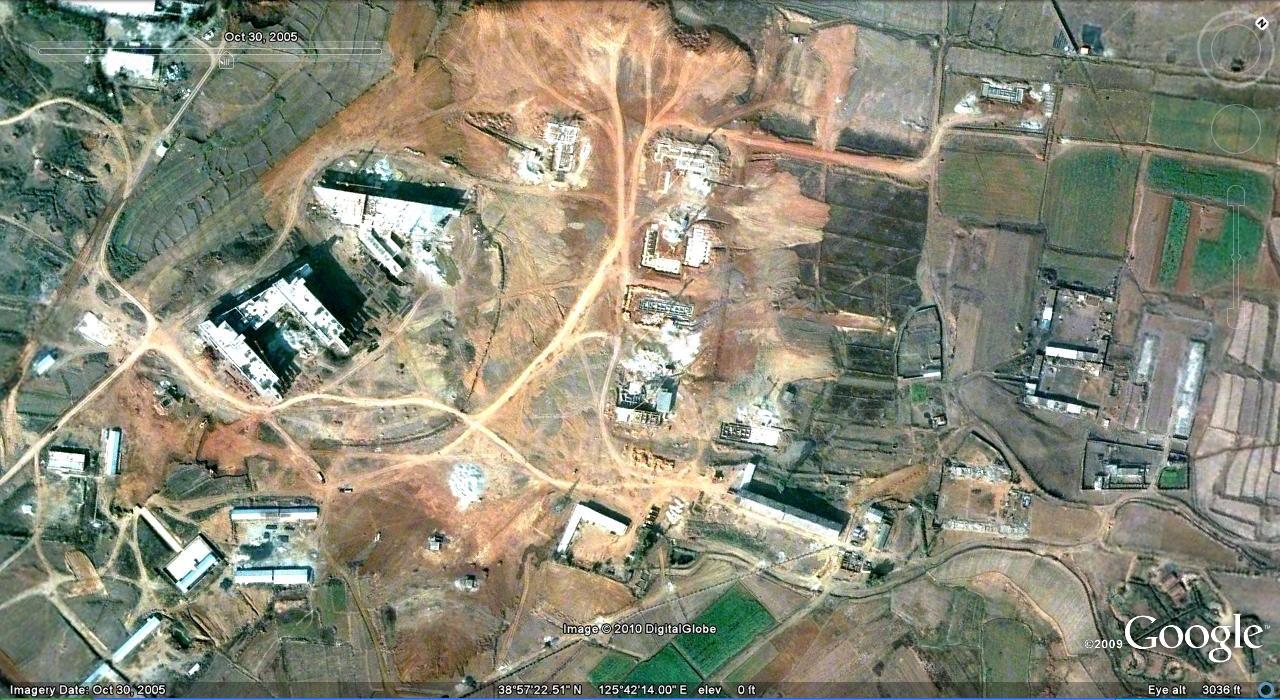
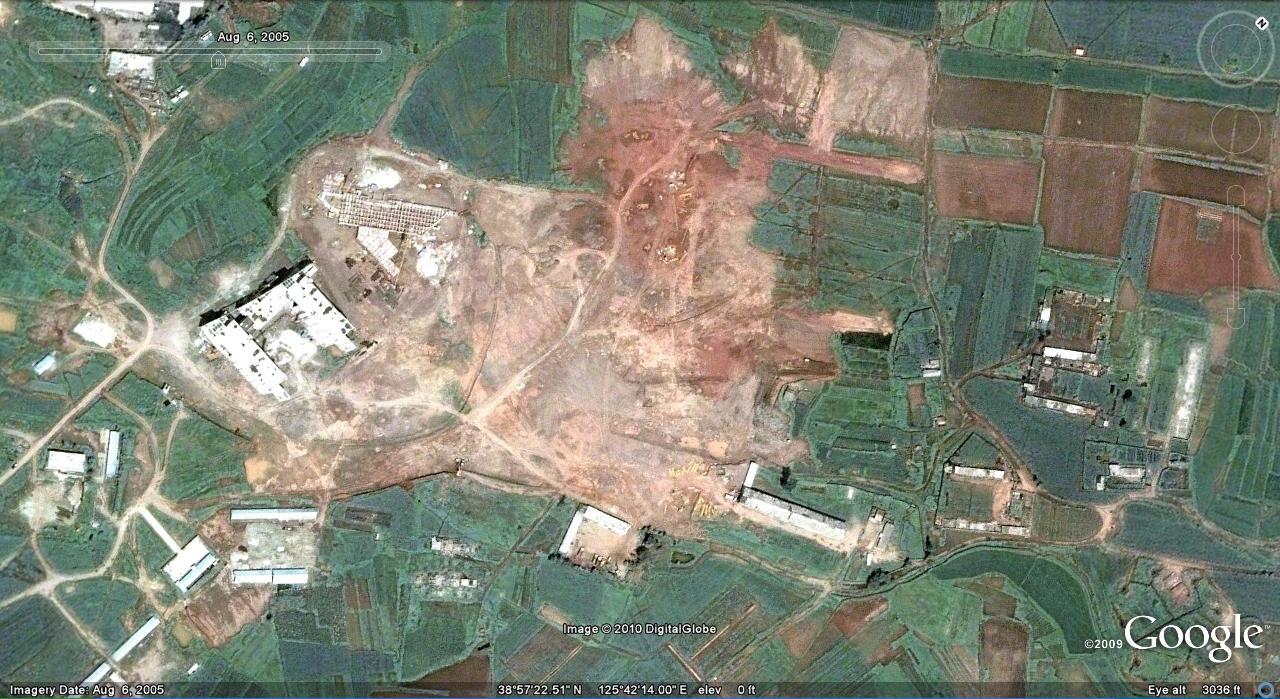
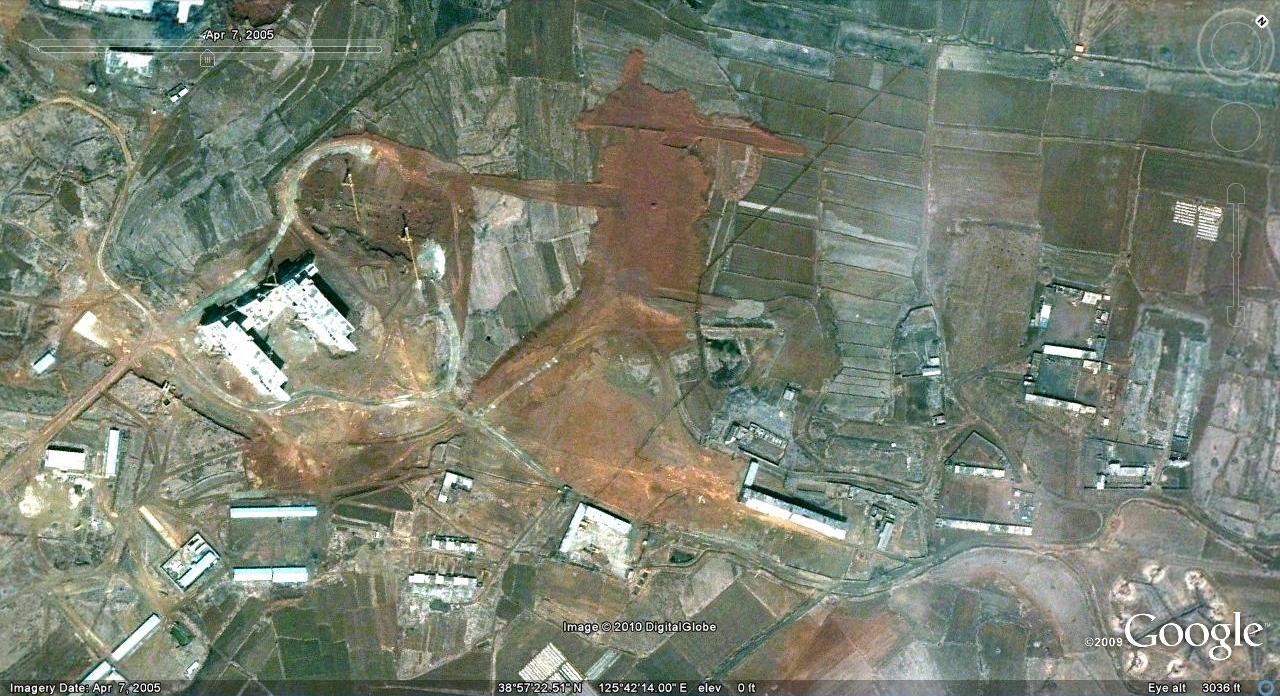
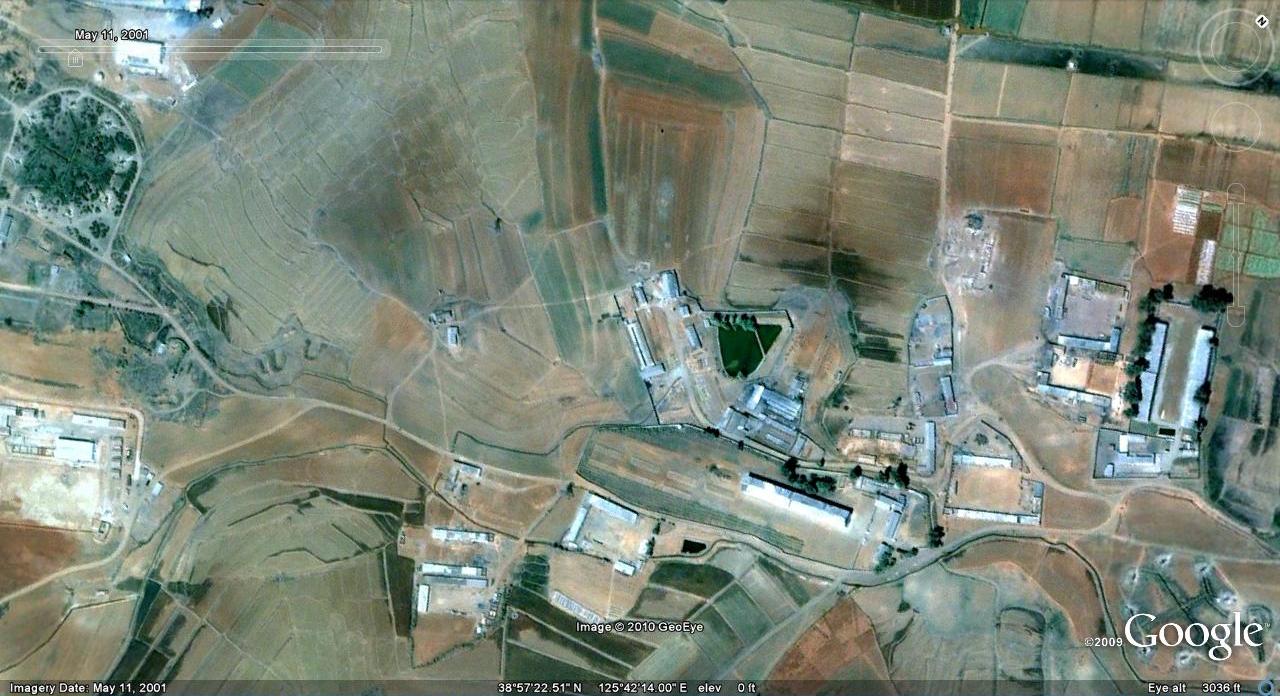
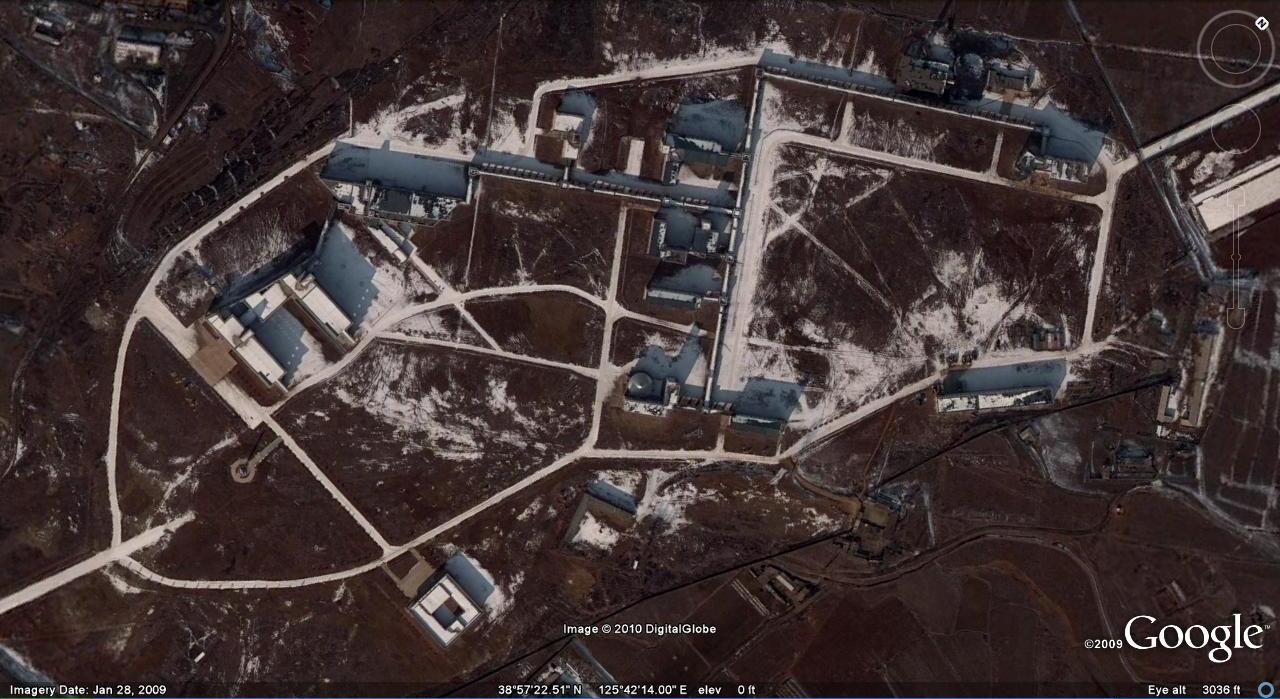
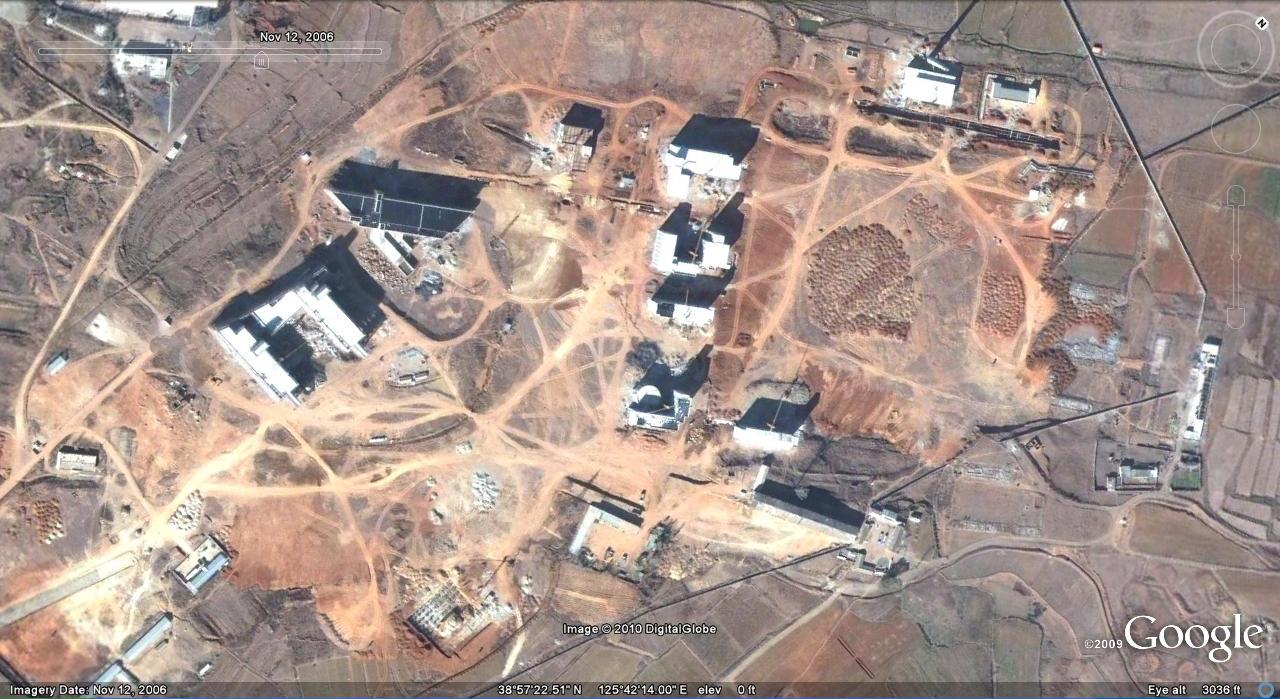
Google has updated satellite imagery of Pyongyang so there are some interesting developments to point out.  I will spread these out over the next few days, but I thought I would begin with the Pyongyang Univeristy of Science and Technology.

Here is imagery of the university’s construction in reverse chronological order:

January 28, 2009
2009-1-28-pust.JPG

November 12, 2006
2006-11-12-pust.JPG

October 30, 2005
2005-10-30-pust.JPG

August 6, 2005
2005-8-6-pust.JPG

April 7, 2005
2005-4-7-pust.JPG

May 11, 2001
2001-5-11-pust.JPG

If you open all the images in the same browser you can view them as overlays.

Here is the university’s Wikipedia page.

Here is a video on Youtube.

Here are previous posts about PUST.

Share

Behind the ecenes in North Korea’s markets

March 27th, 2010

According to the Daily NK:

In recent days there has been a sudden decrease in both food prices and the North Korean won-dollar exchange rate, so people are looking at the activities of middlemen wholesalers, the lynchpin of the North Korean market economy, in more detail.

These wholesalers, who had been watching the market situation and waiting for the new currency to stabilize, are now making their move. The markets reopened in February, and restrictions on foreign-currency use have been eased. Rice prices, which had skyrocketed to more than 1,300 won per kilogram in late February, have reportedly fallen back below 600 won as the food which these wholesalers were hoarding entered circulation.

Meanwhile, the North Korean authorities’ plan, to take back control of the economy, came to nothing as they faced a hyperinflationary spiral. Currently, the economy seems to have simply returned to the pre-redenomination period, with markets providing most of the needs of the people, and wholesalers providing products for the market.

Until the early 1990’s, commercial distribution in North Korea was managed by executive fiat. The Ministry of Commerce of the Cabinet commanded the supply chain across the whole country via the works of the National Planning Commission. There was a central wholesale center, a commercial management center and a district wholesale center in each province, and a commerce management center in each district. The state maintained a pyramid control system beneath which each district managed its own commercial spaces.

According to size, these were classified into stores and booths, and into “general” and “special” according to the items sold.

However, after the famine of the 1990’s, state distribution ceased and North Korea’s national commercial network lost its capacity to function. From then on, North Korean people started obtaining their food and basic necessities through private distribution networks, and the jangmadang was spontaneously born.

This private distribution network soon came to include a small quantity of consumer products, so called “August 3 products,” produced in small industrial enterprises and circulated in the jangmadang, and foreign, mostly Chinese, products imported with the profits of trade.

Then, after the July 1st Economic Management Reform Measure of 2002, provincial factories that produced consumer goods started bartering between themselves. During this process, the distribution system expanded and the number and scale of the wholesalers expanded with it.

A cornucopia of items, from welding rods to belts, cotton yarn to copper wire, bearings and the nuts and bolts needed in factories and enterprises were traded through these wholesalers. A paper mill which needed 10kg of welding rods, for instance, could barter 20 notebooks for them. In order to exchange soap for 10kg of welding rods, 10 bars of soap were required. In the case of soju, a traditional liquor in both Koreas, two or three liters was needed.

Provincial factories also traded their production in order to earn the necessary funds to purchase needed materials and run the factories. This was done with the approval of the state through the five percent of booths in the markets allocated to factories after the July 1st Measure. Also, it was possible because the authorities permitted the by-products of regular production to be used for handicraft production, and factory workers to sell 30 percent of production in the market.

Under the changes, the wholesalers were classified into larger ones, called “vehicle traders,” smaller ones called “runners,” and retailers representing booth merchants. They shouldered the burden of providing North Koreans all over the country with their basic necessities.

These middle men wholesalers, known colloquially as “big hands,” get their stocks through trade with foreign currency-earning enterprises. They sell the products to “runners” or directly to stores. Big hands are mostly overseas Chinese, Korean Japanese and the families of those working in foreign currency-earning businesses.

Members of the Party administrative apparatus are another kind of middle wholesaler. It is impossible for them to officially run a business in the markets, so they earn money through middle wholesale after work. They make a huge amount of profit by buying products from factory enterprises at the state price and selling them at the market price. They also sell products accumulated through bribery.

“Runners” who obtain products from the wholesalers travel the different regions of North Korea and sell them to booth retailers. Making a profit through market price differences between regions, they sell those products to retailers at a price 30 percent to 40 percent higher than the price they paid.

One defector, who ran a “runner” business between Chongjin in North Hamkyung and Sinuiju in North Pyongan, bought fabric from traders in Chongjin and sold it in Pyongsung in South Pyongan. With the money earned in Pyongsung, he bought products and sold them in Sinuiju. He went along this same Sinuiju-Pyungsung-Chungjin route back and forth. He was like an 18th century Korean peddler.

Talking of his experiences, he said, “When travelling by train, I could usually make a 30 to 40 percent profit. But there wasn’t much left after paying the necessary bribes.”

When he bought fabric in Chongjin, he paid about 500 to 550 won (in old currency) per meter. When he sold that fabric to retailers in Pyongsung market, they paid him about 800 won per meter. He made about 300 won per meter, but he spent half the money on bribes paid to gatekeepers; for documents, to army troops in charge of trains, and to train inspectors during the process of issuing travel certificates or riding the train. He also had to pay for his board and lodgings, so the final profit he made was less than 100 won per meter, he explained.

Runners like that, going between North Pyongan and North Hamkyung, usually distribute things like fabric for shoes that traders bring across the border or in through Rasun. A runner usually carries between 150 and 200 kilograms of products. When travelling on the train, one person can only carry one or two backpacks-full, because anyone carrying too much baggage will be the target of inspection and have to pay bigger bribes.

Products transported by runners are sold to retailers in the markets. Retailers sell those products at a price 20 to 30 percent higher than the original price. Therefore, the fabric Kim conveyed was sold to the final consumers at approximately 1,000 won per meter.

It seems that the figures North Korean authorities wanted to eradicate via the redenomination were these middle wholesalers, the big hands. For primary producers, paying them with adequate rations and money alone could have wrestled back state control. Retailers, meanwhile, could be controlled by locking up the markets. However, the persistent viability and energy of the middle wholesalers was uncontrollable. This is primarily because low and middle-ranking authorities are working in total collusion with them.

Now, middle wholesalers who survived the carpet bombing of the North Korean authorities, such as the 100:1 currency exchange rate, the exchange limit of 100,000 won and the restriction on usage of foreign currency, are getting ready again. The second round between the North Korean authorities and middle wholesalers with the market as its stage is about to begin. It will be interesting to see how those middle wholesalers who have grown strong will react to the actions of the North Korean authorities.
Wholesalers at Forefront of Market Battle
Daily NK
Yoo Gwan Hee
3/27/2010

Share

Friday Fun: Centre Forward and Mass Games photos

March 26th, 2010

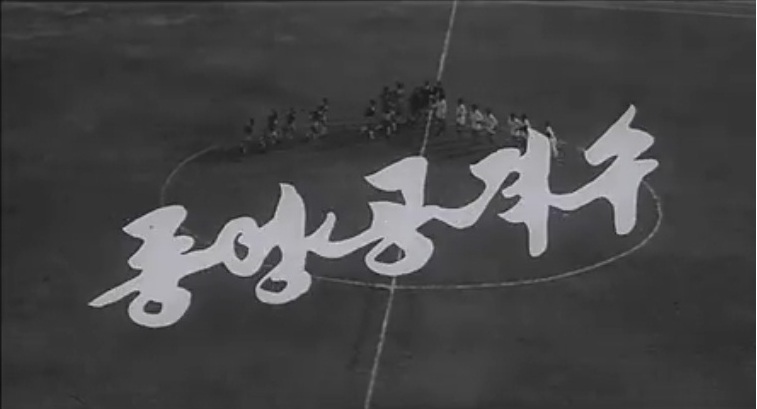
Koryo Tours is distributing the North Korean film Centre Forward–a film which “critics are already hailing as the best North Korean-themed football movie of all time”.

centre-forward.jpg

See the trailer you YouTube here.

See the trailer on Youku (PR China) here.

You can order the film directly from Koryo Tours by email: [email protected]

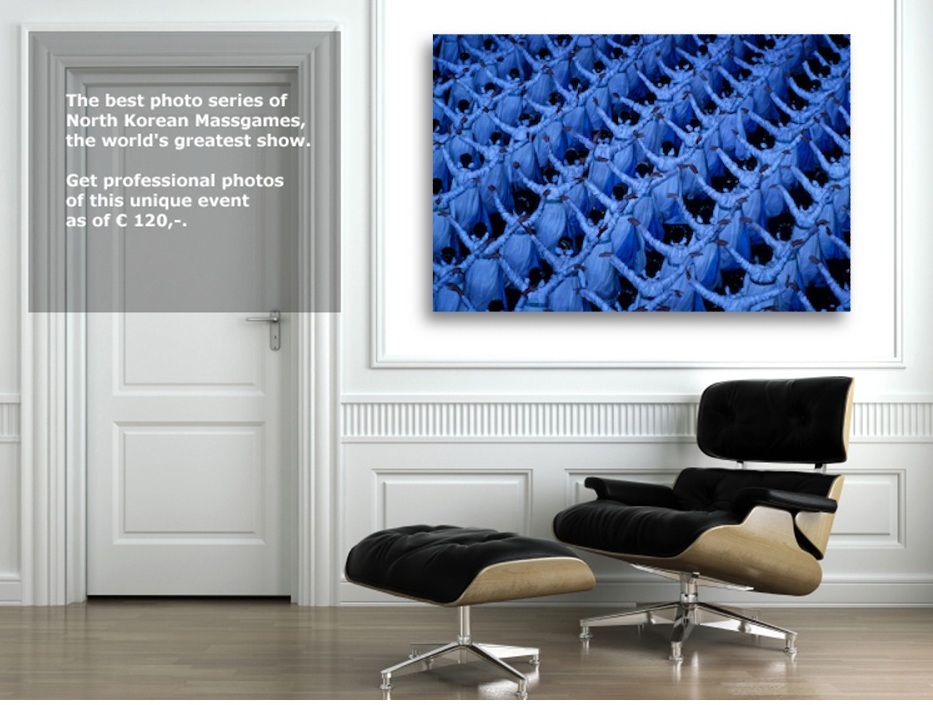
Also, photographer Werner Kranwetvogel worked with Nick Bonner to produce high quality photography of the Mass Games:

mass-games-photos.jpg

See more about his work here.

Share

Economy stabilizes before Supreme People’s Assembly meeting

March 26th, 2010

Institute for Far Eastern Studies (IFES)
NK Brief No. 10-03-24-1
3/24/2010

It has been reported that food prices in North Korea have leveled out in the latter half of March. An informant from North Hamgyeong Province told Daily NK on March 21 that “nonglutinous rice is 950 Won (per kilogram), corn is 220 Won (per kilogram), and pork is 1,800 Won (per kilogram).” The same source stated that prices in the Onseong town market, Namyang Market, prices were similar. It appears that the prices have dropped because of the increase in overseas food assistance to the North and the fact that emergency rations are now being sold on markets.

Of course, there is no guarantee that the current prices will hold steady in the future, and there is no shortage of people voicing concerns that with the spring lean season approaching, rising food prices and instances of starvation could be unavoidable. On February 4, North Korean authorities dictated that rice could not be sold for more than 240 Won/Kg, and that corn must be sold for 130 Won/Kg or less. Along with the fall in the cost of rice, foreign currency exchange rates also appear to be falling. On March 21, the Yuan traded for 100 Won, and one dollar sold for 720 Won.

According to Daily NK, in the Nammun Market of Hyeryeong city, glutinous rice sold for 900 Won/Kg, while corn went for 500 Won/Kg. On the 13th of last month, (polished) rice cost 1,200 Won/Kg, while corn sold for 550 Won/Kg. The exchange rate was 1 Yuan:120 Won and 1 USD: 1,00Won.

On March 20, the Korean Central News Agency reported that the second session of the North’s 12th Supreme People’s Assembly would open in Pyongyang on April 9. While the agenda was not revealed, the assembly meets each spring, generally to settle the previous year’s budget and set the spending schedule of the current year. There is no reason to believe this year would be different.

At this assembly meeting, it is also likely that new members of the National Defense Commission, Cabinet, and other high-level administrators will be sworn in. In particular, with the aftermath of failed currency reforms and growing reports of starvation throughout the country, there will likely be new economic measures introduced along with the replacement of some officials.

Share

Foreign exchange and smuggling again prevalnet in North Korea

March 26th, 2010

Institute for Far Eastern Studies (IFES)
NK Brief No. 10-03-22-1
3/22/2010

Foreign currency swaps and illegal trade are again prevalent in North Korea, despite recent currency reforms and bans on money exchanges.

Following last November’s currency reform, there has been a significant crackdown on the use of foreign currency and cross-border trade by individuals. However, reports indicate that North Korean traders continue to conduct business with outside entities, despite new regulations requiring them to remit profits through the Korean ‘Kwangson’ Bank. There has been a crack-down on unauthorized transactions, but it appears to have been ineffective.

The Korean Central Bank and Chinese People’s Bank established the Kwangson Bank in 2004 in Dandung as part of the North’s efforts to earn foreign capital. Even today, North Korean authorities rely on the Kwangson Bank to handle trade accounts, but most North Korean traders despise using the bank, and conduct most of their transactions privately, avoiding authorities. This is because the bank has a reputation for seizing the profits of private traders. The official decision to funnel foreign funds through the Kwangson Bank was part of the effort to crack down on smuggling, and was in conjunction with other currency reform efforts.

Economic reform attempts included crackdowns on illegal activity for a short time, but black market currency trade and smuggling has again become commonplace. Reform efforts were aimed at reducing unregulated and illegal trade by requiring transactions to be carried out through a government bank, but the costs associated with such a transaction further encouraged black market activity.

It also appears that currency exchange, banned as part of last year’s currency reform, is now again being allowed in order to ease rising prices and other detrimental side effects of the measures.

In North Korea, not only traders, but also average citizens are earning foreign capital through smuggling and other means. The latest reversal of policy to again allow currency exchange is seen as an attempt by authorities to sooth rising discontent within the masses.

In November of last year, North Korea implemented currency reforms and issued new notes, devaluing the currency by 100:1 and banning private holdings of foreign currency. This led North Koreans to lose faith in the value of their currency and sparked a drive on foreign monies. Now, the government appears to be implementing measures to underscore the value of the Won and to stave off inflation. Foreign visitors are allowed to again spend foreign currency and it appears that other restrictions are slowly being lifted.

Share

Bermudez publishes KPA Journal, Vol. 1, No.3

March 25th, 2010

kpa-journal-3.jpg

Joseph Bermudez, military analyst for Jane’s Intelligence Review and author of The Armed Forces of North Korea, has published the third issue of his very fascinating KPA Journal.

Click here to download the full issue (PDF)

Chapters include: KPA Engineer River Crossing Units During the Fatherland Liberation War (Part 3), The Scud B SRBM in KPA Service, A ‘Type’ KPAF Fortified SAM Base. 

Bermudez Comments in the Journal:

With this issue I’ve concluded coverage of the KPA’s engineer river crossing units during the Fatherland Liberation War. I would like to thank all the readers for their positive comments concerning this series of articles.  As I mentioned in issue No. 2 I will follow up this series with some coverage of KPA underwater bridges and bridging equipment.  Which issue they will appear in is presently uncertain.

A number of readers have asked if I will be writing anything special for the 60th Anniversary of the Korean War this June.  I haven’t yet decided upon a topic for the June issue, but would like to hear from what you the readers might be interested to see.  Readers might be interested to know that I had written a history of the KPA’s 17th Tank Division during the war and submitted it to Armor for publication with the hope that it would appear in the May-June issue.  Unfortunatley their publication  schedule is already full.  They have, however, accepted it for publication in a future issue.  When that occurrs, I will inform the readers of KPA Journal.

In response to a number of reader’s requests I will be preparing several articles, or photo essays, on KPA tanks and armored fighting vehicles. I hope to have the first in time for the next issue. 

I am making slow progress on the KPA Journal website and I hope to have it up in a month or so.  I will let the readers know when it goes live.

Finally, all readers are encouraged to share ideas of what you would like to see in future issues of KPA Journal.  As always I would like to thank you all for your encouragement and support.

You can download previous issues of KPA Journal here.

Share

Building a New Elite for the Post-Kim World

March 25th, 2010

Daily NK
Andrei Lankov
3/25/2010

When considering the future of North and South Korea, we can see that the time has come to raise an alternative elite, the kind that meets the expectations of the modern world and has no relationship with the Kim Jong Il regime.

But since it is impossible to participate in any political activity or gain a great deal of knowledge while inside North Korea, this kind of elite can only be formed in South Korea. For North Korean intellectuals with a sense of the modern world, South Korea is a base from which they can go into action and even receive an education. The birthplace of the alternative elite is the defector community in South Korea.

In 2010, the number of defectors in South Korea reached 20,000. The number of defectors is growing, and their social backgrounds are very different from those who escaped in the 1990s and after. Most of the defectors who crossed over to South Korea in and after the 1990s were farmers, laborers and soldiers. Being realistic, it is difficult to view them as talented people who could have been converted into an alternative elite.

However, there are a growing number of exceptions now. First of all, there are intellectuals among the defectors. Secondly, there are quite a lot of people who are young, talented and eager to get educated. The number of juvenile defectors who need to be educated in South Korea has now reached 1,800.

We can view the North Korean intellectuals living in South Korea as an existing alternative elite, and they have a great deal of potential. In Eastern Europe, the activities of dissident writers contributed a lot to the changes in their society. For example, in the cases of Poland and Hungary between the 1960s and 1980s, many of the most popular artists were in exile or intentionally avoided cooperating with the government in their own countries.

Their literary pieces did not always directly criticize communism, but they challenged the outlook the government forced upon the people and honestly described its internal contradictions. From 1970, it became common sense that a writer who obeys his or her government cannot produce meaningful work.

Among the defectors in South Korea today are writers, poets, journalists and people working in the movie industry. But most of them find it difficult to continue their creative lifestyles. The experiences that are the themes in their work are, of course, close to the reality of North Korea. However, it is a matter of regret that South Korean mainstream society is indifferent to both North Koreans and their experiences. Under such conditions, works that deal with North Korean life are not marketable. This is why North Korean artists cannot make a living in creative activities without external support.

There are various ways to support them. Giving financial support to North Korean writers, supporting magazines and publishing companies that publish their work and promoting exhibitions by North Korean painters are just some of the examples. Broadcasting stations for North Korea such as Free North Korea Radio can act as a base of financial support for the alternative elite.

While it is important to help North Korean elites, however, it is more important to pursue the formation of a new North Korean elite group. Intellectuals who were educated in North Korea know well about the reality of the country, but they face a lot of obstacles in learning modern knowledge. On the contrary, young North Koreans can learn about world class technology and knowledge when educated in South Korea.

But I find a lot of problems when I listen to the experiences of defectors studying in South Korean universities. Most either quit school or are regularly absent. Of course some leave school because of a lack of ability, but for many of them the reason why they do not graduate does not have anything to do with their ability at all.

Instead, North Korean university students who are admitted to South Korean universities face too difficult a challenge. First of all, despite the fact that they went to middle school and high school, the facilities and education standards of North Korea are far behind those of South Korea, with the exception of a few privileged schools. Secondly, most of them couldn’t get access to any kind of education while they were in China after defecting. Thirdly, the social culture and school culture they are used to is different from that of South Korea.

However, the most important obstacle they face is the different content of the education. Most of what they learn in North Korea is lies, worthless in the modern world. For example North Korean students learn a lot about the Kim family, but such knowledge is not helpful in any way.

On the contrary, there is a lot of knowledge that North Korea does not teach, but is thought of as basic knowledge in the modern world. For example, most North Koreans cannot speak English or use a computer. Kim Chul Yong, the vice director of the movie “Crossing” said, “whatever you learned in North Korea, it is always better to learn it again in South Korea.” This is correct. So in order to adjust to school life, North Korean university students have to work much harder than South Korean students. Therefore, even if North Korean students are talented, it is difficult for them to excel in South Korean schools.

We can also see how difficult it is for North Korean students to study when we consider the economic status of defector families. The income of a North Korean family is about 50 percent of that of a South Korean family. This forces them to put more effort into making a living than studying hard, and those defectors who could serve as the future elite cannot focus on their studies because they have to support themselves.

This is why we should consider providing scholarships for defector students. Current scholarships support them only with tuition fees. However, considering the financial problems North Korean students suffer, that is far from enough. Not all the defector students should receive living expenses and scholarships. It is a better policy to provide opportunities to those students who are determined to perform the role of future elite.

This method is not only economic, but it also encourages them to study harder. 25 to 30 percent of the whole defector student community would benefit. Of course, in order to select nominees objectively, there should be well-organized evaluation standards with grades and an interview at their core.

It would be a good idea to provide those top students with a living expense subsidy of 400,000 won to 500,000 won a month and a scholarship for graduate school. This program is not a big pressure. Scholarships could be provided by the government, but there will be only about 100 students who deserve the scholarship in the whole country, so any foundation or social organization would be able to support them, too.

Part 2: The Many Tasks of the New Elite (3/30/2010)

The subject North Korean students find most difficult to learn is English. Defector students never encountered English in North Korea, whereas Korean students who learn English in schools and academies have a lot of experience. It is almost impossible for defectors to catch up with them. Not having reached a reasonable proficiency, they cannot search in English textbooks and therefore find it difficult to get a job after graduating. Therefore, it is an important task to establish a special English institution for defectors that can provide them with appropriate English education. Financial problems could be taken care of with the support of foreign countries that are interested in defector issues.

Of course, studying abroad is the most efficient way of studying a foreign language. It may be difficult for defector students to support themselves, but there is a fairly economic way of supporting them. The United States or Australia would be unaffordable, but the Philippines is an economical and efficient country in which to study English. $6000 to $7000 per semester would be more than enough to study in the Philippines, including tuition fees, living expenses and plane tickets. Of course, talented and determined candidates should be selected. It would not be too much of a burden to pick 10 to 20 defector students who have done well in standardized tests such as TOEFL and send them to the Philippines.

Such a program could be sponsored by organizations and individuals if government support were impossible. It is only right and noble for high-income earners who have achieved a successful life after overcoming hardships to help those North Korean students who face the same challenge they faced in the past.

The obstacles defector students have to overcome are not just financial issues and English. Lack of knowledge about South Korean society also makes it difficult for defectors to build a successful career. They are not familiar with working procedures, so it is difficult for them to get a job. Also, it is difficult for them to find out what issues they have to focus on at school. This is another reason why getting a job is difficult for them. Providing defector students with a lot of opportunities for internships at corporations would be good.

The biggest problem defector students face when they are hired by a Korean corporation is adjusting themselves to the community. Through internships we can give them experience of what role they have to take and what kind of work they have to do, which will help them understand the cultural differences and adjust to them.

But what is the purpose of forming such an alternative elite? And what are they supposed to do in the future?

More than anything, as long as the Kim dictatorship survives without any significant changes, the alternative elite has a mission to exert influence on North Korean society and spread a critical social consciousness about the Kim dictatorship. Through various routes such as broadcasting stations for North Korea, they should let the North Korean people know their opinions from different places in the world.

Also, due to the spread of cell phone usage, most defectors maintain contact with their families and relatives in North Korea. Defector students who have received a good education and adjusted well to Korean society can explain that Korean society to their families in North Korea more accurately.

Secondly, if there is a sudden change in North Korea, they have the potential to perform various tasks. Defectors who took part in the North Korean democratization movement in South Korea are considered future politicians and high class administrative officers in the new North Korea. In a ‘post-Kim age,’ after the Kim regime, if there is a small number of or no such people at all, those with power will be former Workers’ Party authorities or South Koreans. Considering their backgrounds and values, they cannot lead North Korean society or gain the trust of the North Korean people. Therefore, it will be difficult for them to represent North Koreans and be their protecting power.

Alternative elite members who can apply the knowledge they learned in South Korea well in the North Korean reality could be doctors, technicians, CEOs and scholars of a post-Kim age. Re-education could cultivate specialists in the new North Korea. Despite the very low economic level, North Korea provides a fairly good basic education. Therefore, when carrying out the rehabilitation of North Korea, re-education based on the knowledge they already have is more reasonable than educating North Korean specialists such as technicians and doctors all over again from the start. An alternative elite which received a university education in South Korea and has experience of working in a modern environment with modern technologies is one which can accomplish the most in re-education.

Thirdly, there is a possibility that the North Korean regime might not break down for a long time. In this case, the alternative elites could perform an important social role in South Korea.

Regardless of the future of North Korea, there is no doubt that the number of defectors will constantly increase. 10 years from now, it is certain that the number of defectors in South Korea will exceed 50,000. Even 100,000 is possible. Therefore, issues of defectors adjusting to South Korean society will continuously be important.

Defector elite persons who graduated from prestigious universities in South Korea and succeeded will be role models to young defectors. Their experiences can prove that North Koreans do not necessarily have to be blue collar workers for good, and open a new path to future defectors.

Watching the movement of the North Korean authorities, it is certain that they are against reform and an open-door policy, and that they have decided to maintain the anachronistic Stalinist system. Such a strategy can delay the end of the Kim system, but at the same time it sharpens its crisis.

It is difficult to prepare for internal turmoil because we, as of now, cannot know specifically when and how the end of North Korean system will take place. However, no matter what happens to North Korea, an alternative elite who know about both North Korean and South Korean society and are not guilty of pro-Kim acts will be helpful in preparing for internal turmoil. In fact, there are not many means of preparing for internal turmoil which cannot be specifically predicted. But pursuing the formation of an alternative elites is one of the important means.

Such a program is cheap, but it needs to be installed over a long period of time in order to achieve any result. There seems to be no political will to systematically and continuously support such a program. Regrettably, just like other democratic countries, South Korean politicians are not interested in plans that do not seem to help them much in the next election.

So I am placing my hope in organizations and corporations rather than state institutions. But whether it is a state institution or a social organization, it is clear that the time has come to take such measures.

Share

Old Guard Returns to the Economic Fold

March 24th, 2010

According to the Daily NK:

Yun Gi Jeong, the 82-year old former Finance Director of the old Administration Council (now known as the Cabinet), has apparently been charged with resolving the crisis in the chaotic people’s economy.

Her elevation may represent an attempt to steady the ship following the disastrous currency redenomination and rumored execution of former economic boss Park Nam Ki.

The chair of a people’s unit in a neighborhood of Shinuiju told The Daily NK on Tuesday, “Prices have been fluctuating since the redenomination, but now a notice has been handed down from the Cabinet saying that they will be stabilized by April 1. It says the Cabinet will deal with this confusion in the people’s economy.”

He said that Yun Gi Jeong, who resigned her office in the Administration Council some years ago, had been brought back to the Cabinet to bring order to the chaos.

“Upon her return to the Cabinet,” the source added, “the rice price started dropping. It was over 1,500 won early March, but has now settled at around the 600 won level.”

According to his explanation, the North’s authorities intend to try and cap rising prices by April 1. The authorities released official price ceilings on February 4th; rice was 240 won and corn 130 won per kilogram, but these rapidly proved unrealistic.

Another source from North Hamkyung Province told the Daily NK yesterday, “When the rumor that they would restart distribution as normal came out, rice prices dropped drastically. As the news of Yun Gi Jeong came out, rice prices and exchange rates also went down. However, people still feel frustration at the fluctuating exchange rate.”

Yun Gi Jeong was born in Seoul in 1928 and served as the Finance Director of the Administration Council for almost 20 years from April, 1980. After her resignation in 1999 she became the President of the National Economic Institute, and is now an honorary professor at Kim Il Sung University, a member of the Party Central Committee and a delegate to the 12th Supreme People’s Assembly.

One defector who was a high official in North Korea explained to The Daily NK today, “Yun Gi Jeong is a person who Kim Il Sung was in favor of. After he died, she stepped back from the economic field.”

He added, “She tends to stick to her principles and is known to be a workaholic. Kim Jong Il presumably asked her to solve the economic problems because she is an old hand in the economic field.”

Read the full article here:
Old Guard Returns to the Economic Fold
Daily NK
Jung Kwon Ho
3/24/2010

Share

North Korean Life: inside and out

March 24th, 2010

March 27, 11:30 a.m.-5 p.m. (Korean lunch will be provided.)
McShain Lounge in McCarthy Hall
Georgetown University
Washington, DC
RSVP and questions: [email protected] or 202-492-9631

Flyer here.

Have you ever imagined what life would be like living in the world’s most isolated country?  Moreover, have you wondered what it would be like to live as a North Korean under the ruling of Kim Jong-il?

Join us for a speedy synopsis of North Koreans life inside the reclusive country as well as a dialogue with two defectors about their escape and settlement in a new world beyond the reins of Kim Jong-il. Invest ONE afternoon and gain a fresh perspective of life inside North Korea.

For the detailed program and directions, please refer to the attachment.

This event is hosted by People for Successful Corean Reunification  and sponsored by Asian Studies Program at Georgetown University. PSCORE is a non-profit, non-religious, non-partisan NGO based in Seoul & Washington, DC. PSCORE strives for mutual understanding and harmony between the two Koreas and aims to provide a platform to discuss topics such as democratization, human rights and social issues. We hope to bridge the gap between South Korea, North Korea and the international community. We are not affiliated with any political organizations.

Read program flyer here.

Share

Reports of worsening conditions in DPRK

March 23rd, 2010

This week there have been several reports about conditions worsening following the DPRK’s currency reform.  Here are links to some of those stories:

New Signs of Unrest in North Korea?
Peterson Institute
Conversation with Marcus Noland (audio)
March 22, 2010

Resistance against N. Korean regime taking root, survey suggests
Washington Post
Blaine Harden
March 24, 2010

Political Attitudes under Repression: Evidence from North Korean Refugees
Stephan Haggard, Marcus Noland
East West Center Working Paper
No. 21, March 2010

North Koreans fear another famine amid economic crisis
Los Angeles Times
Barbara Demick
3/23/2010

North Koreans fear the country is on the verge of a new famine
Times of London
Jane Macartney
3/20/2010

According to the AFP, the US is ready to provide food assistance but the North Koreans banned assistance a year ago:

The United States would consider resuming food aid to North Korea if Pyongyang moves to lift a year-old refusal of humanitarian assistance, the State Department said Tuesday.

“There are profound needs for the North Korean population, and to the extent that North Korea wants to accept aid from the international community, including the United States, we will be willing to consider that,” department spokesman Philip Crowley said at a daily briefing.

In June 2008, Washington agreed to send 500,000 tonnes of food aid to North Korea, including 400,000 tonnes through the UN’s World Food Program and the remainder through other non-governmental agencies.

In March last year, however, the hermit nation began refusing US food aid, without offering a reason.

“If we (provide humanitarian assistance) in the future, just as we’ve done that in the past, our efforts will be to make sure that the aid actually goes to the North Korean people who need it most and is not diverted to other groups such as the military,” Crowley said.

Share