Mansudae Overseas Development Group Projects

June 23rd, 2010

According to the Daily NK:

North Korea has earned more than $160 million in the last ten years thanks to the construction of sculptures and other edifices in countries across Africa.

A Daily NK source in China revealed on the 18th, “Since 2000, North Korea has been earning colossal quantities of dollars through contracts for the Mansudae Overseas Project Group of Companies under the Mansudae Art Institute to construct sculptures.”

Mansudae Art Institute is an organization primarily dedicated to the idolization of Kim Il Sung and Kim Jong Il through public works, one whose construction of edifices such as the Juche Tower and Arch of Triumph in Pyongyang has added to the status of the country.

It has also been building revolutionary monuments in African countries such as Ethiopia since the 1970s in order to maintain cordial relations with socialist states, but in the early 2000s started doing work in African countries to earn foreign currency as well.

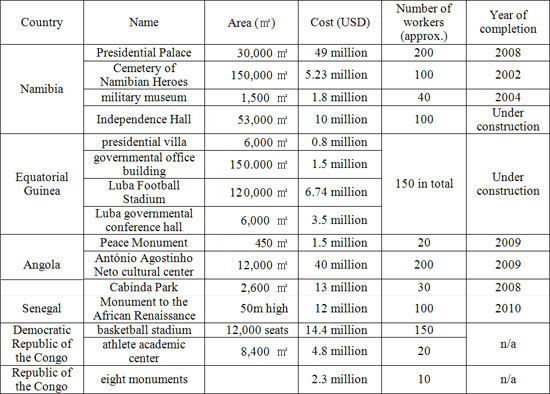
According to the source, North Korea has earned $66.03 million from Namibia alone thanks to the construction of the Presidential Palace ($49 million); the Cemetery of National Heroes ($5.23 million); a military museum ($1.8 million); and Independence Hall ($10 million).

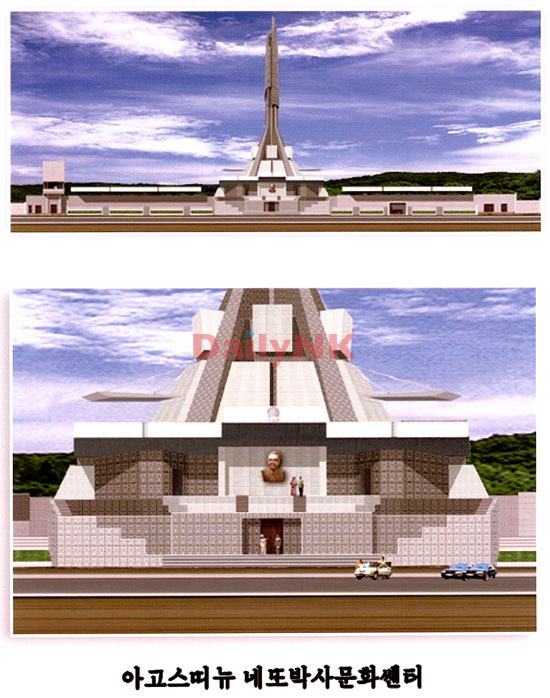
It has also earned almost $55 million from Angola via the António Agostinho Neto culture center ($40 million); Cabinda Park ($13 million); and the Peace Monument ($1.5 million).

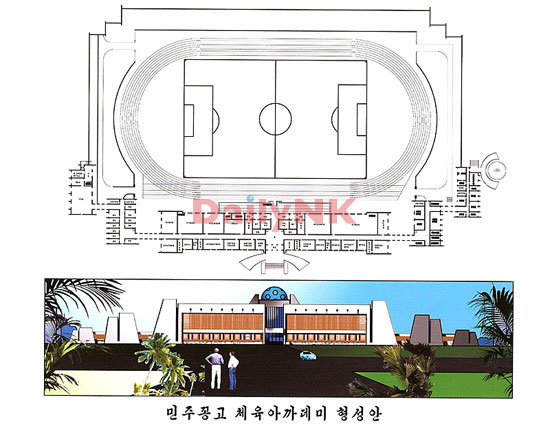
Additionally, the North has constructed a basketball stadium ($14.4 million) and an athlete academic center ($4.8 million) in the Congo, earning almost $20 million dollars in total.

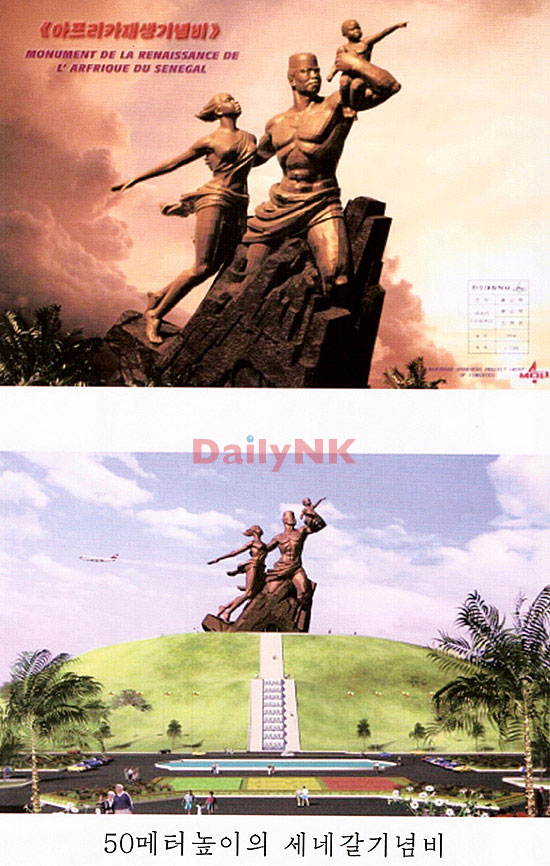
Thanks to the Monument to the African Renaissance in Senegal, the North has made another $12 million dollars.

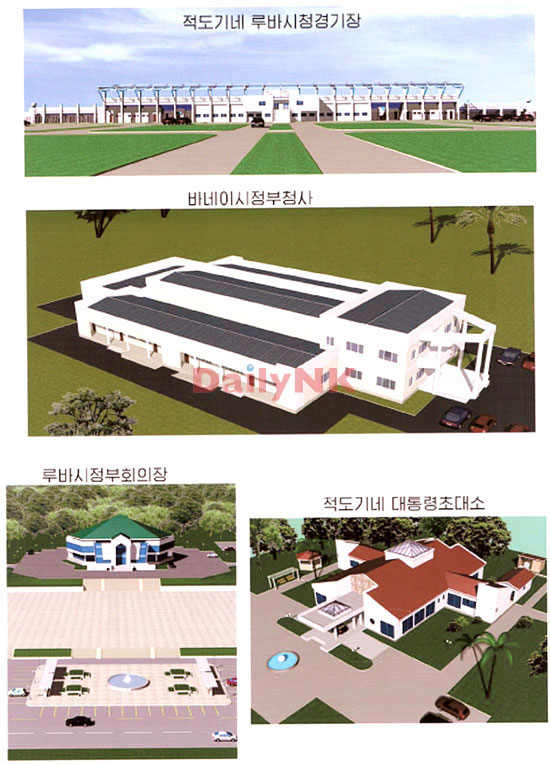
There are around 19.8㎢ set aside for a vacation spot for the president of Equatorial Guinea, which is supposed to earn Mansudae around $800,000, not to mention a government office building ($1.5 million), Luba Stadium ($6.74 million) and conference halls ($3.5 million).

The source also reported, “The money earned from these construction projects is managed by the No. 39 Department. Some of these dollars are used for domestic governance, while the rest go to secret accounts in Switzerland or Macau to become Kim Jong Il’s secret funds.”

Here are the images from the story including a table of financial data (which I would take with a grain of salt):

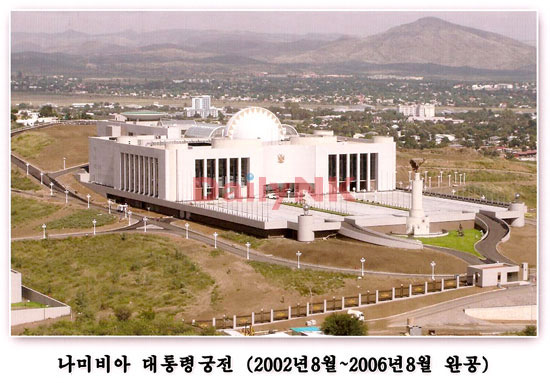
dnk-mansudae-1.jpg dnk-mansudae-2.jpg dnk-mansudae-3.jpg dnk-mansudae-4.jpg dnk-mansudae-5.jpg dnk-mansudae-6.jpg dnk-mansudae-7.jpg

Additional Information:

1. I blogged here about the Derg Monument in Ethiopia.

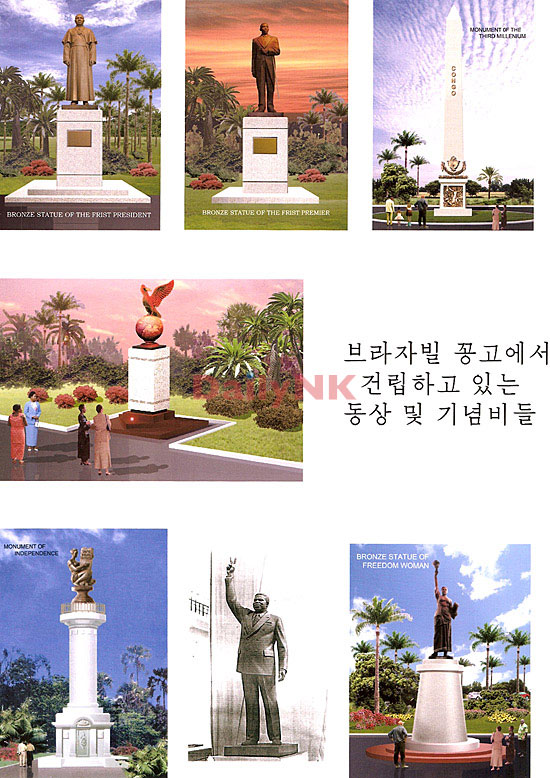
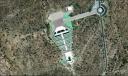
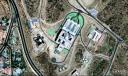
2. I have located some of the Mansudae Overseas projects mentioned in this story (as well as numerous other places not menioned in this story: Egypt and Syria, Zimbabwe, DR Congo). However, here are GeoEye satellite images of some of the Namibia and Angola projects mentioned above courtesy of Google Earth:  

Namibia National Heroes Acre (22°39’46.02″S,  17° 4’41.06″E):

national-heroes-acre-namibia-thumb.jpg

Namibia State House (22°35’28.83″S,  17° 6’2.76″E)

namibia-state-house-thumb.jpg

Cultural Center of António Agostinho Neto (Mausoleum) (8°49’24.73″S,  13°13’8.52″E)

angola-nehro-thumb.jpg


Share

Room (Bureau) 38 allegedly restored

June 23rd, 2010

According ot the Choson Ilbo:

North Korea in March restored a special department in the Workers Party codenamed Room 38 which manages leader Kim Jong-il’s coffers and personal slush funds, it emerged Monday. The North last fall merged Room 38 with Room 39, which manages party slush funds.

“Rooms 38 and 39 were merged to simplify Kim Jong-il’s slush funds,” said a North Korean source. “But when it became difficult to secure hard currency due to international sanctions, Room 38 seems to have been restored because there was a feeling that Room 39 alone can’t meet the need.”

Room 38 is reportedly led by Kim Tong-il, who heads three regional departments in charge of earning hard currency.

Room 39 tries to maximize earnings from gold and zinc mining and farming and fisheries. It also manages stores and hotels exclusively for foreigners in Pyongyang. Room 39 seems to have suffered badly due to the recent suspension of inter-Korean trade. “Taesong Bank and Zokwang Trading, which received remittances from Mt. Kumgang tourism, are both controlled by Room 39, and is also in charge of the exports of agricultural and fisheries products,” said a government source.

Kim Jong-il needs dollars to maintain the party elite’s loyalty to him and his heir presumptive. He is said to have told party bigwigs in February, “From now on I will judge your loyalty based on the amount you contribute to the fund.” His son Jong-un is also said to be amassing separate slush funds for his own use.

But international sanctions on exports of weapons, counterfeit dollars, fake cigarettes and drugs remain in place, and the United States is pushing ahead with additional financial sanctions over the North’s sinking of the South Korean Navy corvette Cheonan in March. Pyongyang was dealt a heavy blow in 2005 when the U.S. froze US$25 million in the Banco Delta Asia in Macao which was apparently for Kim’s personal use.

Kim earlier this year appointed his high school friend Jon Il-chun head of Room 39. Jon was also named chairman of the National Development Bank, established early this year with a view to conducting normal international financial transactions to induce foreign investment. “North Korea seems to be planning to divert part of foreign investment to Kim’s slush fund,” said a government official.

NK Leadership Watch has more

Read the full story here:
Kim Jong-il Restores Special Department to Swell Coffers
Choson Ilbo
6/24/2010

Share

DPRK promotes environemntal efforts

June 23rd, 2010

According to Reuters:

There are no private cars in North Korea and countless factory chimneys have not belched smoke in years, but state media said on Tuesday scientists were inventing new ways to cut air pollution and protect the environment.

The country “has directed a great effort” to research environmental protection, the state news agency KCNA reported.

“Researchers have developed a new material for removing exhaust fumes from automobiles so as to cut the greenhouse gas emissions and reduce air pollution 35-40 percent,” it said, without elaborating.

It also said “units” in the capital, Pyongyang, that caused pollution had been registered, suggesting that dirty industries were under pressure to get clean.

“They are now developing a gas and dust arrester necessary in production processes and new materials needed to secure environmental safety of products,” it said.

The isolated communist country’s state-run media periodically boasts revolutionary innovations in science and technology, despite a moribund economy and chronic food shortages.

Perhaps the most visible in recent years have been related to the relatively well-funded — and well-fed — military. North Korea has conducted two nuclear tests since 2006 and several missile launches, upsetting its neighbours.

North Korean scientists also invented a device using “locally available materials” to incinerate hospital waste, KCNA said, and the Environmental Protection Institute of the Ministry of Land and Environmental Conservation had intensified research into pollution-free vegetable production.

Here is the original KCNA story:

Scientific Achievements of Environmental Protection
 
Pyongyang, June 22 (KCNA) — The Democratic People’s Republic of Korea has directed a great effort to scientific researches for environmental protection.

Researchers have developed a new material for removing exhaust fumes from automobiles so as to cut the greenhouse gas emissions and reduce air pollution 35-40 percent.

They have also put the environmental management of industrial establishments on IT basis.

Meanwhile, they have registered units causing environmental pollution in Pyongyang and confirmed methods and procedures for preventing pollution. They are now developing a gas and dust arrester necessary in production processes and new materials needed to secure environmental safety of products.

Besides, they have invented a new device to destroy by fire such wastes from hospitals as contaminated injector and bandage with locally available materials.

Scientists of the Environmental Protection Institute of the Ministry of Land and Environmental Conservation have intensified a research in pollution-free vegetable production.

Read the full Reuters story here:
N.Korea says puts “great effort” into environment
Reuters
6/22/2010

Share

Japanese Firms Suspected of Selling North Korea Possible Missile Parts

June 23rd, 2010

According to Kyodo (via Breitbart):

Police are set to arrest two company presidents Tuesday on suspicion of illegally exporting to North Korea machines which can be used in the development of weapons of mass destruction, investigative sources said.

Fukuoka and Kumamoto police have decided to arrest the two in the Kyushu region, southwestern Japan, for the alleged violation of the foreign trade control law as the machines in question include a power shovel, which falls under Japan’s “catch-all control” regulation requiring export license, the sources said.

The Japanese government decided in May to strengthen coordination between its ministries to rein in surreptitious exports to North Korea in the wake of the sinking of a South Korean warship that Seoul has blamed on Pyongyang.

A power shovel is designated among items subject to the export control regulation as it could be converted into delivery means and launch pads for ballistic missiles such as Rodong and Taepodong missiles.

Earlier this month, a trader and his wife in Shimonoseki, Yamaguchi Prefecture, were arrested on suspicion of violating the foreign trade control law by illegally exporting cosmetics to North Korea despite a ban on the export of “luxury” items to the country.

Read the full article here:
2 firm heads to be arrested for alleged illegal exporting to N. Korea
Kyodo (via Breitbart)
6/22/2010

Share

Market stuff

June 21st, 2010

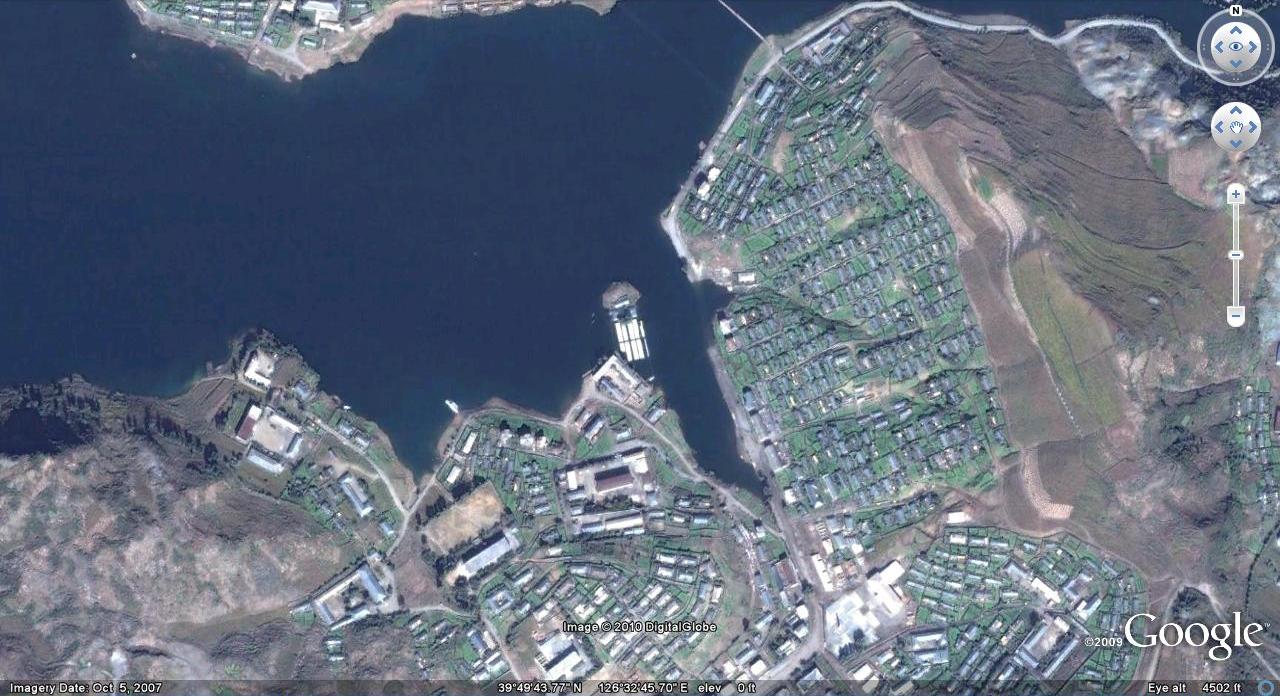
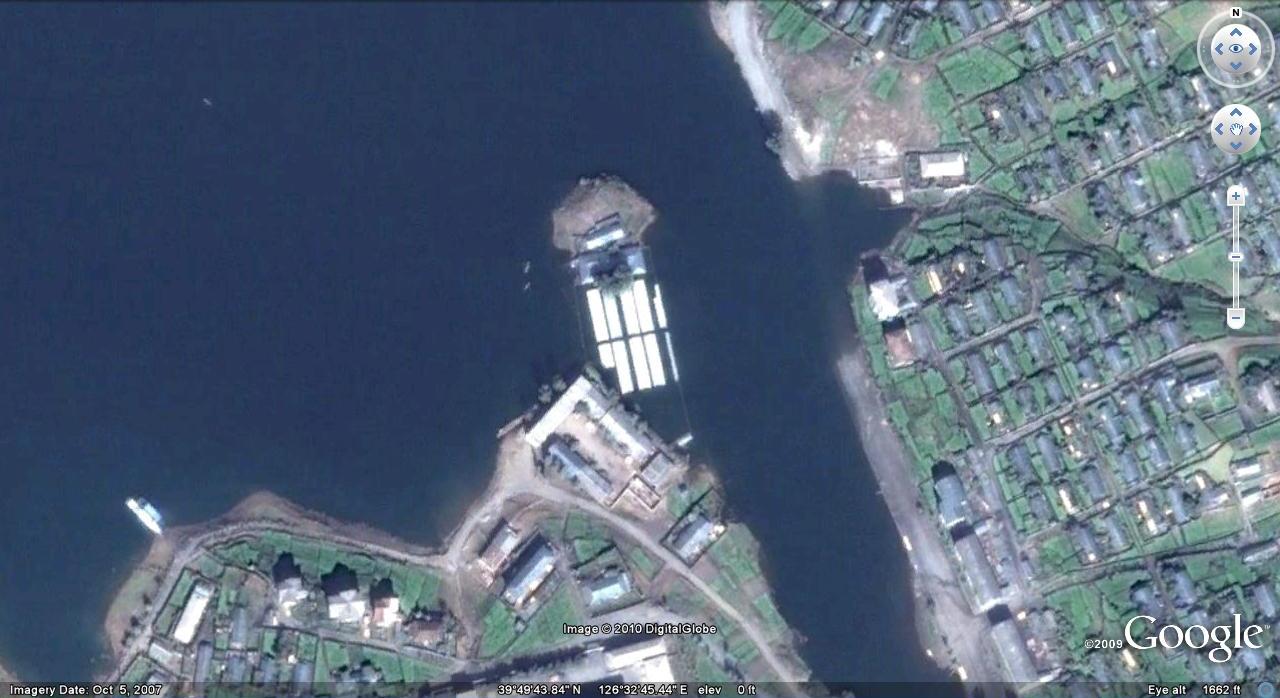
The North Korean government’s attempt to regulate and close wholesale markets has been well documented.  Reports at the time had indicated inconsistent levels of success.  If recent reports are true, however, market participants might have won a temporary reprive from Pyongyang’s edicts.  But the North Korean government might have successfully closed one market in the town of Nyongwon(녕원: 39.8288444°N, 126.5459556°E), or at least forced it to temporarily relocate, by flooding it.

2007-10-5-flooded-market-overview.JPG

2007-10-5-flooded-market-closeup.JPG

The problem seems to have been caused by the water level maintained by the Taedong River Dam in Tokchon (덕천).  Maybe the level of water in 2007 was unusually high.  There do appear to be several other facilities that are flooded.  However, we do not have enough satellite imagery to determine what happened.

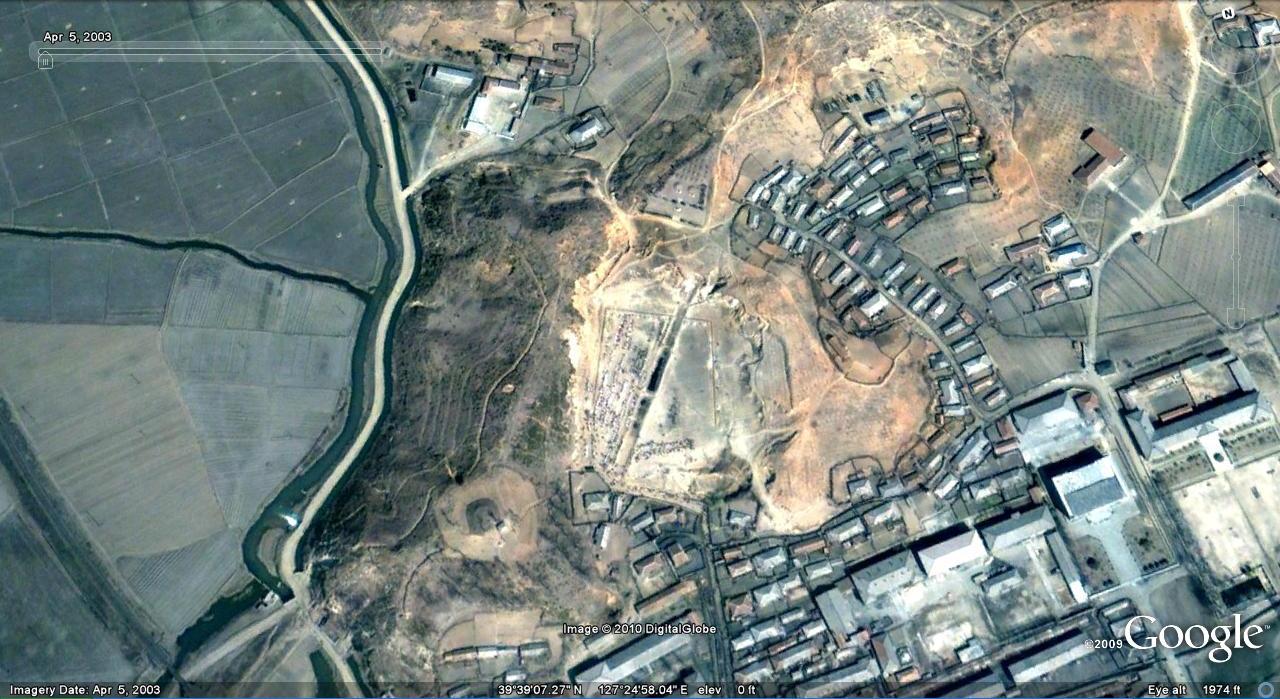
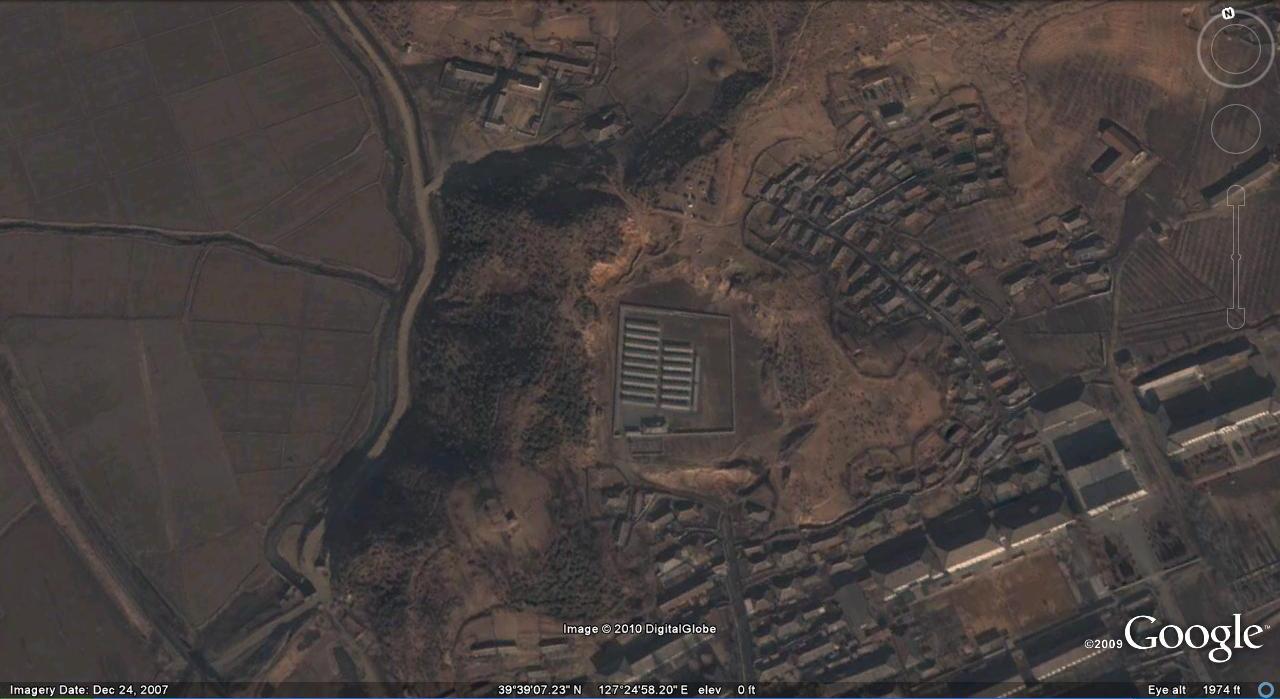
On a more positive note, we do have satellite imagery of the formalization of the Sinsang Market (신상: 39.6518138°N, 127.4163115°E).

2003-4-5-market-construction.JPG

2007-12-24-market-construction.JPG

The latter image above was taken on Christmas Eve 2007.

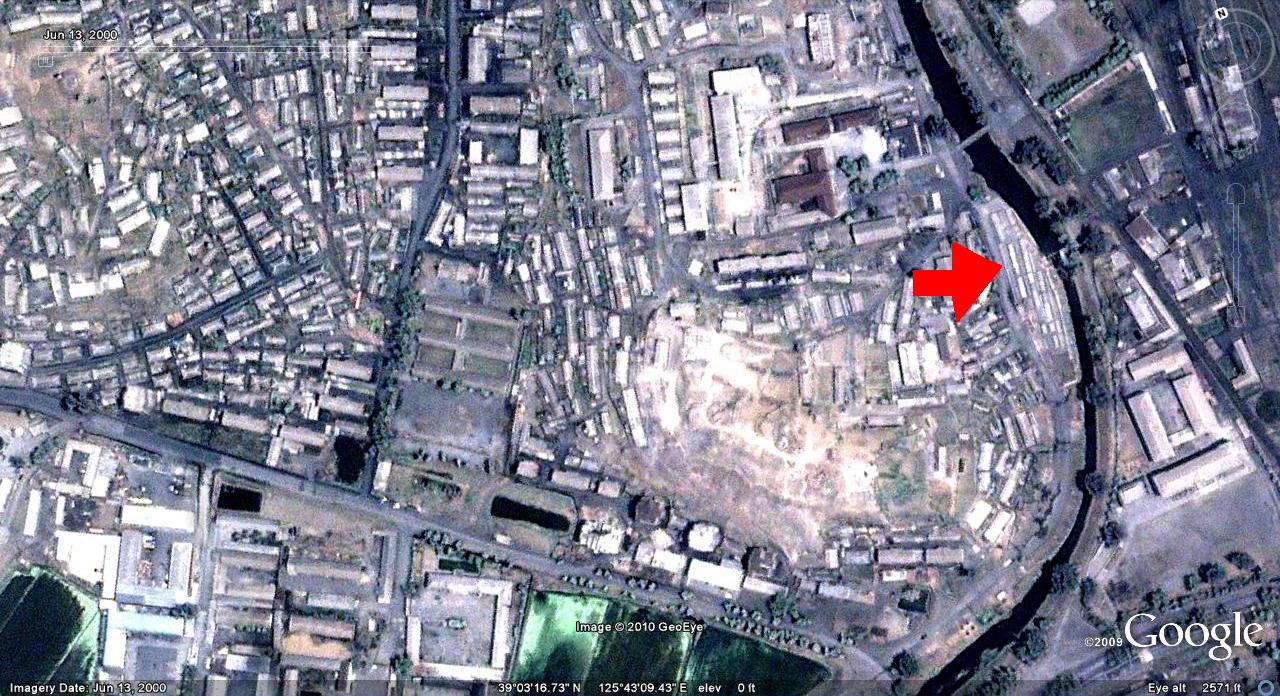
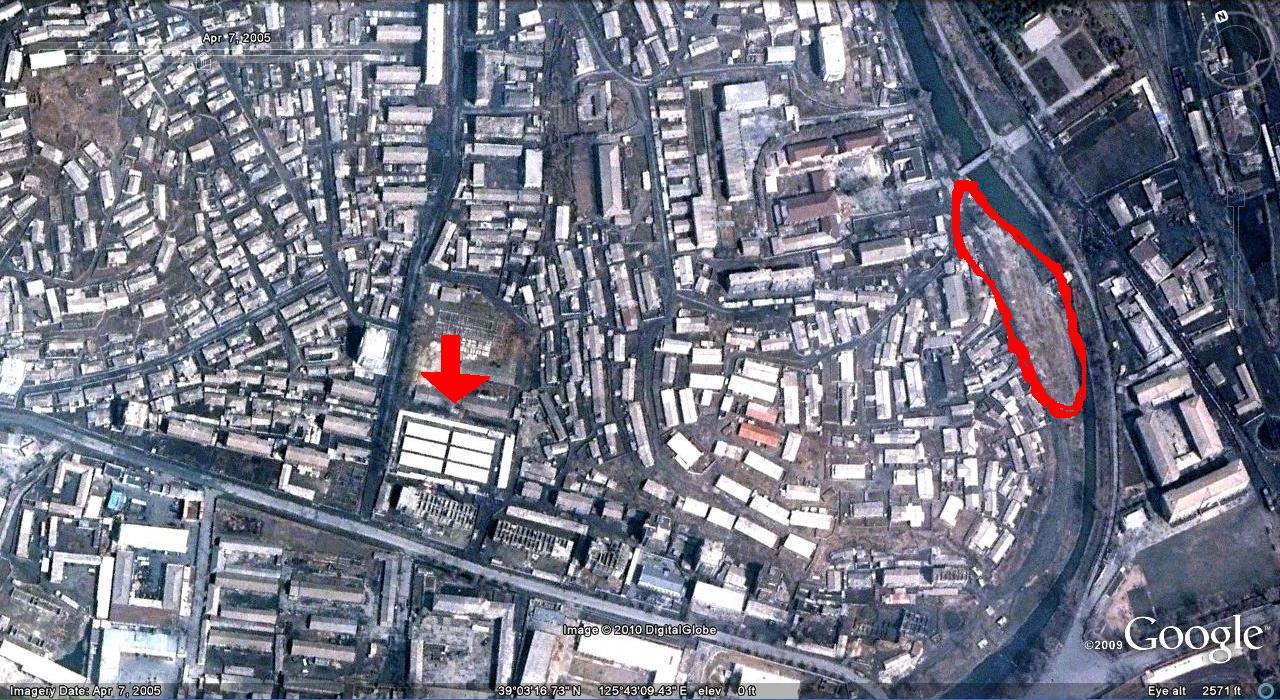
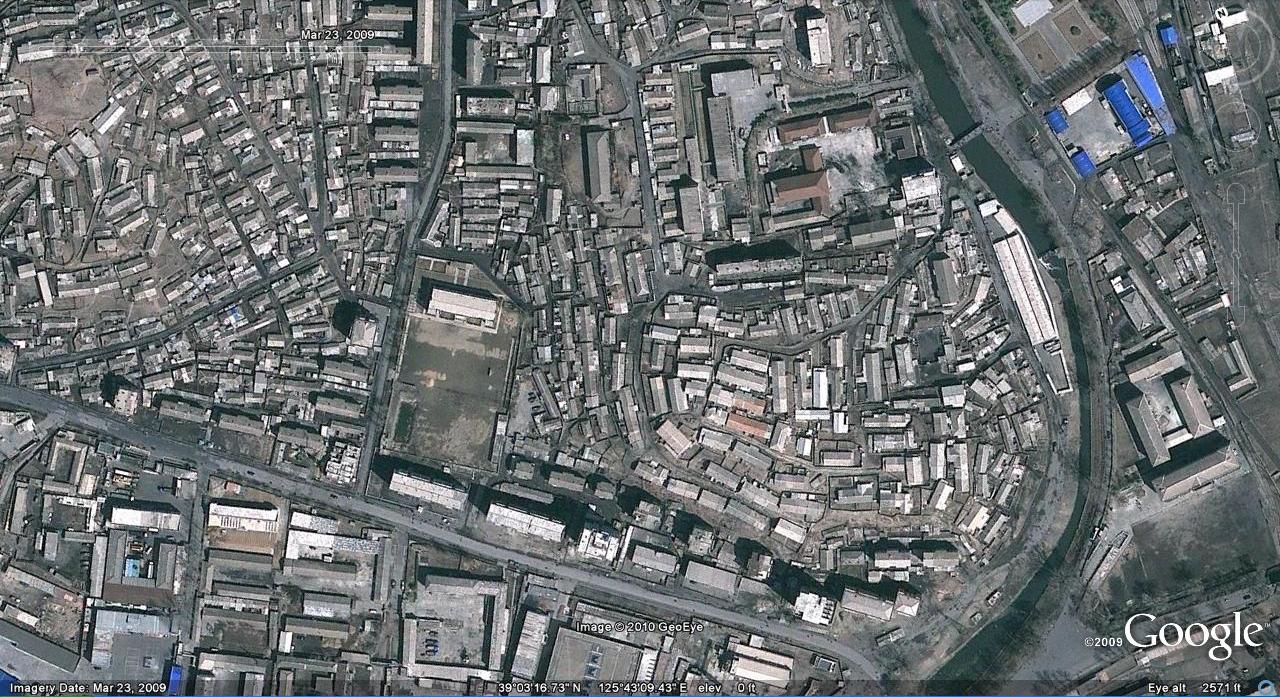
Pyongyang’s Hyongjiesan Market (형제산구역: 39.0539763°N, 125.7224°E) seems to have sprung up in one place but was temporarily relocated to a more formal facility before moving back to its original location. I do not know how to explain these moves.

2000-6-13-py-market.JPG

2005-4-7-py-market.JPG

2009-3-23-py-market.JPG

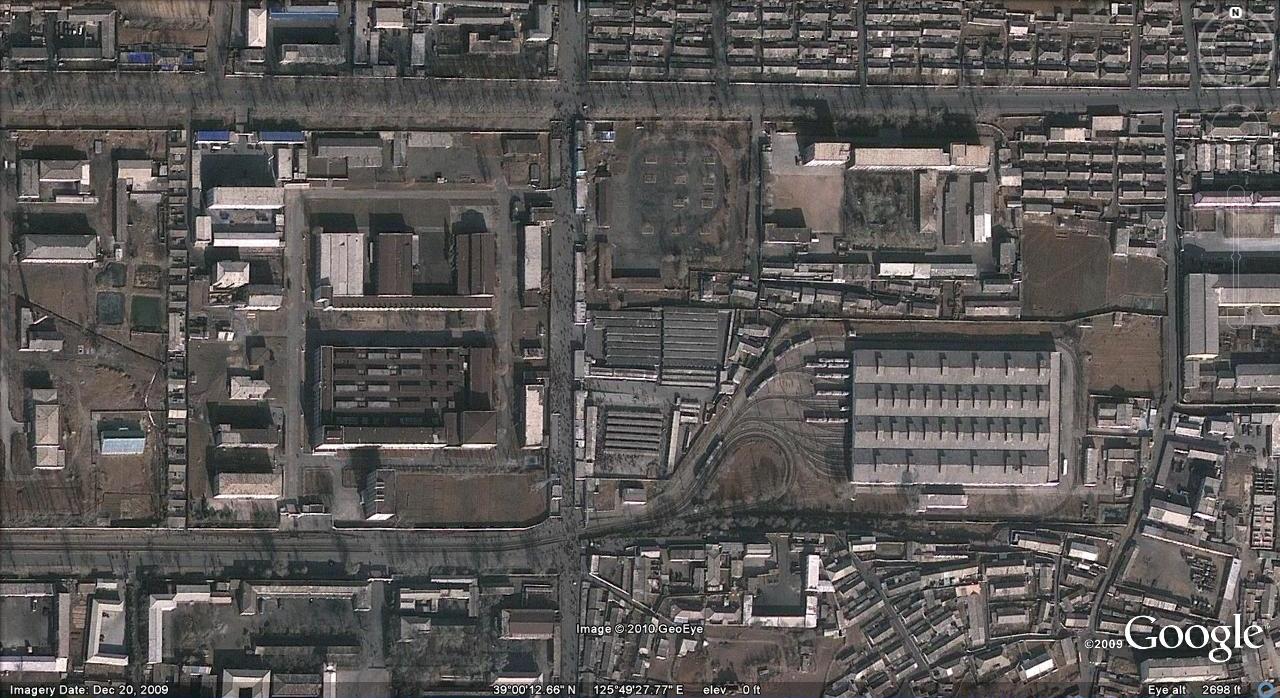
Pyongyang’s Sadong Market (39.0035985°N, 125.824281°E):

12-20-2009-sadong-market-py.JPG

Here is a clandestine video of the Sadong Market (Filmed in January 2009).

And what does the North Korean government think of these markets?  They are not happy with them.  This BBC video clip does not offer much new information about the DPRK but it does deliver at least one  official willing to be interviewed on the DPRK’s economic policies (at the 11:50 mark).

Share

DPRK earns $10m at 2010 World Cup

June 21st, 2010

According to the Choson Ilbo:

North Korea will receive at least US$10 million from FIFA for fielding its national team in the World Cup. The figure amounts to three month’s wages for the over 43,000 North Koreans working in the joint Kaesong Industrial Complex.

FIFA gives the 32 teams playing in the World Cup $1 million each for preparation costs. After playing three matches in the first round, each team is given an additional $8 million no matter if it advances to the next round or not. From this year, every club that has a player in the World Cup receives $1,600 per day, per player. The paid period begins two weeks before the opening of the tournament and ends a day after the final match of each contending team.

For North Korea, the period lasts until this Saturday as it plays its final first-round match against Cote d’Ivoire on Friday. Less the three players who play for foreign football clubs — Jong Tae-se, An Yong-hak and Hong Yong-jo — the North will be given a combined $960,000 for the remaining 20 players on its team. Mostly soldiers, they are affiliated with six domestic clubs. FIFA’s payment is made to each club, but as the North’s are all state-run clubs, Pyongyang has secured at least $9.96 million so far.

If North Korea makes it into the qualifying round it will be awarded an additional $9 million. The teams playing in the quarter-final receive $14 million each and those in the semi-final $18 million each, while the winner takes home $30 million.

With its national team playing in this year’s World Cup, North Korea has also signed a $4.9 million deal under which Italy-based sports apparel maker LEGEA will provide the North with jerseys and training gear for four years.

Read the full article here:
N.Korea to Earn $10 Million for World Cup
Choson Ilbo
6/21/2010

Share

More reports of easing market regulations

June 18th, 2010

According to the Washington Post:

Because North Korea operates in secrecy and isolation, outside observers rely on informants and accounts from defectors. In this case, experts agree that the food shortage is dire. Several analysts who monitor and travel to North Korea agree that in recent weeks, Pyongyang has abandoned almost all rules about who can spend money and when. That would seem to indicate that Kim — who once equated free-market trading with “egotism” and a collapse of social order — now wants to rehabilitate markets that were damaged months earlier.

As of May 26, the government no longer forces markets to close at 6 or 7 p.m., has dropped the rule restricting customers to women older than 40 and has lifted a ban on certain goods being sold. One city official in the city of Pyungsung informed the Good Friends humanitarian group that the living standard had “drastically decreased since the currency exchange, and the government cannot provide distribution so they have to bring the market back up.”

Read the full article here.

IFES has also reported this move.

It should be noted that both of these reports cite this Good Friends report:

Blanket Permission to Open Markets “Everyone can do business”
Authorization of public market is included at the core of the 5.26 Party directives. The North Korean authorities decided to allow everyone to have access to markets and overturned their original plan to close down the general market and exercise strong control over market. They announced that there will be no time restrictions, product control or age limitation. In reality, they allowed Democratic Women’s Union’s weekly prohibition from market operation during official work so people can work at market regardless of Democratic Women’s Union hours. Their only condition was to participate in labor mobilization. Pyungsung City, which suffered the most since last year’s decision to prohibit general market, is now allowed to open business and cancel other market regulations. A city official described the background on allowing of the market, “The living standard drastically decreased since the currency exchange and the government cannot provide distribution so they have to bring market back up.” He added, “There are increasing deaths from starvation so opening market is a reasonable resolution. Death due to starvation has gone out of control.” However, although the market doors are open wide, products are not being distributed and there is no cash flow. Market has shrunk that a businessman who used to make 3,000 won a day is barely making 200-300 won a day.

Good Friends is a valuable source of information but their reports should be taken with a grain of salt.

Share

U.S. Policy Toward the Korean Peninsula

June 17th, 2010

The Council on Foreign Relations has published the Independent Task Force Report No. 64: U.S. Policy Toward the Korean Peninsula.

The publication web page is here (overview and task force members).

Download the report here (PDF).

Overview
As tensions on the Korean peninsula rise after an international investigation found that North Korea was responsible for the sinking of a South Korean warship, a Council on Foreign Relations (CFR) Independent Task Force warns that North Korea’s continued provocations pose a serious threat to its neighbors and that its nuclear weapons program must be stopped. “The United States must seek to resolve rather than simply manage the challenge posed by a nuclear North Korea,” asserts the Task Force.

In its report, U.S. Policy Toward the Korean Peninsula, the Task Force emphasizes that “despite the difficulty of the challenge, the danger posed by North Korea is sufficiently severe, and the costs of inaction and acquiescence so high, that the United States and its partners must continue to press for denuclearization.” The United States cannot risk “the potential spread of nuclear weapons to rogue states, terrorist groups or others—especially in the Middle East.”

The Task Force says that the United States also must provide leadership with its regional partners to “coordinate actions designed to contain the spillover effects of possible North Korean instability while insisting that North Korea give up its destabilizing course of action.” It recommends that contingency pla nning be prioritized: “Given the uncertainties and associated risks related to North Korea’s future, it is necessary and sensible for its neighbors to consider the possibility of volatility in North Korea and plan for its possible effects.”

The bipartisan Task Force, chaired by former special envoy for negotiations with North Korea Charles L. “Jack” Pritchard and former commander of UN Command/U.S. Forces Korea John H. Tilelli Jr., and directed by CFR Adjunct Senior Fellow Scott A. Snyder, is comprised of roughly two dozen distinguished experts representing a wide variety of backgrounds. The report commends the U.S.-South Korean partnership and applauds the close alliance coordination following the ship incident. The Task Force urges the passage of the South Korea-U.S. Free Trade Agreement, which it says is good for America and would send a strong message of support for South Korea.

While each member of the Six Party talks—China, Japan, North Korea, Russia, South Korea, and the United States—has its own concerns, “any hope of resolving the North Korean standoff will depend on all parties cooperating with one another and being firm with North Korea.” The report emphasizes that “Chinese cooperation is essential to the success of denuclearization on the Korean peninsula and to ensuring regional stability.”

The report makes several specific recommendations, including calling for the establishment of a dialogue with China about the future of the Korean peninsula, bilateral talks with North Korea regarding missile development, and close consultations with allies South Korea and Japan. The report recommends that the Obama administration prioritize its approach to North Korea in the following order.

* Prevent horizontal proliferation: “The United States and its allies should heighten vigilance against the possibility of a transfer of nuclear weapons technologies or fissile material from North Korea and strengthen the capacity to carry out effective counterproliferation measures.”
* Stop vertical proliferation: “North Korea’s unconstrained efforts to develop a missile delivery capability for its nuclear arsenal would dramatically expand its ability to threaten its neighbors and further complicate prospects for reversing its nuclear program.”
* Denuclearize: “The debate over nonproliferation versus denuclearization is a false choice; the United States and its partners can and must do both by containing proliferation while also pressing for denuclearization.”

The Task Force recommends that the United States seek ways to integrate North Korea into the international community, including through cultural and academic exchanges. “The Obama administration should change long-standing U.S. policies blocking North Korea’s participation in activities of international financial institutions,” notes the report. It also condemns North Korea’s abysmal human rights record: “North Korea’s shameful human rights situation and failure to meet the needs of its people is a human tragedy that should be addressed by U.S. humanitarian assistance and other measures to improve human rights conditions inside North Korea.”

Share

Lankov on DPRK sanctions

June 17th, 2010

Lankov provides a rhetorical argument against the feasibility of sanctions leading to policy changes in the DPRK.  Writing in the Korea Times:

As everybody repeats these days, the “Sunshine Policy” of engagement and unilateral concessions is dead. After the Cheonan sinking, all Seoul talks about is sanctions and pressure ― and this position finds some understanding in Washington.

It is not likely that talks of tougher sanctions will actually produce tougher punishment against the North. In all probability the attempts to put pressure on Pyongyang will be quietly (or not so quietly) sabotaged by China, perhaps with some Russian support.

This will be disappointing news for many Korean and American hardliners, but they should probably not be that upset: in the very unlikely case of a truly vigorous sanctions regimen being implemented, it is not going to succeed in influencing North Korea’s behavior. The peculiarities of the North Korean regime make it essentially immune to sanctions.

How does a sanctions regimen normally work? When a country is subjected to international sanctions, it does not mean that the leaders suffer from malnutrition ― in all probability, their daily intake of caviar and cognac does not go down a lot, and the fuel tanks of their Jaguars are still full.

Contrary to the lofty rhetoric of diplomats, in nearly all cases it is the common population and lower reaches of the elite who feel the brunt of the sanctions.

Depending on the time and place it might mean anything from surviving for years on a starvation diet to a mere inability to buy a new car, but at any rate people do not take the noticeable decline in their living standards lightly.

So, the dissatisfaction begins to build up, and people start feeling bad about the policy which brought the sanctions upon them (and also toward the government which initiated such a policy).

This is bad news for the government. If a country has relatively free and fair elections, chances are that the government will be voted out of power. In less liberal regimes, a revolution is a likely outcome.

And, last but not least, the factions of the ruling elite might seize the opportunity and use the public discontent to stage a coup. At any rate, a government which is too stubborn faces a very real risk of losing its power because of popular discontent.

However, this mechanism is clearly not what is going to work in North Korea. None of the above-mentioned scenarios of regime change can be realistically expected there.

Needless to say, the North Koreans do not vote ― well, they vote with a predictable 100 percent approval rate for the sole candidate, appointed by the government long before elections.

A popular uprising is not likely either. In the late 1990s North Korea suffered a disastrous famine which killed between half a million and a million people. To a large extent it was brought about by the policy of the government which refused to implement reforms out of fear of instability.

But even the famine victims died quietly, with little, if any, resistance. The North Korean population was too terrified and disorganized to stage any efficient resistance movement. The North Koreans did not know much about available alternatives to their regimented existence. Nowadays the situation has changed to some extent, but not that much.

In other words, the North Korean political system does not receive feedback. The economic prosperity and even survival of the population is not high on the regime agenda, and the population itself has neither violent nor peaceful ways to influence the government policy.

It seems that sanctions supporters pin their hopes largely on a coup orchestrated by the dissatisfied elite, so it makes sense to dwell on this scenario a bit longer. Their logic runs like this: Kim Jong-il uses his funds to bribe top officials, providing them with cars, hi-tech gadgets and luxury goods.

If they do not get these giveaways, they will become resentful of Kim Jong-il and his policies and will probably demand changes or even stage a coup ― in order to have a reliable supply of Hennessy.

But will they? This logic would probably work in some Latin American dictatorships of the 1960s and 1970s where the change of the dictator would not lead to a collapse of the entire system, so ambitious colonels were always looking for an opportunity to get rid of the aging generals. This is not the case in North Korea.

The North Korean leaders understand that any attempt to rock the boat is dangerous. A sight of disunity at the very top might send a dangerous signal to the hitherto docile and terrified populace, and the collapse of the entire system becomes a probability (East Europe of the early 1990s demonstrated once again how sudden revolutions can be).

The god-like status of the Kim family complicates the situation further. The top leaders might have more realistic ideas about the dictator, but they understand that for the populace the sight of a god being removed from power will come as a huge shock. After that, people might become ungovernable.

But, unlike most other countries, North Korea is a part of a divided nation, and an outbreak of instability there might bring about unification with the South ― the ultimate nightmare of the present day elite. If that happens, the top officials and generals have no chance of keeping their privileges, and they are seriously afraid of being prosecuted for their past misdeeds.

It is not incidental that Kim Il-sung, Kim Jong-il’s father and founder of the regime, in the early 1990s made sure that all members of his entourage watched the footage of the execution of Ceausescu, a Romanian strongman who was the closest analogue to the Kims, and the violent Romanian revolution.

His message was: if I am removed from power, you will lose everything, including, probably, your lives. The message was not lost, more so since it appears to be correct.

So, the North Korean generals and dignitaries can survive on a reduced amount of Scotch whisky if the most likely alternative seems to be a lifelong survival on prison rations ― or worse. Kim Jong-il is seen by those people as a guarantee of stability, and none of them will challenge his supremacy.

Thus, if by some unlikely miracle China sincerely joins the sanctions regimen and puts serious pressure on North Korea, the immediate result will be neither revolution nor coup, but simply a dramatic increase in the mortality rate ― in other words, a lot of dead farmers.

Perhaps some breaking point exists and can even be reached if sanctions are applied systematically and for a long time, but this breaking point seems to be too many corpses away.

Fortunately for the average North Korean, it is not going to happen. Driven by fear of instability (and decisively unenthusiastic about unification) China does not want to see North Korea cornered, and will not allow any efficient sanctions to be applied.
Read the full story here:
Sanctions against North Korea
Korea Times
Andrei Lankov
6/17/2010

Share

OECD on Korean unification costs

June 17th, 2010

According to Yonhap:

The widening inter-Korean economic and social gaps could eventually increase the cost of unification, a report showed Friday, highlighting the importance of the private sector’s role in “limiting the gap.”

According to the report compiled by the Organization for Economic Cooperation and Development, South Korea’s economy is about 38 times larger than the North’s and 18 times larger on a per-capita basis as of the end of 2008.

North Korea’s total trade volume remains just 0.4 percent of South Korea’s, while production of electricity and steel stands at a mere 6 percent and 2.4 percent, respectively, the report showed.

The report also noted that the North Korean economy grew 3.7 percent in 2008 following two years of contraction but its currency reform in late 2009 triggered “serious economic problems,” pointing to a tough road for the reclusive country’s future growth.

The North is also showing a marked gap with the South not just in the economic field but also in social and welfare areas such as high infant mortality rates and relatively short life expectancy, according to the report.

“The large gap in income and health will boost the eventual cost of economic integration,” said the report.

“The expansion of trade driven by private sector firms in the South, in line with the government’s strategy of limiting cooperation to projects that are economically viable and that do not overburden taxpayers in the South, provides the best hope for limiting the gap,” it added.

The report comes as inter-Korean trade and investment except for an industrial park in the border town of Kaesong was suspended after a multinational investigation recently proved that the North torpedoed one of South Korea’s patrol ships in March, killing 46 sailors.

The two Koreas are still technically at war as no peace treaty was signed at the end of the 1950-53 Korean War.

Of course, Yonhap does not bother to tell us the name of the study or provide a link!

I think I found it however. I am 99% confident that Yonhap is citing the OECD Economic Surveys: Korea 2010.

The reason I was able to locate the report was because one of the quotes Yonhap provided above was used word-for-word in the OECD Economic Surveys: Korea 2008. Check out the last sentence of paragraph 2 on page 54.

Share