Inter-Korean trade hits record high in 2012

February 9th, 2013

According to Yonhap:

Despite rising cross-border tension, the trade between South and North Korea reached a record high last year, government data showed Saturday.

The volume of trade between the two Koreas reached US$1.97 billion in 2012, inching up from the previous record of $1.91 billion in 2010, according to the data by the Korea Customs Service.

South Korean products worth $896.26 million were shipped to North Korea, up 13.4 percent from the previous year.

The amount of products that came here from the North jumped 19.3 percent on-year to $1.07 billion, according to the data.

A total of 99 percent of the volume was shipped through a land route linked to the inter-Korean industrial complex in the North’s border town of Kaesong.

Read the full story here:
Inter-Korean trade hits record high in 2012
Yonhap
2013-2-9

Share

Friday Fun: The DPRK’s AK-47 and new calendar

February 8th, 2013

I thought I had posted this before, but apparently not….

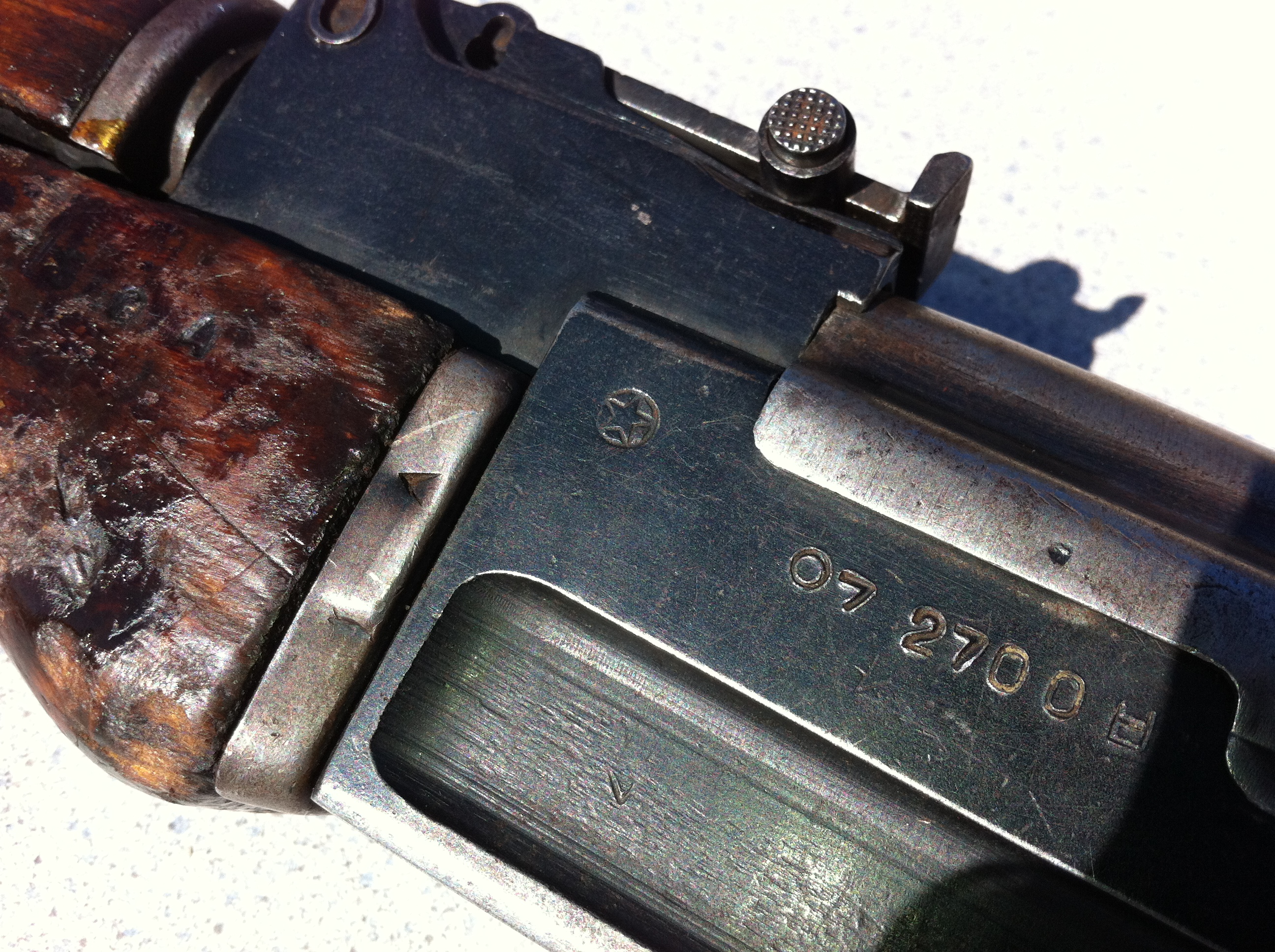
A friend of mine in the law enforcement community down in South Florida went to a shooting range where he had the chance to fire a North Korean AK-47.

DPRK-ak-47-2

DPRK-ak-47-1

The gun was seized in a operation somewhere. I don’t know where, how, or when, but I sure would like to.

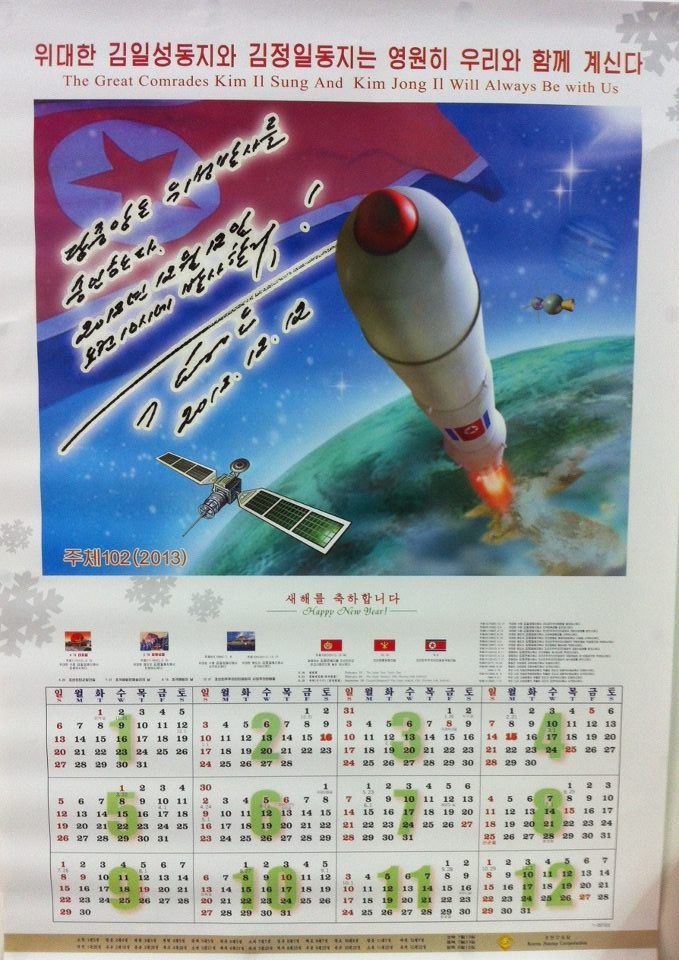
Also, Koryo Tours has posted the picture of a new DPRK 2013 calendar to their Facebook Page:

Koryo-tpurs-2013-calendar

The birthdays of President Kim Il-sung and Kim Jong-il are highlighted, but nothing for Kim Jong-un’s birthday.

Share

High rice prices and foreign exchange rates continue in North Korea

February 7th, 2013

Institute for Far Eastern studies (IFES)
2012-2-7

A year has passed since Kim Jong Un took power, yet that has not prevented instability to continue in the price of rice and foreign exchange rates in North Korea, having doubled in some cases compared to last year.

According to “North Korean Market Trends,” published by the online newspaper Daily NK, the price of rice per kg from January 2 to 9, 2013 in Pyongyang, Sinuiju, and Haesan was 6,700 KPW, 7,000 KPW, and 6,600 KPW, respectively. This was a rise of 300 KPW, 200 KPW, and 100 KPW in just two weeks.

During the same period, the foreign exchange rates in Pyongyang, Sinuiju, and Haesan also escalated to 9,100 KPW, 8,950KPW, and 8,750 KPW, a rise of 1,300 KPW, 950KPW, and 300 KPW, respectively.

This is the highest recorded price for rice and exchange rates. Last year from January 15 to 21, the price of rice in Pyongyang was 3,200 KPW and the exchange rate was 4,400 KPW. Compared to current prices, the price has more than doubled.

Prices began to escalate drastically from April 2012. Recorded highs were recorded from September 24 to 27 (at 6,800 KPW). Since then they have continued to remain high.

The Daily NK interpreted the increase in rice prices and exchange rates to be consequential of the political events that resulted in a decrease in food transactions and North Korean residents’ preference for US dollars.

Instability in rice prices and exchange rates are expected to continue as the international community adopted a new resolution to impose sanctions against North Korea in response to North Korea’s “long-range rocket launch” (December 2012) and recent announcement that it is preparing to conduct another nuclear test.

*(NKeconWatch) Another cause of the price increases is inflationary public finance in the DPRK.

Share

Chinese company to invest in gold mine, luxury hotel in North Korea

February 3rd, 2013

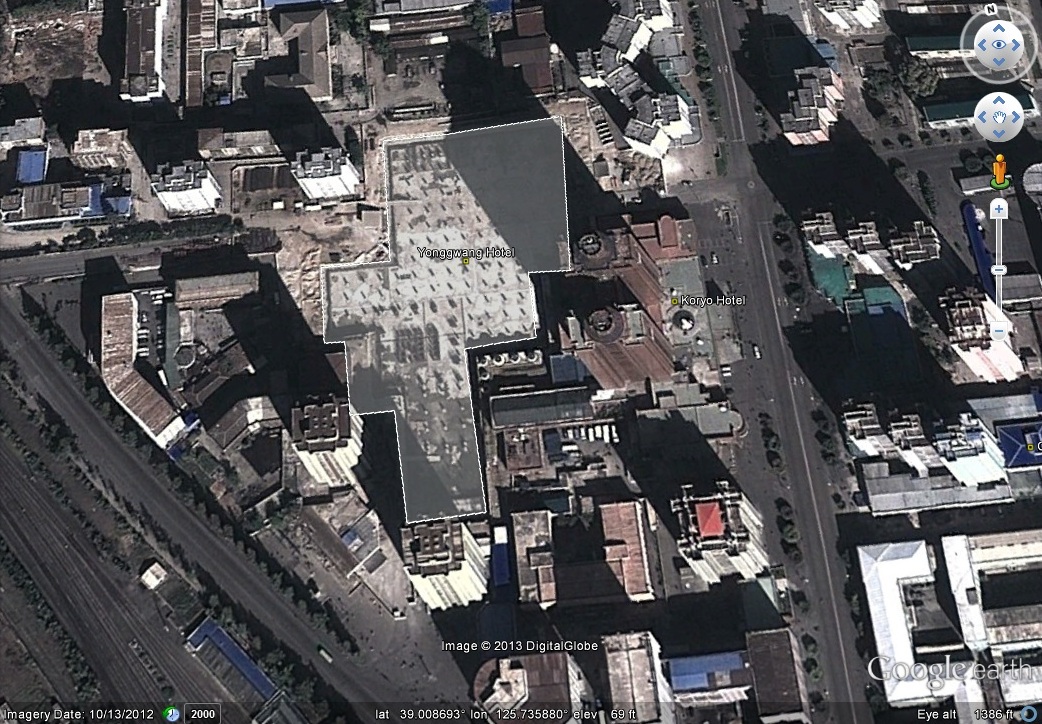
koryo-seven-star-under construction

Pictured Above: New hotel under construction. See more here. I am still not sure about the gold mine.

By Michael Rank

A Chinese company has announced plans to invest $20 million in a gold mine in North Korea as well as in the country’s first five-star hotel, a Chinese-language website reports (http://www.#removed-for-malware-warning-external-site#idprkorea.com/news/news/view.asp?id=2599).

The mine, with deposits of 50 tonnes of gold, is in Unsan county 운산군 in North Phyongan province 평안북도 in northwestern North Korea near the Chinese border.

The report said Weijin Investment Group is the first Chinese company from Hunan province to invest in North Korea.

It quoted Weijin chairman Xia Juhua as saying, “North Korea is backward in infrastructure construction, so we can fulfill the requirements of mineral resources exploitation by offering technology and management support to the country’s key projects like highways and hotels”.

He said Wejin plans to construct a 30-storey, five-star hotel to be completed this year but did not give a location. Xia also mentioned plans to invest in the rare earth sector in North Korea but gave no details.

The report said about 200 Chinese companies were investing in North Korea and that over 70% were focusing on the mining sector. But at least one of these ventures went spectacularly sour last year, when the Chinese partner launched an extraordinarily bitter attack on its North Korean counterpart, accusing the North Koreans of tearing up a multi-million-dollar deal, intimidating its staff, imposing outrageous extra charges and cutting off its power and water, as well as of corruption and demanding prostitutes whenever their North Korean colleagues visited China.

UPDATE (2013-3-13): NK News has published that the hotel will be named “Yonggwang Hotel (영광호텔)”…which is the name of the closest metro stop.

Share

Taepung International Investment Group allegedly dissolved

February 1st, 2013

According to Yonhap:

North Korea dissolved a well-known state-run company in charge of attracting foreign investment due to its unsatisfactory performance, South Korea’s Unification Ministry said Friday.

“Daepung International Investment Group seems to have been disbanded, probably due to poor performance,” a ministry official said in a briefing on governmental and personnel changes taken under the Kim Jong-un regime over the past year.

The country also broke up another extra-governmental organization in charge of trade promotion and foreign investment with its work believed to have been reassigned to the government’s Commission for Joint Venture and Investment, according to the official.

Daepung Group was established at the instruction of the North’s highest political body, the National Defense Commission, in January 2010 as a means to attract foreign investment.

The group oversaw the now-suspended joint tourist program in Mount Kumgang on the eastern coast of North Korea.

The cross-border program had served as a cash cow for the North before Seoul halted it in 2008 following the shooting death of a South Korean tourist at the resort.

Additional Information:

1. Previous posts on the Taepung Investment Group can be found here.

2. NK Leadership Watch has an excellend review of the organization here.

3. The “Commission for Joint Venture and Investment” is also known as the Joint Venture Investment Committee (JVIC). See JVIC posts here.

Read the full story here:
N. Korea dissolves state-run firm in charge of attracting foreign investment: gov’t
Yonhap
2013-2-1

Share

Lee Myung-bak administration sets the lowest record for assistance to North Korea

January 31st, 2013

Institute for Far Eastern studies (IFES)
2013-1-31

The total amount of assistance provided to North Korea by the South Korean government and private organizations in 2012 decreased by 28 percent against 2011, which marks six years of continuous decline.

The Ministry of Unification revealed on January 27 that the total amount of South Korean assistance to North Korea tallied 14.1 billion KRW (13 million USD), with 2.3 billion KRW (2.12 million USD) of government aid for vaccines and medical trainings and 11.8 billion KRW (10.89 million USD) from the private sector for medical supplies. This is a 28.1 percent drop from the previous year’s total of 1.96 billion KRW (18.09 million USD).

The South Korean government sent about 6.5 billion KRW (6 million USD) of medical supplies to North Korea via UNICEF and the private sector sent about 13.1 billion KRW (12.1 million USD) of malaria prevention supplies, powdered milk, soy milk, and flour.

Last year was the lowest record for humanitarian assistance to North Korea in sixteen years. Prior to this low was 1996, which recorded 3.6 billion KRW (3.3 million USD).

Lee Myung-bak administration’s aid to North Korea for the last five years reached a total of 257.5 billion KRW (236.2 million USD), with 102.4 billion KRW (93.94 million USD) in government funds and 155.1 billion KRW (142.3 million USD) from the private sector. This is equal to only 20 percent of the Roh Moo-hyun administration’s 1.275 trillion KRW (1.17 billion USD), and 44 percent of the Kim Dae-jung administration’s 582.9 billion KRW (534.8 million USD) of total aid to North Korea.

The highest record for South Korean humanitarian aid to North Korea was in 2006 at 298 billion KRW (273.4 million USD), in both government and private sector aid and continued to remain at a high level in 2007 with 289 billion KRW (265.1 million USD) in 2007. However, with the launch of the Lee Myung-bak government in 2008, it dropped to 116 billion KRW (106 million USD), and continued the downward slide recording 67.1 billion KRW (61.6 million USD) in 2009; 40.4 billion KRW (37.06 million USD) in 2010; 19.1 billion KRW in 2011 (17.5 million USD); and 14.1 billion KRW (12.9 million USD) in 2012.

The source of the drop in humanitarian assistance can be attributed to deadlocked inter-Korean relations followed by the shooting death of a Mount Kumgang tourist in 2008; long-range rocket launch and second nuclear test in 2009; and Cheonan and Yeonpyeong Island incidents in 2010.

From 1995 to 2012, the total amount of humanitarian aid to North Korea from the South Korean government was 1.48 trillion KRW (1.36 billion USD) and from the private sector was 871 billion KRW (799.1 million USD), equating to about 2.347 trillion KRW (2.15 billion USD) in total.

Meanwhile, international humanitarian aid to North Korea increased 30 percent in 2012 against the previous year. According to the United Nation’s Office for the Coordination of Humanitarian Affairs (OCHA), total aid to North Korea in 2012 was 113 million USD while the previous year reached 89.2 million USD. It quadrupled to the total amount, 24.4 million USD of 2010.

Nineteen countries joined in the effort to provide humanitarian aid to North Korea such as South Korea, Norway, Switzerland, Canada, Russia, Brazil, and Sweden. In 2010, there were only six countries, and it later increased to seventeen countries in 2011. The OCHA announced that the humanitarian aid provided in 2012 focused mainly on improving the food supply and nutrition, and provided agricultural support.

UPDATE: Here is a similar report in Yonhap (2013-1-27):

South Korea’s humanitarian aid to North Korea dropped 28 percent to a record 16-year low last year, the unification ministry said Sunday, as the cross-border relations remained chilled under Seoul’s outgoing government of President Lee Myung-bak.

Seoul’s humanitarian aid to the impoverished North totaled 14.1 billion won (US$13.1 million), compared with 19.6 billion won a year earlier. Last year’s amount is the lowest since 1996 when only 3.6 billion won was provided to the North in humanitarian aid.

The sharp drop came as relations between the two Koreas remained frozen since the North sank a South Korean warship near their Yellow Sea border in March 2010 and then shelled a border island in November that year. Pyongyang’s nuclear test and rocket launches also affected their ties.

The total amount of assistance the South provided the North during the five years of President Lee was 257.5 billion won, including 155.1 billion won of civilian aid. The total amount is only 20 percent of the aid sent during the presidency of Lee’s predecessor, the former late President Roh Moo-hyun.

Share

Food prices continue to climb

January 31st, 2013

According to Yonhap:

The Daily NK, a Web site run by opponents of the North Korean government which provides detailed coverage of the communist nation, claimed the price of rice, a key staple, has risen steadily over the last year.

It added that despite efforts to control prices, a kilogram of rice purchased in Pyongyang and Sinuiju from Jan. 2 through Jan. 9, rose by 300 won and 200 won, respectively, compared to just two weeks prior.

A kilogram of rice in Pyongyang cost 6,700 (North Korean) won, while in Sinuiju, just across the Amnok river from the Chinese city of Dandong, it reached 7,000 won.

The media outlet, which claims it uses a secret network of sources in the communist country, said the latest price of rice represents a more than two-fold increase from the year before, right after Kim took control of the country. In the first month of last year, a kilogram sack of rise cost 3,200 won in Pyongyang.

The North Korean leader took power following the sudden death of his father Kim Jong-il on Dec. 17, 2011.

On changes in foreign exchange rates, Daily NK said a U.S. dollar was worth around 9,100 North Korean won this month, which is a depreciation of more than 100 percent from an year earlier. In January 2011, a one dollar bill was worth just 4,400 won.

Read the full article here:
N. Korea’s rice prices, foreign exchange rates remain unstable: report
Yonhap
2012-1-31

Share

DPRK Law on Underground Resources

January 31st, 2013

The DPRK’s Naenara web page posts PDF copies of the DPRK magazine, International Trade. No updates have been made for 2013, however, Choson Exchange points an interesting article from the Q4 2012 issue which contains interesting information on the DPRK mining sector.

Choson Exchange posted a high resolution .jpg from the most recent issue of International Trade and you can see it here.

The article, “Abundant Underground Resources and the Policy for Their Development,” provides information on the “DPRK Law on Underground Resources” which was allegedly adopted by Decree No. 14 at the fifth session of the ninth Supreme Peoples’ Assembly (1993-4-8: during the Arduous March).

The text of the law is not given, and most of the article is “fluff” language, but here are some interesting tidbits:

Institutions, enterprises and organizations can develop underground resources.  They are obliged not only to make mining equipment large, modern, and high-speed, and diversify transportation but to give priority to tunneling and introduce efficient mining methods to boost mineral output.

Development of underground resources is subject to the approval of the state organ of deliberation of underground resources development .

Institutions, enterprises and organizations engaged in underground resource development shall ensure high efficiency of investment pursuant to the design of underground resource development.

They shall ensure rational organization of mining to excavate ore bodies that conform to mining criterion and standard of calculating deposits of underground resources. But the practices of digging out only high-grade and thick ore bodies in good condition to excavate are prohibited.

Abandoning of ore and coal mines and their pits should be subject to the approval of the state organ of deliberation of underground resource development.

Institutions, enterprises, and organizations, concerned should actively tap the resources of geotherm, underground water and mineral water for the economic development and improvement of people’s [sic] life [sic].

The living environment of inhabitants and ecological environment of animals and plants, including land, resources and landscapes should not be damaged in the course of their development.

The DPRK policy of underground resources development makes a tangible contribution to protection and development of underground resources to fully meet the increasing demands of the national economy for raw materials and fuel, and thus gives the impetus to the building of a thriving socialist country.

Share

DPRK allegedly extends overseas rotations for trade officials

January 30th, 2013

According to Radio Free Asia:

Businessmen in China told RFA’s Korean Service that until recently, the North’s leadership had largely kept to its rule of allowing trade officials to work abroad only once during their tenure as part of an effort to limit exposure to the outside world.

“The [practice of] ‘revolving door personnel allocation’ is prevalent in North Korea,” said one merchant surnamed Li from the city of Dandong in northeastern China’s Liaoning province, which is located on the border between the two countries.

But he said that an increasing number of North Koreans who had just recently returned from assignments in China were being sent to the neighboring country again in an official capacity.

“A North Korean trade representative who had worked in Dandong five years ago returned [to China] as a representative working in Beijing, which was surprising,” Li said, adding that he had never encountered a North Korean official who had served in the country on more than one occasion.

Another Chinese merchant surnamed Wang, who is currently living in North Korea, confirmed that more officials were being sent to China multiple times.

“Recently there are an increasing number of North Korean representatives who have repeatedly been dispatched abroad, although they are working in regions different from those where they had previously been posted,” Wang said.

One source suggested that Pyongyang may be continuing to rely on officials who have already served abroad in order to leverage their existing experience dealing with China’s trade sector.

He said that when the North Korean government requires an urgent trade agreement, it has become more willing to use officials with experience because training new personnel would be too time-intensive.

But another source said that the prompt resolution of trade negotiations is not the regime’s driving motive behind redeploying officials abroad.

“It’s not because the North Korean government needs an urgent resolution to trade matters, but simply because the officials who have previously worked abroad are lobbying so hard to be re-dispatched,” the source said.

Read the full story here:
North Korea Redeploying Officials
Radio Free Asia
Joon Ho Kim
2013-1-30

Share

38 North’s DPRK Digital Atlas

January 28th, 2013

I have worked with 38 North to publish the DPRK Digital Atlas. This is the most comprehensive and authoritative source of administrative boundaries in the DPRK that is publicly available:

Here is some information on the project:

The DPRK Digital Atlas is a resource developed by 38 North, working with Curtis Melvin (North Korean Economy Watch) and a talented team of programmers. It is part of 38 North’s on-going effort to provide various information and analysis resources to help policymakers, researchers, and the general public better understand the DPRK. The data for this project has been culled and vetted through a number of sources to provide users with the most accurate geographic information available at this time.

The atlas was created in Google Earth and then converted to a browser-based application to allow users to search the map either by name (English and Korean), coordinates, or simply by browsing through the drop down menus. Because it is built on the Google Earth platform, users can see the latest publicly available satellite imagery of any specific point or area as they are searching.

In this first iteration of the atlas, users can browse through the provinces, cities, counties, districts, towns and villages throughout the DPRK. Although it is the most comprehensive satellite mapping project of the DPRK, this remains an on-going GIS project, and future iterations will provide even greater detail and a wider variety of localities and features.

We are in debt to the following people and organizations for their contribution of key resources for the completion of this project: Jonathan Ung, Tam Nguyen, “Hank,” Stephen Mercado, Michael Rank, PSCORE, and the George Washington University Gelman Library’s Asia Reading Room.

The web page is fairly intuitive, but there is a separate page containing instructions. Data sources are listed on the atlas “About” page.

An older version of my infrastructure mapping project, North Korea Uncovered, can be found here. Although it was published in 2009, I have been working on it for nearly every day since. I am not someone who tends to exaggeration, but it is the most authoritative map of the DPRK’s infrastructure that will be made publicly available. I hope to publish it soon…

In closing, there is no golf course on Yanggak Island. And this is interesting.

Share