Archive for the ‘Real estate’ Category

Friday grab bag

Thursday, November 12th, 2009

North Korean defector poetry: I am personally not a big fan of poetry, but some poetry written by North Korean defectors has been translated into English and published.  Read it in Radio Free Asia.

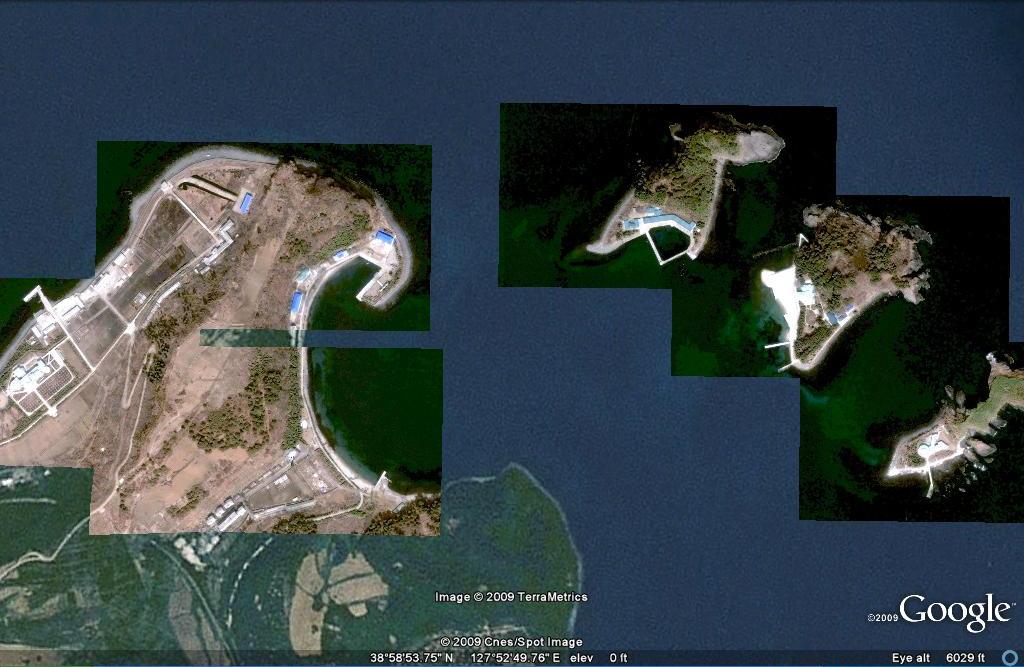
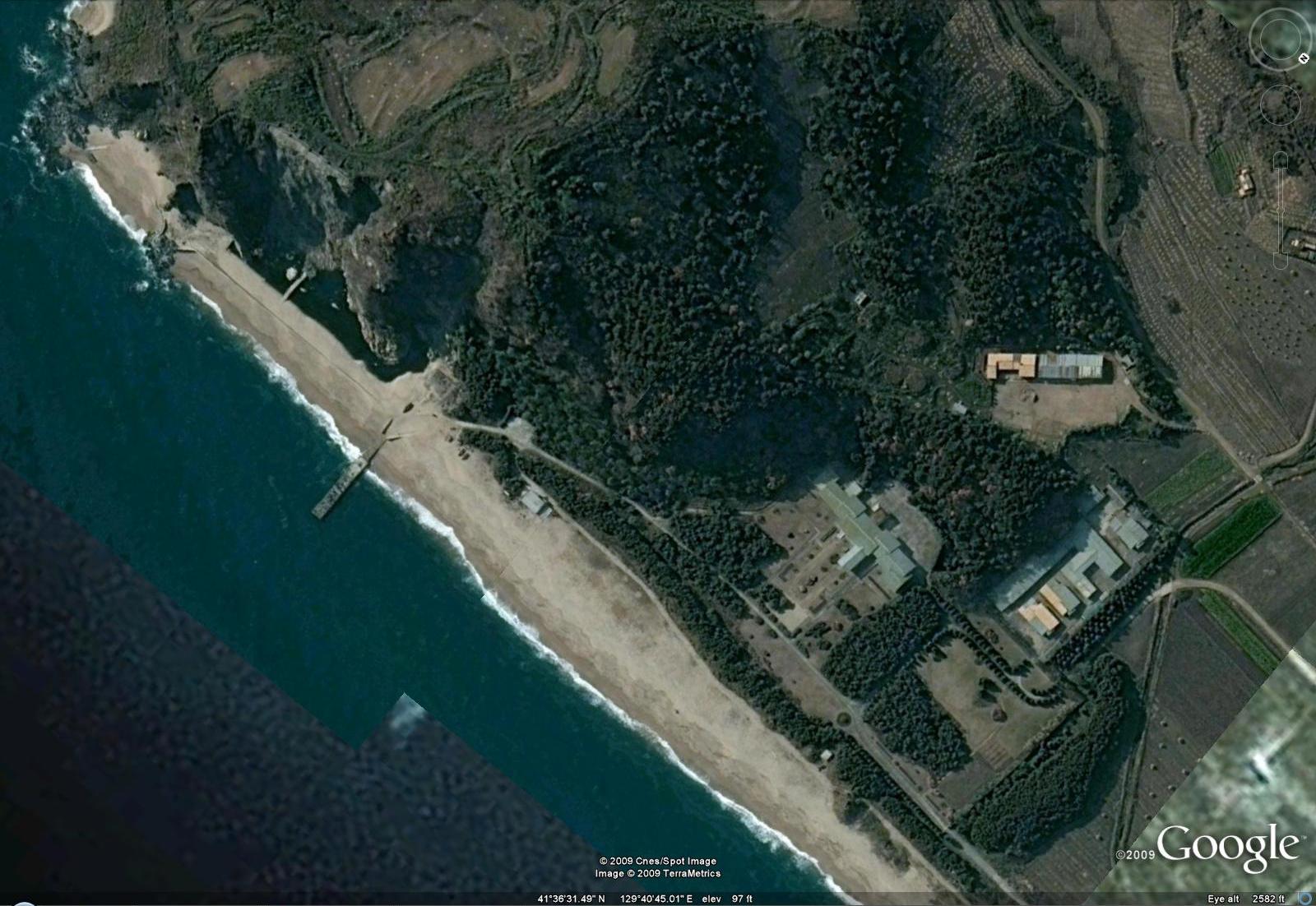
North Korean Leadership Compounds: We have pretty much located all of the “easy to find” leadership complexes in North Korea on Google Earth.  However, not all of them are visible with high resolution imagery.  Here are a few I have recently taken care of:

1. Sinchon Compound (written about by Keji Fujimoto)

sinchon-elite-copound.JPG

Click image for larger version

Download Google Earth overlay here.

2. Island getaway: For the leader who has everything

island-getaway.JPG

Click image for larger version

Download Google Earth overlay here.

3. Sugnam

sugnam-elite-area.jpg

Click image for larger version

Download Google Earth Overlay here

Eight Scenic Views of the Songun Era:

1. Sunrise over Mt. Paektu. (See here)

2. Snow Covered Tapak Sol guard post in Mangyongdae.  (See here – Actually not sure where the guard post is, but this is Mangyongdae)

3. Royal Azaleas on the Chol Pass. (See here)

4. Illuinated night view of the Jangja River in Kanggye. (See here)

5. Ulim Waterfall. (See here)

6. Rezoned Handre (Handure) Plain on the Unhung Cooperative Farm in Thaechon County. (See here)

7.  Potato flowers in Taehongdan. (See here)

8. Poman-ri fish farm. (See here)

A Song was even written about these places.

Share

10,000 apartments under construction in Pyongyang

Wednesday, November 11th, 2009

Institute for Far Eastern Studies (IFES)
NK Brief No. 09-11-10-1
11/10/2009

North Korea is pouring all efforts into the construction of 10,000 family homes in Pyongyang by 2012. Whether this construction plan can be completed within the next three years will weigh on the success or failure of the regime’s goal of establishing a ‘Strong and Prosperous Nation.’

An article run on November 4 in the Chosun Sinbo, a newspaper of the Jochongryeon, the pro-Pyongyang Korean residents’ association in Japan, stated, “Currently, the construction of 10,000 family dwellings is underway in Pyongyang, and the efforts poured into this over the next 3 years will show the strength of the country.” It was also reported that “North Korean authorities are devising policies to concentrate all efforts into the construction area in order to see this through.”

The article also confirmed that the apartment construction project was part of the “effort to open the door to a ‘Strong and Prosperous Nation’,” and that completion of the project “would mean the complete solution of the people’s housing problems in Pyongyang.”

The newspaper claimed that the project is the largest project ever undertaken by the North. In the 1980s and 1990s, 5,000-unit apartments were built along Kwangbok Street and Unification Street over 4 to 5 years, but the current project is twice as large. The aim is to complete the project in 3 years. Each unit is said to be 100 square meters.

North Korean authorities are reportedly pledging that the ‘Strong and Prosperous Nation’ will not just be reflected through economic statistics or increased production, but that they are putting all efforts into increasing the standard of living for the people.

In order to meet the expected increase in demand for electricity, a hydroelectric power plant is being built in Huicheon, Chagang Province, and is expected to be complete by 2012.

It is expected that it will be difficult for the North to complete 10,000 apartments in the next 3 years, and so authorities are also conducting campaigns to repair and upgrade old production lines in factories and companies in order to meet the demand for materials. As well, Preparations are also underway to create a system of factories and businesses to produce needed materials within Pyongyang. The construction project has meant the removal of some military barracks in the area, causing some conflicts between soldiers and civilians.

Share

Reconstruction of Ryongchon

Wednesday, October 28th, 2009

UPDATE 3 (2014-4-4): Here is the Red Cross report on the Ryongchon explosion (PDF).

UPDATE 2 (2004-4-22): Apparently these buildings have not aged well.

UPDATE 1 (2009-11-6) : This post was picked up by Yonhap:

N. Korea’s Ryongchon blast site reborn with Soviet-era complexes
Yonhap
Sam Kim

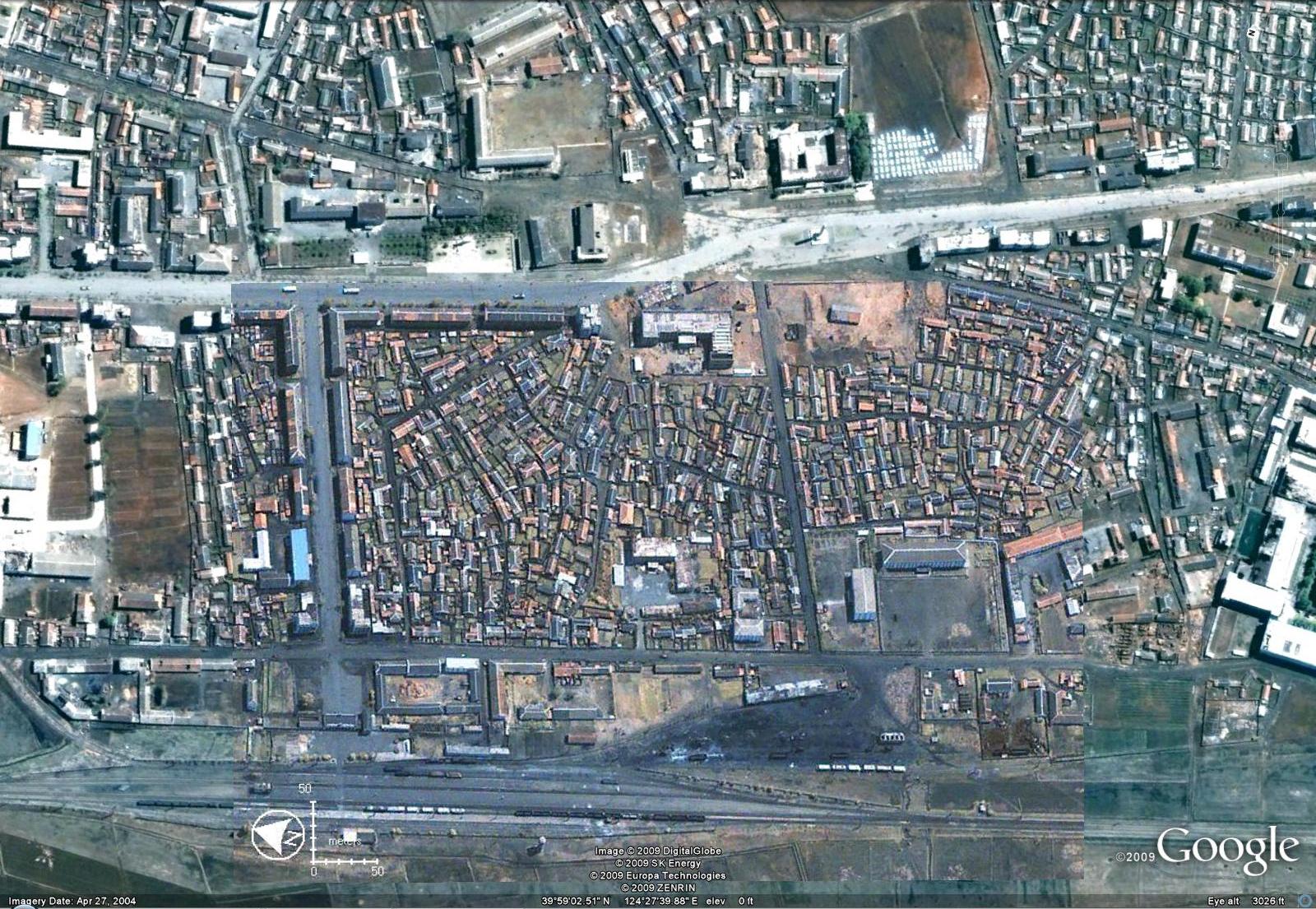
ORIGINAL POST (2009-10-28): In 2004 much of the town of Ryongchon was tragically destroyed in a large explosion.  Here is the Wikipedia page on the disaster if you would like a quick reference.

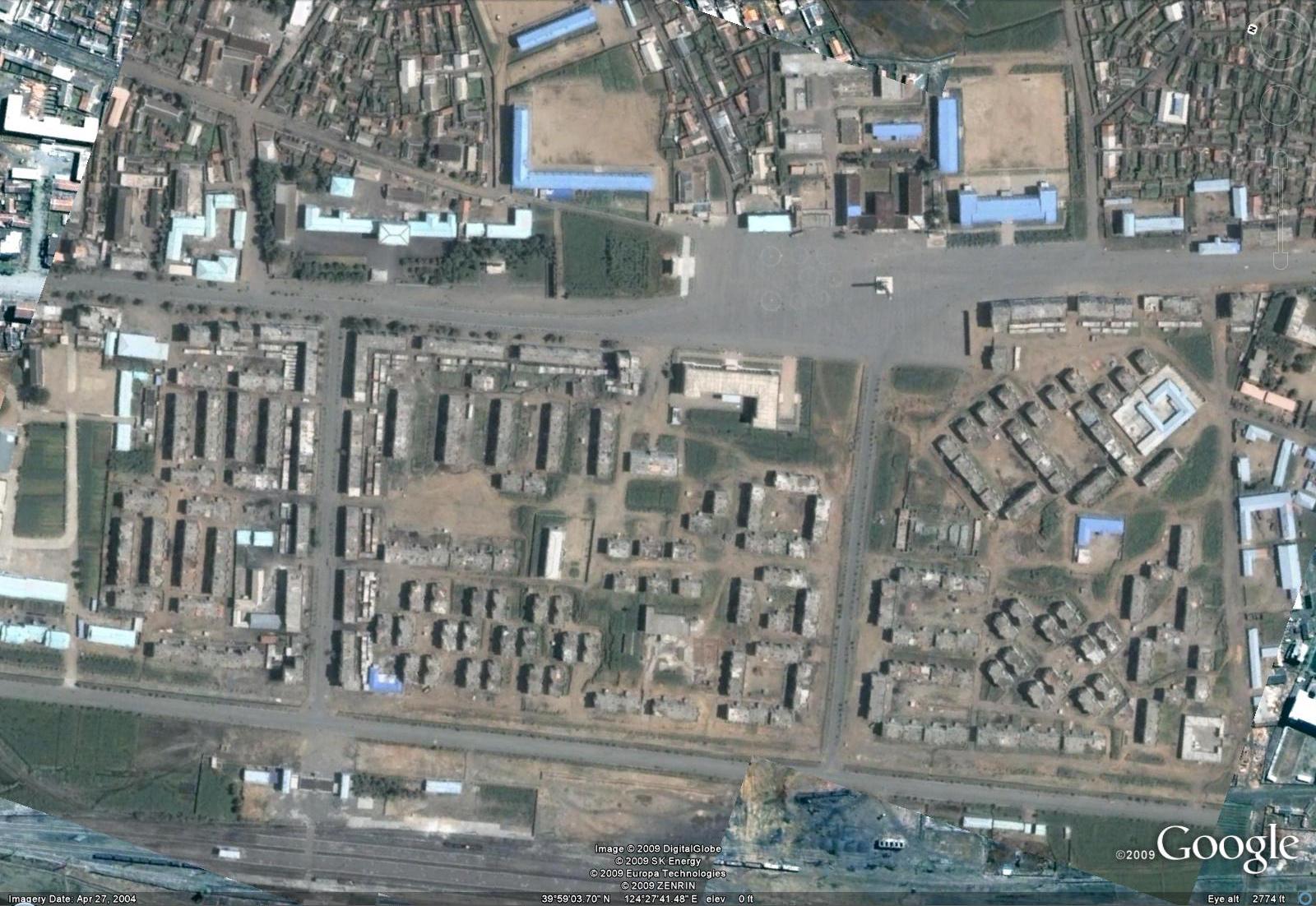
I compiled a couple of images to construct this “before” picture of Ryongchon:

ryongchon-before.jpg
(Click image for larger version)

Notice that the center of town is composed largely of traditional houses.

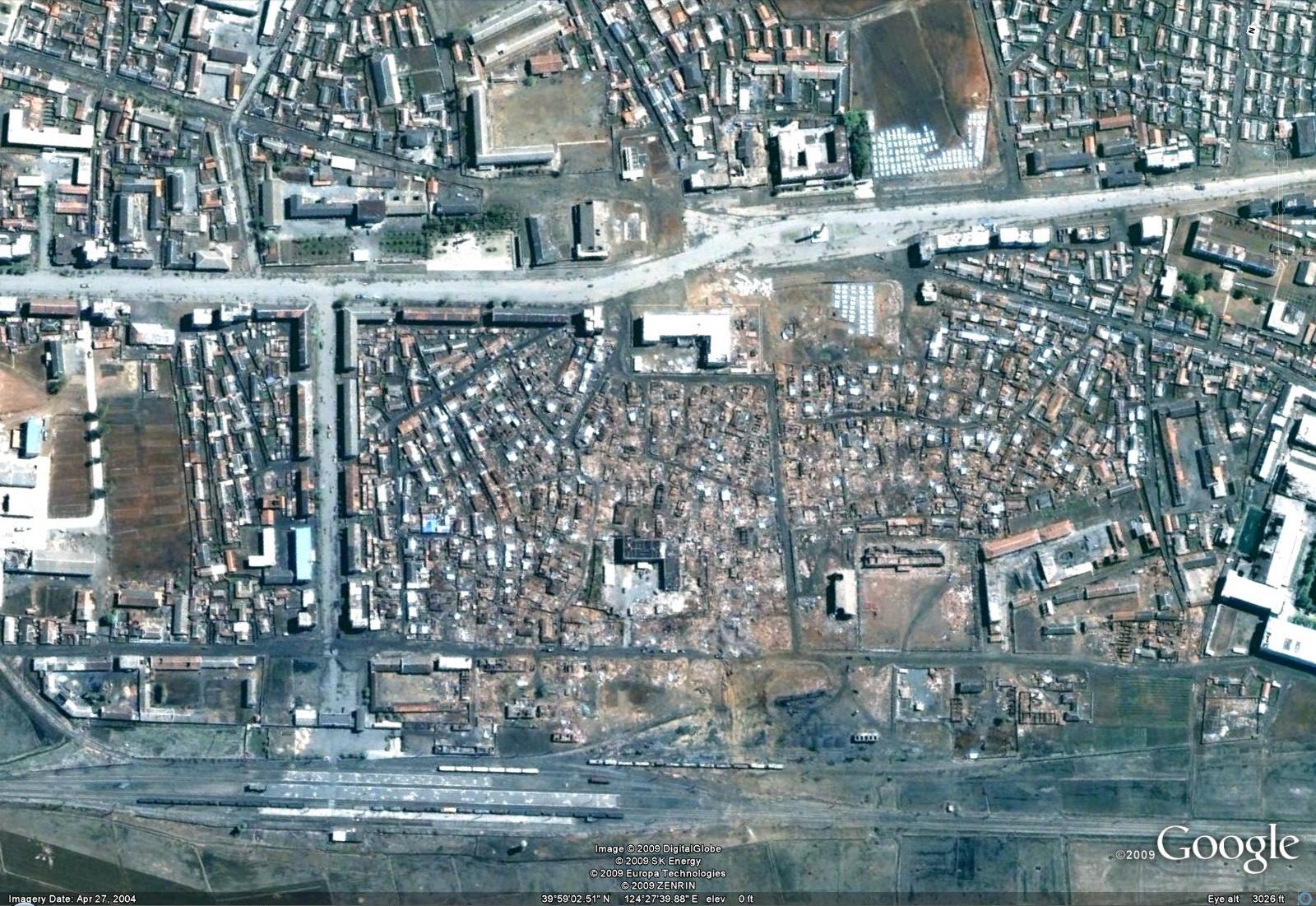
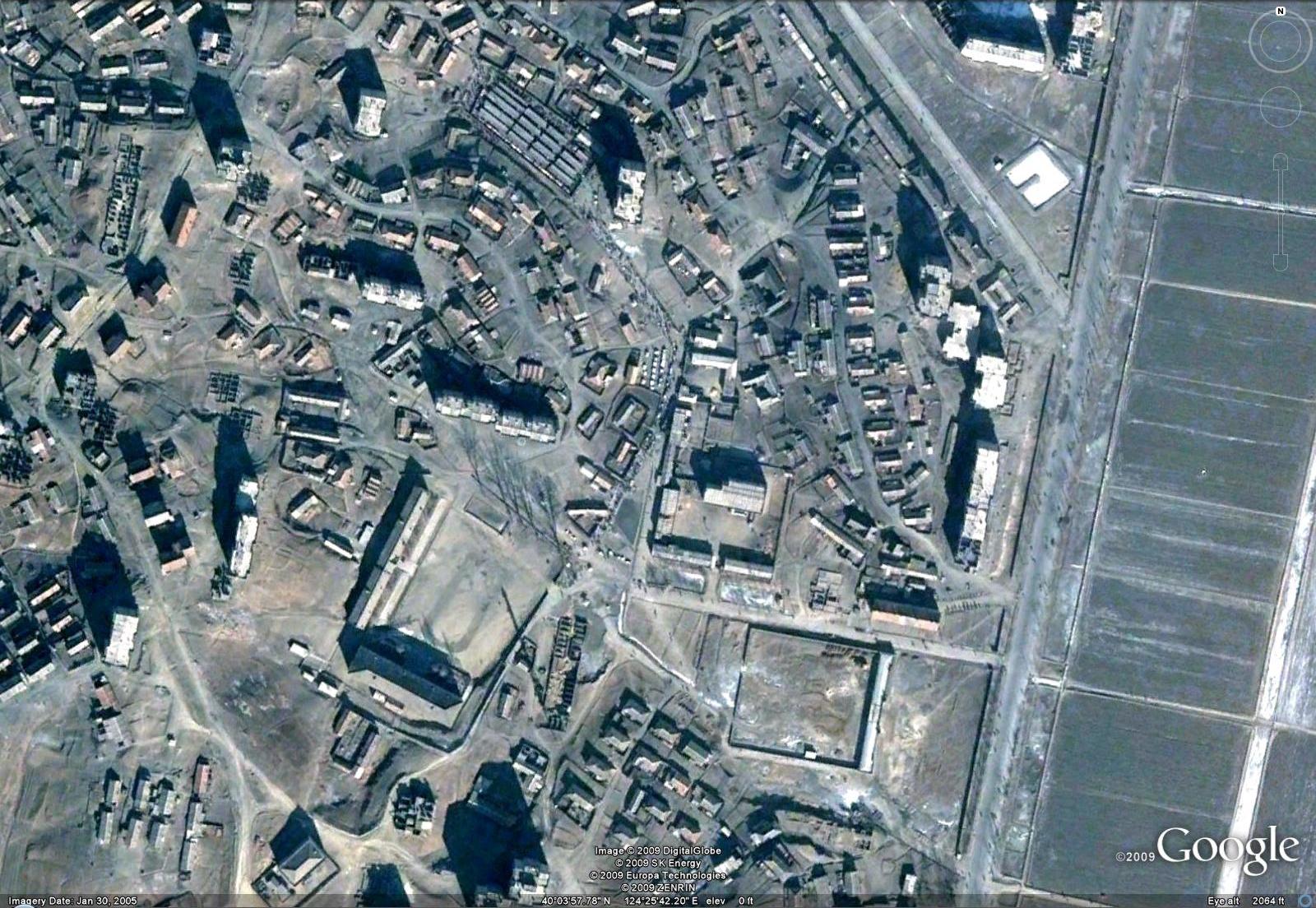
Here is the first “after” image (which is the default image on Google Earth):

ryongchon-after1.jpg
(Click image for larger version)

As you can see a large number of traditional houses were destroyed as well as a school.

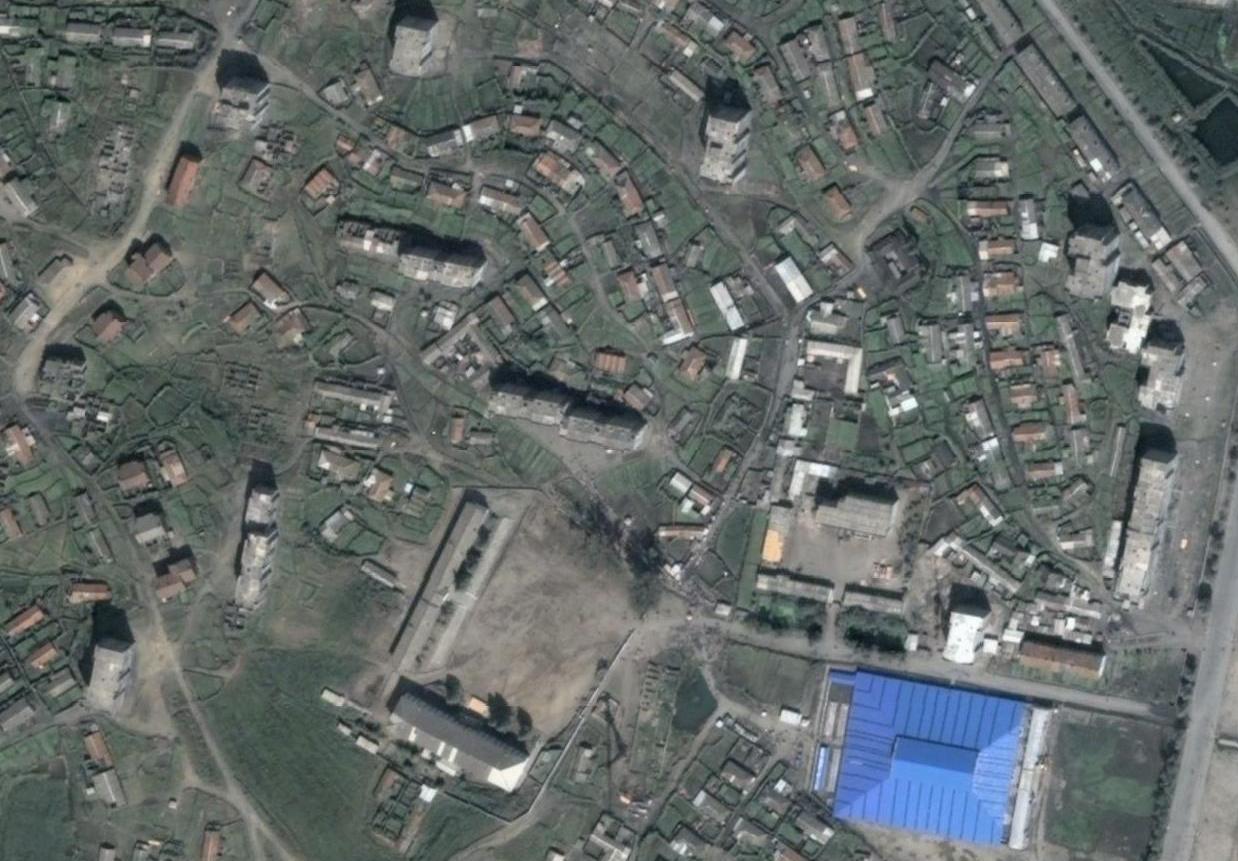
Below I have compiled more recent images to show how the city was reconstructed.  Gone are the traditional homes.  They have been replaced by typical Soviet-style apartment blocks:

ryongchon-after2.jpg
(Click image for larger version)

Share

Sinuiju market upgrade

Wednesday, October 28th, 2009

Below is the Google Earth satellite image from an area south of Sinuiju:

oldsinuijumarket1.jpg
(Click image for larger version)

The busy area at the top of the image is a local market (Jangmadang).

Below is a more recent image of the same area.

newsinuijumarket2.jpg
(Click image for larger version)

We can see that the initial market has been closed and relocated to a larger and more modern facility.  This one is closer to the main road and reminds me of the Tongil Market in Pyongyang in terms of size and prominence.  Most all of the other markets are hidden from the main roads.

Share

DPRK government goes after informal lenders

Sunday, September 20th, 2009

PSA Cracks Down on Loan Sharks
Daily NK
Jung Kwon Ho
9/20/2009

North Korea’s police, the People’s Safety Agency (PSA), have launched a special investigation into the behavior of loan sharks, or “usurers,” in light of the high numbers of people taking out high interest loans but being unable to keep up repayments and ending up as “kotjebi.”

A source from Shinuiju told Daily NK on Friday, “A decree declaring all-out war against predatory usurers has been handed down to the provincial People’s Safety Agency. They are investigating Korean-Chinese traders and North Koreans repatriated from Japan.”

Loan sharks in North Korea are generally Korean-Chinese with relatives in China or those who have returned from Japan but whose relatives remain there.

The story was confirmed by a source from Hoiryeong in North Hamkyung Province. The source explained to Daily NK on Thursday, “The People’s Safety Agency issued a decree exposing the usury, and conveyed it to every office of the provincial and municipal National Security Agency (NSA) and the PSA. Thereafter, NSA officials attended People’s Unit meetings and gave lectures about harshly sanctioning the practice of earning money through high interest loans.”

According to the Hoiryeong source, the decree, “Map out measures to uproot usury,” was delivered to all NSA officials on September 2.

The decree apparently says, “Although national measures have been adopted to root out usury, this social phenomenon has not been eradicated.”

The Shinuiju source said that the authorities’ new hard-line has come about because the numbers of people who are being turned into “kotjebi” by these predatory loans is increasing.

He noted, “Since 2000, new kotjebi have been people who have gone to ruin and lost their homes to loan sharks. These days their numbers are drastically increasing, so the authorities cannot stand by indifferently.”

According to one source, a Korean-Chinese loan shark called Cho Jung Cheol was recently caught by the PSA on suspicion of taking a total of seven houses from defaulters.

North Korean people usually offer their house as security on a loan. Cho lent money at 30% interest for two weeks to a month, and used gangsters to take houses from those who couldn’t pay.

Those who lose their houses in this way roam the streets with their family members, the family splits up, or sometimes they escape from North Korea. After 2005, this became a common social phenomenon.

The loan sharks have other unethical ways to turn a profit, “Some of these loan sharks hoard up food during the harvest season and earn undue profits from selling it in the difficult spring season,” the source explained.

Sources all agreed that the people unanimously welcome the authorities’ measures.

Share

The urban dimension of the North Korean economy: A speculative analysis

Sunday, August 9th, 2009

Chapter 11 of North Korea in the World Economy
Bertrand Renauld

(NKeconWatch: the whole paper is worth reading in full.  Below is the introduction.  Here is a link to the chapter in Google Books.

Introduction:

This chapter explores the urban dimension of the North Korean economy. Few areas of economic management of centrally planned economies have met with such widespread dissatisfaction and broad popular support for reforms as housing and urban development. This dissatisfaction arises from the peculiar systemic features of the “socialist city.” Since the early 1990s we have been able to study the economics of this type of city based on data from cities of the former Soviet Union, Central Europe, and also China and Vietnam. Of course, no such access to information exists today in North Korea.

As a starting point, I ask only one question: based on the body of knowledge that we have gained from other centrally planned economies (CPE), what are the systemic features of the North Korean urban economy that we expect to find? By so doing, the chapter applies to North Korean cities the method of “rigorous speculation” used earlier by Noland et al. (2000a) on North Korean macroeconomic and trade performance. According to Noland and his colleagues, “rigorous speculation” is the incorporation of fragmentary information into a consistent analytical framework that can clarify alternative scenarios regarding current economic conditions in North Korea. The results can then suggest suitable reforms to stimulate the economy.

Using a medical analogy, the focus is how the “personal history and diagnosis” of the North Korean urban system should be conducted some day. The analysis should not be misconstrued or misused: it is not offered as an actual diagnosis of the North Korean urban system. Rather, using our body of knowledge of the anatomy and physiology of the “socialist city,” it speculates about what we should expect to find in the Democratic People’s Republic of Korea (DPRK) urban system. This “pre-diagnosis” relies on the limited yet often revealing information available on the North Korean urban system and its patterns of investment. We also can narrow the range of uncertainty about the structure of the North Korean urban system by means of international comparisons. For instance, should we expect the North Korea system of cities to have more in common with the Soviet cities of Russia than with Chinese or Vietnamese cities, both in terms of time paths of development and of institutional arrangements?

The paper contains many interesting facts and data that help us understand just how different centrally planned/socialist cities are when compared with market-based cities.  The paper also spells out some interesting implications for North Korea’s urban residents (the majority of the country’s population) once the transition from a socialist to a market-based infrastructure begins. 

Share

Kim Jong Il, Urban Planner

Friday, April 24th, 2009

Daily NK
Lee Sung Jin
4/24/2009

Hyesan, Yangkang Province: If it had been any other day, on April 18th the entire city would be buzzing with People’s Unit evaluation meetings and cadre lectures. On this particular day, however, influential officials in Yangkang Province, including Kim Kyung Ho, Chief Secretary of the provincial committee of the Party, were gathered together around the railroad tracks in Sungwoo-dong.

The “Ground-Breaking Ceremony” for a project to clear residences near the railroad, so as to fulfill “Supreme Commander Kim Jong Il’s March 4th Decree,” was being held. However, the expressions on the faces of the officials carrying out the decree were grim. The ceremony ended with a few civilians who had been mobilized for the event demolishing an old farmhouse near the railroad and without the top official present making the planned speech. The faces of the bystander officials as well as the gathered civilians betrayed their distress; removal of houses near the railroad has already started, while new homes for residents, whose houses are to be demolished, are not yet prepared.

All of this started with Kim Jong Il’s onsite inspections at Samjiyeon, also in Yangkang Province, on March 4th. Kim, who entered the county along the road connecting Bukchung in North Hamkyung Province and Hyesan, had some choice words for the homes haphazardly clustered around the railroad.

“Why is it so disorderly around here? Get rid of all of the houses surrounding the railroad within the year!”

He also apparently expanded on his beliefs, “Clearing the area around the railway is an important project which improves the image of our country.” Since Kim Jong Il’s words and “instructions” surpass all laws and institutions, his words immediately formed the “March 4th Decree” and were subsequently relayed to all officials in the Yangkang Province region.

Railways in North Korea

In North Korea, there is no protection surrounding railroads, which frequently cut across the center of cities. There are rules that prohibit the construction of public buildings, including residential homes, within 50 meters of railroad tracks, but such rules have existed in name only for a long time.

From the perspective of common citizens, the areas around the railways are some of the most active zones for economic activity. Of course, it is very dangerous when trains are passing, but since they run only once or twice a day at most, the danger is short-lived.

The railroad is a more direct route than the roads, which are in any case not always paved, so it helps conserve time for commuters or those going to markets. It is also convenient to travel on the rails on wooden blocks during the winter! In the border cities of Yangkang and North Hamkyung Provinces, railways running alongside the Yalu and Tumen Rivers serve as important smuggling routes to and from China.

Since the early 2000s, when citizens began to prefer convenient locations around railroads for selling goods or commuting to and from work, the North Korean authorities permitted the construction of residential homes, though bribes had to be offered to officials. In small and mid-size cities, many homes were built within 10 meters of railway tracks.

A source from Yangkang Province explained in a phone conversation with Daily NK on the 23rd while relaying the news of the groundbreaking ceremony, “Workers have to spend most of the year constructing homes. Many people will then be forcibly evacuated from the danger areas.”

The source further commented, “In Hyesan, several hundred households have to be relocated even if only the residential homes within 50 meters of the railway are demolished. Since land is available only on the outskirts of the cities, citizens slated for evacuation have been putting up strong resistance.”

The source also commented dryly, “In resettlement projects, homes are usually built very sloppily. It would be better if the state provided resources to the individuals to build the homes themselves.”

In the areas surrounding the railroad in Hyesan proper, where one-bedroom rentals by university students recently discharged from the army are commonplace, frustration has been running high. The source relayed that while the People’s Units around the railways have been holding daily meetings to decide on the households to be relocated, angry words and even fistfights have been rampant, making mutual agreement difficult if not impossible.

The Party in Hyesan allotted responsibility for the construction of new residences to each factory and enterprises. However, the construction materials provided by the North Korean authorities amounted to just 300kg of cement, which is barely enough for the under-floor heating of a house. Additional materials and means of transportation have to be provided in their entirety by the factories and the enterprises.

Even the citizens who do not live in the vicinity of the railways are incensed by the recent decree. Each household in Hyesan was ordered to make and offer 500 bricks of mud and straw. The factories, in order to secure fuel and other materials, have had to reduce the wages of workers, which at best are not even equivalent to two kilograms of rice, by half.

The source explained, “In 1992, 1,000 homes were built for the discharged soldiers who had been stationed in the Hyesan mine, but in less than three years, at least half had abandoned their homes. Residential homes built in Potae-ri, Samjiyeon or in Daehongdan look great on the outside, but they were all built sloppily, so the soldiers are living in poor conditions to this day.” 

Share

North Korea Google Earth

Wednesday, March 11th, 2009

North Korea Uncovered v.16
Download it here

laurent-kabila.jpg

The most recent version of North Korea Uncovered (North Korea Google Earth) has been published.  Since being launched, this project has been continuously expanded and to date has been downloaded over 32,000 times.

Pictured to the left is a statue of Laurent Kabila of the Democratic Republic of Congo.  This statue, as well as many others identified in this version of the project, was built by the North Koreans. According to a visitor:

From the neck down, the Kabila monument looks strangely like Kim Jong Il: baggy uniform, creased pants, the raised arm, a little book in his left hand. From the neck up, the statue is the thick, grim bald mug of Laurent Kabila (his son Joseph is the current president). “The body was made in North Korea,” explains my driver Felix. In other words, the body is Kim Jong Il’s, but with a fat, scowling Kabila head simply welded on.

This is particularly interesting because there are no known pictures of a Kim Jong il statue.  The only KJI statue that is reported to exist is in front of the National Security Agency in Pyongyang.  If a Kim Jong il statue does in fact exist, it might look something like this.

Thanks again to the anonymous contributors, readers, and fans of this project for your helpful advice and location information. This project would not be successful without your contributions.

Version 16 contains the following additions: Rakwon Machine Complex, Sinuiju Cosmetics Factory, Manpo Restaurant, Worker’s Party No. 3 Building (including Central Committee and Guidance Dept.), Pukchang Aluminum Factory, Pusan-ri Aluminum Factory, Pukchung Machine Complex, Mirim Block Factory, Pyongyang General Textile Factory, Chonnae Cement Factory, Pyongsu Rx Joint Venture, Tongbong Cooperative Farm, Chusang Cooperative Farm, Hoeryong Essential Foodstuff Factory, Kim Ki-song Hoeryong First Middle School , Mirim War University, electricity grid expansion, Tonghae Satellite Launching Ground (TSLG)” is also known as the “Musudan-ri Launching Station,” rebuilt electricity grid, Kumchang-ri suspected underground nuclear site, Wangjaesan Grand Monument, Phothae Revolutionary Site, Naedong Revolutionary Site, Kunja Revolutionary Site, Junggang Revolutionary Site, Phophyong Revolutionary Site, Samdung Revolutionary Site, Phyongsan Granite Mine, Songjin Iron and Steel Complex (Kimchaek), Swedish, German and British embassy building, Taehongdan Potato Processing Factory, Pyongyang Muyseum of Film and Theatrical Arts, Overseas Monuments built by DPRK: Rice Museum (Muzium Padi) in Malaysia, Statue de Patrice Lumumba (Kinshasa, DR Congo), National Heroes Acre (Windhoek, Namibia), Derg Monument (Addis Ababa, Ethiopia), National Heroes Acre (Harare, Zimbabwe), New State House (Windhoek, Namibia), Three Dikgosi (Chiefs) Monument (Gaborone, Botswana), 1st of May Square Statue of Agostinho Neto (Luanda, Angola), Momunment Heroinas Angolas (Luanda, Angola), Monument to the Martyrs of Kifangondo Battle (Luanda, Angola), Place de l’étoile rouge, (Porto Novo, Benin), Statue of King Béhanzin (Abomey, Benin), Monument to the African Renaissance (Dakar, Senegal), Monument to Laurent Kabila [pictured above] (Kinshasa, DR Congo).
Share

Home make-overs: DPRK edition

Friday, February 27th, 2009

In the last twenty years, a number of 1960s-era, Soviet-style houses in the DPRK’s elite housing compounds have been upgraded into more “western-contemporary” housing.  For example, compare Kenji Fujimoto’s 1989 Kangdong photo (below) with a 2004 image from Google Earth:

kangdong1a.JPG

1989

kangdong-new.JPG
2004

Judging from Google Earth imagery, this process is largely completed, though there still appear to be a few locations that that have not been remodeled.  Looking at Onchon County (below) we can see that the reconstruction of old-style compounds was still under way as of 2005.  The house on the left of both photos appears to already be upgraded in 2002, but by 2005 the unit on the right of the first photo (below) has been completely leveled.  Reconstruction of this residence was probably underway into early 2006. 

mar1-2002.JPG
3/1/2002

mar2-2005.JPG
3/2/2005

I do not know the calculus used to determine which residencies are updated, neither in degree nor order.  I am also immediately unaware of which organization/s is/are responsible for construction/maintenance of these facilities.  A KPA unit built Sihanouk’s palace on Lake Changsuwon, and it is reasonable to believe the same unit constructed in the above locations as well.  If any readers have more information on this, please let me know.

UPDATE: (Hat tip to Mike) “The residences are either constructed on commission or they are presented to KJI, or some other CCKWP cadre, as a gift.  KJI, his family, members of the Kang and Jang families, long time CCKWP members and select intelligence/security appartus officials are known to have designated homes.

The home are constructed by KPA construction units (like Changsuwon) in cooperation with civilian crews under the auspices of the Escort/Bodyguard Bureau.  Some members of the civilian crews also work on the large monuments in the DPRK, and overseas.   When the homes are built or renovated on commission, the financing comes from the CCKWP offices.  A lot of the fixtures and furnishings are purchased through SOE’s or  by discreet MOFA officers.  A lot of these purchases are conducted in Beijing, Moscow, Geneva, Vienna and Paris. “

Not to draw to stark a comparison, but the reverse process is also evident through dated satellite photos.  This warehouse/factory near the Bukchang Thermal Power Plant has clearly fallen into disrepair (and possible asset stripping) between 2002 and 2005.

assetstripping-7-7-02.JPG
7/7/2002

assetstripping-11-16-05.JPG
11/16/2005

Share

Expansion of Pyongyang’s east market

Monday, February 23rd, 2009

The newest version of Google Earth allows the user to scroll backwards in time to see how a specific area has changed over the years.  Although the satelite imagery available for North Korea needs to be expanded, by utilizing the current stock of photos we can uncover some interesting developments.

Below is an example—a bird’s eye view of the expansion of Pyongyang’s eastern market (click on images for full size):

pyangeastmarket-12-25-2003.JPG

December 25, 2003

pyangeastmarket-6-4-2004.JPG

June 4, 2004

pyangeastmarket-4-6-2005.JPG

April 6, 2005

pyangeastmarket-10-29-2005.JPG

October 29, 2005

pyangeastmarket-most-recent.JPG

Most recently

If any readers out there discover other interesting developments please let me know.

Share

An affiliate of 38 North