Archive for the ‘Special Economic Zones’ Category

Politics, blood ties trump trump profits in north

Thursday, June 22nd, 2006

Joong Ang Daily
6/22/2006

In the ground floor ballroom of the Yanggakdo Hotel annex in Pyongyang, the North Korean Chamber of Commerce hosted a trade information and investors’ relations conference on May 16. Senior North Korean trade ministry officials gave presentations on North Korea’s economic policy and investment climate. Rim Tae-dok, chief counselor of the trade ministry, said Pyongyang protected property rights of foreign investors and guaranteed the independence of their management. The North Korean official stressed that foreign investors would enjoy tax benefits and that the legal process of establishing companies in the North has been largely simplified.

Another senior North Korean official, Kim Ha-dong, also gave a presentation about Pyongyang’s export policy. Mr. Kim, a senior researcher at the trade ministry, said the communist country had been issuing permits for exports and imports after only a short review process. He encouraged investors to participate in trade.

The North Korean presentations were not very different from those given in any capitalist country, but the concept of “self-reliance” was prominent.

“We will build a self-reliant economy of Koreans and carry out trade on top of that,” Mr. Kim said. He added that North Korea’s self-reliance must not be damaged or controlled by foreign economies through trade.

During the JoongAng Ilbo’s 10-day survey of the reclusive communist country’s economic sites, Pyongyang’s dilemma ― self-reliant socialism versus economic development by attracting foreign investments ― was apparent. Some North Korean officials showed skepticism about China’s model of partially opening its economy, claiming that their country had to be run in a different manner.

“I have toured special economic zones in China several times,” said Ju Tong-chan, the North’s chairman of the National Economic Cooperation Committee. “But we have different ways of managing our economy than China, and I believe we should run our special economic zones in different ways. We are still researching our options, but we will not do it that [Chinese] way.”

China was able to expand its economy at high speed after the central government opened up the economy. It gave local governments enough independence to run business autonomously in their areas and attract foreign investment. But Mr. Ju was obviously unconvinced by the success of China’s model. The opening of the economy could boomerang, becoming a threat to the North’s system, he worried.

On factories and farms, North Koreans were still caught up – or at least gave the outward appearance of being caught up ― in a personality cult centered on the nation’s founding family. At cooperative farms and factories, the senior managers’ introductory briefings were always about the lessons taught by Kim Il Sung, North Korea’s first president, and Kim Jong-il, who succeeded him but did not assume the title of national president. These managers’ presentations began with the number of visits by the Kims to the site. There were always paeans to the communist regime’s “military first” policy and slogans to that effect were emblazoned everywhere, making it clear that the military and politics take priority over the economy.

North Korean officials were also reluctant to lay out all pertinent information to investors and journalists.

Kim Yong-il, 45, the manager of the port at Nampo on the country’s west coast, refused to cite specific numbers about the port’s freight-handling capacity. He said only that it could deal with “large amounts” of cargo.

Mr. Rim, the trade ministry chief counselor, said North Korean politics were extremely stable, which guaranteed the security of foreign investments. He gave no data or examples to support that claim of stability, however, and completely ignored the question of North Korea’s nuclear programs and how they might or might not affect stability.

Reacting to the journalists’ remarks that South Korean firms were reluctant to invest in the North because it has been difficult to make profits there, Mr. Ju, the chairman of the National Economic Cooperation Committee, said, “Why is money the priority? Inter-Korean business must be about something more than just monetary calculations.”

He was also visibly upset about Seoul’s policy on economic cooperation. “We made extremely sensitive military restricted areas at Mount Kumgang and Kaesong available to the South,” Mr. Ju said. “But the South has just given us a lot of excuses and failed to cooperate.”

He continued, “To nurture the Kaesong Industrial Complex into a world-class production facility, electronic and advanced technology industries are crucial. But labor-intensive industries are the majority in Kaesong. In this information era of the 21st century, the South has failed to bring in computers for administrative use in Kaesong.”

He also vented some spleen about the United States, asking the journalists why Seoul was so careful not to irritate Washington. He cited the U.S. restrictions on the re-export without prior approval of so-called “dual-use” goods, those with civilian and military applications, to countries it has blacklisted, including North Korea. Other international accords, such as the Wassenaar Agreement, also prevent South Korea from providing the North merchandise and commodities that have “strategic” applications.

But Mr. Ju sounded firm about continuing operations at Kaesong. “It is the nucleus of inter-Korean economic cooperation, and we must make it a success first. Then we can move on to other projects.”

He also dismissed the U.S. concerns that workers in Kaesong were laboring under harsh working conditions, but seemed to sidestep the basic question. “It is a matter that we should deal with,” Mr. Ju said. “Since we manage businesses differently, we are trying to come up with the best resolution to make direct [wage] payments to the workers.”

South Korean economists and businessmen who listened to similar presentations and looked at some of the North’s accounts were troubled by Pyongyang’s rigidity in opening up the economy. That, they said, coupled with the simmering nuclear weapons problem, is the most serious obstacle to attracting foreign investments. Unless U.S. diplomatic ties with North Korea are established, investing in facilities in North Korea and selling “made in North Korea” products on global markets would be difficult and risky, they agreed.

“If a foreign investor wants to visit a factory in the North that he has put money into, he has to obtain an invitation every time, and his schedule and movements in the North are strictly controlled,” said Kwon Yeong-wuk, the trade promotion director at the Korea International Trade Association of Seoul. “Under such circumstances, the North should not expect much in the way of foreign investments.” He said Pyongyang had a “my way or the highway” approach to the economy: If you’re here, follow our rules. The rigidity, he reiterated, is a serious obstacle to investors.

Other experts and businessmen in South Korea said Pyongyang’s attitude toward inter-Korean business in particular makes it hard to earn profit. They complain about the stress North Korean officials put on the concept that business between the two Koreas should be based on the maxim “blood is thicker than water” and not on market principles. An official at North Korea’s National Reconciliation Council argued that South Korean conglomerates should make large investments there based on that concept.

A South Korean businessman who has been looking for business opportunities in the North said he has run into a series of dead ends. “South Korean firms are doing businesses in the global market,” he said. “The largest market is the United States, and not many people would want to give that up to do business with the North.” He added that North Korea’s cheap but skilled manpower is an attractive point, but that poor infrastructure, extremely low purchasing power and the difficulty of obtaining raw materials make China and Vietnam much more attractive investment locales. Kim Yeon-chul, an academic at Korea University in Seoul, agreed with that assessment. “Large companies in South Korea have already automated their production facilities, so labor costs are not important in deciding on investments,” he said. “North Korea must improve other conditions instead of stressing the merits of its manpower or blaming outside causes.”

Share

Economic aid and the 6/2006 missle test

Thursday, June 22nd, 2006

From the Joong Ang Daily:

In Seoul yesterday, Lee Jong-seok, the unification minister, told the opposition Grand National Party’s interim leader, Kim Young-sun, that it would be “difficult” to continue economic aid to North Korea if it tested a missile.

But he said that Seoul’s action would be “limited sanctions” only. He did not elaborate, except to say that operations at the Kaesong Industrial Complex would not be affected.

North Korea has asked for 450,000 tons of fertilizer this year, of which 150,000 tons has been already been delivered. Another 200,000 tons is being readied for shipment.

A Unification Ministry official said plans to ship the remaining 100,000 tons of fertilizer and shipments of rice could be withheld if the North’s missile lifts off. “We have told the North that there will be consequences and we are firm on this,” the official said.

Share

Kumgang resort getting a South Korean Bank

Thursday, June 22nd, 2006

From Yonhap:

S. Korean lender Nonghyup plans to open branch on N. Korea’s Mt. Geumgang in September

SEOUL, June 22 (Yonhap) — South Korea’s National Agricultural Cooperative Federation(Nonghyup) said Thursday it plans to open a branch at the Mount Geumgang resort in North Korea in September.

Nonghyup will open the Mount Geumgang branch on September 15 with three South Korean employees and two North Korean employees, it told the National Assembly’s Agriculture, Forestry, Maritime Affairs and Fisheries Committee.

The state-run financial institution received approval on May 4 to open the branch at the resort from South Korea’s Unification Ministry.

Nonghyup plans to build a two-floor building for its branch and to operate it 365 days a year without holidays.

In 2004, Woori Bank launched a branch in an industrial complex in the North Korean city of Kaesong, the first case of a South Korean lender setting up a branch in the North.

Share

Seoul offering subsidies to companies that invest in Kaesong

Saturday, June 17th, 2006

Joong Ang Daily

The government said yesterday it would give loan guarantees of up to 10 billion won ($10.5 million) to companies operating in the Kaesong Industrial Complex in North Korea.

The guarantees, offered as a means of encouraging more manufacturing activity there, will be available beginning late this year.

The Korea Credit Guarantee Fund, a government-owned fund, will guarantee loans extended by banks and other financial institutions. The guarantees will be limited to seven years, and will carry a price tag of a maximum of 3 percent of the loan amount.

The decision was made at a meeting presided over by Han Duck-soo, the economic deputy prime minister.

Finance Ministry officials said such guarantees are limited to 3 billion won for small and medium businesses operating domestically. Those “ordinary” guarantees are also available to exporters and trading companies who want to open or expand domestic facilities.

Companies operating in Kaesong are also eligible for direct loans of up to 5 billion won from official inter-Korean economic cooperation funds.

North Korea has grumbled about the slow pace of building up the Kaesong complex; part of the problem, the ministry said, is that there is some hesitation by companies and difficulty in obtaining loans because of the perceived political risk and the difficulty in using assets located in North Korea as collateral for loans in the South. Those questions, coupled with what the ministry hopes will be a surge in interest in manufacturing at the complex, were the spurs for the new guarantee program, finance officials said.

Seoul is pushing its trade partners to treat goods made in Kaesong as domestic Korean products, a request accepted by some but rejected by others, including the United States. Some trade experts also worry that the new guarantee program could be seen as government subsidies to manufacturers, which could be illegal under international trade rules.

Fifteen companies are operating at the complex now; another 23 are preparing to start.

Share

Seoul says no DPRK aid without railways test

Thursday, June 8th, 2006

From the Korea Times:

South Korea’s chief delegate for the inter-Korean economic talks yesterday reaffirmed the North will not be getting any new economic support unless it pushes ahead with the railways test-run.

In a radio interview, Vice Finance Minister Bahk Byong-won said, “We created a structure in which the additional economic cooperation is only possible after the railways test-run.”

The two Koreas closed their 12th Economic Cooperation and Promotion Committee meeting in Jeju on Tuesday with a nine-article agreement on support for light industries, natural resources development and others.

The two sides concurred such agreements will only be implemented when “conditions are met,” which they verbally confirmed referred to the cancelled cross-border test-runs.

North Korea abruptly cancelled the scheduled testing last month, prompting an angry response from the South.

The South, remaining steadfast to its policy of engaging more economically with its communist neighbor, believes staunch military authorities to be behind the cancellation.

“(The North’s) military authorities are closely connected with the procedures of implementing many of the inter-Korean agreements. And the (preconditioning) clause refers to just that,” Bahk said, emphasizing that the North Korean military must take visible measures such as preparing a military guarantee for the railways operation.

The two railways, on the east and west of the Korean Peninsula, run through heavily fortified borders. It would be the first time in over five decades that the trains run.

“Although we said ‘conditions’ in the agreement, both sides made clear when we read out the agreement that the conditions referred to the railways test to avoid any conflicting interpretations in the future,” Bahk said.

([email protected])

By Lee Joo-hee

Share

Joint railway tests still on the agenda…

Wednesday, June 7th, 2006

From the Joong Ang Daily:

South Korean delegates at the inter-Korean economic talks here won a victory of sorts early yesterday morning; North Korea agreed to Seoul’s linkage of the completion of test runs of the newly reconnected railroads across the Demilitarized Zone to its offer of raw materials for the North’s light industries.

But in what apparently was a face-saving gesture to the North, the linkage was not made explicit in the joint announcement of the results of the four-day meeting. South Korea agreed to supply a package of raw materials for the North’s shoe, soap and textile industries worth $80 million, which will be delivered “when necessary conditions are met.” The agreement said nothing more about the conditions, but the rail tests, most recently cancelled by North Korea the day before they were to be conducted last month, were clearly the point at issue. Kim Chun-sig, the Seoul delegation’s spokesman, made that explicit. “The trial train runs are linked with the supply of raw materials, and the agreed announcement was issued with that understanding by the North.” He said agreement to the linkage was not easily won from the North; Seoul’s delegates stressed the uproar that would break out here if that condition were not attached.

The aid will be in the form of a loan to be repaid in kind ― North Korean natural resources ― over a 15-year period with an interest rate of 1 percent. The two delegations met the press to announce the agreement, saying they had signed a nine-point agreement and a 10-point supplemental document dealing with the aid package.

In the agreement, the aid is to be delivered in August. Mr. Kim said that meant that the necessary military-to-military agreement on safeguards required before travelers cross the Demilitarized Zone must be in place and the rails tests completed.

The strings attached to the aid package are something of a departure for the Roh administration, which has been tolerant ― far too tolerant, critics in the South contend ― of North Korea’s penchant for accepting aid donations while failing to keep promises it had made in return. Pyongyang’s cancellation of the railroad tests in late May was, apparently, too much for Seoul to stomach politically. The tests were cancelled the day before they were to take place, and the North blamed “political instability” in the South and the lack of a military safeguards agreement that the North itself has blocked.

A Seoul delegate said proudly, “Unlike in the past, we focused on enforcement of the agreement and secured some leverage over North Korea.” The two sides made some modest progress on other issues. They agreed to conduct negotiations on a joint project to mine gravel from the mouth of the Han River inside the Demilitarized Zone. They agreed that military-to-military agreements would be necessary for safety and security reasons. The project had been suggested by Seoul in April, and reflects the dwindling supply of such material here because of South Korea’s 30-year construction boom.

Other agreed meetings will address administrative procedures at the Kaesong Industrial Complex, flood control on cross-DMZ rivers and exchanges of weather data, especially on the yellow dust storms that originate in China’s Gobi Desert.

Share

Koreas agree on business contracts

Wednesday, June 7th, 2006

From the Korea Herald:

JEJU – The two Koreas yesterday agreed on a set of contracts to stimulate North Korea’s light industries and mining operations, but only when “conditions are met.” South Korean officials say the expression is a diplomatic term being used to describe the North’s obligation to allow the test run of trains on two cross-border rail links.

Economic delegates from Seoul and Pyongyang ended their four-day meeting on Jeju Island early yesterday morning, working out a nine-point agreement on various economic cooperation plans.

The talks were held against a background of hostility in the South following North Korea’s unilateral cancellation of the landmark testing of cross-border railways on May 25.

After marathon talks, the two sides managed to achieve a reluctant consensus on how to describe Pyongyang’s duty to revive the cancelled railway test-runs in return for a package of business cooperation deals.

The two sides resorted to indirectly referring to Pyongyang’s railway obligation by using the term “when conditions are met,” instead of using more direct language. Some observers said the “ambiguous” preconditioning leaves room for Pyongyang to pull out from the agreement later on.

The North apparently faces opposition from the military authorities who are apparently against opening the railways to the South. The North Korean military has demanded the two Koreas first conclude a full military guarantee.

“The implication of the agreement is that if there is no test run for the railways, there will be no economic support,” said Kim Chun-sig, spokesman for the South Korean delegation, during a press briefing.

Underscoring that the agreement is strong enough to encourage North Korea fulfill its part of the bargain, Kim said that the two Koreas would soon begin to discuss the military guarantees.

Based on the agreement, South Korea will provide some $80 million worth of raw materials needed for the destitute state to manufacture garments, shoes and soaps from August this year. North Korea will repay 3 percent of the loans in the form of minerals such as zinc. The interest rate was set at a low 1 percent.

The two Koreas also agreed to jointly develop North Korean mines and designate an organization to take charge of the project within one month from now.

Seoul officials argue that this agreement raises the level of inter-Korean cooperation to a mutual and commercial relationship from one-sided aid from Seoul to Pyongyang.

Other agreements included a joint excavation of aggregates in the Han River estuary that is located along the demarcation line, and to open working-level contacts from June 26-27 to discuss how to prevent the Imjin River from flooding nearby areas.

The two Koreas also saw eye-to-eye on advancing their joint businesses into third countries.

Another working-level meeting on the Gaeseong industrial park will be held from June 20-21.

The next Economic Cooperation and Promotion Committee meeting will be held in September in Pyongyang.

South Korean delegation was headed by Vice Finance Minister Bahk Byong-won and the North Korea team was led by Ju Tong-chan.

By Lee Joo-hee

From Yonhap:

The following is the full text of a joint press statement issued by South and North Korea at the end of their four-day economic cooperation meeting on the southern South Korean island of Jeju, Tuesday.

South and North Korea held the 12th meeting of the Inter-Korean Economic Cooperation Promotion Committee in Jeju Island on June 3-6, 2006.

During the meeting, the two sides discussed the issues to further develop the inter-Korean economic cooperation project in the interest of the Korean people in the spirit of the June 15 joint declaration, and agreed on the followings.

1. South and North Korea agree to adopt an accord on South-North Cooperation in Light Industry and Natural Resource Development and enforce it at the earliest possible time in favorable conditions.

2. South and North Korea agree to discuss and then implement a project to extract sand from the Han River’s estuary as military safety measures are taken.

3. South and North Korea agree to make necessary conditions for making the Kaesong Industrial Park globally competitive. To that end, the two sides will hold the second meeting of working-level officials for Kaesong industrial park construction and discuss ways of introducing an ID system, simplifying customs and passage procedures, securing a stable source of workers and building dormitories and convenient facilities to solve problems stemming from an increase in the number of workers.

4. South and North Korea agree to hold the first working-level meeting in Kaesong on June 26-27 to prevent flooding in shared areas near the Imjin River to review each other’s survey reports, discuss joint survey plans and ways of establishing a flood warning system.

5. South and North Korea agree to cooperate actively in preventing such natural disasters as flood, forest fires and yellow dust storms and discuss concrete issues at a working-level meeting in Kaesong sometime in July.

6. South and North Korea agree to discuss their advance into third countries in the field of natural resource development at a working-level meeting in Kaesong sometime in July.

7. South and North Korea agree to exchange economic observation delegations when an accord on South-North Cooperation in Light Industry and Natural Resource Development takes place.

8. South and North Korea agree to discuss and finalize the schedules of working-level meetings for fishery, science and technology cooperation, as well as a timetable for business arbitration committee talks, visits to Kaesong and Mount Geumgang and exchange of lists and other things, in the form of exchanging documents.

9. The 13th meeting of the Inter-Korean Economic Cooperation Promotion Committee will be held in Pyongyang in September 2006 and the date will be determined after consultation in the form of exchanging documents.

Share

Kaesong products to be marked

Wednesday, May 31st, 2006

Joong Ang Daily
5/31/2006

By the end of the year, products made in North Korea’s Kaesong Industrial Complex, as well as visitors’ passes, will be tagged with special radio chips to speed up customs procedures, the Information Ministry said yesterday.

The Kaesong complex is one of four government projects that will use the radio frequency identification chips.

According to the Information Ministry, embedding the chips on Kaesong-made products with details about the products will shorten the time it takes to get through customs from three hours to 30 minutes.

The government also plans to tag arms and ammunition and install the chips at port facilities to improve logistics and track waste management, such as the safer disposal of medical waste.

The chips ― which contain information about the product to which they are attached as well as its location ― are picked up by radio frequency signals from a control station equipped with a transceiver.

“These projects are the first steps toward the widespread use of these chips in Korea,” an Information Ministry official said.

Share

Living Art/Sonoko goes down in flames (literally)

Monday, May 29th, 2006

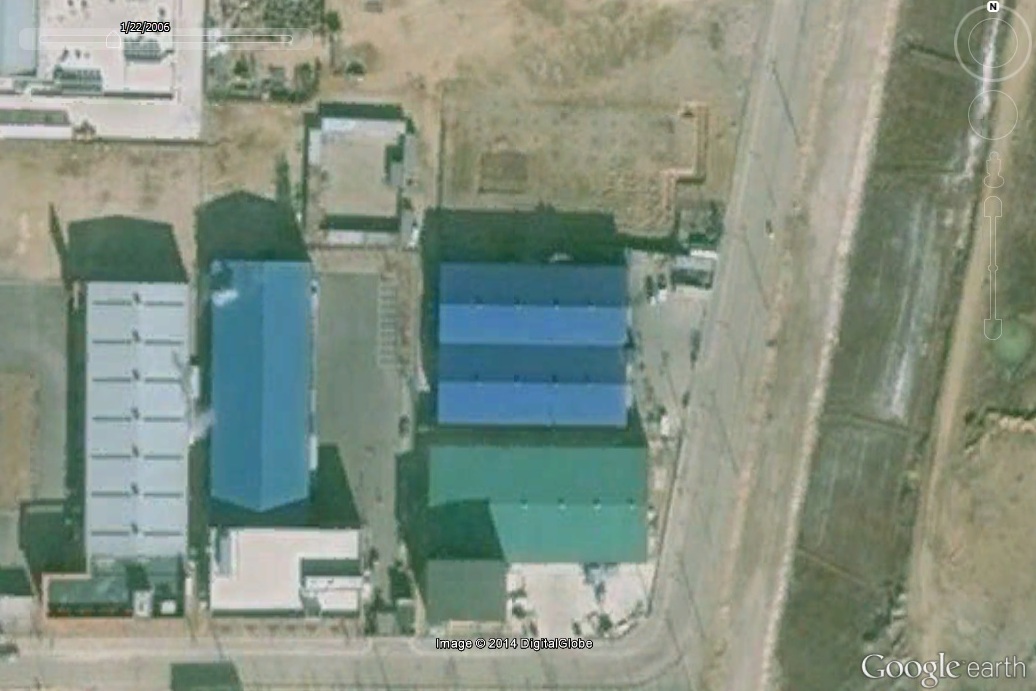
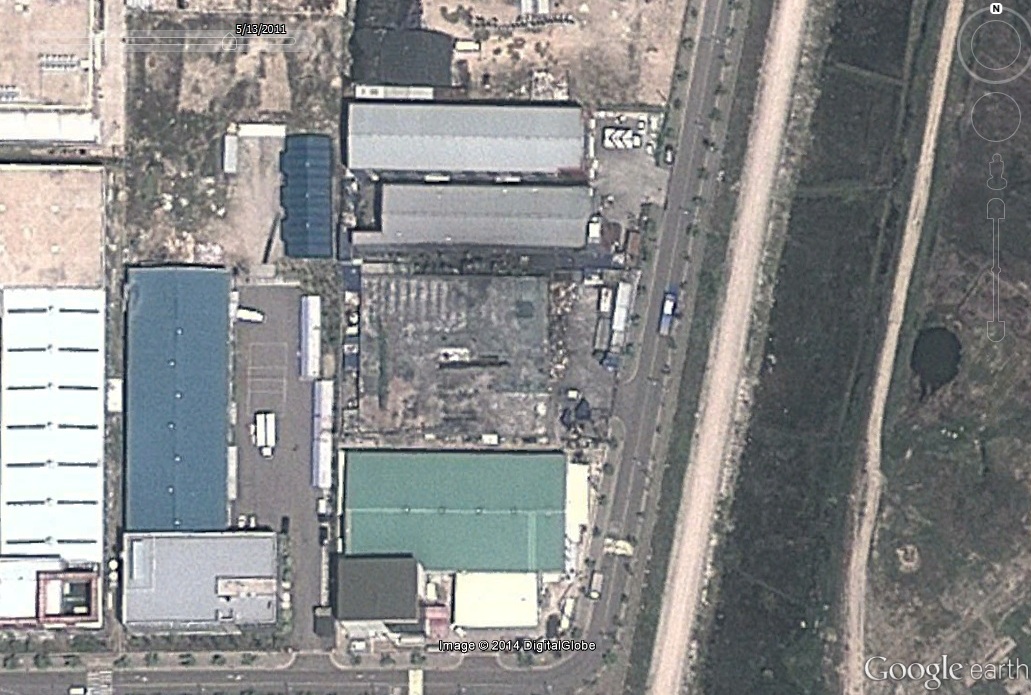
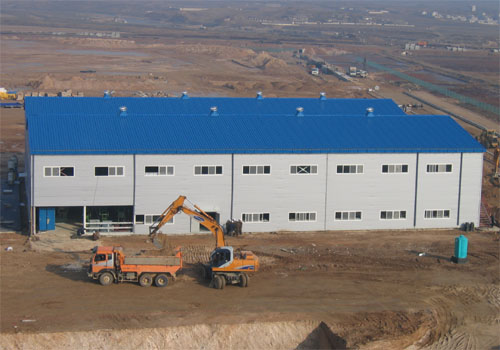
Living-art-factory-ground-2004-12-15 Living-art-GE-2006-1-22 Sonoko-fire-GE-2011-5-13

Pictured Above: (TL) A Picture of the Living Art/Sonoko Factory (source) (TR) A Google Earth Image of the Factory (B) The remains of the fire

UPDATE 4 (2012-1-16): The Living Art/Sonoko Factory has burned down. According to Yonhap:

For Kim Suck-chul, Christmas 2010 was a nightmare that nearly cost him his fledging factory in North Korea.

Kim was the first South Korean businessmen to make an inroad into the joint inter-Korean industrial complex in the North Korea’s western border city of Kaesong.

Kim set up his factory in Kaesong in late 2004 to produce kitchenware and hired some 350 North Korean workers.

[…]

Cooking pots made in the North were brought to South Korea for sale in late 2004, where they made headlines and quickly sold out in a major department store. The kitchenware was later exported to Mexico and Germany also.

A pre-dawn fire on Christmas Eve, 2010, destroyed half of Sonoko Cuisineware’s factory in the Northern economic enclave, costing Kim about 2 billion won (US$1.7 million).

The fire began in a shipping container in the factory’s compound after North Korean workers did not switch off an electric pad and electric heater the previous day, Kim said.

He said the South Korean authorities had inadequate fire fighting measures for the South Korean factories in the complex.

“Firefighters came to the scene more than 40 minutes after the fire tore through the factory,” Kim told Yonhap News Agency by phone from his office in Ilsan, west of Seoul.

He said a fire engine and water wagon came from a fire station just 300 meters away, though the water wagon held so little water it had to return to the station to refill before coming back to the scene.

The blaze completely destroyed machines and other equipment in the factory, bringing the operation to a halt for more than a year.

“All of my North Korean employees are working for other South Korean factories in the complex as I could not pay them wages,” Kim said. He added that four of his eight South Korean workers had either quit or taken leaves of absence.

Kim said he has yet to recover from the devastating damage due to financial constraints.

He sent official documents to former and then current unification ministers on four occasions between April and October of last year to try to secure financial assistance to resume operations, but was only told to “wait.”

Out of frustration, he posted his latest appeal on the Web site of the Unification Ministry, which handles inter-Korea affairs.

“I’m in deathly agony and I can not sleep,” he said. In a worst-case scenario, he said, he may file a suit against the government over the issue.

Unification Ministry spokesman Kim Hyung-suk indicated the government can not give special favors to the kitchenware manufacturer, saying it needs to exercise fairness in its handling of the more than 120 South Korean companies in the complex.

Despite lingering tensions on the Korean Peninsula, the two Koreas have kept intact the shared complex that serves as a key legitimate cash cow for North Korea.

UPDATE 3 (2006-11-28): Living Art and Sonoko managers indicted for embezzlement. According to the Korea Herald:

Prosecutors yesterday indicted the chief executives of two kitchenware manufacturers that operated a joint venture in North Korea’s Gaeseong industrial complex on charges of embezzling government funds granted to promote inter-Korean ties. One was also charged for delaying salary payments for his employees.

This is the first time any business concern in the industrial complex has faced criminal charges.

The Seoul Central Prosecutors Office charged Kim Seok-chul, the chairman of Sonoko Cuisineware Inc., and Kang Man-soo, head of Living Art Co., for colluding to embezzle 300 million won – part of the 3 billion won in government loans which they received as aid for investing in Gaeseong.

The two companies set up a joint venture in Gaeseong in 2004 under the name of Living Art. The kitchenware maker began to use the name of Sonoko in January this year after Living Art pulled out of the venture three months earlier citing financial difficulties.

“After receiving the loans on Oct. 26, 2004, Kim and Kang took the total amount of money in a month,” said a prosecutor investigating the case, declining to be identified.

The prosecutor said Kim and Kang used part of the money to pay their personal debts.

The government funds were extended as low-interest loans, sums of which Living Art redeemed before going bankrupt. Sonoko Cuisineware is reportedly covering the monthly interest payments as it has been independently operating in Gaeseong to produce pots, pans and other kitchenware. The two companies dissolved their partnership in October of last year.

Prosecutors said Kim is also charged of violating inter-Korean economic exchange laws after providing factories in Gaeseong to three different companies where had no business approval by the Unification Ministry which oversees all inter-Korean businesses.

Prosecutors suspect Kim had approached investors by promising to help them gain entry into North Korea, and allegedly led an investors visit to Gaeseong in June of this year with false identities provided by Sonoko.

Prosecutors also accused Kim of delays in payment of salaries to his employees to the tune of over 20 million won in October 2004.

Kim also sent gifts such as expensive imported liquors to North Korean officials in return for business favors. He claimed to have used his own money for the gifts.

The history of Sonoko and Living Art dates back to before Living Art was selected to enter the Gaeseong pilot project in 2004.

Kim was then in charge of exports at Living Art. He persuaded the company to set up a plant in Gaeseong.

Living Art was to invest in the manufacturing equipment, while Kim financed the plant-building.

The 3 billion won of government loans were for building the production facility, but Kim reportedly claimed Living Art failed to pay for the equipment.

Living Art was feted for manufacturing the first Gaeseong-made products that were exported overseas with tags on the pots and pans declaring “Made-in-Korea.” However, the company soon slipped into financial difficulties, leaving Sonoko to cope on its own. In October last year, Sonoko broke off all ties with Living Art and began to independently operate in Gaeseong.

Read the Full story here:
Two Kaesong potmakers indicted for embezzlement
Korea Herald
2006-11-28

UPDATE 1 (2006-5-31): According to the Korea Herald:

In separate news, the Unification Ministry yesterday denied local reports that there was any wrongdoing behind the selection of Living Art as one of the first businesses to enter Gaeseong.

Reports said there were suspicions of backroom deals involving Living Art, which was the first business to roll out products from the inter-Korean complex with the help of millions of won in government loans. Notwithstanding, the enterprise quickly went bankrupt.

“Living Art was not initially among the first 15 companies selected to enter Gaeseong, but was among the next 10 candidates. Living Art was added to the list after two vacancies occurred,” the ministry said.

The ministry said Living Art has paid back 700 million won out of the 3 billion won in government loans it received, and that the company did not appear delinquent at the time the loans were approved in September 2004.

Read the full story here:
Korea Herald
Lee Joo-hee
2006-5-31

ORIGINAL POST (2006-5-29): Living Art (리빙아트 공장) has become the first company to go bankrupt in the KIC. According to the Choson Ilbo:

A kitchenware manufacturer that was among the first to move to the joint Korean Kaesong Industrial Complex in the North in 2004 went bankrupt not long afterwards. The firm was picked despite being in serious trouble already, prompting suspicions of irregularities in the selection process. The prospect of recovering the hefty startup loan from the Inter-Korean Economic Cooperation Fund looks dim.

Living Art was one of only 15 companies chosen from among 136 hopefuls in June 2004. Korean Land Corporation, which was in charge of selection together with the Unification Ministry and the Export-Import Bank of Korea, at the time stressed it would choose only financially sound businesses.

But Living Art went belly-up early in 2005, stopped all activities and sold its plants. As of at the end of May, It had yet to submit its audit report for last year to the Financial Supervisory Service.

In September 2004, soon after the company was selected, its South Korea plant and facilities in Incheon were temporarily seized and put up for auction, but only a month later it was given a loan of W3 billion (US$3 million) from Exim Bank. A financial expert says it is hard to understand how that could happen. Sonoko Cuisineware, an affiliate of Living Art, still makes cookers in Kaesong but is in serious financial trouble because of the Living Art bankruptcy.

Living Art released first products from the Kaesong Industrial Complex in December 2004 and held a grand celebration attended by politicians and officials from the Unification Ministry and Korea Land Corporation. The products were sold in Korean departments stores.

Read the full story here:
Bankruptcy Casts Shadow Over Kaesong Complex
Choson Ilbo
2006-5-29

Share

Moody’s pessimistic on DPRK reform

Wednesday, May 24th, 2006

Will this have repercussions in the south’s credit rating?

From the Daily NK:

On May 22, an official of Moody’s Investor Service, a Credit Rating Agency, announced that despite Kim Jong Il’s visit to China early this year, North Korea did not show indications for internal economic reformation.

On May 22, Vice-president Thomas Byrne of Moody’s Investor Service rated the possibility of North Korea towards economic reformation negative in the North Korean Economic Outlook Symposium held by Institute for Corean-American Studies(ICAS) in the Rusell Senate Building.

Vice-president Byrne estimated that North Korea failed to adjust its currency and exchange rate, and its trade environment was not improved, so that rather its economic situation was worse. Plus, he emphasized that North Korea did not show any signs of internal economic reformation.

He said about Gaesung Industrial Complex that, “If 5 more complexes like Gaesung Industrial Complex develop, we can see North Korea be in the economic reformation’s process, yet the Complex is no more than a symbol”. He emphasized that if North Korea has a strong resolute for economic reformation, “it should follow the economic model of South Korea because the way to Seoul is easier than the train to Shanghai for it”.

Vice-president Byrne warned that if South Korea would continue to support North Korea economically, it would face economic crisis soon.

While saying that, “The difference between the approaches of South Korea and the U.S is not great enough to make an impact on the credit rating of South Korea”, he stated, “Due to North Korea, South Korea always gets a lower credit rating than its original rating”.

Meanwhile, a special correspondent informed that North Korean-Chinese trader Lee Dae Kil(pseudonym, 49) who recently came back from North Korea showed a negative opinion about North Korean economy.

Mr. Lee said that, “There has been little profit in spite of trades with North Koreans for a few years”, and “North Koreans buy and sell only for living, not for investment for profits. He said that, “The North Korean government does not show even such efforts”,.

Mr. Lee said that, “After it was known that the U.S blocked banks banking with North Korea, dollar transactions sharply decreased”, and “There were people who even asked me about what happened outside”.

Share