Archive for the ‘Economic reform’ Category

Koryolink reaching 48,000 subscribers

Thursday, July 30th, 2009

According to an article in the Choson Ilbo, Koryolink has attracted nearly 50,000 subscribers since launching.  Most surprisingly, they claim that members of the Worker’s Party are not allowed to use the phones.  (I am not sure if I believe that).

According to the article:

Orascom, the Egyptian telecom firm that runs it, plans to expand the service area from Pyongyang to the whole of North Korea by the end of this year, VOA said. The operator is poised to start HSPA service at the request of foreigners in North Korea who need to use wireless high-speed internet there, the report said.
 
Currently, officials of the North Korean Workers’ Party or the government are reportedly banned from using mobile phones for security reasons. Ordinary North Korean residents, whose monthly pay is about 4,000 North Korean won (around US$30), cannot afford the service due to the high price of handsets, which cost at US$300-500, and the subscription fee.

“We understand that mobile phones are used chiefly by foreigners, wealthy people, and trade functionaries,” a South Korean government official said.

North Korean phone users buy prepaid phone cards and can send text messages. The North started the European-style GSM service in Pyongyang and the Rajin-Sonbong special economic zone in November 2002 but suspended it after an explosion at Ryongchon Railway Station in April 2004.

Further information: 

1. The Economist Intelligence Unit on Orascom (joint venture partner in Koryolink).

2. Here is a very informative older post on Koryolink. Make sure to read the information in the comment section.

3. Regarding the claim that party members are not allowed to purchase Koryolink service: In February, Martyn Williams gave us an interesting update on Koryolink–after only two weeks of sales.  This story notes, “But while Koryolink’s first customers might not have high-profile official jobs, they are among the more wealthy in society and price, particularly of the handsets, stands as an obstacle to greater penetration.”

4. The previous mobile network, set up by a Thai subsidiary in 2002, is still in operation.  I know that North Korean VIPs and visiting journalists have been using this network since 2002 (despite the wide media coverage of this system being closed down).

5. If this story is true, it would imply that 1 out of every 60 Pyongyang residents has a phone (assuming pop of 3 million).  Additionally, if Koryolink sold 6,000 units in their first two weeks last February, they would have to sell nearly 9000 new units/month on average to reach a total of 50,000 today.  Does that seem reasonable?  Can anyone track down the original VOA sotry on which the Choson Ilbo story is based?

Read the full Choson Ilbo story here:
Some 50,000 N.Koreans Use Mobile Phones
Choson Ilbo
7/31/2009

Share

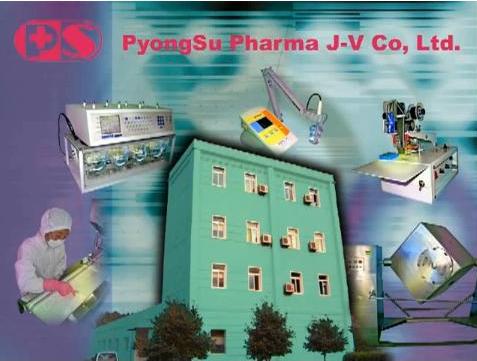
PyongSu Rx advertisement

Sunday, July 19th, 2009

From YouTube:

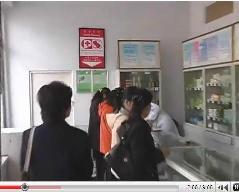
pyongsu-advert.JPG

(Click on image to see video)

According to the video description:

This was PyongSu’s introduction to donor organisations and individuals that have been purchasing pharmaceuticals abroad and shipped them to North Korea. PyongSu’s promotional presentation explained to them why they should place their orders with PyongSu rather than with pharmaceutical companies abroad.

As PyongSu had no budget to mandate a professional advertising company with the task its managing director Felix Abt made the concept, the script and produced it in-house towards the end of 2005, with the help of North Korean IT and designing students and their Canadian trainer Ian Lee as well as teacher Michael P. Spavor, then giving language courses in Pyongyang, who was the “voice” in this clip. Thus, this unique advertising clip was made in its entirety in Pyongyang (and by people who are not advertising professionals). Check it out and add your comment!

Longer videos on investments in the DPRK can be found here.

Share

DPRK continues to supply new laborers to KIC

Thursday, July 16th, 2009

Institute for Far Eastern Studies (IFES)
NK Brief No. 09-7-15-1
7/15/2009

Despite the fact that inter-Korean relations continue to be stalled, North Korea authorities reportedly provided approximately 1,300 new workers in June for businesses entering the Kaesong Industrial Complex (KIC). Despite the fact that there has been no progress in inter-Korean working-level talks between authorities involved in the KIC, the North is continuing to provide a labor force for South Korean businesses in the complex.

An official from the Kaesong Industrial District Management Committee verified that “approximately 1,300 new laborers were supplied last month,” and that “there are some young workers, as well, but the majority are 30 to 40-year-old women.” The official also explained, “the number of laborers was reduced slightly at the beginning of the year; while [their number] was insufficient, laborers continue to come…up until June of this year, while the number fluctuated, an average of around 700 per month [were provided].” Last year, the number of new workers each month was around 1,000.

New workers continue to be provided to the KIC, but there has also been a sharp increase in the number of workers quitting or being removed from their positions. At the end of June, there were 40,255 North Korean laborers; the overall number of workers provided by the North has only increased by 1,324 since the end of last year.

The source explained that at the beginning of 2009, more than 2000 construction workers quit. It appears, according to the numerous reports on the status of employment in the KIC, that the supply of workers is still insufficient, but that the North Korean authorities are working as hard as possible to provide what manpower they can.

North Korea’s Central Special Zone Development Guidance General Bureau recently held a general assembly for all North Korean labor representatives, and ordered them to “work to the max” in order to alleviate all complaints by South Korean businesses. However, as there has still been no resolution to the issue of constructing additional dormitories for the workers, this issue will continue to restrict growth in the number of North Korean laborers, regardless of the attitude in Pyongyang.

Share

Pyonghwa Motors repatriates profit…wow.

Wednesday, July 15th, 2009

According to Yonhap:

A South Korean automaker operating in North Korea said Wednesday it has posted its first net profit and remitted part of it home, the first southbound money transfer by an inter-Korean venture.

Pyeonghwa Motors Corp. made a net profit of US$700,000 for the fiscal year ending in February and sent $500,000 to its headquarters in Seoul via a bank account in Hong Kong, its spokesman Roh Byoung-chun said.

The automaker began production in 2002 as a joint venture between North Korea and the Unification Church of South Korean Rev. Moon Sun-myung, who was born in the North. Its plant in Pyongyang produces sedans and small buses with some 340 employees, and its customers are mostly local businesses.

Roh said it took a while for North Korea to approve the remittance, which was made through a South Korean lender, Woori Bank, in Hong Kong in late May.

“For North Korea, $500,000 is a large sum of money. It is not used to the capitalist idea of making investments and retrieving profits. We believe they pondered deeply before giving approval,” he said.

Pyeonghwa sold 652 units last year, while North Korea took $200,000 for its 30 percent share in the venture, he said. The company says profits are picking up, with this year’s sales already surpassing 740.

North Korea’s own automaker, Sungri Motor, was established in 1958 and mostly produces cargo trucks.

Pyeonghwa’s production is not influenced by political tensions or South Korea’s ban on cross-border shipments, he said, as raw materials and parts are imported from Europe and China. The ban was enforced after North’s rocket launch in April, with the exception of goods going to a joint industrial complex in the North’s border town of Kaesong, where 109 South Korean small firms operate.

“The remittance is symbolic. They are having a hard time in Kaesong, and many went bankrupt in Mount Kumgang (the North Korean tourist resort),” Roh said. “We hope this can bring hope to people doing business in North Korea that anyone can go there and can bring back profits.”

Officials from the South Korean Unification Ministry said inbound money transfers from North Korea are not restricted, although outbound remittances are strictly monitored and prohibited in some cases. It is the first time a South Korean company has sent profits from sales in North Korea, they said. Other businesses investing in North Korea, including those operating in the Kaesong park, sell their goods in South Korea and elsewhere.

South Korea has put three North Korean firms, including a bank, on its blacklist under a U.N. resolution that bans financial transactions with North Korean entities suspected of aiding the country’s nuclear and missile development.

Read the full artilce below:
S. Korean automaker in Pyongyang sends first business profit home
Yonhap
Kim Hyun
7/15/2009

According to the Wall Street Journal:

The Pyeonghwa spokesman didn’t disclose revenue figures but said last year’s vehicle sales were just over twice the 2007 level. The company has already sold more cars this year, 742, and expects to sell more than 1,500 for the full year, the spokesman said.

The performance is the culmination of an 18-year effort that began when church founder Rev. Moon Sun-myung met North Korea’s then-ruler Kim Il Sung in Pyongyang to propose several business ventures. In 1999, the church spent $55 million to build the auto factory in the port city of Nampo, on North Korea’s west coast. The Unification Church, based in South Korea, has a number of investments in tourism, construction and trade.

Since completing the factory in 2002, Pyeonghwa has imported partially built cars, in a form called knockdown kits, from manufacturers such as Italy’s Fiat SpA and China’s Brilliance Automotive Holdings Ltd.

Pyeonghwa completes the cars and puts its own nameplate and brand names on them. In 2003, its first full year of operation, the company sold 316 cars.

North Korea’s government is a partner in the company and took about 30% of the profit.

When it first started production, the company touted North Korean dictator Kim Jong Il’s role in naming several cars. One sport-utility vehicle, built from the design of Fiat’s Doblo model, was named by Mr. Kim as the Ppeokkugi, or Cuckoo.

Pyeonghwa, like other companies that do business in North Korea, faced enormous difficulty moving its money out of the country. Many Chinese businesses resort to buying commodities in North Korea with their profits, then exporting them to China to be sold for Chinese currency.

The motor company worked from February to May to move its money from North Korea, seeking permission from the North’s central bank, the spokesman said.

Read the full article below:
Pyeonghwa Sells in North Korea
Wall Street Journal
Sungha Park
7/16/2009

Read other Pyonghwa stories here.

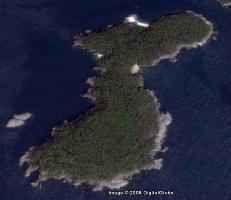
Here is the location of Pyonghwa’s factory near Nampo.

Share

Pyongyang Strikes Back: North Korean Policies of 2002–08 and Attempts to Reverse “De-Stalinization from Below”

Wednesday, July 15th, 2009

Andrei Lankov
Asia Policy 8, July 2009
The National Bureau of Asian Research

Download the article (PDF) here. 

Executive Summary
This article explains why the North Korean government has attempted to reassert state control over society—which had been eroding from 1994–2002—and offers predictions regarding the impact that this shift will likely have on North Korean society.

Main Argument
From 1994 to 2002 North Korean society changed tremendously: state-run industry collapsed, the rationing system ceased to function, and free-market activity, though still technically illegal or semi-legal, became most citizen’s major source of income. Although not initiated by the government, in 2002 some of these spontaneous changes won the belated and conditional approval of the regime.

The evidence emerging in the last three to four years demonstrates, however, that the North Korean government has chosen not to tolerate those changes. This policy of recrudescence, while economically self-destructive, makes political sense because the existence of an affluent and free South Korea makes North Korea far more insecure. The leadership in Pyongyang has reason to believe that any domestic liberal reform in North Korea would lead to a regime collapse.

Policy Implications
1. Pyongyang’s decision to reject reformist policies is based on a rational and well-informed assessment of North Korea’s domestic and international situation. Therefore, the outside world can do very little to influence the regime’s position, and thus there is no chance of meaningful reform in North Korea in the foreseeable future as long as the current regime remains in power.

2. Because the current policy makes sustainable economic growth impossible, the North Korean government will need to rely on stratagems to secure vital foreign aid, with the U.S. being one of the main (but not only) targets of these maneuvers. The “North Korean problem” will remain a part of the international landscape in the foreseeable future.

3. If the current attempt by the government at counter-reform fails, this failure will create additional avenues for influencing the North Korean government from within.

Download the article (PDF) here. 

Share

DPRK market closure reports deemed rumor

Wednesday, July 8th, 2009

Institute for Far Eastern Studies (IFES)
NK Brief No. 09-7-8-1
7/8/2009

North Korea’s main wholesale market, in Pyongysong, was temporarily closed for just over a week during mid-April, but it has reportedly been open and operating normally since then. It was rumored, and reported [previously (see below)], that the Pyongysong Wholesale Market was shut down in mid-June. There was a report that officials felt the market had grown too large, and there was a plan to divide it into East and West Markets. However, reports of these plans have now been deemed nothing more than rumor.

A source in Kangdong-gun stated that there has been much talk of closing markets since the beginning of the year, but that no measures have been enforced and everything is operating normally. Another source reported that many traders are traveling to and from Sinuiju and Pyongysong, and that their numbers have been growing since the onset of summer. While rumors still abound regarding market closures, the source noted that there is significantly less talk of such measures compared to earlier in the year.

In January, North Korean authorities released a statement indicating that general markets would be transformed into farmers’ markets, and only open once every ten days. However, six months has already passed, and there has been no action taken. There have been no measures to transform even some of the largest markets, in Hyeryong, Hyesan, Musan and Sinuiju. That said, it is always possible that the North Korean authorities proceed with plans to close or transform the markets.

The majority of North Koreans trading in the markets do not believe the authorities could easily carry out market-closing measures. Due to the likelihood of large-scale civil revolts, the regime must come up with an alternative to the markets if it intends to close or transform them. The current food issues faced by the North make it impossible to close markets. In addition, transforming general markets into farmers’ markets would force residents to buy daily necessities and other manufactured products at department stores or government-run shops, but these shops have nothing in stock. Furthermore, preventing residents from selling in the markets makes it more difficult for them to acquire the food necessary to sustain themselves and their families. The number of empty stalls in markets appears to be slowing increasing, but a complete shutdown of the market would likely lead to protests.

Original Post:
North Korea begins closing general markets
Institute for Far Eastern Studies (IFES)
NK Brief No. 09-6-26-1
6/26/2009

It has been reported that North Korea’s market closing measure is slowly beginning to be enforced. The June 23 27* issue of North Korea Today, a newsletter from the South Korean group Good Friends, announced that the Pyongsong general market has now been shut down, in what some call the most prominent omen that all general markets will be shut down throughout the country. As the Pyongsong general market served as the central wholesale market for the entire North, some believe it was shut down first in order to encourage the use of smaller, more local traditional markets. In addition, central Party authorities have ordered department stores and general stores in Pyongyang to stock up on Chinese goods. The North Korean government has announced, on a number of occasions since last year, that general markets would be closed and turned into farmers’ markets, but for a variety of reasons, the measure has been on hold for over six months.

Regional authorities were also ordered to import various goods from China, in accordance with the demands of local citizens and regional conditions, in order to head off any concerns that daily necessities might not be available after the markets are closed. This series of measures indicates that the government is concerned that attempts to forcefully close the markets may lead to citizen revolts, as clashes between traders and police occurred previously when the North attempted to enforce market restrictions.

One official in Pyongyang stated that this measure put citizen’s concerns and inconveniences first, stating, “[The Party] must unconditionally get rid of markets. But on the inside, they see that there will be huge opposition from the citizens if they only use force, so this time they decided to combine it with conciliatory policies.” The source added, however, that authorities plan to continue to operate restricted markets while at the same time, completely changing the market system before the end of this year.

Currently, as the 150-day ‘battle’ campaign to improve the economy is underway, more and more lectures are also being given. One week after the North’s second nuclear test, propaganda speeches were given in each factory and business in Pyongsong, South Pyongan Province, stating, “Now there is no one in the world that can face off with our military might,” and, “If the United States and those countries that kowtow to it carry out an economic blockade against our country, we will see it as an act of war and stand against it with military power. If only we carry out the 150-day battle well this year, we will completely attain a Strong and Prosperous Nation. [All the people] must follow after the revolutionary military spirit of the People’s Army and open the door to a strong and prosperous nation without one day’s delay.”

UPDATE: According to the Daily NK, the closing of the Pyongsong Market was not successful:

Despite North Korean official attempts to shift general markets onto an agricultural format, the general markets are operating as normal because of popular resistance to change.

A source residing in Kangdong-gun, Pyongyang told Daily NK, “In mid-April, a wholesale market in Pyongsung was shut down for around ten days, but after that it reopened and continues to operate.” He added that, “I’ve heard that the existing market was supposed to close early this year and be changed into an agricultural market, but there have actually been no shutdowns at all.”

He continued, “I don’t know the exact reason for the closure of Pyongsung market in April, but I’ve heard that there was an investigation of the individuals who manage the big wholesale businesses there. Traders strongly opposed it, so the closure of the market could not be completed.”

The source added, “In Kangdong-gun and other districts of Pyongyang, there have been many rumors about market closures, but there have not been any so far. Markets are operating normally.”

A source from Shinuiju confirmed it. “Many rumors of market closure have circulated, but they are working as usual,” the source said, “Markets in Pyongsung are operating as well, so there are still many traders coming and going between Shinuiju and Pyongsung. Especially, as summer approaches, trade is increasing.”

He added, “People still talk about the closure of the markets, but they don’t talk about it as much as earlier this year. In truth, if the jangmadang is closed, it will be hard for even the cadres to live, let alone ordinary residents. So cadres also have a negative opinion of the measure, and for that reason it will be difficult to shift to agricultural markets.” 

Read the full story here:
Markets Continue Despite Official Bluster
Daily NK
Lee Sung Jin
7/3/2009

Share

More on the market closing measure

Sunday, July 5th, 2009

Barbara Demick has an informative article in the Los Angeles Times.  The whole piece is worth reading but here are some themes and excerpts.

Market restictions ordered

In the markets of Kilju, a city of 100,000 near North Korea’s eastern seacoast, the ruling Korean Workers’ Party has ordered the removal of Chinese-made cookies, candies and pharmaceuticals.

Even soybeans, many articles of clothing and shoes are now forbidden.

It is all part of a great leap backward taking place in the secretive autocracy. North Koreans interviewed in China in recent weeks say that the regime of Kim Jong Il has made a concerted effort to roll back reforms that had over the last decade liberalized the most strictly controlled economy in the world.

… 

So many Chinese goods are now taboo that markets stock only about 35% of the merchandise previously available, some say.

Import substiution policy implemented?

“They want to promote our own products made in North Korea, but since everything is ‘made in China,’ there is nothing to buy,” said Kim Young Chul, a civilian working for the North Korean military who had come to China to sell wild ginseng on behalf of his employer.

Exports curtailed

Kim Chol Hee, a trader from Yanji, a Chinese city near the border with a large ethnic Korean population, said it was harder now than at any time in the 10 years he’s been in business to import from North Korea.

“I used to bring in squid, crab, steel parts from Chongjin. We can still buy seafood, but the North Korean government won’t let us buy steel,” he said Kim. “They say they need to keep all their resources for themselves.”

Restrctions inefective

Kilju residents have not dared to hold public protests against the restriction. But the Korean Workers Party nonetheless might be fighting a losing battle. Much of the trading is done by people with powerful connections in the provincial government and the military. Many state-owned enterprises do illegal trading to raise cash for their operations.

For example, trader Kim Young Chul says he is responsible for raising about $900 each year for his work unit by selling ginseng, while he and his partners keep any additional profits.

“I have a lot of freedom. They don’t dare ask me too many questions in North Korea, because I work for the ministry,” said Kim.

Just as quickly as the Korean Workers’ Party issues a decree, people find a way to circumvent it. Vendors banned from the market bring out their mothers and grandmothers, while secretly running the businesses from behind the scenes. Others sell banned good from their homes, or simply stash it behind other merchandise.

“If you want to buy cosmetics in Kilju, you still can find them, but they are usually hidden underneath the table,” Lee said.

Once a loyal member of the Workers’ Party, Lee said she had remained devoted to Kim Jong Il up to her departure from North Korea in May, vowing that she would return home as soon as she got money for her family.

“Even the day I left, I was singing songs about Kim Il Sung and Kim Jong Il in my house,” said Lee. “Now that I’ve come to China, I’m not so sure.

Read the full article here:
North Korea moves to restrict economy
Los Angeles Times
Barbara Demick
7/5/2009

Share

Nick Bonner offers comments on North Korea tourism

Sunday, June 28th, 2009

From China Business News:

Q: Koryo Tours has built its business by providing tour trips to North Korea. Why did you choose North Korea, and how tricky was it to get the business started?

A: In 1993, Joshua Green and I were approached by a North Korean colleague (that Josh had studied Chinese with at the Beijing Foreign Language University in 1998 and Nick played football with in 1993) who, after returning to Pyongyang had worked in the national travel company. At that time, it was a real fledgling travel industry (they only opened to western tourism in 1987) and less than 50 western tourists visited per year. We started going every month but with very few tourists, mainly driven by fascination, realisation that we had incredible access and the fun of working with some amazing Koreans. During the famine, we worked with aid agencies and continued tourism which brought in a steady amount of work for our Korean colleagues. in the past five years, DPRK tourism have seen growth, and we now take just under 1,000 tourists a year – about half of all western visitors. With my colleagues Simon and Hannah, we make sure that tourists have the best access possible to the country and people. Having specialised in one country for 16 years, it really does mean we are literally the only experts in this destination, and for every tourist we have taken it rates as one of their most amazing experiences.

Q: What effect does North Korea’s aggressive stance on defense have on your business – do people become more or less interested in visiting when it tests a nuclear bomb or fires a missile?

A: Every few weeks, North Korea makes the news for one reason or another, usually a negative reason of course. However, North Korea remains one of the safest and most fascinating countries in the world to visit. For those who are of the opinion that seeing a country for yourself is more valuable than watching the interpretation on the world news, then we provide them that access. In addition, as we accompany the tours, we provide an insight into the country that is difficult for a visitor to interpret. Our clientele are generally very worldly and aware and interested in what is going on, I think the DPRK being in the news for any reason puts it on people’s mental map and thus makes more people visit rather than being scared off.  

Q: North Korea is a pretty ‘left-field’ travel destination. What have been the key approaches to marketing your company, both locally and internationally?  

A: Our reputation has been established because we provide excellent service and we really do make sure that any visitor to Korea will have the time of their lives. We have a company responsibility to engage with the Koreans and much of our work is involved in cultural exchanges, film making and charity projects. I think this aspect of our work comes across to potential clients who see we really are more than a travel agency. We rely heavily on word of mouth and a great deal of our tourists know someone else who has been before, also we get a good number of repeat visitors as we don’t simply run the same tour over and over again. Being honest, doing the best job possible and maintaining good contacts with our previous clients are critical. This is how we keep a good reputation which we see as being the key to selling our product.  

Q:  Are you planning to diversify to other locations beyond North Korea – and if so, how do you choose new destinations?

A: Since 2006, we have been running twice-yearly tours to Turkmenistan, which is a fascinating and amazing place to go. In addition to this, in 2010, we are planning on offering a wider range of tours to places such as Tajikistan (for Persian New Year – when they hold a Buzkashi event), to the Tumen river area including Yanji in China, the North Korean free trade zone of Rajin-Sonbong, and Far Eastern Russia (around Vladivostok), also a tour to the North Western Caspian Sea region including Volgograd (once known as Stalingrad) and the mysterious republics of Kalmykia and Dagestan. All are remarkable, highly-interesting, and unique places that we think our discerning clients will be interested in. North Korea remains the focal point of our company, but these other destinations fit well in the mould of visiting unusual but interesting places.

Although I have never visited the DPRK with Koryo Tours, I did travel to Turkmenistan and I recommend it.  That trip launched my interest in Central Asia, and I quickly followed it up with visits to Iran and Tajikistan.

Read the full story here:
BizTalk Interview: Nick Bonner, Founder of Koryo Group
Gary Bowerman
6/27/2009

Share

North Korea on Google Earth v.18

Thursday, June 25th, 2009

North Korea Uncovered version 18 is available.  This Google Earth overlay maps North Korea’s agriculture, aviation, cultural locations, markets, manufacturing facilities, railroad, energy infrastructure, politics, sports venues, military establishments, religious facilities, leisure destinations, and national parks.

This project has now been downloaded over 140,000 times since launching in April 2007 and received much media attention last month following a Wall Street Journal article highlighting the work.

Note: Kimchaek City is now in high resolution for the first time.  Information on this city is pretty scarce.  Contributions welcome.

Additions to this version include: New image overlays in Nampo (infrastructure update), Haeju (infrastructure update, apricot trees), Kanggye (infrastructure update, wood processing factory), Kimchaek (infrastructure update). Also, river dredges (h/t Christopher Del Riesgo), the Handure Plain, Musudan update, Nuclear Test Site revamp (h/t Ogle Earth), The International School of Berne (Kim Jong un school), Ongjin Shallow Sea Farms, Monument to  “Horizon of the Handure Plain”, Unhung Youth Power Station, Hwangnyong Fortress Wall, Kim Ung so House, Tomb of Kim Ung so, Chungnyol Shrine, Onchon Public Library, Onchon Public bathhouse, Anbyon Youth Power Stations.

Share

FDI and JVCs in the DPRK…

Thursday, June 25th, 2009

The General Association of Koreans in Japan (Chongryun) have made a video about foreign direct investment and joint venture companies in the DPRK.  I have posted links to the video below.  It features the PyongSu pharmaceutical factory among other things.  It is in Korean and Japanese (with Japanese subtitles), so if there are any readers who care to translate, please let me know if there is any interesting information in the videos:

Part 1:
chongryn-pyongsuvideo1.JPG

Part 2:
chongryun-pyogsu2.JPG

Part 3:
chongryun-pyogsu3.JPG

Share