Archive for the ‘Economic reform’ Category

North Korea’s regime stumbles

Wednesday, February 10th, 2010

The Economist
2/10/2010

However loathsome his neighbours find Kim Jong Il, the nuclear-armed North Korean dictator, there are few who do not also admit that beneath the big hair lurks a tactical genius with a flair for survival. At home, North Koreans are smothered by his ruthless personality cult. With the outside world, he is an adept blackmailer: act mad enough to be dangerous; then be conciliatory in exchange for cash.

Recently, however, on both counts he has made tactical mistakes. None of these are serious enough to endanger his regime, diplomats say. But they are encouraging to those who believe they can eventually push North Korea back to talks about dismantling its nuclear arsenal. And they reaffirm the benefits of what the Americans call “strategic patience”: waiting until North Korea is desperate enough to offer concessions.

Even the regime appears, in its oddball way, to have acknowledged the most recent blunder. News reports this month suggest that North Korea has reversed some elements of a crackdown on private enterprise that it unleashed with a cack-handed redenomination of the won on November 30th.

In the interim, the currency collapsed, the price of rice surged by as much as 50 times, and much of traders’ working capital for buying and selling goods was wiped out. Amid a seizing up of food distribution, there were some rare grumbles of protest.

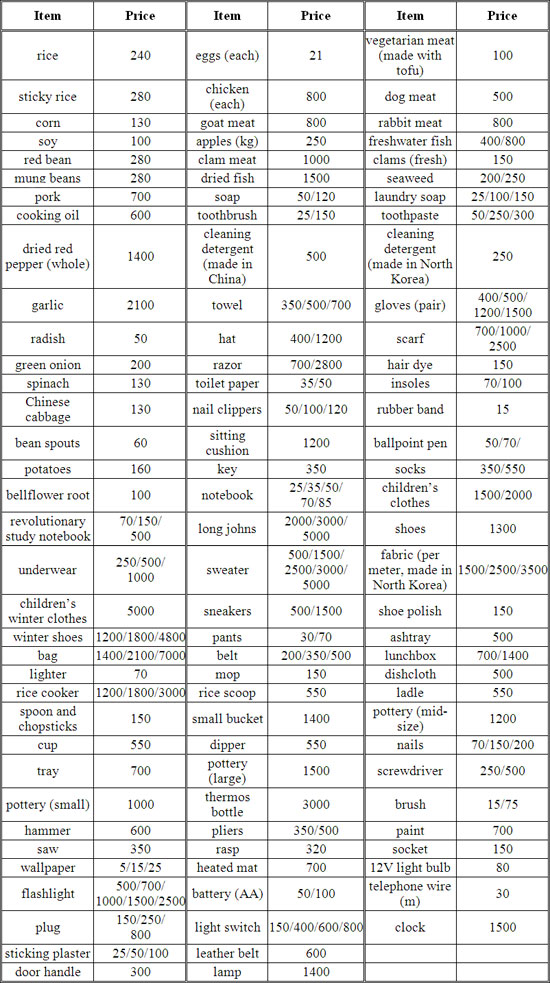
But since early February, regulations on trading in the jangmadang, or markets, across North Korea appear to have been lifted, according to news reports. Official prices (which are not necessarily what are paid) have been posted. A kilo of rice costs 240 won ($1.80) (a bit less than a pair of socks), a toothbrush is 25 won.

Meanwhile, the Dear Leader has made what some observers believe to be an unprecedented apology to his people for feeding them “broken rice” and not providing enough white rice, bread and noodles. He was, he said, “heartbroken”, and implicitly acknowledged he had violated an oath to his godlike father, Kim Il Sung, to feed the people rice and meat soup.

Adding to the poignancy, experts say the bungled reforms were done in the name of Kim Jong Un, the dictator’s third son and potential heir. The young man’s involvement may have been part of a strategy to reassert Stalinist-style state control of the enfeebled economy ahead of 2012, the 100th anniversary of grandfather Kim’s birth.

People knowledgeable on North Korea are loth to believe that such a plan has been abandoned, not least because the small markets that have flourished since the famine of the 1990s represent such a challenge to the state’s authority. But they say the ineptitude must have been glaringly obvious, even in the hermetic state.

“The government has never said sorry to the people, especially on a topic as sensitive as rice,” says Andrei Lankov of Kookmin University in Seoul, who has written a lot on North Korea and has described its leaders as brilliant Machiavellians. “Because of Kim Jong Il’s age and the age of those around him, it looks like he may be losing touch with reality.”

Mr Lankov believes there may have been a similar miscalculation in North Korea’s recent behaviour towards America, China, South Korea, Japan and Russia, the countries with whom in 2003 it started on-again, off-again denuclearisation negotiations, known as the six-party talks. Its firing of a long-range missile and explosion of a nuclear bomb in quick succession last year hardened the resolve of the five to strengthen United Nations sanctions against Pyongyang and maintain them until it gives ground on its nukes. However much Mr Kim has cajoled and coaxed in the months since, he has not yet managed to divide them.

What’s more, diplomats say he appears to be increasingly open to discussing a return to the six-party talks, something which last year he vowed “never” to do. China, which is closest to North Korea and chairs the six-party forum, sent Wang Jiarui, a senior Communist Party official, to meet Mr Kim this week and invite him to Beijing. Mr Kim made no public commitment regarding the six-party talks. But his nuclear negotiator returned with Mr Wang to the Chinese capital.

Lee Myung-bak, South Korea’s president, surprised his countrymen by saying that he, too, hoped to meet Mr Kim “within this year”. The timing was odd. His statement came at about the time North Korea was lobbing artillery shells threateningly into the Yellow Sea. But it revealed what officials say is a twin-track process in Seoul to engage North Korea: bilaterally and via the six-party framework. “My impression is that the North Koreans are moving in the direction of talks,” says Wi Sung-lac, South Korea’s special representative for peace on the peninsula.

Both North Korea and its six-party counterparts have set such tough conditions on coming together that it would be foolhardy to be optimistic. North Korea wants a lifting of the UN sanctions and a peace treaty with America to out a formal end to the 1950-53 Korean War before restarting talks. Washington has resisted both. An East Asian diplomat said the other five countries are demanding that North Korea take “concrete measures” towards denuclearisation as a pre-condition for talks and the lifting of sanctions. “We’re not giving any carrots.”

Underscoring the resolve, humanitarian assistance to North Korea has slowed to a trickle. South Korea sent only $37m of public aid north last year, compared with $209m in 2007. Officials say Mr Lee is adamant no money will go to North Korea to coax it into agreeing to a summit. Talks on cross-border tourism and factories, another means for Pyongyang to extort hard currency from the south, have made no progress.

Mr Kim still has some good cards up his sleeve. Tensions between China and America over Taiwan and Tibet provide a thread of disharmony that he can tug upon. And China has a strategic eye on North Korea’s ports and minerals, which may encourage it to be overly generous to the regime.

But the mere hint of economic and diplomatic fallibility in a regime that demands almost religious devotion from its subjects may be significant. It comes at a time when North Koreans, via smuggled DVDs and telephones, have a greater idea than ever before of how far their living conditions fall short of their neighbours’. That is a rare point of vulnerability for Mr Kim’s interlocutors to exploit.

Share

North Korea dictates new prices on February 4

Tuesday, February 9th, 2010

Institute for Far Eastern Studies (IFES)
NK Brief No.10-02-09-1
2/9/2010

According to a report from the webzine Daily NK, authorities in the North posted notices at the entrances of all markets across the country in the afternoon of February 4, setting state-wide standard prices for 100 different goods. The prices went into effect the next day. The notice reportedly stated, “In the case of foods not being sold at state-set prices, the state will confiscate all goods.”

The list of 100 items for which prices were set includes rice and corn, indicating that the government is allowing the sale of food items in markets (some of the prices can be seen in the table below). It appears, however, that the state-set prices are causing disruptions in the markets due to the significant difference between Pyongyang’s pricing and the actual prices for which goods in the markets are being sold.

Currently, rice is selling for 350 won/Kg, more than 100 won more than state prices. Corn, costing 180 won/Kg, is trading at 50 won more than the government is demanding. In addition, cooking oil and pork are selling for 1,000 won, 300-400 won more than state-mandated prices. Sources in the North report that, while market traders put on the appearance of adhering to the state’s regulation, many continue to trade at prices dictated by the markets.

Most previous attempts by North Korean authorities to clamp down on markets have failed, making it unlikely that this attempt to mandate prices will have any real impact. Actually, authorities have mandated ‘market price caps’ and regulated prices since the North’s economic adjustment measures taken on July 1, 2002. The government has also banned the sale of grains and other food, but this has not helped the North reach its policy goals and, in fact, has done little but stimulate black market activities. Furthermore, one reason for the recent and significant rise in inflation is the lack of policy for improving the supply sector at a time when currency reforms led to a sudden jump in the purchasing power of farmers and laborers. This adds weight to the argument that these latest price controls will not be maintained with any consistency.

GOODS PRICE (DPRK Won)
Rice (kg)  240
Corn (kg)  130
Pork (kg)  700
Beans (kg)  160
Cooking Oil (bottle) 600
Toothbrush  25
Toothpaste  50
Soap  50
Laundry Detergent 25
Athletic Shoes 500
Toilet Paper 50
Workbook  25-55
Lighter  70
Dress Shoes 1,300
Flashlight  500
Battery  100
Children’s Clothes 1,500
Children’s Padded Clothing 5,000
Socks  350
Apples (kg) 250
Egg  21

Share

State Prices Finally Unveiled

Sunday, February 7th, 2010

Daily NK
Jung Kwon Ho
2/5/2010

The North Korean authorities finally released fixed prices for 100 items across the country at 3 P.M. on Thursday.

A Daily NK source inside North Korea revealed the news today in a telephone conversation, saying, “The authorities announced state-designated prices for 100 items in a notice posted at the entrance to markets on Thursday afternoon.

Alongside the message came a warning, “If traders fail to sell goods at the stated prices, goods will be confiscated.”

The price list includes those for rice and corn. By implication, the selling of food has now been officially sanctioned in the market.

If the listed prices are enforced, however, confusion and anger are absolutely inevitable, because the gap between the newly-posted prices and real jangmadang prices is enormous.

For example, the latest real rice price in the jangmadang is 350 won per kilo, while corn is selling for 180 won; however the state-designated prices are 240 won and 130 won respectively. The jangmadang price of pork is around 300 won more expensive than its state-designated price.

Inevitably, therefore, traders’ increasingly wily attempts to circumvent the unrealistic demands of the state are continuing apace, “For now,” the source explained, “traders are pretending to sell for the released prices, but in reality they are selling for the existing jangmadang prices.”

According to the state price list, rice is 240 won per kilo; corn is 130 won; pork is 700 won; soy beans are 160 won; oil is 600 won; a kilogram of apples is 250 won; and a single egg is 21 won.

Meanwhile, a toothbrush is 25 won; bars of soap, tubes of toothpaste and laundry soap are all 50 won; sneakers are 500 won; toilet paper is 50 won; a notebook comes in various sizes between 25 and 55 won; lighters are 70 won; shoes are 1,300 won; a flashlight is 500 won and a single battery 100 won.

Children’s clothes are 1,500 won; children’s winter clothes are 5,000 won; and finally socks are listed as 350 won a pair.

UPDATE: Below is a table of prices from the Daily NK:

dprk-prices-feb-2010.jpg

Click image for larger version

Share

DailyNK series on Chongryon

Sunday, February 7th, 2010

The Daily NK did a series of articles on the General Association of Korean Residents in Japan (Chongryon or Chosen Soren).  Below are links to all seven parts:

Part 1: Chongryon feels the pinch

Part 2: Debts, Mergers, Collapses and Foreclosures

Part 3: Homecoming Project Speeds Chongryon Demise

Part 4: South Korea Visits Weakened Chongryon

Part 5: Chongryon Remittances and Investments

Part 6: “Study Group,” the Core of Chongryon

Part 7: Study Group Money Laundering Machine

Share

Daily NK reports market regulations easing

Wednesday, February 3rd, 2010

The particular regulations that seem to have been eased: the 10-day rule and price controls on rice.  No word on whether this easing is short-term or long-term in nature. 

From the Daily NK:

In an attempt to avert a food crisis and stem popular discontent, the North Korean authorities have reportedly bowed to pressure and started lifting market regulations across the country.

The decision, which apparently came into force at the start of February, may seem to be an abrupt one, yet it is largely inevitable. A food crisis has seemed to be on the cards for a while, while acts of violence against security officials have been occurring with increasing frequency and discontent among the people has been rising rapidly since the currency redenomination at the end of November.

An inside source reported the news to The Daily NK on Tuesday, saying, “Since February 1st, in Yangkang and Hamkyung Provinces, jangmadang regulations have been completely lifted. The price of rice, which had been more than 400 won, has now stabilized at between 250 and 300 won.”

The source added, “It is a good thing that the jangmadang is open. We were worried about a coming crisis as the rice price has been soaring and we have not been given any wages. That said, the people are watching the authorities’ next move, so they are still reticent to trade.”

Some foresee that, since the authorities have still not released state-designated price for rice in the jangmadang, they may be planning to allow it to just float with the market.

It is still unclear if the February 1st decree completely opened the market as it used to be or is just a temporary solution to avert a possible food crisis. Inside sources say they plan to wait and see.

Regardless, now that the jangmadang is open, exchange rates seem to be stabilizing as well. The dollar exchange rate, which was around 400 won, has fallen back to nearer 300 won in just two days.

Read the full story here:
Ban on Markets lifted
Daily NK
Jung Kwon Ho
2/3/2010

Share

DPRK finance chief sacked over currency revaluation

Wednesday, February 3rd, 2010

According to the Choson Ilbo:

The North Korean regime apparently sacked the Workers’ Party’s Finance Director Pak Nam-gi, letting him take the fall for the failed currency reform late last year. Pak was appointed finance director in July 2007 to oversee North Korea’s economic policies and has spent the past few years trying to root out a nascent market economy.

“Right now, North Korean officials are busy blaming each other for the failed currency reform and Pak, who spearheaded the revaluation, is believed to have been sacked,” said a diplomatic source in Beijing. “Markets have come to a grinding halt following the currency revaluation and prices have soared,” the source said. It seems North Korea hoped to stabilize prices through the currency reform and then credit the achievement to Kim Jong-il’s third son and heir apparent Jong-un to consolidate his grip on power, but this flopped, the source added.

Some North Korea watchers in China predict that the regime may perform a U-turn back to timid market reforms now that Pak, who led the crusade against capitalism, has been fired. One North Korea expert in Beijing said, “There is a strong possibility that high-ranking North Korean officials who led the drive to crush market forces since 2004 will be removed from office, while policies will shift toward market reforms starting in the second half of this year.”

Meanwhile, the new North Korean won is still plummeting against the U.S. dollar. North Korea valued the new currency to 98 won per dollar after the old won weakened to 3,500. But the new won has plunged since last month and is now being traded at between 300 and 500 won per dollar, according to people who trade goods with North Koreans.

According to the Daily NK:

In the tradition of dictatorial regimes worldwide, scapegoats have apparently also been chosen. South Korea’s Chosun Ilbo today claimed that Park Nam Ki, Director of the Planning and Financial Department of the Central Committee, has taken responsibility for the failed redenomination, which initiated a period of hyper-inflation, and been dismissed.

According to the report, Park was appointed to the top economic position in the North Korean government in July, 2005, where he began to pull up the green shoots of spontaneous market economy.

If the news is confirmed, Park will be following in the undesirable footsteps of Ministry of Agriculture head Seo Gwan Hee and Premier Park Bong Ju.

Seo was executed for his role in the 1990s famine. According to defector testimony, Kim Jong Il shifted responsibility for the famine onto him and had him publicly executed in 1997.

Meanwhile, Park Bong Ju became the Premier of the North Korean Cabinet in 2003, the year after the adoption of the July 1st Economic Management Reform Measure, and was responsible for introducing revised market economic elements according to the July 1st Measure. However, results were not sufficient and he was sent to manage the Suncheon Vinylon Complex in South Pyongan Province. 

Lets hope that the jangmadang come back with a vengeance. 

Read the full articles here:
N.Korean Finance Chief Sacked Over Currency Debacle
Choson Ilbo
2/3/2010

Read the full story here:
Ban on Markets lifted
Daily NK
Jung Kwon Ho
2/3/2010

Share

Fighting in the Streets

Tuesday, February 2nd, 2010

Daily NK
Park Sung Kook
2/2/2010

There has been an explosion in the number of casualties resulting from popular resentment at harsh regulation of market activities by the security apparatus across North Korea, according to various Daily NK sources.

For instance, in Pyongsung, North Pyongan Province, normally one of the key distribution centers in North Korea, there have been several incidents of agents from the People’s Safety Agency (PSA), the organization charged with cracking down on the smuggling of food and other officially “immoral” acts, being attacked by unidentified assailants.

A Daily NK source reported on Monday, “A group of agents who had just finished doing the rounds of the jangmadang and alley markets in Naengcheon-dong, Haksu-dong, and Cheongok-ri in Pyongsung were attacked by a number of people, who assaulted them and immediately ran away. As a result, PSA officials are feeling very tense these days.”

Commenting privately on these incidents, some people savor them as acts of revenge, but others are worried about the situation, according to The Daily NK’s sources.

There have been more examples unearthed in recent days, too. For instance, North Korea Intellectuals Solidarity (NKIS), a Seoul-based defector group, recently received news that “a fight broke out between agents of the PSA, who monitor the Hyesan jangmadang, and some residents. As the fight turned serious, one resident snatched an agent’s gun and fired randomly into the crowd. One agent, Choe, is in a critical condition.”

According to NKIS, the fight began after the PSA agents beat up a trader who was trying to avoid the crackdown, and that made other residents angry, so they attacked the agents in return. As the fight grew more serious, agents threatened residents, but this only added fuel to the flames.

Finally, a Daily NK source from North Hamkyung Province released one other incident: Cho, who used to work for the Prosecutions Department of the National Security Agency in the region, was apparently killed by a Chongjin Steel Mill worker called Jeung Hyun Deuk.

The source explained, “Jeung’s father, the chief of a foreign currency-generating company, was interrogated last July on suspicion of embezzling enormous amounts of property and foreign currency, and in January was sentenced to life in prison. However, a few days after being imprisoned, he died. Thereafter, Jeung held a grudge against his father’s interrogator, Cho, and eventually killed him.”

The source concluded, “Traders and residents have lost their property due to the redenomination and are pretty much being treated as criminals as a result of the NSA and PSA’s ‘50-Day Battle.’ Therefore, people are taking revenge on agents, since they feel so desperate that, regardless of their actions, they will die. As a result, social unrest is becoming more serious.”

On January 2, the National Defense Commission released an order entitled “On completely sweeping away hostile factions who attempt to demolish our Republic from the inside,” initiating the “50-Day Battle” crackdown by the PSA and NSA in every city, county, and province which was referred to by the North Hamkyung Province source.

Share

GPI 2010 business delegations to DPRK

Wednesday, January 20th, 2010

From GPI:

In the current financial and economic situation, companies face many challenges. They must cut costs, develop new products and find new markets. In these fields, North-Korea might be an interesting option. Since a few years, it is opening its doors to foreign enterprises. The labor costs are the lowest of Asia, and its skilled labor is of a high quality. It established free trade zones to attract foreign investors and there are several sectors, including textile industry, shipbuilding, agro business, logistics, mining and Information Technology that can be considered for trade and investment.
 
European Business Mission (May 2010) & Pyongyang Spring International Trade Fair
Information Flyer Here(PDF)

In order to explore these business opportunities, we are organizing again a business mission to North-Korea (15 – 22 May). We will also visit the annual Pyongyang Spring International Trade Fair. This fair can be used by European companies to come in contact with potential buyers and suppliers in North-Korea. Information abouth both events has been attached.
 
North-Korean investment mission to visit The Netherlands (February)
There are investment opportunities in several areas, such as textiles; agro business (e.g. export of vegetables, fruit and flowers to South-Korea); mining (e.g. zinc, mica, tungsten, rare metals); real estate (e.g. office buildings); renewable energy (e.g. windenergy, batteries); Information Technology; electronics; chemicals and tourism. A high-ranking delegation from North-Korea will visit The Netherlands at the end of February, in order to discuss these opportunities in detail and to present specific investment projects. We can be contacted for further details.
 
New book on European – North Korean relations
Information Flyer Here (PDF)
This spring, the Hanns Seidel Foundation (Germany) will publish a new book about the relations between Europe and North-Korea. The publication: “Europe – North Korea: Between Humanitarianism and Business?” also contains two chapters about trade development and business issues – including my article on IT-cooperation. Its Table Of Contents has been attached.     

With best regards, Paul Tjia (director) 
GPI Consultancy, P.O. Box 26151, 3002 ED Rotterdam, The Netherlands
E-mail: [email protected] tel: +31-10-4254172  fax: +31-10-4254317 Website: www.gpic.nl

Share

First DPRK-RoK joint venture in Rason announced

Tuesday, January 19th, 2010

According to the AFP:

A South Korean company said Tuesday it is planning a joint-venture factory in a free-trade zone in northeastern North Korea, the first such investment by Seoul in the faltering project.

Food processor Merry Co said Pyongyang last month approved its partnership with state-run Korea Gaeson General Trading Corp in the Rason zone near the North’s border with China and Russia.

“We’re going to have a first joint venture between the two Koreas in Rason,” Merry president Chung Han-Gi told AFP.

The North this month upgraded the status of the zone in an attempt to invigorate anaemic foreign investment there.

Chung said his company would invest 60 percent of the 7.5 million dollar cost of the new plant while its North Korean partner would put in 40 percent.

He said he would this week ask the South’s unification ministry, which must authorise all cross-border contacts, to approve the joint venture.

The communist state designated the Rajin-Sonbong Economic Special Zone — later renamed Rason — in 1991, its first such project. But little foreign investment materialised and senior officials who headed the project were reportedly sacked.

In recent years the North has begun trying to revive it, signing an accord with Russia to rebuild railways and the port there. China has also been exploring investment opportunities in the city.

The North’s leader Kim Jong-Il paid his first visit to the zone last month and state media said later that parliament has designated Rason as a municipality to upgrade its status.

South and North Korea have a joint-venture industrial estate at Kaesong near their border. Its operations have often been hit by political tensions, but the two sides were to start talks Tuesday on ways to develop it.

Chung said his firm’s joint venture at Rason, which would have some 200 North Korean employees, plans to produce canned and processed food including tuna for exports.

Merry, which also has a factory in Shanghai, will send Chinese engineers to Rason next month to install production facilities.

The Choson Ilbo adds some interesting details:

This is the first time that Pyongyang has allowed for direct business collaboration, set to take place between North Korea’s Gaeson General Company and the South’s Chilbosan Merry Joint Venture.

The firms are slated to split investment 60/40 and will work together to process and export canned marine and agricultural products starting in March.

UPDATE 1: As reader Gag Halfron points out, this is not the first DPRK-RoK joint Venture. Remember Pyonghwa Motors and Pyongyang’s fried chicken restaurant?

UPDATE 2: In the comments, Werner notes the following: http://www1.korea-np.co.jp/pk/149th_issue/2000101405.htm

Read the full articles below:
N.Korea OKs joint venture with South in trade zone
AFP
1/18/2009

First Inter-Korean Joint Venture to Be Established
Choson Ilbo
1/20/2010

Share

DPRK won exchange rates falling after currency reform

Monday, January 18th, 2010

Institute for Far Eastern Studies (IFES)
NK Brief No.10-01-18-1
2010-01-18

Following the currency reform undertaken by North Korea at the end of 2009, the Chinese newspaper International Herald Leader (國際先驅導報) reported on January 7 that the Choson Bank of Trade had set the USD:DPRK Won exchange rate at 1:96.9. There have been other reports of the DPRK’s new exchange rate through organizations related to North Korea, but this is the first report of an official exchange rate by an official Chinese media source. The International Herald Leader is the global news paper of the government-run Xinhua news agency.

Good Friends, a South Korea-based organization working for human rights in the North, had reported earlier that the new exchange rate was 1 USD:35 Won. The conflicting reports appear to be a result of a constantly changing exchange rate. North Korean authorities control the exchange rate, announcing changes to the exchange rate system at their whim.

According to the International Herald Leader, the exchange rates for the new DPRK Won are 96.9:1 USD, 138.35:1 Euro and 14.19:1 Chinese Yuan. These new rates are approximately 25-30 percent lower than previous rates, indicating a rise in the value of the DPRK Won.

North Korean security forces released a notice titled ‘Regarding the Strict Punishment of Those Overissuing Foreign Currency Within the Republic’ on December 28, and banned the use of foreign currency across the country beginning January 1. Immediately following the announcement of the measure banning the use of foreign currency, the DPRK Won:PRC Yuan exchange rate rose sharply, indicating a steep drop in the value of the Won.

Until the December 28 announcement banning foreign currency, North Koreans were exchanging Chinese money for the new DPRK Won at a rate of 1:5 (the official rate was 1:1.6). Before the currency reform, the Won:Yuan exchange rate was 600:1. However, after the ban on foreign currency, the value of the new North Korean money quickly fell, with the exchange rate toppling 4-5 times over within just days. According to a Daily NK report, on January 5 of this year, the Won:Yuan exchange rate in Hyesan, Yanggang Province hit 20:1, while in North Hamgyeong Province’s cities and towns of Hoeryeong, Onseong, Musan, and Cheongjin, the Won is being exchanged for Yuan at a rate of 1:15. Therefore, it appears that the Chinese media’s report of a 1:14.19 exchange rate reflects the reality of only some regions of North Korea.

Share