Archive for the ‘DPRK organizations’ Category

Economic ills shape crisis

Tuesday, April 22nd, 2003

From the BBC:

North Korea’s economy has been in the doldrums for more than a decade. Perhaps as many as a million people perished in a famine during the 1990s, and the food situation inside the country remains precarious today.

There are two hypotheses about why a country facing such problems has pursued nuclear weapons.

1. Its nuclear programme is merely a bargaining chip to be traded away to extract political and economic concessions from the US – a kind of atomic “trick or treat”.

2.  The North Koreans regard nuclear weapons as an end in themselves – a military deterrent and the ultimate guarantor of the regime’s survival.

North Korea’s foreign ministry said as much on 18 April when it declared, “The Iraqi war teaches a lesson that in order to prevent war and defend the security of a country and the sovereignty of a nation, it is necessary to have a powerful deterrent force only.”

Yet even from this perspective, there is an intriguing economic angle.

If a nuclear North Korea were to foreswear aggression toward South Korea, then its huge conventional forces would be redundant.

Its million-man army, an albatross around the economy’s neck, could be demobilised.

In fact, before the nuclear crisis erupted last October, North Korea floated trial balloons regarding the possibility of such a demobilisation.

But if the North’s army is to be demobilised, those troops have to have jobs to go to.

Last July, the government announced a package of policy changes designed to revitalise the economy.

These included marketisation, the promotion of special economic zones, and a diplomatic opening toward Japan, which the North hoped would pay billions of dollars in post-colonial claims and aid.

However, the rapprochement with Tokyo has stalled, and the expected capital infusion has not materialised.

The consensus of outside observers is that, so far, the reforms have largely failed to deliver.

Indeed, some of the policy changes, such as the creation of massive inflation and the demand that North Koreans surrender their holdings of dollars, could be interpreted as an attempt to re-assert state influence rather than reform the system.

Last month, Pyongyang introduced a new financial instrument it called a bond, though it is more like a lottery ticket. A mass campaign encouraging citizens to purchase these bonds suggests that politics, not personal finance, is the main selling point.

To make matters worse, the oil flow through a pipeline from China on which North Korea depends was interrupted earlier this month for several days.

The official explanation was that mechanical failure, not diplomatic arm-twisting, was the cause.

In sum, the economic situation remains dire.

However, both China and South Korea have indicated that while they want to see a negotiated resolution [to the nuclear issue], they are unwilling to embargo North Korea in the way the US envisions.

This reluctance to sanction Pyongyang undercuts the credibility of the US threat to isolate North Korea.

The Bush administration’s own rhetoric also calls into question its willingness to promote North Korea’s constructive integration into the global community.  

Marcus Noland is a senior fellow at the Institute for International Economics, and author of Avoiding the Apocalypse: The Future of the Two Koreas.

Share

N.K. drug company urges aid donors to `buy local`

Wednesday, April 16th, 2003

Korea Herald
Chris Gelkin
3/30/2007

“It’s not just about making money, at least not from our perspective as a producer,” declared Felix Abt, president of the Pyongyang-based pharmaceutical company PyongSu Pharma. “The profit margins are very small. It is more about supplying a necessary and quality product at a price people can afford.”

Abt was in Seoul earlier this week meeting with South Korean pharmaceutical companies and aid organizations. On the table was a unique opportunity that would allow them to expand their existing humanitarian work, while at the same time helping to lay a solid foundation for the future of the pharmaceutical sector in North Korea.

“One of the main purposes of my visit here is to meet with the people who donate drugs and medicines to North Korea, or their agents who are based here,” Abt told The Korea Herald. The “frontier-businessman” believes substantial savings could be realized if the donor had the drugs produced locally, in North Korea, rather than purchasing them here in the South or overseas and then having them shipped in.

“We have lower production costs in the North, and of course there would be savings on transportation. All of these cost savings would translate into more money being made available for the actual provision of drugs. And after all, that is the whole point of the exercise, isn`t it?” Abt said, posing a very pertinent question.

For each donated dollar, for each dollar spent, he explained, more medicines would actually reach the people who need them.

“So that, from a humanitarian position at the very least, is a very compelling reason for them to buy from us or have us produce them and then organize the distribution.”

PyongSu has been gaining experience through contract manufacturing for charity organizations, donors and pharmaceutical companies, but Abt says there is plenty of scope to do more.

“We have a total staff of about 30 running one full shift,” Abt said, “and obviously we have capacity to expand that.”

Abt said in addition to helping even more North Korean patients in hospitals and clinics throughout the country, aid organizations could also help raise the quality standards of the local pharmaceutical industry.

“Just shipping aid here is all well and good,” Abt explained, “but it has the danger of creating a culture of dependency. So rather than, for example, just giving them fish, we should give them a fishing rod and teach them how to fish.”

By expanding local production in terms of quantity and variety, Abt said, donors would be helping the people to learn how to stand on their own feet.

“This should be particularly interesting for pharmaceutical companies based here in the South,” he said, “it is absolutely in their long-term interests to see a pharmaceutical sector in the North that is developed and meets international standards which could later become a strong and important partner for South Korean companies.”

PyongSu recently underwent an international inspection and has been approved as a producer that meets the highest standards of pharmaceutical producers worldwide.

The company was launched in the summer of 2004 in a joint venture between the Ministry of Public Health and a group of foreign investors. By the end of 2006, PyongSu was producing a range of medications including painkillers and antibiotics among others.

The company`s mission was to reach and maintain production quality and service standards comparable to any pharmaceutical producer elsewhere in the world.

“We are making a direct contribution to the improvement of the local pharmaceutical sector,” Abt said, “through training, education, and our sharing of knowledge with medical professionals and staff at all levels throughout the DPRK.”

PyongSu pharmacists meet regularly with staff from hospitals and clinics to fully understand their needs, and provide them with up to date information on the latest drugs.

Abt said PyongSu has its finger on the pulse of the medical sector in the DPRK, and is in a unique position to serve humanitarian and aid organizations by producing drugs on their behalf and distributing them, “to those who are in need of them.”

Share

First busses make overland treck to Kumgang

Tuesday, February 18th, 2003

from the BBC:

The BBC’s Kevin Kim joined the first overland tourist trip to North Korea, and reflects on his journey to the other side of the border.

“I was on board one of 20 buses that crossed the DMZ for the first time.

As a South Korean it felt really strange, because up to now we were strictly forbidden from getting near to the DMZ.

The mountains on the North Korean side looked totally different from the mountains on the South Korean side.

It was very barren. There were hardly any trees.

North Korea is in an energy crisis right now and every single tree is put to good use, for heating.

The South Korean guide told us that while travelling through the DMZ we must not take pictures, wave outside, or show any South Korean newspapers or magazines through the window.

I guess that is why everyone on the bus was talking in a very soft voice.

Every few hundred metres there were North Korean soldiers with their rifles just looking on as the buses went by.

I was really tempted to just open the window and say “hello” or “nice to see you”.

But I had been told by my South Korean guide that I could open the window but I could not say anything to them.

Like the words of the South Korean song, “Longing for Mount Kumgang”, getting to North Korea and seeing its natural beauty has been something that people in the South could only long for until now.

Unification, too, is something that Koreans have only dreamed about.

But having travelled through the most heavily fortified border in the world, I began to think that while unification in the Korean peninsula may seem impossible right away, it does not have to stay as a dream.

Who knows, in 20 years time we might actually be seeing the fences coming down.

It is wishful thinking. But Koreans are natural born optimists. ”

Also from the BBC:

The overland border between the two Koreas has opened for the first time since the Korean war ended half a century ago. The BBC’s Seoul correspondent Caroline Gluck was among the first to cross.

Fanfare, fireworks and balloons greeted us at a ceremony on the South Korean border, as we prepared to journey through the world’s most heavily fortified road border to the North.

This is the first land route for civilians since the end of the Korean war half a century ago.

The pilot journey is due to pave the way for regular overland tourist trips to the North’s scenic resort of Mount Kumgang, or Diamond Mountain – which has been developed by the South Korean company Hyundai Asan.

Hyundai Asan’s president, Kim Yoon-Kyu, described the trip as a historic moment.

“I can compare it to breaking the wall between East and West Germany,” he said.

Opening the border was also one of the ways to reduce tensions between North and South Korea, he said.

“I’m going to persuade (the North Koreans) not to have any nuclear power. We need money. Money is better than nuclear power,” he said.

At the demilitarized zone, there was a razor wire fence on either side, and signs warning that landmines were present.

When we reached the military demarcation line, I could see the first North Korean soldiers watch the convoy – around 20 buses in all.

All around me I could see the mountains covered in snow.

It is a barren landscape but quite beautiful. Many believe that if the two Koreas reunify, it should be turned into an ecological zone.

On the North Korean side, a welcoming committee with a female brass band was waiting for us, playing the North Korean song Pangap-sumnida, or Nice to Meet You.

Around 150 North Koreans took part in the ceremony to welcome their southern counterparts.

Ro Chang hyup, a North Korean tourist official, said it was an important step forward in inter-Korean exchanges.

“This is a first step towards unification. It is helping to break the ice and I really welcome our south Korean brothers.”

Ri Jong-hyok, deputy head of the North’s Asia-Pacific Peace Committee which handles the North’s joint ventures with South Korea, said: “People are here for tourism. Why are you talking about nuclear issues? I get a headache when people talk about that”.

Bang Jong-Sam, head of the Mount Kumgang international tourism company, had a similar message.

“We don’t have nuclear weapons. Let the crazy people say whatever they want. All we have to do is to continue tourism,” he said.

Since 1988, when tours by cruise boat to Diamond Mountain began, around half a million South Koreans have travelled to the area.

For most, it is their only chance to visit the Communist North. They come to explore the peaks of the fabled mountain – immortalised in songs, paintings and poetry.

Fenced-in resort

But contacts between the two Koreans at the resort is limited.

The Hyundai-built tourism site is fenced in, and North Korean guides are on hand to monitor all movements.

You can catch glimpses of North Korean villages and people travelling on roads only allowed for locals – but most visible are the soldiers.

A group of around 40 soldiers marched by our tour group, singing the praises of their leader, Kim Jong-il.

He’s our great commander, they said.

“His love is like the sun, reaching out to every corner.”

If the project is aimed at breaking down barriers between the two Koreas, there is clearly a long way to go.

But some ventures, like a locally run restaurant open only to South Koreans, at least help to allow more contact between the two sides.

“I’m sure unification will come,” said my waitress.

“It’s really good that so many South Koreans are coming here. I’m proud to work here – and I welcome them.”

Projects like this and the opening of the cross-border road between the two Koreas are full of symbolism.

But, in practice, it is clear that there is still a long way to go before the two sides can freely mingle.

Share

Pyongyang’s Banking Beachhead in Europe

Thursday, February 13th, 2003

Far Eastern Economic Review
Bertil Lintner
2/13/2003 

One of the few things that Kim Kum Jin and Sun Hui Ri didn’t leave behind when they fled Slovakia in August last year was their collection of bank records. Their invoices came to millions of dollars, but the documents recovered by Slovak police don’t make clear where all the money went. Some answers could probably be found just up the Danube River from Bratislava. Since 1982, the North Koreans have had their own bank in Austria’s capital, Vienna. It’s called the Golden Star Bank–almost the same name as a North Korean company in Beijing that was used by Kim.

According to official Austrian bank documents seen by the REVIEW, the Golden Star Bank is 100% owned by the Korea Daesong Bank, a state enterprise headquartered in Pyongyang. Kim Dok Hong, a top North Korean official who fled to South Korea in 1997, says that both banks come under the jurisdiction of Bureau 39, a shadowy wing of the ruling Korean Workers’ Party controlled by North Korean leader Kim Jong Il. Western and Asian intelligence services believe it was set up in 1994 to generate hard currency for Kim’s impoverished nation.

For more than two decades, the Austrian police have kept a close eye on the Golden Star Bank, but there is no law that forbids the North Koreans from operating a nonretail financial institution in the country. Nevertheless, Austria’s police intelligence department stated in a 1997 report: “This bank [Golden Star] has been mentioned repeatedly in connection with everything from money laundering and distribution of fake currency notes to involvement in the illegal trade in radioactive material.”

But finding hard evidence of illegal activity is another matter and the bank continues trading in the Austrian capital. While documents left behind in Bratislava by Kim Kum Jin and Sun show dealings with respected banks such as the Bank of China and the National Bank of Egypt, there is no paperwork connecting them directly to the Golden Star Bank. But the Austrian police report’s assertion that “Vienna must be seen as North Korea’s centre for financial transactions in Europe” remains relevant today.

The former Portuguese enclave of Macau–where the North Koreans have had a discreet but solid presence since the mid-1970s–plays a similar role in East Asia, according to Western and Asian intelligence officials. The North Koreans do not have their own bank in the largely autonomous Chinese territory, but they operate through locally owned family banks, the officials believe.

In an October 2000 conference paper, Marcus Noland of the Washington-based Institute for International Economics asserted that money owed by South Korea’s Hyundai company to the North Korean government had gone “into the Macau bank account of ‘Bureau 39’.” The payments were for permission to operate tourist trips to Mt. Kumgang in the North. An official at Hyundai Asan, which organizes the tours, says only that royalties are paid to North Korea through Korea Exchange Bank’s branches in unspecified third countries.

The Congressional Research Service–which provides United States congressmen with background briefings–reported on March 5 last year that “the U.S. military command and the Central Intelligence Agency reportedly believe that North Korea is using for military purposes the large cash payments, over $400 million since 1998, that the Hyundai Corporation has to pay for the right to operate [the] tourist project.”

Noland, an expert on Korean affairs, asserted in his paper that this income was used for “regime maintenance,” or to strengthen the government and its armed forces. Bankers and Western security officials believe this is also the case with money earned from the operations in Europe and the Middle East.
The Macau Connection
The Former Portuguese Colony was a Terrorist Base for Pyongyang

Avenida de Sidonio Pais is not Macau’s busiest street. And the trading company that is located on the fifth floor in a nondescript concrete building doesn’t even have a sign outside. But this is where Zokwang Trading is located–and from where the North Koreans have conducted some of their more nefarious activities in East Asia. The company was set up shortly after the Carnation Revolution in Portugal in 1974, when the old fascist dictatorship was overthrown and the new, left-leaning leaders recognized North Korea.

But Zokwang, which ironically means “morning light” in Korean, has always been more than a trading company. This was the alleged planning base for the 1983 bombing in which North Korean agents killed 17 South Korean officials, including four cabinet ministers, who were visiting the Burmese capital, Rangoon. In 1987, another set of North Korean agents bombed a Korean Air jet, killing all 115 people on board. One of those agents, Kim Hyun Hee, now lives in Seoul and describes in her autobiography, The Tears of My Soul, how she was trained in Macau. There, she and other North Korean agents learnt Cantonese so that they would be able to pose as Macau or Hong Kong Chinese when sent on overseas missions. They were also trained to shop in supermarkets, use credit cards and visit discos–amenities that did not exist in their homeland.

In 1994, the head of Zokwang and four other North Koreans were arrested in Macau for depositing millions of dollars worth of counterfeit $100 bills. But nothing came of the investigation and in 1999, more counterfeit dollars were discovered in Macau. The North Koreans were also suspected of peddling drugs and guns through the then Portuguese enclave. Once a week, the North Korean national carrier Air Koryo flew from Bangkok to Pyongyang with a stopover in Macau. The flights, now monthly, carried few passengers–but plenty of cargo.

So Western and Japanese intelligence agencies were apprehensive when North Korea was allowed by the Chinese government to open a new consulate general in Hong Kong on February 16. Air Koryo had applied in April last year for permission to use Hong Kong’s new Chek Lap Kok airport instead. But the airport authorities turned the request down. Air Koryo’s old Tupolev Tu-154 aircraft were just too noisy.

But those who thought Hong Kong would become a new centre for North Korean crime have so far been proven wrong. Perhaps under Chinese pressure, the North Koreans in Hong Kong have become model diplomats: open, approachable and eager to forge links with the local business community. Hong Kong has also eclipsed Macau as the centre for North Korean businesses in East Asia, and the new style may serve as a harbinger for change. No one wants to see another terrorist state emerge in Asia.

Issue cover-dated October 25, 2001

Share

Korea Trade Bank in Dandong

Thursday, November 21st, 2002

According to the Chosun Ilbo (2002-11-21):

It has been learned that North Korea recently opened a branch office of the (North) Korea Trade Bank in Dandong, China across the border from Sinuiju, a step tied with the designation of Sinuiju as a special administrative region. The only bank in the North specialized in foreign currency and responsible for exchange rates, the Korea Trade Bank opened its Dandong branch in October under the a judgment that promotion of economic cooperation with Dandong is a prerequisite to success for the Sinuiju capitalism experiment, said South Korean government officials.

The officials saw the step as indicating Pyongyang’s will to develop the Sinuiju SAR despite the detention of Yang Bin, the first administrative officer of the SAR. The Korea Trade Bank is empowered to conclude agreements with foreign financial institutions under accords reached between governments involved. The bank’s recent opening of its branch office in Dandong, accordingly, indicates that China, which originally opposed to the Sinuiju SAR, is in favor of it now.

The Korea Trade Bank’s Dandong branch is expected to handle not only inducement of foreign investments into the Sinuiju SAR, but also North Korean corporations’ exports to China via Dandong, observed the officials.

The article used as a source for this post has since been removed from the Choson Ilbo web page.

Share

Pyonghwa Motors factory in Nampo

Saturday, April 6th, 2002

KCNA
4/6/2002

Kim Yong Sun meets S. Korean delegation

Kim Yong Sun, chairman of the Korean Asia-Pacific Peace Committee, met a delegation that had attended a ceremony of commissioning the Pyonghwa Motors General Factory at the People’s Palace of Culture today and had a talk with it in an atmosphere overflowing with compatriotic feelings.

Setting Up Shop in N. Korea: Car Firm Plunges In
Los Angeles Times

Barbara Demick
3/28/2002

Company linked to Sun Myung Moon’s church is to open an assembly plant in April.

At first glance, there couldn’t be a more improbable business proposition than opening an automobile factory in North Korea, where hardly anybody owns a car or knows how to drive. Even more surprising is that the company making this investment is an affiliate of the Unification Church, headed by the thumpingly anti-communist Rev. Sun Myung Moon.

Against all odds, Pyonghwa Motors next month is opening a $55-million auto assembly plant where there once were rice paddies in the western coastal city of Nampo. It is one of the largest private ventures in North Korea, a bastion of militant communism that only recently has cracked open its doors to foreign investment in a desperate quest for hard currency.

“This country was so closed that nobody, not God, not Buddha, could get in the last 50 years without a visa,” Park Sang Kwon, the president of Pyonghwa Motors, said at a news conference Friday in Seoul, the South Korean capital, where the company is headquartered. “Nobody, even in my own company, believed it was possible to build an automobile in North Korea. Only I believed.” Initially, the assembly line will turn out Fiat Sienas, a compact model, but Pyonghwa Motors hopes to develop its own model for the North Koreans.

The communist government, which also owns a stake in the company, has contracted to buy 1,000 cars in the first year. After that, the company hopes to sell vehicles in China, Russia and, if the political situation allows, South Korea. The plant has the potential to turn out 20,000 cars a year.

The unlikely relationship between the Unification Church and North Korea dates to 1991, when Moon visited the country’s founder and chief ideologue, Kim Il Sung. That paved the way for Moon, an archconservative who nonetheless supports dialogue with the North, to buy two hotels in Pyongyang, the North Korean capital, including the 161-room Potonggang, which boasts of being the only hotel in the isolated country with satellite television.

The North Koreans also allowed Moon’s followers to develop Jongju, the northwestern town where Moon was born, into a pilgrimage site–another coup for the Unification Church because the communist nation bans all practice of religion.

In addition to the car assembly plant, Pyonghwa wants to open a department store, gas stations, automobile showrooms and what the company described as a “World Peace Center” in Pyongyang to promote cultural and educational exchanges.

Pyonghwa officials say they hope the investments will advance the reconciliation process between the two Koreas, estranged for more than half a century. Indeed, the name of the company means “peace” in Korean.

“We will show the North Koreans brotherly love through this project,” Park, the company president, said Friday, flashing slides for journalists of North and South Korean employees working together in building the assembly plant, then clowning around as they pose for a photograph.

From a financial viewpoint, the company hopes that low labor costs will allow it to turn out automobiles more cheaply than elsewhere in Asia. The company now employs about 200 North Korean auto workers who are paid an average of $120 a month.

“We are bound to succeed,” Park said. “There are no unions, low labor costs. The workers are very clever, very quick to learn, and they are harshly controlled by their superiors.”

Among the extraordinary problems that Pyonghwa has encountered in trying to do business in North Korea is the erratic power supply and poor transportation system. The new plant is situated next to a 2-year-old highway linking Nampo with Pyongyang, 25 miles to the northeast. However, the road was constructed with picks and shovels; it does not accommodate heavy trucks well and frequently needs repairs. Merely putting up a sign over the front gate of the factory was a struggle, in which capitalism ultimately triumphed over communism.

“This is the first time anybody was allowed to put a company logo on a billboard in North Korea,” Park said.

The plant’s grand opening, scheduled for April 5, comes as North Korea is going through a particularly rough patch in trying to attract foreign investment. The rapprochement with South Korea has ground to a halt, while President Bush’s characterization of North Korea as part of an “axis of evil” has hardly induced companies to invest.

There also have been a number of well-publicized failures. Hyundai, the South Korean conglomerate, recently had to turn to its own government for a bailout to rescue its 3-year-old venture bringing tourists to North Korea’s scenic Mt. Kumgang.

“We advise companies to look carefully, to cross-check everything as much as possible before doing business in North Korea,” said Jean-Jacques Grauhar, secretary-general of the European Chamber of Commerce in Seoul. “We don’t think the legal framework is satisfactory at this stage, and the general way of doing business is not yet developed.”

In addition to its assembly line, Pyonghwa is refurbishing used cars imported from Japan for resale in North Korea. That business opened early last year and has brought in about $300,000 in sales.

There are 3,000 passenger cars in North Korea for a population of 23 million. All are said to belong to the government or top officials.

Pyonghwa also owns a Fiat assembly plant in Vietnam and has tried various automotive projects in China, which so far have been unsuccessful.

The company’s affiliation with the Unification Church is unclear. Several businesspeople in Seoul said it is part of the church, although company officials said it is merely owned by individuals who are church members, including Park, who owns about 80%.

“This really has nothing to do with religion, and the fact that our president is a member of the church doesn’t affect the way the company does business,” said Lee Hyun Tak, a Pyonghwa official.

Unification Church to sell 1,000 cars in N.Korea in ’02
Reuters

Samuel Len
3/22/2002

The automotive arm of South Korea’s Unification Church said on Friday it has finished building a $55 million car assembly plant in famine-hit North Korea, whose government has pledged to buy 1,000 cars each year.

“North Korea wants to develop its own model as soon as possible,” Park Sang-kwon, the company’s president, told a news conference in Seoul.

Business prospects in the reclusive country seemed to glow shortly after President Kim Dae-jung of South Korea held an unprecedented summit in 2000 with North Korean leader Kim Jong-il.

But relations between the neighbours chilled last year and have come under even greater pressure after President George W. Bush labelled North Korea part of an “axis of evil” in January.

North and South Korea remain technically at war as the 1950-53 Korean War ended without a peace agreement.

Undaunted by this atmosphere, Pyeongwha Motors Corp, the first South Korean company to build an auto plant in the north, says it sees a burgeoning market.

Pyeongwha, which means “peace” in Korean, is a joint venture with North Korea’s Ryonbong company. The assembly plant in the port city of Nampo will be capable of rolling out up to 20,000 cars annually when it opens on April 5.

Two years ago, Pyongyang completed a spanking new, 10-lane highway linking the port city of Nampo to the capital, he said.

All that’s needed, Pyeongwha says, are cars to fill the empty roads of a country of 23 million people. However, there were just 3,000 passenger cars among the 290,000 to 300,000 vehicles in North Korea in 1999.

NORTH KOREAN CAR EXPORTS?

The Unification Church, founded in 1954 by Reverend Sun Myung Moon and famed for mass wedding ceremonies, is also a considerable business force in South Korea. Its interests range from refining titanium to pharmaceutical products.

“We were chosen because we approached them with an offer to develop our own offspring,” he said. “We want to fill North Korea with cars and then export them.”

Exports could begin anywhere from 10 to 15 years down the road, with North Koreans preferring to export an indigenous model fitted with a Pyeongwha engine, Park said.

The orders from the North Korean government alone would be enough for the company to break even. Ssales are expected to rise to 2,000 to 3,000 cars next year, he said.

The plant assembles one model for domestic sales, the Siena compact designed by Italy’s Fiat SpA FIA.MI.

Pyeongwha has imported used Japanese cars into North Korea and refurbished for resale using North Korea’s cheap labour. It has been selling 20 to 30 cars a month, at between $10,000 to $15,000, mainly to foreign businessmen and diplomats, Park said.

Park painted a picture of life in the North Korean capital far different from the horrific images of outer regions described by aid workers.

“There’s a nine-hole golf course in the city, as well as a driving range,” built by ethnic Koreans in Japan, Park said.

Wikipedia:

Stockholders
70% Pyonghwa Motors (Seoul) (owned by the Unification Church)
30% Ryonbong Corp.

Car models
Hwiparam (휘파람 – Whistle) – based on the Fiat Siena
Ppeokkugi (뻐꾸기 – Cuckoo) – based on the Fiat Doblò
Premio (also known as Cuckoo 3) – based on a Dandong Shuguang pick-up
Pronto (also known as Cuckoo 2) – based on a Dandong Shuguang SUV
Junma – apparently based on the SsangYong Chairman

Video from DPRK state television

Share

North Korean Financial Institutions (loads of info)

Tuesday, March 5th, 2002

From our friends at the U.S. Embassy in Seoul:

North Korean financial institutions
U.S. Embassy; Seoul, South Korea
Flash Fax Document Number: 5711
Date: April, 1995
——————————————————————————–

1. This cable summarizes information obtained from meetings with Korean Development Institute (KDI) officials as well as from two unclassified publications:
— “Status of North Korea’s financial system and expected reform in North Korea’s financial world in case economic integration takes place,” written by Dr. Chun Hong-Taek, and published by KDI in January 1994. Chun notes that his information is from open sources as well as interviews with South Korean companies that have done business with North Korea.

— “North Korean trading companies and financial institutions,” published by the National Unification Board (NUB) in October 1994. The NUB notes that the data in its publication is based on contract forms between South and North Korean trading corporations and other open sources, such as “Foreign trade of the DPRK” (published by the DPRK International Trade Promotion Committee, editions of January 1993 to June 1994) and “Directory of DPRK Foreign Trade Organizations,” (published in March 1994 by Japan’s East Asian Trade Society).

2. A few observations about the information:

— It provides a snapshot of individual North Korean financial institutions, such as a bank’s areas of specialization (if any), its address, key personnel, and its correspondent banks overseas. It does not provide information on current financial transactions.

— There are some differences in the information provided by the KDI and NUB, especially regarding subordination/jurisdiction. For example, the KDI publication notes that all banks are subordinate to the Central Bank, which itself is subordinate to the State Administration Council (SAC). The NUB, however, indicates that some banks are directly responsible to the Central Bank, while others are responsible to the SAC.

— Neither the KDI nor NUB publication lists any North Korean financial institution as having a correspondent agreement with Ashikaga Bank in Japan — a relationship that has been discussed in the press.

— Because of the date of information, newly created banks, such as the Ing-North East Asia Bank (reftel), are not included below.

— Likewise, the KDI and NUB include the names of several banks that may not be currently operating (such as Lyongaksan Bank), may have merged, or may have been renamed. 3. According to KDI officials and the two documents mentioned above, North Korean financial institutions include:

The Central Bank
4. Its title in English is the “Central Bank of the Democratic People’s Republic of Korea.” The CB is located In the central district of Pyongyang. Its telegraphic address is central bank. The CB operates 227 branches throughout North Korea, including P’yongyang, Ch’ongjin, Haeju, Hamhung, Hyesan, Kaesong, Kanggye, Namp’o, Najin, Sariwon, Sinuiju, and Wonsan. According to NUB, CB’s President is Chong Song-t’aek.

5. Established in 1946, the CB falls under the jurisdiction of the State Administration Council. Organizationally, the CB consists of three departments (Cadre Affairs, Material Supply, and Finance) and 14 Offices (coordination/planning, floating fund, Construction fund, repair fund, technology, currency control, banknote issue, fixed assets, savings/insurance, bookkeeping, inspection, business, and mobilization).

6. As a central bank, it is responsible for issuing bank notes, regulating currency in circulation, handling matters related to payment of accounts on a national level, making the government’s budgetary payments, and purchasing/managing precious metals. The Central Bank also operates as: a “special bank” by supplying state funds; a “commercial bank” by accepting deposits and lending money; a “state auditor” by exercising financial control in matters regarding the use of state funds; a “state property manager” by registering and evaluating the fixed assets of state institutions and enterprises; and as an “insurance institution” by handling domestic insurance matters–including property insurance for cooperative farms and factories and accident insurance for working Persons between 16 and 65 years old.

7. (FYI: according to KDI, there are four kinds of savings accounts available at the CB and north Korean Post Offices: ordinary savings accounts carrying 3.0 percent interest per year; long-term savings accounts carrying 3.6 percent interest per year; time deposit accounts carrying 4.0 percent interest per year; and a lottery-type deposit whereby the subscriber-if he/she draws a winning number in a lottery held every quarter–is paid a prize instead of interest.)

8. Funds lent by the CB to North Korean enterprises come from three sources, including the state budget, savings accounts, and insurance premiums. If an enterprise suffers a temporary cash flow problem while implementing Its projected economic plan, it can go to the CB because — according to KDI — the CB is the only supplier of state budgetary funds and money needed for financing national economic plans comes out of the state budget.

9. The NUB publication lists a firm named “Eunbyol Corporation of the Central Bank of the Democratic People’s Republic of Korea.” It is located in the central district of P’yongyang, its telex number is 5965 zu kp, and its telephone numbers are 33946 and 36882. According to the NUB, Eunbyol accepts orders for the manufacture of memorial coins. (Comment: The relationship between Eunbyol and the Central Bank is not further defined.)

Trade Bank (aka Korea Trade Bank)
10. The Korea Trade Bank’s (KTB) title in English is the “Foreign Trade Bank of the Democratic People’s Republic of Korea.” The bank is located in the central district of P’yongyang. Its telegraphic address is Mooyokbank Pyongyang; its telephone numbers are 32588, 34531, and 36508; its telex is 5460, 5465, 5477 and 36032 muyok bk kp; and its fax number is 814467. KTB’s president is Kim Ung-ch’ol, and its vice presidents are Kim Chun-ch’ol, Kim Myong-po, Pak Yang-sok, and Kim Yun-sik.

11. KTB was established in November 1959. The bank comes under the Central Bank’s jurisdiction, although KDI officials believe that the bank is now operating with less Central Bank oversight. According to KDI — KTB actually functions like a central bank’s foreign exchange department because its responsibilities include settling accounts in trade and invisible transactions, exercising control in matters regarding foreign exchange acquisition and disbursement, setting and announcing foreign exchange rates, and issuing foreign exchange convertible notes that can be used only by foreigners while staying in north Korea. According to NUB, KTB was once involved in trade with South Korea, such as selling gold and silver nuggets.

12. In order to settle its trade accounts overseas, KTB has correspondent agreements with foreign banks, including 18 banks in Japan, which (as of March 1993) the NUB identified as Sanwa, Tokyo, Sakura, Mitsubishi, Fuji, Daiichi-kangyo, Tokai, Sumitomo, Asahi, Saiwa, Hokkaido Takushoku, Nihon Kogyo, Nihon Long-term Credit Bank, Itsui Trust, Sokuri, Hyogo, Hokkuriku, and Norin Chuou Kinko. According to KDI, other foreign banks include Great Britain’s Lloyds and Standard Chartered, Germany’s Deutsche and Commerze, France’s BNP and Credit lyonnaise, Switzerland’s SBC and UBS, Austria’s Creditanstalt Bankverein and Girozentrale Vienna. KTB also has correspondent agreements with unidentified banks in Hong Kong.

Daesong Bank
13. This bank’s title in English is “Korea Daesong Bank” (KDB. It is located in the central district of P’yongyang. Its telegraphic address is Daesongbank Pyongyang; its telephone number is 43002; and its telex is 36023 and 37041 kdb kp. According to the NUB, KDB’s President is Kim Myong-hui, its vice president is Chang Kon-il, and its chief managing director is Ch’oe Su-kil. (comment: according to KDI, the KDB’s top managers traditionally hold high posts within the KWP, and these persons are typically more influential than other government officials.)

14. Established in November 1978, KDP comes under the Central Bank’s jurisdiction. The bank settles accounts for trading and shipping companies, such as Korea Daesong Trading Corporation, Korea Tonghae Shipping Company, and Korea Mangyong Trading Corporation. The bank was also once involved in trade with South Korea, such as selling gold and silver nuggets

15. (Comment: the KDI and NUB publications say that KDB is under the Central Bank’s jurisdiction, but the NUB write-up on Korea Daesong General Trading Corporation (KDGTC) notes that KDGTC operates a bank, most likely referring to Korea Daesong bank. Moreover, the NUB says That kdgtc itself is under the jurisdiction of the Daesong General Bureau, Office 39, KWP Central Committee.)

16. KDB operates a branch/affiliate in Vienna, Austria, named the Golden Star Bank. It also operates a branch of the Korea Daesong Trading Corporation in Hong Kong, according to KDI. In addition, KDB has correspondent relations with banks in Japan (Tokyo, Sanwa, and Sokuri), In the United Kingdom (Midland, National Westminister, and Standard Chartered), in Germany (Deutsche Bank) and in Switzerland (Swiss Bancorp). It also has correspondent relations with unidentified banks in Bombay, Frankfurt, Hong Kong, London, Paris, Singapore, Stockholm, and Vienna.

Changgwang Credit Bank
17. Its title in English is “Korea Changgwang Credit Bank” (KCCB). The bank is located in P’yongyang. Its telegraphic address is Changgwang credit; its telephone number is 31477; its telex is 36016 kccbc kp; and its fax number is 814414. According to NUB, the chairman of Korea Changgwang Credit Bank (KCCB) is Sin Ho and its president is Maeng Pok-sik.

18. According to NUB, KCCB was established on 25 February 1983 and deals in international financing – making exchange transactions in Beijing, Copenhagen, Frankfurt, Geneva, Hong Kong, London, Milan, Rome, Singapore, Stockholm, Tokyo, and Vienna. KCCBC also has 172 branches. (Comment: the NUB publication does not specify whether these branches are located in North Korea or overseas.)

19. (Comment: Although KDI’s banking document does not contain any details on KCCB or its activities, a KDI official told Emboffs that he considers KCCB to be the richest bank operating in North Korea — primarily because it is associated with the military (NFI).)

Koryo Commercial Bank
20. The bank’s title in English is “Koryo Commercial Bank Ltd.” This bank is located in Taedonggang District, P’yongyang. Its telegraphic address is Koryo bank; its telephone number is 32060; its telex is 36019 kcb kp; and its fax number is 814441. According to NUB, the bank was established in 1988, jointly financed by the DPRK and a Group of Korean residents in the United States. Its business reportedly is to issue “National Reunification Fund” bonds.

Credit Bank
21. The Credit Bank’s title in English is “Credit Bank Of Korea.” It is located in the Taedonggang District of P’yongyang. Its telegraphic address is credit bank; its telephone number is 814285; its telex is 5939 cbk kp; and its fax number is 817806. The president of Credit Bank is Pak Ki-chu.

22. Credit Bank was first established in September 1986. It was initially called the International Credit Bank, but its name was changed to its present form on 23 August 1989. Dealing in international finance, the Credit Bank does exchange transactions in cities around the world, including Amsterdam, Brussels, Frankfurt, Hong Kong, London, Milan, Moscow, New York, Paris, Tokyo, Vienna, and Zurich. The Credit Bank also was once Involved in trade with South Korea, selling gold nuggets to it.

Kumgang Bank
23. Kumgang bank is located in the central district, P’yongyang. Its telegraphic address is Kumgang Pyongyang; Its telephone numbers are 32029 and 32797; its telex is 5355 kgbk kp. Kumgang Bank settles accounts for export-import transactions of North Korean trading corporations, including Korea Pyongyang Trading Corporation and Korea Ponghwa General Trading Corporation.

24. According to the NUB, Kumgang bank was established in September 1978. Its subordination is not clear as the NUB says it is under the state administration council’s jurisdiction, while KDI says it is under the Central Bank’s. (Comment: to further complicate the issue, the NUB document notes in its write-up of Korea Ponghwa General Corporation (SEPTEL) that Ponghwa itself operates the Kumgang Bank.)

Nagwon Financial Joint Venture Corporation
25. According to the NUB publication, Nagwon was established in October 1987, jointly financed by Korea Nagwon Trading Corporation and a Japanese firm “Palace.” Its subordination is not clear as NUB says it is under the State Administration Council jurisdiction, while KDI says it is under the Central Bank’s. The bank accepts deposits, remits money, and provides financial services to joint venture projects, trading corporations, and companies run by overseas compatriots.

26. (Comment: The KDI publication does not provide information on this firm. Instead, it notes that a bank named Korea Ragwon Kumyung Company (aka Korea Ragwon Financing Company) operates in North Korea, but information on its activities is not available. It is not clear whether the NUB and the KDI firms are one and the same.)

Yongaksan Bank (aka Lyongaksan Bank)
27. This bank was established in February 1983. It settles trade accounts of trading companies, including Yongaksan Trading Corporation.

T’ongil Palchon Bank (aka Korea Tongil Paljon Bank)
28. (Comment: T’ongil Palchon means “reunification and development.” Based on the information below, this bank is probably the same as “United Development Bank” which was formed in November 1991 between Ruby Holdings (now known as China Strategic Investments) and Osandok General Trading Corporation.)

29. According to NUB and KDI, T’ongil Palchon Bank (TPB) is a joint venture between Hong Kong’s Ruby Holdings Company and North Korea’s Osandok General Bureau. The two publications differ regarding the bank’s financing and subordination: –NUB says that TPB was jointly financed; KDI indicates that Ruby Holdings financed 51 percent of TPB’s US $30 million capital, with Osandok financing the remaining 49 percent. (Comment: According to the KDI publication, China’s International Trust and Investment Corporation (CITIC) had an option to buy into the joint venture, but it is not clear whether CITIC ever did so.)

— The NUB says TPB falls under the State Administration Council’s jurisdiction; KDI says TPB is subordinate to the Central Bank.

30. According to KDI, TPB deals in general trade, including the import of advanced technologies (NFI). It also operates an affiliate, Korea International Trust Investment Corporation (KITIC). KDI notes that North Korea appears interested in learning market financing techniques because the holding company of the joint venture partner (Ruby Holdings) is Indonesia’s Sinarmas (phonetic) Business Group which owns the Bank International Indonesia. (Comment: KDI defines “financing techniques” as ones required for inducing foreign capital.)

Habyong Bank
31. Habyong Bank’s title in English is “Korea Joint Venture Bank” (KJVB). It is located in the Central District, P’yongyang. KJVB’s telephone numbers are 33052 and 39620; its telex is 36001 kjb kp; and its fax number is 814497. The bank’s vice president is Pak Il-nak, who the NUB document says is from the Chosen Soren.

32. KJVB was established in April 1989. The NUB and the KDI publications differ on the names of the joint venture partners:

— The NUB says that the bank was formed by the Chosen Soren and its affiliate, the Federation of Korean Traders and Industrialists in Japan. The North Korean partner is the State Administration Council’s Joint Venture Industry General Bureau.

— KDI notes that KJVB was jointly financed by the Chosen Soren’s Joint Ventures Promotion Committee and North Korea’s Korea International Joint Venture Company.

33. The bank functions as an international financial institution, providing financial assistance for North Korea’s joint venture projects and settling domestic and foreign accounts for joint venture companies. According to NUB, the bank also conducts economic surveys. KJVB operates branches in North Korea, including Hamhung, Sariwon, Sinuiju, Wonsan, P’yongsong, and Ch’ongjin. It also has correspondent relationships with some 30 foreign banks, including Japan’s Sokuri Bank, Hong Kong’s Maritime Commercial Bank, and China’s Bank of China.

Kukche Insurance Company
34. This firm’s title in English is “Korea Foreign Insurance Company” (KFIC). It is located in P’yongch’on District in P’yongyang. Its telegraphic address is chosunbohom; its telephone numbers are 36147, 38805, and 45501; and its telex number is 5464 bohom kp. KFIC’s president is Paek Myong-non, and its vice presidents are Yi Sang-chu and Pak Kun-pae.

35. According to NUB, KFIC handles insurance matters involving ships and export-import cargos and reinsurance issues involving foreign insurance companies. It also does business with some non-life insurance companies in Japan regarding reinsurance matters. KFIC operates branches at major ports, including Namp’o, Hungnam, Ch’ongjin, Najin, and Haeju.

Share

Coming in From the Cold

Thursday, October 25th, 2001

UN PAN
Bertil Lintner
Suh-Kyung Yoon

Pak Ku Po and his companion would not make it in international business circles.  They have no name cards and one of them does not even want to give his name. They claim they know nothing about the place where they are based–“we’re just newcomers here”–but promise to be more forthcoming “the next time we meet.”  Their secretiveness is perhaps understandable as they work for Zokwang Trading, a state-owned North Korean company in Macau, which in the past has been accused of being involved in the distribution of counterfeit money, arms smuggling and terrorist training. North Korea had been accused of state-sponsored terrorism long before Afghanistan decided to give shelter to Osama bin Laden and the seeds of the present conflict in Central Asia were sown.

But now things are supposed to have changed, and Zokwang and other North Korean trading companies–and there are many of them throughout East Asia–claim they are legitimate business operations. Pak, for instance, says that Zokwang is involved mainly in the export of North Korean ginseng to Asian countries, and sweaters and other knitwear to France and Canada. Over the past few years, North Korea has embarked on a vigorous commercial drive across the globe, and, for the first time, it is making serious attempts to attract foreign investment. Is Pyongyang finally turning to capitalism to save the world’s last Stalinist state?

The main question is whether this change in attitude will, in the long run, also change North Korea’s economy and society–as similar initiatives by the Chinese communists in the late 1970s have begun to transform China. Or will more hard currency in the state’s coffers only serve to delay the collapse of one of the world’s most atavistic regimes, thus prolonging the suffering of the North Korean people? And have North Korean businesses overseas really become legitimate? Or are they still peddling fake bank notes, drugs and ballistic-missile technology? This is an important issue going forward because the United States has made it clear it will track down all sources of funding for terrorists in future–and now that other sources are drying up,lesser-known alternatives may come into vogue.

There is little doubt that the sale of ballistic-missile technology in violation of the Missile Technology Control Regime and, more generally, the export of weapons to terrorist organizations and the states that harbour them, is far more lucrative than all of Pyongyang’s legitimate commercial ventures put together. But it is equally true that the international war on terrorism will only make such sales more difficult with every passing day.

Ri To Sop, North Korean consul general at the recently established diplomatic mission in Hong Kong, is firm in his assurances. “Our Dear Leader has told us that this is a new millennium, and that we should not do things in the old way. There will be changes. Just wait and see,” he says. The “Dear Leader,” North Korea’s reclusive supremo, Kim Jong Il, visited China in May this year, where his hosts took him to see the stock exchange in Shanghai. In July, he embarked on a 10-day epic train journey through Siberia to Moscow and St. Petersburg, where he visited sites commemorating the 1917 communist revolution, but also held talks with Russia’s new, born-again capitalist leadership. The trip was hailed by South Korean Foreign Minister Han Seung Soo: “[This is] a very positive development because it is an indication that North Korea is willing to open up.”

The main force behind North Korea’s commercial drive is, perhaps not surprisingly, the country’s powerful military. In June, a North Korean defector described the North Korean People’s Army as the country’s biggest “foreign-exchange earner.” From early spring this year, servicemen have been made to engage in a variety of export-oriented projects including mushroom harvesting, gold mining, medicinal-herb collection and crab fishing.

The ruling Korean Workers’ Party is also reported to be operating more than 40 restaurants in six countries as a means of raising hard currency. The first North Korean eatery opened in Austria as early as in March 1986, but in recent years more have followed in China, Russia and Indonesia. According to South Korean intelligence, North Korea will soon open restaurants also in Bulgaria and Australia.

Even more imaginatively, the Dongkong Foreign Trade Corporation in the Chinese city of Dandong, just across the border from North Korea, acquired in September the exclusive right to sell North Korean medicines in the international market–including a brand called Cheongchun No. 1, which is a home-made North Korean version of Viagra.

EFFORTS PAYING OFF
In Thailand, a North Korean-owned company, Wolmyongsan Progress Joint Venture, has for years been engaged in mining activities near the Burmese border in Kanchanaburi, west of Bangkok, while Kosun Import-Export, which is based in the Thai capital itself, is permitted to trade in rice, rubber, paper, tapioca and clothing.  Kosun is located in a discreet office on the top floor of an eight-storey building in a Bangkok suburb. The company is also involved in property, apparently owning the building and renting out flats and office space.

At first glance, it seems that North Korea’s dive into the world of capitalism is paying off. North Korea does not release any trade or economic figures, but according to data collected by South Korea’s state-run Korea Trade-Investment Promotion Agency, or Kotra, from the North’s main trading partners–China, Japan, Thailand and Hong Kong–its external trade in 2000 jumped by 33.1% to $1.96 billion from a year earlier.  It was the second straight year that North Korea saw its trade volume expand and that, too, at a much higher rate than the modest 2.6% increase in 1999.

Kotra is now actively promoting more trade with North Korea. In April this year, the agency published a fact book on how to do business in the Stalinist state, complete with useful phone numbers in Pyongyang and the complete text, in English, of all new laws relating to foreign trade and investment. South Korea’s interest in the development of the impoverished north is understandable. Since South Korean President Kim Dae Jung undertook his historic journey to Pyongyang in June last year, the question of a reunification of the Korean peninsula has become much more urgent–and the South Koreans are painfully aware of the wide income gap between the North and the South.

“Unless we help North Korea develop and strengthen its economy, both countries would collapse if they were reunited,” says a South Korean diplomat on condition of anonymity. “The South would not be able to take care of the North. The gap is just too wide today.” The cost of reunification was first discussed in South Korea shortly after East and West Germany–at a tremendous price–became one country in 1990. According to Marcus Noland, a researcher at the Institute for International Economics, Washington, South Korea would have to invest as much as $3.17 trillion in order to avoid an abrupt influx of people to the South and to upgrade living standards in the North–significantly more than West Germany had to pay to raise living standards in East Germany to an acceptable level.

A closer look at Kotra’s upbeat trade figures for North Korea also reveals a somewhat less rosy picture. In 2000, North Korea exported $556 million worth of machinery and chemical goods–while importing $1.4 billion worth of food, computers and vehicles. The North’s perennial trade deficit is expected to worsen this year as the country has to increase imports of rice, corn and other grains. According to the Bank of Korea, North Korea’s foreign debt totals $12.3 billion and Pyongyang’s credit rating is the lowest in the world.

There is no doubt that it is the dire straits that North Korea has found itself in which have forced its government to resort to commerce, not any real change of mind in the inviolability of the country’s austere socialist system. According to a study by Heather Smith and Yiping Huang of the Australian National University, the present food crisis in North Korea was caused by the disruption in trading ties with former communist allies in the late 1980s. The former Soviet Union ceased providing aid in 1987. More devastatingly, they emphasize, both the former Soviet Union in 1990 and China in 1993 demanded that North Korea pay standard international prices for goods, and that it pay in hard currency rather than through barter trade, as previously had been the case. This affected petroleum imports to the degree that they declined from 506,000 tonnes in 1989 to 30,000 tonnes in 1992.

Subsequently, North Korea embarked on its overseas capitalist ventures. According to a Western diplomat who follows developments in North Korea, the country’s embassies abroad were mobilized to raise badly needed foreign exchange. This, he says, was done partly in the name of the diplomats themselves, or through locally established trading companies, which in reality are offshoots of bigger, Pyongyang-based state trading corporations. “Not only do the embassies have to be self-sufficient, they are also expected to send money back to the government in Pyongyang,” the diplomat says. “How they raise money is immaterial. It can be by legal or illegal means. And it’s often done by abusing diplomatic privileges.”

The sad truth is that the North Koreans are desperate and prepared to do anything to make money, and Bangkok seems to be emerging as a centre for many of their activities. Western intelligence officials based in the Thai capital are aware of the import and sale of luxury cars, which are brought in duty-free by North Korean diplomats. Another way of raising money is to insure a cargo consignment at a disproportionate level, and then report the goods lost. “This is usually done through international insurance markets, and there is little the companies can do but to pay up,” the diplomat says.

And earlier this year, fake $100 notes turned up in Bangkok. The police believed that the North Korean embassy was responsible as some of its diplomats were caught trying to deposit the forgeries in local banks. The North Korean diplomats were warned not to try it again. In a more novel enterprise, the North Koreans in Bangkok were reported to be buying second-hand mobile phones–and sending them in diplomatic pouches to Bangladesh, where they were resold to customers who cannot afford new ones.

And even where businesses tend to be more legitimate, North Korea has managed to attract some rather unusual investors. As early as 1991, the North Koreans established a “free economic and trade zone” in Rajin-Sonbong along the Tumen River near the border with China and Russia. Some 746 square kilometres were set aside for “foreign capitalists”–but there have been very few takers apart from pro-Pyongyang ethnic Koreans from Japan, who have invested because of patriotic duty rather than any expectations of quick returns. In fact, there is only one major foreign investor in the entire zone: Hong Kong entrepreneur Albert Yeung Sau Shing, who controls the Emperor Group, which has interests in gold, securities, property and entertainment in Hong Kong and China as well as a banking venture in Cambodia.

In October 1999, Yeung opened the $180 million Seaview Casino Hotel in Rajin-Sonbong. Although locals are banned from entering the establishment, the Emperor Group is betting that wealthy Chinese and Russians will come there to gamble. The casino has 52 slot machines and 16 gaming tables offering everything from blackjack and baccarat to roulette. In Hong Kong, Yeung is best remembered for his acquittal at his dramatic trial for criminal intimidation in 1995 when all five witnesses called by the prosecution testified that they did not remember anything. Yeung was accused of having kept a former employee prisoner after threatening to break his leg. Even the victim himself said he could not remember what had happened.

In the same year, Macau gambling tycoon Stanley Ho also opened a casino in North Korea, but in the capital itself. Ho’s $30 million Casino Pyongyang is located in the Yanggakdo Hotel, where his partner is Macau businessman Wong Sing-wa. His company, the Talented Dragon Investment Firm, in 1990 became Pyongyang’s unofficial consulate in Macau with authority to issue North Korean visas.

Wong, who has interests in several Macau casinos, made headlines in early 1998, when a Lisbon-based weekly newspaper, the Independent, protested over his presence in a delegation from Macau that was being received by the Portuguese president. The paper cited a Macau official as saying that Wong had “no criminal record, but we have registered information that links him to organized crime” in Macau.

With such business partners, it is obvious that the North Koreans have a long way to go before they acquire a better understanding of how capitalism really works. Nor has North Korea, despite its efforts, managed to attract a large number of new investors.  In July this year, a delegation of representatives from 17 Hong Kong companies went to North Korea on a trip initiated by the new consulate in the special administrative region. But though they showed some interest, no commitments were made.

LITTLE BUSINESS INTEREST
In October, the Singapore Confederation of Industry sent a 25-member delegation to North Korea to look into business opportunities, but little investment is expected from there as well. In recent years, only one Singapore company, Maxgro Holdings, has concluded a joint-venture agreement with North Korea. Maxgro intends to plant 80 million paulownia trees on 20,000 hectares of state-owned land and the project is meant to produce wood for furniture, veneers and musical instruments. But at a value of only $23 million, it is hardly going to turn things around in North Korea.

And, as the fake dollars in circulation in Bangkok show, old habits die hard. In fact, North Korea’s main export item remains ballistic-missile technology. There are especially two North Korean companies that have attracted the attention of Western diplomats: the Changgwang Sinyong Corporation and the Lyongaksan General Trading Company.

In the 1990s, Changgwang was sanctioned by the U.S. government for exporting ballistic-missile technology to Pakistan. In July this year, Changgwang was once again sanctioned by Washington, this time for providing Iran with the same technology. According to Western diplomats, Lyongaksan, which like Changgwang is controlled by the North Korean military, sends people under commercial cover to countries such as Syria and Libya, where they in reality sell weapons systems. According to a report which the Seoul-based Korean Institute for Defence Analyses released in April, North Korea has exported at least 540 missiles to Libya, Iraq and other Middle East countries since 1985.

Libya recently bought 50 Rodong-1 missiles with a range of 1,000 kilometres. Cash-starved North Korea has not hesitated to sell weapons to whoever wants to buy them, including terrorist groups. A video of an attack last year by the Liberation Tigers of Tamil Eelam on a Sri Lankan navy vessel shows speedboats which appeared to be of North Korean origin. The rebels also appeared to be using a North Korean variant of the Russian 107 millimetre Katysha rocket launcher. And in late 1990, North Korea sold Burma 20 million rounds of 7.62 millimetre rifle ammunition, which intelligence sources say ended up in the hands of the United Wa State Army, a drug-trafficking group which is active in the Burmese sector of the golden triangle.

While the world is focusing on the terrorist threat from Afghanistan, North Korea’s potential for mischief has been almost overlooked. But in testimony on April 17 this year, Deputy CIA Director John E. McLaughlin warned: “North Korea’s challenge to regional and global security is magnified by two . . . factors . . . first the North’s pursuit of weapons of mass destruction and long-range missiles, and its readiness–and eagerness–to become missile salesman to the world. And second, the economic and humanitarian disaster that has afflicted the people of the North–a catastrophe whose effects will endure for generations, no matter how the Korean situation finally plays out.”

Unlike North Korea’s more mainstream trading companies, its sale of ballistic-missile technology and military hardware raises millions of dollars, which–minus commissions for the North Korean “businessmen” in the field–flow back into Pyongyang’s coffers. “There is no evidence to suggest that this money is used to put food upon the tables of North Korea’s starving people,” quips a Western diplomat.

North Korea, which depends on international aid to feed its people, has imported $340 million worth of military hardware over the past decade, according to South Korean security officials. This may be less in absolute terms than what South Korea spends on its military. But the much-poorer North spends 14.3% of the country’s GDP on its military compared to the 3.1% spent by the South.

So, for the time being, missiles rather than mushrooms make up the backbone of the North Korea’s exports. If some capitalist seeds have been sown during the present drive to shore up the economy, it will take some time for a new business mentality to emerge. Kim Jong Il, it seems, is not yet about to become another Deng Xiaoping.  But in a world ever more concerned with the spread of biological, chemical and nuclear weapons, states that are known, or suspected, to possess them will find themselves facing intense scrutiny–if not outright isolation. North Korea, thus, has very good reason to come in from the cold.

Share

Kwangmyongsong No. 1 “satellite” compendium

Friday, July 31st, 1998

Kwangmyongsong-1-1998-8

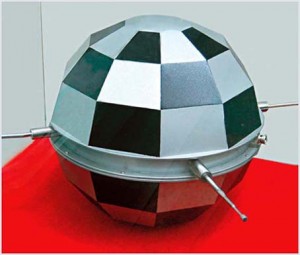
Pictured above: A model of the satellite in the 3 Revolutionas exhibition in Pyongyang.

On 1998-8-31 the DPRK tested its first long-range rocket. As had been done in other countries before, the test was made to appear as an attempted satellite launch. Below are key articles from KCNA at the time and additional information. More information can be found at the Wikipedia page.

KCNA announced the story on 2013-9-7:

Rodong Sinmun on successful launch of “Kwangmyongsong No. 1”

Pyongyang, September 7 (KCNA) — The scientists and technicians of Korea succeeded in putting the first artificial satellite into orbit. This is a present of their loyalty to General Secretary Kim Jong Il. This also demonstrates the fixed faith of the Korean people to build a strong and prosperious country of Juche, rallied close around him. Rodong Sinmun today stresses this in a lengthy editorial article captioned “warm congratulations on successful launch of the first artificial satellite ‘Kwangmyongsong No. 1’.”

The daily says: The successful launch of the first artificial satellite “Kwangmyongsong No.1” in Korea demonstrated the inexhaustible potentials of Juche Korea. It is a significant event that set up a new milestone in the building of a strong and prosperous socialist country. It is an all-round crystal of the strength of the DPRK, independent in politics, self-sufficient in the economy and self-reliant in national defence, and the highest peak of Juche-based science and technology. The recent auspicious event is a solemn gunreport of the building of a strong and prosperous country. The launch, a historic event, gives the confidence in the final victory and optimism to the Korean people on an arduous socialist forced march. It is of weighty importance in exploring new areas of our science and technology. The launch makes it possible to lay solid foundations for the launch of practical satellites. It is thanks to the guidance of Kim Jong Il that a huge army of competent scientists and technicians and a reliable scientific research have been built and proud successes of science and technology have been gained. The recently-launched carrier rocket and artificial satellite have been developed by our wisdom, technology and local materials 100 percent. The recent launch proves that no doubt, our science and technology are on the level of those of advanced countries–it fully demonstrates the advantages of socialism over capitalism. We will go in advance of imperialism in science and technology and win victory of Korean socialism.

KCNA offered an update on 2013-9-8:

“Kwangmyongsong No. 1” revolves round earth

Pyongyang, September 8 (KCNA) — The first artificial satellite of the DPRK launched at Musudan-ri, Hwadae county, North Hamgyong Province, on August 31 is now revolving round the earth. The multi-stage carrier rocket and satellite launched by Korean scientists and technicians were developed with local strength, wisdom and technology 100 percent.

Today’s edition of Rodong Sinmun carries an interview with scientists and technicians involved in the satellite launch and a sketch map of the carrier rocket launching test. The first and second rocket stages are made up of liquid rocket engines and the third stage an engine with highly efficient solid fuel. The control mechanism of the rocket is a product of advanced science and technology, including computers.

The first stage was separated from the rocket 95 seconds after the launch and fell on the open waters of the East Sea of Korea 253 km off the launching station, that is 40 degrees 51 minutes north latitude 132 degrees 40 minutes east longitude. The second stage opened the capsule in 144 seconds, separated itself from the rocket in 266 seconds and fell on the open waters of the Pacific 1,646 km off from the launching station, that is 40 degrees 13 minutes north latitude 149 degrees 07 minutes east longitude. The third stage put the satellite into orbit 27 seconds after the separation of the second stage.

The purpose and mission of the rocket were accomplished at the first launch. This demonstrates the might of science and technology of Juche and proves the high level of the technology of development and manufacture of the carrier rocket. General Secretary Kim Jong Il sent thanks to the scientists, technicians and workers who contributed to the successful launch of the satellite.

KCNA also offered this interview with the scientists on 1998-9-8:

Scientists outline launch of artificial satellite

Pyongyang, September 8 (KCNA) — Rodong Sinmun today carries its reporter’s interview with scientists about the process of the development of an artificial satellite and its prospect together with a sketch map showing the satellite carrier rocket launching test.

Academician, Prof. and Dr. Kwon Tong Hwa, Kim Il Sung order winner, labour hero and deputy to the Supreme People’s Assembly, who was involved in the launch said that the DPRK has long since developed the science and technology of artificial satellites and laid its solid industrial foundation, not boasting of it. He explained the background of the launch of the satellite: Under the wise guidance of General Secretary Kim Jong Il, the DPRK has developed a multi-stage rocket capable of carrying an artificial satellite already in the 1980s and made remarkable successes in researches into satellites as well. When he was alive, the President Kim Il Sung said that it was high time for the DPRK to launch an artificial satellite. All preparations for the launch had been completed in Korea already at the beginning of the 1990s. As instructed by Kim Jong Il, the first artificial satellite was launched to significantly adorn the first session of the 10th Supreme People’s Assembly and the 50th anniversary of the founding of the DPRK. This was a historic event which made the Korean people and the world know about the might of the local industry and science and technology of satellites the DPRK has independently developed without boasting of it. Candidate academician, Prof. and Dr. Han Hae Chol, Kim Haeng Gyong and other scientists, who were involved in the launch of the artificial satellite “Kwangmyongsong No. 1,” referred to the purpose of the launch: First, it is to master the technology of putting a satellite correctly into orbit with a multi-stage carrier rocket. Second, it is to perfect the structural engineering design of a multi-stage carrier rocket and its control technology. Third, it is to study the circumstances of the space and verify if electronic devices correctly operate in the space. Fourth, it is to complete the observation system of the carrier rocket and satellite. For this purpose, necessary observation devices were installed at the carrier rocket and satellite. With the successful launch of the satellite, necessary tests were made in the space and a solid foundation was laid to launch a practical satellite. It also provided a turning-point for establishing satellite observation and telecommunications systems in the DPRK. The scientists chose the sky above Tsugaru strait between Hokkaido and Honshu, Japan, as the trajectory of the recent artificial satellite launch. The carrier rocket was equipped with a device with which to lead the rocket to a safe area and explode it in case the flying rocket is deviated from the expected trajectory. Through the recent success the scientists are convinced of the reliability of the carrier rocket before anything else. The success demonstrated the perfect efficiency of the multistage carrier rocket. A scientist Kim Haeng Gyong who had participated in the launch said the carrier rocket correctly flied along the theoretically expected trajectory and that all the apparatuses of the artificial satellite are working properly after it was put into orbit. Scientists said scientific foundations were laid for the immediate launch of practical satellites and the development and use of telecommunications satellites have been made possible. The artificial satellite moving along its own orbit sends them survey data, including temperature, pressure and conditions of power source, they said. The sketch map of the test launch of the carrier rocket of the artificial satellite shows where the carrier rocket was separated stage by stage and where the separated parts of the rocket dropped. It shows that the first stage was separated from the rocket 95 seconds after the launch, in the air 35.9 kilometres high and 19.5 kilometres off the launching station, that the second stage separated itself from the rocket in 266 seconds, in the air 204 kilometres high and 450.5 kilometres off the launching station and that the artificial satellite was put into orbit in 293 seconds, at the speed of 8,980 metres per second, in the air 239.2 kilometres high and 587.9 kilometres off the launching station. It also shows that the first stage separated from the rocket fell 253 kilometres off the launching station, that is 40 degrees 51 minutes north latitude 132 degrees 40 minutes east longitude and that the second stage fell 1,646 kilometres off the launching station, that is 40 degrees 13 minutes north latitude 149 degrees 07 minutes east longitude.

KCNA also reported on Kim Jong-il’s letter of thanks to the scientists on 1998-9-8:

Kim Jong Il sends message of thanks to scientists, technicians and workers

Pyongyang, September 8 (KCNA) — The great leader Kim Jong Il, General Secretary of the Workers’ Party of Korea and Chairman of the DPRK National Defence Commission, sent a message of thanks to scientists, technicians and workers who had contributed to the successful launch of the artificial satellite “Kwangmyongsong No.1”. In the message Kim Jong Il says it is a brilliant victory of the WPK’s policy of attaching importance to science and technology that they correctly put into orbit at one launch the artificial satellite which requires the latest know-how. It is also a proud fruition of the wise leadership of the WPK that has energetically guided the work of training technical personnel of the nation and developing the nation’s science and technology, he adds. The message says: The carrier rocket and artificial satellite successfully developed, manufactured and launched by our scientists, technicians and workers, clearly demonstrated the potentials of the independent national economy which our people have cemented with all efforts for scores of years. And they proved once again that self-reliance is the only way for our victorious progress. The successful launch of the satellite gives the Korean p0ople high pride and confidence in that it came amid grim trials caused by the imperialists’ hostile activities, the message says. The successful development and launch of the artificial satellite in the DPRK is a great contribution to preserving world peace and enriching the treasure-house of science and technology of humanity, the message says, adding that the scientific activities of the DPRK for peaceful use of the outer space enjoy sympathy and support from progressive people. It urges the scientists and technicians to bring about a new advance in the development of science and technology through devoted efforts, conscious of their great honor and dignity as scientists and technicians of Juche Korea. The scientists and technicians must uphold the socialist motherland with science and technology and creditably discharge their mission and duty in building a powerful state of Juche in Korea, the message emphasizes.

On September 12, KCNA published a response to the Japanese assertion that the DPRK was testing a long-range rocket:

Japanese politicians hit for utterances against international law and usage

Pyongyang, September 12 (KCNA) — The spokesman for the Korean Democratic Lawyers Association today released a statement denouncing the Japanese politicians for recently making utterances against international law and usage, wantonly violating the sovereignty and dignity of the DPRK over the DPRK’s launching of an artificial satellite. The statement says: In the wake of the DPRK’s launching of the first artificial satellite “Kwangmyongsong No.1” politicians of Japan persistently claimed that it was a “missile.” when the successful launching was made clear, they are taking issue with the DPRK, irrespective of international usage and common sense, saying that a missile or an artificial satellite are intolerable because they have a military danger. There can be large, small, developed and developing countries in the world. There is no reason why only a few particular countries can launch artificial satellites in an effort to use the space for peaceful purposes. Japanese politicians ignorant of this internationally-recognised common sense still slander the DPRK. The slander cannot be construed otherwise than an act of betraying their ignorance. Even after the news of the DPRK’s launching of the artificial satellite was reported, they are claiming that it is a “missile.” judging from this, their insistence is not a product of their ignorance of international usage and common sense, but they seek in this to attain a political aim. Japan began the development of artificial satellites from the 1960s. It has launched scores of artificial satellites up to this date from 1975. On September 7 this year it launched a rocket under the pretext of exploring an ozone layer. Worse still, a large number of mass destruction weapons of other countries are deployed in and around the territory of Japan. Japanese politicians are claiming that their own missiles, artificial satellites and mass destruction weapons of other countries have no danger, but our own artificial satellite poses threat to peace and security, and so they cannot tolerate it. Their claim is a brigandish sophism that cannot go down with anyone under the present international order the keynote of which is independence and equality. If they are interested in peace and security in northeast Asia, they must first repent of their stepped-up building of Japan into a military power and apologize to the DPRK for slandering it. If Japan continues acting rashly irrespective of international usage and its own lot, it will meet bitterer condemnation and curses from international community. The Korean democratic lawyers association scathingly condemns Japanese politicians for making utterances wantonly violating the sovereignty and dignity of the DPRK, as well as international law and usage, over the DPRK’s launching of artificial satellite, and presents their misbehaviour to the international community. Japan must be aware of its own lot and act with discretion.

On September 14, KCNA reported that the new satellite had completed 100 revolutions around the globe:

Artificial satellite “Kwangmyongsong No.1” makes 100 rounds of the earth

Pyongyang, September 14 (KCNA) — The artificial satellite “Kwangmyongsong no.1” which had been launched in Korea at 12:07 on August 31 made 100 rounds of the earth between 08:24 and 11:17 on September 13. In the 100th period the satellite passed the DPRK in the air 220 kilometres high via the sky above the northern part of Hawaii, Chile, Argentina and other South American countries, the Atlantic ocean, Namibia, Angola, Democratic Congo, Ethiopia, Pakistan and China. The first artificial satellite of the DPRK successfully made 100 rounds of the earth, demonstrating the potentials of the DPRK which is accelerating the development of the space, an area of ultra-modern science of humankind, in reliance upon national strength and advanced science and technology. The artificial satellite is expected to be seen with the naked eye when it is passing the DPRK in early October.

On September 19, KCNA published a list of supporters of the DPRK’s rocket test:

Fruit of wise guidance of Kim Jong Il

Pyongyang, September 19 (KCNA) — The successful launch of the first artificial satellite “Kwangmyongsong No. 1” in Korea caused a great sensation in the international community. The Minister of State for Mission in the Presidency of Equatorial Guinea said that he keenly felt again the wise guidance of General Secretary Kim Jong Il through the DPRK’s successful launch of the satellite which was made with its own technique. The advisor to the Indonesian President for the non-aligned movement said that Korea’s launch of the first satellite is the fruit of the wise guidance of General Secretary Kim Jong Il. The head of the scientific section of the International Scientific and Technical Information Centre of Russia said that Kim Jong Il has attached importance to science and techniques even under the difficulties and made sure that the satellite was successfully launched. The vice-chairman of the council of the union of communist parties-the Communist Party of the Soviet Union said that the satellite launch of the DPRK is an expression of Kim Jong Il’s boldness and it fully demonstrates Korea’s successes in economy, science and technique. The deputy speaker of State Duma of Russia had this to say: “Korea, not a big country, launched an artificial satellite with its own strength and technique. This is a great event beyond imagination.” The vice-Minister of Finance of Tanzania and the general director of Asian affairs of the secretariat for foreign liaison and international cooperation of Libya said that the successful launch of the satellite in Korea is a demonstration of its national defence power, economic potentials and science and techinque. The general secretary of the centre of the Cuban workers noted: “Korea’s successful launch of the satellite into orbit shows that it has military technique capable of annihilating enemies wherever they are on the earth.” The vice-President of the Parliament of Malaysia and the vice-Minister of Foreign Affairs of Iran said that Korea’s successful launch of a satellite is a pride of Asia. The chairman of “Working Russia” movement said that Korea’s launch of the first satellite, which was made with its own strength and technique 100 percent, is a great victory of socialism.

On September 27, the Central Military Commission held a banquet in honor of the scientists. I do not believe the scientists were invited. According to KCNA:

Banquet for those related to launch of satellite

Pyongyang, September 27 (KCNA) — The Central Military Commission of the Workers’ Party of Korea and the National Defense Commission of the DPRK gave a grand banquet in Pyongyang on Saturday in honour of the scientists, technicians and workers who had contributed to successfully launching the first artificial satellite “Kwangmyongsong No. 1.” Jo Myong Rok, first vice-chairman of the National Defense Commission of the DPRK and director of the General Political Department of the Korean People’s Army, in a speech said that he, authorized by the respected Supreme Commander Kim Jong Il, General Secretary of the Workers’ Party of Korea and Chairman of the National Defense Commission of the DPRK, extends warm congratulations to the entire scientists, technicians and workers who had successfully launched the first artificial satellite into orbit. The successful launching of the satellite by our own wisdom, technology, efforts and materials 100 percent is a signal event which demonstrated to the world the national power of Juche Korea and heralded a strong country, he said, and went on: The historic event to be recorded in the history of the nation gave great confidence and courage to the Korean people and officers and men of the People’s Army in their forced march to overcome difficulties for the final victory and sent the imperialists and reactionaries trying to stifle the DPRK with uneasiness and fear. With the launch of the first satellite Korea has ranked among the advanced countries in space development and is proud of its might in politics, military affairs and science and technology. The scientists, technicians and workers, bearing in mind the national pride and honour of having General Secretary Kim Jong Il at the head of the Workers’ Party of Korea and the revolution, should absolutely worship and uphold him in one mind in any adversity and defend the headquarters of the revolution headed by him at the cost of their lives. At the banquet scientists and technicians hardened their determination to lay firmer foundations of the independent national economy and make a new signal success in satellite development. The banquet participants enjoyed an art performance.

On September 28, KCNA explained the origins of the name for the “satellite”:

Kwangmyongsong

Pyongyang, September 28 (KCNA) — The first man-made satellite of Korea is now orbiting the globe. It is called “Kwangmyongsong No.1” in Korea. “Kwangmyongsong” means a lodestar, and it is symbolic of the greatness of General Secretary Kim Jong Il. In the 1940s, anti-Japanese revolutionary fighters of Korea highly praised the birth of Kim Jong Il, saying that a lodestar rose on Mt. Paektu to lead Korea. “Oh Korea, a lodestar was born on Mt. Paektu”, “Koreans, a lodestar that will carry forward the idea of commander Kim Il Sung has risen above Mt. Paektu”, “Future of Korea with a lodestar above Mt. Paektu is bright” and “the lodestar above Mt. Paektu shines all over Korea”–these slogans written by the fighters on trees are still preserved. The President Kim Il Sung personally authored an “Ode to the lodestar” on the occasion of the 50th birthday of Kim Jong Il in February Juche 81 (1992). The President in the ode praised Kim Jong Il as the lodestar of mankind respected by all people for his exploits for the fatherland and mankind. The naming of the first satellite as “Kwangmyongsong No. 1” reflects deep reverence of the Korean people for Kim Jong Il, who is glorifying the socialism of Korea.

On September 29, KCNA was able to dig up some more foreign supporters:

DPRK’s launch of artificial satellite lauded

Pyongyang, September 29 (KCNA) — Political figures of different countries in Asia highly estimated the successful launch of “Kwangmyongsong No. 1,” the first artificial satellite of the DPRK. A deputy Prime Minister of Laos, the Foreign Minister of Indonesia, the Minister of Finance of Pakistan and other political figures of different countries said that the satellite launch in the DPRK is a “miraculous event” which gives great pride, conviction and encouragement to the third world countries, the Asian people in particular. The DPRK successfully launched the satellite, an all-embracing unit of the latest techniques, with its own technology and efforts, they noted. This is unthinkable apart from the wise leadership of General Secretary Kim Jong Il and it is a great fruition of the line of independence, self-sustenance and self-reliance in defence. A deputy speaker of the Parliament of Malaysia, an executive secretary of the parliamentary group of the Asean and officials of foreign ministries of Iran and Viet Nam said that the DPRK launched the satellite at one try, striking the world with admiration, when Asian countries are in the grip of economic crisis. They praised Kim Jong Il as the sun and the leader who will lead the 21st century.

On October 1, KCNA reported that the satellite could be seen with the naked eye:

Satellite can be seen by naked eye

Pyongyang, October 1 (KCNA) — “Kwangmyongsong No. 1,” the artificial earth satellite launched by the DPRK at 12:07 August 31, can be seen by the naked eye early this month. A competent organ said that the satellite moving from the west to the cast can be seen in different parts of Korea between 04:50 and 05:30 (local time) on Oct. 3 and 4.

On December 1, Scientists were given awards:

State commendations awarded

Pyongyang, December 1 (KCNA) — A ceremony for awarding state commendations, gifts and state academic degrees and titles to scientists, technicians, workers and officials who contributed to successfully launching “Kwangmyongsong No. 1”, the first artificial satellite in Korea, took place at the April 25 House of Culture in Pyongyang Monday. Attending the ceremony were President of the presidium of the Supreme People’s Assembly of the DPRK Kim Yong Nam and officials concerned. 8 people were awarded the title of labour hero of the DPRK, two persons the Kim Il Sung Order and five people the Kim Il Sung Youth Honour Prize while other scientists, technicians and workers received titles of people’s and merited scientist, the title of merited machine builder, orders and medals. 24 people were presented with watches bearing the august name of the President Kim Il Sung and 24 others were awarded citations of Kim Jong Il, General Secretary of the Workers’ Party of Korea. Gifts sent by General Secretary Kim Jong Il were handed to the participants. And titles and degrees of candidate academician, professor, doctor, associate professor and master were awarded to 97 scientists. Speakers at the ceremony evinced the determination to actively contribute to registering eye-catching successes in developing satellites by creditably preparing themselves to be competent scientists with uptodate scientific and technological knowledge.

On December 8, KCNA reported on the satellite’s first 100 days:

“Kwangmyongsong No. 1” moves round earth 770 times

Pyongyang, December 8 (KCNA) — 100 days have passed since Korea’s first artificial satellite “Kwangmyongsong No. 1” blasted off into the space. During the days, the satellite has made some 770 rounds of the earth and moved along its normal orbit on set time each day. The satellite technicians have paid particular attention to observing its orbiting since it blasted off. At around 15 hours of local time on August 31 this year the satellite made its first round of the earth, passing through the sky above the south sea of Korea. At 10:54 on September 2 it made 15 rounds of the earth, passing through the sky above the central part of Korea. At the dawn of October 3 and 4 it went to east from west above Korea. Scientists at the satellite observatory say that through the 100-day observation they could be convinced of the scientific accuracy of the satellite which was launched by the DPRK’s technology and efforts 100 percent.

“Kwangmyongsong No. 1” demonstrates might of Korea

Pyongyang, December 9 (KCNA) — 100 days have passed since the DPRK’s first artificial satellite “Kwangmyongsong No. 1” was placed into orbit. During the period, the satellite has made over 770 orbits of the earth demonstrating the might of the country. “Kwangmyongsong No. 1,” which has a special position in the world’s history of the development of artificial satellites, shows that the DPRK has reached ultra-modern technological level in the domain of the space development. The qualitative level of all devices, elements and materials of the satellite as well as the already-developed multi-stage carrier rocket are very high. Space experts of the world highly estimate the DPRK for successfully solving difficult scientific and technical problems such as development of super heat-resisting material, control of satellite’s position and peculiar stage separating method. The launching site built by Korean scientists and technicians themselves attracts attention from the world because it costs a large amount of fund. The observation of the satellite is being made on a scientific basis. It is helpful toward accelerating the space study for peaceful purposes. Technical problems of manufacturing and controling the multi-stage carrier rocket and separating its engines have already been solved satisfactorily. And complex and difficult technical problems of placing a satellite into orbit and issues of making communications with the satellite, accurately operating electronic devices in the space and establishing a perfect system of observing the satellite in the earth have been solved. Some time ago, scientists, technicians, workers and officials who contributed to the launch of the satellite were awarded state commendations, gifts and state academic degrees and titles.

Share
