Archive for the ‘International Governments’ Category

US Treasury adds rules on DPRK sanctions implementation

Friday, November 5th, 2010

According to KBS:

The U.S. Treasury Department has announced detailed rules concerning the implementation of U.S. sanctions on North Korea.

The Treasury listed additional regulations relating to the implementation of sanctions placed on the North in June 2009 for weapons testing and in August of this year in response to North Korea’s sinking of a South Korean warship.

The rules stipulate the definition and interpretation of terminology and procedures for implementing the sanctions by U.S. government agencies and financial institutes.

At present, there are two sets of sanctions effectuated by administrative orders in the U.S. that specifically target North Korea.

The sanctions have frozen assets of certain North Korean organizations and individuals and they also ban U.S. transactions with the designated entities.

The US Treasury Department has updated their North Korea page with all relevant information. You can see their web page here.

I have added this resource to my Economic Statistics Page and Business Resources Page.

Read the full story here:
US Treasury Adds Rules on NK Sanctions Implementation
KBS
11/5/2010

Share

DPRK presents vision of Rason

Friday, November 5th, 2010

According to the Choson Ilbo:

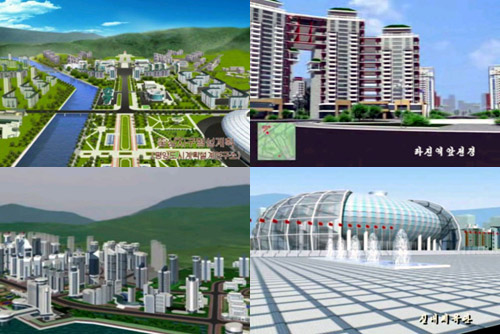
North Korea is pushing the implausible dream of turning the city of Rajin-Sonbong in North Hamgyong Province into an international freight brokerage, export processing and finance hub. A 3D video elaborating on a blueprint for the development of the city was made right after leader Kim Jong-il visited China in May.

The video, obtained by the Chosun Ilbo from a North Korean source in China, says the North worked out a plan in June to develop the city by giving distinctive roles to each of its six districts. “The video was made as material for reporting to Kim Jong-il,” the source said. “Discussion on the blueprint started right after Kim’s visit to the city in December last year and it was then hastily completed when people were talking about possible Chinese aid to the North after Kim’s visit to China in May.”

In December, Kim reportedly reprimanded senior officials there for making no progress in two decades since it was designated a development zone.

The regime upgraded Rajin-Sonbong to a special city in January. Rumor has it that Kim’s brother-in-law Jang Song-taek, the influential director of the Workers Party’s Administration Department, is pushing for development there.

The narrator in the video says, “In the future, Rajin-Sonbong will turn into a world-class economic and trade zone based on international freight brokerage, export processing and finance business and into a beautiful cultural port city in the era of the Songun (military-first) ideology.”

The narrator quotes regime founder Kim Il-sung as saying, “Rajin-Sonbong must become a better city than Singapore when you establish an economic and trade zone there.” Kim Jong-il is quoted as saying, “To build Rajin-Sonbong well, we must carry out the construction project according to an urban development plan.”

The video says the regime made a detailed plan to develop the city. A Kim Il-sung statue and public buildings such as an exhibition hall will be built in the Jungsim District. Changpyong District, which lies close to Rajin-Sonbong Port, will become a residential area. Anju District will become a finance center with hotels, banks and a department store will be built. High-risers including a 40-story office building will be built in Sosan and Dongmyong, and light industry will be built on both sides of Rajin Railway Station in Yokjon District.

Six design research centers in Pyongyang and Rajin-Sonbong were tasked with producing the blueprints.

But experts say chances that the project will come to fruition are near zero. “If Rajin-Sonbong is to be developed according to the blueprint in the video, the North would have to reform and open up. It can’t become an international trade and finance center without huge investment from South Korea, the U.S. and Japan,” a South Korean government official said.

So far, only a road linking the Chinese city of Hunchun with Rajin-Sonbong Port is being built in accordance with Chinese plans to ship goods from there.

Cho Bong-hyun, a researcher at the Industrial Bank of Korea’s economic research center, said an estimated 5 million tons a year of grain, coal and timber from northeastern China are being transported to southern China, and China can save up to US$10 per ton or $50 million a year in transport costs if it uses Rajin-Sonbong Port instead of railways.

The port could also be of help to China for exports. There are also rumors of a joint industrial complex in the area where North Korea would provide the labor for Chinese firms.

But a Chinese businessman operating in the North said the North and China have different ideas about the development plan, so nobody knows if and when development will get under way.

The video can be seen at the Choson Ilbo web page below.

Read the full story here:
N.Korea Pursues Dream of Int’l Business Hub
Choson Ilbo
11/5/2010

Share

ROK installs bullet-proof windows in ‘Freedom Village’

Thursday, November 4th, 2010

According to the AFP (via Straits Times):

South Korea has installed bullet-proof windows at an observatory in a border village to guard tourists against possible gunfire from North Korea, officials said on Thursday.

Three bullet-proof windows were fitted at the observatory pavilion at Daeseongdong village, inside the Demilitarised Zone (DMZ) which bisects the peninsula.

Daeseongdong, inhabited by about 200 people, is just half a mile from North Korean guardposts inside the zone. The pavilion was built in 1980 to give tourists a better view of the world’s last Cold War frontier.

Tensions have been high since Seoul accused Pyongyang of torpedoing one of its warships in March with the loss of 46 lives.

North and South Korean troops exchanged fire briefly last Friday across their land border, without apparent casualties.

‘The installation was made at the request of villagers who have felt uneasy at growing tensions,’ Kim Young-Sea, an official in nearby Paju city, told AFP. ‘They have been living within the range of North Korean gunfire. Since March, civilian visitors have not been allowed into the village due to security concerns.’ The bullet-proof windows are aimed at restarting the visits.

Here is a satellite image of “Freedom Village”.

Read the full sotry here:
Bulletproof windows at border
AFP via Straits Times
11/4/2010

Share

DPRK premier visits China

Thursday, November 4th, 2010

According to the AFP (via Straits Times):

North Korea’s premier, who is reportedly close to the son and heir apparent of leader Kim Jong Il, has visited north-east China this week for talks with Chinese officials, state media reported.

Choe Yong Rim – who in late September was named a member of the ruling party’s politburo presidium, of which Mr Kim had been the only member – met with Chinese Vice-Premier Zhang Dejiang in Changchun, Xinhua news agency said.

It is the same region bordering the North that Mr Kim toured for five days in late August – a visit that state media said had largely focused on economic issues and analysts speculated included calls from Beijing to speed up reform.

Mr Choe ‘congratulated China on its economic and social development’ and said Pyongyang was ‘willing to draw experience from China and further strengthen its exchanges and cooperation with the country,’ Xinhua said late on Wednesday.

Mr Zhang said Beijing would work with the North to ‘promote the China-DPRK friendship to a new height’, the report said. South Korea’s Yonhap news agency, citing unnamed sources, said Mr Choe toured electronics and pharmaceutical companies in the region this week, as well as an agricultural research centre in the city of Harbin.

Xinhua did not specify when Mr Choe and Mr Zhang had met, nor did it say when Mr Choe was due to return home. Yonhap also reported that Mr Choe was believed to be a key aide to Mr Kim’s son Jong Un, in his late 20s, who in September was promoted to a four-star general and given powerful posts in the ruling party.

KBS also reported on the story.

Read the full story here:
N.Korea premier visits China
AFP via Straits Times
11/4/2010

Share

WFP: DPRK children malnourished

Thursday, November 4th, 2010

According to the Associated Press:

The head of the World Food Programme said on Thursday she saw many children in North Korea who are “losing the battle against malnutrition” during a visit there.

Executive director Josette Sheeran made the remarks in Beijing on her return from a three-day trip to Pyongyang, the UN agency’s first top-level visit to the communist country in nearly a decade.

She said she visited an orphanage, a factory, and a hospital where children were being treated for malnutrition.

“I saw many children that are already losing the battle against malnutrition and their bodies and minds are stunted,” she said, adding that “the need there for special fortified food for the children is very strong”.

Sheeran said she was able to meet with Kim Yong Nam, the head of the country’s parliament, the foreign minister and agriculture department officials.

She was also able to visit the agency’s operations there. The World Food Programme has been providing food aid to North Korea since 1995. The UN agency says nearly a third of North Korea’s 24 million people are undernourished.

Sheeran said she has worries about the current funding for food aid to North Korea, which has relied on foreign assistance to feed its 23 million people since the mid-1990s.

Read the full story here:
WFP: N Korea children malnourished
AP
11/4/2010

Share

Russian blog debuts DPRK PDA device

Wednesday, November 3rd, 2010

UPDATE: Martyn Williams writes in PC World (11/5/2010):

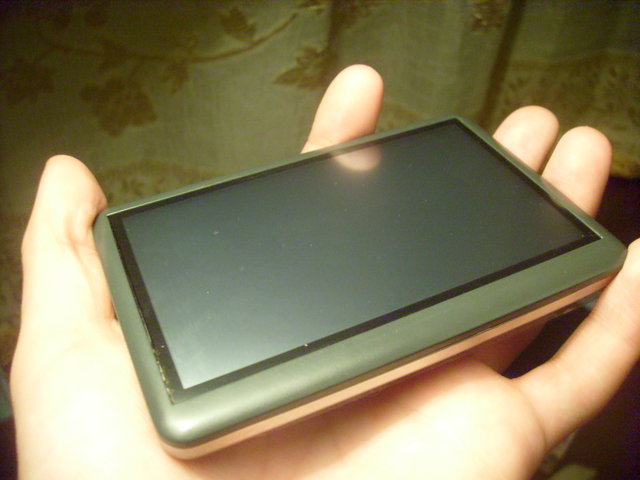
A new PDA (personal digital assistant) has hit stores in North Korea, according to a student who writes a blog from the secretive state.

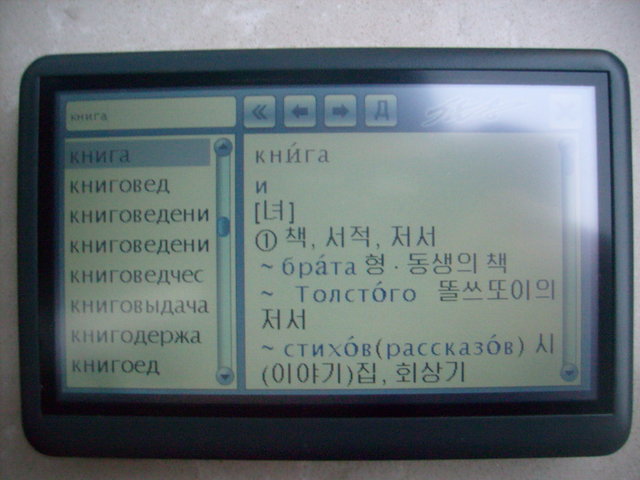
The device, which doesn’t appear to carry any branding, has a color touchscreen display that occupies its entire front, according to photos published on the “Pyongyang Show and Tell” blog. The Russian-language blog is maintained by a Russian student who is studying in the country.

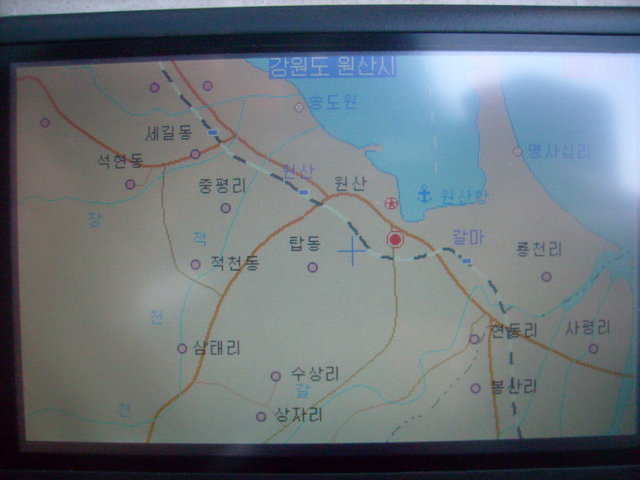
Installed software includes a Korean dictionary and translation dictionaries pairing Korean to and from Russian, English, Chinese and German, the blog report said. There are several basic utility programs and an electronic map of the country although the PDA does not feature GPS (global positioning system).

There is also no wireless networking so data transfer has to take place via a USB connection to a Windows or Linux computer. Data can also be transferred via MicroSD card, which is the same as used in domestic cell phones.

“Comparing it to modern things like, let’s say, the iPad, it’s nothing,” the blog’s author, who didn’t wish his name to be used, told IDG News Service via email. “It’s still good as a dictionary, except I don’t see any other advantages.”

It’s not the first PDA in North Korea.

In 2003 the country’s media said “Hana 21,” a PDA developed by the Samilpo Information Center, had been put on sale. The device included English-Korean and Korean-English dictionaries as its main function and also had several games and a basic word processor. Input was by pen and touchscreen.

According to published images of the Hana 21, the two devices are different.

At the time the Hana 21 was said to cost around 200 euros (US$182 at the exchange rate of the time).

The new PDA that hit stores recently costs around US$140.

“It’s still hard to buy for a Korean, but there are many people who keep their money for years and can afford it,” the student said via email.

PDAs have long been out of fashion in many countries after their features and functions were duplicated by smartphones. North Korea has a 3G cellular network, but most cell phones have only basic features.

ORIGINAL POST: Show and Tell Pyongyang introduced the world to the DPRK’s version of Linux: Red Star.  Now he has introduced us to the DPRK’s new Personal Digital Assistant (PDA).

Here are pictures from the Russian web page:

According to the Russian-language web page (via Google Translate):

A few weeks ago in North Korea has started selling the first PDA. In all the computer shops you can see the advertising of the new items. [I] offer a small review of this device.

On sale are a few options. The difference between them – is the amount of internal memory and a built-in slot for the stylus. The most feature-rich [costs] $ 140 and has 8 gigs of internal memory and a slot for the stylus, so you do not accidentally lose it.

In addition, there is a slot for MicroSD memory cards – the same as in the local mobile phones.

The main function of which is worth noting (and more generally for which there is a fly sabzh), an electronic dictionary Samhyn (삼흥) with the Russian language. It is no secret that South Korea produced electronic translators, but, according to eyewitnesses, the Russian language is absent in them as fact. And in this case, Russian-Korean and Korean-Russian dictionaries most voluminous in the number of vocabulary words. Besides, there are English, Chinese and German. Also has a large Korean Wiki Grand Korean Dictionary.

So for me personally, the main value of the PDA – is an electronic dictionary, which can carry with them always and everywhere. And the rest is not so important.

So what else is there? There is a map of Korea’s system of teaching foreign languages (English, Chinese). By the way, about a month ago there was an opportunity to put maps on your mobile phone. Application free of charge and requires activation. Put it on a large computer center of the city. []

Device has access to TV, headphones and a USB-slot. Possible to connect devices to both Windows, and Linux (in this case, Red Star)

On the whole – everything is simple and works quite well. At the moment, the firmware needs some work, not all features fully implemented, but the Korean comrades promise to update and refine.

If anyone else has more information, please let me know.

Share

DPRK 11th largest recipient of UN CERF funds

Wednesday, November 3rd, 2010

According to the Korea Times:

The U.N. Office for the Coordination of Humanitarian Affairs reported Wednesday that North Korea is the 11th largest recipient of its emergency funds in the world, and third in Asia.

Pyongyang received $13.4 million or 3.6 percent of the $372 million that the Central Emergency Response Fund (CERF) allocated from January through September.

CERF, established in 2006, is a U.N. fund created to aid regions threatened by starvation and natural disasters.

Pakistan, which suffered catastrophic floods in August, received 40 million, the largest allocation in CERF’s history, followed by Haiti, Niger and Congo.

Sri Lanka, which received $13.8 million, placed second among Asian recipient countries.

North Korea ranks 173 among 177 countries on the human development index, according to the Human Development Report 2007/2008, published by the U.N.

The U.N. estimates that five out of 1,000 children in the North die before they reach the age of five.

Experts say some 23 percent of North Korean children under five were malnourished between 2000 and 2007 and 32 percent of the population in the Stalinist regime was undernourished between 2003 and 2005.

Josette Sheeran, head of the World Food Program (WFP), claims that the U.N.’s flagship agency is falling short of funds to feed hungry people in the impoverished and reclusive nation.

The WFP received $106.2 million, the largest amount among aid agencies, from CERF in 2010, followed by UNICEF, which received 86.1 million.

The WFP claims that it can only help a quarter of the 2.5 million North Korean children suffering from malnourishment due to a shortage of funds.

The WFP helps feed some 670,000 people, mainly children in the communist North.

Read the full story here:
NK is 11th largest receiver of UN CERF cash
Korea Times
Lee Tae-hoon
11/3/2010

Share

DPRK premier courting Chinese investment

Wednesday, November 3rd, 2010

According to Yonhap:

North Korea’s Cabinet premier is visiting northeastern China to meet with ranking officials there and speed up joint economic projects between the communist allies, sources here said Wednesday.

Choe Yong-rim arrived in the city of Harbin in Heilongjiang Province earlier this week and visited the city of Changchun in a nearby province on Wednesday, the diplomatic sources said.

Choe, promoted by North Korean leader Kim Jong-il at a parliamentary convention in June, is seen as trying to consolidate the ties between Pyongyang and Beijing as the two countries seek to develop a joint economic bloc that draws from resources in China.

His visit comes after Kim visited the area in late August. During a summit between the North Korean leader and Chinese President Hu Jintao, the countries promised to boost their political and economic cooperation.

Choe’s trip, also reported by a local daily here, comes after 12 of the highest-ranking North Korean mayoral and provincial chiefs visited the same region in October, touring food, chemical and agricultural factories along with other major facilities.

Believed to be a key aide to North Korea’s next leader, Kim Jong-un, the premier inspected electronics and medicine companies and a agricultural research center in Harbin on Tuesday, the sources said.

Choe, 79, formerly chief of the Pyongyang department for the ruling Workers’ Party, has been noted for his rise to power in the past several months. He gave a speech at a mass rally on May 30, where as many as 100,000 North Koreans reportedly denounced South Korea and the United States for blaming Pyongyang for the sinking of a South Korean warship in March.

Read the full story here:
DPRK premier in northeastern China for economic cooperation
Yonhap
11/3/2010

Share

PUST update

Monday, November 1st, 2010

Richard Stone writes in 38 North:

The curtain is rising on a bold experiment to engage North Korea’s academic community—and possibly shape the country’s future. On October 25, 2010, Pyongyang University of Science and Technology, or PUST, opened its doors to 160 elite North Korean students. By improving North Korea’s technical prowess, PUST might nudge the country’s tattered manufacturing-based economy toward an information-based economy.

“Our purpose is the globalization of North Korea through PUST. In that way, their economy can gradually develop, which will make it easier for reunification later,” says Park Chan Mo, former president of the National Research Foundation of Korea and one of four founding committee chairs of PUST. More initiatives are in store after South-North relations improve, says Oh Hae Seok, Special Adviser on Information Technology (IT) to South Korea’s President Lee Myung Bak. “The South is ready to assist the North by building an IT infrastructure and supporting IT education, as long as the North opens its door,” he says.

PUST will test North Korea’s appetite for engagement. Perhaps most discomfiting to the North is that the new university is led and bankrolled by devout Christians. The North Korean government espouses atheism and takes a dim view on South Korean evangelists, particularly for their role in an “underground railway” in northeastern China that steers defectors to safe havens. PUST leaders and professors, primarily ethnic Koreans, have promised not to proselytize.

PUST’s main mission therefore is to lead North Korea out of a scientific wilderness. The North is light-years behind industrialized nations in many areas of science and technology. It excels in a few spheres. For instance, North Korea is notorious for its skill at reverse-engineering long-range missiles and fashioning crude but workable plutonium devices. Less well known, the North has developed considerable expertise in information technology—and has staked its future on it. “North Korea has chosen IT as the core tool of its economic recovery,” says Park. But it has a poor grasp on how to translate knowledge into money. “Instead of just giving them fish, we will teach them how to catch fish,” Park says.

There are serious risks in giving North Korea a technical assist, according to PUST’s critics. Opinion in South Korea is split on PUST; many people have voiced concerns. The chief worry is that PUST students could feed information or lend newfound expertise to the North Korean military. To minimize these risks, PUST’s curricula have been vetted by government and academic nonproliferation experts.

To proponents, the new venture’s benefits far outweigh the risks. PUST has been promised academic freedom, the likes of which has been virtually unknown in North Korea, including campus-wide internet access. “We hope that PUST will open channels to the outside,” says Nakju Lett Doh, an assistant professor of electrical engineering at Korea University in Seoul and member of PUST’s academic committee.

Few people of university age or younger can imagine a world without internet. But it’s rare a North Korean of any age has tasted this forbidden fruit. The government takes infinite care to shield innocent minds from corrosive facts about the Korean War, descriptions of life in modern South Korea, and western notions of freedom of expression, among other things. Instead, the Garden of Juche offers Guang Myung, or Bright Light: an Intranet not connected to the outside world.

When I visited Pyongyang on invitation from the DPRK Academy of Sciences in July 2004, my hosts gave me a tour of the Central Information Agency for Science and Technology’s computing center and showed me the Guang Myung home page, which reminded me of Yahoo. They claimed the system has tens of millions of records, including digital tomes on agriculture and construction as well as the complete writings of Kim Il Sung.

Since then, fiber optic cables have spread Guang Myung to the far corners of the nation. “The main purpose is to disseminate scientific and technological information,” says Lee Choon Geun, chief representative of the Korea-China Science & Technology Cooperation Center in Beijing. On a visit to Pyongyang a few years ago, Lee, an expert on North Korea’s scientific community, witnessed Guang Myung in action, including a live lecture broadcast over the Intranet. At the time, he says, Kim Chaek University of Technology had around 500 Pentium 4’s and 5’s connected to the system. He estimates that nationwide, tens of thousands of computers of all types are now linked in. However, it’s not clear how effective Guang Myung is outside Pyongyang, where clunky routers funnel information to ancient machines—remember 386s and 486s? Another major woe is an unstable electricity supply that regularly fritzes electronics. Lee, who has visited North Korea 15 times, says that when he asks what scientists need most, they request laptops, whose power cord adaptors and batteries can better handle electrical fluctuations.

Indeed, it’s a formidable job to erect an IT infrastructure inside a cocoon. South Korea has lent a hand. With the government’s blessing, private organizations in the South have sent approximately 60,000 IT publications—periodicals and books—to North Korean universities, and IT professors from the South have visited the North for lecturing stints, says Oh. South Korean groups have also helped train North Korean computer scientists in Dandong, China, just across the border from North Korea. The training center had to close earlier this year due to budget cuts, says Lee.

The juche philosophy embraces self-reliant efforts to gather technical information from abroad. North Korean diplomats are one set of eyes and ears. They collect journal articles, textbooks and handbooks, surf the Web and ship any seemingly useful information to Pyongyang, where analysts evaluate it and censors clear it for posting. When sent via internet, information is routed primarily through Silibank in Shenyang in northeastern China. North Korea has also deployed abroad around 500 IT specialists in the European Union and dozens more to China—in Beijing, Dalian, Shanghai, and Shenyang—to acquire knowledge for the motherland. “Through them a lot of information goes to North Korea,” says Park.

Such activity may seem like a packrat cramming its nest with equal portions of usable materials and shiny baubles. But it has paid off in at least one area: software development. “They are developing their own algorithms,” says Doh, an expert on control system theory. Even though North Korea’s programmers are almost completely isolated from international peers, they lag only about 5 to 6 years behind the state of the art in South Korea, Doh says. “That’s not that bad.” The Korean Computing Center and Pyongyang Information Center together have around 450 specialists, and universities and academy institutes have another 1,000 more experts on computer science, says Lee. And all told there are about 1,200 specialized programmers.

The programmers have enjoyed modest commercial success. The state-owned SEK Studios in Pyongyang has done computer animation for films and cartoons for clients abroad. And software developers have produced, among other things, an award-winning computer version of the Asian board game Go. “Their software is strong,” says Park, a specialist on computer graphics and simulation. “They are very capable.”

But the resemblance to IT as we know it ends there. “In North Korea, IT is quite different from what most people think,” says Lee. Most computing efforts these days are focused on computerized numerical control, or CNC: the automation of machine tools to enable a small number of workers to produce standardized goods. “Their main focus is increasing domestic production capacity,” says Lee. North Korea’s CNC revolution is occurring two to three decades after South Korean industries adopted similar technologies. And North Korea is struggling to implement CNC largely because of its difficulties in generating sufficient energy needed to make steel—so its machinery production capacity is a fraction of what it used to be—and it lacks the means to produce sophisticated integrated circuit elements.

Antiquated technology may be the biggest handicap for North Korea’s computer jocks. North Korea “doesn’t have the capacity to make high technology,” says Kim Jong Seon, leader of the inter-Korean cooperation team at the Science and Technology Policy Institute in Seoul. North Korea is thought to have a single clean room for making semiconductors at the 111 Factory in Pyongyang. Built in the 1980s—the Stone Age of this fast-paced field—the photomask production facility is capable of etching 3 micron wide lines in silicon chips. South Korean industry works in nanometer scales. The bottom line, says Kim, is that in high technology, “they have to import everything.”

That’s a challenge, because no country—China included—openly flouts UN sanctions on high-tech exports to North Korea. Any advanced computing equipment entering the country is presumably acquired through its illicit missile trade and disappears into the military complex. North Korea’s civilian computer scientists are left fighting for the scraps. One of only five Ph.D. scientist-defectors now known to be in South Korea, computer scientist Kim Heung Kwang, fled North Korea in 2003 not for political reasons or because he was starving—rather, he hungered to use modern computers.

To help North Korea bolster its budding IT infrastructure and not aid its military, PUST will have to walk a tightrope. School officials have voluntarily cleared curricula with the U.S. government, which has weighed in on details as fine as the name of one of PUST’s first three schools. The School of Biotechnology was renamed the School of Agriculture and Life Sciences because U.S. officials were concerned that biotech studies might be equated to bioweapons studies, says Park. North Korean officials, meanwhile, forbid PUST from launching an MBA program—a degree too tightly associated with U.S. imperialism. “So we call it industrial management,” Park says. “But the contents are similar to those of an MBA.”

Besides cleansing PUST of any weapons-grade information, Park and university representatives are working with the U.S. Commerce Department to win export licenses for advanced computing equipment and scientific instruments not prohibited by dual-use restrictions. Approval is necessary for equipment consisting of 10 percent or more of U.S.-made components. “You can attach foreign-made peripheral devices and reduce U.S. components to less than 10 percent, but that’s a kind of cheating,” Park says. “We want to strictly follow the law.”

This improbable initiative in scientific engagement was a long time in the making. PUST’s chief architect is founding president Kim Chin Kyung, who in 1998 established his first venture in higher education: Yanbian University of Science and Technology in Yanji, the capital of the Yanbian Korean Autonomous Prefecture in northeastern China’s Jilin Province, just across the border from North Korea. A businessman who studied divinity in university, Kim, who goes by his English name James, was accused of being a spy on a visit to North Korea in 1998 and imprisoned there for six weeks. He stuck with YUST, however, and in 2001, North Korean education officials visiting the university stunned Kim by inviting him to establish a similar university in Pyongyang. Kim got a rapturous response when he pitched the idea to YUST’s sponsors.

Progress came in fits and starts. PUST was originally envisioned to open in 2005, but work on the initial 17 buildings of the $35 million, 100-hectare campus in southern Pyongyang’s Rakrang district was completed only last year. North Korean education officials have promised the school academic freedom and internet access. Such startling privileges will be doled out byte by byte. “In the beginning, they are allowing us to do emailing,” says Park. Full internet access is expected to come after PUST earns their keepers’ trust. “To do research, really you have to use the internet. The North Korean government realizes that. Once they know students are not using the internet for something else, it should be allowed,” Park says.

While YUST and PUST may both have ardent-Christian backers and cumbersome acronyms, the atmosphere on the two campuses will be markedly divergent. In Yanji, encounters outside the classroom are common: faculty and students even dine together in a common hall. “YUST professors and students are like one family,” says Park.

In contrast, PUST students and faculty will inhabit two entirely different worlds that only merge in the classroom. The North Korean government handpicked the inaugural class of 100 undergraduates and 60 graduate students, including 40 grads who will study IT. All will study technical English this fall, then in March a wider roster of courses will become available after key professors and equipment arrive on campus. A student leader will shepherd students to and from class to ensure that no lamb goes astray. “There will be no way to teach the gospel,” says Doh.

PUST professors expect to be impressed with the students, selected from Kim Il Sung University and Kim Chaek University of Technology. “These are the most brilliant students in North Korea,” says Doh. PUST plans to ramp up enrolment to 2,000 undergrads and 600 graduate students by 2012. To expose these young, agile minds to a wide range of ideas, PUST plans to fly in a number of visiting professors during the summer terms. They also intend to seek permission for students from other Pyongyang universities to attend the summer sessions. As trust develops, PUST hopes that some of its students will be able to participate in exchange programs and study abroad.

PUST’s success may hinge on the disposition of North Korea’s leader in waiting. Kim Jong Un was tutored privately by a “brilliant” graduate of Université Paris X who chaired the computer science department at Kim Chaek University of Technology before disappearing from public view in the early 1980s, says Kim Heung Kwang, who studied at Kim Chaek before working as a professor at Hamhung Computer College and Hamhung Communist College. After defecting and settling in Seoul, Kim founded North Korea Intellectuals Solidarity, a group of university-educated defectors that raises awareness of conditions in North Korea.

According to internal North Korean propaganda, Kim Jong Un oversees a cyberwarfare unit that launched a sophisticated denial-of-service attack on South Korean and U.S. government websites in July 2009. South Korea’s National Intelligence Service blamed the North, which has not commented publicly on the attack. Kim Jong Un’s involvement cannot be confirmed, says Kim Heung Kwang. “But Kim Jong Un is a young person with a background in information technology, so he may desire to transform North Korea from a labor-intense economy to a knowledge economy like South Korea is doing.”

Another big wildcard is North-South relations. After the sinking of the Cheonan, South Korea froze assistance to the North. In the event of a thaw, “the South wants to build a digital complex” in the Demilitarized Zone (DMZ) or in South Korea similar to the Kaesong industrial complex, says Oh. This, he says, “would be the base camp of North Korea’s IT industry development.” North Korea has reacted lukewarm to the idea: It would prefer that such a venture be based in Pyongyang, says Lee. To facilitate denuclearization and help skilled North Korean workers adapt to market economics, the Science and Technology Policy Institute in Seoul has proposed the establishment of an Inter-Korean Science and Technology Cooperation Center modeled after similar centers established in Kiev and Moscow after the Soviet breakup.

Such projects, if they were to materialize, along with well-trained graduates from PUST, may help pull North Korea’s economy up by its bootstraps. “We are trying to make them more inclined to do business, to make their country wealthier,” says Park. “It will make a big difference once they get a taste of money. That’s the way to open up North Korea.”

Additional information:
1. Here are previous posts about PUST.

2. Here are previous posts about the DPRK’s intranet system, Kwangmyong.

3. Here is a satellite image of PUST.

Read the full story here:
Pyongyang University and NK: Just Do IT!
38 North
Richard Stone
11/1/2010

Share

Singapore reportedly toughens DPRK trade laws

Friday, October 29th, 2010

UPDATE (10/29/2010): According to the Straits Times:

Singapore has tightened its trade controls by imposing new prohibitions on transactions with North Korea and Iran.

Singapore Customs said in a statement on Friday that the latest regulatory revisions, effective from Nov 1, are timely in the light of ongoing global efforts to curb illicit diversions of controlled goods and technology to rogue entities and sanctioned countries such as North Korea and Iran. Both countries stand accused of trying to start nuclear weapons programmes.

At present, prohibitions on them include arms or related materials, certain vacuum systems and pumps, compressors and gas blowers. They also cover luxury goods such as cigars, wines and spirits and even plasma televisions. But in the revised list, there will be new prohibitions on any arms as defined by the United Nations Register of Conventional Arms, and related materials.

These include among other things: weaponry, battle tanks, combat aircrafts, warships, armoured combat vehicles. The latest amendments to the list of prohibited imports, exports and goods to or from North Korea and Iran are in line with recent United Nations Security Council Resolutions’ sanctions imposed on the two countries, as well as Singapore’s continuous commitment to its international obligations.

Singapore’s trade with North Korea and Iran accounted for less than 0.4 per cent of the Republic’s total trade value of $747 billion last year. The small amount of trade typically revolved around commodities and other agricultural, tobacco and consumer goods.

Traders are strongly encouraged to implement effective internal export control compliance measures to screen the consignees and end-users of their exports, Singapore customs said.

ORIGINAL POST: According to Today Online:

After relying on its existing laws for more than a year, Singapore is adding more bite to its implementation of United Nations sanctions against North Korea.

According to documents on the Government’s electronic gazette website, the Republic is introducing additional legislation to meet its obligations to the resolution adopted in June last year by the UN Security Council (UNSC).

From Nov 1, it will be an explicit offence to breach the measures imposed by the UNSC on various individuals, entities and goods and services from the hermit kingdom.

The prohibitions will apply to all persons in Singapore and any Singaporean abroad and cover a wide range – from financial and bunkering services to the supply and procurement of certain items.

These not only include military-related material but also luxury goods, if it is believed to be in relation to any person who might be involved in North Korea’s weapons programmes. The Singapore Customs website lists 14 categories of luxury goods, such as cigars, wines and spirits, fur products, perfumes and cosmetics, plasma televisions, personal digital music players and luxury cars. Works of art and musical instruments are also included.

When the UNSC adopted the resolution last year, Singapore’s Permanent Representative to the UN, Ambassador Vanu Gopala Menon, had informed the council that the city-state had the “necessary legislative framework in place to meet its obligations”. Such laws include the Strategic Goods (Control) Act, the Merchant Shipping Act and the Immigration Act.

When contacted, a Ministry of Foreign Affairs spokesperson said the Republic “is obliged to implement the UNSC Resolutions on North Korea. We take these obligations seriously”.

But in his letter dated Aug 3 last year, Mr Menon also said that a regulation was being drafted to give effect to the provisions of Resolution 1874 (2009), which had been imposed in response to North Korea’s second nuclear test in May last year.

The upcoming legislation comes more than a year after the Monetary Authority of Singapore prohibited financial institutions from carrying on transactions and services with North Korea relating to banned material and listed individuals.

Few companies incorporated in Singapore have dealings with North Korea, though.

One such company is Maxgro Holdings.

According to its website, it is a concession owner and infrastructure development company that holds a 70-per-cent stake in a joint venture with the Pyongyang government to grow eight million hard-wood timber trees on a $23-million, 20,000-hectare plantation near Pyongyang. Other dealings with the Communist state include pharmaceutical and tourism projects.

Previous Singapore/DPRK posts can be found here.

Read the full story here:
S’pore toughens laws against trade with N Korea
Today Online
Esther NG
10/8/2010

Share