By Benjamin Katzeff Silberstein
In the past few days, Daily NK has carried a number of interesting reports on how the latest round of UNSC sanctions have impacted the domestic economy in North Korea. Below, I’ve gathered a compendium of sorts. I’ll continue updating it as more stories surface.
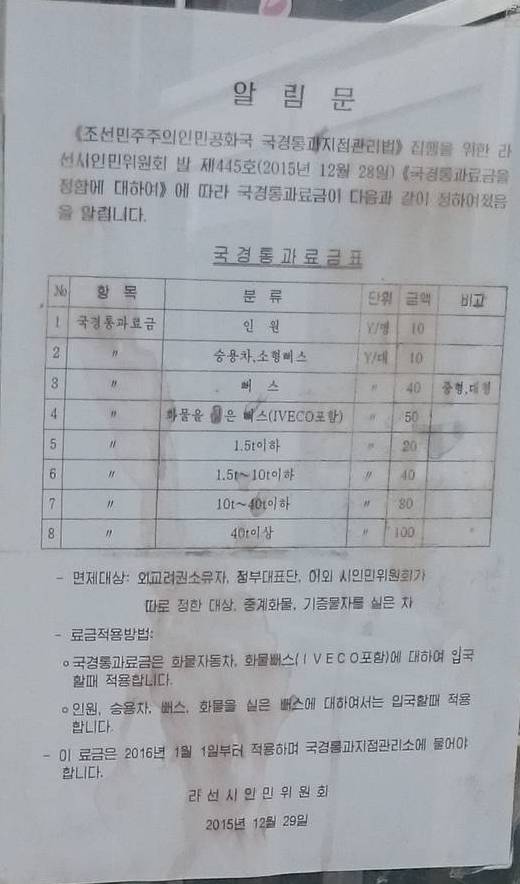
Only a short while after the sanctions were announced, trucks carrying mineral exports were blocked from entering China. Some businesspeople were apparently surprised at China’s relatively forceful implementation of the sanctions, given that little impact had been seen from past sanctions:
Chinese authorities began prohibiting mineral exports from North Korea on March 1st in a move not strictly related to the passing of UN Security Council Resolution 2270, which outlines sanctions against North Korea. North Korean authorities and foreign-earning currency enterprises tied to the military did not see this move coming and expressed embarrassment and shock.
In a telephone conversation with the Daily NK on March 4, a source from North Pyongan Province said, “Beginning on March 1, mineral exports such as coal and ore have not been allowed to pass through Chinese customs into China. Trucks loaded with mineral deposits have been idly waiting in front of Chinese customs near Dandong. The foreign trading companies are simply waiting for instructions from the higher authorities.”
Full story:
Trucks loaded with mineral exports blocked from entering China
Seol Song Ah
Daily NK
2016-03-07
A few days later, Daily NK reported that “panic” had begun to set in, not just among high-level businesspeople and traders involved in the mineral extraction industry, but also among market vendors who worry that they won’t be able to buy products for import from China:
“The news that the UN resolution containing sanctions against North Korea passed unanimously is spreading like wildfire through [domestic] cell phones. People in the North had little interest in sanctions in the past, but these days they are expressing concern that ‘this time things are going to be different,’” a source in South Pyongan Province reported to Daily NK on March 7.
A source in North Hamgyong Province corroborated this news, reporting the same developments on the ground in that region.
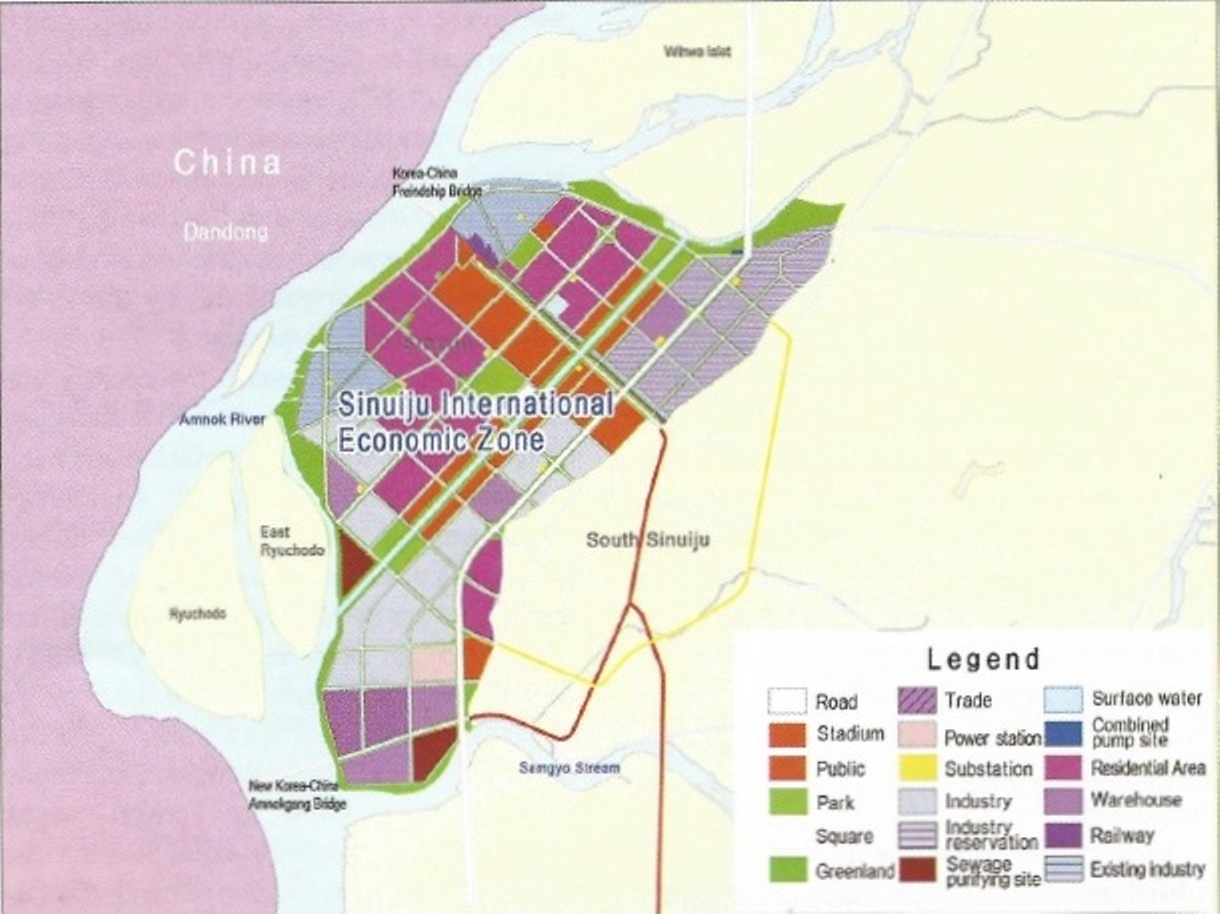
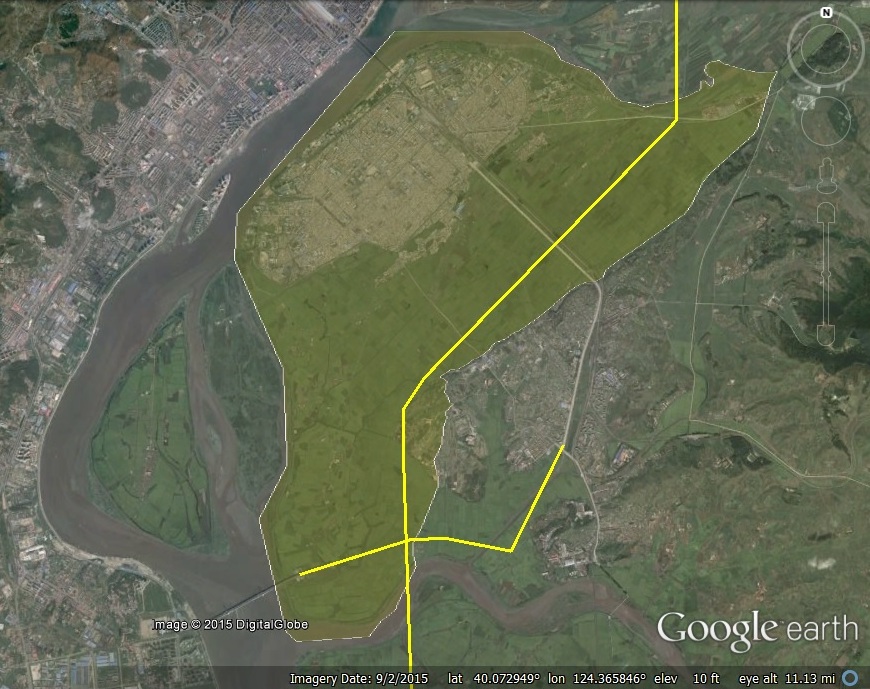
“Sinuiju is known as the gateway to China and the ultimate symbol of friendly relations between our two nations. That’s why news of its closure to mineral exports is causing dismay,” she explained, adding that a rumor has also taken off that international customs offices in other border towns such as North Hamgyong’s Rajin and Hoeryong will be shuttered.
Further anxiety is being stoked by the fact that trusted allies such as China and Russia are participating in the sanctions and the fact that residents are getting detailed information about the resolution’s specific clauses.
“People are further concerned because things have apparently changed significantly since China helped the country to overcome the difficulties during the ‘Arduous March,’ [famine] in the mid 1990s. People from all over the country are concerned that China might shut the border down totally. If that happens, it will become difficult for everyone to make a living,” the source indicated.
“Wholesalers and market vendors are feeling the most vulnerable to the UN sanctions. Their greatest fear is that they won’t be able to buy products. Merchants who have been selling Chinese products at cheap prices are expecting a cost increase and have momentarily discontinued sales.”
Full story:
Panic sets in as sanctions specifics circulate
Daily NK
Choi Song Min
2016-03-08
Not just mineral exports to China have taken a hit. Food products specialties like hairy crab, frequently imported to cities like Yanji in China from North Korea’s northern fishing cities like Rajin, are now being sold at domestic markets instead:
“These days items that were previously hard to find because they were earmarked for export are suddenly emerging at the markets,” a source from North Hamgyong Province told Daily NK on Thursday. “The price haven’t gone down enough yet, so you don’t see too many people actually buying them. But you do see flocks of curious people coming out to the markets to see all the delicacies for sale.”
She added, “High-end marine goods like roe, sea urchin eggs, hairy crab, and jumbo shrimp and produce like pine nuts, bracken, and salted pine mushrooms were once considered to be strictly for export, but now they’re easy to find. The number of such products, referred to as ‘sent back goods,’ at Sunam Market and other markets around Chongjin is growing by the day.”
Additional sources in both North and South Hwanghae Provinces reported the same developments in those regions.
Despite the sanctions that have already kicked in, products from China are still flowing into North Korea. however, the goods sold in bulk to China–minerals like coal, marine products, etc.– have nowhere to go and are therefore making their way back into the country.
Full story:
Would-be food exports to China popping up in jangmadang
Choi Song Min
Daily NK
2016-03-11
Politically, too, the topic of sanctions has become highly sensitive. According to reports by Daily NK, surveillance authorities have increased their focus on certain groups that they deem as more likely than others to speak out about the added pressures from the sanctions:
The boost in surveillance is interpreted as a move by the regime to nip in the bud any rumblings of political unrest engendered by members of society more likely to speak out about the pressure squeezing North Korea. Those tracing the lines of the circumstances leading to this pressure, namely a volley of sanctions lobbed at North Korea by the international community in response to its nuclear test and rocket launch, are a threat to the regime’s authoritarian grip over the population.
A source with the Ministry of People’s Security [MPS, or North Korea’s equivalent of a police force] informed Daily NK on March 8 that internal orders came down at the beginning of March for the MPS to survey and track the recent movements of those anyone ascribed to the “wavering” cohort. Two separate sources in the same province verified this information, but Daily NK has not yet confirmed if the same orders are in effect in other provinces.
Full story:
MPS steps up surveillance to suppress potential ‘pot stirrers’
Kang Mi Jin
Daily NK
2016-03-11
(UPDATE 2016-02-18): a couple of days ago, Daily NK published another piece on this topic. They note that market prices have remained relatively stable, and that many people don’t seem to treat this sanctions round as anything out of the ordinary:
Market prices in North Korea have remained relatively stable despite stronger sanctions enforced by the international community, including China, as well as greater limitations on market operationsdue to nationwide preparation for Pyongyang’s May Party Congress.
Multiple Daily NK sources within the country have confirmed that rice prices in Pyongyang, South Pyongan Province’s Sinuiju, and Ryanggang Province’s Hyesan are trading at 5,100 KPW, 5,150 KPW, and 5,080 KPW per kilogram, respectively, similar to levels before sanctions were stepped up (5,100 KPW, 5,100 KPW, 5,260 KPW).
This is also the case on the foreign exchange front, with 1 USD trading for 8,150 KPW in Pyongyang, 8,200 KPW in Sinuiju, and 8,170 KPW in Hyesan, showing some signs of strengthening for the local currency from pre-sanction rates (Pyongyang 8,200 KPW, Sinuiju·Hyesan 8,290 KPW).
“There had been concern we would see fewer goods in the market because of UN sanctions, but in reality, there hasn’t been much difference,” a source from North Pyongan Province told Daily NK in a telephone conversation on Sunday. “The state is placing restrictions on opening hours for the market for the ‘70-day battle’ (mobilization for the Party Congress), but the markets have remained lively, and there’s not much change in terms of market prices.”
Further confirming trends previously reported by Daily NK last week, an additional source in North Hamgyong Province reported yesterday that some people had stocked up food worried about sanctions from the UN, but that this hasn’t led to a violent gyration in prices. “Actually, in some regions, we’re seeing prices of certain products drop,” he noted.
This price stability seen in the marketplace, in spite of the sanctions having kicked in earlier this month, can be attributed to the fact that most products are still trading as they would have save one of the North’s main export items: minerals.
The simple reality that people have experienced similar times before is also at play. “In the past, people who had stockpiled food during other sanctions discovered that after the political climate evened out a bit they were unable to get their money’s worth for everything they bought. This is why we’re seeing less of it,” a source from Ryanggang Province explained. “Initially there was a little bit of noise, but in general people are remaining calm.”
Full article:
Market prices so far showing resilience against sanctions
Daily NK
Kang Mi Jin
2016-03-14
Also, Marcus Noland recently launched a “Black Market Contest” at the Witness to Transformation blog, letting readers bet on what will happen with the unofficial exchange rate as a result of the sanctions:
The exchange rate issue has re-emerged with the imposition of sanctions. My colleague Steph Haggard leans toward the view that the imposition of a broader set of sanctions, particularly with respect to mining, together with enhanced Chinese enforcement will generate a balance of payments cum financial crisis with uncertain implications for political stability. I am more skeptical of both the additional coverage and the likely Chinese rigor in enforcement.
But this is an empirical issue. If the sanctions bite, then one would expect to see their effects manifested in the black market rate on the won. So we decided to offer up this conundrum to the wisdom of the crowd, or at least of our readership, in this Witness to Transformation Black Market Contest. Yes, you can ply your wits against North Korean loan sharks and black market traders. Or maybe the North Korean monetary authorities. Here’s how it works.
Steph thinks that within two months, evidence of the impact of sanctions should begin to emerge. So the object of the contest is to guess the black market won-dollar rate two months hence. Since the sanctions resolution passed 2 March, we will use the first DailyNK average rate applying to the post-2 May period as the reference. So you have the next month to analyze trade data, contact spies in Dandong, or call in favors in Switzerland to inform your estimate. Whoever guesses closest to the May black market rate wins. In the event of a tie, whoever submitted their entry first wins.
Please list your estimate in the comments section below. The entry period closes 15 April.
Full article:
Witness to Transformation Black Market Contest
Witness to Transformation blog
Marcus Noland
2016-03-16
(UPDATE 2016-05-02): DailyNK continues to cover domestic prices in the context of the sanctions. In late April, vegetable prices rose, but rice prices remain notably stabile:
Despite these high prices, movements on the rice and foreign currency front have remained relatively stable, leading people to believe the spike in vegetables will be short lived.
“Vegetables are not export items and therefore their prices are determined by domestic supply and demand,” the Pyongyang-based source noted. “However strong the sanctions may be, rice prices have nonetheless remained the same and, under these conditions, not many will choose to eat expensive cabbages over rice,” the source added, suggesting that prices are likely to return to normal as the markets readjust for supply and demand.
Full article here:
Vegetable prices spikes, rice remains stabile
Daily NK
Kang Mi Jin
2016-04-28