Archive for the ‘Joint Ventures’ Category

Kumgang/Kaesong tourism strong in first quarter of 2008

Sunday, May 4th, 2008

Although business seems to have stalled in the Kaesong Industrial Zone, Hyundai Asan’s tourism projects have picked up this year.

From Yonhap: 

As many as 100,300 South Koreans toured Mount Geumgang so far this year, up from 58,000 a year earlier, according to a spokesman for Hyundai Asan, Hyundai Group’s arm dealing with business with North Korea.

Hyundai Asan officials expect more than 500,000 South Korean to visit the North’s mountain resort this year alone, up from last year’s 350,000.

A total of 40,090 South Koreans also visited the North’s medieval capital city of Kaesong during the first four months this year, Hyundai officials said, adding they recently increased the daily quota for South Korean visitors to Kaesong to 500 from 300.

Read the full article here:
More South Koreans toured North Korea despite chill in ties
Yonhap
5/4/2008

North Korean businesses expanding in Russia

Saturday, April 5th, 2008

From the Donga Ilbo:

A black Benz with the red license plate of “087” passed by quickly. 087 is a number used exclusively for the sedans of North Korean diplomats. It was easy to tell that the North Korean embassy located on this street recently purchased the luxurious sedan.

“The North Korean embassy has been full of life since the latter half of 2006 because of the increased number of North Korean workers sent to Russia, diversified businesses and growing efforts to secure energy supplies,“ said North Korean defectors that the Dong-A Ilbo report team met in Moscow.

North Korean workers will construct the next APEC forum venue:

In order to prepare for the APEC, the Primorsky regional government (on the North Korean border) plans to issue work permits to 12,000 North Korean workers in 2008, four times higher than the number of those last year. A foreign national, who has hired North Korean workers, said, “North Korean senior officials are lobbying fiercely in order to increase the quota for laborers. They even arrange free tours of North Korea for Russian government officials.”

North Korea companies revived:

Recently, North Korean companies, such as Daedong River, Neungra, Baekdu and Goonpyo, have established their offices in many parts of Russia.

A 39-year-old North Korean defector who has stayed in Russia for 12 years said, “I believe, out of the 49 Russian provinces, North Korean firms have established their offices in about 30 provinces. Some 90 percent of them are responsible for overseeing North Korean workers.”

Joint ventures between Russia and North Korea, which went into hibernation after the United States froze North Korea’s account at Macau’s Banco Delta Asia in 2005, have recently resumed their activities. “Joint companies, which were active in the early 1990s, such as Dongbang Seafood and Far East Marine Transportation, have resumed their businesses,” said one Korean-Russian residing in Nakhodka.

Wages and Taxes:

“North Korean companies, which are spread across Russia, have been collecting about $400 to 500 from each North Korean worker every month. It is then used as high ranking officials’ business expenses,” said a 46-year-old North Korean defector.

“The discontent of workers is growing because high ranking officials dine out at fancy restaurants and their wives purchase expensive clothes with money earned by them,” added the defector.

(Uncle Sam is the only other government I know of that also taxes the income its citizens earn outside of its territory)

The story also makes a big deal out of the fact that the North Koreans pay huge bribes to do business in Russia, but who doesn’t?

Big players, who deliver a large sum of bribes to Russians, have also recently emerged. A captain of a North Korea freight ship was caught March 12 on site while shipping 100 tons of crude oil without reporting to customs at the Slavyanka shipyard, southern Vladivostok. It was found that the captain gave $45,000 to the president of the crude oil storage company as a kickback.

Read the full sotry here:
N.Korea’s Businesses Thriving in Russia
Donga Ilbo
4/4/2008

South Korean firm gets exclusive rights in Nampo

Tuesday, April 1st, 2008

Acheon Global Corp.  has obtained the exclusive right to use the Ryongnam Ship Repair Factory in the western port city of Nampo

The right to enable the firm to gain domestic and overseas investment in its ship repair and steel-structure manufacturing businesses in North Korea, Acheon officials said.

According to KCNA (12/29/2006), the site has been recently refurbished:

The Ryongnam Ship Repair Factory of the Democratic People’s Republic of Korea has been reconstructed on an expansion basis. The factory successfully constructed a large dock, three wharves to repair big cargo ships, a combined repair workshop, an acetylene generating workshop, oxygen generating workshop, a heavy oil power plant, a wind and solar power station over the last four years.

The newly built Dock No. 2 can repair several ships of tens of thousands of tons simultaneously.

The repair processes are automatized and controlled by computer. There are in the dock a horizontal jib crane, gantry crane and general control room. It is divided into the main sluice, operated by computer, and the middle one.

The combined repair workshop which covers the floor space of over 17,000 square meters specializes in making ship-body pipes while repairing propellers and power system.

The acetylene generating workshop does not produce any industrial spent water.

The wind and solar power station turns out stabilized electricity for the general control room, dwelling houses and cultural welfare facilities. Its expansion on a modern basis has consolidated the material and technical foundation for developing water transport.

Read the full article here:
Local firm to use N.K. ship repair yard
Yonhap
3/23/2008

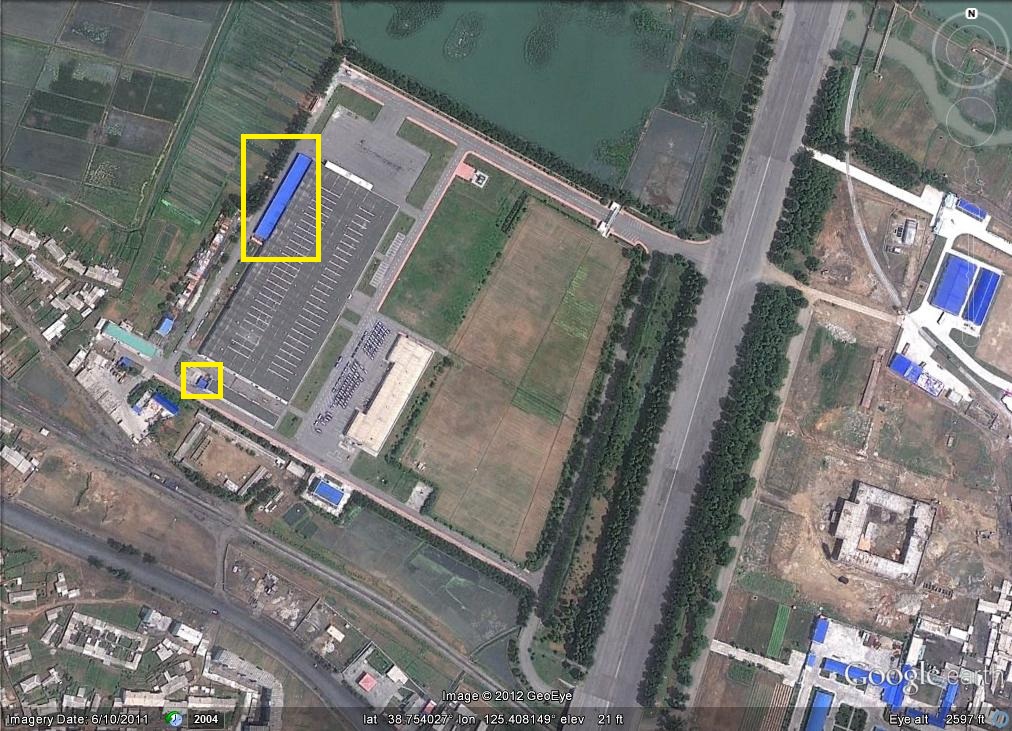
Russian auto plant KamAZ in DPRK

Thursday, March 6th, 2008

A couple of days ago, we had an interesting exchange in the comments that I want to make sure readers have an opportiunity to see:
———————–

Werner Koidl Says: 
 
In that Asia Times report Dr. Petrov wrote:
“… Last year the Russian auto plant KamAZ opened its first assembly line in North Korea, specializing in the production of medium-size trucks named “Taebaeksan-96″. …”

I would be interested in more details about that KAMAZ truck assembly line in North Korea ! Where ?, joint venture ?, size ?
———————–

Leonid Petrov Says: 
 
Concerning the “Taebaeksan 96″ truck assembling plant, the KamAZ set it up last year (2007 or Juche 96) in the town of Pyeongseong. The terms of this deal with NK were really “friendly” and last year KamAZ was having no or very little profit. The production volume last year was very limited (45 or 48 trucks). However, it’s just the beginning of such cooperation.

There is one technician-representative from KamAZ who manages the assembling process. He stays in Pot’onggang HTL and commutes to Pyeongseong. Many North Korean drivers and technicians seem to be technically ignorant (i.e. not knowing how to change the engine oil, etc.), so they need a new technological culture to be introduced. Russians train them well and the North Koreans are grateful.
———————–

Gag Halfrunt Says:

Now that explains the brochure for the Taebaeksan 96 I’d noticed on the Korean Friendship Association’s exports page. I was wondering how anyone could be making money from sticking badges on KamAZes and trying to sell them on. In any case, the export potential for the Taebaeksan 96 must be close to zero, since anyone outside the DPRK who wants a KamAZ can buy one assembled by KamAZ itself.

Trying to drum up interest in the DPRK as an investment destination, the KFA say, “All business made directly with the government, state-owned companies. No middle agents.” This is amusing, because, on the Pyeonghwa car brochure on the KFA website, they’ve sneakily deleted Pyeonghwa’s own contact details and replaced them with the KFA’s email and web addresses. I think this qualifies them a “middle agent” standing between Pyeonghwa and any potential export customers…
———————–

Werner Koidl Says:
 
The link “brochure for the Taebaeksan 96″ given by Gag Halfrunt seems to indicate that the KamAZ Taebaeksan-96 is assembled in a joint venture with Ryongwang [Ryongbong] Trading Company of North Korea. Ryongwang Trading is also the joint venture partner of Pyeonghwa Motors (Unification Church) to assemble the “Whiparam” in Nampo. And Ryongwang Trading company is also business partner of “Kohas” company from Switzerland. And because of its connections to Ryongwang this Swiss company got in troubles with the US administration.

More on the DPRK-Orascom deal…

Monday, February 18th, 2008

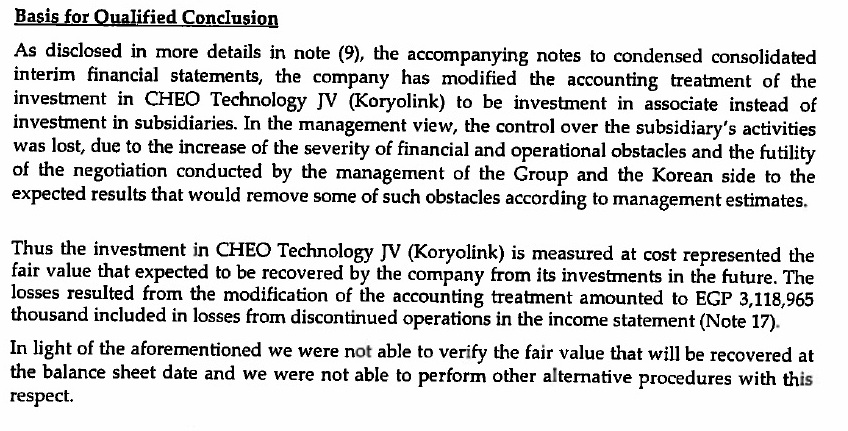
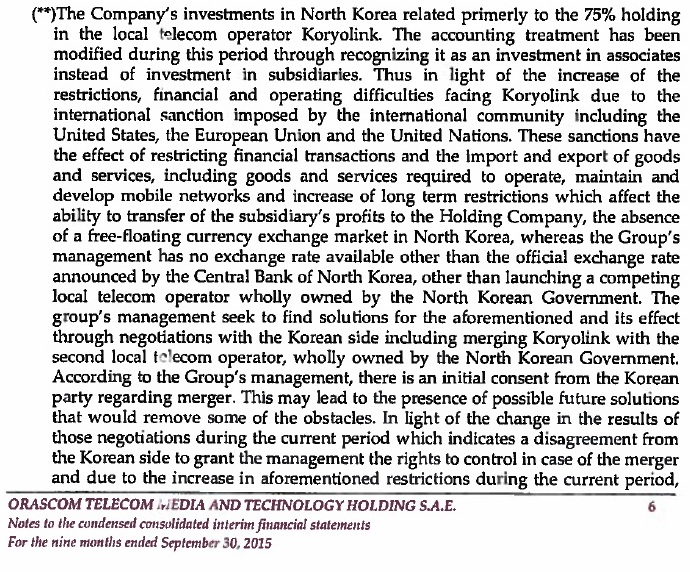
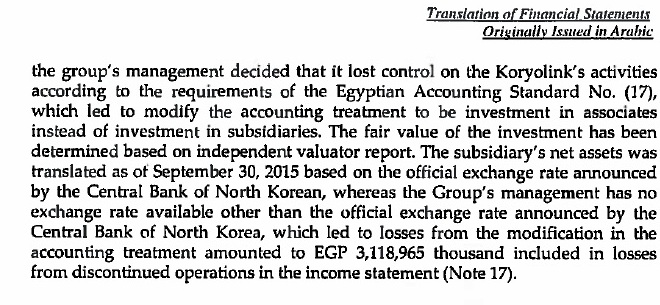
Since Orascom announced at the end of January that it was going into the cell phone business in the DPRK, there has been a lot of follow up reporting which has flushed out a broader picture of the DPRK’s attempts to launch a mobile phone network.

Today Yonhap is reporting that Pyongyang will likely go live with the Orascom project in April, although on a piecemeal schedule:

The measure will affect only Pyongyang, the North’s capital, this time and gradually expand to cover other major cities in the communist country, the Tokyo Shimbun said, quoting an unnamed North Korean official in Beijing.

North Korea has prohibited its people from using mobile phones since a deadly explosion occurred at the Ryongchon train station near the North’s border with China in April 2004. Debris of a mobile phone with adhesive tape attached to it was reportedly found at the scene of explosion, leading the authorities to impose the sudden ban in the belief that the mobile phone could have been used as a detonator.

More details of the deal also emerged:

Cheo [an Orascom subsidiary] secured a 25-year license and will invest up to US$400 million in network infrastructure. The North Korean state company owns a 25 percent stake in Cheo, Orascom said.

How accessible will the  new phones be?

Choi Yeong-cheol, 43, who defected from North Korea in 2006, said that senior party and administrative officials as well as trade workers were given mobile phones for free in 2002. “But ordinary people have not even dreamed of using a mobile phone because it cost them 170,000 North Korean won,” Choi told Daily NK, a Seoul-based Internet newspaper. The figure of 170,000 won is big money considering the average monthly payment for ordinary North Korean workers is up to 3,000 won (US$1) now.

The full article can be found here:
N.K. to lift mobile phone ban in April: Japanese daily
Yonhap
2/18/2008

The reports of my death are greatly exaggerated..

Sunday, February 17th, 2008

Update:
It seems opposition efforts to spare the South Korean Ministry of Unification were not entirely successful. Yonhap is reporting that even though the ministry will retain its name, much of the rest of it is on the chopping block.

Sources said that if the ministry is retained, its five divisions and one office may be reduced to a single office and three bureaus, with part of its work transferred to the other ministries.

The ministry’s five division headquarters — including unification policy, economic cooperation and cultural exchange — are likely to be reorganized into smaller bureaus, with public relations and information analysis to come under the direct control of the minister.

The office in charge of the Kaesong industrial complex may be turned over to the newly created Ministry of Knowledge-based Economy.

However, the ministry may retain control of inter-Korean dialogue headquarters, the inter-Korean transit office, and a settlement support team for people who have fled North Korea.  (Yonhap)

Although I personally favor an engagement policy with the DPRK, sending the signal that MoU standard practices will no longer be tolerated might actually encourage the DPRK to use donated funds and supplies in an acceptible way.  Remember: carrots AND sticks.  See the game theory here.  However, since the DPRK’s new game seems to play the US, China, Russia, and South Korea off of each other, some are concerned that pushing the DPRK too hard on accoutability and transparency in managing their donations might simply shift North Korea more firmly into China’s corner–which according to Lankov, they already have a strong incentive to do… 

Original Post: 2/8/2008
In the political shake up following the recent South Korean elections, incoming President Lee Myung-bak floated the idea of merging the Ministry of Unification (responsible for the North Korea protfolio) with the South Korean Foreign Ministry.  The story is here.

Today, Reuters is reporting that the Unification Ministry is here to stay.  Afterall, the first rule of bureaucracy is, “Why have one ministry when you can have two at twice the cost!” 

South Korean lawmakers have agreed to spare the ministry responsible for relations with North Korea and reject a call for its closure made by the president-elect, local media reported on Saturday.

The compromise allows the Unification Ministry to stay while lawmakers try to strike a deal to shut other ministries in a plan backed by Lee to streamline government, local media reported lawmakers as saying.

Critics say Lee’s proposal to close the ministry primarily responsible for relations with North Korea could send the wrong signal to Pyongyang, which has long accused Lee’s conservative party of plotting to keep the peninsula divided.

The Unification Ministry has been at the centre of criticism that the outgoing government had been too soft on the impoverished North, pouring aid across the border despite internationally condemned missile and nuclear tests. (Reuters)

The full article can be found here:
South Korea to keep ministry on North: media
Reuters
Rhee So-eui
2/8/2008

New gov’t to downsize Unification Ministry
Yonhap
2/17/2008

North Korea Now: Will the Clock Be Turned Back?

Friday, February 15th, 2008

This morning I received an email from a reader at the Brookings Institution who shared an article by one of their visiting fellows.  Much of it was about US/DPRK foreign policy, but I thought the following excerpt was interesting from a social change perspective:

On a recent visit to Pyongyang, this author was impressed by the sheer scale of new economic phenomena in DPRK. In terms of variety of goods, activity, and scale, markets in North Korea’s central areas (less in the provinces) remind of Chinese provincial markets. Numerous restaurants serve good—and very cheap, by Western standards—food to customers flocking to them. New “service centers” (eundokwon), combining shops, saunas, and restaurants under one roof, have sprung up and are run by highly placed entities such as Party departments and “offices.” Every branch of the Party, military, and local authorities now operates trading companies. Real business managers have appeared, some engaged not only in the “shuttle” trade with China but in bigger projects (in construction, for example), and some corporations have amassed a considerable volume of business. Judging by the author’s experiences in the 1980s and 1990s, these “new Koreans” are much more realistic and open to contact with outsiders than was the case before. There are changes in the official line as well: North Korean economists explained that now, out of several hundred thousand products manufactured in the country, only several hundred are now centrally planned. For the vast majority of manufactured products, managers of the state-owned enterprises are given a free hand to determine their production targets and to get what they need through the “socialist wholesale market.”

Having witnessed the processes eventually leading to the denunciation of the command economy in the USSR, and the transition to a market-based economy, this author can testify that there are striking resemblances in certain aspects of contemporary daily life in the DPRK to the USSR in the 1970s and 1980s (the Chinese experience in the1980s, with private enterprise officially sanctioned, is less similar). At that time in the Soviet Union, a vast black market of goods and services began to form in major cities. Many of its dealers became (often after a prison term) the leading businessmen of the post-Soviet era.

For example, at that time there was no private property for apartments in Moscow or elsewhere, and no real estate market officially existed. But at the same time almost any Soviet in the course of his life would “change” one apartment for a better one, paying considerable sums of money to the former “owner.” Some shadowy dealers would buy apartments outright, bribing officials to get a “registration” (propiska), and many made a profession of acting as a “go-between.” Similar activities are sprouting like mushrooms around North Korea. A one-room apartment in Pyongyang is said to cost about US$5000, less in local areas. However, real estate in some small cities close to Pyongyang boast the same high prices, as various kinds of dealers and traders, who are not permitted to settle in Pyongyang, buy apartments there. Foreign currency flows freely and, like in the USSR, most things can be obtained for money. A Russian joke said: “if it is illegal, but very much desirable, it is not prohibited.”

The ground for developing market relations is well prepared. The “royal economy” serving the ruling class (Kim Jong-il’s immediate retinue and the top nomenklatura or kanbu), and a large part of the internationalized sector (joint ventures and free economic zones) operate on market principles. The next step, should the country’s leaders admit the need for developing the country and sustaining their power, should be “setting the rules of the game” by providing a legal framework for what already exists. For that, however, external security should be guaranteed to the regime—irreversibly and comprehensively. Only then will the hard-liners, who fear—with good reason—that reforms would invite subversion of the regime, be confident enough for real progress to take place. Nevertheless the words “reform” and “openness” (especially because of their “Chinese connotations”) are unacceptable to Pyongyang, and Kim Jong-il himself stated as much during his talks with Roh Moo-hyun in October 2007. Under the present leadership Pyongyang, any economic reforms would most likely never be called such and would take place in an unpublicized manner without discussion, which is not helpful in terms of public relations with the West and negative international sentiment about the regime.

The full article can be found here:
North Korea Now: Will the Clock Be Turned Back?
logo_sm.bmp

Georgy Toloraya, Visiting Fellow, Center for Northeast Asian Policy Studies
2/11/2008

North Korea can produce instant noodles again

Tuesday, February 12th, 2008

The Chosun-Shinbo reports (via the Daily NK) ”North Korea can produce instant noodles again” because construction has been completed on Pyongyang’s newest (and largest) noodle factory, the Pyongyang Wheat Flour Factory.

“Starting this year, domestically produced instant noodles will likely be supplied to people on a large scale.”(Daily NK)

…signaling that the DPRK government still seems intent on re-launcing the collapsed Public Distribution System (which has floundered many times).

[The] Pyongyang Wheat Flour Factory is located in Samheong-dong of Mankyungdae District, in Pyongyang, and mainly produces wheat flour, cookie, noodle, and yeast. North Korea built its first noodle factory, Daedong River Instant Noodle Factory, with foreign capital in August 2000 along the Daedong River in Pyongyang.(Daily NK)

Last October Yonhap, reported that Hyundai’s 44,000-strong union donated US$553,800,  appx. $13 per worker, to help finance a corn noodle factory in Pyongyang.  This is likely the “older” Daedong River Instant Noodle Factory.  If this is the case, then Pyongyang has two noodle factories coming on line at about the same time.

The rest of the story:
Although the DPRK government is a newcomer to the noodle business, noodle production and consumption have been burgeoning in North Korea’s private economy, and there is supportive journalistic evidence that the business now suports those on the lower rungs of the  economic ladder (see here, here, here, and here).  Small scale noodle production requires little capital, so it is a natural fit for those who have nothing but have taken to supporting themselves. 

The opening of new government-operated food processing plants is tantamount to a “re-nationalization” of a “privatized” industry in the DPRK.  Past reports claim that noodle sales earned private vendors between 900 to 1,600 won.  Now these vendors, who operate at the fringes of North Korea’s semi-legal private economy, will at a minimum, be forced to compete with “free” or heavily subsidized government operators. 

What will be the result?  On the pessimistic side, we could claim that the DPRK government is attempting to monopolize the food supply to control the population (as it has in the past).  On the other hand, their ambitions might be more modest and they are only looking to establish some form of carrot they can point to as legitimization of the government’s leadership.

From an economic reform perspective, however, North Korea needs fewer government-run noodle factories and a better business environment for noodle entrepreneurs. 

The full stories can be found here:
North Korea Can Produce Instant Noodles Again
Daily NK
Park Hyun Min
2/12/2008

Hyundai Motor union leaders visit N. Korea for noodle project
Yonhap
10/31/2007

North Korea launching massive anti-corruption drive

Monday, February 11th, 2008

Last Friday, Yonhap reported that Kim Jong Il has ordered an anti-corruption investigation of two key agencies, both of which manage South Korean investments in the DPRK: the United Front Department (which Lankov claims is involved in clandestine operations) and the National Economic Cooperation Council.

North Korea is in the midst of a massive anti-corruption drive which has already resulted in the arrest of one of its top officials handling business with South Korea, informed sources in Seoul said Saturday.

The campaign, ordered by leader Kim Jong-il, was prompted by widespread allegations that some top party and administration officials took bribes as they pushed business projects with South Korean industrialists, said the sources well versed in North Korean affairs.

“The probe was launched as National Defense Commission Chairman Kim Jong-il said there was a lack of supervision over the United Front Department [a key party organization that supervises inter-Korean affairs], although lots of suspicions were raised over the department’s corruption,” one source told Yonhap News Agency.

According to the sources in Seoul, the North Korean leader was enraged after getting a report that some party and government officials allegedly pocketed bribes and diverted food and other aid from South Korea to black markets.

Also under investigation is the National Economic Cooperation Council, a government body that handles business with South Korean entrepreneurs, the sources said.

The Council’s chief, Jeong Woon-eop, remains under arrest pending investigation into allegations that he took “huge amounts” of bribes, said the sources, who wanted to remain anonymous. (Yonhap excerpted)

Frequently “anti-corruption campaigns” in developing countries have nothing to do with making the bureaucracy more accountable or responsive to public demands, but rather are political maneuvers to prevent “rents” or funds from being channeled to uses that lie outside the leadership’s control (or some faction of the leadership).  In other words, they are regime enhancing.  The announcement of this campaign demonstrates two important principles that deserve explicit mention:

1. Not all profits earned by North Korean joint ventures are channeled to the leadership, and in fact many of them are siphoned off by middlemen who actually control the financial machinery.  Once skimmed off the top, it is likely that these funds are used in illicit private commercial operations since they cannot be legally declared by the owner (unless there are domestic channels for laundering money in North Korea).

2.  If funds are being siphoned off of high-profile official joint venture operations, then the leadership is not in control of its internal fiscal affairs.  Indeed it is likely that, as in the Soviet Union, the people who keep the private economy running are the trusted mid- to senior-level officials who can skirt the rules and know how to actually get things done within the system.

Update 2/24/2008:

North Korean authorities have been investigating the chief of a North Korean committee in charge of inter-Korean economic cooperation for months after seizing $20 million from his house, a report said Friday.

The full article can be found here:
NK Official Suspected of Embezzling Funds From Seoul
Korea Times
Jung Sung-ki

Update 2/12/2008:

The chief of Daesung General Bureau, a division of the 39th Department which manages foreign transactions, was fired on suspicion of embezzling US$1.4 million last fall.” (Daily NK)

The full article can be found here:
North Korea launching massive anti-corruption drive
Yonhap
2/9/2008

North Korean run restaurants diversify product lines

Thursday, February 7th, 2008

Writing today for the Asia Times, Sunny Lee gives an update on the North Korean-run restaurants in China and South East Asia.  Much has already been published on these restaurants: how they channel money back to North Korea and how the waitresses tend to defect.  (As mentioned in the Kaesong post yesterday, they probably also pay hefty bribes for their overseas posts and have well-connected relatives.)

Sunny Lee points out that these restaurants (see YouTube video here) are now diversifying their product lines to boost profits, and like other successful capitalists across Asia, they are doing it by leveraging their most unique asset–attractive North Korean women.  How?  By transforming into karaoke bars after dinner hours.

North Korea has some 100 restaurants overseas, mostly in China and Southeast Asia, including Laos, Vietnam and Cambodia. These restaurants serve as an important revenue pipeline for earning foreign currencies for Pyongyang. Each overseas North Korean restaurant is said to be allotted a revenue quota to fill, ranging from US$100,000 to $300,000 a year to send to Pyongyang, which makes the total revenue estimation some tens of millions of dollars.

The business formula - restaurant by day and karaoke bar by night - is also seen as an effort for these restaurants to meet the assigned financial quota. Currently, there are scores of North Korean restaurants in China, including in cities such as Beijing, Tianjin, Tsingdao, Dandong and Yanji. Beijing has 11 North Korean restaurants. All of these employ North Koreans whose total employment number in China is estimated to be several hundred. (Asia Times)

Despite the higher cost, business is brisk…

The reason that North Korean restaurants are expensive yet remain popular among customers is their immaculate service from beautiful employees. In China, where service quality at restaurants is often unsatisfactory, North Korean restaurants are becoming a favorite alternative among members of the businesses community. (Asia Times)

However, if you want to enjoy an authentic North Korean dining experience but have moral qualms about supporting the regime, then you can patronize similar resturants managed by North Korean defectors in South Korea–though the experience is quite different.  Whereas the Chinese pay extra for premium restaurant service in Beijing, the South Koreans pay for the genuine socialist restaurant experience.  In other words, they pay to be treated like an annoyance to the staff.

[At the Pyongyang Moran Bar (located in South Korea), the] North Korean waitresses wore traditional dresses in the bright colors that were fashionable in the South some years back. The singer’s interpretation of “Whistle,” a North Korean standard of the 1980’s, was shaky and off-key. Service was bad and included at least one mild threat. Drinks were spilled, beer bottles left unopened and unpoured.

But the South Korean customers could not get enough of the Pyongyang Moran Bar. (New York Times)

So you have your choice of North Korean themed restaurants:  The propaganda ideal or the  socialist reality.

The full articles can be found here:
Chillin’ at a North Korean karaoke bar
Asia Times
Sunny Lee
2/8/2008

In Deep South, North Koreans Find a Hot Market
New York Times
Norimitsu Onishi
5/25/2006