Archive for the ‘Film’ Category

Film Screening: “The Schoolgirl’s Diary” (2006)

Monday, April 7th, 2008

(NKeconWatch: “I hope to see you there”) 

April 09 2008, 4:00 p.m. - 6:30 p.m.
6th Floor Auditorium
Woodrow Wilson Center
One Woodrow Wilson Plaza
1300 Pennsylvania Ave., NW
Washington, DC 20004

Learn more and REGISTER here

The Schoolgirl’s Diary (Han Nyeohaksaengeui Ilgi-2006, in Korean–no subtitles) is the story of a self-absorbed North Korean teenager, Soo-Ryeon, who yearns to move to an apartment from her home in the countryside and questions the values of her father and mother; a scientist and a librarian at the academy of sciences who put the good of the nation before that of their family. Soo-Ryeon realizes how selfish she is only after her mother falls ill and her father makes a major breakthrough in his research. The film’s screenwriters reportedly received guidance in drafting the script from North Korean leader Kim Jong Il.

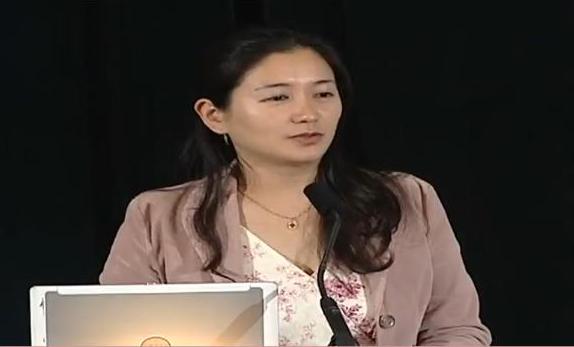
Following the screening: Suk-Young Kim will discuss the film and offer comments.  Suk-Young Kim is assistant professor of theater and dance at the University of California at Santa Barbara and an expert on North Korean propaganda. She is currently completing a book project titled Illusive Utopia: Theater, Film, and Everyday Performance in North Korea, which explores how state produced propaganda performances intersect with everyday life practice in North Korea. Another book project, Long Road Home: A Testimony of a North Korean Camp Survivor (coauthored with Kim Yong) is forthcoming from Columbia University Press.

Sponsored by: North Korean International Documentation Project

North Koreans are people too.

Friday, April 4th, 2008

The Daily NK reports that demand for South Korean pornography among Northerners is on the increase:

The demand for X-rated movies among North Korea’s high cadres is so great that a single VCD sells for 50 US dollars.

The latest publication of Good Friends, a North Korea-related aid organization, tells the story of Mr. Park, a resident of Hyesan, Yangkang Province. Mr. Park was arrested for making copies of South Korean adult movies–called “colored movies” in North Korea–and selling them in Pyongyang. Despite the high price per VCD, the publication notes that supplies are getting tight.

“Mr. Park bought the CDs near the North Korean- Chinese border from China. Then he would make his friend in Pyonsung, South Pyongan Province copy them and to sell them to traders in Pyongyang,” reported the publication.

The fact that there is a demand for pornography in the DPRK is not surprising (I have met several North Koreans who have seen it more than once) but the price reported in the story seems unusually high. 

Read the full story here:
Pyongyang Cadres Want South Korean Adult Movies
Daily NK
Park In Ho
4/4/2008

Haeju receives South Korean broadcasts

Friday, February 22nd, 2008

How pervasive is the flow of outside information in North Korea?  Typically stories in the media answer this question as though geography is the determinate variable: Cities near the Chinese border are the most influenced by heterodox ideas (since cell phones, clear television signals, and smuggling have been commonplace for years), and cities in the south (along the DMZ) are the most isolated (aside from Kaesong).  North Korea’s internal travel restrictions prevent foreign ideas from spreading.  This view was recently repeated by Andrei Lankov.

“The Kaesong exception” is thought to be correlated to the growth of the the Kaesong Industrial Zone.  The theory goes that the thousands of North Koreans who are employed in Kaesong (who work in South Korean facilities for South Korean managers) pick up bits of outside information at the margin and share it with their friends and family back home.  It is not an unreasonable theory.   

A new story in the Daily NK, however, presents evidence which points to ideological contamination on a nationwide scale (irrespective of geography).  The story claims that the city of Haeju is not only thoroughly exposed to South Korean radio and television - it is a production hub of a pirate video market:

“We can receive the TV broadcast of KBS (Korean Broadcasting System) and SBS (Seoul Broadcasting System) fine in Haeju. Sometimes, we can watch MBC (Moonhwa Broadcasting Corporation) as well. I watched Dae Jo Yong (a popular TV drama from KBS) on TV. However, I wanted to watch it again, so I bought a CD and watched it several more time.” He said, “We can get copies of South Korean TV programs from China. However, a great number of copies are also produced in Haeju.”

In a nod to communist efficiency, the subject interviewed in the Daily NK story even claims that in Haeju it is easier to pick up South Korean television signals than those from North Korea! 

With a “manufacturing” facility in Haeju, black market DVDs or VCDs can be copied and distributed throughout the south east even if security is tighter along the Chinese border.  Additionally, these DVDs/VCDs would be cheaper and more widely distributed because they are produced locally (as opposed to using Chinese labor/capital) and will require fewer middlemen to get them across the border and into the hands of consumers.  If this has been going on for some time, then it is safe to assume that most urban centers from Haeju to Pyongyang have regular access to South Korean media! 

Of course a decline in acceptance of the state ideology means the government must rely on external controls (rather than an individual’s self-control) to maintain the system.  The good news is that external controls can be avoided through technolgy, corruption, or both: 

“In the border areas with China and South Korea such as Hwanghae and Kangwon Province, the North Korean authorities try to prevent people from watching S. Korean TV by soldering and pre-tuning TV sets to Chonsun (North Korea) Central TV. Lately, the authorities also attempt to restrict the usage of remote control by covering the sensor with silver paper.

However, North Korean people circumvent the regulation. Instead of giving away their remote control to the authorities, they purchase an extra and watch the TV as they please after removing the silver paper. After all, the authorities’ efforts to control TV channels turn out to be futile for those who have remote control TV sets.

The full article can be found here:
North Korean People Copy South Korean TV Drama for Trade
Daily NK
Lee Sung Jin
2/22/2008

“Crossing the Line” now out on DVD

Saturday, February 16th, 2008

crossing.jpgThe third film by Dan Gordon and Nick Bonner is now out on DVD.  

The film’s official web site is here.

Order the film on Amazon.com here.

Nick and Dan, what’s next?

Reporters Without Borders 2008 Report

Thursday, February 14th, 2008

rwb.JPG

The Reporters Without Borders 2008 Annual Report has been published.  It is not an index (with rankings assigned to each country) but rather a survey that groups nations into one of five quintiles based on the publisher’s perceptions of press freedom: (1. Good situation, 2. Satisfactory situation, 3. Noticeable problems, 4. Difficult situation, 5. Very noticeable problems.

If you read the report (here), it is mostly a qualitative analysis and there does not seem to be any objective methodology for grouping countries into a particular quintile. (Disclaimer: I have note read the whole thing, but usually the methodology is spelled out in its own section for these types of publications, but I have not been able to find it). This worries me because if there is no standard methodology, with relative weights, then the results are vulnerable to questions of subjectivity.

North korea is ranked a “Very Noticeable Problem.”  To read just the North Korea section of the report click: rwb-dprk.pdf

Pyongyang launches a cultural wave

Tuesday, January 29th, 2008

Joong Ang Daily
1/29/2008

While dragging its feet again on its pledge to denuclearize, North Korea is expanding its cultural outreach to the West.

The move is drawing a mixed response from North Korea watchers. Some hail it as a prelude to a long-awaited opening of the isolated nation, recalling China’s “ping-pong diplomacy” that served as a catalyst for a thaw in its relations with the United States in the 1970s.

Others, however, caution against expecting too much, citing the communist nation’s track record of using arts for propaganda.

Regardless, Pyongyang looks set to provide a rare chance for Europeans to see its elite orchestra perform.

The North’s State Symphony Orchestra is scheduled to hold performances in London and Middlesbrough in September in what would be its largest-ever shows abroad, according to Radio Free Asia. The concerts will be telecast live, added the U.S.-government funded station.

The orchestra is said to have been nurtured by the North’s all-powerful leader Kim Jong-il, reportedly a big fan of film, music and other arts.

In the North’s latest cultural diplomatic activity, five North Korean movies were screened over the weekend in San Diego, California during the first inter-Korean film festival organized by a university in the United States. North Korean authorities selected the films. Pyongyang’s No. 2 two diplomat in the North’s United Nations mission, Kim Myong-gil, attended the event after receiving U.S. government approval. Members of North Korea’s UN mission are required to stay within a small radius of New York and need Washington’s approval for trips outside the city.

The film festival came two weeks after a North Korean movie, titled “Schoolgirl’s Diary,” was screened in Paris. It marked the first-ever commercial distribution of a North Korean movie in the West.

One of the most awaited shows in coming weeks is a concert by the New York Philharmonic in Pyongyang. During the performance, the orchestra will perform the U.S. and North Korean national anthems as well as classical music. The historic concert, backed by the U.S. State Department, will be broadcast live via satellite on Feb. 26.

“This journey is a manifestation of the power of music to unite people,” said Zarin Mehta, the orchestra’s executive director, reiterating remarks he made last month.

Assistant Secretary of State Christopher Hill, Washington’s point man on Pyongyang, said earlier the performance bodes well for their bilateral relationship.

“We haven’t even had ping-pong diplomacy with these people,” he said. “It would signal that North Korea is beginning to come out of its shell, which everyone understands is a long-term process. It does represent a shift in how they view us.”

Hill expressed hope that the cultural exchange will help resolve the North Korean nuclear crisis.

Many experts here agree cultural diplomacy can be an effective way of dealing with the North. They view the North’s move as reflecting its cultural pride and determination to break its isolation. “It also appears to be aimed at diluting the North’s negative image as a repressive nation and silencing criticism from hard-line U.S. officials,” said Yang Moo-jin, a professor at the University of North Korean Studies in Seoul.

But skepticism lingers with the nuclear crisis still unresolved.

“Even if the orchestra plays music from heaven, it will have nothing to do with most North Koreans outside of the venue,” said Joo Sung-ha, who defected from North Korea in 2001 and now works as a journalist in Seoul. “We need to think about for whom such one-time shows should continue.”

Porno Became Widespread in `90s, Thanks to the Dear Leader

Sunday, December 23rd, 2007

Daily NK
Moon Sung Hwee
12/23/2007

Excerpt:

Porno became prevalent in late 1990s, first among party officials and it leaked out to the public. Nude or bikini-worn women dance in North Korean porno with music.

Such indigenous videos disappear as foreign-made porno being imported. The first consumers, and the largest now, are high-ranking officials of the party and army.

It costs 2000 North Korea won (approx. USD 1 =3,200 North Korean Wown) to rent a porno CD for an hour in North Korea. Even middle school students collect money to rent one.

North Korea Google Earth (Version 7)

Friday, December 14th, 2007

The most authoritative map of North Korea on Google Earth
North Korea Uncovered v.7
Download it here

koreaisland.JPGThis map covers North Korea’s agriculture, aviation, cultural locations, manufacturing facilities, railroad, energy infrastructure, politics, sports venues, military establishments, religious facilities, leisure destinations, and national parks. It is continually expanding and undergoing revisions. This is the sixth version.

Additions to the latest version of “North Korea Uncovered” include: A Korean War folder featuring overlays of US attacks on the Sui Ho Dam, Yalu Bridge, and Nakwon Munitians Plant (before/after), plus other locations such as the Hoeryong Revolutionary Site, Ponghwa Revolutionary Site, Taechon reactor (overlay), Pyongyang Railway Museum, Kwangmyong Salt Works, Woljong Temple, Sansong Revolutionary Site, Jongbansan Fort and park, Jangsan Cape, Yongbyon House of Culture, Chongsokjong, Lake Yonpung, Nortern Limit Line (NLL), Sinuiju Old Fort Walls, Pyongyang open air market, and confirmed Pyongyang Intranet nodes.

Disclaimer: I cannot vouch for the authenticity of many locations since I have not seen or been to them, but great efforts have been made to check for authenticity. These efforts include pouring over books, maps, conducting interviews, and keeping up with other peoples’ discoveries. In many cases, I have posted sources, though not for all. This is a thorough compilation of lots of material, but I will leave it up to the reader to make up their own minds as to what they see. I cannot catch everything and I welcome contributions.

State of the market in the DPRK

Tuesday, December 11th, 2007

Institute of Far Eastern Studies (IFES)
NK Brief No. 07-12-5-1
12/11/2007

North Korean authorities are increasing market regulation. Beginning December 1st, women under the age of 49 were prohibited from running businesses in Pyongyang. Age restrictions were placed on female merchants since the inter-Korean summit meeting in October, at first prohibiting those 39 years and under, but now includes anyone under the age of 49.

In North Korea, because males are officially required to be at their assigned workplace, women generally run the businesses. However, market regulations started being enforced in order to eradicate South Korean dramas, movies, and other so-called non-socialist elements from the marketplace.

According to the results from a Daily NK survey on the present state of the North Korean marketplace, although market activity has slowed, these new regulations are not being enforced aggressively outside of the cities, and businesses still continue to operate because the regulation officers are receptive to bribes.

Also, because of the direct link between business regulations and the issue of making a living, citizens’ voices of opposition are getting louder than ever. Let us explore the present state of the North Korean marketplace.

Although not an exact statistic, it seems that there are roughly two to four marketplaces within a city. In the case of the most-populated city, Pyongyang (19 districts), there is a marketplace in every district. Tongil-geori has two because of its large population. In Sinuiju, the bridgehead of trade between North Korea and China, there is one in South Sinuiju, and three in Sinuiju itself (Chaeha, Namjung, and Dongseo [The Peace Market]). In North Korea’s second largest city after Pyongyang, Chungjin, there are two marketplaces in the larger districts. In the case of counties, there is a town marketplace, and one to two smaller farmers’ markets.

The marketplace is generally active, except during the rice-planting and harvest period. However, it has become very stagnant recently due to the enforcement of restrictive measures like price regulations and age restrictions on merchants. For instance, in Pyongyang, there used to be around 50-60 merchants in one area, but now there are only 7 or 8. Now, It is that much more difficult to find good products at the market.

Stallholders’ daily earnings differ depending on their products. In the case of agricultural goods, merchants earn an average of 3,000 won per day, and around 5,000-6,000 won per day for marine products. Merchants who sell manufactured goods could make around 10,000 won.

In addition to the age restrictions, there are increasing measures regulating products sold at the marketplace. There are officers who patrol the marketplace enforcing regulations. Outside the marketplace, safety officers regulate the businesses. The level of control depends on the person, but if bribes are given, they tend to slack off.

With exception of large cities in North Hamkyong Province such as Hoeryeong, Musan, and Chungjin, market activity remains ‘business as usual’ in smaller cities and counties, despite the regulations.

Because everyone knows each other in small cities and counties, it is not possible for the regulations to be strictly enforced. Moreover, even in main cities, there are many merchants under the age of 40 who carry out their business, and if they are not able to in the marketplace, they are still able to sell products in alleys and other locations.

Google Earth North Korea (version 6)

Sunday, November 11th, 2007

The most authoritative map of North Korea on Google Earth
North Korea Uncovered: Version 6
Download it here

kissquare.JPGThis map covers North Korea’s agriculture, aviation, cultural locations, manufacturing facilities, railroad, energy infrastructure, politics, sports venues, military establishments, religious facilities, leisure destinations, and national parks. It is continually expanding and undergoing revisions. This is the sixth version.

Additions to the newest version of North Korea Uncovered include: Alleged Syrian nuclear site (before and after bombing), Majon beach resort, electricity grid expansion, Runga Island in Pyongyang, Mt. Ryongak, Yongbyon historical fort walls, Suyang Fort walls and waterfall in Haeju, Kaechon-Lake Taesong water project, Paekma-Cholsan waterway, Yachts (3), and Hyesan Youth Copper Mine.

Disclaimer: I cannot vouch for the authenticity of many locations since I have not seen or been to them, but great efforts have been made to check for authenticity. These efforts include pouring over books, maps, conducting interviews, and keeping up with other peoples’ discoveries. In many cases, I have posted sources, though not for all. This is a thorough compilation of lots of material, but I will leave it up to the reader to make up their own minds as to what they see. I cannot catch everything and I welcome contributions.