Largest known rare earth deposit discovered in DPRK

December 5th, 2013

2013-12-Jongju

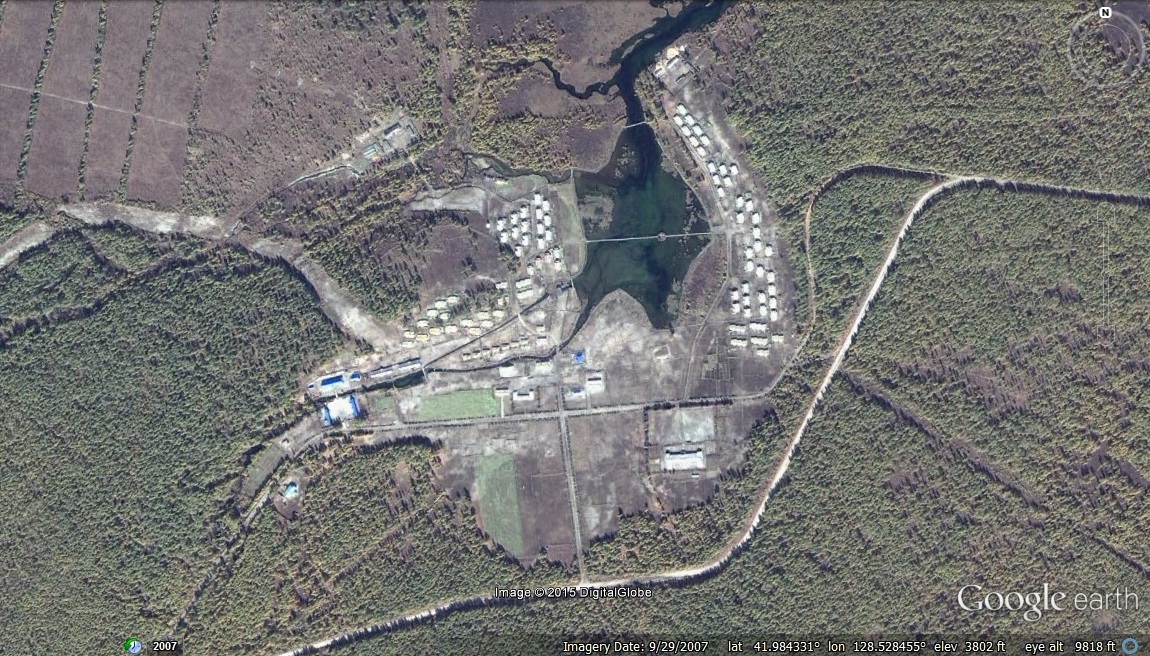
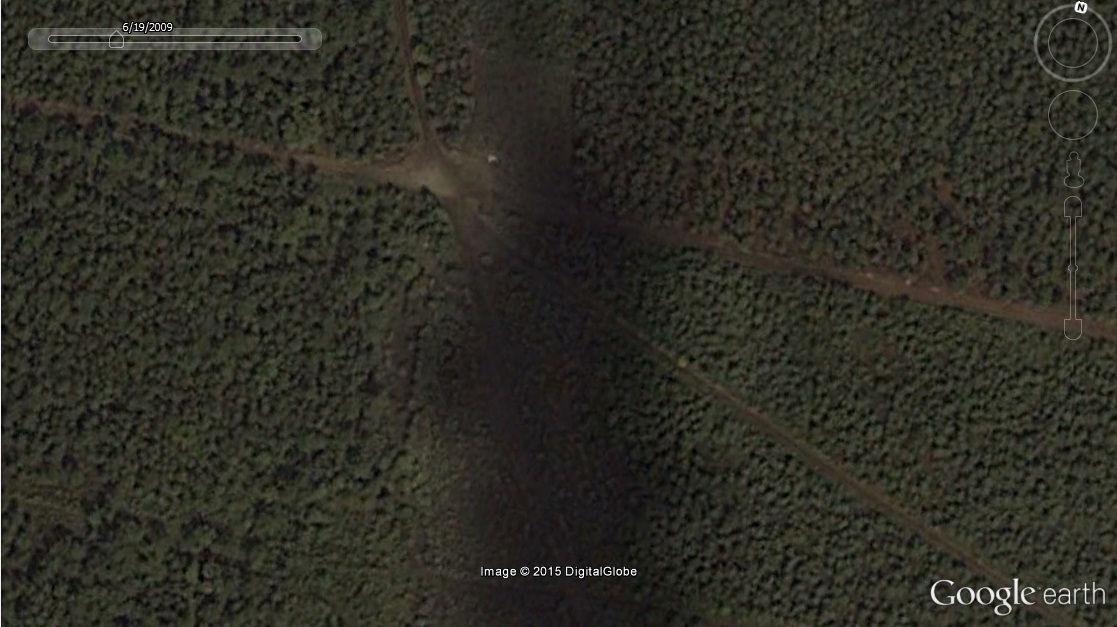
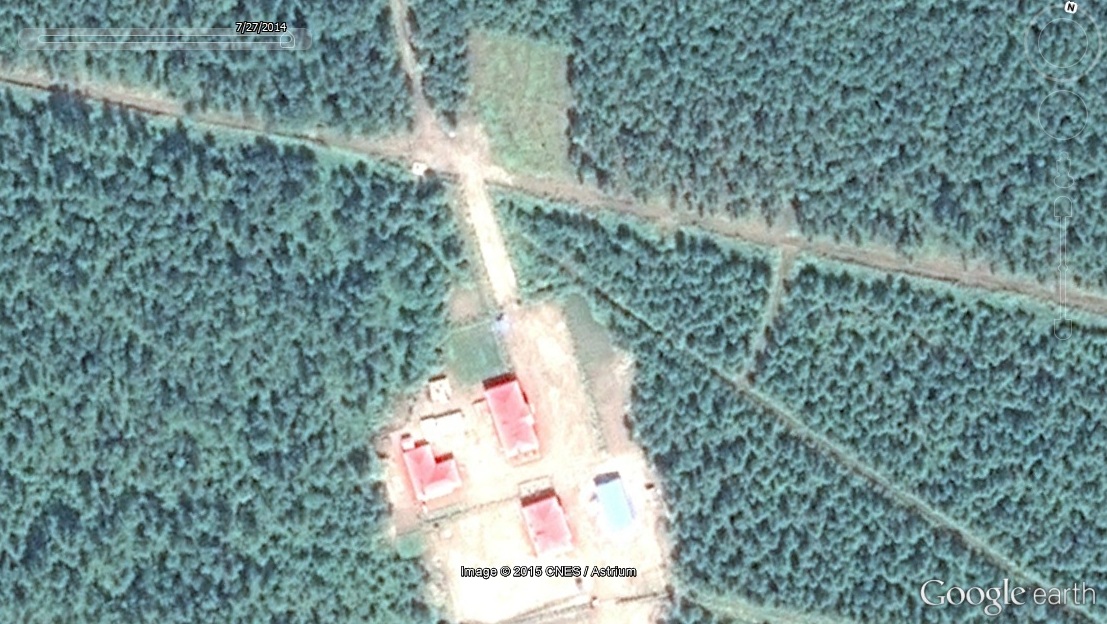
Pictured above (Google Earth): Jongju County

According to Mining.com:

Privately-held SRE Minerals on Wednesday announced the discovery in North Korea of what is believed to be the largest deposit of rare earth elements anywhere in the world.

SRE also signed a joint venture agreement with the Korea Natural Resources Trading Corporation for rights to develop REE deposits at Jongju in the Democratic People’s Republic of Korea for the next 25 years with a further renewal period of 25 years.

The joint venture company known as Pacific Century Rare Earth Mineral Limited, based in the British Virgin Islands, has also been granted permission for a processing plant on site at Jongju, situated approximately 150 km north-northwest of the capital of Pyongyang.

The initial assessment of the Jongju target indicates a total mineralisation potential of 6 billion tonnes with total 216.2 million tonnes rare-earth-oxides including light REEs such as lanthanum, cerium and praseodymium; mainly britholite and associated rare earth minerals. Approximately 2.66% of the 216.2 million tonnes consists of more valuable heavy rare-earth-elements.

According Dr Louis Schurmann, Fellow of the Australasian Institute of Mining and Metallurgy and lead scientist on the project, the Jongju deposit is the world’s largest known REE occurrence.

The 216 million tonne Jongju deposit, theoretically worth trillions of dollars, would more than double the current global known resource of REE oxides which according to the US Geological Survey is pegged at 110 million tonnes.

Minerals like fluorite, apatite, zircon, nepheline, feldspar, and ilmenite are seen as potential by-products to the mining and recovery of REE at Jongju.

Further exploration is planned for March 2014, which will includes 96,000m (Phase 1) and 120,000m (Phase 2) of core drilling, with results reported according to the Australia’s JORC Code, a standard for mineral disclosure similar to Canada’s widely used National Instrument 43-101.

Also from Mining Weekly:

SRE Minerals Limited announces the results of exploration and studies in collaboration with the Korea Natural Resources Trading Corporation of the Democratic People’s Republic of Korea

SRE Minerals Limited (“SRE” or “the company”) announced today their joint venture agreement with the Korea Natural Resources Trading Corporation for rights to develop all rare-earth-element deposits at Jongju, North Pyongan Province.

The joint venture company known as Pacific Century Rare Earth Mineral Limited has the rights under the joint venture agreement which includes the exploration, mining, beneficiation and marketing of all REE deposits in the Jongju area for the next 25 years with a further renewal period of 25 years.

Under the terms of the JV agreement SRE has also been granted permission for a National Rare Earth Mineral Processing Plant on site at Jongju, which is situated approximately 150 km north-northwest of the capital city of Pyongyang, within the North Pyongan Province, Democratic People’s Republic of Korea.

Leading Australian mining and geological consultancy, HDR Salva Resources Pty Ltd, has been SRE’s technical representative for the project and has been commissioned to access the mineralised potential of the Jongju REE target* with special reference to detailed mapping, extensive trenching and limited drilling.

HDR Salva Resources (Pty) Ltd.’s initial assessment of the Jongju REE Exploration Target* indicates a total mineralisation potential of 6.0 Bt (216.2 Mt total rare-earth-oxides including light rare-earth- elements such as lanthanum, cerium and praseodymium (mainly britholite and associated rare earth minerals). Approximately 2.66% of the 216.2 Mt TREO consists of heavy rare-earth-elements. A detailed classification of mineralised potential present in the Jongju REE Target* is presumed to be:

• 664.8 Mt @ >10.00% TREO,
• 1.1 Bt @ 4.72% TREO,
• 579.4 Mt @ 3.97% TREO, and
• 3.63 Bt @ 1.35% TREO.

Dr Louis Schurmann said: “The Jongju Target* would appear to be the World’s largest known REE occurrence.”

Technical information in this announcement has been compiled by Dr Louis W. Schurmann, who is a Fellow of the Australasian Institute of Mining and Metallurgy and a Professional Natural Scientist with over 18 years of experience relevant to the styles and types of rare earth mineral deposits under consideration, and to the activities which has been undertaken to qualify as a Competent Person as defined by the Australasian Code for Reporting of Minerals Resources and Reserves (JORC) 2004. Dr Schurmann consents to the inclusion of information in this publication.

Further exploration is planned to recommence in March 2014, which will include 96,000m (Phase 1) and 120,000m (Phase 2) of core drilling. Results from the exploration program will be reported according to the Joint Ore Reserves Committee of The Australasian Institute of Mining and Metallurgy, Australian Institute of Geoscientists and Mineral Council of Australia (JORC Code (2004 / 2012)).

Investigations by the DPRK’s Academy of Science geologists have also identified several HREE targets*. There are also seven newly discovered carbonatite complexes which have been identified as green-field exploration targets. Exploration programs have been planned to assess their potential in 2014, together with the evaluation of known bastnasite and monazite deposits.

According to the mentioned HDR Salva Resources’ assessment, the Jongju REE Target* also contains economical quantities of rare and critical metals associated with fluorite, apatite, zircon, magnetite, ilmenite, nepheline and feldspar. These commodities will also be addressed during future exploration and further studies.
“This joint venture agreement reinforces the strong and constructive relationship SRE has developed with the DPRK over that time,” he said.

“The REE resource potential of the DPRK, while estimated to be massive has only been lightly explored to date. Given the major economic significance of the effective utilisation of these important minerals to the DPRK, we look forward to working in close co-operation with our partner to progress the development of this excellent opportunity.”

In terms of back ground, the majority of rare earth elements were sourced from placer deposits in India and Brazil in 1948. During the 1950’s, supply came mainly from South Africa, mined from large veins of rare earth-bearing monazite. Then from the 1960’s to 1980’s, rare earths were supplied primarily from the U.S., predominantly from Mountain Pass in California. Competition from China and environmental concerns eventually saw the U.S. operations shut down, and for the last 15 years China has dominated global supply. China today supplies an estimated 90-95% of the global market.

China has recently set quotas to restrict its rare earth exports, and global suppliers have made considerable headway in reducing dependence on Chinese supply. Based on this, several major rare earth companies have been taking advantage of this situation while many junior exploration companies have embarked on exploration programs to add value to small and relatively low-grade REE occurrences.

References to Exploration Target(s)* or Target(s)* in this document are in accordance with the guidelines of the JORC Code (2004). As such it is important to note that in relation to reported Exploration Targets or Target any reference to quality and quantity are conceptual in nature. Exploration carried out to date is insufficient to be able to estimate and report rare-earth mineral resources in accordance with the JORC Code (2004). It is uncertain if further exploration will result in the determination of a rare earth mineral Resource.

Further information will be available at www.pcreml.com and www.sreminerals.com

Here is coverage in Voice of America,  Time, The Diplomat.

Read the full story here:
Largest known rare earth deposit discovered in North Korea
Mining.com
Frik Els
2013-12-5

Share

DPRK – PRC trade up 6.2% in Jan – Oct 2013

December 4th, 2013

According to Yonhap:

Trade between North Korea and its major trading partner China rose 6.2 percent on year in the first 10 months of this year to total US$4.72 billion, data showed Wednesday, despite international sanctions against Pyongyang over its defiant nuclear and missile tests.

The rise suggested that North Korea is becoming increasingly reliant on China, although Beijing is not supportive of Pyongyang’s nuclear ambition.

In the 10-month period, North Korea’s exports to China jumped 12.3 percent on year to account for $2.36 billion, according to data by the China Customs Information Center. The North’s imports gained 1.8 percent to $2.36 billion.

Remarkably this data shows a perfect balance of trade between the DPRK and China (exports=imports). This is a reversal from earlier in the year when it was reported that DPRK – PRC trade volumes had fallen from the previous year. See previous posts on DPRK trade statistics here.

Read the full story here:
Trade between N. Korea, China rise 6.2 pct in Jan-Oct despite sanctions
Yonhap
2013-12-4

Share

DPRK joins international satellite organization

December 2nd, 2013

According to Yonhap:

North Korea joined the International Mobile Satellite Organization (IMSO) convention last month as part of an ongoing effort contribute to the development of maritime transportation and safety, state media said Monday.

The Korean Central News Agency, citing the chief delegate to the general assembly of the International Maritime Organization said Pyongyang officially joined the convention on Oct. 15.

The delegate who attended the London meeting said Pyongyang will take steps to improve friendly relations with other members of the organization. The North’s news wire service did not disclose the name of the official.

The IMSO is an international body that uses satellites to regulate the movement of ships and maritime communication. South Korea’s telecom giant KT joined in 1985.

As part of its contribution, the North plans to set up and operate 25 very high frequency wireless stations along its eastern and western coasts starting next year, and actively pursue projects that can better preserve the maritime environment.

North Korean watchers, meanwhile, speculated that the North’s joining of the convention is part of an ongoing effort to mend fences and improve its image within the international community.

Read the full story here:
N. Korea joins int’l satellite organization
Yonhap
2013-12-2

Share

DPRK harvest up 5% for third year, but chronic malnutrition persists

November 28th, 2013

“Speical Report: FAO/WFP crop and food security assessment mission to the Democratic People’s Republic of Korean”
Read the full report here (PDF)Previous reports here.

According to the UN WFP/FAO Press Release (on Thanksgiving day!):

ROME/PYONGYANG – A nationwide assessment by two United Nations agencies shows an increase in staple food production in the Democratic People’s Republic of Korea (DPRK) for the third year running.

The report, however, notes that although rates of child malnutrition have steadily declined over the past 10 years, rates of stunting caused by malnutrition during the first 1,000 days of a child’s life remain high and micronutrient deficiencies are of particular concern.

The joint Crop and Food Security Assessment Mission to the DPRK by the Food and Agriculture Organization (FAO) and World Food Programme (WFP) visited all nine agricultural provinces in late September and early October around the main annual cereal harvest.

Total food production is estimated at about 5.03 million metric tons (including milled rice) in 2013, which is about a 5 percent increase over the previous year. Despite the improved harvest, the food security situation is still unsatisfactory with 84 percent of households having borderline or poor food consumption.

The mission observed immense logistical challenges for the public food distribution system and expressed concerns about the timeliness and consistency of distributions. Markets and informal mechanisms of bartering and other forms of exchange are believed to be of increasing importance for access to food by families, particularly in urban areas.

“Despite continued improvement in agricultural production, the food system in the DPRK remains highly vulnerable to shocks and serious shortages exist particularly in the production of protein-rich foods,” said Kisan Gunjal, FAO economist and co-leader of the mission. “In the interest of increased protein consumption and to reverse the downward trend of soybean production, the price paid to farmers for soybean should be increased.”

Since 1998, WFP in partnership with the government has produced blended fortified foods and nutritious biscuits for children and pregnant or nursing women. WFP has recommended a shift to a new product – Rice Soya Milk Blend – for children in nurseries to reduce stunting and wasting.

“Improving the diversity and quality of food provided through the child institution system is essential to improving children’s nutrition,” said WFP DPRK Country Director Dierk Stegen. “We want to produce Rice Soya Milk Blend but can only do so if we receive sufficient donor support.”

Despite a small reduction in the area planted, overall crop production in 2013/14 is estimated to increase due to generally favourable weather conditions that resulted in a higher rice crop.

The aggregate production from cooperative farms, plots on sloping land and household gardens estimated by the mission includes the 2013 main season harvest and the forecast for 2014 early season crops. Unusually early and heavy rains in July and early August compromised maize and soybean yields but had little effect on paddy.

The report estimated cereal import requirements at 340,000 metric tons for the 2013/14 marketing year (November/October). Assuming the official import target of 300,000 metric tons of cereals is met, there remains an uncovered food deficit of 40,000 metric tons for the current marketing year.

While this food gap is the narrowest in many years, it needs to be bridged either through additional purchases by the government and/or international support to avoid increased undernourishment during the current marketing year.

To improve food security and nutrition, the report recommends national and international support for sustainable farming practices, better price and market incentives for farmers and improvements in farm mechanization.

In nutrition, the report recommends that efforts should go toward improving dietary diversity and feeding practices for young children and women through strategies such as behavioural change, market reform and encouraging livestock and fish production; strengthening treatment of severe and moderate acute malnutrition; and better hygiene and sanitation practices.

ADDITIONAL INFORATION:

1. Here is a follow up report in 38 North by Randall Ireson.

2. Here is coverage in the Wall Street Journal and Assocaited Press.

3. High-Resolution photographs from DPRK can be downloaded here.


Share

An update and DPRK calendars

November 26th, 2013

UPDATE: 

I have been very busy this autumn, so non-remunerative blogging has taken a back seat. As you are aware, more content than ever is published on the DPRK each day and going through it all is a major drain on time! It’s certainly not like the old days (2006-2010) when you could read everything about North Korea that day before lunch! So I will be slowly updating this web page (all posts will be back-dated) and I hope to be caught up by the end of the year.

In the meantime, I have published several articles at NK News.

CALENDARS:

The ever-innovative NK News is selling 2014 calendars featuring great photography of the DPRK. Order yours below.

NK-news-calendar-2014

Order your calendar here.

I really enjoyed my 2013 calendar!

Share

Skilled North Koreans in Russia

November 26th, 2013

According to Yonhap:

The number of skilled North Korean workers in Russia has jumped 2.8-fold in the first nine months of this year compared to 2012, a report showed Tuesday.

The report by Radio Free Asia that used data provided by Amur Oblast showed 762 cases of work permits being issued to skilled North Koreans in the cited period. Of these, 34 involved permits for specialized workers with considerable technical expertise.

The Washington-based media outlet said the sharp on-year increase is in contrast to the incremental rise in the number of work visas issued for menial laborers, which grew by just 2.2 percent to around 1,700 cases.

Pyongyang has been sending workers to Russia to help the country earn hard currency, with most being hired by Russian logging companies.

The North and Russia held government-level talks on Nov. 12 to facilitate the movement and employment of North Korean workers.

Read the full story here:
Number of skilled N. Korean workers in Russia surge this year: report
Yonhap
2013-11-26

Share

38 North on the expansion of the DPRK’s mobile phone network

November 26th, 2013

Here is the conclusion:

One should be careful not to jump to a conclusion that North Korea is entering ‘mobile telecommunications revolution.’ North Koreans are still largely denied internet access, and international calls are blocked. Prohibitive top-up rates have made general users reserve their calls for important messages or emergencies. New digital social networking remains an unreachable luxury for the general population and traditional self-censorship prevents politically sensitive conversations on the phone. The government conducts tight surveillance of phone calls and text messages and frequently censors ‘politically inappropriate’ content on them such as South Korean songs and dramas.

However, there are still loopholes that the government cannot perfectly close. For example, a primitive but creative way to make ‘international’ calls supported by illegal Chinese cell phones is in the making, mainly employed now for remittances from defectors in South Korea to their families left in North Korea. However, if brokers can find more profit opportunities, they could surely figure out safer and more creative ways to circumvent technical barriers and the monitoring system. A defector in Seoul has already overcome that technical barrier by connecting to foreign phones with SIM cards bought in Pyongyang. The fact that millions of handheld cameras and digital voice recorders are being circulated should be source of anxiety for the regime. Despite tightly controlled and monitored, the Koryolink network could still potentially widen the loopholes of information flow to and from the outside world.

Read the full article here.

Share

Inter-Korean trade begins to recover in Q4 2013

November 24th, 2013

According to Yonhap:

Inter-Korean trade has gradually been returning to normal levels following the reopening of a joint industrial park in North Korea’s border city of Kaesong in September, government data showed Sunday.

According to data from the Ministry of Unification and the Korea Customs Service, two-way trade between South and North Korea amounted to US$152.15 million last month. The amount is equivalent to 80.9 percent of total bilateral trade in the same month last year.

“Exports have grown with the entry of large amounts of raw materials, production facilities and food supplies as (the Kaesong complex) prepares to resume operations in earnest,” a ministry official said, speaking on condition of anonymity.

The complex, which ground to a halt in April amid high security tensions on the Korean Peninsula, reopened in September. Inter-Korean trade is limited to the joint factory park because all other economic exchanges have been banned since May 2010 due to North Korea’s sinking of a South Korean warship in March of that year.

“The Kaesong Industrial Complex is gradually recovering to previous levels,” the official said.

The complex, a key outcome of the first-ever inter-Korean summit in 2000, combines South Korean capital and technology with cheap North Korean labor to produce clothes, utensils, watches and other labor-intensive goods.

The project serves as a key source of cash for the impoverished country.

My compendium of stories related to the closure and reopening of the Kaesong Zone can be found here.

Read the full story here:
Inter-Korean trade recovers following reopening of Kaesong complex
Yonhap
2013-11-24

Share

Special Economic Zones (SEZs) and Economic Development Zones

November 21st, 2013

UPDATE 1 (2013-11-29): New economic zones are under development at provincial level – development of Sinuiju special zone officially announced (IFES):

North Korea has enacted the Economic Zone Development Act on May 29 this year and explained, “The economic development zones are special economic zones where preferential treatments are guaranteed in accordance with appropriate laws as provided by the state.” It also elucidated that the provincial level SEZs were to be managed differently from the central-level SEZs.

On October 16, the institution in charge of the central-level economic development zones, the General State Economic Development Department, was upgraded to become the State Economic Development Commission, with Kim Ki Sok appointed as the commission’s chairman. Kim served as the vice-chairman of the Joint Investment Committee of Korea. In addition, the Korean Economic Development Association was established as a private organization, with Yun Yong Sok being named as president.

Provincial-level economic development zones will be open to joint venture company or independent investment by a foreign company and 50 years are guaranteed as the cooperation period. Each of the 13 SEZs in each province will be developed incorporating the special characteristics of each region. The total amount of investment permitted in this area will range from 70 million USD to 240 million USD. The provincial-level SEZs will be managed by the Economic Zone Development Bureau.

With the announcement of the names of the 13 SEZs, it is likely the development plans is likely to proceed rather rapidly.

On the other hand, Sinuiju SEZ is reported to be developed as a central-level zone. In 2002, Sinuiju already had received the title as a special administrative region but after the arrest of the Administrative Minister Yang Bin, the development of this area came to a halt.

The plan for Sinuiju SEZ is likely to be developed as state-of-the-art, comprehensive special zone modeled after China’s Shenzhen SEZ.  A Joint Venture Investment Committee and an international group from Hong Kong will hold 50:50 shares and establish a new joint venture company.

Sinuiju is especially located in a geographically advantageous area, adjacent from Dandong City divided by the Amnok (Yalu) River and it is well connected through railway and bridge that connects the two cities. The currently under construction New Yalu River Bridge is also in progress and expected for completion early next year.

ORIGINAL POST (2013-11-21): Until this year, there were four Special Economic Zones (SEZs) in the DPRK: Hwanggumphyong and Wihwado Economic Zones, Kaesong Industrial Zone, Mt. Kumgang Tourist Special Zone, Rason Economic and Trade Zone.

There is also a new “Kaesong Latest Science, Technology Development Zone” under construction.

On November 21, 2013, KCNA reported additional information on the continuing evolution of the DPRK’s Special Economic Zones (특수경제지대) and Economic Development Zones (경제개발구).

KCNA reported again that Sinuiju will be the site of a Special Economic Zone:

DPRK to Set Up Special Economic Zone in Sinuiju

Pyongyang, November 21 (KCNA) — The DPRK decided to set up a special economic zone in some part of Sinuiju, North Phyongan Province.

The sovereignty of the DPRK will be exercised in the zone.

A relevant decree of the Presidium of the Supreme People’s Assembly of the DPRK was released on Thursday.

Here is the same article in Korean:

신의주시의 일부 지역에 특수경제지대 내오기로 결정

(평양 11월 21일발 조선중앙통신)조선에서 평안북도 신의주시의 일부 지역에 특수경제지대를 내오기로 하였다.

특수경제지대에는 조선민주주의인민공화국 주권이 행사된다.

이와 관련한 조선민주주의인민공화국 최고인민회의 상임위원회 정령이 21일에 발표되였다.(끝)

Sinuiju has been proposed as a Special Administrative Region (SAR) before. You can read all Sinuiju SAR posts hereHere is the announcement in KCNA from 2002-9-20 announcing the SAR. Ultimately the endeavor was not successful, thought it ultimately led to the creation of the nearby Hwanggumphyong and Wihwado Economic Zones

On the same day that KCNA made this announcement, they also offered more information on the new provincial level “Economic Development Zones (경제개발구). I am unsure of the relationship between “Special Economic Zone” and “Economic Development Zone”.

According to the KCNA article:

The DPRK is to set up economic development zones in provinces.

A decree of the Presidium of the Supreme People’s Assembly of the DPRK was released Thursday.

According to the decree, some part of Ojok-ri, Uiju County, North Phyongan Province will come under the jurisdiction of Ryongun-ri. Ryongun-ri will belong to Sinuiju and be called North Phyongan Provincial Amnokgang economic development zone [압록강경제개발구].

Jagang Provincial Manpho economic development zone [자강도 만포경제개발구] will be established in some areas of Mitha-ri (including Poldung Islet) and Phosang-ri, Manpho City, Jagang Province and Jagang Provincial Wiwon industrial development zone [자강도 위원공업개발구] will be set up in areas covering part of Tokam-ri and part of Kosong-ri, Wiwon County.

North Hwanghae Provincial Sinphyong tourist development zone [황해북도 신평관광개발구] will appear in some areas of Phyonghwa-ri, Sinphyong County, North Hwanghae Province and North Hwanghae Provincial Songrim export processing zone [황해북도 송림수출가공구] will be set up in some areas of Sosong-ri, Songrim City.

Kangwon Provincial Hyondong industrial development zone [강원도 현동공업개발구] will be set up in some areas of Hyondong-ri, Wonsan City, Kangwon Province.

South Hamgyong Provincial Hungnam industrial development zone [함경남도 흥남공업개발구] will take its shape in some areas in Haean District, Hamhung City, South Hamgyong Province and South Hamgyong Provincial Pukchong agricultural development zone [함경남도 북청농업개발구] will be created in areas covering part of Mundong-ri, Pudong-ri and Jongsan-ri of Pukchong County.

North Hamgyong Provincial Chongjin economic development zone [함경북도 청진경제개발구] will be set up in areas covering part of Wolpho-ri, Susong-dong and Namsok-ri, Songphyong District, Chongjin City, North Hamgyong Province. North Hamgyong Provincial Orang agricultural development zone [함경북도 어랑농업개발구] will appear in some areas of Ryongjon-ri, Orang County. North Hamgyong Provincial Onsong island tourist development zone [함경북도 온성섬관광개발구] will be formed in some areas of Onsong township, Onsong County.

Ryanggang Provincial Hyesan economic development zone [량강도 혜산경제개발구] will appear in some areas of Sinjang-ri, Hyesan City, Ryanggang Province.

Some areas of Ryongnam-ri, Waudo District, Nampho City will turn into Nampho City Waudo export processing zone [남포시 와우도수출가공구].

The sovereignty of the DPRK will be exercised in the provincial economic development zones.

The Korean version of this article can be found here. The DPRK announced there would be 14 SEZ/Economic Development Zones. With the inclusion of the Sinuiju Special Economic Zone with the KCNA list of 13 economic development zones, you will get 14. However, there are other economic development zones that have been announced that are not included on this list. By my count there are  at least 18. If one is to be in each province, then zones in South Phyongan and South Hwanghae have yet to be announced.

As mentioned before, these economic development zones are supposed to be governed by the Law on Economic Development Zones and the Economic Development Commission/Association.

Share

North Korea emphasizing the development of science and technology for the construction of a powerful nation

November 21st, 2013

Institute for Far Eastern Studies (IFES)
2013-11-21

Under the new leadership of Kim Jong Un, the importance of advancing the country’s science and technology is being increasingly highlighted. Recently, a conference for scientists and technicians was held on November 13, 2013. Although Kim Jong Un did not attend, his article on “Let’s Promote Transition for the Development of Science and Technology to Build a Powerful Nation” was delivered and letters of appeal to the participants were also announced at the conference.

The first three pages of the November 14, 2013 edition of Rodong Sinmun featured news on the conference. The letters of appeal to the scientists and technicians were included in the article, which read, “The future of building a powerful nation depends on science and technology.” The letters encouraged scientists from each field to put in more effort. It was also stated that “Our party considers science and technology as the most important state affair and the basis for our nation’s development and is bringing scientification in all sectors.” Resolving the food situation and energy shortage problem was stated as the most urgent task for the scientists and technicians. The article also boasted the achievements made in the development of computer numerical control (CNC) and high-tech industries such as nanotechnology and defense-related science and technology.

Premier Pak Pong Ju also commented that North Korea will “push strongly and boldly for the creation of high-tech development zones” and stressed that investment in this sector will be prioritized, seemingly referring to the plan of building more areas that incorporate science and technology with the economy, as the ground-breaking ceremony for the “Kaesong High-Tech Industrial Park” is reported to have took place on Monday, November 11.

From early on the Kim Jong Un regime expressed interest in science and technology. After North Korea’s successful launch of a long-range rocket in December 2012, engineers and scientists were invited to Pyongyang and were officially proclaimed “heroes of the Republic.” Recently, in an effort to raise the living standard of elite scientists, construction of special residential complexes — Unha Scientists Street and residential complex for Kim Il Sung University faculty — were completed.

Since last August, new slogans such as “Science and Technology for Everyone” are being promoted for the purpose of cultivating young talent in the field of science and technology. This is reminiscent of the slogans associated with the former Kim Il Sung regime’s refined military doctrine of the 1960s, i.e., the ‘four-point military line’, which stressed the need for arming the entire nation to safeguard the homeland. The recent conference magnifies the prevalent atmosphere — that is, preferential treatment for scientists and increased emphasis on science and technology.

This recent trend reflects North Korea’s recognition that economic development must be backed by strong advancement in science and technology. Science and technology has been put forth as the instrument in which to achieve the nation’s goal of becoming an economic powerhouse of knowledge. Scientists are expected to play a critical, central role in North Korea’s economic development.

Share

An affiliate of 38 North