‘Donju’ step in on state construction

March 16th, 2015

Sunchon-power-plant-health-complex-2014-12-31

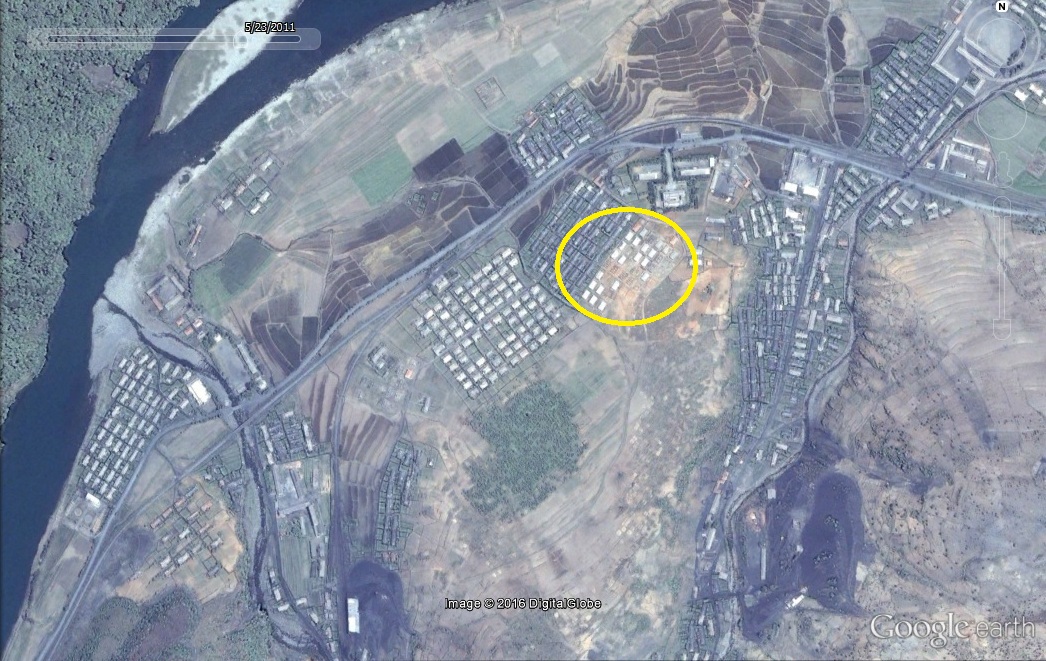
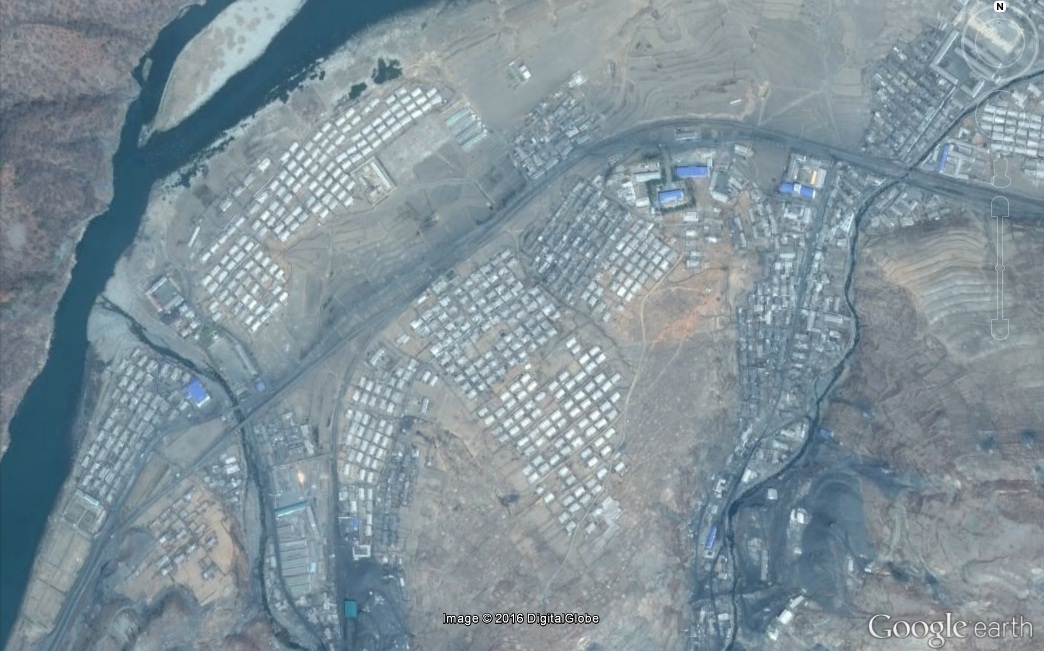
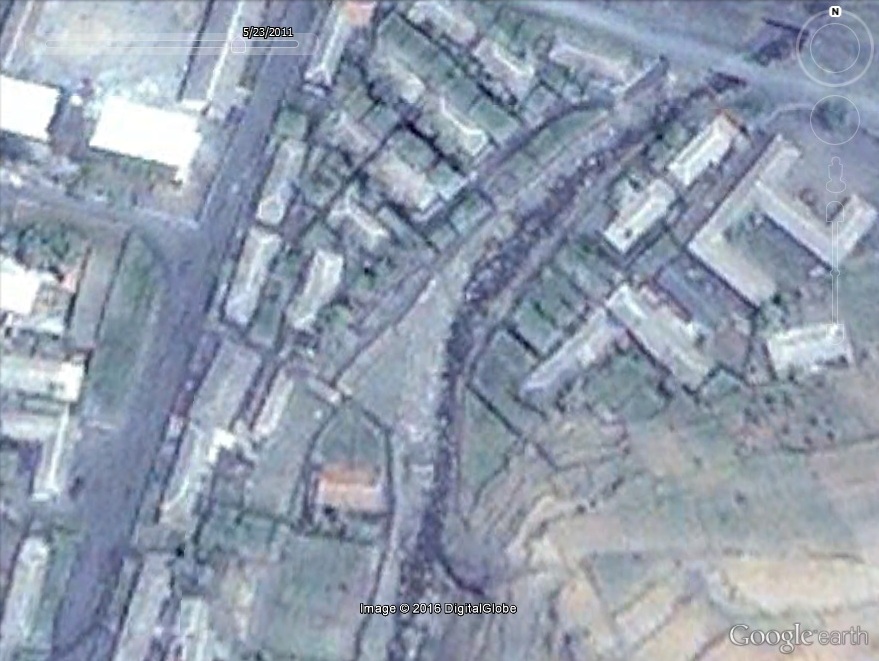
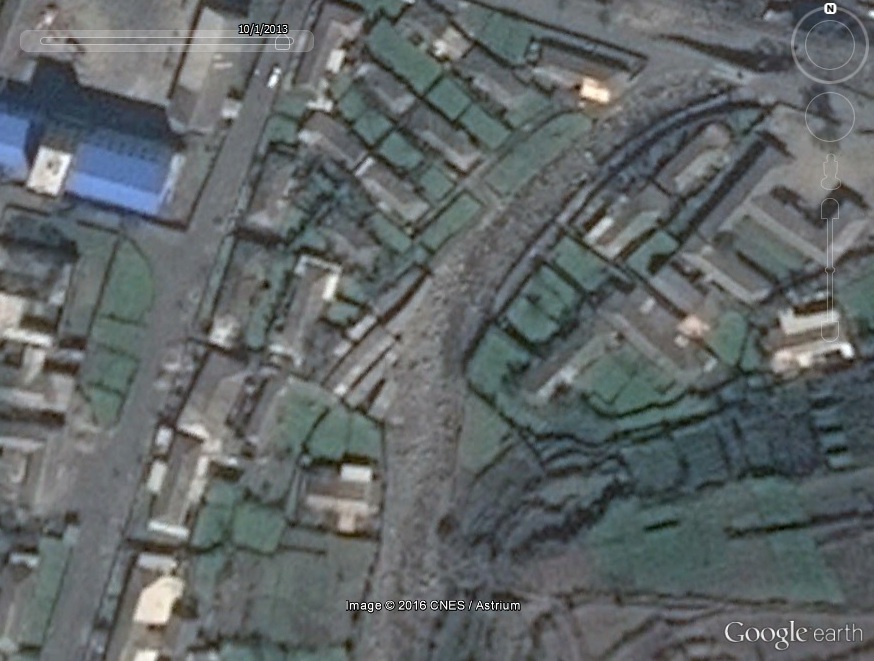
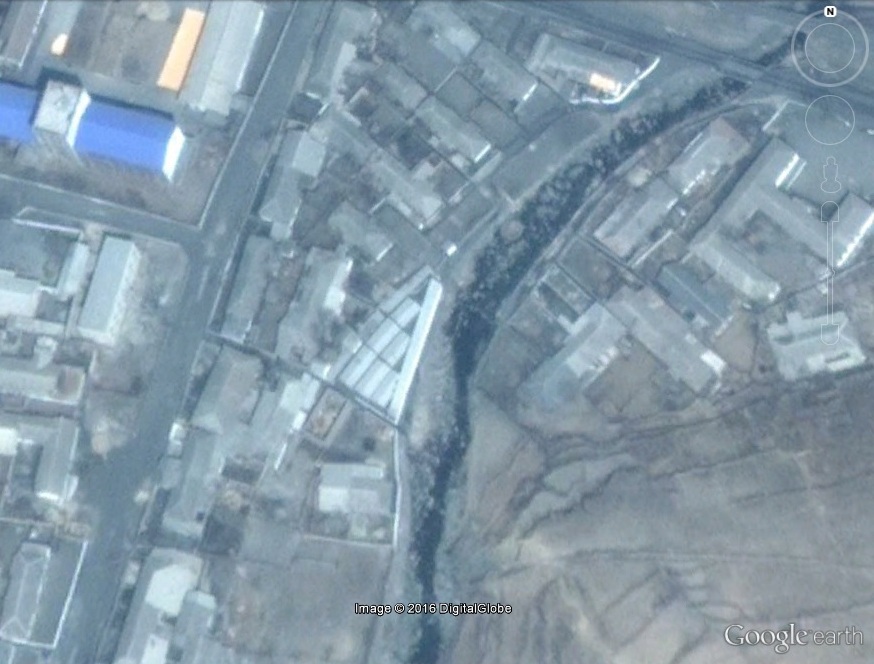
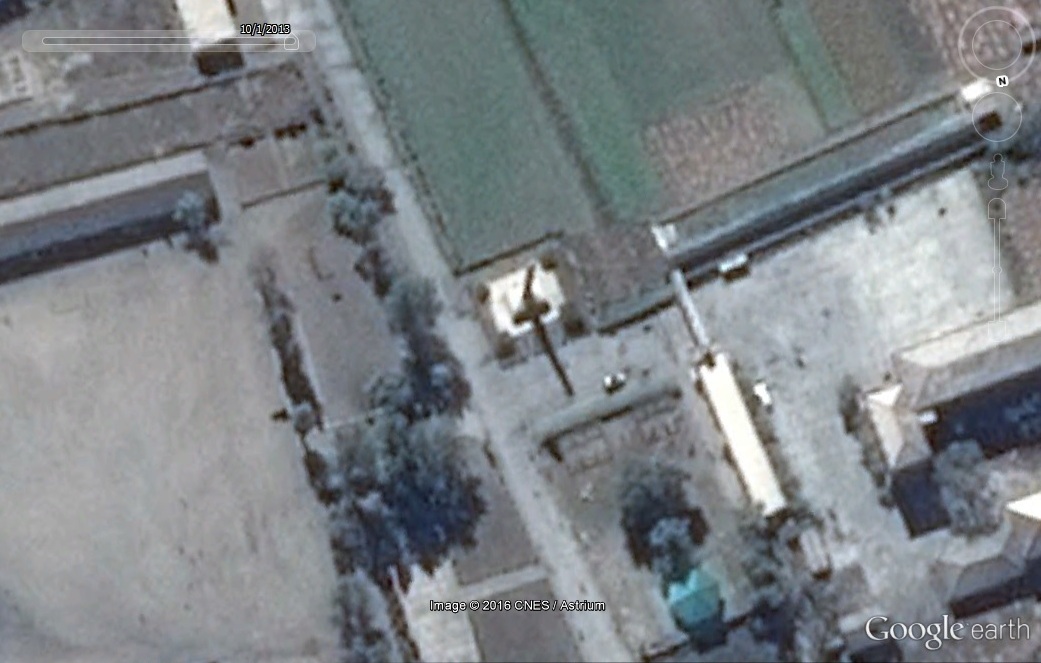
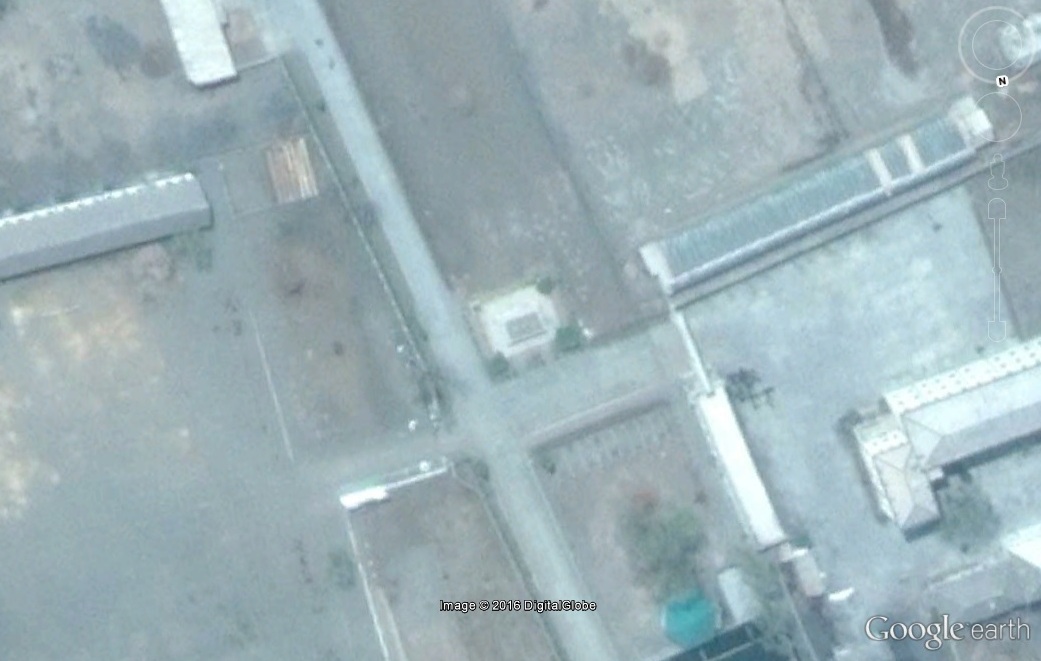
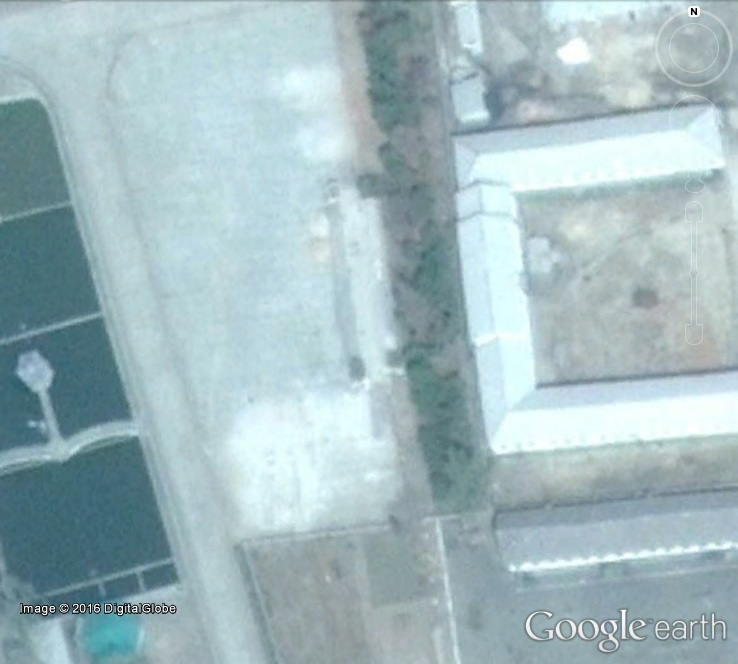
Pictured Above (Google Earth): The Sunchon Thermal Power Plant Health complex

According to the Daily NK:

The donju —North Korea’s nouveau riche — have recently been expanding their business inroads. Whereas this contingent previously forayed in wholesale/retail businesses, the burgeoning real estate market, and transportation, they are now yielding profits by increasingly partaking in state construction projects, Daily NK has learned.

“The South Pyongan Sunchon Thermal Power Plant recently built swimming pools and bathhouses by utilizing waste heat recovery, a project in which several of the donju invested,” a source in South Pyongan Province informed Daily NK on the 16th. “The authorities merely granted permission—the entire project was undertaken with the money invested by the donju.”

The recently constructed swimming pool can hold up to 200 people, creating potential for significant financial profits to be split 50/50 between the state-run power plant and the donju investors, according to the source. She noted that since last year, the Sunchon Thermal Power Plant has already reaped in significant construction funds through residual revenue from the swimming pool.

“The swimming pools, bathhouses, and steam room facilities boast modern amenities, such as restaurants and snack bars, attracting scores of patrons,” she explained. “All the waste heat from the power plant turbines was squandered until the launch of this construction project, which was based on a proposal by the donju to redirect the secondary heat in order to establish swimming pools and steam bathhouses.”

Those members of the donju with more expendable wealth have impressive business acumen, utilizing connections with executives of state-run enterprises in order to partake in various profitable ventures. “The donju are doing what the state cannot ,” the source pointed out.

She expounded on this by saying that donju business domains are rapidly expanding to encompass state construction endeavors. Beset by financial difficulties, North Korean officials are heavily reliant on the donju to implement state-run construction projects, creating a de facto “public-private partnership.” Party cadres forge a symbiotic relationship with the donju: the former receive immense kickbacks from the latter, who are more than willing to pay for the opportunity to expand their business terrains.

“The city of Sinuiju has been carrying out a large-scale national project of building apartments recently,” a different source based in the city told Daily NK. As previously reported by Daily NK, a multitude of the donju have invested in this large-scale venture.

“The donju are investing in the apartment construction under the condition of attaining a certain degree of leasing rights; in other words, they will effectively own the place and charge rent to individuals to reap in profits,” she concluded.

Read the full story here:
‘Donju’ Step In on State Construction
Daily NK
Seol Song Ah
2015-3-16

Share

And just how much are overseas North Koreans earning?

March 16th, 2015

Anna Fifield, in this interesting Washington Post story, actually gets a current data point:

Kim is part of the economic lifeline that is keeping North Korea afloat. He manages a factory in a small town outside Dandong, China’s commercial gateway to North Korea, where North Korean women work making clothes for a Chinese company. The women are allowed to keep one-third of the $300 a month they earn, while the rest goes back to Kim Jong Un’s regime in Pyongyang.

In a second article, she provides a little more information:

In the clothing factory, the women work 13 hours a day, 28 or 29 days a month, and are paid $300 each a month — one-third of which they keep. The rest goes back to the government in Pyongyang.

“Even though I want to pay them more, I have to send a certain amount home to my country, so this is all I can give them,” Kim said in his office at the factory. On his desk, an open laptop revealed that visitors had interrupted his game of solitaire.

North Korea is thought to have at least 50,000 workers outside the country earning money for the regime, and 13,000 of them work in Dandong.

Assuming that there are 50,000 workers earning $200 each / month for Pyongyang (a low-ball figure in my opinion), this would imply a cash transfer of $120 million per year. Not a lot of money on a national scale, but remember this is a lower-bound estimate.

At the same time in Geneva, special rapporteur Marzuki Darusman said he was launching an inquiry into the “bonded labourers” working for the DPRK. Read more about this in The Guardian.

The full articles are worth reading here:
“Talking kimchi and capitalism with a North Korean businessman”
Washington Post
Anna Fifield
2014-3-16

North Korea’s growing economy — and America’s misconceptions about it
Washington Post
Anna Fifield
2014-3-13

Share

North Korean cabinet adopts forest restoration resolution

March 12th, 2015

According to the Institute for Far Eastern Studies (IFES):

North Korea’s official news agency, Korean Central News Agency reported on March 7, 2015 that the North Korean Cabinet has adopted a resolution to support national forest restoration activities.

According to the news agency, the Cabinet recently “announced this decision, which they adopted to fully mobilize the entire party, military, and citizenry in the forest restoration battle.”

The resolution states that the General Bureau of Forestry of the Ministry of Land and Environment Preservation will procure the funds necessary for forest restoration and that the State Planning Committee, General Bureau of Forestry of the Ministry of Land and Environment Preservation, as well as other agencies such as the forestry and agriculture ministries, will draft a concrete plan.

The directive also set up a management system including a supervisory and regulatory task for forest conservation, and it urged for cooperation between county residents and the development of scientific technology in the forestry sector.

In accordance with First Chairman of the National Defence Commission Kim Jong Un’s guidelines, since last year North Korea has repeatedly drawn attention to the precarious state of the country’s forests and has been encouraging tree-planting and nature conservation.

Welcoming ‘Tree-Planting Day’ on March 2, Kim Jong Un also revealed North Korea’s plans to begin an intense forestation restoration campaign. The leader spoke directly regarding this effort, saying, “Forests are a precious resource of our country and a great treasure that we must bequeath to future generations […] However, since the ‘Arduous March,’ people, while saying that they are procuring firewood and provisions, have recklessly damaged our forests, and since the country could not even erect a forest fire prevention measure, our country’s precious forest resources have been greatly reduced.”

In addition, while referencing issues like the drought and damage incurred during the rainy season due to the deforestation, Kim Jong Un emphasized patriotism: “If the country’s forests are not currently beyond repair, they lie at the crossroads of recovery.”

Ordering the complete restoration of forests within 10 years, Kim added that “The entire party, military, and citizenry need to fully engage in a forest restoration battle to make the green forests in the Motherland’s mountains lush.”

Following this, ‘Tree-Planting Day’ was held as an extensive tree-planting event, and Kim Jong Un encouraged the people to plant many saplings in the central tree nursery and regional tree nurseries.

In addition he stressed the importance of the forest conservation work and ordered the supervision and regulation of forest development and conservation through means such as the prohibition of reckless logging, forest fire prevention measures, and the provision of firewood.

On March 2, 2015, Rodong Sinmun reported that Kim Jong-un had given a talk on forestry. You can download a PDF of the talk here.

Share

DPRK, Russia declare 2015 as “friendship year”

March 11th, 2015

According to KCNA:

The Democratic People’s Republic of Korea and the Russian Federation decided to make 2015 in which fall the 70th anniversaries of Korea’s liberation and the victory in the great Patriotic War in Russia as a year of friendship between the two countries, prompted by the purpose to develop the bilateral relations onto a new higher stage in various fields including politics, economy and culture under a mutual agreement.

During the year of friendship the two countries are to invigorate exchanges of delegations and contacts between national institutions and regions and hold joint cultural events in Pyongyang and Moscow and other cities of the two countries.

Here is coverage in Yonhap:

North Korea and Russia will mark 2015 as a year of friendship and step up bilateral exchanges in political, economic and cultural sectors, the North’s official news agency said Wednesday.

“The Democratic People’s Republic of Korea and the Russian Federation decided to make 2015, in which falls the 70th anniversaries of Korea’s liberation and the victory in the great Patriotic War in Russia, as a year of friendship between the two countries,” the North’s Korean Central News Agency (KCNA) said in a brief dispatch.

The countries will “develop the bilateral relations onto a new higher stage in various fields, including politics, economy and culture under a mutual agreement,” the KCNA said.

The two countries will also invigorate exchanges of delegations and contacts between their national institutions and regions, the report said, adding that joint cultural events will take place in Pyongyang and Moscow as well as other cities.

The designation came as the two countries are scurrying to tighten bilateral ties amid languid North-China relations.

Choe Ryong-hae, a governing party secretary, visited Russia in November as a special envoy of North Korean leader Kim Jong-un as part of efforts to improve relations.

In May, the North Korean leader is expected to attend a Russian ceremony in Moscow marking the 70th anniversary of the Soviet victory over Nazi Germany in World War II. It would be the reclusive leader’s first foreign visit since taking power in December 2011.

Here are some recent Russia-DPRK engagement stories:

1. Russia-Korea pipeline development
2. DPRK and Russia set up business and exchange council
3. DPRK-Russia trade down in 2014
4. Russian investment in DPRK railway line and coal exports
5. Port No. 3 in Rason and coal shipments to South Korea
6. Russia forgives DPRK debt 

You can read the full Yonhap story here:
N. Korea, Russia declare 2015 as friendship year: KCNA
Yonhap
2015-3-11

Share

Korea-China FTA (as it relates to the DPRK)

March 11th, 2015

UPDATE 1 (2015-3-11): Dandong tries to position itself as gateway to North Korea via China – [South Korea] FTA. According to Yonhap:

The Chinese border city of Dandong, known for its bustling trade with North Korea, has unveiled a plan to become a “bridgehead” to boost trade between South Korea and China as the two nations work to formally sign a bilateral free trade deal.

The plan, put forward by the Dandong city government in Liaoning province on Tuesday during the country’s annual session of the Communist Party-controlled parliament, came as the bilateral trade deal between South Korea and China is expected to be signed within the first-half of this year.

“China and South Korea completed free trade negotiations. Dandong will make efforts to serve as a bridgehead of trade between China and South Korea,” the Chinese city government said in a statement.

The trade deal is expected to give a big boost to the city’s ambition to become a trade hub in the northern parts of the Yellow Sea and the Bohai Strait, adjacent to the Korean Peninsula, it said.

Details of the Chinese city’s plan are sketchy, but the city is expanding its logistics and marketing facilities to cope with rising trade if the South Korea-China free trade deal is implemented, according to the statement.

As much as 80 percent of bilateral trade between North Korea and China is conducted through Dandong.

Although China’s trade with North Korea appears largely unaffected, large-scale economic projects between the allies have made little progress as China’s leadership has been increasingly frustrated with the North’s defiant pursuit of nuclear weapons.

Last week, Chinese Premier Li Keqiang said Beijing will spare no effort to formally sign a bilateral free trade agreement with South Korea “as soon as possible.”

The deal calls for South Korea and China to remove tariffs on about 90 percent of goods traded between the two nations over the next two decades. However, rice and cars were excluded from the deal.

ORIGINAL POST (2015-2-26): Goods at teh Kaesong Complex will be included in the China-[South] Korea FTA. According to the Joong Ang Daily:

More than 300 products manufactured in the Kaesong Industrial Complex in North Korea will be given special tariff reductions for export to China once the Korea-China Free Trade Agreement (FTA) takes effect, the South Korean government said Wednesday.

This is the largest number of products from Kaesong that will be eligible for tariff reductions in a bilateral trade pact signed by Korea. Its FTAs with the United States and the European Union don’t deal with products manufactured by South Korean companies in the North Korean industrial park.

New agreements have been negotiated in the three months since President Park Geun-hye and Chinese President Xi Jinping announced the free trade pact last November in Beijing.

According to the Ministry of Trade, Industry and Energy, a newly upgraded pact was signed and exchanged on Wednesday in Beijing after follow-up negotiations were held recently.

China is the largest importer of Korean goods in the world, and trade with the country has consistently risen over the past decade.

The FTA initialing on Wednesday in Beijing came after three months of continuous negotiations in which the two sides came up with more detailed articles and resolved technical and legal details.

On Wednesday morning, commercial attaches from the Korean embassy in Beijing exchanged the initialed documents with their counterparts.

With the initialing, the two countries confirmed the English version of the FTA document, and the “substantial agreement” announced in November has gotten a step closer to implementation.

The pact still requires official signing and final ratifications from the two countries’ legislatures before going into effect.

“The two governments agreed to do our best to complete an official signing by the first half of this year so that our exporters can start benefiting from the FTA as soon as possible,” Woo Tae-hee, assistant minister for trade and chief FTA negotiator, said at a press briefing at the Sejong government complex on Wednesday morning.

Signings of FTAs are usually done by trade ministers, but an official at the Trade Ministry said this FTA is likely to be signed by the two presidents.

Under the updated agreement, Korean producers of 310 products in Kaesong will benefit from reduced or completely eliminated tariff as if the products were produced locally.

This will improve the price competitiveness of those exports from Kaesong to China.

To be eligible, at least 60 percent of each product’s raw materials should come from China or Korea. The list of 310 products will be renegotiated every year.

The Kaesong provision is a lot more generous than in Korea’s other FTAs, the Trade Ministry says.

Korea’s FTA with the European Free Trade Association (Korea-EFTA), consisting mostly of Scandinavian countries, gave tariff breaks to 267 products from Kaesong. The Korea-India FTA gave breaks on 108 products. The FTAs with ASEAN, Peru and Colombia gave breaks to 100 products.

Korea and China also inserted language into the FTA to launch a group to discuss opening more industrial complexes in North Korea.

The updated Korea-China FTA also includes an article that potentially allows other countries or offshore industrial complexes like Kaesong to join the Korea-China FTA. The article was added on China’s request.

“Through the Korea-China FTA, I think China wants to set up a new trade order within Northeast Asia, which other major Asian economies like Hong Kong and Macau can also participate in and expand this bilateral free trade pact into a larger-scale trade partnership within Asia,” Woo explained.

The two countries also decided to form a separate committee that discusses new business zones in each country to encourage the exploitation of the Korea-China FTA. Discussion of jointly operated business zones received a boost in the wake of Chinese Vice Premier Wang Yang’s visit to Seoul at the end of January.

The locations of such business zones are undecided yet, but candidate regions include Yancheng, Yentai and Guangzhou, cities located on China’s southern and eastern coasts, and Saemangeum on the western coast of Korea.

The Korea-China FTA’s services and investment articles also got more specific.

As soon as the FTA goes into effect, Korean law firms with a China office can do joint projects with local law firms.

The rule will be first tested within Shanghai Free Trade Zone. Also, the Chinese government agreed to lower barriers for business licenses for Korean builders.

However, the Korea-China FTA still seems to be limited to manufacturers, and other areas remain protected by tariffs including farmers and manufacturers in weak sectors.

China excluded most of Korea’s key export items to China in auto parts, steel and petrochemical industries from the tariff elimination list.

Korea’s sensitive agricultural products like rice, meat, vegetables and fruits will still keep their current tariff levels.

The level of tariff reduction and schedule for elimination varies by the product.

But most of Korea’s top exports to China, such as displays, petrochemical products, mobile phones and auto parts, will maintain current tariff levels.

On the other hand, the tariffs on top imports to Korea from China – the list is similar, including semiconductor, mobile phones, computers and displays – will be mostly eliminated as soon as the FTA is implemented.

The details of Korea-China FTA are currently available to the public on the Trade Ministry’s website.

Read the full story here:
Korea-China FTA includes Kaesong
Joong Ang Daily
2105-2-26

Share

“Golden” ambassador stopped in Bangladesh

March 7th, 2015

UPDATE 1 (2015-3-9): According to the BBC, the ambassador has been expelled:

B

angladesh has expelled a North Korea diplomat caught trying to smuggle 27kg (59lb) of gold into the country.

Son Young-nam, the first secretary of North Korea’s Dhaka embassy, was stopped as he arrived in Bangladesh via Singapore on Friday.

He was released and has not been charged, according to diplomatic protocol, but customs officials said it was a “clear case of smuggling”.

Sanctions against North Korea tightly restrict the movement of money.

Mr Son’s bag, which he had refused to allow customs officials to inspect, was found to contain gold bars and ornaments worth about US$1.6m (£1m).

North Korea’s ambassador, Ri Song-hyon, was summoned to the foreign ministry on Monday and told to send Mr Son home.

“We told the ambassador to prosecute him in North Korea and update us about the action to be taken against him,” Mohammad Shahidul Haque, the ministry secretary, told Reuters.

“We conveyed to him that the government would take serious action if any embassy official is found to be involved in any crimes in future.”

Mr Son was reported to have left Bangladesh on Monday night.

Official figures show customs officers have seized nearly 1,000kg (2,200lbs) of gold in the past 22 months at Bangladesh’s two international airports.

ORIGINAL POST (2015-3-7): According to the Wall Street Journal:

Bangladeshi authorities said they intercepted a North Korean envoy who arrived at Dhaka’s international airport with 27 kilograms of gold—worth an estimated $1.4 million—in his carry-on bag.

Customs officials said they seized the gold and detained the diplomat, who they identified as Son Young Nam, a first secretary at the North Korean embassy in the Bangladeshi capital, on Thursday. Mr. Son was released Friday, they said.

Sales of gold have long been an important source of funds for the North Korean regime, which has been largely cut off from the global financial system by sanctions imposed to curb its nuclear-weapons program.

Kim Kwang-jin, a former banker for the Pyongyang regime, said North Korea could have been moving the precious metal in an effort to find buyers.

Bangladeshi police officials said they are also investigating whether Mr. Son was acting as a courier by a local smuggling ring. Bangladesh has become a transit point for illicit gold shipments bound for India, which has raised import duties on the metal.

Bangladeshi authorities said the North Korean diplomat had arrived from Singapore. “We tried to scan his bag, but he resisted,” said Kazi Zia Uddin, a senior customs official. “He gave in after he was told he would be arrested.”

Calls to the North Korean embassy in Dhaka went unanswered on Friday and Saturday, the weekend in Muslim majority Bangladesh.

A man who answered the phone at the North Korean embassy in Singapore and declined to give his name said he had “no idea” about the gold shipment and hadn’t heard of Mr. Son.

Bangladeshi airport officials said Mr. Son told them he had been given the bag with the gold by a man in Singapore whom he declined to identify. Mr. Son said he was to deliver it to “a friend” of the man in Dhaka, the officials said.

A police official said four North Korean diplomats came to the airport seeking Mr. Son’s release.

Gold smuggling through the Dhaka airport has risen sharply in recent months, with large quantities seized. In February, officials discovered 61 kilograms of gold in the toilet of a Bangladeshi aircraft.

Mr. Kim, the former Pyongyang banker, who defected while based in Singapore in 2003, said that North Korea may have moved the gold to Bangladesh for sale after running into problems selling it in Singapore.

North Korea has previously sold gold bullion in the Singapore market, he said. But tighter restrictions imposed by the city-state on sales of precious metals, stones and other valuable items last year have made it harder.

Singapore’s new rules, intended to combat money laundering and terrorism financing, require dealers to submit a report to the government for any cash transaction valued over about $14,000.

Gold sales help provide funds used by North Korean leaders to ensure the loyalty of senior officials by providing them with a comfortable lifestyle, according to high-level defectors.

Choi Kun-chol, a former senior North Korean official who worked at the state’s main gold-trading business, told the Journal last year that sales of gold from North Korean mines has fallen from a peak of around 10 tons in the late 1980s to around four tons in more recent years.

North Korea often uses diplomats to carry cash and other valuables, defectors and diplomats say. Increased sanctions and scrutiny of official bank accounts have increased the need for secret movement of items in this way, they say.

Share

Railways Profit on “donju” cash

March 5th, 2015

According to the Daily NK:

The North Korean railway system, a popular form of public transportation, is the latest mechanism through which the authorities are raking in profits. Railway officials are charging more than 100 times the regular state price for tickets on the most popular routes– a move specifically targeting the donju [new affluent middle class] and their money.

“Following orders handed down from the Ministry of Railways, diesel engines started towing train cars at the beginning this year, allowing the trains to run on time,“ a source in North Hamkyung Province reported to Daily NK on March 4th. “Previously it was hard to operate the 23~24 trains, which run between Pyongyang and Chongjin, due to shortages of electricity. However, this problem was solved by utilizing diesel engines that replaced the electric trains.”

He went on to explain that diesel engines, free from reliance on electricity, allow trains to depart and arrive on time despite shortages in power. Needless to say, this reliable option is extremely popular, particularly among those reliant on them to do business, which the railways are using to their advantage by charging exorbitant fees for their services.

“A limited number of tickets for these trains are sold in the official railway offices for 1,300 KPW [10 RMB] to regular customers. But it’s all a facade. Behind the scenes, dozens of women are being mobilized to sell tickets for 100 times the actual price,” he said. “It’s already difficult enough for most travelers to purchase tickets for a train bound for Chongjin from Pyongyang, and now the only real option is to get them on the black market, where the cost is exponentially higher.”

In this burgeoning black market arena, ticket prices have skyrocketed 100 RMB [135,000 KPW] and make up 80% of total sales; only 20% of ticket sales take place at official train station ticketing offices. Areas surrounding the stations are filled with female brokers selling tickets, who, according to the source, constantly holler out, “Get your ticket for the express train—100 RMB!”

For the donju, trains serve as an integral part of their business operations–and time is money. “Trains other than the Pyongyang-Chongjin train take more than fifteen days to travel 800 km,” the source explained. “Late last month, it took a 9~10 train from Pyongyang bound for Musan twenty days to arrive at its destination.”

The 7~8 train, which runs from Pyongyang to the Tumen River, was originally an international express bound to Russia, while the 9~10 train transported civil servants to various locations for international business trips. The 23~24 train, however, is the most widely used train in modern North Korea, designated specifically for business purposes since the proliferation of market activity at the start of the 21st century.

Read the full story here:
Railways Profit on Donju Cash
Daily NK
Choi Song Min
2015-3-5

Share

North Koreans discuss curbs to outflow of natural resources

March 5th, 2015

The Institute for Far Eastern studies (IFES) published the article below:

The Issue of Regulating Coal and Iron Ore Exports Raised in North Korea

There is a growing sense inside North Korea for a need to regulate the export of underground resources such as coal through imposing export tariffs or other trade barriers.

An overwhelming percentage of the country’s exports consist of underground resources and there is rising speculation that North Korea is pushing forward long-term transformation of its trade and industrial structure.

An article in a recent edition (published October 20, 2014) of Kim Il Sung University’s school newspaper has argued that “We need to protect the country’s precious resources by applying different tariff rates.”

The article stressed that “The subjects of export tariff first need to be selected for raw materials and energy resources that is urgently needed for the construction of a socialist economic powerhouse.”

In other words, there is a need to prevent the excessive exportation of goods through levying a high export tariff rate on underground resources.

The article specifically picked out coal and iron ore as underground resources which are important for economic development, and pointed out that “We need to do all we can to prohibit the export [of these resources].”

According to KOTRA (the Korea Trade-Investment Promotion Agency), in 2013 the percentages of coal and iron ore among North Korea’s total exports were, respectively, 42.9 percent and 9.3 percent, which amount to over half of all exports.

North Korea’s consideration of regulating the export of underground resources in such a situation is seen as an attempt to achieve long-term industrial development, which may decrease its foreign currency earnings in the short-run.

The Kim Il Sung University newspaper article also argued that “We must actively protect our country’s resources so that we can develop a vibrant and self-reliant national economy.”

The fact that last year North Korea’s export of anthracite* to China dropped for the first time in 8 years is also thought to be a product of such a policy consideration.

North Korea’s push to regulate the export of underground resources is viewed as an effort to reduce its dependence on China, but many are skeptical regarding how effectively North Korea will implement such a policy with its urgent need for foreign currency.

The article is interesting for three reasons.

The first is that DPRK policy-makers may find it preferable to impose a tariff on exports rather than actually control the number of organizations that are legally allowed to export natural resources. This raises a government capacity point. Alternatively, this could be seen as a tool to draw resources from the privileged JVCs and trading companies that are outside the control of the cabinet. In a sense, a tariff, if effectively implemented, could improve the fiscal position of the people’s economy by “taxing” all the trading companies under the control of different sectors of the party and military.

Second, Chinese environmental policies may be inadvertently accomplishing this policy outcome without the DPRK having to actually do anything. The amount of coal being exported to China is down significantly in 2014, and there are questions as to whether 2013 numbers will be achieved again in the near-term. However, Chinese environmental policies which reduce imports from the DPRK have a negative fiscal effect for Pyongyang since no trade actually takes place. Indeed, if Chinese imports of DPRK resources continue to fall, a tariff will make less and less sense.

And third, one of Kim Il-sung’s strategic concerns was that fraternal socialist countries would not invest in industrial production in the DPRK, and it would only become a valuable member of the communist trading block as a source of natural resources. Kim Il-sung was worried about what would happen to his country when the natural resources were all gone. Perhaps imposing an export tariff can be seen as a sign that there is a coalition in the leadership that wants to move away from natural resource exports and into a greater reliance on SEZ’s, domestic production, etc.

Share

Total development plans completed for economic development zones: Tenant companies to be put under selection process

February 27th, 2015

Institute for Far Eastern Studies (IFES)
2015-2-27

According to the Choson Sinbo, a pro-North Korean newspaper in Japan, North Korea is promoting “diversification in foreign economy,” and has recently signed “bilateral agreements on promotion and protection of foreign investment” with 28 countries and “double taxation avoidance agreements” with 13 countries.

The newspaper cited an interview with Kim Chon Il, the director of (North) Korea Economic Development Association: “multilateral foreign economic development signifies developing foreign economic relations with many countries around the world in various economic sectors and units, unlike in the past where foreign economic activities were concentrated around only a few countries.”

In addition, he said, “the form of exchange and cooperation is also orienting toward diversification” and “We are promoting businesses in various sectors in trade, investment, joint venture, and science and technology cooperation based on new products and achievements made with the state-of-the-art science and technology.”

The Choson Sinbo article emphasized that, “Currently foreign economic business projects are not delegated to only a specific unit,” and that “Choson [North Korea] is promoting various business establishments and management of domestic institutions, corporations, and organizations as well as encouraging various overseas companies and individuals in joint venture projects and establishing independent foreign companies in special economic zones.”

The news also elaborated on the amendment of recent foreign investment laws and explained that new regulations and bylaws are being developed to incorporate various investment strategies including internationally recognized BOT (build-operate-transfer) method.

Moreover, the article confirmed that “the core of the DPRK’s foreign economic development lies with the economic development zones,” and the development plans for economic development zones and investment attraction projects are well underway since last year.

Director Kim Chon Il confirmed that “Currently, the total development plans of 13 provincial-level economic development zones were completed and the total plans for the rest of the economic development zones are in the closing stages.”

He added that the Wonsan District Development General Corporation was launched last year and disclosed that the development plans for the Wonsan-Mt. Kumgang International Tourist Zone was completed.

Furthermore, Kim estimated the preparatory period for the business to take about two years and that the substantial business plans must begin now, starting with the selection process for tenant companies. He stressed, “It is timely to vigorously attract investment from around the world on a large scale in accordance with the total development plans of the economic development zones.”

Share

Kim Jong-un’s speech on animal husbandry

February 27th, 2015

North Korean media reports that on January 28, 2015, Kim jong-un delivered a speech to senior officials of the party and state economic agencies titled, “Let Us Expedite the Construction of the Livestock Farming Base in the Sepho Area and Bring about a New Turn in Developing Animal Husbandry”.

The western media that reported on the speech primarily latched onto a phrase used a the beginning where Kim Jong-un admitted to problems sleeping at night when he thinks about his people:

Whenever I am reminded of my failure to provide a rich life to these laudable people, who, in spite of their difficult living conditions, have firmly trusted and followed only our Party and remained faithful to their pure sense of moral obligation to the great Comrades Kim Il Sung and Kim Jong Il, I cannot get sleep.

The majority of the speech, however, focuses on the development of the Sepho Tableland Stock-breeding Project. It does not appear to be going well. Kim opens with these optimistic words:

This is the first time for our country to create pastures covering tens of thousands of hectares and build a large-scale livestock farming base. Though they are inexperienced and many things are in short supply, the builders of the large-scale livestock farming base in the Sepho area are creating miracles and innovations to the wonder and admiration of all by giving full play to the fighting spirit of self-reliance and fortitude. The service personnel of the People’s Army and shock-brigade members, who have gone to the Sepho area in hearty response to the Party’s call, have created tens of thousands of hectares of pastures in a short period, taking up the challenges of Nature, and overfulfilled the last year’s target of grass production. Great successes have also been achieved in the road work and the construction of dwelling houses, animal sheds, public buildings and other structures.

Following these words, however, is a cascade of complaints and problems he wants resolved: Shortages of supplies for workers, poor soil, unsuitable grass for animals, strong winds, shortage of capital for investment in buildings, transport and production. There are also shortages of livestock, livestock feed, and technicians.

Kim then moves onto other problems with the nation’s livestock breeding enterprises.  He states:

We should normalize production at the modern livestock farming bases built under the Party’s leadership. […] several of them are not functioning properly because officials failed to take measures necessary for their normal operation after they were built.

So apparently many of the country’s livestock farms are incapable of turning out a regular [predictable] quantity of protein. Of course there is no data here, so we do not know if there is a problem with production or whether there is a problem with the production finding its way to official distribution channels. Either way, the Party Center is not pleased.

Kim Jong-un offered a laundry list of technological fixes to these problems:

“In order to develop livestock farming, it is necessary to solve the problems of animal breeds and their feed, improve the methods of raising them and take thoroughgoing veterinary and anti-epizootic measures.”

But little about enterprise management, or how it can be improved, is discussed in detail. For example Kim still officially believes that patriotism and propaganda campaigns can lead to sustained improvements in output:

“Party organizations at all levels, those in the stockbreeding sector in particular, should conduct a proactive political offensive to rouse officials and working people to carry out the Party’s line on animal husbandry. They should implant in their hearts the ennobling love for the people cherished by the General all his life, so that they will all turn out enthusiastically to carry out the Party’s policy. They should give wide publicity to the units and working people that do livestock farming with all consistency and enjoy benefits from it, and generalize their experiences.”

However, the speech was not entirely depressing from an economic perspective. Kim did reference private livestock farming as one option that could be encouraged to mitigate supply problems with the official agriculture sector:

“Private livestock farming at rural households should be encouraged. Every house teeming with domestic animals adds to the socialist rural scenery. Rural households should be encouraged to raise large numbers of pigs, goats, rabbits, chicken and other kinds of domestic animals so as to augment their income and enrich their lives.”

I have made a PDF of the entire speech and you can read it here.

Share

An affiliate of 38 North