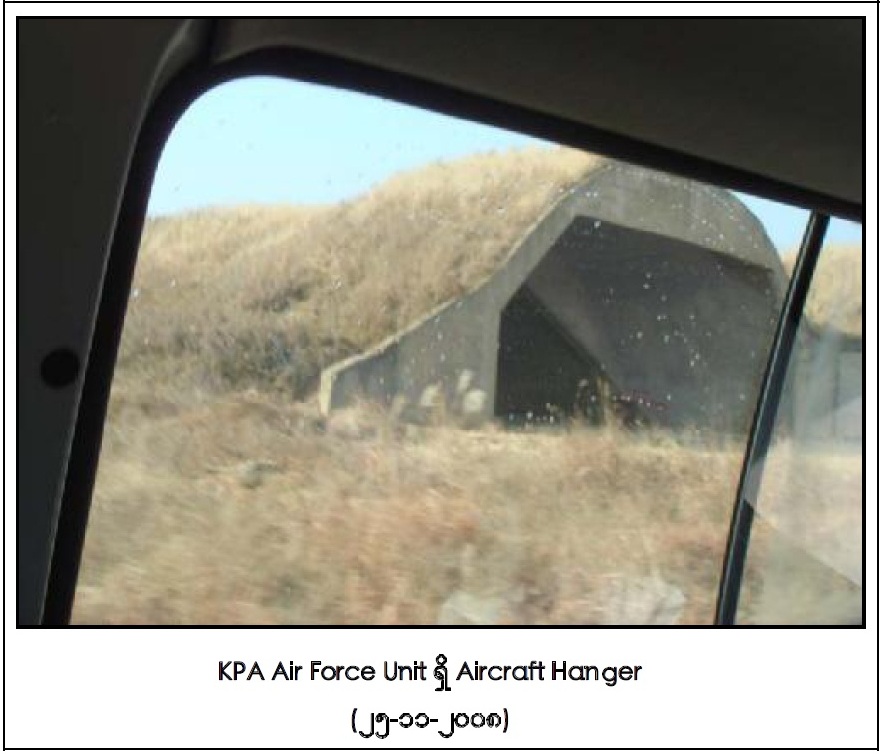
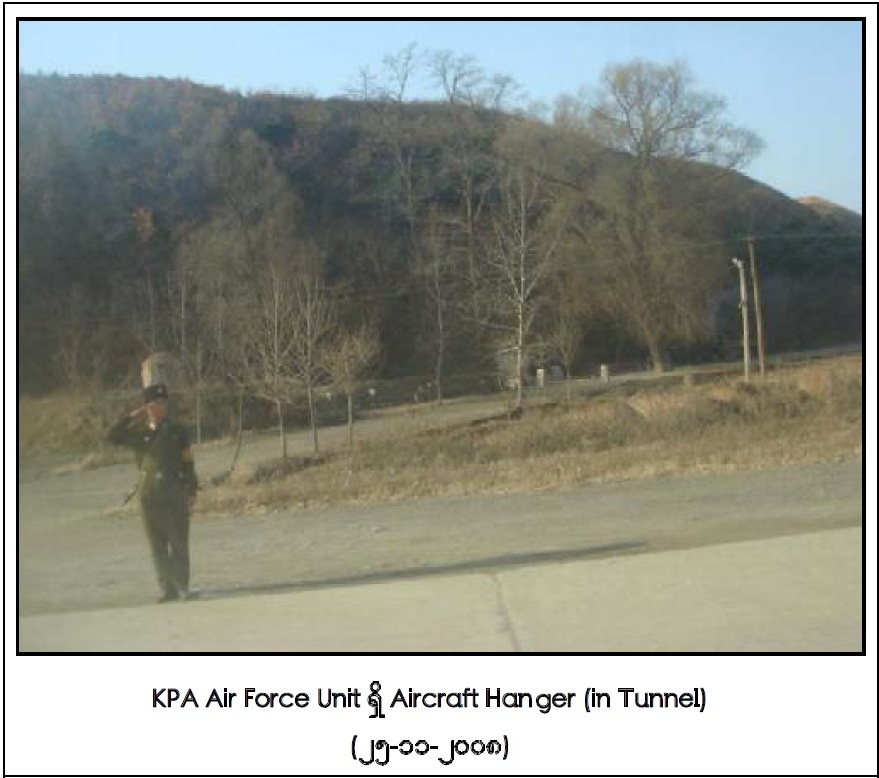
Myanmar military delegation’s visit to DPRK in 2008

July 28th, 2010

I stumbled on a set of photos taken by a Myanmar military delegation which visited the DPRK to shop for military accessories.  The visit was from Nov 21-28, 2008, but there are no KCNA stories which report on the visit.  I am not sure how the pictures made it out of Myanmar, but I am sure somebody got into trouble (UPDATE: See Tad in the comments).  They have been in the public domain for some time I gather, but I had never seen them until recently.

I received the photo set in PDF format with Burmese captions.  The image resolution was not great.  You can see the original PDF here. I had the photo captions translated and matched up with a publication of the group’s membership and itinerary and I even took the time to locate some (though not all) of the group’s destinations on Google Earth. You can see the photos and translated captions here (PDF). It is a large file, so give it a minute to download.  Apologies for any grammatical mistakes in this document.  There are some small typos which I could not be bothered to fix.  I relied on friends (and friends of friends) for all the translation work, but I believe it is all reasonably accurate.

Surprisingly, many of the stops on the delegation’s visit were typical tourist locations: Myohyangsan, West Sea Barrage, Tower of the Juche Idea, Arch of Triumph, Puhung and Yangwang Metro Stops.  But below I identify some of the more unique shopping destinations.

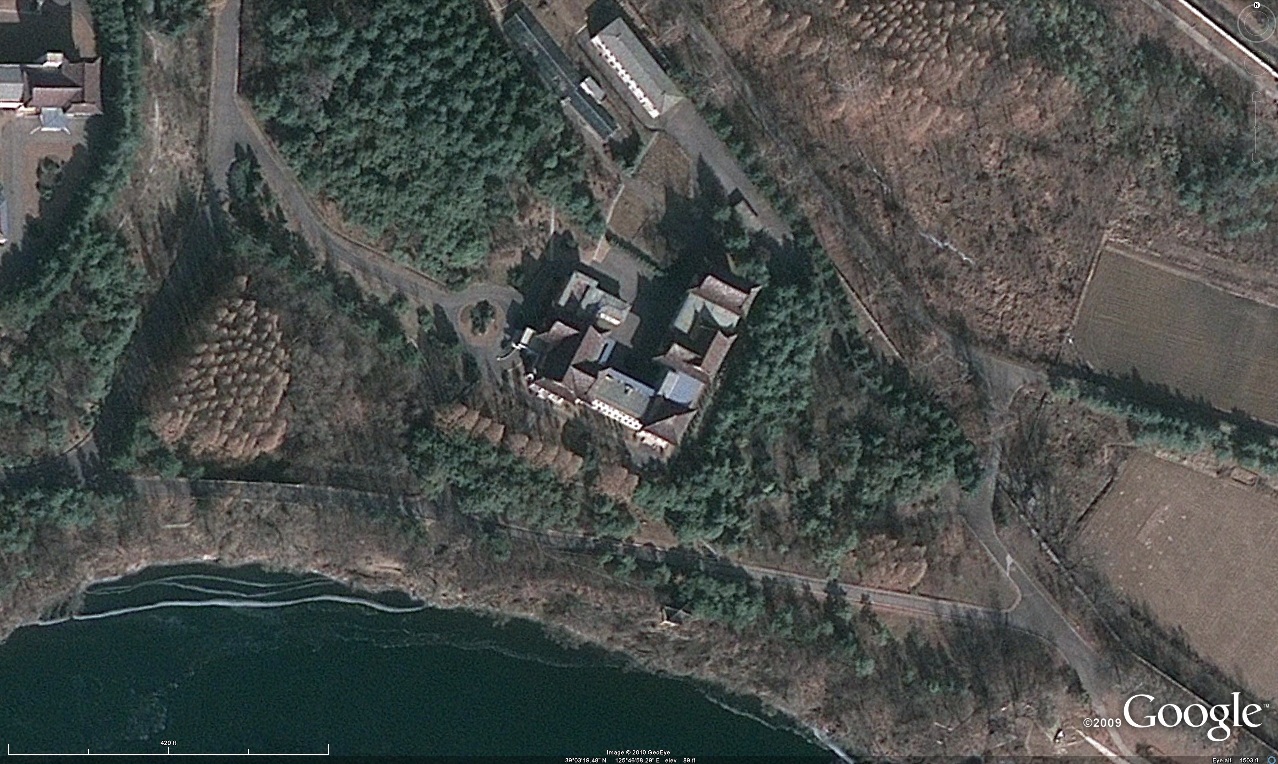
1. The Myanmar military delegation stayed in a “special hotel” for dignitaries behind Kamsusan Palace.  Previous guests have included the former King of Cambodia.  Below are frontal and satellite images:
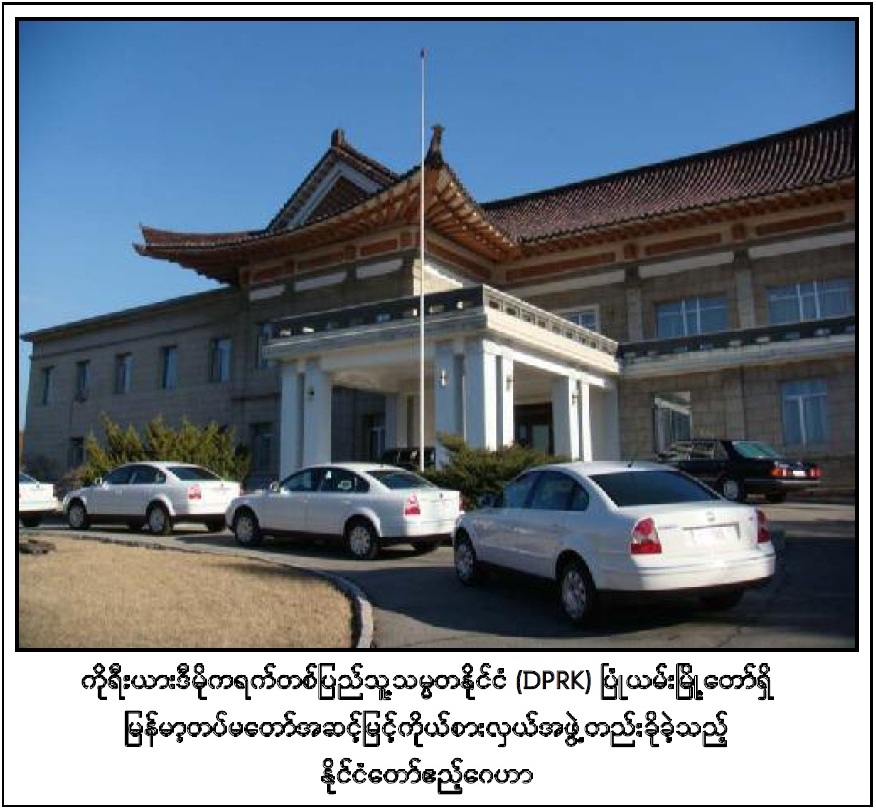
myanmar-delegation-hotel.jpg myanmar-delegation-hotel-satellitel.jpg

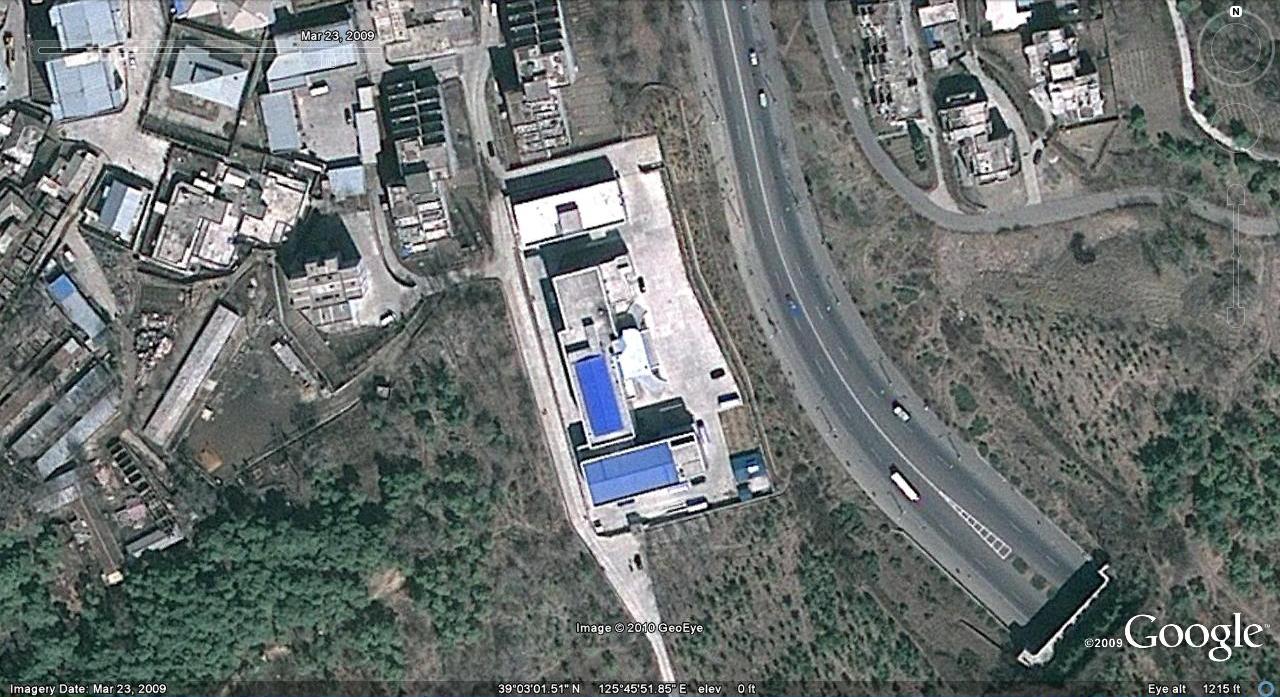
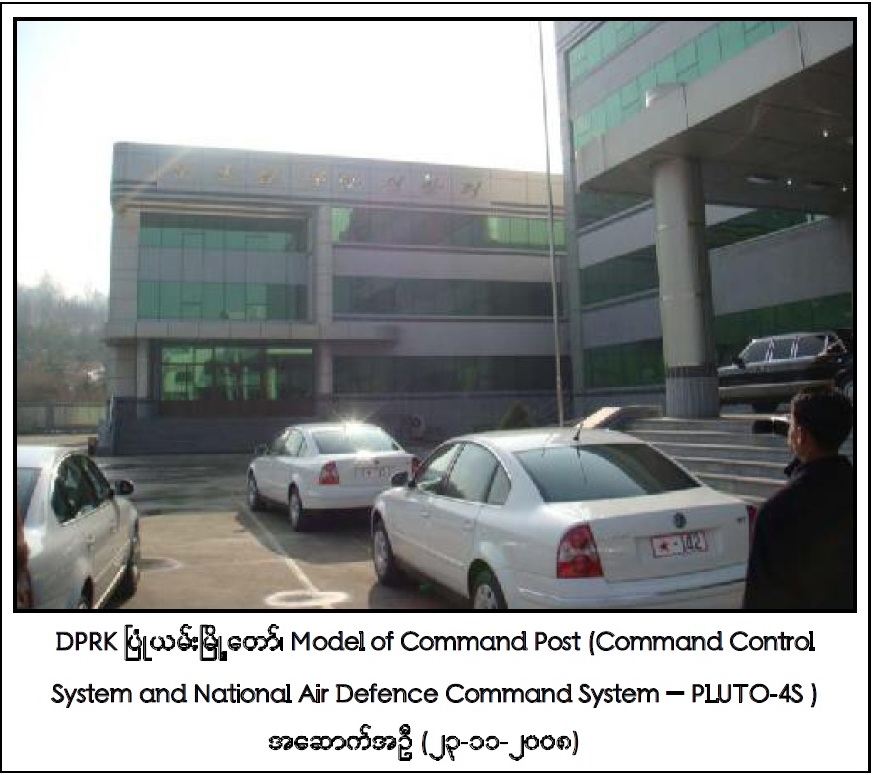
2. The delegation visited a facility called the “Model of Command Post”  (Command Control System and National Air Defense Command System – PLUTO – 4S).  Judging by the satellite imagery, this is a new facility.
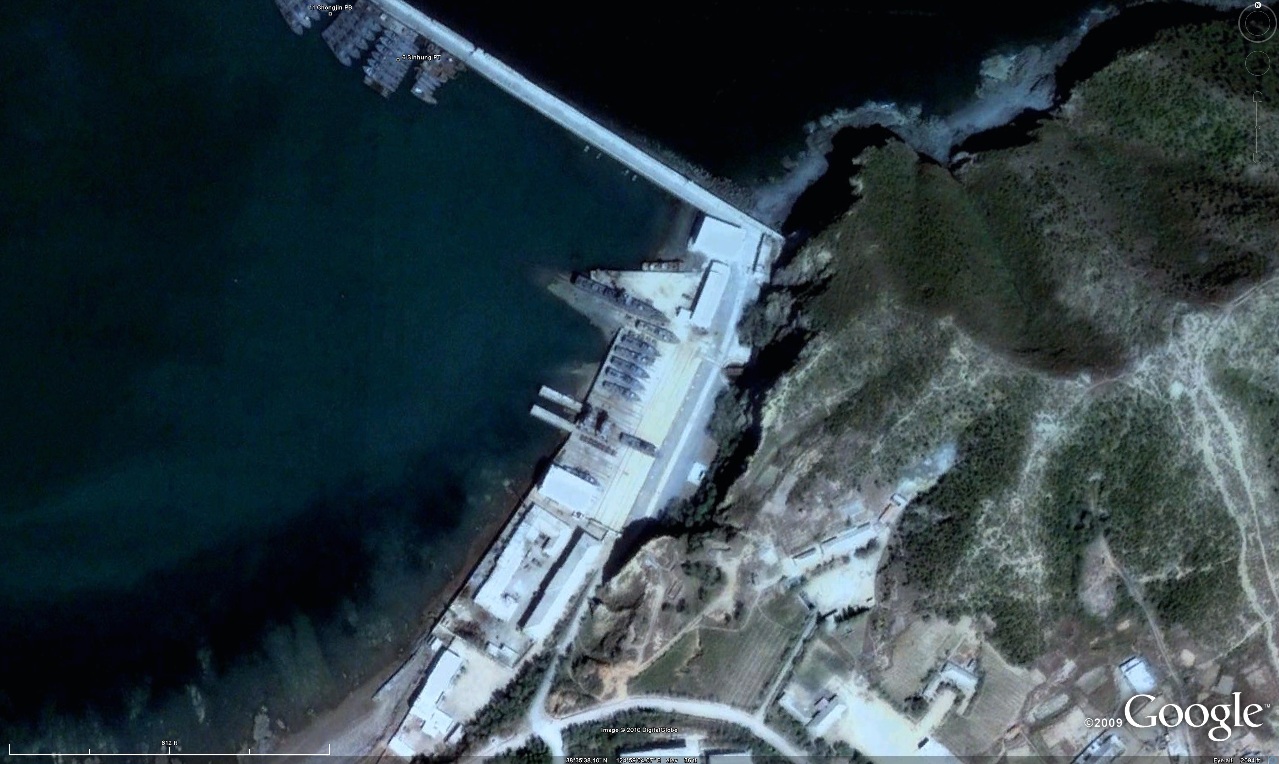
3. Judging from the pictures, the delegation seems to have visited the Pipagot Naval Base near Nampo. The South Koreans allege this base was involved in the sinking of the Cheonan.  We are not given this location in the pictures but we do know that the group was near Nampo at the time and that the pictures and satellite imagery of Pipagot are consistent.
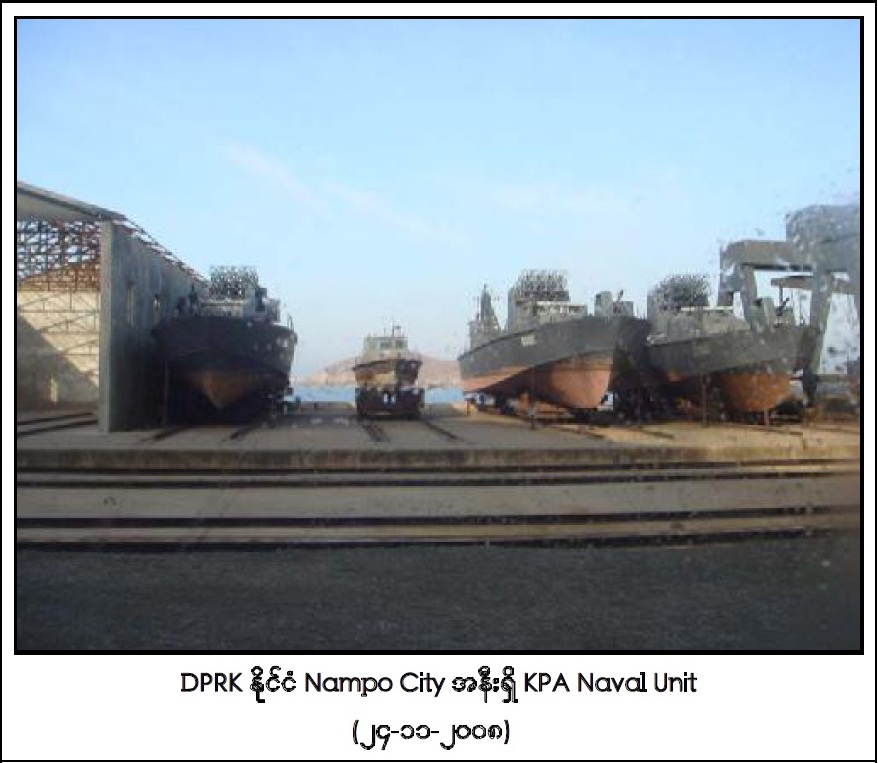
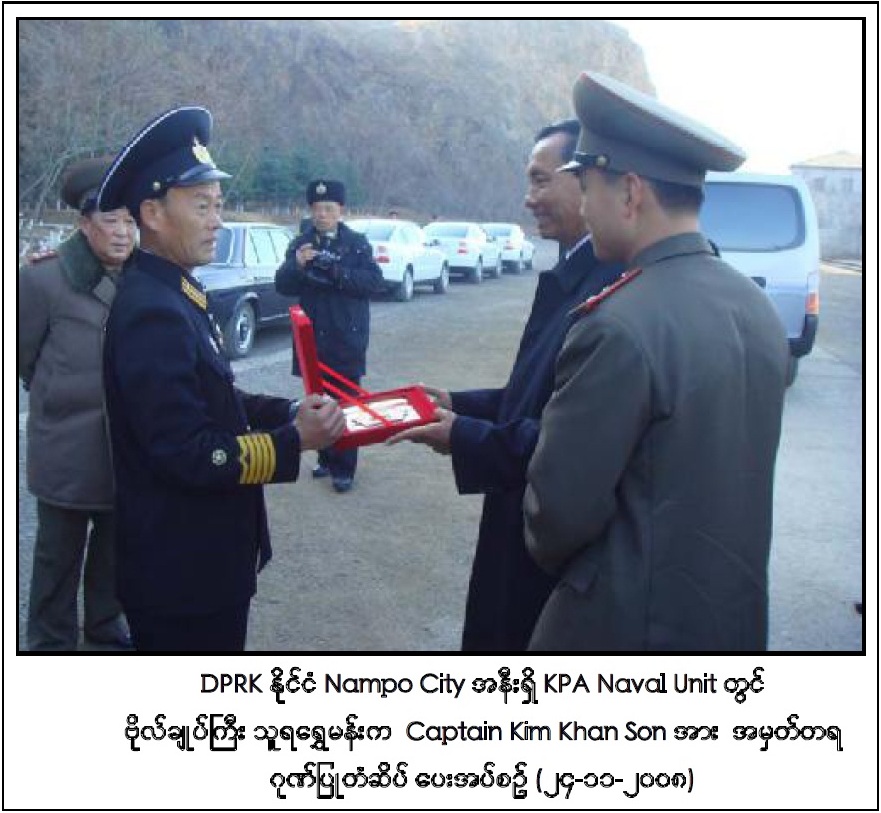
myanmar-delegation-pipagot-1.jpg myanmar-delegation-pipagot-2.jpg myanmar-delegation-pipagot-satellite.jpg

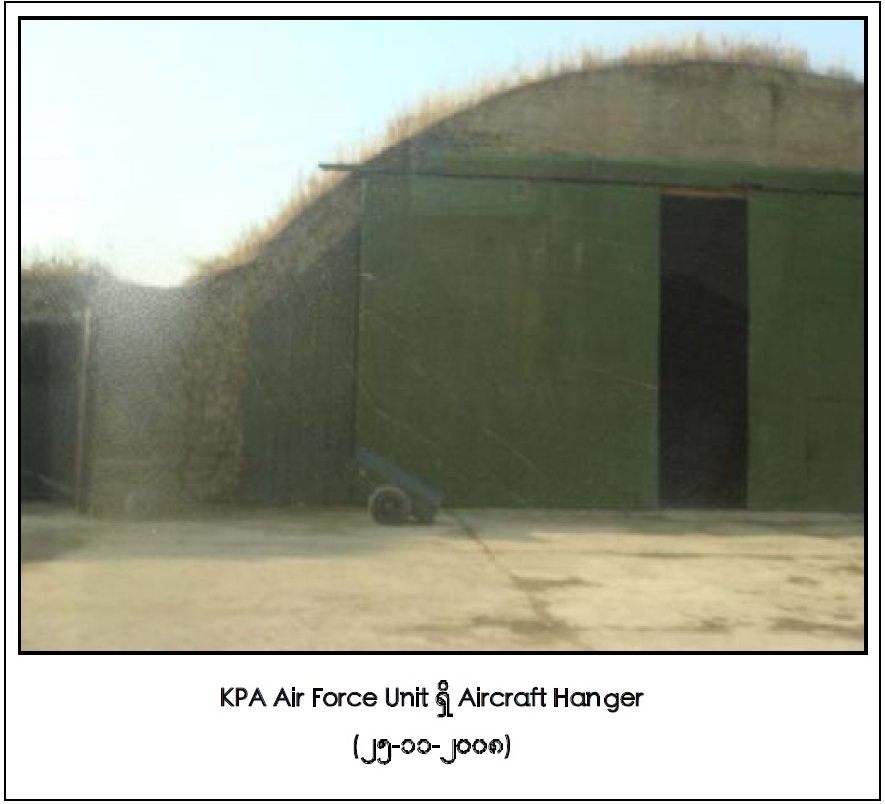
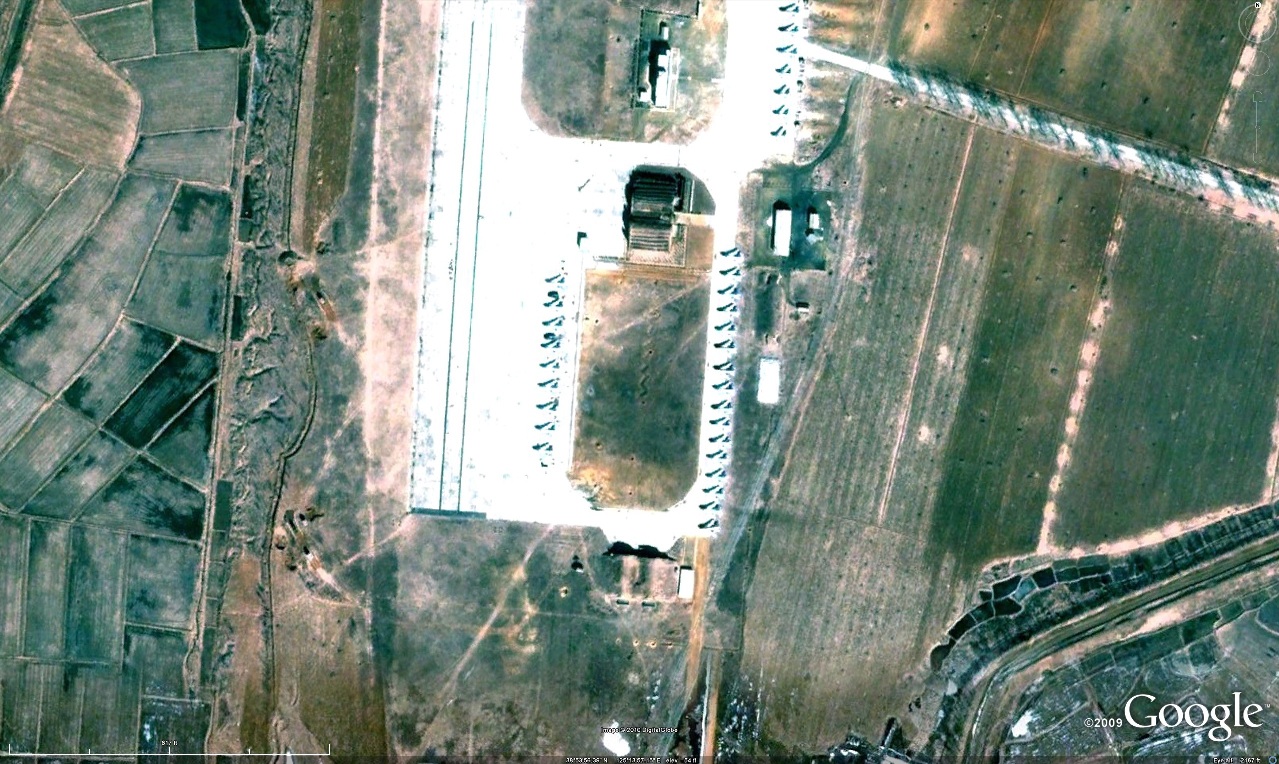
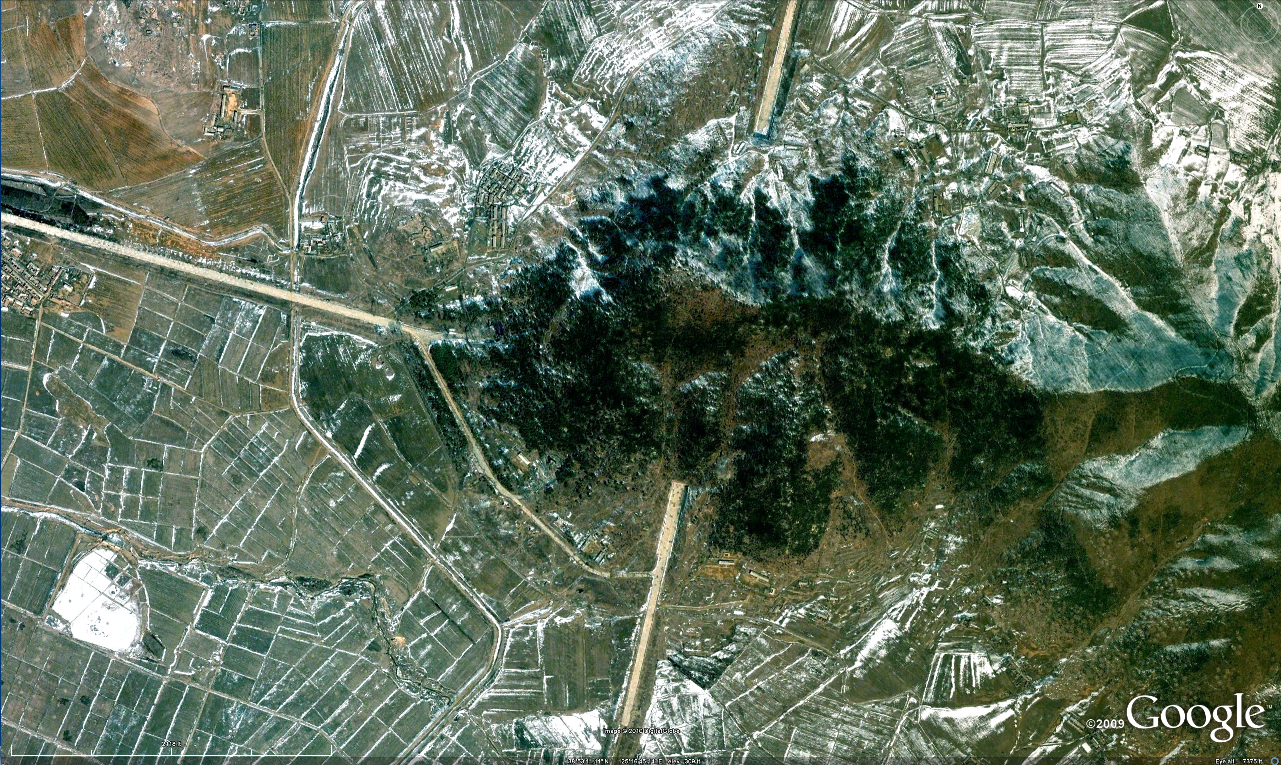
4. I believe that the pictures also confirm the Myanmar delegation visited the Onchon Air Force Base.  Again this is because we know the group was near Nampo, the photos and the satellite imagery of the area are consistent, and in the fourth photo below, the Burmese language caption acknowledges the existence of Onchon’s underground aircraft hangar.
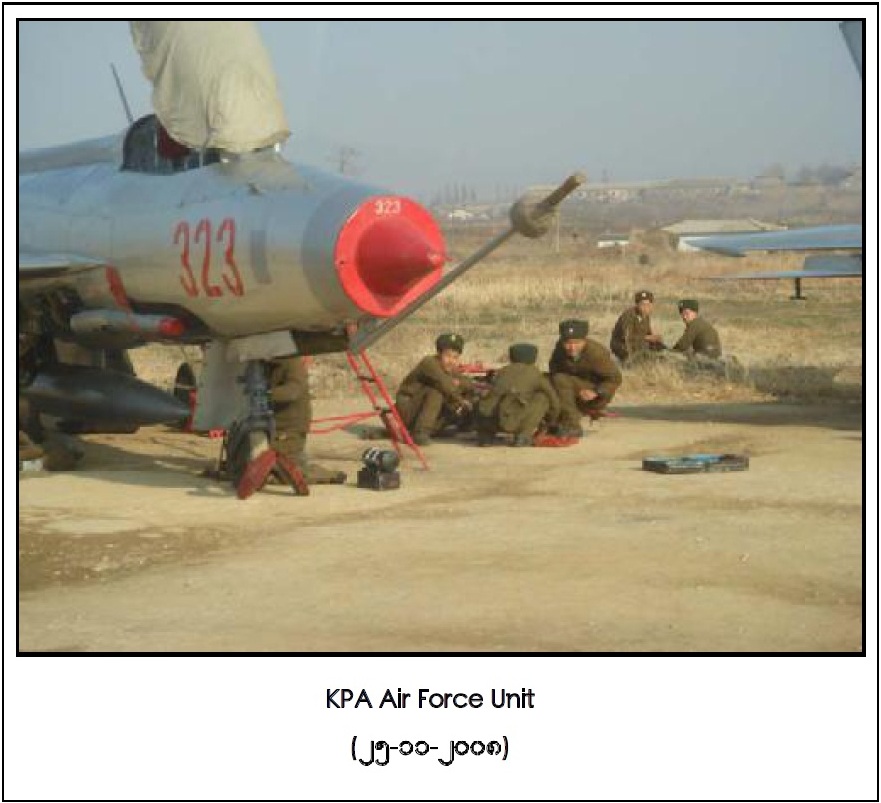
myanmar-delegation-onchon-1.jpg mynamar-delegation-onchon-2.jpg myanmar-delegation-onchon-3.jpg

myanmar-delegation-onchon-4.jpg myanmar-delegation-onchon-satellite-1.jpg myanmar-delegation-onchon-satellite-2.jpg

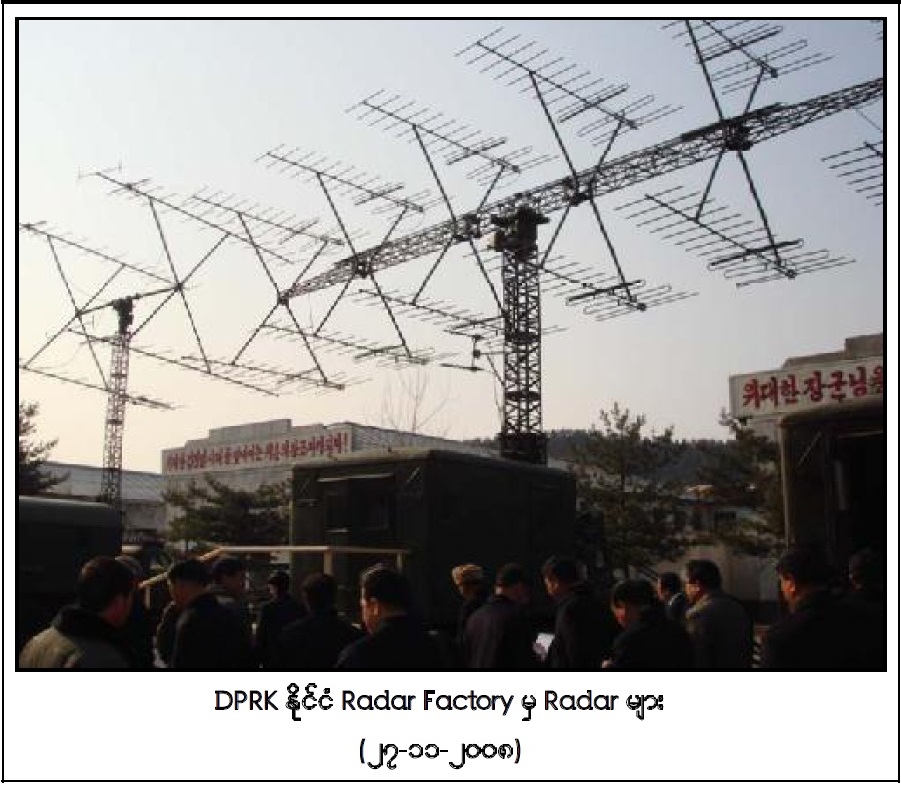
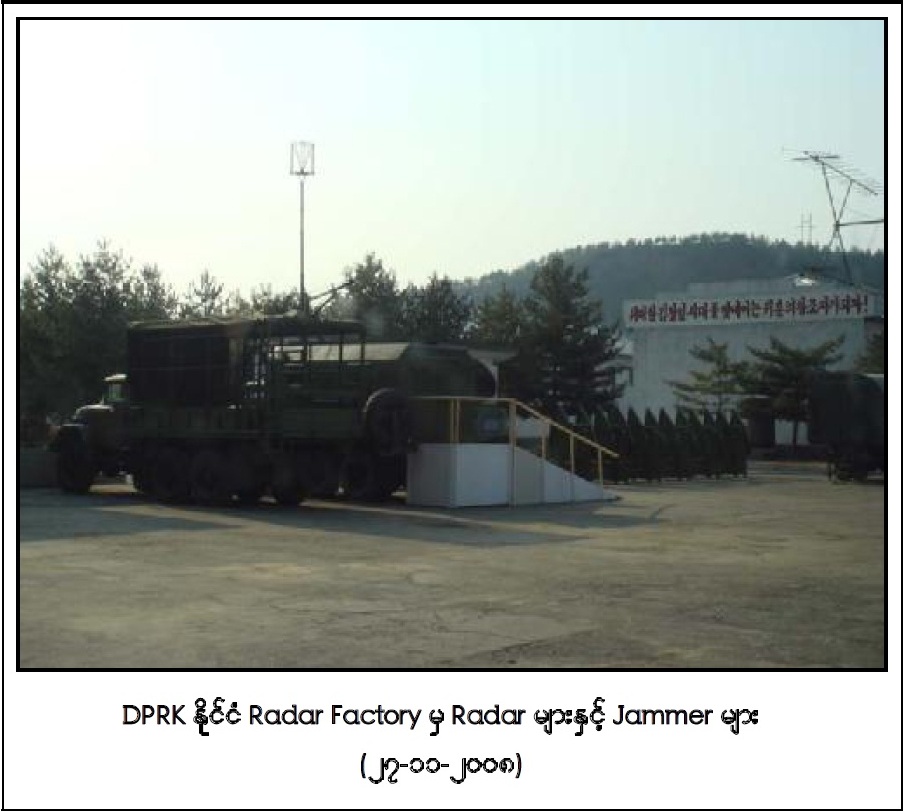
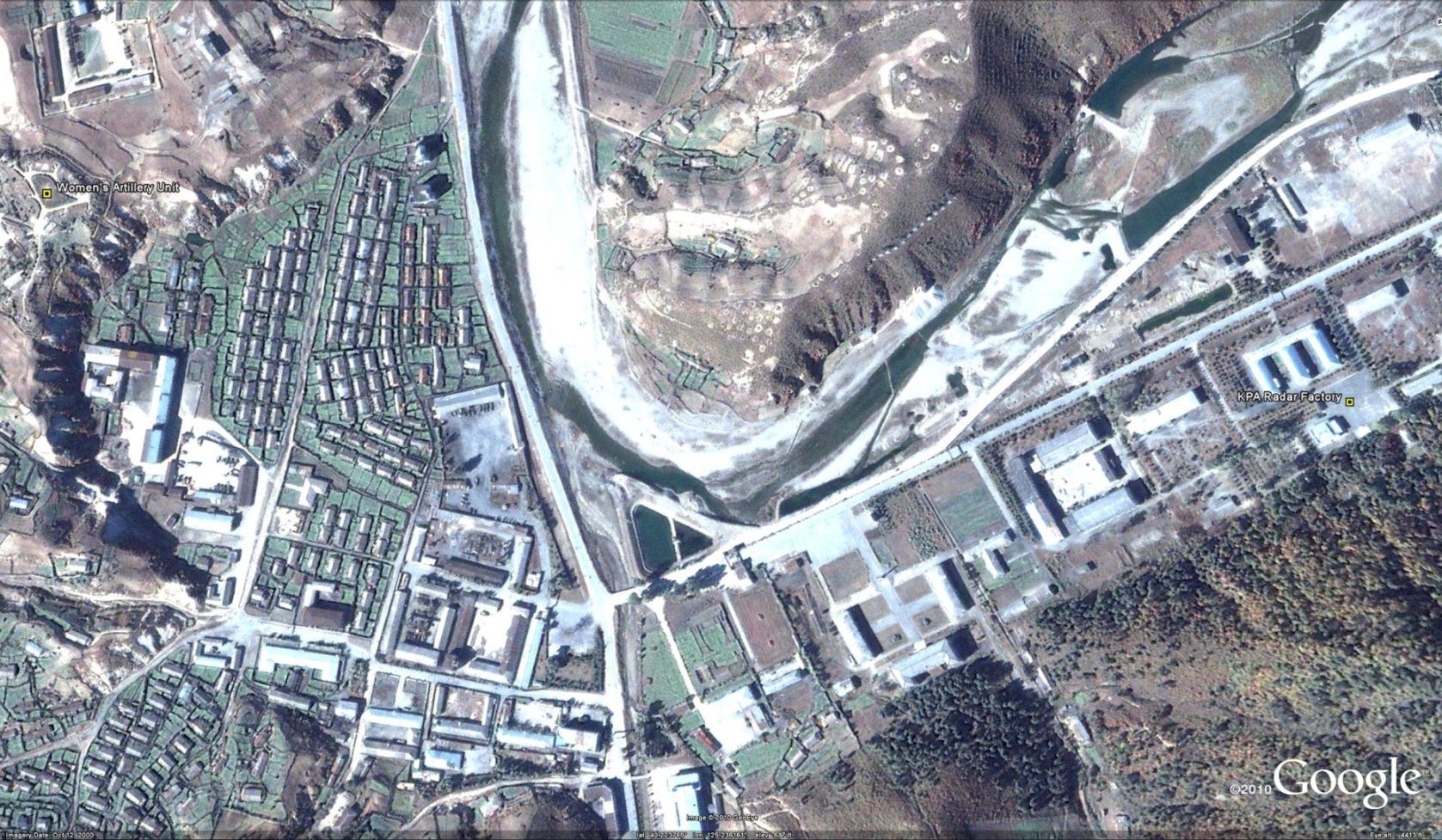
5. And finally, the photos claim that the delegation visited a number of facilities in a place called “Tackwon”:  A Women’s military unit, AA ammunition factory, anti-tank-laser-beam-guided-missile factory, radar factory, and Igla factory.  This location is is actually Taegwan (Daegwan, 대관) in North Pyongan Province (40°13’10.48″N, 125°13’27.32″E).  Of all the facilities mentioned in the itinerary, the only one from which we have ground-level photographs is the “Women’s Artillery Unit” and the  “Radar Factory”.
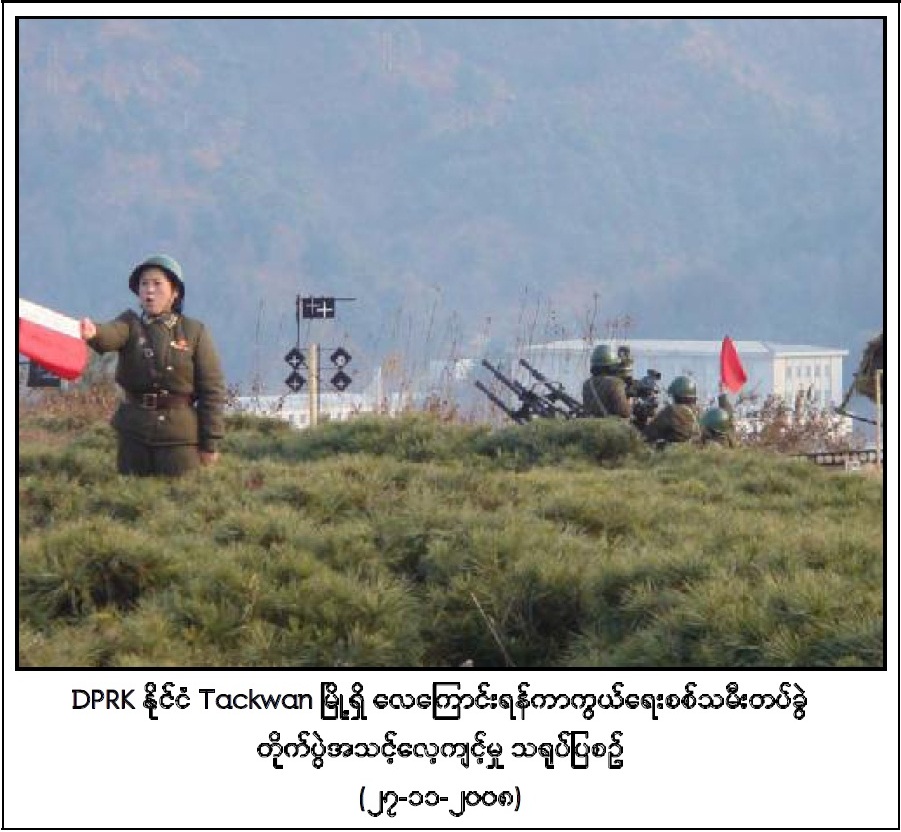
myanmar-taegwan-1.jpg myanmar-taegwan-2.jpg mynamar-taegwan-3.jpg

As of 12/8/2010 the imagery for this location is in high resolution on Google Earth and we can now pinpoint these locations.  The “Women’s Artillery Unit” is located at 40.218949°, 125.231670° and the “Radar Factory” is located at 40.228778°, 125.237964°.  They are pictured on the left- and right-hand sides of the following image:
Share

Air Koryo launches Shanghai-Pyongyang flights

July 28th, 2010

By Michael Rank

North Korea’s Air Koryo has begun twice-weekly direct flights between Shanghai and Pyongyang, a Chinese website reports.

The flights will run each Tuesday and Friday until October 5, leaving Shanghai at 1700 hours, arriving Pyongyang at 1950 and leaving Pyongyang at 1300 hours with the arrival time in Shanghai given rather vaguely as 16 hours.

It quotes the Korean Travel Agency as saying many Chinese [so-called] volunteers want to visit North Korea for the 60th anniversary of the Korean war, while August-October is the Arirang [Mass Games] season, so now is the time to come.

The report also says there is strong interest in visiting North Korea in eastern China around Shanghai, but it until now passengers had to change planes in Beijing or Shenyang which added to the cost and was inconvenient.

It says the first flight was on July 16 and gives the flight numbers as JS522/21. It also gives phone numbers, etc for tourists interested in booking a seat.

Share

ROK raises barriers to trade with DPRK

July 28th, 2010

According to Yonhap, the South Korean government is subsidizing firms as they transition away from trade with North Korean firms:

South Korea will provide low-interest loans worth a total of about 60 billion won (US$50 million) to companies troubled by a government ban on trade with North Korea, an official said Monday.

The loans are aimed at alleviating the financial trouble of the companies, which started when South Korea implemented a ban in May in retaliation for the March 26 sinking of its warship near the Yellow Sea border with North Korea, Unification Ministry spokesman Chun Hae-sung said in a briefing.

“Each company will be eligible to receive a loan of up to 700 million won with a 2 percent interest rate, based on the volume and type of trade the companies have been doing for the past year,” he said, adding the measure will take effect next week.

Hundreds of companies had to stop trading with North Korea after South Korea announced that a multinational investigation found the communist state responsible for the Cheonan sinking, which claimed the lives of 46 sailors.

Yonhap also reports  South Korean companies operating in the DPRK will once again be banned from shipping goods and materials for consignment trade with the DPRK from early next month:

The application deadline was set for Aug. 10, when the temporary lift of the existing ban will end, the ministry said.

On May 24, South Korea prohibited all shipments to the North as part of punitive actions against the communist neighbor it blamed for a deadly torpedo attack on one of its warships. The March 26 sinking in the Yellow Sea killed 46 sailors.

More than 500 hundred South Korean companies were doing consignment trade with the North, in which they send raw material and bring back processed goods. Such trade amounted to US$254 million in 2009.

Seoul’s shipment ban seriously affected South Korean businesses operating at the North’s border city of Kaesong, where some 120 firms from the South operate manufacturing lines using the North’s relatively cheap labor costs.

The companies’ complaints forced the government to temporarily lift the ban, on condition that the business contracts were made before May 24.

Read the full stories here:
S. Korea to offer loans to companies banned from trading with N. Korea
Yonhap
7/26/2010

S. Korea to re-impose ban on materials shipments to N. Korea after temporary lift
Yonhap
7/28/2010

Share

DPRK seeks to repay debt in ginseng

July 28th, 2010

UPDATE: This story was picked up by the Financial Times (8/11/2010):

North Korea has offered the Czech Republic 20 tonnes of ginseng in lieu of payment for some of its debts.

However, Prague has turned down the deal, instead suggesting that Pyongyang pays in the valuable mineral zinc, which can be resold on international markets.

North Korea owes the Czech Republic $10m from the days when the Czech Republic was under communist rule and the two countries traded with each other regularly. Communist Czechoslovakia was a leading supplier of trucks, trams and machinery to North Korea, creating a large pile of debt.

Pyongyang reportedly offered $500,000 worth of ginseng, a root which is reputed to boost memory, stamina and libido, as a down payment.

However, consumption of ginseng in the European country is low, with just 1.4 tonnes used each year.

North Korea’s economy is struggling as international sanctions tighten and it hopes to be able to barter its way out of handing over valuable cash.

Non-cash transactions between socialist countries is common, with Cuba sending Venezuela doctors in exchange for discounted oil.

A Czech government spokesman has said that the countries were in negotiation over how the debt would be paid.

“We have been trying to convince them to send, for instance, a shipment of zinc,” the deputy finance minister told the MF Dnes newspaper.

ORIGINAL POST: According to the Korea Times:

North Korea has offered to pay its debt to the Czech government with ginseng, according to a local Czech daily newspaper.

MF DNES, a daily newspaper based in Prague, reported last Saturday that North Korea has recently suggested to the Czech Finance Ministry that it would pay 5 percent of its debt — approximately $500,000 — with ginseng.

“We are trying to persuade them (North Korea) to give us, for example a bulk of Zinc instead, so that we could sell it to someone else,” Tomas Zidek, deputy finance minister, told the newspaper in Czech.

North Korea is believed to have a significant amount of zinc in deposits.

The paper went on to say the consumption of ginseng in the Czech Republic is very small, and it only imported 1.4 tons last year. The amount of ginseng worth $500,000 will be roughly 400 tons, securing the supply for more than 200 years.

But, to Czech’s disappointment, North Korea seemed to have made up its mind, as it sent a delegation with samples of ginseng.

North Korea is known to be Czech’s 10th biggest debtor, which goes back to the communist governments. The North bought many trams and vehicles from former Czechoslovakia.

Read the full story here:
North Korea wants to pay back debt in ginseng
Korea Times
Kim Se-jeong
7/26/2010

Share

Complex organization of North Korean companies

July 27th, 2010

According ot the Choson Ilbo:

Hong Kong government investigators have inspected an office in the territory belonging to North Korea’s Taepung International Investment Group as part of U.S.-led financial sanctions against North Korea. Taepung is charged with attracting foreign investment to the North.

Investigators say that the company registered itself under the address Rm.# 2508, Lippo Centre, Hong Kong with the authorities, but the only office at that address is the Law Office of Ho, Wong and Wong.

Companies registry documents obtained by the Chosun Ilbo show a complicated network of related businesses. It was established in April 2006 with parent company Taepung International Investment Holdings owning all of its shares. Taepung is capitalized at 20 million Hong Kong dollars (W3.2 billion).

It registered a company called Saiying, also listed at the Lippo Centre address, as its corporate secretary, which serves as a bridge with the Hong Kong government. China Deals Finder, which was in turn registered as the corporate secretary of Saiying, also has the same address.

The parent companies of both Saiying and CDF are registered under the same address in tax haven the Virgin Islands. They are paper companies capitalized at 50,000 and 10,000 dollars respectively and have shifted addresses, board of directors and secretaries several times. The law office of Ho, Wong and Wong handled the reporting of each change.

“It appears that Taepung turned to the aid of a legal expert to conceal the identity of its true owner and make it difficult to track its financial activities,” said a financial expert in Hong Kong.

The Hong Kong government has stressed its intend to comply with UN resolutions  According to Yonhap:

The government of Hong Kong affirmed its commitment Friday to continue implementing punitive U.N. sanctions imposed on North Korea to end its nuclear ambitions.

“Hong Kong will continue to exercise vigilance in enforcing our regulation to effectively implement the United Nations Security Coucil sanctions against DPRK,” Josephine Lo, an official at the Commerce and Economic Development Bureau of the Hong Kong government, told Yonhap News, using the North’s official name, the Democratic People’s Republic of Korea.

“Our law enforcement agencies will take appropriate actions on those found in violation of the laws,” she said.

The comment was made after U.S. Secretary of State Hillary Clinton’s announcement Wednesday that the U.S. will hit North Korea with a new set of sanctions to punish it for its sinking of a South Korean warship and prevent it from further provocations.

Those sanctions will “strengthen our enforcement of U.N. Security Council resolutions 1718 and 1874” adopted after North Korea’s first and second nuclear tests in 2006 and 2009, Clinton said at a joint press conference in Seoul after a meeting with South Korea’s foreign and defense ministers.

Hong Kong legislated what is called the U.N. Sanctions Regulation in June 2007 to implement the U.N. Security Council Resolution 1718, according to Lo.

In January, Hong Kong amended the regulation to implement the new and expanded sanctions against North Korea under the Security Council Resolution 1874, she said.

A source here said earlier Friday that the United States has identified about 200 bank accounts with links to North Korea, and that the country is expected to freeze some 100 of those suspected of being used for weapons exports and other illicit purposes banned under U.N. resolutions.

The U.S. State Department said the U.S. will carry out new sanctions within two weeks to cut off money from illicit trafficking of weapons of mass destruction and counterfeit currency or luxury goods flowing into the North Korean leadership.

North Korea has bristled at the announcement of new sanctions and Seoul’s plan to conduct large-scale joint naval exercises with the U.S., claiming the moves pose grave threats to regional peace.

Read the full stories here:
Probe Reveals Elusive Structure of N.Korean Company
Choson Ilbo
7/26/2010

Hong Kong to continue implementing U.N. sanctions on N. Korea
Yonhap
Kim Young-gyo
7/23/2010

Share

Hikes in prices and exchange rates again shake DPRK markets

July 27th, 2010

Institute for Far Eastern Studies (IFES)
NK Brief No.10-07-19-4
7/19/2010

Market prices in North Korea, which had been falling since March, have again begun to grow since the second week of July. This year’s prices have not followed the trends normally seen in the North; usually, prices fluctuate around the April~May lean crop season. According to a Daily NK source within North Korea, rice cost 450-500 won/Kg at the Hyeryeong Market, in North Hamgyeong Province, up until the end of June. However, prices had shot up to 750 won/Kg by July 13. Corn had also risen to more than 400 won/Kg. Along with the rise in prices, the exchange rate for won-to-yuan rose to 150:1, indicating that the value of the North Korean won had plummeted to a very low level.

Since the mid-2000s, as market economics expanded in the North, food prices tended to shoot up during the lean season of April~May every year. After potato and barley harvests in late June, prices again rise until September, when food prices tend to drop in anticipation of fall grain harvests. Because of this trend, most market traders spend November and December concentrating on buying up food stocks, and they then actively sell their food stores after April. Government authorities have also been known to stockpile food at the end of a year in order to resell after April at considerably higher prices. This regular fluctuation of prices also leads most North Koreans to stockpile all the food they can in December and January.

However, with the currency reform efforts enacted last November 30, North Korea’s food prices set off on a very different trend. Because the North Korean authorities closed markets after last year’s currency reform, January rice prices soared to sixty times as much as before the reform measure. Markets were allowed to reopen after February 5, but food prices remained unstable through mid-March. As the food stockpiling that North Koreans needed to do in December was delayed until March, spring sales were driven more by demand than by supply.

At the beginning of April, Pyongyang authorized the distribution of a small amount of food. Residents of the capital city received enough corn to get through May and June, and these rations, along with rumors of food imports following Kim Jong Il’s trip to China, helped stabilize prices. However, this stability faltered after less than two months. Anticipated Chinese food imports never materialized, and authorities discussed food shortages. In May, North Ham Province party officials released an order titled ‘Each unit is to resolve the food problems in the latter half of the year’. The lack of food and confidence circulating even at government levels again undermined market stability.

A continually soaring exchange rate also drove up prices. The won-to-yuan rate had climbed to 110:1 by June, and in late July has risen to 150:1. North Korean prices rise with the exchange rate, so without food price stabilization measures from the government, food costs will likely continue to grow.

Traders in Hyesan, Yanggang Province have more freedom to trade than most in North Korea, and are permitted to cross over into China once every two weeks in order to purchase goods to sell in North Korean markets. However, prices in the region continue to grow as demand cannot be met, due in part to the rising exchange rate that makes it increasingly expensive to import Chinese goods.

In the aftermath of the currency reform, North Korean authorities have released some food originally slated for military use and enacted measures to force down prices in an attempt to sooth the public. But, these attempts provided only temporary stability, and cracks are again appearing under the weight of rising exchange rates.

North Korea is planning to hold the first meeting of Party leaders in 44 years, and the state media has been emphasizing the economic successes of Kim Jong Eun in order to shore up support for him. Despite the press, however, average citizens in the North only see rising prices. Recently, due to the harvest season, Hyesan markets have been open only between 3:00 and 7:00 in the afternoon. Despite the limited hours, when doors open there is no apparent crackdown on prices or on the use of foreign currency, and markets are operating freely. However, since increasing numbers of North Koreans find themselves broke after the currency reform, sales are still slow.

The North’s economic situation is likely to get worse. Flooding during the July-August rainy season could have a detrimental impact of fall harvests. Farms already suffered from frosts in the spring, raising expectations that this year’s harvests will be lean. If fall harvests are light, concerns over food could grow, further destabilizing the food markets. Food prices are expected to continue to rise, and if this inflation impacts other goods, as well, disturbances such as those seen in January are likely to occur.

Share

Leaked US military docs accuse NK of proliferation to al-Quaeda

July 27th, 2010

UPDATE (8/9/2010): The Washington Post hosted a discussion on this topic which was interesting:

Michael Scheuer, a former CIA analyst who once ran the agency’s bin Laden unit, doubts that the Taliban has bought North Korean’s version of the Stinger.

It doesn’t need them, he says.

“They have the weapons from non-North Korean sources, but why bother using them?” he said. “They are beating the U.S. and NATO with a smaller array of weapons than they needed to drive out 40th [Soviet Red] Army, so why use the stockpiled weapons if we are going to beat ourselves?”

Even if the Taliban has them, says Gary Berntsen, a former CIA officer in Afghanistan, the rebels would risk their lives every time they turned them on.

Instead, he said, “They have, and try to use, dishkas,” Russian heavy anti-aircraft machine guns “that can knock down a helicopter with troops.”

As soon as a spy reports the rebels dragging one forward for an attack, he said, NATO forces’ electronic ears and eyes start looking for it.

“It’s a dangerous game of cat and mouse,” said Bertnsen, who has returned to Afghanistan as a military adviser in recent years but is now the Republican candidate for the U.S. Senate in New York.

Of course, the report of the North Korea visit by Hekmatyar and bin Laden aide Amin al-Haq (or ul-Haq) might well have been false — or even fabricated to implicate Pyongyang, some sources said.

As one former senior CIA officer put it, “You are right to distrust information on this topic, since every serious intelligence organization in the world, and certainly our own, is probably engaged in disinformation as part of a general psy-ops program.”

Hekmetyar, he pointed out, could “get in touch with the North Koreans without a traceable trip to Pyongyang, like by sending an emissary to [their] embassy in Islamabad or some other Third World country nearby, including Iran.”

When the first reports of the helicopter shoot-down arrived in 2007, word spread in intelligence circles that the culprit was an Iranian-supplied weapon, one person familiar with the incident recalled. It was a time when hardline elements in the Bush administration were pushing for regime change in Iran, he noted.

A military intelligence officer also theorized the report was fabricated, but by different parties, for a different reason.

“My thoughts are that perhaps the intelligence report might have been provided by a HUMINT [human intelligence] source under the hostile control of either Iran or Pakistan, to deliberately mislead us and turn attention away from them as the providers of such weapon systems and blame the North Koreans.”

The silence of the Taliban missiles, in short, remains a mystery.

Except, perhaps, to U.S. military officials in Kabul, who sound grateful.

“There’s been no recent activity suggesting that these weapons are a threat,” an unidentified U.S. official told CNN, “as attested by the volume of our daily air activity and the causes of aircraft incidents, which we report.”

ORIGINAL POST (6/27/2010): According to the Washington Post:

A powerful Afghan insurgent leader and a man identified as Osama Bin Laden’s financial adviser purchased ground-to-air missiles from North Korea in 2005, according to an uncorroborated U.S. intelligence report released by Wikileaks on Sunday.

“On 19 November 2005, Hezb-Islami party leader Gulbuddin Hekmatyar [sic] and Dr. Amin [no last name], Osama Bin Ladin’s financial advisor, both flew to North Korea departing from Iran,” the undated report said.

“While in North Korea, the two confirmed a deal with the North Korean government for remote controlled rockets for use against American and coalition aircraft,” said the report, whose origin could not be determined from the version published on the Wikileaks site.

Wikileaks had previously said it planned to strip any markings from the documents that might help U.S. law enforcement agencies identify who leaked them.

The intelligence report said, “The shipment of said weapons is expected shortly after the New Year,” meaning the beginning of 2006.

The terms of the deal were not reported.

“The two men stayed in North Korea for two weeks, returning to Helmand, Afghanistan around Dec. 3,” the report said. Hekmatyar proceeded to eastern Afghanistan.

Then, about 18 months later, according a previously undisclosed after-action military report obtained by Wikileaks, a CH-47 Chinook helicopter was downed by a missile “shortly after crossing over the Helmand River.”

“The impact of the missile projected the aft end of the aircraft up as it burst into flames followed immediately by a nose dive into the crash site with no survivors,” the May 30, 2007 report added.

“Based on description of launch, size of round, and impact force of the projectile,” the report said, “it is assessed to be bigger then an RPG [rocket propelled grenade] and possibly a Surface-to-Air Missile.”

It added, “Witness statements from (troops) suggest (it) was struck by a MANPAD and is consistent with MANPAD event described by Arrow 25.”

The name of the alleged Bin Laden financial adviser who went to North Korea, “Dr. Amin,” could not immediately be found in media reports, scholarly papers or books. If such a man exists, he would be the latest of several individuals identified as filling that role over the years.

Nor could any previous reports linking North Korea to the Afghan insurgency be immediately located.

If true, it illustrates the length to which North Korea will go to kick the United States — and generate cash for its sanctions-strapped economy, experts said.

“If they are a paying customer, that would help the North Korean cash flow,” said one of them, Terence J. Roehrig, a professor of national security decision-making at the Naval War College who has written about North Korea. “Arms sales are an important source of income for the regime.”

The United States and and South Korea are conducting joint naval maneuvers in a show of force to North Korea. Pyongyang has vowed to respond with “a sacred war and a powerful nuclear deterrence.”

Read the full story here:
Wikileaks documents: N. Korea sold missiles to al-Qaeda, Taliban
Washington Post
Jeff Stein
7/26/2010

Share

Anti-socialist computer inspections

July 27th, 2010

According ot the Daily NK:

Since June 20, a thorough inspection of overseas media in the areas of the North Hamkyung Province has been conducted. The inspection has focused in particular on word processing software attached to computer operating system like Windows XP and video and audio playing programs.

A source from the North Hamkyung Province stated that, “This inspection has been led by the No. 109 Anti-Socialist Inspection Group, consisting of agents from the Provincial National Security Agency, the Provincial People Safety Ministry and the Provincial Prosecutor Office of North Hamkyung Province. It will continue until August 10.”

According to the source, it shows a change to previous general anti-socialist inspections.

Computer programs are a specific target of the inspection including computers set up at schools and public offices. According to North Korean regulations, only self-developed computer programs are allowed to be used. To this end, the North developed and distributed “Red Star” in the last year, an operating system based on Linux.

In reality most computers are installed with Chinese versions of Windows XP and MS-office. Since most computers in North Korea are imported from China, Chinese versions of the software have spread throughout the country. Once the Korean language packages have been installed on the PC, writing a document in Korean language is possible but North Korean authorities are concerned about the use of Chinese versions of word processing programs based on Chinese language OS tools.

Illegally copied software is being sold at very low prices, around three to five Yuan (0.4-0.7 dollars), in Yanji, China.

The Inspection Group is also concentrating on video and audio programs. As desktop and laptop computers are distributed amongst North Korean individuals, there is concern about South Korean films and music being circulated through external hard drives and USB memory sticks.

In addition to that, it is considered unusual that the Provincial Committee of the Party in North Hamkyung Province organized the Joint Inspection Group. Previously, the National Security Agency and People’s Safety Ministry have been responsible for inspections on anti-system or anti-regime inspections. However, when the case authorities felt they needed to implement an intensive examination of border regions, a joint inspection group was organized not by provincial authorities, but by the authorities in Pyongyang. This consists of agents from the Workers’ Party, the National Security Agency, the People’s Safety Ministry, the Central Prosecutor Office, and the Defense Security Command of the People’s Army.

A source commented that, “Since Kim Jong Il visited his mother’s (Kim Jong Suk) hometown late last year, his focus on the region of North Hamkyung Province, of course, including Hoiryeong has increased. Nevertheless, the Provincial Committee of the Party has been concerned about increased anti-socialist elements like smuggling and crossing the border.”

He went on, “At the same time, preparatory tasks are required in the border province prior to the Delegate’s Conference of the Chosun Workers’ Party, due in September; the first time in forty four years.”

In addition, the effect of the inspection will increase with cross checking carried out by the North Hamkyung Provincial Committee of the Party. Authorities will ensure that agents are excluded from inspecting their own residential area and unit as at least 200 come from areas of the North Hamkyung Province.

The source stated that, “The inspection is filled with rumors that will be difficult to evade, even with money and the right family background. Rewards or promotions will be offered to those inspection agents who carry out the most diligent and principled work. Any agents found to be incorrectly carrying out their duty may be sentenced to labor training camp or, in serious situations, reeducation camps.”

Read the full story here:
North Korea Controls Chinese Windows XP
Daily NK
Yoo Gwan Hee
7/27/2010

Share

Wilson Center NKIDP document readers

July 25th, 2010

The Woodrow Wilson Center’s North Korea International Documentation Project has published some more great document readers compiled from archives in the Soviet Union, USA, ROK, China, Hungary, Romania, Poland and East Germany.

The Rise and Fall of the Detente on the Korean Peninsula: 1970-1974
Download PDF here
A collection of archival documents on inter-Korean, US-ROK and DPRK-Communist bloc relations from 1970 to 1974 compiled in preparation for a 1-2 July 2010 conference.

New Evidence on North Korea
Download PDF here
New archival documents from Russia, China, South Korea, Hungary, Romania, Poland and (East) Germany on North Korean history from 1955-1984.

New Evidence on the Korean War
Download PDF here
New documentary evidence on the Korean War from Russian, Polish and other archives. Compiled in connection with the 16-17 June 2010 conference New Documents and New Histories: Twenty-First Century Perspectives on the Korean War.

A press conference was held at the Truman Presidential Library announcing the release of the latter two Document Readers–which was carried on C-SPAN. You can watch it here.

Share

Official DPRK merchandise

July 25th, 2010

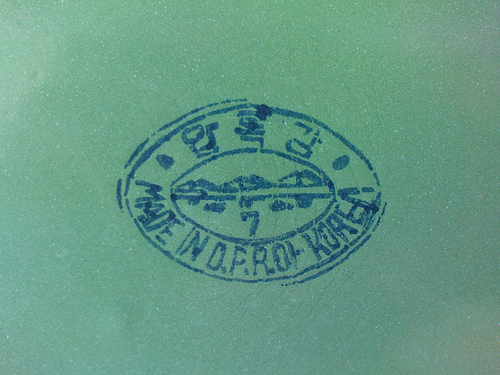
Remember it’s not official DPRK merchandise unless it says “Made in the DPR of Korea” on the bottom.

A woman in Poland  was rummaging through her kitchenware and stumbled on a bowl made in the DPRK:

dprk-logo.jpg

Can anyone translate the Hangul?  “An tuk Gang”?  Maybe the name of the factory?  Mt. Paektu is featured in the logo.  I am not sure what the “7” means.

Henrik offers a better translation of the logo in the comments:

As far as I can see, the stamp says “압록강” which translates as “Amnok gang”, meaning the Amnok (or Yalu) river.

The stamp might actually show the bridge between Dandong and Sinuiju, with boats going under it too.

A further question which a Korea linguist might be able to explain to me is why  “압록강” is translated as “Amnok River” and not “Abrok River”…

Here is a picture of the bowl.  It appears to be a pressed metal sheet with an enamel coating.  They still make bowls this way today in the DPRK.

(h/t MR)

Share