Archive for the ‘International trade’ Category

On the DPRK and Libya in 2011

Wednesday, October 26th, 2011

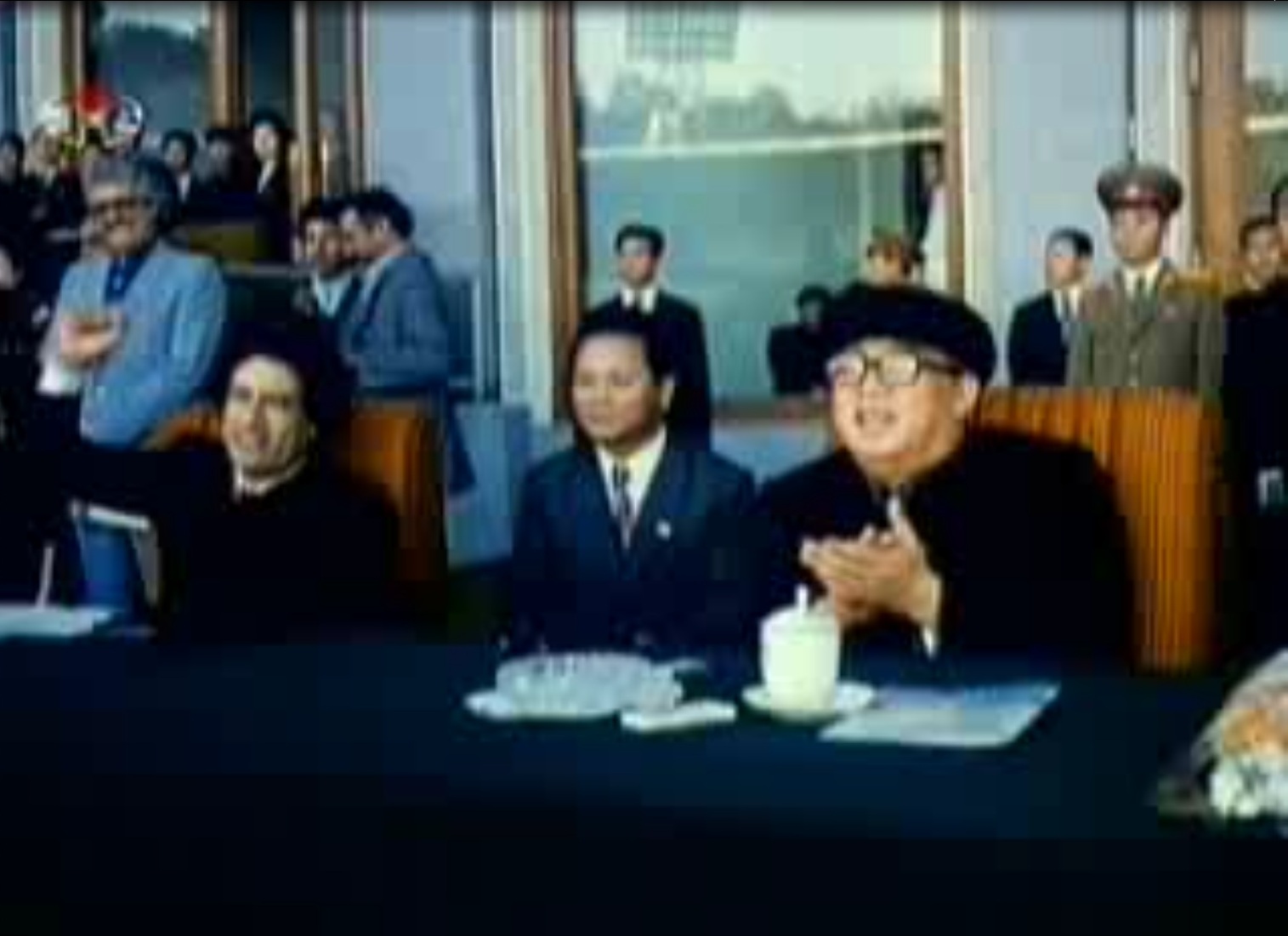
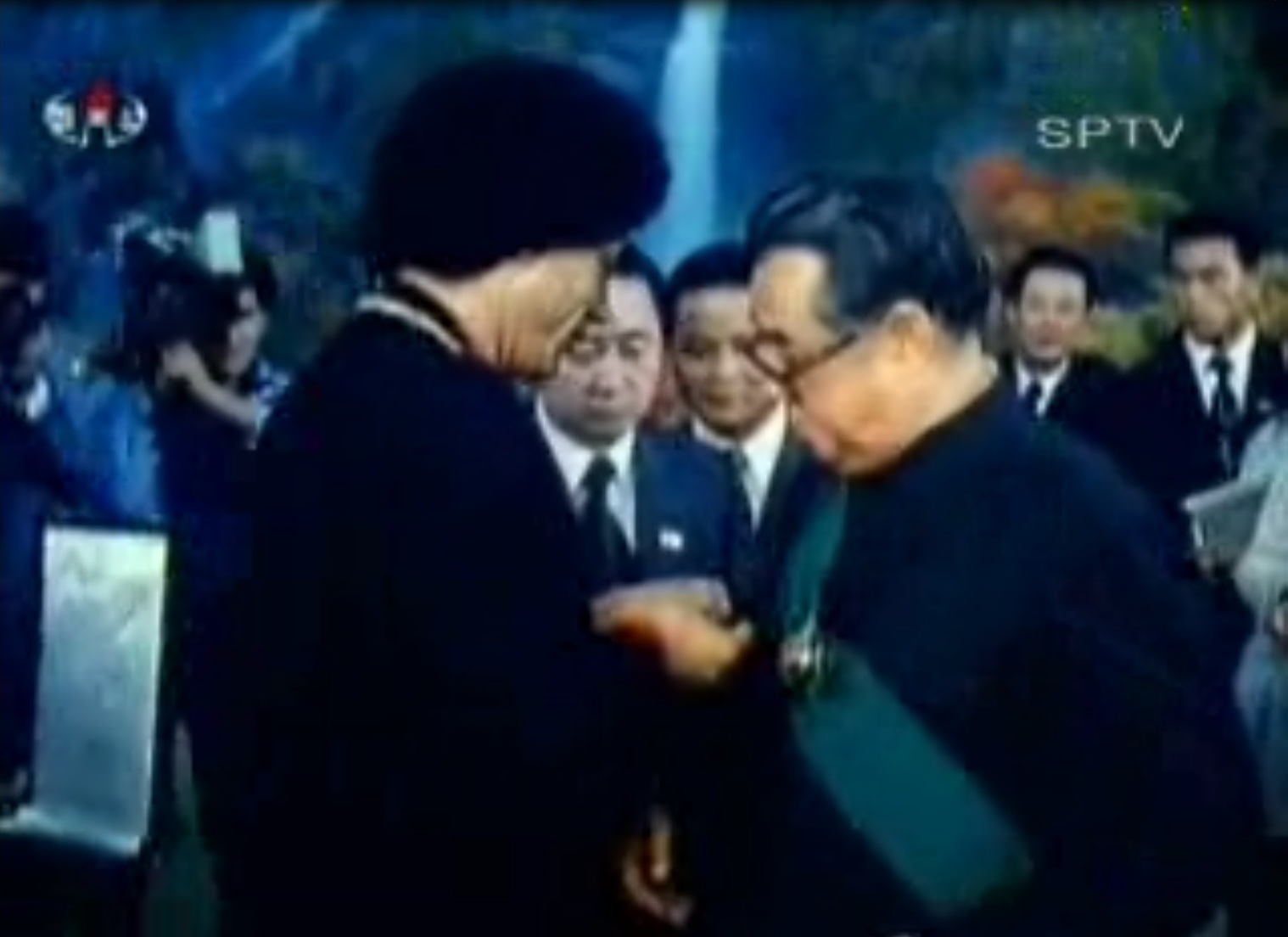
Pictured above: (L) Kim Il-Sung and Muammar Gaddafi attend a Mass Games performance in Kim Il-Sung Stadium, (R) Muammar Gaddafi gives an award to Kim Il-Sung
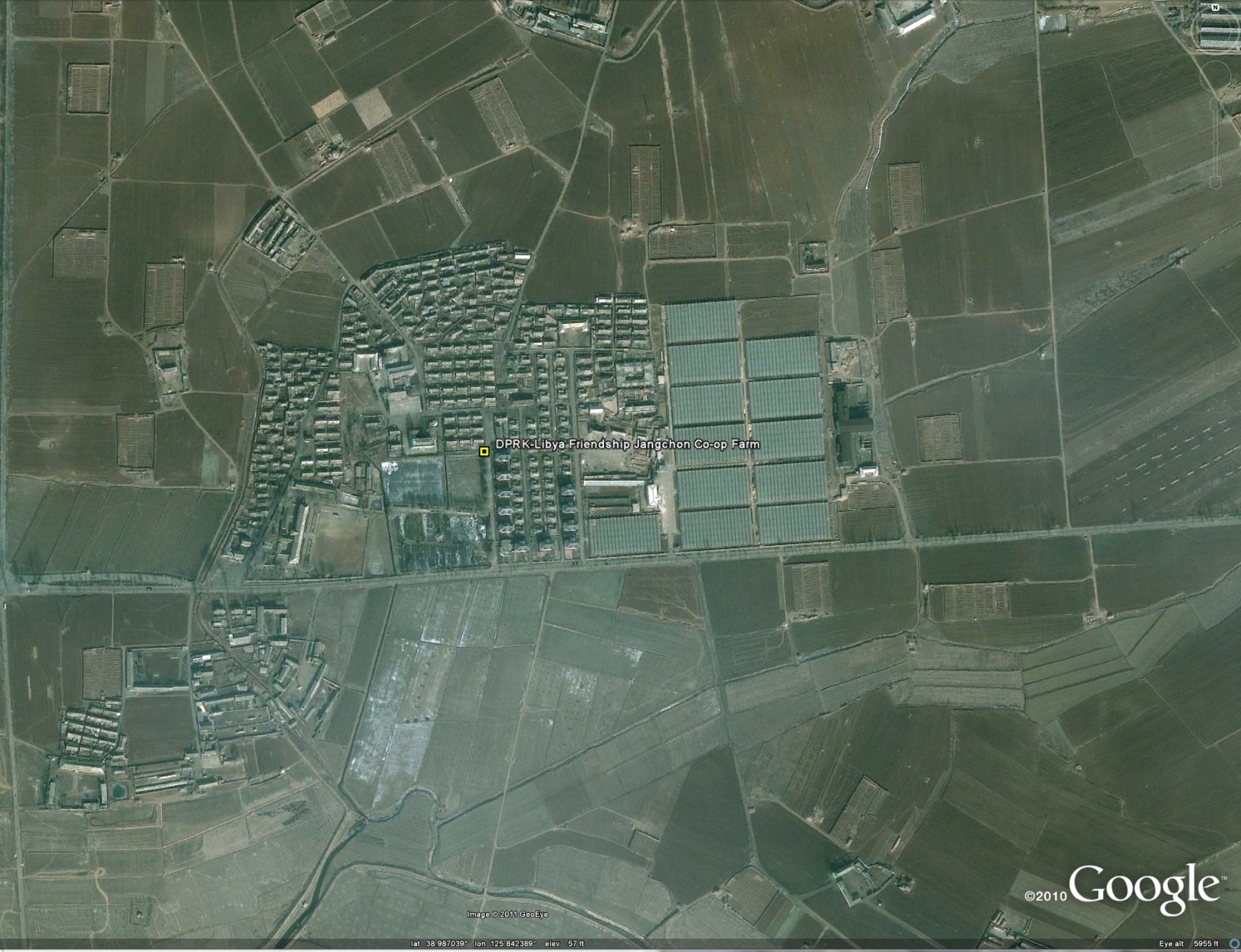
Pictured above (Google Earth): DPRK-Libya Friendship Farm at Jangchon-dong (장천동: 38.987331°, 125.842014°).  More background here.

UPDATE 6 (2011-10-26): Yonhap offers more details on the North Koreans who remain in Libya:

North Korea has banned its citizens in Libya from returning home in an apparent attempt to prevent the popular uprisings in the Arab world from reaching the isolated regime, a source said Wednesday.

About 200 North Koreans have been left in limbo in the war-torn country as Pyongyang ordered them not to return home, the source familiar with the issue said.

The North Korean doctors, nurses and construction workers were sent to the African nation to earn hard currency for their impoverished communist country.

North Korea has also taken similar steps for its officials in Libya, Egypt and other countries, said the source.

UPDATE 5 (2011-8-30): According to the Korea Times:

North Korea has not yet officially recognized the rebel National Transitional Council (NTC) in Libya as the North African nation’s legitimate governing authority, said an official at the North Korean Embassy in Tripoli, Monday.

Asked whether Pyongyang has granted recognition to Libya’s NTC, the official was quoted as saying by Yonhap News Agency, “Not yet … (we’ll have to) wait and see.” The official, who wished to remain unidentified, was speaking to reporters at the North Korean Embassy in Tripoli.

The official also confirmed reports that some 200 North Koreans are currently working in Libya as doctors, nurses and construction workers. With regard to their safety, the official said some have returned home, although others have not been able to leave due to difficulties in transit.

“We will deal with them depending on the circumstances,” the official was quoted as saying.

The North Korean Embassy building has not been looted or damaged in the six-month-long conflict, the official added. In the past week, the South Korean Embassy building and ambassador’s residence in Tripoli were attacked by armed robbers, although no one was hurt in either incident.

Pyongyang has yet to send a new ambassador to Tripoli, after the previous envoy returned to North Korea upon completing his term, the official said.

Between the two Koreas, Pyongyang was the first to establish diplomatic relations with Tripoli in 1974.

“We hope for peace and stability (in Libya),” the official said, adding that future relations between the nations will depend on the North African nation’s stability.

Some 50 to 60 countries, including South Korea, have recognized the NTC since its formation by rebel forces against the regime of Moammar Gadhafi in February.

Read the full story here:
North Korea yet to recognize Libya’s rebel NTC
Korea Times
Philip Iglauer
2011-8-30

UPDATE 4 (2011-5-16): According to the Daily NK, NATO denies hitting the embassy:

“It has been alleged that NATO attacked the embassy; this is simply not true,” NATO said in a statement released on Friday, “While we are aware of media reports that there was damage to the North Korean embassy, we have no knowledge of possible collateral damage.”

The statement came following one released Thursday by the Libyan Ministry of Foreign Affairs, stating North Korean claims that it had incurred damage as a result of a “barbaric, indiscriminate air raid” by NATO.

It described how a bomb exploded in the vicinity of the embassy during the night of May 9th, releasing shrapnel that penetrated the ceiling of the building and broke car windows.

While NATO conceded that it was targeting a bunker in central Tripoli that night, it said that “the embassy was located some 500 meters from the target we struck.”

“Our strikes are precise and while the possibility of collateral damage will always exist, we go to great lengths to reduce such possibilities,” it went on.

Earlier, Libya national television also reported that the North Korean embassy in Tripoli had been damaged during an air raid.

UPDATE 3 (2011-5-12): Libya and China’s Xinhua are reporting that NATO damaged the DPRK embassy in Tripoli. KCNA has not said anything as of now.  According to Xinhua:

Libya’s state television said on Thursday a NATO air strike damaged the DPRK embassy in the capital Tripoli without giving more details.

Earlier reports indicated that the staff of the embassy has been unable to return home during the uprising.

Here is video footage of the embassy.

UPDATE 2 (2011-5-8): North Korea exported nuclear materials to Libya (Korea Herald and VOA):

The nuclear materials found in Libya in 2004 were highly likely to have been produced by North Korea, U.S.-funded broadcaster Voice of America said Saturday, citing an interview with a former senior official of the U.N. nuclear watchdog.

In the interview, Olli Heinonen, the former deputy director general of the International Atomic Energy Agency, said uranium hexafluoride, or UF6 ― used in uranium enrichment in Libya ― was very likely to have been made by the communist state.

Heinonen made the allegations based on North Korea’s purchase of parts to develop nuclear capabilities, information provided by Pakistan and other pieces of evidence.

To the question of whether there is any connection between the North and Syria with regard to nuclear technology developments, he said that that should be further investigated. He added that a nuclear reactor in Syria, which Israel destroyed, was very similar to North Korean reactors, indicating the possible connection between the two states.

The former deputy director general also said there was a good chance that North Korea has uranium enrichment facilities in areas other than the Yongbyon nuclear complex, stressing that IAEA inspectors should visit those facilities, provided they are allowed to do so.

Touching on the possibility of the North abandoning its nuclear programs, Heinonen said that the North could renounce them if the abandonment would lead to its economic development and security assurance.

The six-party talks aimed at denuclearizing the North have been suspended since 2008. China, the host of the multilateral talks, has been seeking to establish a mood for the dialogue while the South is apparently reluctant to see the resumption of the talks immediately as inter-Korean issues, including two deadly attacks last year, have yet to be addressed.

UPDATE 1 (2011-4-10): The DPRK has apparently ordered many of its citizens to remain in Libya and other Arab nations.  According to Yonhap:

North Korea has ordered its people in Libya not to return home, apparently out of fear that they will spread news of the anti-government uprisings in the African nation, a source said Sunday.

In a letter sent to the North Korean embassy in Libya, Pyongyang ordered its people to “follow the measures of the Libyan government” and not return home, said the source familiar with North Korea affairs.

The move sharply contrasts with other countries’ efforts to evacuate their people from strife-torn Libya and demonstrates the Pyongyang regime’s fear of possible revolts triggered by the African nation’s pro-democracy protests of the past few months, according to the source.

More than 200 North Koreans are believed to be living in Libya to earn foreign cash while working as doctors, nurses and construction workers.

Between the two Koreas, Pyongyang was first to establish diplomatic relations with Tripoli in 1974, followed by a cooperation pact signed by Libyan leader Moammar Gadhafi during his visit to the North in 1982.

North Koreans in Middle Eastern nations such as Saudi Arabia, Kuwait and the United Arab Emirates also appear unlikely to be able to return home while anti-government protests continue in the region.

Sources say the North Korean government in recent months has tightened control over the flow of information by strictly monitoring the use of computers, mobile phones, USB memory sticks and other IT equipment.

ORIGINAL POST (2011-3-29): Andrei Lankov writes in the Korea Times about the effects NATO military intervention in Libya might have on the DPRK’s medium-term international relations strategies. According to his article:

Kim Jong-il right now may feel very happy about his wisdom which he demonstrated by stubbornly rejecting denuclearization proposals. Colonel Gadhafi in 2003 did exactly what Kim said he would never do ― Gadhafi agreed to swap his nuclear weapons program for better relations with the West and economic rewards. As we see, it did not help the eccentric strongman. Once his subjects rose in rebellion, the West intervened and chose its military might to assist the rebels.

In private conversations, North Korean officials often say: “Had Sadam had nukes he would still be in his palace right now.” From now on, they probably will add: “And had Gadhafi not surrendered his nukes, nobody would have intervened when he was exterminating the rebels.”

But what is the likely overall impact of such thinking on the North Korean actions? If anything, it increases the already high probability of another nuclear test and/or missile launch. The preparations for such undertakings have been underway for some time. Now, North Korean leaders might believe that this is a good time to show off their steadily growing nuclear and missile capabilities. This is a way to send a message to the Obama administration, and the message will read like this: “Mr. President, we are dangerous and its better not to get involved with us even if we do something which is not to your or anybody’s liking”.

At the same time, it’s now less likely that North Korea will attempt a major provocation aimed at South Korea. Until recently, one could be almost certain that in the near future (in April or May, perhaps), the North would repeat what they did with frigate Cheonan and Yeonpyeong Island. Now they will probably think twice before making another attack.

While the attacks on Cheonan and Yeonpyeong Island are usually described as “provocations” this is essentially a misnomer. “Provocation” describes an act whose goal is to elicit an irrational and/or excessive reaction from the target of the incident. It was clearly not the case with the Cheonan or Yeonpyeong attack. The North attacked under the assumption that the South would not react in a meaningful way and would be incapable of inflicting any serious damage on assets valuable to the North Korean leadership (the lives of rank-and-file soldiers do not belong to this category).

North Koreans are aware that currently the South Korean public and government are in an unusually bellicose mood. They therefore expect a massive retaliation to follow in the event of another attack. Until recently the North Korean leadership probably anticipated that the South Korean retaliation would be limited, since neither the South nor its major ally, the United States, would do anything which might lead to an escalation of an exchange of fire on the border to a full scale war.

Therefore from Pyongyang’s point of view, another military operation made perfect sense. It would be a good way to demonstrate that North Korea is not going to be quiet when ignored. They wanted to show that for Seoul and Washington, it’s essentially cheaper to pay some protection money to Pyongyang (in the shape of aid and concessions) than to deal with the ever-present possibility of a North Korean attack and related sense of tensions and instability.

However, the recent developments in Libya might have changed the equation ― for a while, at least. Libya shows that under certain circumstances the U.S. and its major allies may indeed choose to launch a large-scale military operation. The assumption that Seoul and Washington will avoid escalation seems still to be true, but Pyongyang may have started to have grave doubts about this.

So it is quite possible that the coming spring will be quieter than the present author (and many of his colleagues) have until recently expected. This does not mean that North Korea has turned into a pacifist state, but from the vantage point of Pyongyang it makes sense to postpone their operations against the South and wait for the dust to settle. And of course, by being quiet for a while they can save resources which will be needed to better prepare the next missile launch and next nuclear test.

Though Lankov refers to North Korean officials in “private conversations,” the North Korean foreign ministry made essentially the same claim in a public statement on March 22 (KCNA):

The present Libyan crisis teaches the international community a serious lesson.

It was fully exposed before the world that “Libya’s nuclear dismantlement” much touted by the U.S. in the past turned out to be a mode of aggression whereby the latter coaxed the former with such sweet words as “guarantee of security” and “improvement of relations” to disarm itself and then swallowed it up by force.

It proved once again the truth of history that peace can be preserved only when one builds up one’s own strength as long as high-handed and arbitrary practices go on in the world.

The DPRK was quite just when it took the path of Songun and the military capacity for self-defence built up in this course serves as a very valuable deterrent for averting a war and defending peace and stability on the Korean Peninsula.

Since then, they have published 16 stories about Libya: Demonstration Staged in Russia against US Military Operation against Libya, US Involvement in Libya Protested, AU Chairperson Rejects Military Intervention in Libya, Indiscriminate Use of Arms against Libya Assailed, Algeria Opposes Military Intervention in Libya, Military Operation in Libya Condemned in Russia , Venezuelan President Censures West’s Attack on Libya, Iranian Foreign Ministry Assails West’s Military Operation against Libya, Ugandan President Blasts West for Double Standards,  India Regrets Air Strikes on Libya, AU Demands Stop to Attack on Libya , Russian PM Brands Military Operation against Libya as Invasion, Russia Assails Military Attack on Libya , China Concerned about Libyan Crisis, Russia Opposes Military Attack on Libya , Foreign Forces’ Armed Intervention in Libya Assailed in Cuba.

In fact, there are hundreds of KCNA stories about Libya.  Check them out here (STALIN Search Engine).

The Daily NK, however, reminds us of one the the most important aspects of the DPRK-Libya relationship:

Libyan leader Colonel Muammar Qadhafi has been using weapons purchased from North Korea in his faltering attempt to suppress anti-government protests.

As revealed by South Korean television broadcaster SBS on the 28th, boxes containing rockets and clearly bearing the name North Korea were found in Ras Lanuf following the retreat of pro-Qadhafi forces under NATO air strikes.

The boxes were disguised as parts for bulldozers.

Elsewhere, “64 Machine gun” was found written in Korean on an anti-aircraft heavy machine gun. A similar model of machine gun has been seen many times in images released by the North Korean authorities.

Check out the article for pictures.

UPDATE: Writing at the Wall Street Journal Blog, Evan Ramstad gets a quote from Bruce Bechtol:

“It just goes to show how deeply involved in the arms market (in the Middle East and Africa) North Korea is,” said Bruce Bechtol, a former intelligence officer with the Defense Intelligence Agency in the U.S. who is now a professor at San Angelo State University.

“Their WMD [weapons of mass destruction] proliferation gets lots of attention, but folks often forget that they also engage in a plethora of conventional arms sales,” he said.

Would it be a stretch to assume that The DPRK and Libya have been trading oil for weapons?

Previous posts about the DPRK and Libya here.

This was picked up by RFA.

Share

DPRK air force short on capital

Wednesday, October 19th, 2011

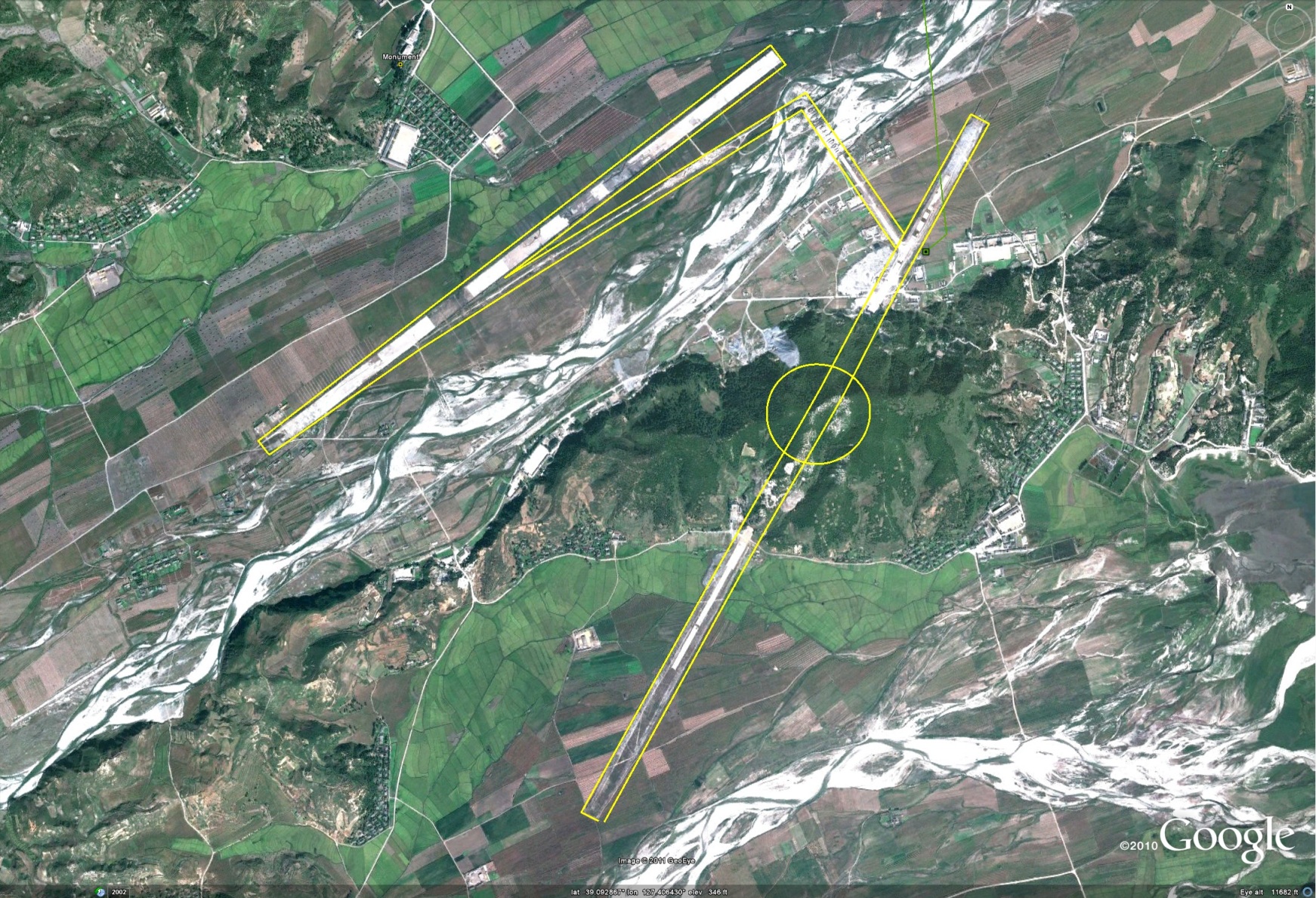
Pictured above (Google Earth): The DPRK’s underground air force base under construction near Wonsan.

According to Strategy Page (2011-10-19):

South Korea recently revealed that North Korea had gone looking for someone to sell them new combat aircraft, and had been turned down by China and Russia. South Korean diplomats were pleased to find this out, and South Korean Air Force officers were not surprised that the North Koreans were desperate to upgrade their air force.
This was it had earlier been revealed that in late 2010, after North Korea artillery fired on South Korea (Yeonpyeong Island), North Korea quickly made preparations for war. These preparations were apparently ordered without much warning. So too, apparently, was the attack on Yeonpyeong Island.

What the South Korean intel analysts were particularly amazed by was the poor performance of the North Korean air force during this hasty mobilization. It was known that North Korean pilots had been getting less and less flying time in the past decade, but when ordered into the air on a large scale for this hasty mobilization, the results were amazingly bad. The flying skills of combat pilots were particularly unimpressive, as was the performance of many aircraft (indicating poor maintenance). There were several crashes, and many near misses in the air, and a general sense of confusion among the North Korean Air Force commanders and troops.

While North Korea was apparently trying to impress, and intimidate, South Korea with this display of aerial might, the impact was just the opposite. With the exception of ten MiG-29s, the North Korean air force consists of several hundred Cold War era Russian and Chinese warplanes. The Chinese aircraft are knockoffs of older Russian designs, and most of the North Korean fleet consists of aircraft designs that were getting old in the 1970s. The North Korean Air Force training exercise merely confirmed what many South Korean and American intelligence analysts already suspected; that the North Korean Air Force could barely fly, and hardly fight.

Neither China nor Russia wants to encourage North Korea to undertake any more such misadventures; thus the refusal to provide new aircraft. Moreover, North Korea is difficult to do business with, often refusing to pay, or delaying payment for a long time. North Korea is not a good customer, and even China and Russia, who supported the north for over half a century, are fed up with North Korea’s increasingly bizarre behavior.

Kim Jong-il visited an aircraft factory in Russia on his last visit there.  See a satellite image of that factory here. Some speculated he was trying to make a deal for the procurement of Russian fighter jets.

Share

North Koreans working in Mongolia

Friday, October 14th, 2011

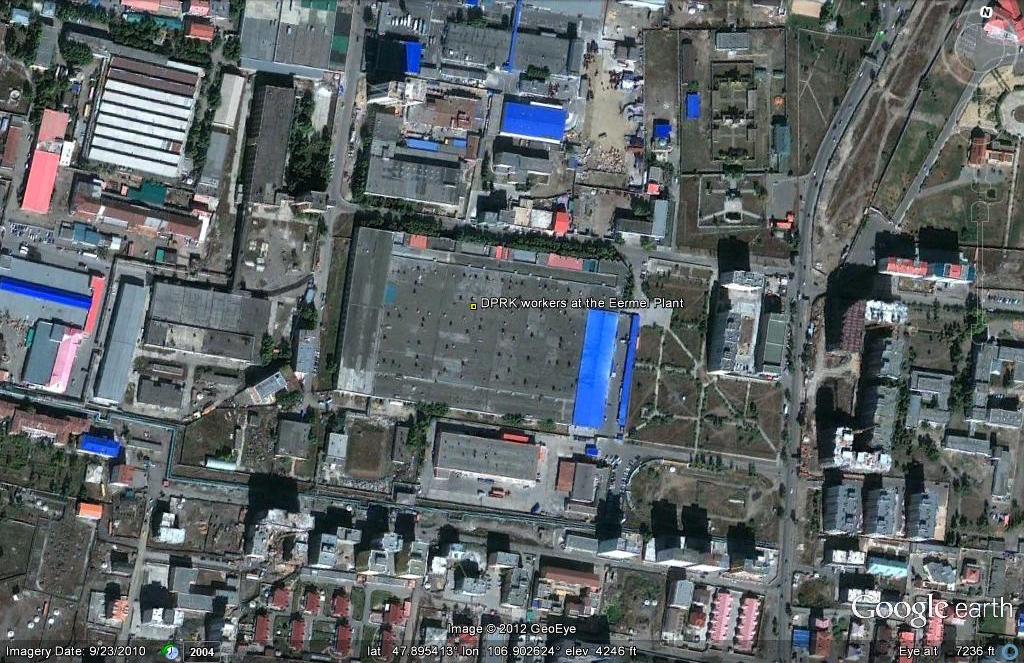
Pictured Above (Google Earth): Eermel Factory in Ulan Bator

Simon Ostrovsky, who produced this BBC piece on North Korean loggers in eastern Siberia, has produced a piece on North Korean workers in the Mongolian capital, Ulan Bator. I have posted his article in The Independent as well as a few related pieces and additional information below.

According to his article in The Independent:

Sitting astride rows of buzzing looms and distinguishable from their colleagues by the white make-up heavily applied to their faces, a few dozen North Korean women in a run-down Mongolian clothing factory are busily knitting garments to please minders from their Communist state.

They are part of a North Korean labour force tens-of-thousands strong, put in place across Asia to help the Stalinist regime meet its financial targets. And British consumers are unwittingly filling the dictatorship’s pockets through these workers, an investigation in Mongolia by The Independent and the investigative journalism project WorldView has found.

Sent in their hundreds, under an agreement between Mongolia and the Democratic People’s Republic of Korea (DPRK), the North Korean workers take jobs on construction sites and in factories across this Central Asian state, where they are closely monitored by overseers from their homeland. Some of them were found to be producing goods for popular UK clothing brands such as Edinburgh Woollen Mill (EWM).

“They’re hard workers, they don’t complain and they get stuck in, they’re quite skilled,” said David Woods, a British textiles professional brought on as a specialist at the Eermel clothing factory in the Mongolian capital, Ulan Bator. North Korea has been able to transplant elements of its highly centralised state to Mongolia, where labourers keep to a tight schedule dictated by their embassy for the duration of their three-year contracts. They also have to seek permission to speak to outsiders, unlike their Mongolian co-workers.

Mr Woods showed a reporter a James Pringle-brand cashmere sweater made for EWM with a £140 price-tag already affixed, ahead of shipment to the UK, as he gave a tour of the factory. He described how its 80 female North Korean employees were housed and fed on site under a scheme managed by North Korea’s embassy, earning up to £200 per month.

Another Eermel employee told The Independent that the women’s labour fed the coffers of the North Korean regime, echoing the North Korean practice across Asia where tens of thousands of North Koreans are estimated to be employed on behalf of their government. “We are paying to Korean workers like Mongolians, the same salary,” said Bayar, Eermel’s director for exports, who like many Mongolians uses only one name. “But… we are transferring the money to the account of the [North Korean] embassy. How they split the salary, we don’t know.”

It’s a surprising move for a regime that regularly tries to keep its citizens in the dark about world events and strictly controls access to information at home. The fact that North Korea has allowed so many of its citizens to leave and glimpse the outside world reflects the severe economic situation the country has faced since the collapse of its one-time sponsor, the Soviet Union, and, more recently, international sanctions over its nuclear-weapons programme. It’s also an example of how Pyongyang has been able to adapt and continue profiting from a globalised economy while keeping most of its population at arm’s length.

In Mongolia, the practice goes back to 2004, according to leaked US embassy cables released by WikiLeaks in August. The cables, penned in 2006, describe how a representative of North Korea, who was “extremely professional in both manner and appearance”, approached a Canadian-owned gold mine to offer workers for $1.50 (90p) per day.

Another 2006 cable says: “The working and living conditions of these labourers raise the concern that they are subject to coercion, and are not free to leave their employment… the DPRK workers are monitored closely by ‘minders’ from their government, and many are believed to be subject to DPRK government pressure because of family members left behind in North Korea. The workers reportedly do not routinely receive direct and full salary.”

North Korea watchers warned that the work-abroad programmes should not be seen as a step by Pyongyang towards more openness. “As far as the regime is concerned, sending groups of people to foreign countries where they don’t speak the language and can be sequestered in barracks or factory dorms is a much safer option than granting to foreign investors in North Korea the kind of freedom and mobility they demand,” Brian Myers, a Seoul-based North Korea analyst, said.

The scheme has been hugely successful with businesses in Mongolia, which are attracted by the North Koreans’ rock-bottom labour costs and an unparalleled work ethic. One of the few countries with warm ties to the Stalinist state, Mongolia has increased its quota of North Koreans allowed to work in the country from 2,200 to 3,000 in 2011, according to the Ministry of Labour and Social Welfare.

The workers are even more popular in Russia, where 21,000 laboured in the first quarter of 2010 alone, according to the Russian migration agency. And many more are believed to be working in China, where the statistics are not made public.

Part of that army of workers are the seamstresses at Eermel, a hulking Soviet-era cashmere factory in the Mongolian capital that produces sweaters and other cashmere garments for the EWM retail chain and a number of lesser-known UK labels including Hush, Moray and Brodie. Clothing racks in Germany, Italy, Australia, Japan and beyond are also stocked with Eermel garments, according to Mr Woods. That means international isolation has not stopped North Korea from tapping global consumer markets.

North Korea’s culture of secrecy makes it difficult to get accurate data on the workers’ contract terms. The private interests using its labour force seem to understand that continued co-operation depends on maintaining the code of silence. After a short phone call to the North Korean embassy, Eermel factory officials refused to allow The Independent to interview any of its North Korean employees.

And at the Mongolian foreign ministry, officials were tight-lipped about how much the North Koreans’ labour is worth to Pyongyang in cash transfers, preferring to focus on benefits to the individual labourers. “For the families of the individuals who work [here] that could be helpful,” State Secretary Tsogtbaatar Damdin said. But when asked if he knew what portion of their salaries the North Korean labourers were allowed to keep, he said: “If they owe some commitments to their county we would rather not intervene in that area.”

The deal could be worth over £7m annually to North Korea if the Eermel factory workers’ wages are representative of those across Mongolia. It’s no small sum when compared to North Korea’s gross national product, estimated by the CIA to equal only $40bn in 2008. EWM, for its part, confirmed that it was supplied by the Eermel factory in Mongolia and that there were North Koreans among the workforce there, but said it was told by the factory that the North Koreans’ wages were paid directly to the workers, not the North Korean government.

The Scottish company quoted Eermel as telling it: “We do not pay any commission to the North Korean government, any North Korean Agency or anyone else. We pay the workers directly.” That stands in stark contrast to what The Independent was told by factory officials in Mongolia. But even though their contract terms are secret and are likely in violation of a raft of international agreements on workers’ rights, the practice has its supporters among North Korea watchers. They believe North Koreans working abroad will share their experiences of the outside world when they return home, perhaps in the long run leading to social and political change within the country.

“It’s every North Korean worker’s dream to be selected [to work abroad],” Andrei Lankov, a professor of Korean studies at Kookmin University in Seoul, said. “They cannot make even remotely as much inside North Korea. And on top of that, they are coming back and they bring knowledge about the outside world. They are closely supervised and they have to be very cautious, because their families back in North Korea are essentially hostages, but… this knowledge in the long run is going to change North Korean society.”

There is evidence that the North Korean workers will go to extreme lengths to avoid going home and live in perpetual fear that their minders will make them do so. “I met one man who broke his arm and was hiding it from his superiors for over a month because he was afraid he’d get sent back to North Korea if they found out about it,” said Koh Kwang Sub, a member of the South Korean business community in Ulan Bator. Mr Koh, who owns a local pharmacy, said he was able to meet workers and hand out medical supplies every few weeks when their managers were away. “It would be nice if they could work here and go back home safely, but they have no medical help and sustain a lot of work-related injuries,” he said.

The fully stocked store shelves and proliferation of mobile phones here must come as a surprise to a first-time visitor brought up to think North Korea is the world’s most advanced nation. Has the realisation led many of the workers to try defecting? “I really can’t talk about that,” said Ha Kyeong Yun, a South Korean entrepreneur who employs 30 North Korean army veterans at his farm in the northern Mongolian town of Sharin Gyol. But the answer is probably that very few, if any, have. “Their hierarchy is very rigid. They’re from the military and they maintain their rank relations.”

It’s also no coincidence that all of the male North Korean workers are at least 40-years old. All have families back home who would pay the price for what amounts to a crime against the state under the country’s system of hereditary discipline.

All of this makes the North Koreans very dedicated workers. At Eermel, Mr Woods said he was very proud of the company’s hard-won relationship with EWM and praised the North Korean staff. “Why they come over from North Korea to Mongolia I’m not entirely certain,” he said. “They work hard and we’re happy to have them here.”

A global market

Mongolia The practice of using North Korean workers goes back to at least 2004. A new deal was signed in 2008 that allowed for more than 5,000 workers to come to Mongolia until 2013. There are currently around 3,000 in the country.

Russia There are some 21,000 North Korean workers in the far east of the country, where they work in logging camps. They reportedly have just two rest days a year.

China No reliable statistics exist, but there are thought to be thousands of North Koreans working in China. The numbers in Dandong, a city close to the border, is said to have soared in recent years.

Here is a related story in the Daily NK.

Here is some information on Eermel (Evseg):

Founded in 1982 and privatized in 1994, Eermel (Evseg TM) is on its way to becoming a strong competitor in the world market of quality cashmere and camel wool products. Today, it is the second largest manufacturer of Cashmire in Mongolia, after Gobi Cashmere Industry.

Presently, Eermel has over 600 workers and has capacity of washing 500.0 tons and de-hairing 90.0 tons annually, making it highly efficient in key segments of Cashmire production. The company now has four production lines of textile, knitting, sewing and quilting, and produces more than 380 different types of end-products available for customers to purchase at prestige stores throughout Mongolia. The company exports dehaired cashmere to Switzerland, China, United Kingdom, Hong Kong, Italy, Japan and the USA, and exports knitted yarns to Japan, Italy, China, United Kingdom and Mexico. Russia continues to be the largest recipient of Eermel Cashmire exports.

In addition to Cashmire, Eermel is Mongolian trading company that trades in coal, cobalt and copper and is also an importer of consumer goods to Mongolia. 50 percent of Eermel’s shares are owned by the everyday workers of the plant.

The company has been selling public shares since November 28, 1992 with the initial price of 100 MNT per 1 unit of stock.

Share

Jordanian bank tied to DPRK illicit weapons trade

Friday, October 7th, 2011

UPDATE (2011-10-10): According to the Jordan Times, the Bank denies any involvement:

The Arab Bank on Sunday stressed that it has never dealt with the government of North Korea or Tanchon Bank, which the US has accused of being the primary financial agent behind Pyongyang’s weapons programmes. “Based on a review of its customer account and transaction records, Arab Bank does not believe that it has conducted business with the government of North Korea or Tanchon Bank,” a spokesperson from the Arab Bank said.

In a diplomatic cable sent by the US State Department to the US embassy in Amman in August 2007, officials warned that the Arab Bank could be unwittingly assisting proliferation-related transfers between Iran, Syria and North Korea. “We are concerned that Iran, Syria and DPRK [Democratic People’s Republic of Korea] proliferation entities are using the Arab Bank network to process what may be proliferation-related transactions,” read the cable, released by WikiLeaks on its website at the end of August and viewed by The Jordan Times.

According to the cable, the US knew that as of 2007, North Korea’s Foreign Trade Bank mission in Tripoli, Libya (FTB Libya) had expanded its role in North Korea’s banking network and was helping Tanchon Commercial Bank, the banking arm of North Korea’s primary weapons trading firm, KOMID, to move funds from both Syria and Iran.

It added that in 2007, FTB Libya provided assistance to Tanchon in making remittances from funds from the sale of unspecified, probably proliferation-related goods in Syria.

“Our information indicates that Tanchon is establishing this new arrangement because Tanchon could no longer remit funds through a route it had previously used. FTB Libya arranged remittance routes for Tanchon from Syria and other locations via intermediary banks… We have information that Tanchon’s financial transfers are conducted surreptitiously by using either aliases or front companies,” the US State Department said in the cable.

The US reportedly claimed that the transfers, which were probably proliferation-related, occurred inside the Arab Bank network and involved both Arab Bank branches and the Arab Tunisian Bank, of which, according to the US, the Arab Bank is a 64.2 per cent stakeholder.

“By processing these transactions, Arab Bank could be unwittingly assisting proliferation-related activities,” read the cable.

In the cable, the State Department called on Jordan to maintain vigilance with regard to Syrian, Iranian and North Korean financial transactions in its jurisdiction to prevent these countries from using deceptive financial practices to further their proliferation-related activities, urging appropriate authorities to investigate such transactions.

The Arab Bank spokesperson told The Jordan Times that the bank has not found any records indicating that Jordanian government officials provided it with information concerning surreptitious efforts by North Korea to move funds through its network.

Citing the cable’s reference to “deceptive financial practices” by North Korea, the spokesperson emphasised that without knowing the details of these efforts by North Korea to conceal its financial transactions, it is not possible for Arab Bank or any other bank to address these allegations with any more specificity.

“As noted in the US State Department cable, Arab Bank is one of the ‘most respected banks in the Middle East’, with a network that spans 30 countries and five continents. The bank maintains a state of the art compliance programme, works closely with banking regulators in all countries where it operates, and has a long history of providing safe and secure banking services,” the spokesperson stressed.

A US embassy official in Amman told The Jordan Times last week that the embassy’s policy is not to comment on WikiLeaks cables.

ORIGINAL POST (2011-10-7): According to the Wall Street Journal:

As it sought to stop North Korea from spreading its nuclear technology, the U.S. uncovered signs in 2007 that the country was channeling funds through a major Middle Eastern bank based in Jordan, one of its closest regional allies, according to diplomatic cables posted online by document leaking website WikiLeaks.

In the cables, viewed by The Wall Street Journal, U.S. officials warned their counterparts in Jordan that North Korea was using Amman-based Arab Bank PLC to receive money from Syria and Iran, circumventing international sanctions.

The U.S. has said, apart from the cables, that it believes Syria purchased North Korean nuclear technology, including a nuclear reactor that Israel bombed in 2007. The U.S. also believes that Iran has acquired long-range missiles from North Korea.

“We are concerned that Iran, Syria, and DPRK [North Korea] proliferation entities are using the Arab Bank network to process what may be proliferation-related transactions,” read an August 2007 cable from the U.S. State Department to the U.S. Embassy in Amman.

The warnings provide a rare glimpse into U.S. efforts to stop North Korea from spreading arms and nuclear technology to its enemies. U.S. officials have said as recently as last month that North Korea is still aggressively establishing a network of front companies through which to secretly sell its weapons and evade sanctions.

“U.S. efforts have helped to spur isolation, but I think there is still a cat-and-mouse aspect to North Korean illicit financial activity,” Juan Zarate, a White House counterterrorism official until 2009, said Thursday.

In the cables, the U.S. said it was concerned that North Korea helped one of its lenders, Tanchon Commercial Bank, which it describes as the “primary financial agent behind the DPRK’s weapons programs,” to funnel money from Syria and Iran through Arab Bank.

The governments of Syria, Iran and North Korea didn’t respond to calls and emails requesting comment. A spokeswoman for the Jordanian Embassy in Washington declined to comment.

The cables said those transactions “have occurred through Arab Bank PLC, one of the oldest and most respected banks in the Middle East.”

Arab Bank said it didn’t believe it had processed any North Korean funds. “Based on a review of its customer account and transaction records, Arab Bank does not believe that it has conducted business with the government of North Korea or Tanchon Bank,” the bank said.

“In addition, Arab Bank has not found any records indicating that government officials provided information to the bank concerning surreptitious efforts by North Korea to move funds through its network,” it said.

The U.S. cables, which were posted at the end of August, suggest that Arab Bank may have processed the purported North Korean transactions unwittingly. They say that Tanchon was conducting its financial transfers surreptitiously using aliases and front companies.

In interviews, current and former U.S. officials said warnings such as those reported in the cables aren’t unusual and don’t indicate that they viewed Arab Bank as a particular cause for concern.

The bank was fined by U.S. banking regulators in 2005 for lacking adequate safeguards to stop money laundering and terrorist financing. Since then, a U.S. official said, Arab Bank has taken major steps to shore up its internal controls and has emerged as one of the more responsible lenders in the region.

The cables don’t say how large the purported transactions were, or their purpose. Nor do they say what, if anything, was done after the warnings.

Arab Bank is facing several civil lawsuits in a New York federal court dating to 2004 that allege it knowingly helped fund Palestinian terrorist attacks. The suits, brought by family members of those killed or injured in the attacks, allege the bank acted as a conduit for money from Saudi donors that went to families of suicide bombers and terror groups, a charge the bank denies.

In a statement, Arab Bank said it complies with banking laws in all 30 countries where it does business, including the U.S. “The bank abhors terrorism and has not done business with terrorists or terrorist organizations designated by these countries,” it said.

Jordan has interceded on Arab Bank’s behalf in the suits, arguing that the bank is being unfairly punished for failing to turn over what it says are confidential client records. In a November 2010 court brief, Jordan said a set of legal sanctions imposed by the U.S. judge hearing the case could destroy the bank. Because Arab Bank was a crucial cog in the regional economy, that outcome would be “potentially calamitous” for the economies of the Middle East, the brief said.

The appeals court has called a hearing on Nov. 14. However, Arab Bank has asked for it to be postponed as its lawyer cannot make it that day due to a conflict with another case.

While the leaked cables show the U.S. had concerns about illicit money transfers at Arab Bank two years after the 2005 punishment, they also include a U.S. expression of support for the bank. In a July 2008 cable, the U.S. Embassy in Amman said it saw no reason why the U.S. shouldn’t provide financing for Arab Bank and two other Jordanian financial institutions.

“The embassy does not have any information that these banks or their investors have known ties to terrorists, money laundering, corruption, or violations of the law,” it stated.

According to UPI:

A bank in Jordan, a strong U.S. ally in the region, may have unknowingly moved cash for the North Koreans to finance illicit weapons programs, cables suggest.

Sensitive cables distributed by WikiLeaks and reviewed by The Wall Street Journal suggest Jordan’s Arab Bank PLC was used by North Korea to get money from Syria and Iran to help with its proliferation activity.

An August 2007 cable from the U.S. State Department to Washington’s embassy in Amman expressed concern “that Iran, Syria and DPRK (North Korea) proliferation entities are using the Arab Bank network to process what may be proliferation-related transactions.”

Arab Bank, in a statement published by the Journal, said it “does not believe” it carried out business with the North Koreans. The bank was fined in 2005 by U.S. banking regulators for not having mechanisms in place to prevent money laundering and terrorist financing, the newspaper adds.

The cables suggest the Jordanian bank processed the North Korean activity without knowing about it.

The International Atomic Energy Agency, at its regular summer meeting with the board of governors in Vienna, expressed concern about the Syrian, North Korean and Iranian nuclear programs.

I have created  a wikileaks story index which you can see here.

Read the full stories here:
Cables Say Syria, Iran Illegally Moved Cash to North Korea
Wall Street Journal
Thomas Catan
2011-10-7

Jordanian bank tied to illicit weapons?
UPI
2011-10-7

Share

Japan arrests North Korean on charges of illegal export

Wednesday, October 5th, 2011

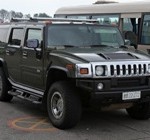
Pictured above: An American-made, petrol-guzzling Hummer H2 (MSRP 2008-$53,286; 10 mpg-US;24 L/100 km; 12 mpg-imp) in the parking lot of (I believe) the Yanggakdo Hotel in Pyongyang in September 2010.  The photo comes from here.

UPDATE 2 (2011-10-5): Accoridng to the Mainichi Daily News:

A man standing trial for illegally exporting luxury foreign cars to North Korea was a spy attempting to acquire foreign currency under the guise of a businessman, police allege.

An Sonki, 71, a North Korean resident of Japan, is being tried at the Tokyo District Court on charges of violating the Foreign Exchange Law for exporting three foreign luxury cars to North Korea in 2008.

An traveled to North Korea and China on 40 occasions over the past five years. He is believed to have worked as a broker between North Korea’s state-run companies and foreign firms, while ostensibly working for an electricity-affiliated company in Tokyo almost every day. He managed his own trading company, whose nominal president was a South Korean resident of Japan whom he was acquainted with.

The Metropolitan Police Department (MPD)’s Public Security Bureau had kept track of An since the 1990s because An invited North Korean trade missions to Japan and visited the North Korean passenger-cargo ship Mangyongbong while it was docked at a port in Japan.

The MPD launched a criminal investigation into the illegal export case in June and found that An belonged to a spy agency under the Korean Workers’ Party. An reportedly received instructions from the secretive agency by calling it about once a week from a public telephone.

The MPD also confiscated dozens of contracts and planning documents from locations linked to An. The documents pertained to joint crab and shrimp fishing with Russian companies; the processing and selling of kimchi with Vietnamese companies; scrapping and repairing of ships with Japanese and Chinese companies; cable copper trading with Zambian companies; and importing matsutake mushrooms and snow crabs to Japan.

An’s activities were apparently aimed at brokering joint ventures between North Korean state-run companies and foreign companies, as well as bringing supplies to North Korea. Investigators suspect that An was helping with North Korea’s acquisition of foreign currency and the improvement of power supply in the North.

An was reportedly living a frugal life, renting a six-tatami mat apartment room without a bathroom for 40,000 yen a month. The apartment was not equipped with an air conditioner or television. There was hardly any living ware in the apartment, except for a rice cooker and a compact refrigerator. His lunch box he brought to his company contained only rice and pickled vegetables. He always wore a suit, which was left by a deceased acquaintance. He rarely contacted his separated wife and child.

“I never thought of my own interests but acted in accordance with the agency’s instructions,” An was quoted as telling investigators.

An has not revealed much about the flow of his money. Investigators confiscated 1 million yen in cash and wads of receipts from traveling abroad, but the origin of those funds is unknown.

“His activities are shrouded in mystery. We suspect that the importance of secret agents like him has been increasing in North Korea, which is under economic sanctions,” said a senior MPD official.

During the first hearing of the trial on Sept. 9, An demanded that all charges in the indictments be withheld. How much of his secret activities will be revealed depends on the questioning of the defendant during the ongoing trial.

UPDATE 1 (2011-7-7): According to the Mainichi Daily News:

A North Korean man under arrest for illegally exporting luxury foreign cars to Pyongyang by way of South Korea allegedly disguised the cars as destined for foreign embassies, it has been learned.

An Sonki, 71, a North Korean resident of Tokyo’s Bunkyo Ward, was earlier arrested by the Metropolitan Police Department (MPD) on charges of violating the Foreign Exchange Law for exporting luxury foreign cars to North Korea from Kobe in 2008 under the instruction of the Workers’ Party of Korea’s undercover agency.

According to the latest revelations, the North’s undercover agency instructed An to make the Indian Embassy in Pyongyang one of the final destinations of the exported cars apparently to prevent South Korean authorities from uncovering irregularities when the cars went through the South. The MPD is trying to work out all the facts of the case.

An is suspected to have exported three fancy foreign cars to Pyongyang on two separate occasions in 2008, ferrying the cars from Kobe Port. The export was undertaken by a Tokyo-based trading company called “Godo Holdings,” which is effectively managed by An. The MPD suspects that An is a North Korean agent.

According to the MPD’s Public Security Bureau, An had declared to Japanese customs that the consignee of the luxury cars was a delivery company in Seoul. However, the vehicles were ultimately shipped to North Korea by way of the South, where the items were re-registered as transit cargo. It is believed that the cars were declared as destined for the embassies when they cleared South Korean customs.

Investigators have confiscated from An’s home documents that described a plan to make the Indian Embassy and a Middle Eastern embassy in Pyongyang the final destinations of the cars.

“I was told to make the embassies the nominal destinations of the cars,” An was quoted as telling investigators.

Investigators have also confiscated a North Korean passport, a seal with the name of the undercover agency engraved, as well as a document describing a plan to establish routes to distribute the North’s agricultural and marine products to Japan, the United States and Europe. It has also emerged that An had traveled to South Africa in order to procure rare metals, according to investigators.

An reportedly belonged to a section of the North’s undercover agency that was in charge of Japan.

More on the interesting business dealings of the North Korean embassy in India below.

ORIGINAL POST (2011-6-21): According to KBS:

Japanese police have arrested a North Korean citizen on charges of selling luxury foreign cars to the North through South Korea.

Japanese media said that the North Korean man, who resides in Tokyo and was identified only by his surname “Ahn,” is charged with violating Japan’s foreign currency law.

Ahn is accused of illegally exporting three used Mercedes-Benz cars to North Korea without the Japanese government’s permission. The cars were shipped to the communist country from Japan’s Kobe port via South Korea’s Busan and Incheon between September and December 2008.

This is the first uncovered illegal export scheme to use South Korea as a stopover between Japan and North Korea. China is generally the popular channel for illegal exports between the two nations.

Japanese police also believe that Ahn is a North Korean spy.

Back in May, the DPRK detained two Japanese men for drug smuggling in Rason, and North Korean Embassy officials in India came under investigation for involvement in a luxury car smuggling case worth W100 billion (US$1=W1,091).

Read the full story here:
Japan Arrests N. Korean on Charges of Illegal Export
KBS
2011-6-21

Share

Friday Fun: Fashion, Beer and Coca-Cola

Friday, September 30th, 2011

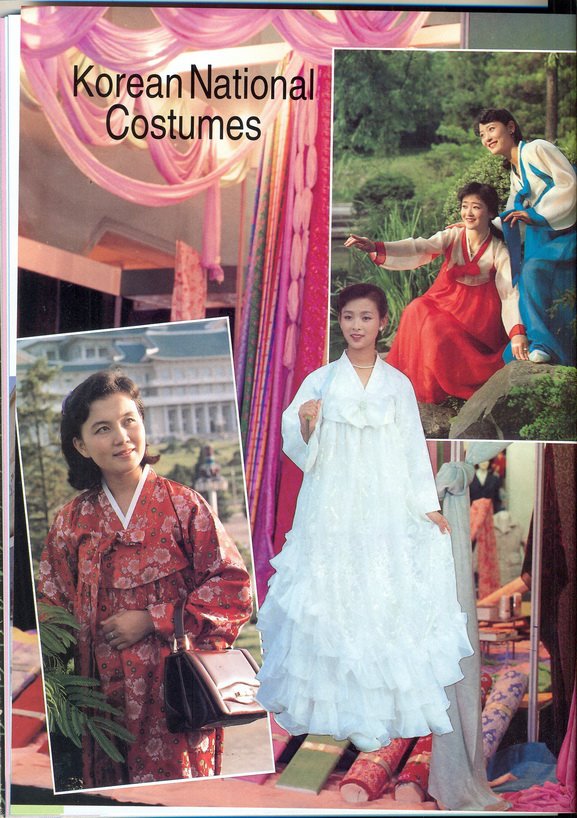
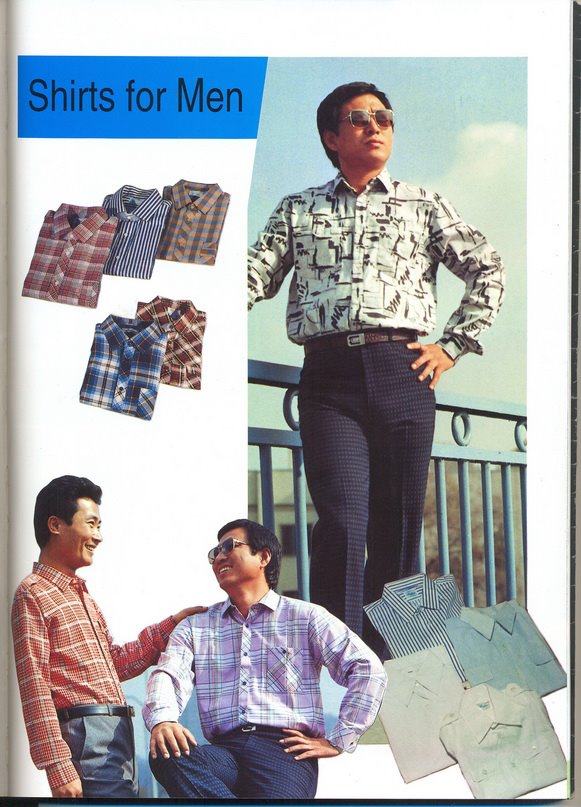
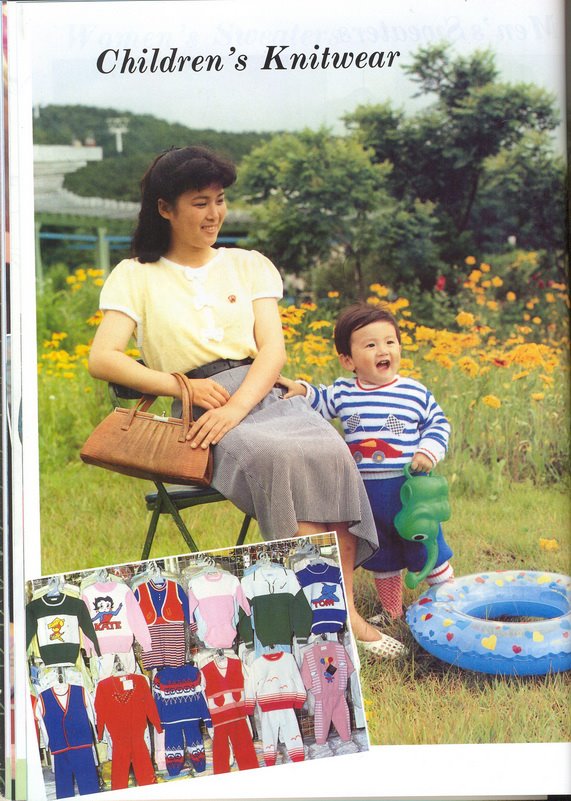
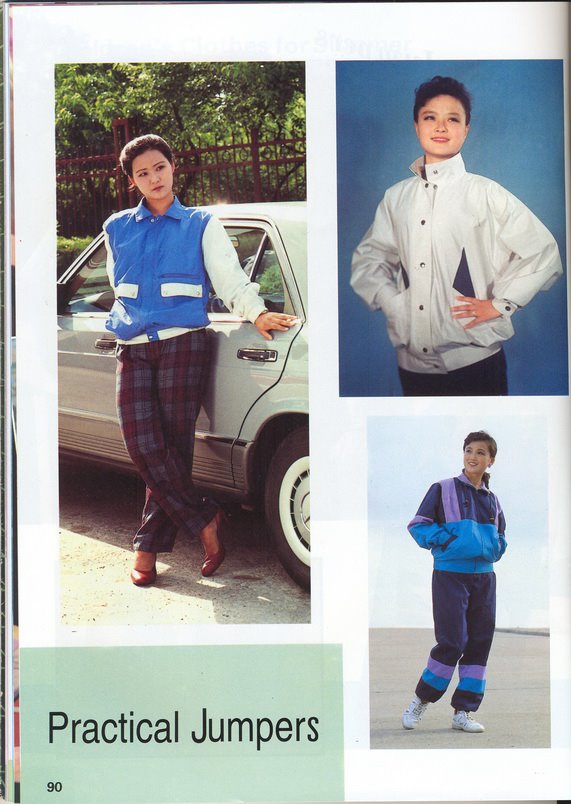
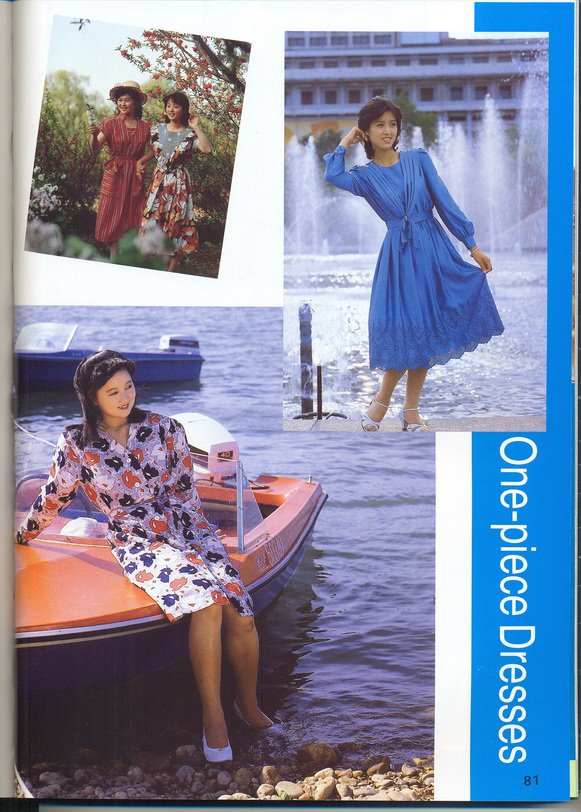
North Korean Fashion Archives

Choson Exchange posted the following on their web page:

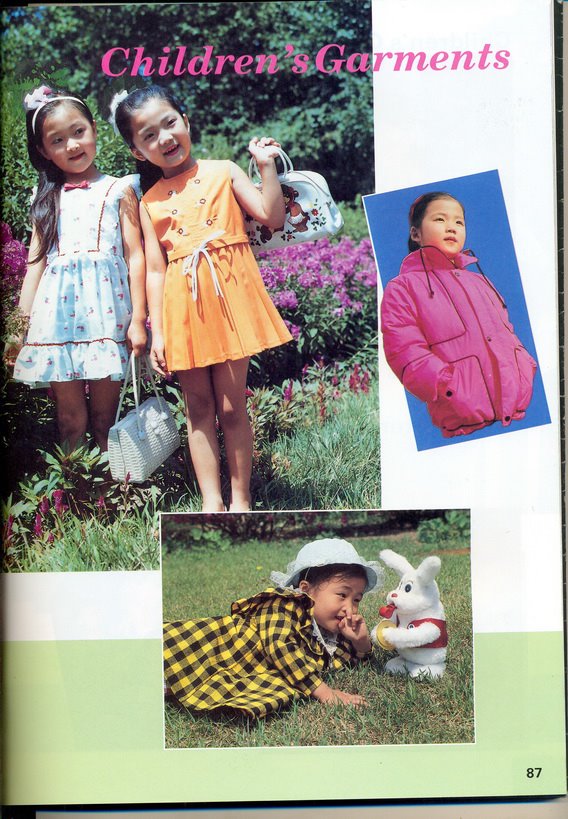
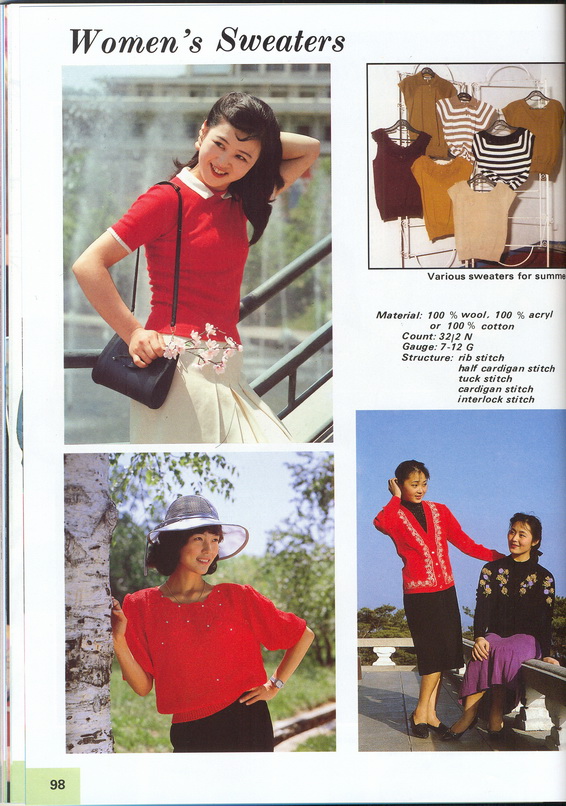
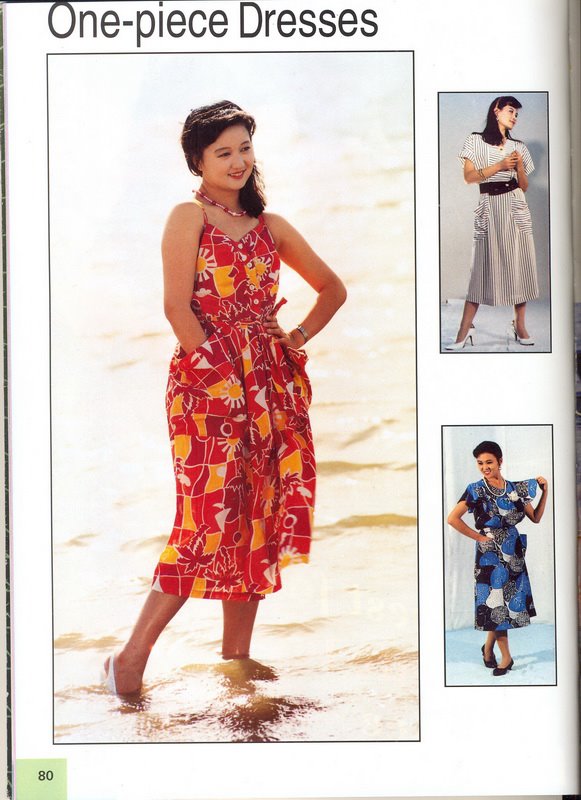
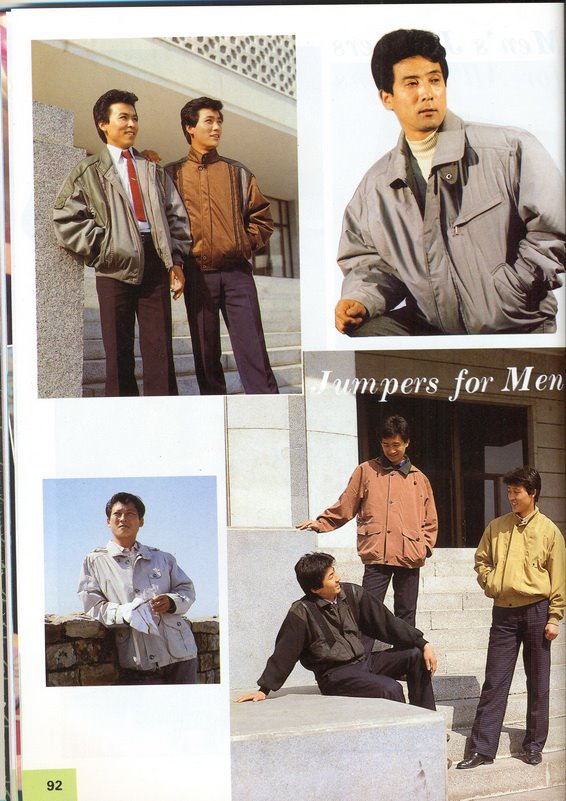
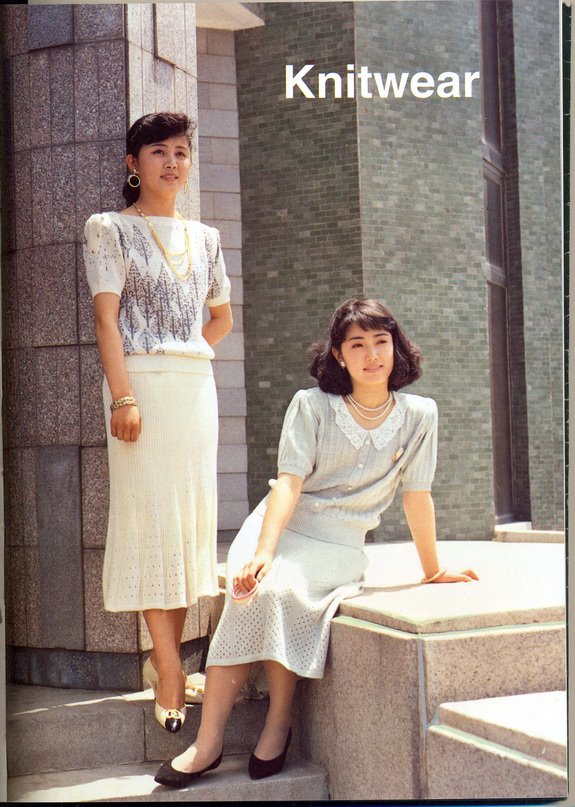
During our last trip, we met with Korea Daesong Bank, which kindly provided a product catalog from the 80s/90s of their parent company – Korea Daesong Economic Group (KDEG). While fashion definitely has moved on in Pyongyang, we thought that it might be good to share some of the products they display in their catalog – for old times sake. In case you decide that the retro look is for you, do note that KDEG is currently under international sanctions.

Choson Exchange posted the pictures to their Facebook Page, but since there are many people who cannot (or do not) access Facebook, I thought I would post the pictures here:

American beer popular in the DPRK?

Pictured above (left) is a bottle of Budweiser served with dry fish aboard the recent Mangyongbong-92 “cruise” from Rason to Kumgangsan.  Learn more here. Pictured above (right) is a can of Pabst Blue Ribbon (PBR) which has been converted into a candle holder and placed next to a bottle of “domestic” Taedonggang Beer. Click image for source. Maybe the number of hipster visitors to the DPRK has increased?

Coca Cola
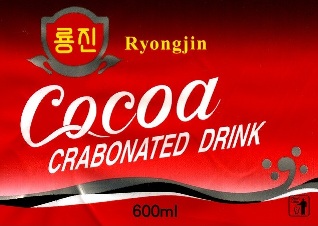
Forbes Magazine has a very interesting article on talks between the North Koreans and Coca-Cola! Read the full article here.  I thought this would be a good time to remind readers about the DPRK’s indigenous cola:

Image source here

The soda is “Crabonated” which is a pretty funny typo. Also worth noting are the lengths they have gone through to copy the Coca-Cola brand–as if they are trying to win back market-share from the firm. The colors, red, black, silver and white are the same. The familiar cursive English “C” at the beginning of the word is a close copy. They even tried to replicate the Coke “wave” by adding a literal wave in a similar curve along the bottom of the advert.


Share

DPRK-China Trade Volume Reaches Record High at 3.1 Billion Dollars

Thursday, September 29th, 2011

Institute for Far Eastern Studies (IFES)
2011-9-29

This year’s trade volume between China and the DPRK reached an all time high.

According to the (South) Korea Trade Investment Promotion Agency, the trade volume between China and North Korea between January and July of 2011 recorded 3.097 billion USD, surpassing last year’s 3.472 billion USD by 88 percent.

This is the second year since 2008 for the yearly trade volume to continue to break the record of the previous year.

During the same period, China exported 1.783 billion USD and imported 1.314 billion USD to North Korea. Compared to the same period last year, exports increased by 53.3 percent while imports increased by 169.2 percent, and its trade surplus decreased by 30.4 percent.

The main exports of China are oil, diesel freight vehicles, nitrogenous fertilizers, and grains while the top imports were anthracites, steel, and non-alloy pig irons.

The total amount of fertilizer North Korea imported between January and June totaled 193,960 tons (equaling about 39.88 million USD), a hike of 91 percent against last year’s 99,588 tons (25.4 million USD).

The price per ton of imported fertilizers was 188 USD for ammonium sulfate fertilizer (164,456 ton) and 346 USD for urea fertilizers (25,577 ton). Last year, 59,110 tons of ammonium sulfate fertilizer and 45,310 tons of urea fertilizer were imported. A drastically higher amount of ammonium sulfate fertilizer was imported this year compared with the previous year, the cause of which is speculated to be either a radical decrease in the fertilizer production in North Korea or an attempt to improve the country’s food production.

The total amount of grains imported from China from January to June totaled 149,173 tons, a boost of 5.5 percent from the previous year. The price of grain per ton went up from 372 USD to 404 USD, a rise of 8.6 percent. The cost of imported grain increased 14.4 percent against last year, an increase from 52.7 million USD to 63.1 million USD.

The grains imported were corn (38.2 percent), flour (37.5 percent), rice (16.9 percent), and bean (7.2 percent). Compared to last year, corn and flour imports rose while rice and bean slightly decreased. This year’s average price per ton of grain was 661 USD for bean, 538 USD for rice, 395 USD for flour, and 304 USD for corn.

Share

DPRK increases grain imports from China

Thursday, September 29th, 2011

According to Yonhap:

North Korea imported nearly three times as much grain from China in August as last year, an expert said Thursday, an unusual increase that may suggest food shortages in the impoverished nation have worsened.

The North purchased 47,978 tons of corn, flour and rice in August, up from 16,723 tons in the same period of last year, said Kwon Tae-jin, a North Korea expert at the Korea Rural Economic Institute.

“It is unusual that the North increased grain imports sharply in August ahead of the harvest season in fall,” Kwon said. “It is believed that the North increased imports as its grain stock is falling low.”

The North imported 216,535 tons of grain from China in the first eight months, a rise of 20 percent compared to the same period last year.

China is the North’s key ally, economic benefactor and diplomatic supporter.

North Korea suffered devastating floods in recent months that washed away tens of thousands of hectares of farmland, damage that is feared to threaten its already fragile food situation.

The North has relied on international handouts since the late 1990s when it suffered a massive famine that was estimated to have killed 2 million people.

Back in June 2011, Yonhap reported:

North Korea imported more than 50,000 tons of grains from its key ally China in May, an expert said Thursday, amid chronic food shortages in the North.

The North purchased 50,328 tons of corn, flour and rice in May, up 31.5 percent compared to the same period last year, said Kwon Tae-jin, a North Korea expert at the Korea Rural Economic Institute.

The North also imported 114,300 tons of fertilizer from China in the first five months, a rise of 39 percent compared to the same period last year, Kwon said, citing figures from Seoul’s Korea International Trade Association.

China is the North’s last remaining ally, key economic benefactor and diplomatic supporter.

In March, the U.N. food agency appealed for 430,000 tons of food aid to feed 6 million vulnerable North Korean people, a quarter of the country’s population.

Washington sent its delegation to North Korea in May to assess the food situation, though no decision on food aid has been made yet.

The North has relied on international handouts since the late 1990s when it suffered a massive famine that was estimated to have killed 2 million people.

However, the outside aid has dwindled following the North’s missile and nuclear tests and other provocations.

There are basically two conflicting narratives being played out in the media in regards to this kind of news. The first narrative is that heavy seasonal floods and typhoon damage wiped out a large percentage of North Korea’s fall harvest and they are in desperate need of food assistance. The second narrative is that the DPRK is boosting food stocks in advance of 2012, the year the country is supposed to transition into a “Strong and Prosperous Country” (according to official propaganda). Since the DPRK’s appeal for large-scale food aid has gone largely ignored by the international community (despite the best efforts of organizations like the UNWFP and charities like Samaritan’s Purse), the country is forced to increase food stocks through international trade if it wants to live up to the expectations it has created among the domestic population.  Meeting these expectations is especially important right now as they will play an important role in facilitating the leadership  transition to Kim Jong-il’s designated successor, Kim Jong-un.

I have been posting stories about this year’s food shortage here (though neglected for a couple of weeks).

Read the full stories here:
N. Korea’s grain imports from China increase threefold
Yonhap
2011-9-29

N. Korea increases grain imports from China
Yonhap
2011-6-30

Share

Lankov on DPRK-Russian economic relations

Tuesday, September 27th, 2011

Andrei Lankov writes in the Korea Times:

In 2010, the volume of trade between these two countries was merely $110 million. As international trade goes, this volume is tiny. By comparison, in the same year North Korea’s trade with China was around $3.4 billion, some 30 times larger than its trade with Russia.

The reason for this inactivity is quite simple: Russian companies have no interest in dealing with North Korea. In the Soviet era, trade flourished because it was subsidized due to geopolitical concerns of Moscow. Currently, when it comes to pure economic considerations, North Korea has almost nothing to offer the new Russian economy.

North Korea has only two resources that can be sold on the international market. First, it has deposits of minerals (coal, iron ore). Second, it has a relatively large quantity of cheap labor ― or to put things in a less cynically capitalist way, there are millions of North Koreans willing to work for $10 a month.

But Russian companies are decisively uninterested in North Korean minerals. These mines may be attractive to resource-hungry China, but not to Russia, which has the riches of Siberia at its disposal. The chronic political instability in which North Korea is immersed is another reason which lessens Russian interest in North Korean minerals.

Cheap labor is more attractive, and indeed Russia has continuously used North Korean labor since 1967 but not in the North itself. Some Chinese companies began to outsource to North Korea, and built small factories there, in order to take advantage of the obscenely low local wages. This approach is not very attractive to Russia, since it is not a major player in producing winter parkas, wool hoods, or running shoes. Russian companies prefer to use North Korean workers inside Russia itself.

These workers are sent to Russia by the North Korean authorities and can be described as indentured labor. Their families are hostages who can be punished if a worker does something improper and the workers are also expected to ‘donate’ a significant part of their wages to the state. Despite these harsh conditions, one should not forget that these jobs are among the best paid regular jobs in the country. North Koreans compete for opportunities to become indentured laborers in Russia.

That said, the scale of these ventures is rather limited, as is the demand for cheap labor in the Russian Far East (the only part of Russia where the use of North Korean laborers really makes practical sense).

Aside from this, North Korea has something else to offer – its geographical location. This country blocks all land routes to the prosperous South. Russia has much interest in the South Korean market, especially when it comes to the sale of natural resources. Impeding this is the existence of North Korea, and the continued strained relations between the two Korean states, making sales of Russian commodities rather difficult.

So it is not incidental that the two most important potential projects are a railway and a gas pipeline. Both projects can hardly be described as “economic cooperation” between North Korea and Russia, since neither has much to do with the North Korean economy itself. North Korea, in these cases, is present merely as a space to be traversed. It would be no different if it were a dessert or jungle. Russia is willing to pay North Korea for facilitating Russia’s economic link with the South, and that is all.

So it is not surprising that an agreement on the pipeline construction was signed after the Russian-North Korean summit. This project is indeed acceptable to the North, since it will mean easy money for transit, it is favorable to Russia, and it will be good for the general situation since it will bind Russia, North and South Korea closer.

Yet, a word of caution is necessary. In spite of all official statements, we should not expect large-scale construction work to begin in the near future. The political risks remain huge, so it is likely that Russian companies will not rush headlong into the project. The recent agreement should rather be seen as a declaration of intent. In all probability, the trans-Korean pipeline and trans-Korean railway will be built eventually. But the completion of these important initiatives will probably take many, many years.

Read the full story here:
Russia-N. Korea Trade
Korea Times
Andrei Lankov
2011-9-25

Share

DPRK-China trade update

Tuesday, September 27th, 2011

According to Yonhap:

North Korea’s trade dependence on China deepened over the past four years, in contrast to a reduction in South Korea’s share in the North’s external trade, Seoul’s Unification Ministry said in a report Sunday.

The proportion of China in North Korea’s foreign trade is on the rise, increasing from 41.6 percent in 2007 to 49.5 percent in 2008, 52.7 percent in 2009 and 57.1 percent last year, the report said.

By contrast, South Korea saw its share of the North’s trade declining from 38.0 percent in 2007 to 33.0 percent in 2009 to 31.4 percent last year, it noted.

In terms of trade volume, too, bilateral trade between North Korea and China jumped from US$1.97 billion in 2007 to $2.68 billion in 2009 and $3.47 billion in 2010, the report said, adding the inter-Korean trade volume slightly increased from $1.8 billion in 2007 to $1.91 billion last year.

I looked on the Ministry of Unification’s web page, but I was unable to find the report mentioned above.  It  has obviously not been published in English.

As this information was released in South Korea, the DPRK’s premier, Choe Yong-rim, is in China.  According to the Korea Times:

The North’s Premier Choe Yong-rim and his Chinese counterpart Wen Jiabao “pledged to promote trade, investment and economic cooperation” between the nations during a meeting held on Monday night during Choe’s official visit to China, Xinhua news agency said.

“Under the context of the complicated regional and international situation, the parties, governments and peoples of China and the DPRK (North Korea)…made joint efforts to push forward bilateral ties,” Xinhua quoted Wen as telling Choe during the talks.

Wen hailed the North’s achievements in developing its economy and vowed that Beijing will continue to offer assistance within its capability, according to the report.

He then called on the two sides to speed up mutually beneficial cooperation in fields such as trade, investment, infrastructure, natural resources and agriculture, the report said.

Here is the Xinhua report.

Scott Snyder had some interesting comments on the DPRK-PRC trade relationship:

South Korea’s perceived failure to compete with China for economic influence in the North as a result of heightened tensions in inter-Korean relations remains an active subject of frustration in South Korea, especially among progressives, but North Korea’s continued pursuit of nuclear and missile tests and other tension-raising provocations against the South make it clear that China has been unable to use the North’s economic dependency on Beijing as a tool for imposing political restraint on Pyongyang.

Read the full stories here:
N. Korea deepens trade dependence on China
Yonhap
2011-9-25

Premiers of NK, China vow to boost economic cooperation
Korea Times
2011-9-27

Share