Archive for the ‘International Aid’ Category

DPRK-RoK trade increases in September

Monday, October 19th, 2009

According to Yonhap:

Inter-Korean trade grew for the first time in 13 months in September amid improving global economic conditions and eased cross-border tensions, customs data showed Monday.

According to data compiled by the Korea Customs Service, trade between South and North Korea amounted to US$173.17 million last month, up 2.6 percent from a year earlier when the global financial turbulence first began following the collapse of Lehman Brothers.

Also according to Yonhap however, the DPRK and RoK failed to agree on an aid-for-family reunions deal:

The two Koreas on Friday ended their day-long negotiations over further cross-border family reunions and other humanitarian issues without reaching any concrete agreement, with Pyongyang asking for resumption of aid by Seoul, officials said.

In the meeting arranged by Red Cross offices from both sides, South Korea proposed holding new rounds of reunions for families separated by the 1950-53 Korean War next month in both Seoul and Pyongyang, and again around February at the North’s Mount Kumgang resort.

But aid is not off the table.  According to the Korea Times today:

The government has been reviewing whether to subsidize non-government organizations through the inter-Korean cooperation fund in order to provide aid to North Korea, according to the Ministry of Unification, Monday.

“The government is mainly checking plans to offer health and medical care,” ministry spokesman Chun Hae-sung told reporters. “But details have yet to be determined.”

Chun reiterated that Seoul is sticking to its existing stance that it will provide North Korea with humanitarian assistance regardless of the political climate.

According to government sources, the subsidy would total less than 1 billion won (about $853,000).

The plan, however, is not related to North Korea’s request for humanitarian aid made during the inter-Korean Red Cross talks last Friday, the sources said.

Seoul has also been reviewing whether to provide the reclusive state with government-level support such as food and fertilizer aid, according to ministry officials.

The inter-Korean cooperation fund has served as a lifeline for cross-border business projects, including the Gaeseong Industrial Complex and the Mt. Geumgang tourism program, which has been suspended.

It is also a main source of South Korea’s economic aid to the impoverished North.

The cash pot was introduced in 1990 in order to boost personal exchanges, economic cooperation and trust-building between the two Koreas.

In August, the ministry approved a plan to subsidize 10 civic groups with approximately 3.6 billion won ($3 million) from the fund for relief activities involving North Korean babies, pregnant women and other social minorities.

The government originally planned to distribute the money starting from April but North Korea’s provocations postponed the plan.

As reported before, the South Korean government has spent just 5% of the funds it budgeted for inter-Korean projects this year.

At the same time North Korea is soliciting aid from South Korean and Western religious origanizations.  See here, here, and here in just the last few days.

Share

Braille dictionaries for the DPRK

Friday, October 16th, 2009

From Koryo Tours:

Throughout 2009 we have been raising money for 2 humanitarian projects in the DPRK. We are aiming to complete one of these – a project to buy braille dictionaries which have been previously unavailable in the DPRK – by the end of October.

The total amount needed for for the dictionaries is EUR 2400 and the amount raised so far is EUR 505. We only have 2 more weeks to complete this project so your help is needed. More information about this project can be found here.

If you would like to make a donation to this worthwhile cause please do contact us for details of how to send us the money. Any amount really makes a difference! Surplus funds will be put towards our second project to buy playground equipment for an orphanage in Wonsan. If we can complete both these projects by the end of this year it will be fantastic.

Many thanks to all of you who have already donated money and we will be in touch with the results.

Nick, Simon and Hannah
Koryo Tours Ltd

Share

Samaritan’s Purse Press Release: Rev. Graham headed back to Noth Korea

Sunday, October 11th, 2009

BOONE, N.C., Oct. 9, 2009—Franklin Graham, president of Samaritan’s Purse and the Billy Graham Evangelistic Association, is preparing to make another historic visit to the DPRK (North Korea) to meet with high-level government officials and visit his ministries’ humanitarian assistance projects.

“I believe it is important to make visits like this to help improve better relations and to have better understanding with each other,” said Graham. “I’m going as a minister of Jesus Christ with a message of peace and that God loves each one of us regardless of our borders or politics.”

This is Graham’s third trip to the country rarely visited by Americans, but his family has a long history in the DPRK, going back to 1934 when his mother Ruth Bell Graham attended a mission school in Pyongyang. His father Billy Graham visited in 1992 and 1994, meeting with President Kim Il Sung. Last year Franklin Graham visited the DPRK to oversee several aid operations and to preach at a newly constructed Protestant church in Pyongyang.

Samaritan’s Purse has been working in the DPRK since 1997, primarily with medical and dental programs, providing more than $10 million in assist ance. Next week, Graham will be making a presentation totaling $190,000 in equipment and supplies for a new dental center being built in Pyongyang. He will also visit a provincial hospital in the countryside where a generator system installed by Samaritan’s Purse in conjunction with USAID is now providing electrical power where none previously existed. Graham also hopes his limited time in the DPRK will allow visits to other hospitals and dental facilities where Samaritan’s Purse has offered assistance during the past twelve years.

Samaritan’s Purse has also recently been involved in several major projects in DPRK. In response to devastating floods in 2007, the Christian relief organization chartered a 747 cargo jet to deliver $8.3 million in medicine and other emergency supplies (and more here). That was the first private flight directly from the United States to the DPRK since the Korean War.

Following Graham’s visit to DPRK he will travel to China where in 2008 Samaritan’s Purse sent a Boeing 747 cargo plane filled with urgently-needed supplies to Chengdu in response to a 7.9 magnitude earthquake that killed 40,000 people. One year after the disaster the N.C.-based organization also airlifted 70 tons of Operation Christmas Child shoe box gifts which were hand-delivered to hurting children in that region.

Share

UNDP returns to DPRK

Sunday, October 4th, 2009

According to the Associated Press:

A U.N. development agency has resumed operations in North Korea after a more than two-year pause following allegations of fraud.

The North’s Korean Central News Agency said a ceremony Wednesday marked the return of U.N. Development Program to the country.

UNDP withdrew its operations in March 2007 following allegations that the agency had left itself open to exploitation by the communist regime for money laundering and other illicit purposes.

A U.N. audit cleared UNDP of wrongdoing in June last year, saying the agency knew of no improper financial dealings.

Yonhap news agency reported that UNDP decided to restart its North Korea projects after Pyongyang guaranteed independent auditing and administrative changes to ensure the transparent use of funds.

1. Previous UNDP posts here.

2. Previous DPRK aid posts here.

Read the full article here:
Scandal-hit UN program resumes aid in NKorea
Associated Press
9/30/2009

Share

DPRK harvest to decline

Tuesday, September 22nd, 2009

According to Yonhap:

The North’s corn crop for this year is estimated to be less than 1.5 million tons, considerably down from the 2.5 million to 3 million tons it usually garners, said Kim Soon-kwon, a leading corn biologist and head of the International Corn Foundation. The forecast yield portends a severe food shortage in the country where corn is believed to make up 40 percent of the total food supply.

“Of all the corn harvests I’ve seen while visiting North Korea over the past 12 years, this year’s crop was the worst,” Kim said over the telephone from China where he was staying after last week’s trip to the North.

During the Sept. 12-16 trip, he surveyed corn farms on the outskirts of Pyongyang and around Mount Myohyang and found a widespread shortage of fertilizer had slowed corn growth. Also, a drought in July — a critical period for the crop — followed by heavy downpours further damaged corn fields, he said.

“Corn needs fertilizer more than any other grain,” Kim explained. “The fact that the fertilizer had not been provided appropriately because of the limbo in inter-Korean relations is a major factor in the bad crop.” said Kim, who spent 17 years in Africa helping develop higher-yield corn seeds and spreading farming technologies.

Since 1999, the South Korean government has provided an average 300,000 tons of fertilizer worth 96 billion won (US$77 million) to the North every year to help ease the country’s chronic food shortages. But the aid was suspended after conservative President Lee Myung-bak took office last year, linking inter-Korean aid to progress in North Korea’s denuclearization.

North Korea’s own fertilizer output is estimated at less than 500,000 tons a year, about a third of the 1.5 million tons the country needs for its grain farming, according to Seoul’s Unification Ministry.

Aid activists from World Vision, who visited North Korea last month, said rice paddies were more yellow than green this year due to a fertilizer shortage, which will equate to low yields in the harvest season.

Seoul expects the North will fall more than one million tons short of the 5.48 million tons of food needed to feed its population of 24 million this year.

Read the full story here:
N. Korean corn crop to fall by 40 percent: agronomist
Yonhap
9/22/2009

Share

NKoreans on quiet US trip on food aid

Saturday, August 29th, 2009

According to the AFP:

North Korean officials quietly visited Los Angeles last week to talk about resuming food aid, which the impoverished state cut off five months ago during a standoff, participants have said.

The move comes as tensions gradually ease with North Korea, which stunned the world by conducting a nuclear test earlier this year but in recent weeks has made overtures for dialogue.

Five North Korean officials received special US permission to visit Los Angeles where they met representatives of non-governmental organizations that provide relief worldwide, according to the groups.

Richard Walden, president of Operation USA, said the charity picked up the North Koreans at the airport as a goodwill gesture and took them on a tour of its warehouse stocked with medicine and medical equipment to be sent overseas.

“They were very open, very nice and very cordial,” Walden told AFP. “They looked like they were from any other aid ministry in any country.”

he delegation, which also met with other relief groups, included four members of the Korea-US Private Exchange Society, the North Korean body charged with handling relief goods from US non-governmental organizations.

A fifth delegation member came from North Korea’s mission at the United Nations and received special permission to travel beyond the New York area, Walden said.

I also read the North Koreans made a pit stop in Los Vegas

Read the full story here:
AFP
NKoreans on quiet US trip on food aid
8/29/2009

Share

The Politics of South Korean aid to the DPRK

Tuesday, August 4th, 2009

According to Yohap:

South Korea authorized state funding for 10 North Korea aid organizations Monday, resuming humanitarian operations that had been frozen since the North conducted nuclear and rocket tests.

But the rare softening move toward Pyongyang drew mixed reactions among aid organizations in Seoul, as 3.57 billion won (US$2.92 million) worth of funding will go to less than a quarter of 47 applicants. Some called the selection “arbitrary” and vowed to boycott it.

“The government selected projects that are aimed at helping disadvantaged groups like toddlers and infants, mothers and the disabled on grounds that they contribute to the people’s livelihoods, their urgency and effects,” the Unification Ministry said in a statement.

The funding shrank considerably from last year, when the ministry spent more than 10 billion won for 40 aid groups. Spending cuts in other North Korea projects were also evident, as South Korea executed only 2.8 percent of its yearly budget for economic and humanitarian aid to North Korea during the first half of this year, or 42.42 billion won out of 1.5 trillion won. Seoul officials cite international sanctions over North Korea’s nuclear and missile activity and the protracted stalemate in inter-Korean relations as reasons for the hardening aid policy.

An umbrella group of 56 Seoul-based aid organizations, the Korea NGO Council for Cooperation with North Korea, called an emergency meeting and vowed not to accept the funding unless its selection criteria is fully explained. Secretive selection only fuels internal rifts and rivalry, it said.

“This decision will only drive our aid projects, which continued cooperatively for nearly 10 years, to division and competition. I wonder if this arbitrary selection is a way of taming non-governmental organizations,” Park Hyun-seok from Rose Club Korea, a Christian group focused on medical aid, said in an emergency meeting between aid groups. Rose Club lost its bid for funding.

But signs of a rift emerged among the aid organizations, as some cited the urgency of their stalled missions in the North. Kang Young-shik of the Korean Sharing Movement, which emerged as one of the major beneficiaries with 540 million won in funding, said his organization will accept the money, as the umbrella organization has no binding force over its members.

“It is for each organization to decide. And we believe this fund should be released if there isn’t more expected anytime soon,” Kang said.

In a unanimous call, the aid groups urged the government to lift a ban on humanitarian aid shipments and to stop monitoring trips to North Korea, actions put in place after the North’s nuclear test in May. The restrictions have prevented not only aid from state coffers, but also private donations, from reaching North Koreans.

Sue Kinsler, a Korean-American and head of the Lighthouse Foundation, which helps orphans and the disabled in the North, said the living conditions there have notably deteriorated, with bread factories running short of flour and children wearing the same clothes her organization sent last year.

“We also wanted to bring underwear and some clothes for the children, but we were told those items are not allowed,” Kinsler, who visited North Korea last week with 18 tons of flour, soybeans, sugar and vegetable oil, said. “I saw with my eyes they are experiencing serious food shortages in the midst of the international sanctions.”

Kim Nam-sik, director general of the ministry’s Inter-Korean Exchanges and Cooperation Bureau who attended the aid groups’ meeting, said the government will consider expanding humanitarian aid and cross-border visits, but its efforts are limited by larger international circumstances. While U.N. financial and other sanctions are in place to curb the communist state’s nuclear and missile activity, the government cannot go against the international trend, he said.

Here is a previous post on South Korean aid to the DPRK this year.

Trade between the Koreas has also floundered this year.

Read the full artilce here:
Selective gov’t funding for N. Korea aid groups causes division, discontent
Yonhap
Kim Hyun
8/3/2009

Share

Questions Are Raised About Who Profits from UN Aid to North Korea

Monday, July 27th, 2009

Fox News
George Russell
7/27/2009

Is North Korea’s dictatorial regime quietly profiting from U.N. emergency food supplies delivered to its starving people, even as the regime squeezes those deliveries down to a trickle?

Documents produced by the World Food Program, the U.N.’s flagship relief agency, outlining its current emergency operations in the insular communist state, raise a number of touchy questions about the financing and logistics of the effort, which was originally intended to feed some 6.2 million of North Korea’s most vulnerable people, but which is currently providing limited rations only to 1.33 million.

The $500 million program was meant to run from September, 1, 2008 to November 31, 2009, to deliver nearly 630,000 tons of food aid to North Korea at a time when it is suffering from severe flood damage and fertilizer shortages that have led to local food price increases.

Currently, WFP says that only $75.4 million worth of food aid has been delivered under the emergency program, as international donors have recoiled at the Kim Jong Il regime’s recent nuclear detonation and provocative missile launchings toward Japan and Hawaii.

WFP emergency relief program documents obtained by FOX News show that from the outset the food agency planned to pay extraordinarily high transportation costs for sending relief supplies to North Korea from around the world–about a dollar for every two dollar’s worth of food aid shipped into the country under the program.

Moreover, enormous sums were involved: $130,334,172 for “external transport” of 629,938 tons of grain and other food relief supplies for the overall program. (The food supplies themselves are projected to cost $297,396,729.)

For comparative purposes, the “external” shipping costs planned by WFP for the aid program average about $206.90 per metric ton of food aid .

Those rates were described as “absolutely ridiculous” by an expert on bulk shipping consulted by FOX News, even for sending goods by international shipping carriers to the remote region that includes North Korea. Another international grain expert consulted by FOX News described them as “way out of line” with past and present international shipping rates for bulk grain and other basic food commodities.

What WFP has not revealed in its documentation until questioned by FOX News, however, is that a substantial, but unspecified, amount of that money is intended to move the emergency aid from China to its final North Korean destination via shipping firms owned by the Kim Jong Il government.

Nowhere in the WFP program documents, which appeared on WFP’s public website only after Fox News began raising questions about them, is there any mention of the North Korean shipping involvement.

Even though WFP has not revealed how much of the $130-plus million in planned “external transport” money Kim Jong Il’s shipping firms are in line to receive, an analysis of the current costs involved in getting such supplies to their second-last destination reveal that the amount slated to pay for the last leg of the journey to North Korea could be huge.

A WFP spokesman blamed the overall high cost on “ the remote geographical location of [North Korea] from place of procurement (normally Black Seas, South Africa and South America).”

All WFP food aid, he added, was first shipped to the northern Chinese port of Dalian, before moving on to the North Korean port of Nampo.

But the spokesman then added that high costs were also due to “the lack of competition of transporters for transshipment” between Dalian and Nampo.

In fact, shipments to and from Dalian, China, one of the major centers of China’s huge export sector, are commonplace and hardly expensive by international standards. Data kept by the U.S. Department of Agriculture, for example, shows that grain shipments from Brazil to China between April and June of this year have varied from $32.50 to $42 per metric ton.

Moreover, those international shipping rates have been on a precipitous downward slide since June, 2008-three months before the WFP aid program began. Even allowing for higher rates from the Black Sea and South Africa, international shipping experts told FOX News that the rates would come nowhere near $206 per ton-especially as there is currently a surplus of international shipping capacity.

The same, however, apparently can’t be said of transport between Dalian and Nampo-a distance of 210 nautical miles.

There, the WFP spokesman said, WFP relies entirely on “feeder vessels belonging to the [North Korean] government.”

Asked late last week by FOX News to provide specifics of the rates charged by North Korean vessels for carrying international food aid home, the WFP spokesman did not provide an answer before this article was published.

However much the Kim Jong Il regime charges for bringing food to its people, it is not the only money that WFP provides to Kim for humanitarian assistance.

The WFP documents show that the government was to receive an additional projected $5,039,504 as a transport fuel subsidy if the relief program gets back into full swing. The “fuel reimbursement levy” amounts to $8 per ton of aid delivered, and according to the WFP spokesman, is normally not provided to countries that receive food aid-they are expected to chip in for this cost on their own–except under a waiver that North Korea has been granted.

So far, the Kim regime’s National Coordinating Committee, a subsidiary of the Ministry of Foreign Affairs, has received $1.16 million under this waiver since September 2008, with the promise of an additional $361,400 to come. The WFP spokesman emphasized that the money was not paid in hard currency.

The same apparently applies to $4,409,566 intended by WFP to enhance a “capacity building strategy of government counterparts” envisaged in the relief plan. According to the WFP spokesman, this means management training and information systems upgrades for the Kim government to handle the new food aid. WFP is also paying for warehouses and equipment to handle the aid. So far, the regime has only $103,200 of the projected total, with another $155,000 committed.

Amid all the fuzzy math of the WFP relief program, there is a final quirk: the inexplicably high transportation costs work to the benefit not only of the Kim regime, but also to the benefit of WFP.

As a matter of standard practice, WFP charges a standard 7% management fee against “direct operational costs” of such relief efforts to support its worldwide operations, over and above the costs it incurs in the specific relief exercise. These, in WFP-speak, are known as the organization’s “indirect support costs.”

Based on direct operational costs in North Korea of $445,033,971-including the $133.3 million in “external transport” costs– WFP expected to reap $32,948,811 as its 7% share of “indirect support costs.”

Its 7% “indirect support” levy on the extraordinary $130.3 million transport bill would amount to about $9.1 million.

Share

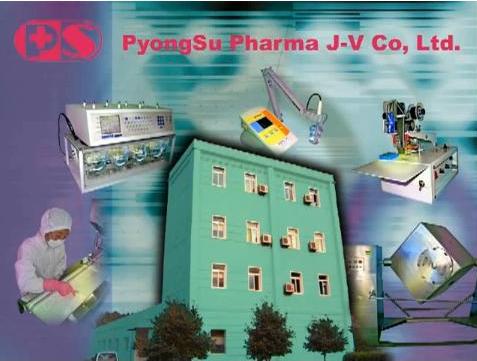
PyongSu Rx advertisement

Sunday, July 19th, 2009

From YouTube:

pyongsu-advert.JPG

(Click on image to see video)

According to the video description:

This was PyongSu’s introduction to donor organisations and individuals that have been purchasing pharmaceuticals abroad and shipped them to North Korea. PyongSu’s promotional presentation explained to them why they should place their orders with PyongSu rather than with pharmaceutical companies abroad.

As PyongSu had no budget to mandate a professional advertising company with the task its managing director Felix Abt made the concept, the script and produced it in-house towards the end of 2005, with the help of North Korean IT and designing students and their Canadian trainer Ian Lee as well as teacher Michael P. Spavor, then giving language courses in Pyongyang, who was the “voice” in this clip. Thus, this unique advertising clip was made in its entirety in Pyongyang (and by people who are not advertising professionals). Check it out and add your comment!

Longer videos on investments in the DPRK can be found here.

Share

North Korea restricts food aid (again)

Friday, July 10th, 2009

According to Fox News:

A spokesman for the World Food program has confirmed to FOX News that on July 3, the emergency relief organization was ordered to limit food deliveries to 57 of the 131 North Korean counties it previously served. At the same time, the agency was told that it must give seven days’ notice of visits to oversee food deliveries at all of its relief sites — a sharp change from the one-day notice previously required under a deal to retain U.S. support for North Korean relief efforts. As a result, the spokesman said, WFP is “reviewing the current terms and conditions for our work” in North Korea, “to ensure that our work and our accountability is not compromised.”

Additional constraints were also slapped on the child relief organization UNICEF in June, according to a spokesman, Chris de Bono. He told FOX News that the regime banned UNICEF from operating in its northerly Ryanggan province, which borders China, and is one of the impoverished country’s poorest areas. UNICEF still operates in 56 other counties across North Korea.

The restrictions make even more dire the food situation in a country where starvation and malnutrition are widespread, even as the Kim regime continues to set off atomic blasts and fire missiles in the direction of Japan and Hawaii.

Furthermore, they once again raise questions about the U.N.’s ability to monitor whatever relief activities that remain in the country. UNICEF’s spokesman told FOX News that only WFP had won the right to 24-hour notification for inspection visits, and that all other U.N. institutions in North Korea have operated with the one-week request limit as a matter of course.

UNICEF has ten international staff and 20 local staffers in North Korea. None of the international staff speak Korean. The agency is budgeted to spend $13 million a year on North Korean operations, principally on food for infants, children and pregnant women, along with emergency vaccination programs, essential medicines and clean water supplies.

But nowhere near that amount of money from international donors is currently available. According to its Web site, UNICEF has received only 10 percent of the total, or about $1.3 million, undoubtedly a result of the North Korean regime’s aggressive pursuit of nuclear weapons. Unless more money is received soon, the UNICEF spokesman said, “it will be difficult to maintain the current level of operations and this will have serious negative consequences for children and other vulnerable people.”

The same funding shortfall applies to the World Food Program, which told FOX News a month ago that donor nations had provided only $75.4 million toward a 2009 goal of $503 million for North Korea, with more than half of that amount — $38.8 million — food aid that was not delivered in 2008.

The only other U.N. agency that has significant operations in North Korea, the United Nations Population Fund, reports that it has received no curtailment in its activities, but it only operates in 11 North Korean counties. It was slated to spend roughly $8.3 million in North Korea between 2007 and 2009, chiefly for birth control and other forms of “reproductive health” and for helping the regime collect population statistics.

Nonetheless, a big question mark still hangs over the North Korean operations of the United Nations Development Program, the U.N.’s major anti-poverty agency, which suspended operations in North Korea in 2007 in the wake of revelations from an independent inquiry that it had wrongfully provided millions in hard currency to the North Korean regime, ignored U.N. Security Council sanctions in passing on dual-use equipment that could conceivably be used in the country’s nuclear program, and allowed North Korean government employees to fill key positions.

Read the full story below:
North Korea Cuts Off More U.N. Relief as Nation Starves
Fox News
George Russell
7/7/2009

Share
