Archive for the ‘Economic reform’ Category

North Korea dragged back to the past

Tuesday, January 29th, 2008

In the article below, Dr. Lankov makes a compelling argument that the North Korean government is now attempting to to re-stalinize the economy because the system cannot survive liberal economic reforms.

Altough the trend seems depressing, optimists should take note that Pyongyang’s efforts to reassert control over the economy parallel a decline in belief in the official ideology.  With a deterioration of this ideology, people’s acquiescence to the DPRK’s political leaders declines, and power dynamics are all that hold the system together.  Efforts to control the general population are increasingly seen by the people as self-interested behavior on the part of their leaders, calling their legitimacy into question.

Additionally, efforts to reassert control over the economy are bound to fail because the system has already collapsed, their capital has been stripped, and there are insufficient funds to rescue the system.

In other words, efforts to re-stalinize the economy are bound to fail from both an economic and ideological perspective.

North Korea dragged back to the past
Asia Times

Andrei Lankov
1/24/2008

When people talk about North Korea these days, they tend to focus on the never-ending saga of the six-party talks and the country’s supposed de-nuclearization. Domestic changes in the North, often ignored or overlooked, should attract more attention.

These changes are considerable and should not encourage those optimists who spent years predicting that given favorable circumstances the North Korean regime would mend its ways and follow the beneficial development line of China and Vietnam. Alas, the recent trend is clear: the North Korean regime is maintaining its counter-offensive against market forces.

Merely five years ago things looked differently. The decade that followed Kim Il-sung’s death in 1994 was the time of unprecedented social disruption and economic disaster culminating in the Great Famine of 1996-99, with its 1 million dead. The old Stalinist economy of steel mills and coal mines collapsed once the Soviets discontinued the aid that alone kept it afloat in earlier decades.

All meaningful economic activity moved to the booming private markets. The food rationing system, once unique in its thoroughness and ubiquity, collapsed, and populace survived through market activities as well as the “second”, or non-official, economy. The explosive growth of official corruption meant that many old restrictions, including a ban on unauthorized domestic travel, were not enforced any more. Border control collapsed and a few hundred thousand refugees fled to China. In other words, the old Stalinist system imploded, and a new grassroots capitalism took over.

The regime, however, did not approve the changes – obviously on assumption that these trends would eventually undermine the government’s control. Authorities staged occasional crackdowns on market activities, though those crackdowns seldom had any lasting impact: people had to survive somehow, and officials were only too willing to ignore the deviations if they were paid sufficient bribes.

By 2002 it seemed as if the government itself decided to bow to the pressure. In July that year, the Industrial Management Improvement Measures (never called “reforms”, since the word has always been a term of abuse in Pyongyang’s official vocabulary) decriminalized much market activity and introduced some changes in the industrial management system – very moderate and somewhat akin to the half-hearted Soviet “reforms” of the 1960s and 1970s.

The 2002 measures were widely hailed overseas as a sign of welcome changes: many Pyongyang sympathizers, especially from among the South Korean Left, still believe that only pressure from the “US imperialists” prevents Kim Jong-il and his entourage from embracing Chinese-style reforms. In fact, the 2002 measures were not that revolutionary: with few exceptions, the government simply gave belated approval to activities that had been going on for years and which the regime could not eradicate (even though it had tried a number of times). Nonetheless, this was clearly a sign of government’s willingness to accept what it could not redo.

However, around 2004 observers began to notice signs of policy reversal: the regime began to crack down on the new, dangerously liberal, activities of its subjects. By 2005, it became clear: the government wanted to turn the clock back, restoring the system that existed before the collapse of the 1990s. In other words, Kim Jong-il’s government spent the recent three of four years attempting to re-Stalinize the country.

This policy might be ruinous economically, but politically it makes perfect sense. It seems that North Korean leaders believe that their system cannot survive major liberalization. They might be correct in their pessimism. The country faces a choice that is unknown to China or Vietnam, two model nations of the post-Communist reform. It is the existence of South Korea that creates the major difference.

Unlike China or Vietnam, North Korea borders a rich and free country that speaks the same language and shares the same culture. The people of China and Vietnam, though well aware of the West’s affluence, do not see it as directly relevant to their problems: the United States and Japan surely are rich, but they are also foreign so their experiences are not directly relevant. But for the North Koreans, the comparison with South Korea hurts. Even according conservative estimates, per capita gross national income in the South is 17 times the level it is in the North; to put things in comparison, just before the Germany’s unification, per capita GNI in West Germany was roughly double that in East Germany.

Were North Korea to reform, the disparities with South Korea would become only starker to its population. This might produce a grave political crisis, so the North Korean government seemingly believes that in order to stay in control it should avoid any tampering with the system. Maintaining the information blockade is of special importance, since access to the overseas information might easily show the North Koreans both the backwardness of their country and the ineptitude of their government.

At the same time, from around 2002 the amount of foreign aid began to increase. The South Korean government, following the so-called Sunshine policy, began to provide generous and essentially unmonitored aid to Pyongyang. China did this as well. Both countries cited humanitarian concerns, even though it seems that the major driving force was the desire to avoid a dramatic and perhaps violent collapse of the North Korean state.

Whatever the reasons, North Korea’s leaders came to assume that their neighbors’ aid would save the country from the worst of famine. They also assumed that this aid, being delivered more or less unconditionally, could be quietly diverted for distribution among the politically valuable parts of the population – such as the military or the police, and this would further increase regime’s internal security.

So, backward movement began. In October 2005, Pyongyang stated that the Public Distribution System would be fully re-started, and it outlawed the sale of grain on the market (the ban has not been thoroughly enforced, thanks to endemic police corruption). Soon afterwards, came regulations prohibited males from trading at markets: the activities should be left only to the women or handicapped. The message was clear: able-bodied people should now go back to where they belong, to the factories of the old-style Stalinist economy.

There have been crackdowns on mobiles phones, and the border control was stepped up. There have been efforts to re-enforce the old prohibition of unauthorized travel. In short, using newly available resources, North Korea’s leaders do not rush to reform themselves, but rather try to turn clock back, restoring the social structure of the 1980s.

The recent changes indicate that this policy continues. From December only sufficiently old ladies are allowed to trade: in order to sell goods at the market a woman has to be at least 50 years old. This means that young and middle-aged women are pushed back to the government factories. Unlike earlier ban on commercial activity on men, this might have grave social consequences: since the revival of the markets in the mid-1990s, women constituted the vast number of vendors, and in most cases it was their earnings that made a family’s survival possible while men still chose to attend the idle factories and other official workplaces.

Other measures aim at reducing opportunities for market trade. In December, the amount of grain that can be moved by an individual was limited to ten kilograms. To facilitate control, some markets were ordered to close all but one gate and make sure that fences are high enough to prevent scaling.

Vendors do what they can to counter these measures. One trick is to use a sufficiently old woman as a figurehead for a family business. The real work is done by a younger woman, usually daughter or daughter-in-law of the nominal vendor, but in case of a police check the actual vendor can always argue that she is merely helping her old mother. Another trick is to trade outside the marketplace, on the streets. This uncontrolled trade often attracts police crackdowns, so vendors avoid times when they can be seen by officials going to their offices.

This autumn in Pyongyang there was an attempt, the first of this kind in years, to prescribe maximum prices of items sold in markets. Large price tables were displayed, and vendors were forbidden to sell goods (largely fish) at an “excessive price”. It was also reported that new regulations limit to 15 the number of items to be sold at one stall.

The government does not forget about other kinds of commercial activities. In recent years, private inns, eateries, and even bus companies began to appear in large numbers. In many cases these companies are thinly disguised as “government enterprises” or, more frequently, as “joint ventures” (many North Korean entrepreneurs have relatives in China and can easily persuade them to pose as investors and sign necessary papers).

Recently a number of such businesses were closed down by police. People were told that the roots of evil capitalism had to be destroyed, so every North Korean can enjoy a happy life working at a proper factory for the common good.

Yet even as the government pushes people back to the state sector of the economy, These new restrictions have little to do with attempts to revive production. A majority of North Korean factories have effectively died and in many cases cannot be re-started without massive investment – which is unlikely to arrive; investors are not much interested in factories where technology and equipment has sometimes remained unchanged since the 1930s.

However, in North Korea the surveillance and indoctrination system has always been centered around work units. Society used to operate on the assumption that every adult Korean male (and most females as well) had a “proper” job with some state-run facility. So, people are now sent back not so much to the production lines than to indoctrination sessions and the watchful eyes of police informers, and away from subversive rumors and dangerous temptations of the marketplace.

At the same time, border security has been stepped up. This has led to a dramatic decline in numbers of North Korean refugees crossing to China (from some 200,000 in 2000 to merely 30,000-40,000 at present). The authorities have said they will treat the border-crossers with greater severity, reviving the harsh approach that was quietly abandoned around 1996. In the 1970s and 1980s under Kim Il-sung, any North Korean trying to cross to China or who was extradited by the Chinese police would be sent to prison for few years.

More recently, the majority of caught border-crossers spent only few weeks in detention. The government says such leniency will soon end. Obviously, this combination of threats, improved surveillance and tighter border control has been effective.

The government is also trying to restore its control of information. Police recently raided and closed a number of video shops and karaoke clubs. Authorities are worried that these outlets can be used to propagate foreign (especially South Korean) pop culture. Selling, copying and watching South Korean video tapes or DVDs remain a serious crime, even though such “subversive materials” still can be obtained easily.

It is clear that North Korean leaders, seeking to resume control that slipped from them in the 1990s and early 2000s, are not concerned if the new measures damage the economy or people’s living standards when set against the threat to their own political domination and perhaps even their own physical survival.

Manifold obstacles nevertheless stand in the way of a revival of North Korean Stalinism.

First, large investment is needed to restart the economy and also – an important if underestimated factor – a sufficient number of true believers ready to make a sacrifice for the ideal. When the North Korean regime was developed in the 1940s and 1950s it had Soviet grants, an economic base left from the days of Japanese investment and a number of devoted zealots. The regime now has none of these. Foreign aid is barely enough to feed the population, and the country’s bureaucrats are extremely cynical about the official ideology.

Second, North Korea society is much changed. Common people have learned that they can survive without relying on rations and giveaways from the government. It will be a gross oversimplification to believe that all North Koreans prefer the relative freedoms of recent years to the grotesquely regimented but stable and predictable existence of the bygone era, but it seems that socially active people do feel that way and do not want to go back. Endemic corruption also constitutes a major obstacle: officials will be willing to ignore all regulations if they see a chance to enrich themselves.

It is telling that government could not carry out its 2005 promise to fully restart the public distribution (rationing) system. Now full rations are given only to residents of major cities while others receive reduced rations that are below the survival level. A related attempt to ban trade in grain at markets also failed: both popular pressure and police inclination to take bribes undermined the policy, so that grain is still traded openly at markets.

Even so, whether the government will succeed in re-Stalinizing society, its true intent remains the revival of the old system. North Korean leaders do not want reforms, assuming that these reforms will undermine their power. They are probably correct in this assumption.

Share

Koreas discuss improving cross-border train service

Tuesday, January 29th, 2008

Yonhap
Shim Sun-ah
1/29/2008

On the first day of working-level talks in North Korea on Tuesday, the two Koreas discussed scaling back their first regular inter-Korean railway service to run in more than a half century, as the trains are often empty, South Korean officials said.

The two Koreas began the regular train service in December as a symbol of peace and rapprochement following the October summit between their leaders.

A 12-car train runs once a day on a 20-kilometer railway connecting South Korea with a North Korean train station near a joint industrial complex in Kaesong.

(more…)

Share

Cancor Report #297: Knowledge Sharing with the DPRK

Sunday, January 27th, 2008

November 12, 2007

The latest edition of the CanKor Report has only one longer-than-usual item.  It is the preparatory document of a workshop recently held in Seoul, Korea, in which NGOs, academics, practitioners and diplomats from Europe, Asia, Australia and North America consulted about the prospects for international cooperation regarding education and training programmes that need to be undertaken with the DPRK if denuclearization proceeds according to the Six-Party timetable.  Experts in economic development believe that the next step in international engagement will have to be the building up of DPRK expertise and intellectual capacity to absorb the significant development assistance that may follow successful completion of the Six-Party process. In this working paper, loyal CanKor reader and former World Bank official Bradley Babson defines “knowledge sharing”, explains why the time is ripe for all sectors to become involved, outlines potential pitfalls, and suggests guiding principles for future engagement by the international community.
*************************************************

Contents:

1.   KNOWLEDGE SHARING WITH THE DPRK
    Bradley O. Babson, CanKor original
       Introduction
       Why knowledge sharing?
       Strategic considerations
       DPRK internal challenges
       Nuclear politics
       Inter-Korean reconciliation
       China, Russia and Northeast Asia regional perspectives
       Operational challenges in the DPRK context
       An underlying tension
       Relationships
       Information
       Absorptive capacity
       Coordination
       Resources
       International experience and best practices
       Conclusions and principles for future engagement
*************************************************

(more…)

Share

Travel to Kaesong Restricted to Prevent Awareness of South Korea

Friday, January 25th, 2008

Daily NK
Yang Jung A
1/25/2008
 
A job in a factory at the Kaesong Industrial Complex is fast becoming the ideal job for North Korean citizens, and positive feelings toward the South are continuing to grow.

Good Friends reported on the 23rd that most North Koreans are aware that economic cooperation at Kaesong is thriving as South Korean enterprises supply advanced materials and management, and North Korea supplies labor.

“South Korean advisory managers supervise workers. If workers do not come to work on time in the morning or they do not work diligently, the managers simply say, ‘You don’t need to come here tomorrow’” reported one North Korean citizen through Good Friends.

The citizen added, “Workers try to complete their appointed tasks under all conditions, while monitoring the South Korean supervisors’ attitudes.”

As the Kaesong Complex grows, the internal customs procedures into Kaesong become more complicated.

Good Friends reported, “Kaesong was originally a strictly controlled zone because of its location just north of the 38th parallel. If a North Korean wanted to visit Kaesong, they had to register, undergo an investigation and get a pass. Now, If they try to go to Kaesong, the process is much more complicated.”

A cadre working at the Kaesong Complex said that this is because people have growing positive feelings toward South Korea. The authorities worry about the great gap between the North and the South and worry about growing public disillusionment.”

He added, “The only place people can talk about South Korea is at Kaesong. They have a yearning for South Korea, especially after they’ve encountered South Korean products.” 

Share

DPRK Regulations on Certification

Friday, January 11th, 2008

From Naenara:

The DPRK government adopted the “Regulations of the DPRK on Certification” on June 30, 2003 by Decision No. 37 of the Cabinet, and is enforcing them with an aim to establish the scientific quality management system in all organs and enterprises, and to upgrade the quality of products for improving the people’s livelihood and facilitating foreign trade.

The regulations consist of 37 articles in four chapters: Chapter 1. General provisions (Article 1–8), Chapter 2. Quality certification bodies (Article 9–18), Chapter 3. Assessment on quality certification (Article 19–31) and Chapter 4. Supervision and control (Article 32–37).

Chapter 1. General Provisions

The management and guidance in quality certification shall be undertaken in a unified way by the State Administration for Quality Management (hereinafter referred to as SAQM).

The SAQM shall publish the products that are subject to compulsory certification step by step in accordance with the urgent requirements. The compulsory certification products can be exported only under certification.

The compulsory certification products exported to and imported from foreign countries which concluded certification agreement with our country are not subject to quality inspection at trade ports, border railway stations, airports and frontier transit points.

The term of validity for certification shall be three years. The quality certification bodies and certified organizations shall fall under surveillance and reassessment within the period defined by the SAQM.

The SAQM shall promote exchange and cooperation with international organizations and foreign bodies in the field of quality certification.

Chapter 2. Quality Certification Bodies

The quality certification bodies shall take charge of the assessment of quality management system of the organizations applying for certification. The quality certification bodies shall be designated by the SAQM.

The quality certification bodies shall undertake product certification, assessment and registration of quality management system, personnel certification, certification testing and training of certification assessors.

Chapter 3. Assessment on Quality Certification

The organizations and individuals who will be certified shall submit the written applications confirmed by their upper body to the relevant central organ to which the quality certification bodies belong.

The applications for product certification and registration of quality management system include the description of quality management system of a product or its production process and the confirmation of the relevant quality supervision body. The application for personnel certification shall comprise the confirmation of the organization to which the applicant belongs.

Upon the receipt of application, the relevant central organ shall confirm whether the application is formulated or not as required by the regulations and send it to its affiliated certification body in time.

In regard to the product certification assessment, the quality certification body shall examine mainly samples and document as well as the quality management system of processes which may affect the quality of products.

The assessment of product certification shall be completed within 60 days.

The assessment of quality management system consists of the document review and on-site assessment.

The document review aims at identifying whether the documents related to quality management system are properly made or not. The on-site assessment aims at ensuring the conformity of quality management system with the contents of the documents and their effectiveness. The registration of quality management system shall be completed within 90 days from the notification of assessment to the applicant.

The quality supervision organs may commit the organizations to inspect the quality of their products which have been certified and registered.

The quality certification bodies and the certified organizations shall use the relevant marks.

Chapter 4. Supervision and Control

The supervision and control on quality certification shall be exercised by the SAQM and the relevant supervision and control organs.

In case of any incidents in sale and export of the certified products or products manufactured through the certified process, the SAQM shall investigate them and take the necessary measures.

In case of any errors in quality certification due to irresponsibility of the quality certification organ and its official, the SAQM shall take strict sanctions such as disqualification and deprivation of authority against them.

In case the relevant organization and personnel violate the regulations and the order concerning quality certification, the SAQM and quality certification bodies may deprive it/him of its/his certificates and marks already issued.

In case of encroachment on the interests of the State and people or damage to the dignity of the country, the person concerned shall suffer from administrative and judicial sanctions according to the degree of seriousness.

Share

Customs Director of Hoiryeong Arrested for Assisting in Drug Trades

Thursday, January 10th, 2008

Daily NK
Yang Jung A
1/10/2008

It was confirmed that the customs director of the city of Hoiryeong in North Hamkyung province was arrested last December for alleged corruption.

Multiple sources in Hoiryeong reported on the 8th that “The customs director of Hoiryeong was arrested at the end of last December on suspicion of assisting in the drug trade with China. It is known that a large sum of U.S. dollars was found in the customs director’s house.”

A source in North Korea reported through a phone call that, “The arrested customs director regulated small-scale merchants heavily and gave benefits to a couple of merchants who regularly gave bribes. Ultimately, the result was that access to commercial licenses in Hoiryeong was limited to the merchants who dominated the jangmadang.

Hoiryeong is one of the major crossing points along the North Korea-China border. Recently, cases of extortion in which the customs director demanded bribes in exchange for not confiscating goods were on the rise. Criticism had been rising.

The outcry from Korean-Chinese who regularly visit relatives in North Korea has been especially loud. Customs officers have required bribes from the Korean-Chinese who visit North Korea to deliver food, clothing, medicine, and daily necessities claiming them as customs fees. Such actions have become commonplace. (more…)

Share

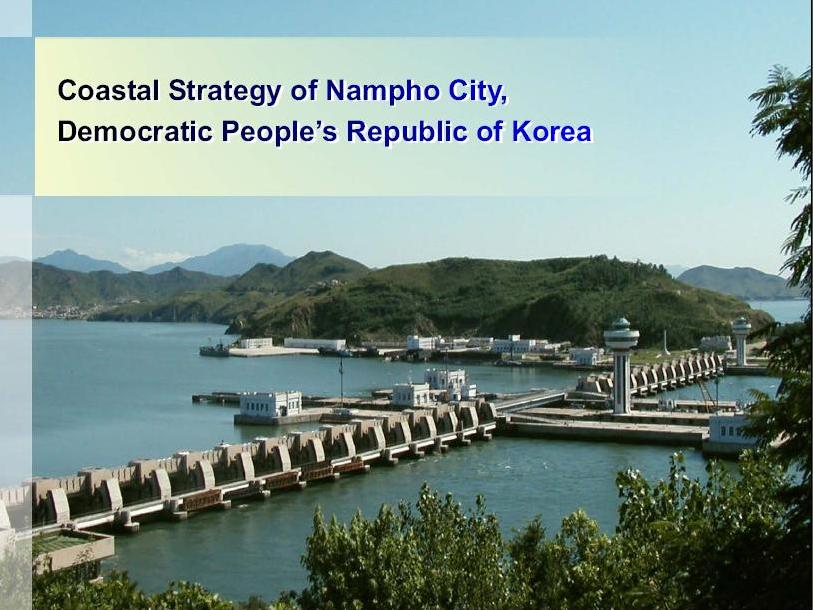
More than you wanted to know about Nampo

Wednesday, January 9th, 2008

nampo.JPG

Judging by this presentation it seems that by 2004 western consultants had already made their way to Nampo:

Click on the image to see the powerpoint presentation.

(more…)

Share

2007 Biggest year for inter-Korean exchange, at USD$1.79 billion

Monday, January 7th, 2008

Institute for Far Eastern Studies (IFES)
NK Brief No. 08-1-10-1
1/10/2008

The net worth of inter-Korean exchanges totaled 1,797,890,000 USD in 2007, up 33% from the 1.35 billion USD in the previous year. Exchanges between the two Koreas began in 1989, and topped one billion dollars for the first time in 2005. The almost 1.8 billion dollars in trade recorded in 2007 is the highest to date, and is equal to 65 percent of North Korea’s non-Korean trade volume of 2.996 billion USD in 2006.

Inter-Korean commercial trade was worth 1,431,170,000 USD, 54 percent higher than the 928 million USD in 2006, while non-commercial trade fell 13 percent, from 421,660,000 dollars in 2006 to only 366,720,000 dollars last year. Overall, commercial trade made up over 80 percent of cross-border exchanges, proving that inter-Korean exchanges continue to grow based on commercial transactions. Commercial trade growth was centered around the mining and fishery sectors (52 percent) and increased production in the Kaesong Industrial Complex (48 percent). Textiles and other goods processed on commission also grew by 30 percent.

Additional manufacturing by companies entering the KIC, as well as the installment of equipment used to increase output by those manufacturers already established in the first phase of the complex, saw a great jump last year. Additionally, South Korea loaned the North 80 million USD for equipment, cloth, soap, polyester fibers, synthetic leather, and other materials to be used in light industry, while the North repayed 2.4 million USD (3 percent) of the loan by delivering 1,000 tons of zinc. This was the first example of the North repaying funds to the South, and shows opportunities for the two Koreas to fulfill each other’s needs and carry out friendly economic cooperation in the future.

With increases in domestic use and export of Bukhan Mountain’s minerals and timber, improvements in communications, customs, and transport issues at the KIC and a growing number of companies moving into the complex leading to an increase in production and manufacturing activity, inter-Korean exchanges are expected to continue to grow in the future.

Share

Will the new ROK govt revisit inter-Korean projects?

Monday, January 7th, 2008

Yonhap (Jan 7, 2008) reports that newly elected South Korean president Lee Myung-bak will revisit the agreement struck between former President Roh and Chairman Kim Jong il last fall.

(excerpt) Projects under review will be the construction of a shipyard complex and its infrastructure in [Haeju] North Korea, along with the establishment of a “peace zone” along the disputed [Northern Line Limit] border in the West Sea, the site of deadly naval clashes between the two Koreas in 1999 and 2002.

“Humanitarian projects, such as the reunion of family members living separately in the two Koreas, and rice and fertilizer aid can be continuously pushed for, but economic cooperation projects should be carried out in parallel with the pace of North Korea nuclear talks,” a key member of the team was quoted as saying at the briefing.

——

Projects in the North are not the only things potentially headed for the chopping block–so it seems is the South Korean Ministry of Unification itself, which could potentially be merged with the South Korean Foreign Ministry. 

The incoming president, however, did suggest a carrot to go with his sticks.  Yonhap reported on January 4 that the new administration plans to launch a USD$40 million fund to promote economic growth in North Korea. 

(excerpt from Yonhap) The planned fund is in line with Lee’s ambitious plan to help increase the impoverished North’s per capita income to $3,000 within a decade if it makes the bold decision to abandon its nuclear program and open its market, said the team’s spokesman Lee Dong-gwan. There are no accurate data on the reclusive nation’s economy but some estimates put its per capita income at around $1,300.

Share

‘Labour hero’ supposedly executed in NKorea

Thursday, January 3rd, 2008

Good Friends claims that a prestigious local politician has been executed for his bourgeois lifestyle…

(excerpt)  A cooperative farm chief who was once honoured by North Korea’s founding president has been publicly executed for starting a private farm to support his luxurious lifestyle, a South Korean aid group said Thursday.

The unidentified man — said to be a member of the national legislature — and two colleagues were put to death by firing squad on December 5 in Pyongsong City, 30 kilometres (20 miles) north of Pyongyang, the Good Friends group quoted sources as saying.

The farm chief, his accountant and the local county’s party secretary were accused of selling produce from an unauthorised farming operation to lead a luxurious lifestyle, said a newsletter from the group which provides aid to the hardline communist state.

The farm chief was accused of failing to register 196 acres (79 hectares) of farmland that had been cultivated over the past decade. He allegedly fed retired soldiers with the produce and used them as his private bodyguards.

The man “acted like a king” in Mundok County and had been deemed untouchable because of his status and the gang of retired soldiers who followed him everywhere, Good Friends said.

All those put to death were said to have lived in upmarket two-storey homes and driven illicit cars.

Read the whole story in the AFP here
1/3/2008

Share
