Archive for the ‘State Offices’ Category

UN panel claims DPRK evading sanctions

Wednesday, November 18th, 2009

The UN panel responsible for implementing UNSC resolutions pertaining to the DPRK has written a report (which is not yet publicly available) claiming that the DPRK continues to evade UN sanctions. According to two different Bloomberg stories :

“The Democratic People’s Republic of Korea has established a highly sophisticated international network for the acquisition, marketing and sale of arms and military equipment,” said the report by a Security Council panel established in June to assess the effectiveness of UN sanctions.

The report said arms sales banned by the UN “have increasingly become one of the country’s principal sources for obtaining foreign exchange.” North Korea has used “reputable shipping entities, misdescription of goods and multiple transfers” to hide arms smuggling, according to the report, which has been circulated within the Security Council and not yet publicly released.

North Korean companies and banks that have been barred from foreign transactions are circumventing the prohibition through subsidiaries, according to “indications” from some member governments, the report said. The Korea Mining Development Trading Corp., cited in April for violations of UN sanctions, “continues to operate through its subsidiary companies,” according to the report.

The Kwangson Banking Corp. and Amroggang Development Bank substitute for or act on behalf of Tanchon Commercial Bank and the Korea Hyoksin Trading Corp., the UN panel said authorities in unspecified countries have determined. The U.S. earlier this year froze the assets of the Kwangson and Amroggang banks.

The UN panel said North Korea is believed to have exported arms to countries in Africa, Southeast Asia, the Middle East and Latin America. Only a “very small percentage” of North Korea’s illegal arms trade has been reported or discovered, the report said.

An example of attempted trade in contraband was reported in August by the United Arab Emirates, which seized a ship carrying North Korean-manufactured munitions, detonators, explosives and rocket-propelled grenades bound for Iran.

According to Reuters:

The Security Council imposed the sanctions, including arms embargoes, asset freezes and travel bans, in resolutions in 2006 and 2009, in response to North Korean nuclear tests and ballistic missile launches. This year for the first time, it listed eight entities and five people who were being targeted.

A report obtained by Reuters on Wednesday was the first to be written by an expert panel set up by the Security Council in May to vet implementation of the sanctions. It is due to be discussed in closed-door council consultations on Thursday.

The six experts said there were several different techniques employed by the isolated communist state to conceal its involvement.

“These include falsification of manifests, fallacious labeling and description of cargo, the use of multiple layers of intermediaries, ‘shell’ companies and financial institutions to hide the true originators and recipients,” the report said.

“In many cases overseas accounts maintained for or on behalf of the DPRK are likely being used for this purpose, making it difficult to trace such transactions, or to relate them to the precise cargo they are intended to cover.”

The experts said North Korea likely also used correspondent accounts in foreign banks, informal transfer mechanisms, cash couriers “and other well known techniques that can be used for money laundering or other surreptitious transactions.”

On illicit arms shipments, the report raised the case of the seizure of a “substantial cargo” of weapons from North Korea. It was apparently referring to arms seized in August by the United Arab Emirates from an Australian-owned ship.

The report also said the North continued to import luxury goods intended for its leadership, despite a U.N. ban. It noted that in July, Italy blocked the sale of two yachts that police said were destined for North Korean leader Kim Jong-il.

The panel, which began work just two months ago, said it would work on recommendations to the Security Council for further firms and individuals to be put on the sanctions list as well as goods whose import by North Korea should be banned.

It also promised more exact definitions of small arms — the only kind of arms Pyongyang can import under existing sanctions — as well as of luxury goods.

Marcus Noland has cleverly named the strategy of tracking down North Korean military financiers and arms dealers “Wac-a-mole“.

Read the full stories below:
North Korean Global Arms Smuggling Evades Ban, UN Panel Says
Bloomberg
Bill Varner
11/18/2009

North Korea Arms Trade Funds Nuclear-Bomb Work, UN Panel Says
Bloomberg
Bill Varner
11/19/2009

North Korea maneuvers to evade U.N. sanctions: experts
Reuters
11/18/2009

Share

In North Korea, the military now issues economic orders

Thursday, November 5th, 2009

Blane Harden wrote an excellent article for the Washington Post on the KPA takeover of state-owned trading companies and how these companies are increasing natural resource exports to China.  (As an aside, China has just recently ceased publishing North Korean trade data).  This is interesting because just a year-and-a-half ago we were discussing Jang Song-thaek’s anti-corruption campaign which was supposed to be closing down KPA companies and making them reapply for export licenses with the Ministry of Foreign Trade (meaning the WPK could start dipping into the revenue pools).

Quoting from Mr. Harden’s article:

The potential profits are eye-popping: China is one of the world’s most voracious consumers of raw materials, and North Korea’s mineral reserves are worth $5.94 trillion, according to an estimate by South Korea’s Ministry of Unification. China has been critical of North Korea’s nuclear program and missile tests, but it also has vastly increased its economic ties with Kim’s government.

Kim is increasingly creaming off a significant slice of Chinese mineral revenue to fund his nuclear program and to buy the loyalty of elites, according to “North Korea, Inc.,” a recent report by the United States Institute of Peace, a Washington-based group funded by the U.S. Congress.

The report echoes the views of North Korean analysts in South Korea, Japan and the United States, who say the military has elbowed out other ministries and the Korean Workers’ Party to take control of exports that earn hard currency. The military is also sending trucks to state farms to haul away as much as a quarter of the annual harvest for its soldiers, analysts say.

“The military is by far the largest, most capable and most efficient organization in North Korea, and Kim Jong Il is making maximum use of it,” said Lim Eul-chul of the Institute for Far Eastern Studies in Seoul.

North Korea is perhaps the world’s most secretive and repressive state, but it makes no attempt to hide the ubiquitous role the military plays in the daily lives of the country’s 23.5 million people. Soldiers dig clams and launch missiles, pick apples and build irrigation canals, market mushrooms and supervise the export of knockoff Nintendo games. They also guard the country’s 3,000 cooperative farms, and help themselves to scarce food in a hungry country.

Missile sales were for many years major earners of foreign currency, according to a report for the Strategic Studies Institute by Daniel A. Pinkston, who is now a Seoul-based analyst with the International Crisis Group. But the cost of the arms trade has gone up and sales have declined as a result of U.N. sanctions imposed after the North’s nuclear tests in 2006 and this year, South Korean analysts say.

The military has thus turned to its new Chinese cash cow. As the army has taken over management of mines in North Korea, mineral exports to China have soared, rising from $15 million in 2003 to $213 million last year. Led by those sales, the North’s total trade volume rose last year to its highest level since 1990, when a far more prosperous and less isolated North Korea was subsidized by the Soviet Union.

A unique advantage the Korean People’s Army brings to foreign trade is a well-disciplined workforce that has to be paid — nothing. Soldiers receive food, clothes and lodging, but virtually no cash. This competitive edge makes military-run trading companies especially attractive to the North’s leadership, according to the Institute of Peace report.

Based on confidential interviews with recent North Korean defectors, four of whom said they worked for trading companies run by the military, the paper concludes that a “designated percentage of all revenues generated from commercial activities . . . goes directly into Kim Jong Il’s personal accounts.” The rest of the revenue flows into the operating budget of the military.

The full article is worth reading here.

Additionally, the report by the Institute of Peace cited above, “North Korea, Inc.”, can be downloaded here. The paper is on my reading list this weekend, but here is the introduction and conclusion:

Introduction: Assessing regime stability in North Korea continues to be a major challenge for analysts. By examining how North Korea, Inc. — the web of state trading companies affiliated to the Korean Workers’ Party (KWP), the Korean People’s Army (KPA), and the Cabinet — operates, we can develop a new framework for gauging regime stability in North Korea. Insights into the Democratic People’s Republic of Korea (DPRK)1 regime can be gained by examining six core questions related to the DPRK state trading company system. First, what are DPRK state trading companies and how did they emerge? Second, how do DPRK state trading companies operate? Third, what roles do they play? Fourth, why are DPRK state trading companies important? Fifth, what major transformations are taking place in the DPRK state trading company system? Sixth, what are the implications of the manner in which this system is currently functioning?

Conclusion:  Despite lingering problems with the fragmented Public Distribution System, the challenges of chronic food shortages, and a deteriorating economic infrastructure system, the DPRK regime has proven to be remarkably resilient. By operating North Korea, Inc. — a network of state trading companies affiliated to the KWP, the KPA, and the Cabinet — the regime is able to derive funds to maintain the loyalty of the North Korean elites and to provide a mechanism through which different branches of the North Korean state can generate funds for operating budgets. During periods when the DPRK’s international isolation deepens as a result of its brinkmanship activities, North Korea, Inc. constitutes an effective coping mechanism for the Kim Jong Il regime.

While North Korea remains an opaque country, we now have greater access to unique defectors with the following characteristics — prior experience working in DPRK state trading companies and current business dealings with former colleagues in North Korea through channels in China. By closely examining DPRK commercial activities and capabilities, a new field of North Korea analysis can be structured to produce insights into the internal dynamics of the DPRK regime. This new line of inquiry would help to broaden our understanding of an evolving North Korea.

Share

North Korean food shortage to grow, crimes of necessity on the rise

Tuesday, November 3rd, 2009

Institute for Far Eastern Studies (IFES)
NK Brief No. 09-11-02-1
11/2/2009

The North Korean agricultural ministry has announced that the countries food shortages are expected to be even greater next year. Edition 302 of the newsletter “North Korea Today,” distributed by the group Good Friends, reports that the Ministry of Agriculture announced harvest predictions for farms in North and South Hwanghae and Pyongan provinces, North Korea’s ‘ricebowl region’. It stated that if the country was to avoid a food crisis next year, everyone would need to strictly manage this year’s crops. It was also reported that the central party authorities in North Korea, after receiving the report, called for the opening of all customs houses in the border region and for trading companies to seek new avenues for trade. An order was passed down to “relentlessly trade with the outside in order to bring in much food.”

With food shortages this year and last, and now news that there will be food problems next year as well, it is rumored that there is a growing number of angry people in the normally mild-mannered Hwanghae Province. In addition, this is driving a growing number of people to turn to crime in order to put food on the table. On October 26, Free North Korea Radio quoted a source as stating, “As rumors spread across North Korea that large-scale famine, the likes of which were seen in the mid-1990s, will again sweep through country next year, anxiety is shooting up among the people and crimes of necessity are on the rise.”

According to the source, “Crimes of necessity, like pillaging granaries on farms, are spreading like never before as people act quickly to ensure food supplies,” and, “Fighting has grown fierce between people trying to maintain their standard of living.” Furthermore, “The number of people in the Dancheon region of South Hamgyeong Province just ‘sitting down and starving to death’ is exploding,” and, “Not long ago, there was even one incident of and armed soldier guarding a threshing floor of one farm being attacked by a gang of thieves.”

The source explained, “People are well aware that this year yielded poor harvests, but that they cannot rely on aid from the international community because of the Kim Jong Il regime’s indiscriminant pursuit of nuclear development.” The source also added, “These days, people are rationalizing illegal activities in the belief that ‘you can rely on no one but yourself.’”

It was also reported that in Hyesan, Hyeryeong, Onseong and Musan, most food prices are at higher levels than what are usually seen in the spring, despite the fact that it is now fall harvest season. According to Free North Korea Radio, October 23rd prices of rice, flour and corn in Hyesan, Hyeryeong, Onseong, and Musan were as follows: Hyesan, rice = 2,550-2,750 won/1 kg, flour = 2,400-2,600 won/1 kg, corn = 850-900 won/1 kg; Hyeryeong, rice = 2,500-2,800 won/ 1 kg, flour = 2,400-2,700 won/ 1 kg, corn = 800-1,000 won/1 kg; Onseong, rice = 2,450-2,600 won/ 1 kg, flour = 2,500-2,700 won/1 kg, corn = 700-900 won/1 kg; Musan, rice = 2,500-2,700 won/1 kg, flour = 2,400-2,600 won/1 kg, corn = 850-1,000 won/1 kg

Share

Treasury blacklists another DPRK bank

Sunday, October 25th, 2009

The US Treasury Department has targeted  the Amroggang Development Bank for its connections with the Tanchon Commercial Bank.

According to Reuters:

Tanchon was previously hit with sanctions by both the United States and the United Nations Security Council for its involvement in Pyongyang’s proliferation activities.

Treasury said assets of Tanchon under U.S. jurisdiction are frozen and Americans are banned from any dealing with it. It said that Tanchon’s president, Kim Tong Myong, also was being added to the list of weapons proliferators.

Treasury described Amroggang as a Tanchon-related company run by Tanchon officials. It said Tanchon helps finance Korea Mining Development Corp’s sales of ballistic missiles and has been involved in Komid’s ballistic missile transactions with an Iranian industrial group.

The US has sanctioned several companies and banks this year (here, here, here).

The UN Security Council has also sanctioned several companies and individuals (here).

Here is a link to the Treasury Department Statement.  Some text below:

Amroggang, which was established in 2006, is a Tanchon-related company managed by Tanchon officials.  Tanchon, the financial arm of the U.S. and UN-designated North Korean company Korea Mining Development Corporation (KOMID), plays a role in financing KOMID’s sales of ballistic missiles and has also been involved in ballistic missile transactions from KOMID to Iran’s Shahid Hemmat Industrial Group (SHIG), the U.S. and UN-designated Iranian organization responsible for developing liquid-fueled ballistic missiles. KOMID is North Korea’s premiere arms dealer and main exporter of goods and equipment related to ballistic missiles and conventional weapons.

A North Korean individual Kim Tong Myong was also designated today for acting on behalf of Tanchon.  Kim Tong Myong has held various positions within Tanchon since at least 2002 and is currently Tanchon’s President.  He has also played a role in managing Amroggang’s affairs using the alias Kim Chin-so’k.

Read the full Reuters article here:
Treasury puts North Korean bank on blacklist
Reuters
10/23/2009

Share

World Council of Churches visiting North Korea

Wednesday, October 21st, 2009

UPDATE 2: Well apparently the World Council of Churches is in bed with the North Korean Ministry of Foreign Affairs.  According to their most recent press release:

Nearly 140 leaders from the world’s churches, North and South Koreans among them, have called for the formation of an inter-Korean confederation even before complete reunification of Korea can take place. Agreement was reached at the close of a three-day meeting in Tsuen Wan, Hong Kong where the Christian leaders expressed unrelenting hope for peace and reconciliation among Koreans, despite the stark realities of the ongoing division of the Korean peninsula.

The call for a confederation came in a communiqué developed by the group at the end of their international consultation on Korean reunification. The “Tsuen Wan Communiqué” says the confederation option would involve progressive steps such as peaceful co-existence and the furthering of economic cooperation between the two Koreas.

The proposal for an inter-Korean confederation was presented to the group jointly by church leaders from North and South Korea on the final day of deliberations.

The “confederation system would respect both governments”, said the Rev. Kang Yong Sop, chairman of the Korea Christian Federation of North Korea, in a presentation to the group on Friday morning.

“North and South Korea must first recognize each other’s systems and engage in cooperation in any field possible, and institutionalize the results,” said Suh Bo Hyug, a member of the National Council of Churches in Korea’s reconciliation and reunification committee: “Only then will they move closer to reunification.”

The communiqué was the outcome of a consultation on peace, reconciliation and reunification of the Korean peninsula held 21 to 23 October 2009, sponsored by the World Council of Churches (WCC) and the Christian Conference of Asia (CCA).

Of course the confederation plan was raised by Kim Il sung years ago and the DPRK is still pushing that vision as an intermediary step towards reunification.

And if there was any doubt remaining:

They also called for all sanctions against North Korea imposed by the United Nations Security Council to be lifted, for immediate bilateral talks between the United States and North Korea, and for North and South Korea to implement fully the 15 June 2000 North-South Joint Declaration and the 4 October 2007 Declaration, both of which spelled out a number of goals and steps toward reunification.

UPDATE 1:  The WCC issued an interesting press release following their visit to the DPRK.  Here is an excerpt:

Visiting North Korea at the invitation of the Korean Christian Federation of North Korea, Kobia and the delegation visited three churches on Sunday 18 October.

In addition to visiting the Bong Soo Church the delegation also visited the Chilgol Church in the capital, Pyongyang, and a house church of 12 members in the town of Sunam which is near Pyongyang.

Continuing with the Corinthian example Kobia told the Bong Soo congregation that no church is more important than the other. “The body is whole when all the parts cooperate with each other,” he said. “Therefore in his letter to the churches in Corinth, Paul appeals to the community to recognize each other as being a very important part of the body.”

The Bong Soo Church was constructed in 1987 with funding from the North Korean government and the Presbyterian Church of Korea. The church is thoroughly modern with a full sound system, balcony and music text on a large screen in front of the church, a video camera system, a high-lofted ceiling and an area for a large choir.

Bibles and songbooks line the seating areas for the congregations. Within the church compound is a recently constructed theological seminary where 12 students are now enrolled to earn degrees in evangelism.

The Bong Soo worship service overflowed with music from the choir, soloists and several women’s groups, mostly singing traditional hymns. Asked if the abundance of music was especially for the WCC delegation, a congregation member said no, “this happens every week.”

The smaller congregation at the Chilgol Church, which the WCC delegation also visited, has been in existence since the late 1800s. The current building is relatively new, as the original building was destroyed in the Korean War by the U.S. bombing of Pyongyang.

A WCC delegation member asked the congregation about the noticeable absence of children in the churches. While acknowledging this is a challenge within North Korean society, they said the children are involved in a broad range of other activities and some will at a later age come to church. They said it was their job to teach their children at home about Christianity.

On Sunday afternoon the WCC delegation visited a house church of 12 members who meet in a home in the community of Sunam outside of Pyongyang. They said the house church movement within North Korea is growing.

The church meets on Sundays, sitting on the floor of the living room of a member’s home. One member brings an accordion to accompany the singing. The singing in the North Korean church tends to be extraordinarily rich and is a key part, along with prayer and teaching, of any worship service.

Read the full press release here.

ORIGINAL POST: According to the press release on their web page (written before departure):

The visit is at the invitation of and being organized by the Korean Christian Federation (KCF) of North Korea and will take place 17 to 20 October.

“We will be meeting with the churches, government officials and learning about the life and witness of churches in North Korea,” said Dr Mathews George Chunakara, director of the WCC Public Witness programme and the Commission of the Churches on International Affairs, who will be a member of the delegation travelling with Kobia. “We will be participating in the worship service at Bong Soo Church in Pyongyang, where the WCC general secretary will preach.”

The churches in North Korea are involved in social development and humanitarian aid assistance, and the members of WCC’s ecumenical fellowship have been supportive to the KCF for the past several years, said Chunakara.

The visit is taking place at a time when intense multilateral diplomatic efforts and negotiations are under way on issues related to denuclearization of North Korea and resumption of Six Party Talks, which were stalled for some time after North Korea withdrew from the talks.

Although North Korean leader Kim Jong-il is said to have made the announcement to Chinese Premier Wen Jiabao in Pyongyang last week during his three-day visit that North Korea would return to the Six Party Talks, it is also reported that Kim Jong-il said the return would be dependent on the progress of its planned bilateral talks with the US.

The WCC has been relating with the churches in North Korea for the past 25 years, with the first official visit having taken place in 1985. In the early 1980s the WCC Commission of the Churches on International Affairs initiated a process aimed at peace, reconciliation and reunification of the Korean peninsula and bringing church leaders from North and South Korea together.

This is the second visit of a WCC general secretary in ten years. In 1999, then general secretary Rev. Dr Konrad Raiser visited North Korea.

After the visit to North Korea, the delegation will travel to Hong Kong to participate in an international consultation on peace, reconciliation and reunification of the Korean peninsula, which will be held from 21 to 23 October.

The WCC general secretary will be accompanied by WCC staff members Mathews George Chunakara, Christina Papazoglou, Mark Beach and Peter Williams, as well as the general secretary of the Christian Conference of Asia, Dr Prawate Khid-arn.

Critics of the DPRK have long argued that the primary purpose of Korean Christian Federation is to attract aid from foreign religious organizations. This is probably true to some extent, but the organization has been around since the 1940s so it is likely that by this point its mission within the political system is more complicated than to function only as an aid magnet.

Here are a few older posts about the KCF.

Share

Golden Jubilee of FTB Celebrated

Thursday, September 24th, 2009

(KCNA) Pyongyang, September 24 (KCNA) — The 50th anniversary of the founding of the Foreign Trade Bank was significantly celebrated in the DPRK.

Established in Juche 48 (1959), the bank has conducted settlement with other countries and financial transactions in a uniform manner as required by the nation’s developing external economic relations.

The bank has boosted its business relations and satisfactorily ensured settlement with banks of various countries, laying a groundwork for developing the nation’s external economic relations including foreign trade.

The bank has further boosted its business capability and improved international confidence as required by the times when the country’s international prestige and economic potential are rising remarkably and made a brisk way into international financial markets, steadily expanding the business relations with various other banks of the world on the principle of independence, equality and mutual benefit.
A meeting celebrating the golden jubilee of the FTB was held in Pyongyang Thursday.

Present there on invitation were delegations and delegates of various countries participating in the celebrations of the golden jubilee of the bank, staff members of embassies of foreign countries here and foreign guests staying in the DPRK.

O Kwang Chol, president of the bank, delivered a report at the meeting.

Additionally: Previous posts featuring the Foreign Trade Bank here.

Share

North Korea shuffles cabinet in effort to build a strong and prosperous nation

Tuesday, September 22nd, 2009

Institute for Far Esatern Studies (IFES)
NK Brief No. 09-22-1
9/22/2009

In order to meet the goal of building a ‘Strong and Prosperous Nation’ by the year 2012, North Korean authorities are reshuffling some positions within the Cabinet, which is its ‘Economic Headquarters’. During the first session of the 12th Supreme People’s Assembly (SPA) last April, Kim Jong Il launched his third regime, and now less than 6 months later, is restructuring the Cabinet. For example, the National Science and Technology Council, which was merged into the Cabinet Academy of Science (now the National Academy of Science) in 1998, has been re-established.

North Korean media briefly reported on the 19th that the SPA Standing Committee brought out the “Democratic People’s Republic of Korea National Science and Technology Council” through the announcement of Government Ordinance # 301. The press did not follow up with specifics concerning the announcement, but the recent position of North Korean authorities that “without scientific and technological development, there is no independence, no national defense, and no economy,” it appears that the recent cabinet order is related to attempts by the North to strengthen its economy.

The first National Science and Technology Council established in the North was created in 1962, and was intended to support the national defense industries. The Academy of Science, which had been established 10 years prior, was put under the control of the council, and the council was responsible for the creation and implementation of a national science and technology plan, as well as for providing guidance over research activities. However, as the North’s level of science and technology improved, the council, which was not made up of experts on science and technology, was unable to appropriately guide the research carried out by the academy. In 1982, the academy was separated from the council, and its status was boosted to that of an independent entity.

North Korea is currently in its 3rd 5-year plan to “develop new national science and technologies” by 2012. Currently, North Korea is prioritizing the modernization of factories, enterprises and other industries, and Kim Jong Il has stressed modernization and the introduction of vanguard technologies during his on-site inspections of the nation’s economic facilities. Therefore, it appears that the newly established National Science and Technology Council will be responsible for overseeing cooperation between mechanical and chemical industries and the modernization of the industrial sector, while the National Academy of Science will focus purely on research.

Share

ROK approves delegation to visit PUST opening

Monday, September 14th, 2009

UPDATE 4:  More on the Leadership of PUST from Houston Business Journal:

A Rice University professor has paved the way for a private university in North Korea.

Malcolm Gillis, the Ervin Kenneth Zingler professor of economics and professor of management, is part of a four-person committee that founded the Pyongyang University of Science and Technology, which will open next spring.

Members of the committee include founding President James Chin-Kyung Kim; Chan-Mo Park, former president of Pohang University of Science and Technology in South Korea; and Jung Bae Kim, former president of Korea University.

Gillis, who was president of Rice from 1993 to 2004, said the project goes back to 1997 when he met with the late Kim Dae Jung, then president-elect of South Korea, to engage in peace talks between North and South Korea.

PUST will offer programs for information technology, industry and management, and agriculture studies, with plans to open new schools for architecture, engineering and public health in the near future.

Reference:
Rice University professor co-founds North Korean university
Houston Business Journal
10/9/2009
UPDATE 3: According to Yonhap:

“North Korea is stumping for opening this university,” Kim Jin-kyung, co-president of the Pyongyang University of Science and Technology, said, returning from a three-day trip to the North Korean capital.

“There are many difficulties, but we are aiming to open the school within this year,” Kim said. He is also president of the Yanbian University of Science and Technology, run with South Korean non-governmental funding, in the Korean autonomous prefecture of Yanbian, northeastern China.

The school seeks to first accept 150 students in the fields of information and communications engineering; agricultural biotechnology and food engineering; and industrial management, he said.

All lectures will be in English, and students will be required to meet the paper-based TOEFL score of 550, Kim said. North Korea has already recruited prospective students among “carefully chosen elites” who studied at top North Korean schools like Kim Il Sung University and Kim Chaek University of Technology, he added.

“North Korea asked us to get the school to have competent faculty members,” he said. “We expect the South Korean government to lend support in the larger context of inter-Korean reconciliation.”

Park Chan-mo, a science and technology advisor to President Lee Myung-bak who attended the completion ceremony with Kim, said Seoul is supportive.

“The fact that (the government) gave permission to the North Korea trip shows it has a will to lend support,” Park said.

The school will be reportedly co-headed by North Korea’s vice education minister, Jon Kuk-man. North Korean media reported the South Korean delegation’s departure earlier Thursday.

UPDATE 2: According to KCNA:

First-Phase Construction of University of Science and Technology Completed

Pyongyang, September 16 (KCNA) — A ceremony for the completion of the first-phase construction of Pyongyang University of Science and Technology was held Wednesday.

Present there were Jon Kuk Man, vice-minister of Education, officials concerned and members of a delegation led by Chin Kyung Kim, founding-president of the university.

Speeches were made there.

After a certificate on nominating the co-managerial president of the university was conveyed to the founding-president, the participants looked round the building of the university completed as the first-phase construction.

UPDATE 1:  CNN published an extensive article on PUST this afternoon.  Read the whole story here (Thanks to AFC).  According to the story:

James Kim, an American businessman turned educator, once sat in the very last place that anyone in the world would wish to be: a cold, dank prison cell in Pyongyang, the godforsaken capital of North Korea.

Kim, who had emigrated from South Korea to the United States in the 1970s, had been a frequent visitor to Pyongyang over the years in pursuit of what, to many, seemed at best a quixotic cause. He wanted to start an international university in Pyongyang, with courses in English, an international faculty, computers, and Internet connections for all the students.

Not only that — in the heart of the world’s most rigidly Communist country, Kim wanted his school to include that training ground for future capitalists: an MBA program.

During one of his trips to the capital in 1998, with North Korea in the midst of a famine that would eventually kill thousands, the state’s secret police arrested Kim.

North Korean dictator Kim Jong Il didn’t lock up the educator for being crazy. He got it in his head that the oddly persistent American — who at the time, among other things, was helping to feed starving North Koreans with deliveries of food aid from China — was a spy.

So for more than 40 days, Kim languished in a North Korean prison. An evangelical Christian, Kim wrote his last will and testament during those days, not knowing if he’d ever get out.

Which makes where he plans to be in mid-September all the more astonishing. Kim will lead a delegation of 200 dignitaries from around the world to North Korea for the dedication of the first privately funded university ever allowed in the Democratic People’s Republic of Korea: the Pyongyang University of Science and Technology (PUST).

The school will have an international faculty educating, eventually, around 600 graduate students. Kim dreams ultimately of hosting an industrial park around the PUST campus, drawing firms from around the world — a North Korean version, as bizarre as it sounds, of Palo Alto or Boston’s Route 128.

There will be Internet access for all, connecting the students to an outside world that they’ve heretofore been instructed is a hostile and dangerous place. And among the six departments will be a school of industrial management.

“We ended up not calling it an ‘MBA program,'” jokes David Kim (no relation to James), a former Bechtel and Pacific Gas & Electric executive who has relocated to Pyongyang to help set up PUST, “because they [the North Koreans] think it sounds vaguely imperialistic.”

That the North Koreans are permitting this to happen — that they have given James Kim the nod to create his university, just as he intended — is remarkable.

It’s hard for outsiders to understand just how backward, isolated, and impoverished North Korea is. Since the collapse of the Eastern bloc 20 years ago, fewer and fewer North Korean university students study abroad. Allowing PUST to proceed lets a gust of fresh air into a stilted, frightfully isolated environment.

The rest of the story is worth reading here.

ORIGINAL POST: Although the Pyongyang University of Science and Technology (PUST) has yet to set an opening date, a South Korean delegation will be visiting the DPRK to commemorate the completion of the facility.  According to Yonhap:

South Korea permitted a delegation from a private foundation to visit North Korea this week to celebrate the completion of a science and technology university jointly built with the North, Seoul’s Unification Ministry said Monday.

The ceremony for the Pyongyang University of Science and Technology is scheduled for Wednesday, according to ministry spokesperson Chun Hae-sung. He said the 20-member delegation will make a three-day trip to the North beginning Tuesday.

The delegation includes Kwak Seon-hee, head of the Seoul-based Northeast Asia Foundation for Education and Culture. The foundation was mostly responsible for organizing donations and fundings for the university, the first to be jointly-operated with an organization not based in the North.

The move marks the first time that the Seoul government has approved a non-humanitarian visit to the North since the communist state carried out its second nuclear test in May.

The date of the school’s opening and other administrative affairs, however, have yet to be decided and must be worked out between the North Korean authorities and the foundation.

Kim Jin-kyung, head of the Yanbian University of Science and Technology in China, will serve as president of the university until its official opening, according to ministry officials.

Further information:

1. Here are previous PUST posts.

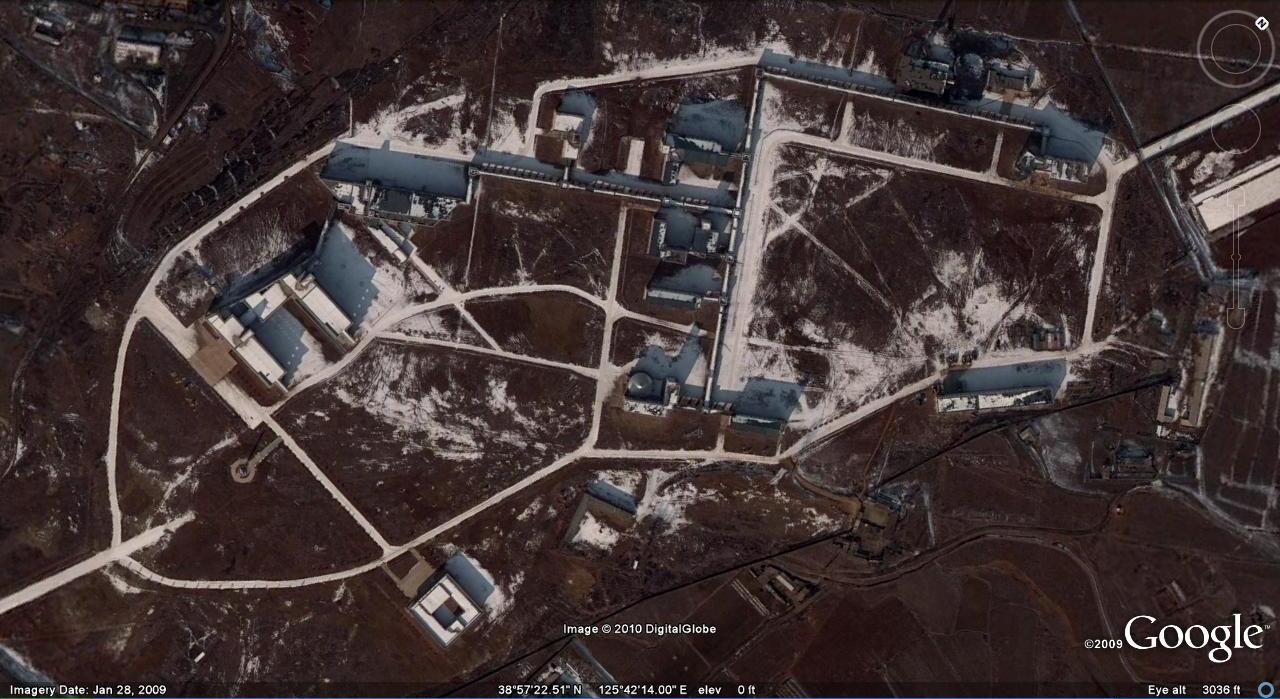
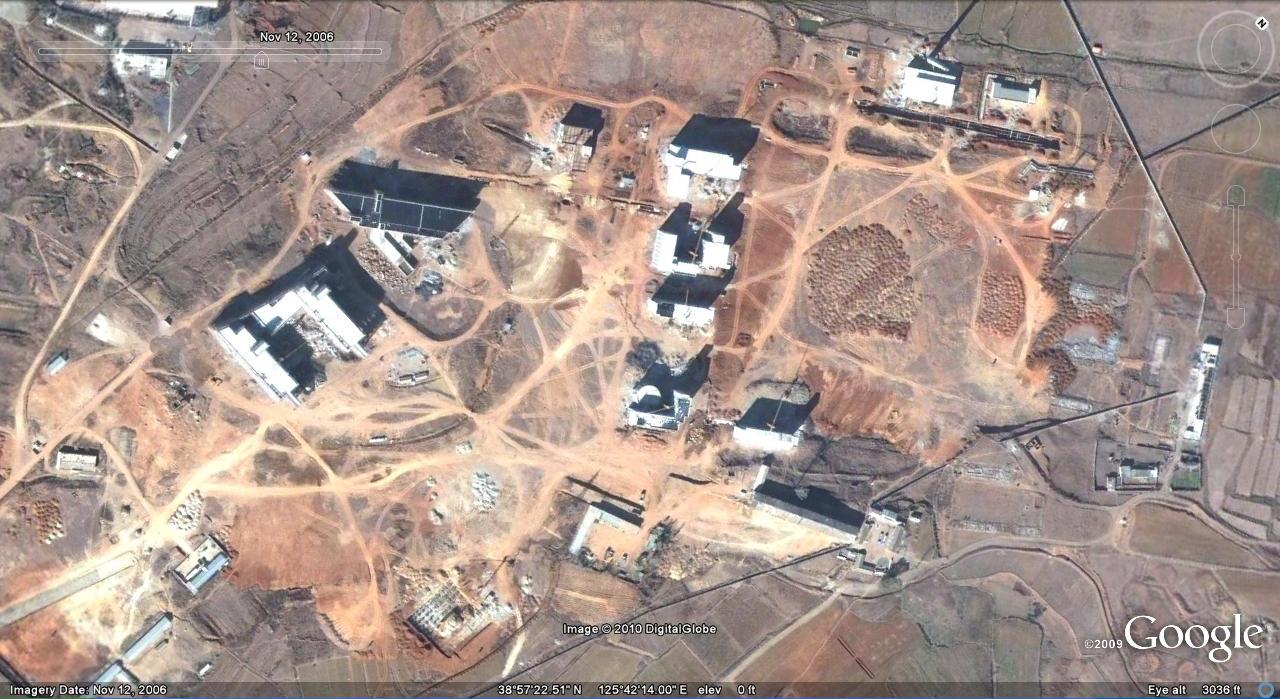
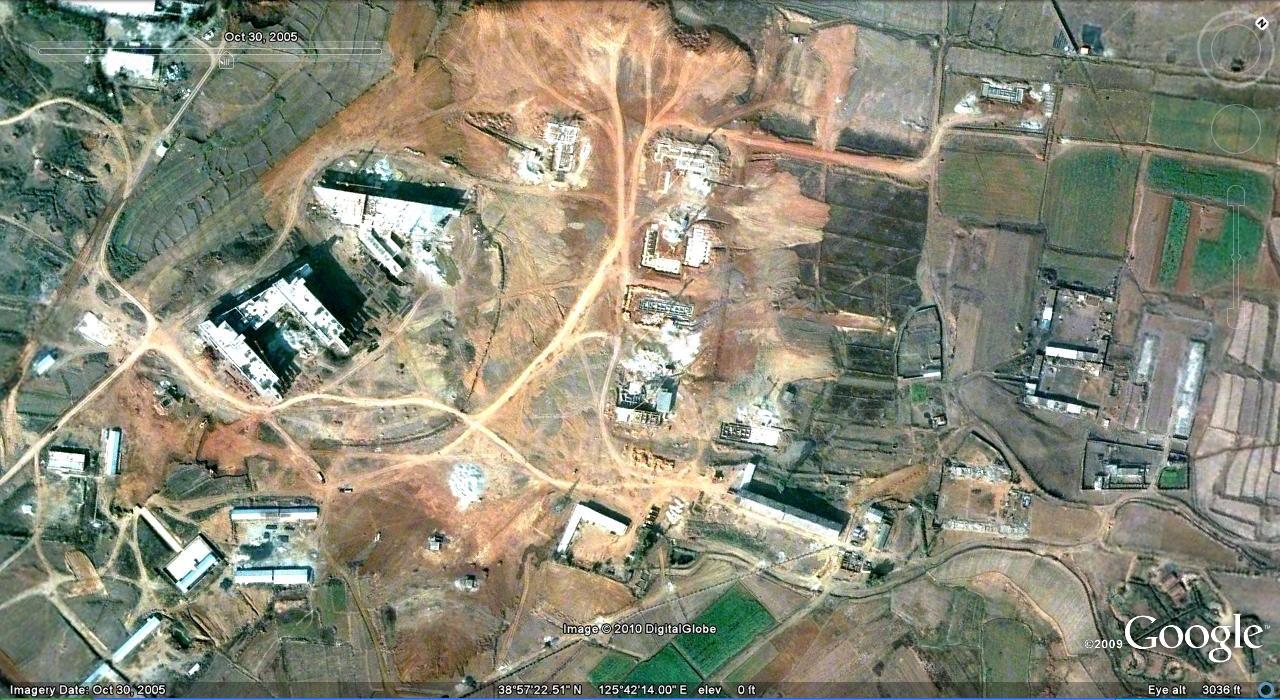
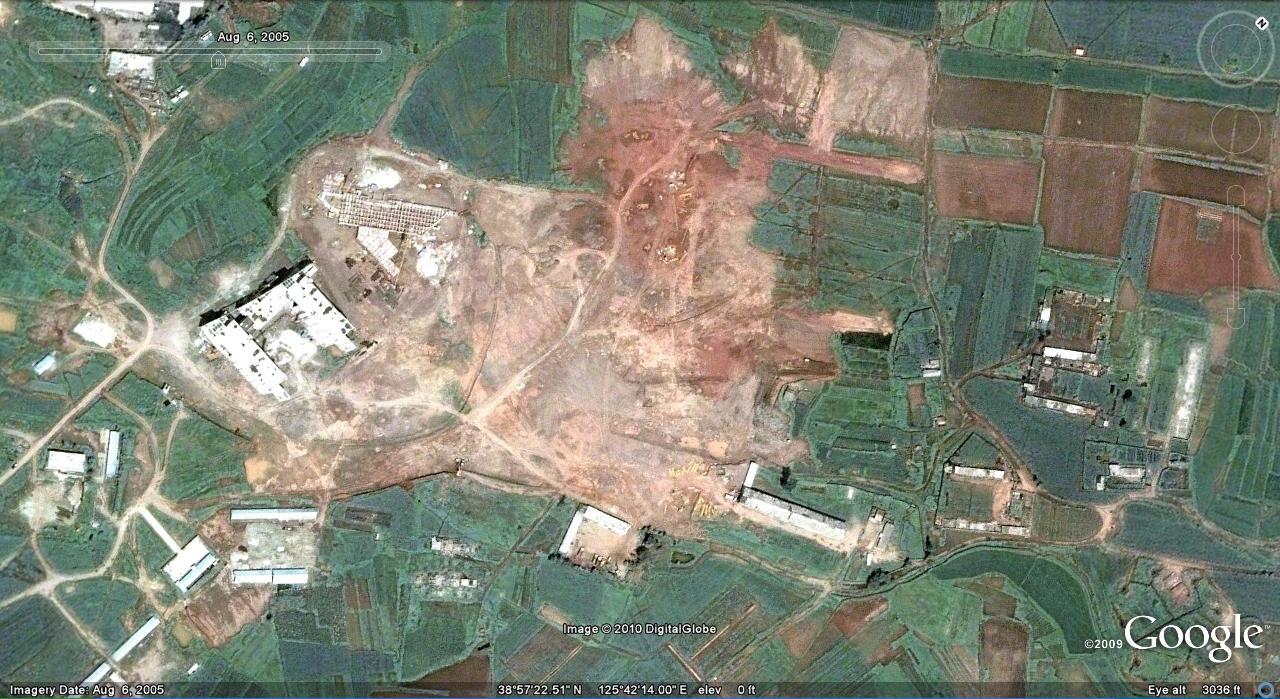
2. Here is the location of PUST.

3. Here is the PUST Wikipedia page.

4.  There are two PUST web pages.  Here is the firstHere is the second. (Thanks to AFC)

Read the full story here:
Seoul approves N.K. trip to mark completion of tech university
Yonhap
9/14/2009

Share

US sanctions more DPRK organizations

Tuesday, September 8th, 2009

According to Reuters (via the New York Times):

The United States moved on Tuesday to freeze the assets of two North Korean entities believed to be involved in atomic and missile programs, raising pressure on Pyongyang to resume disarmament talks.

Despite a recent charm offensive by North Korea, the State Department moved against its General Bureau of Atomic Energy, which oversees the nuclear program, and Korea Tangun Trading Corp, believed to support its missile programs.

Both were targeted under a presidential executive order that allows the White House to freeze the U.S. assets of people and entities suspected of developing weapons of mass destruction or the means to deliver them, including missiles.

“These designations continue U.S. efforts to prevent North Korean entities of proliferation concern from accessing financial and commercial markets that could aid the regime’s efforts to develop nuclear weapons and the missiles capable of delivering them,” the State Department said in a statement.

The action requires U.S. individuals, banks and other institutions to block the assets of the North Korean entities.

It was unclear whether either actually had any assets under U.S. jurisdiction but American officials said Washington hoped the move would discourage other countries from doing business with North Korea.

“Are we hoping for a spillover effect? Of course,” said one U.S. official.

These two organizations were targeted by the UNSC earlier this year.

Here is information and (links to information) taken by the US and UN in 2009.

Read the full story here:
U.S. Acts to Freeze Assets Of Two N.Korean Entities
Reuters (via New York Times)
9/8/2009

Share

DPRK eases fees for investors

Monday, September 7th, 2009

According to Yonhap:

North Korea has taken steps to attract more overseas investors by scrapping extra land use fees and introducing selective import rules that can help foreign-owned companies maintain a market share, a Chinese newspaper said Friday.

According to the Jilin Newspaper, the official daily of China’s Jilin Province, a North Korean official promoted the new foreign-investor friendly measures during a recent trade exposition held in the city of Changchun.

“We revised pertinent laws and regulations so as to relegate land use fees, which have been paid annually by foreign-invested companies to their (North) Korean partners that loan the land,” Yun Yong-sok, a senior official at the international investment department of the North’s Ministry of Foreign Trade, was quoted by the paper as saying at the expo. North Korea’s Radio Pyongyang reported a delegation’s trip to the Chinese expo on Aug. 26.

Foreign investors have so far paid annual land use fees to the North Korean government in addition to a one-off lease payment, which will be still levied after the revisions.

The measures come as North Korea faces tightening international sanctions over its May nuclear test. The U.N. sanctions ban North Korea’s arms trade, a major source of income for the impoverished country, and closely scrutinize cash flows to the North.

North Korea also introduced “state support measures,” such as banning imports of goods that are already produced in adequate quantities within the North by foreign companies to ensure investors’ profits, Yun was quoted as saying.

Foreign companies that invest in science and technology in the North will get additional tax incentives, but those who take North Korean minerals, timber or fish abroad will be levied a new “resource tax” to protect the country’s natural resources, Yun added.

Read the full story here:
N. Korea boosts incentives for foreign investors
Yonhap
9/4/2009

Share

An affiliate of 38 North