Archive for the ‘International Governments’ Category

Mongolia to hire North Korean workers

Tuesday, July 22nd, 2008

From Daily Business News Mongolia:

At the submission of the Government of Mongolia, the Parliament ratified Mongolia-North Korea Inter-governmental Agreement on exchanging work forces on the 20th of July, 2007. According to the Agreement, Ministry of Social Welfare and Labor of Mongolia is to negotiate in the near future with Foreign Trade Ministry on realizing the agreement and exchange of work force, especially number and need of work force, the minimum wage /by USD/, labor conditions /normal and abnormal/, social welfare /social insurance/ and therefore those interested in employing North Korean wok force in 2009 should formulate their TORs accurately as well as submit them to the MSWL within 23 July. Currently orders should be submitted on the basis of position vacancy since number of workers is not specified yet.

Read more here.

Share

(UPDATE) China asks some North Koreans to leave ahead of Olympics

Monday, July 21st, 2008

UPDATE 2: According to the Associated Press:

[A South Korean] NIS official, who asked not be named, citing an internal policy, told The Associated Press that China had no plans to close all bridge links with North Korea “out of concerns of diplomatic friction with North Korea.”

The official also said China would not ask all North Koreans in China to leave, saying that Beijing plans to crackdown on North Koreans who illegally stay in China and Beijing plans to restrict renewing visas for North Koreans. 

UPDATE 1:  According to the Associated Press, China plans to close all the bridges to the DPRK during the Olympics, starting next month.  This will have a devastating impact on trade with Sinuiju, Manpo, Hyesan, Hoeryong, and many other trading hubs along the Chinese border.

ORIGINAL POST: According to an interesting article in Bloomberg (thanks to reader) China is acting to reduce the chances that North Korea issues will interfere with coverage of the Olympic games in Beijing this summer.

According to the article:

China asked some North Korean work units to leave the country or move their business operations during the Olympic Games, according to documentation from the North Korean embassy obtained by Bloomberg News.

Citing security issues, China asked North Koreans, except trade representatives and government-dispatched personnel, to leave by July 31 and not return until the end of September, the Korean-language statement said. The embassy in Beijing gave the order to North Koreans in a July 11 directive, according to a copy of the document obtained by Bloomberg News.

The order took effect from July 13 and those who delay departure would be fined or not allowed to reenter China, according to the document. Workers scheduled for dispatch to China from July 1 should delay their departure until Sept. 25, it said.

and…

It isn’t clear how authoritative the directive is. Five North Korean businessmen contacted by Bloomberg news provided different departure dates, or said they were not affected by the directive. The people refused to be identified in print, citing possible recriminations.

A press attaché at the Chinese embassy in Tokyo who declined to give his name said he wasn’t aware of the directive and that there would be no way to confirm its existence.

Read the articles here:
China asks some North Koreans to leave ahead of Olympics
Bloomberg
Hideko Takayama
7/15/2008

Report: China to shut down all bridges linked to NKorea during Olympics
Associated Press
7/21/2008

China to step up inspections at border with North Korea during Olympics to stop migrants
Associated Press
Kwang-Tae Kim
7/22/2008

Share

Pyongyang wants McDonald’s franchise?!?

Wednesday, July 9th, 2008

Incredible! 

Burger Chain ‘Rebuffed N.Korean Overtures’
Choson Ilbo
7/10/2008
 
Influential North Koreans tried to bring McDonalds into the country, but the fast-food chain declined citing lack of profitability, Radio Free Asia reported Wednesday. RFA quoted Nancy Mazeska at MacDonald’s International Franchise Division as saying the person who contacted the chain probably had “political connections” and a “history of success in North Korea.” But due to the poor infrastructure and distribution network and probable lack of demand, McDonalds decided to take a rain check.

McDonalds at one point thought about letting its franchise in South Korea handle North Korean operations, she said. She did not comment further on who the businessman was and when he contacted the company. According to North Korean press, mass-produced hamburgers were distributed in universities in Pyongyang in September 2000 at the orders of North Korean leader Kim Jong-il.

Many thoughts are running through my head:

1.  Can you imagine?  The “golden arches” right next to the Arch of Triumph in Pyongyang.  Of course the North Koreans would make sure that their “golden arches” were the largest in the world—3 meters taller than the ones in America.

2. Rumor has it that no two countries with a McDonald’s in them have ever attacked each other…with one recent exception: the bombing of Serbia in the 1990s.  Despite the fact that McDonald’s is frequently targeted by anti-American activists, the opening of a franchise in Pyongyang would in fact be a great symbol of hope.

I remember visiting the first McDonald’s in the Soviet Union just after it opened in Moscow.  I stood in line for hours to eat food that tasted exactly like it did in America (of course I was living in England at the time and their food didn’t taste much better than the Soviets’).  The reason I stood in line for so long is because so many Russians wanted to try it as well, and it was finally considered politically acceptable.  The same would probably be true of Pyongyang residents, and the line out the door would be telling.

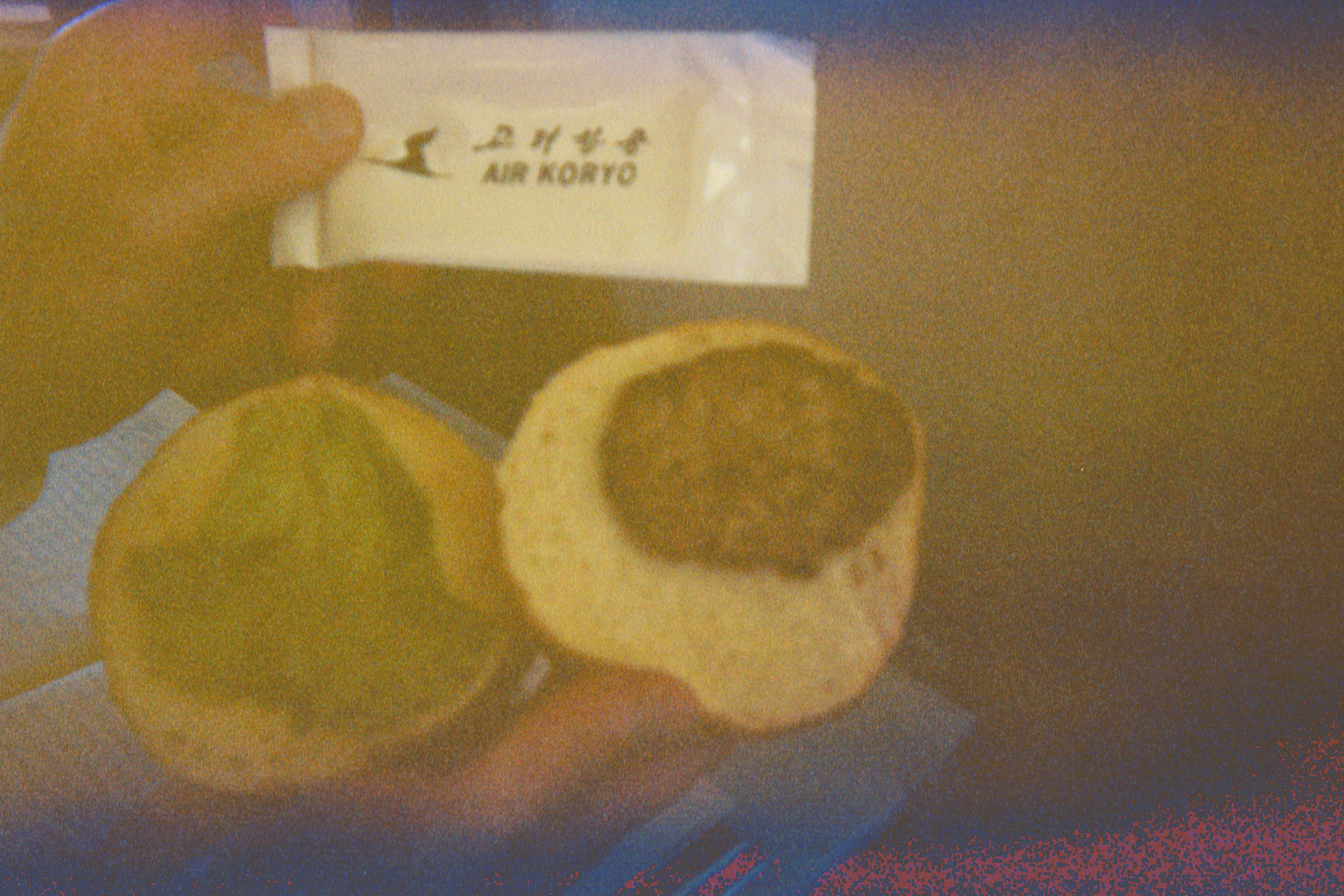
3.  The hamburger is not entirely unknown to North Koreans.  All outbound flights on Air Koryo serve a hamburger (or at least it is some kind of meat patty in a much larger bun with a piece of lettuce).  In business class, you get it on a plate.  I don’t think it is that great, but it is made in the DPRK.  Here is a bad photo I took of the alleged burger.

UPDATE: 4. ROK Drop wonders if they would have used US beef! 

Share

labor constraints at Kaesong

Wednesday, July 9th, 2008

According to the Korea Times, the end of official North-South dialogues has put plans on hold to expand housing for workers in the Kaesong Industrial Zone. 

From the article:

Officials at the complex expressed concerns that South Korean companies intending to set up operations there may be unable to do so as a lack of housing will likely see manpower shortages.

According to the Gaesong Industrial District Management Committee, the number of North Korean workers at 72 companies operating in the site totals 30,084 and the figure could reach 40,000 by late this year.

Besides, approximately 80,000 to 100,000 workers would be needed by 2010 when 450 companies are expected to settle in the industrial park.

However infrastructure projections show that less than 60,000 North Korean workers will likely be able to commute to the industrial site.

Currently, North Korean workers head for their workplaces by 88 commuter buses and bicycles and the authorities promised to provide an additional 100 buses until the year’s end.

South and North Korea agreed last December to build dormitories to accommodate 15,000 North Korean workers.

The two sides were to conduct a geological survey early this year and start construction work in the first half of the year following the agreement but the suspended talks have hindered the plan.

After conservative President Lee Myung-bak vowed a tougher line toward the North, the communist North kicked South Korean officials out of its territory in March and cut off official communication channels.

The Seoul government recognizes the lodging problem as urgent. Yet, it admitted it cannot find a solution at the moment since the North is rejecting any talks.

Read the full story here:
Gaeseong Complex Lacks in Lodgings for N. Korean Workers
Korea Times
Kim Sue-young
7/9/2008

Share

Russia sends fuel to DPRK

Wednesday, July 9th, 2008

According to Yonhap:

Russia will deliver another 100,000 tons of fuel oil to North Korea by October as a reward for the country’s shutdown of its nuclear power facilities, Itar-Tass news agency reported Wednesday, quoting a top Russian envoy to the six-party nuclear talks.

North Korea has been promised energy aid equivalent to a million tons of heavy fuel oil as part of economic and political rewards for declaring all its nuclear programs and disabling its main nuclear plants under a six-party deal on ending the North’s nuclear activities.

“We’ve fulfilled our promises — delivered 100,000 tons of fuel oil in two batches by the middle of the year,” Russian Deputy Foreign Minister Alexei Borodavkin was quoted as telling journalists in Beijing Wednesday. “We are preparing to fulfil our obligations further and send another 100,000 tons by October,” he said.

Read the full article here:
Russia to send more fuel oil to N.K. by October: report
Yonhap
7/9/2008

Share

Noko Jeans

Tuesday, July 8th, 2008

Some enterprising Swedes are attempting to manufacture and export jeans from North Korea.  As far as western countries go, Sweden has been one of the leaders in commercial interaction with the DPRK.  Although, according to Erik Cornell, they were frequently burned. 

The project, Noko Jeans, would be the first jeans manufacturer in North Korea.  Here is some info from their website:

Noko Jeans – jeans from North Korea

Noko Jeans began with an e-mail sent to North Korea, fueled by the enthusiasim of being able to contact the country directly. We thought Noko Jeans would end there, before it even began. It didn’t. Instead, and despite our lack of experience in international trading, it swiftly grew to a much more serious level.

Initiated and managed by three Swedes with a background in advertising and PR, Noko Jeans is our attempt to approach and get closer to North Korea, and it is our attempt to answer the question: is it possible to do what no one has ever done before? Is it possible to design, produce and import jeans from North Korea?

Greetings from North Korea!

After months of research, loads of headache and, lastly, several meetings with North Korean government representatives, we are finally allowed into the country. As official visitors, and by invitation of the state. Take off: 27th of July.

We are just now beginning to sense that this experiment actually might come true. Please stay with us as we tell you the unique process – and story – that is Noko Jeans.

Share

Aid Agencies to Deliver U.S. Food Assistance to DPRK

Sunday, July 6th, 2008

UPDATE: Below is a list of organizations that are distributing US aid in the DPRK:

Mercy Corps works amid disasters, conflicts, chronic poverty and instability to unleash the potential of people who can win against nearly impossible odds. Since 1979, Mercy Corps has provided more than $1.5 billion in assistance to people in 106 nations.

World Vision is a Christian humanitarian organisation dedicated to working with children, families and their communities worldwide to reach their full potential by tackling the causes of poverty and injustice. We serve all people, regardless of religion, race, ethnicity or gender.

Samaritan’s Purse provides immediate, no-red-tape response to the physical and spiritual needs of individuals in crisis situations, especially in locations where few others are working. The organisation is working in more than 100 countries to provide aid to victims of war, disease, natural disaster, poverty, famine and persecution.

Global Resource Services is dedicated to going beyond charity to find real solutions to complex global crisis where peace and security are in jeopardy. Our mission is driven by an end vision of reconciliation. Relationships, respect and reconciliation are the common threads that empower our cause.

Christian Friends of Korea (CFK) has been working since 1995 to bring hope and healing to the people of North Korea. To date, CFK’s efforts to build trust and relationships and meet real human needs at tuberculosis and healthcare facilities have resulted in the delivery of over $35 million USD in humanitarian assistance to the DPRK.

From the World Vision web page:

Five aid agencies today announced that they have signed an agreement with the Democratic People’s Republic of Korea to deliver U.S. government food assistance to North Koreans suffering from severe food shortages. The partnership will distribute 100,000 metric tons of food to more than a half-million needy people over a twelve-month period.

Mercy Corps is leading the programme, with World Vision as co-lead, pending final agreement. Partner agencies are Samaritan’s Purse, Global Resource Services and Christian Friends of Korea. Daily rations will be provided for approximately 550,000 vulnerable people – mostly children, the elderly and pregnant and nursing women – in two North Korean provinces. The programme, funded by the U.S. Agency for International Development’s (USAID) office of Food for Peace, is the first U.S. food assistance programme for North Korea since 2000.  

ORIGINAL POST:
From the Mercy Corps web site (July 1, 2008):

Mercy Corps is taking the lead in a yearlong distribution of 100,000 metric tons of food to quell rampant hunger in North Korea.

We have been asked by the U.S. government to spearhead a partnership of five non-governmental organizations (NGOs) that will implement a major food assistance program for North Korean families. Distribution of the food aid – provided by the U.S. government and funded by the U.S. Agency for International Development’s (USAID) Food for Peace program – is taking place over the course of twelve months beginning in June 2008. Alongside our partner organizations, we will distribute food such as cereal grains, vegetable oils and beans through schools, hospitals, orphanages and other institutions.

Our food distribution programs are expected to reach more than 550,000 people – primarily children, the elderly and the extremely poor – in two provinces. We will have staff residing in North Korea to visit families, monitor distribution and assess impact.

Since 1996, Mercy Corps has promoted cross-cultural exchange and worked with the country’s vulnerable families and communities to help meet health and nutritional needs, as well as collaborate on long-term agricultural and economic solutions. Our late co-founder, Ells Culver, reached out to the North Korean people in the aftermath of drought, flooding and food shortages. That cooperation was strengthened last year when we hand-delivered $13 million of medicines for flood survivors, and earlier this year when we received a USAID grant to install emergency generators and medical equipment in six county hospitals.

Your gift to our Global Food Crisis fund will help us deliver assistance to even more families in some of the world’s most challenging places.

To learn more, visit their website (link).

To make a donation, click here.

To read the press release, see below:
Aid Agencies to Deliver U.S. Food Assistance to North Koreans
Reuters Alert Net
7/2/2008
Contact: Geraldine Ryerson-Cruz, +1.202.572.6302, [email protected]

Share

US ready to pay for more cooperation. DPRK claims it is owed arrears…

Saturday, July 5th, 2008

According to the Associated Press, the Bush administration is ready to pay $20 million to North Korea to complete the last 3 steps (of 12—not to be confused with these 12 steps) to permanently disable its Yongbyon nuclear reactor.

North Korea for its part, says it does not want to address future dismantling work until it receives the goodies it was promised for the first nine stages of Yongbyon decomission.

The North Korean Foreign Ministry said in a statement that it had disabled 80 percent of its main nuclear complex, but that the six countries involved in disarmament talks had made only 40 percent of the energy shipments they had promised. North Korea said it would move to the next phase of the denuclearization process, abandoning and dismantling its nuclear weapons programs, only when it has been awarded all the energy and political benefits it had been promised.

Read the full articles here:
US has $20M to disable NKorean reactor
Associated Press
7/4/2008

North Korea: Foreign Quid Wanted Before Providing the Nuclear Quo
Associated Press (via the New York Times)
7/5/2008

Share

North Korea looks to recycle toxic waste

Monday, June 30th, 2008

UPDATE 3 (2013-3-15): Michael Rank offers more information on the DPRK – Taiwan nuclear waste deal:

North Korean-Taiwan nuclear waste deal thwarted over export permit
By Michael Rank

A Taiwanese report says one reason the North Korean nuclear waste deal fell through was that Taipower didn’t obtain an export permit for the waste from the Taiwanese Atomic Energy Council (AEC).

It also says that Taipower claims no final deal was ever signed, so there is no question of the agreement being violated. It quotes Taipower official Huang Tien-huang as saying the North Koreans blocked them from viewing the processing site at Phyongsan (Pyeongsan, 평산, 平山), while the AEC also had procedural problems with the North Koreans, leading it to refuse an export permit.

North Korea has hired a (presumably Taiwanese) lawyer, Tsai Hui-ling, to plead its case, and is claiming NT$300 million (US$10 million) compensation. Tsai can be seen on this English-language video clip.

A PRC report quoting Taiwanese reports says the first stage of the deal worth US$75.66 million envisaged shipping 60,000 barrels of nuclear waste, and a further 14,000 barrels in the second stage, with a total value of $150 million and that the North Koreans were after the deal as a source of foreign exchange at the height of the famine. There have been ten rounds of negotiations to try to resolve the dispute, the report says, adding that Taiwan decided in 1999 that it would process the waste domestically.

As I reported in 2008, North Korea signed a deal with a Chinese company to recycle industrial waste that is so polluted that other countries have refused to handle it.

A slightly fuller Chinese report than the one I cited earlier names the Chinese company involved as Dalian-based Huatai Recycling Resources Co Ltd and says it has close links with the North Korean National Defence Commission, foreign ministry, environment ministry and foreign trade ministry.

It also says the North Koreans have four large recycling sites at Sinuiju and Nampo, two for lead batteries and two for electronic goods, and that they are able to recycle a wide array of equipment, from plastics to refrigerators as well as computers, phones and scanners, including goods that are banned for recycling in China.

It is not clear if the Chinese-North Korean deal was actually implemented.

UPDATE 2 (2013-3-2): The DPRK intends to sue Taiwan for breach of contract in its failure to begin the Taiwan – DPRK waste management project. According to the China Post (Taiwan):

North Korea is poised to sue Taiwan Power Co. (台電) for damages of NT$300 million, over an alleged breach of a contract signed more than 16 years ago, according to lawyers working on Pyongyang’s behalf.
Litigation will begin March 4, North Korea’s legal counsel said.

In 1996, Taipower allegedly committed to a contract with North Korea in which nuclear waste from Taiwan would be shipped and stored in the isolated communist nation, according to reports.

However, the plans were halted due to North Korea’s then-inadequate waste storage facilities and the sudden eruption of international uproar over the scheme, with Taiwan paying US$8.72 million to preserve a five-year option period in 1998, according to the lawyers, who added that North Korea continued to invest in its waste storage facilities under the assumption that the deal would be completed.

After over 10 rounds of negotiation over the past 15 years, North Korea is now accusing Taipower of complacency and negligence, citing a lack of communication and effort to fulfill the agreed-upon obligations.

In light of North Korea’s unexpected litigation, Taipower has said that such a dated case needs a comprehensive internal review before a response can be formulated.

The lawsuit marks a surprising development in the ongoing row over the proposed plan to construct a fourth nuclear power plant in Taiwan, as the ruling and opposition parties wrestle over the terms of the proposed referendum, which would decide the fate of the plant.

UPDATE 1 (2009-1-8): A Taiwanese official is under investigation for activities related to the Taiwan – DPRK waste management deal. According to the AFP (via Singapore’s Straits Times):

The Apple Daily reported on Thursday that prosecutors had begun investigating claims that Chen might have pocketed 300 million Taiwan dollars of financial aid in 2004 and 2005 in exchange for North Korea handling the island’s nuclear wastes.

The daily, which did not name its sources, alleged the cash would be given to a high-ranking North Korean official through a contact who promised to help Taipei set up a ‘direct communication channel’ with Mr Kim Jong-Il’s regime.

However, Taiwan did not establish any form of contact with North Korea nor send its nuclear waste to the communist state after the foreign ministry paid the money, the report said.

Self-ruled Taiwan is formally recognised by only 23 countries and does not have diplomatic ties with North Korea.

Read the full story here:
Funds were for N.Korea
AFP via Straits Times
1/8/2009

ORIGINAL POST (2008-6-30): According to Michael Rank in the Telegraph:

North Korea is planning to recycle waste that is so polluted other countries refuse to handle it.

Through a Chinese-language website (link here) the country is seeking supplies of plastic and electronic waste which “can be processed in [a North Korean port] but which other countries and territories are restricted from dealing in”, reflecting the country’s dire economic plight and its scant regard for international norms.

Isolated and desperately poor, North Korea is a beginner so far as toxic waste is concerned, although in 1996 it signed a deal with Taiwan to dispose of its nuclear waste from atomic power plants.

South Korea reacted furiously to the deal and Taiwan was eventually forced to back down and cancel the agreement.

North Korea also offered to recycle the North Sea Brent Spar oil storage platform, which Royal Dutch Shell had proposed dumping in the deep Atlantic in 1995.

This caused an environmental furore, with Greenpeace claiming that the structure was full of oil and burying it at sea would result in serious pollution.

An enterprising young North Korean official in London unexpectedly offered to come to the rescue, suggesting that his country could dispose of the structure, saving Shell and the British government from further embarrassment.

The offer was turned down as Shell didn’t want to be seen turning to a regime as dubious as North Korea, but Greenpeace’s own reputation took a serious knock when it was forced to admit that it had enormously over-estimated the amount of oil remaining in Brent Spar’s storage tanks.

North Korea’s waste recycling plans are part of a much bigger, £5 million ($10 million) project to enlarge a port on its west coast and develop it into an export base including a duty-free zone.

“There are no limits, any business taking advantage of [North] Korea’s low labour costs for intensive processing is welcome,” the website states.

Although the port is not named, it is almost certainly Nampo, which is close to the capital and is the largest harbour on North Korea’s west coast. The development covers 30,000 square metres (320,000 square feet) and is “expandable”.

The port currently accepts vessels of up to 10,000 tonnes but the plan is to increase this to 50,000 tonnes.

The project is pitched at Chinese companies, and interested parties are asked to contact a firm in the Chinese city of Dandong on the North Korean border.

A deal with China would help to counterbalance a recent agreement with state-owned Russian Railways to build a £50 million ($100million) container terminal on North Korea’s east coast as part of a £1.5 billion ($3 billion) plan to create a rail corridor linking South Korea with Europe via North Korea and Russia.

Russian Railways wants to turn the port of Rajin into a hub capable of handling 320,000 containers a year for shipment from South Korea to Europe.

Russia and China have fought bitterly over rights to refurbish Rajin. A few years ago China appeared to have won out when a 50-year deal was announced with the Chinese border city of Hunchun, but this came to nought and Russia was the ultimate winner in the battle to revitalise the north-eastern port and ultimately link it with Europe.

The original source, a Chinese language website, is here.

To read the full story click here:
North Korea in bid to recycle toxic waste
Telegraph
Michael Rank
6/30/2008


Share

Chinese invest in DPRK mining

Sunday, June 29th, 2008

Michael Rank, a China/North Korea specialist based in London reports:

A Chinese company has opened a joint venture iron mine in North Korea with registered capital of €36 million ($57 million), a Chinese website specialising in North Korea reports (link here).

The Chinese partner is S Group, whose main aim includes developing magnesite mines in North Korea, but for some reason it switched from magnesite to iron mining.

The mine in Ongjin-gun (gun=county), Hwanghaenam-do (South Hwanghae, do=province), south of Pyongyang, has been in operation since the second half of last year, and the company running it is the Xihai/Seohae (West Sea) Joint Enterprise, the website says, but gives no further details.

The Chinese report erroneously places Ongjin-gun in Hwanghaebuk-do (North Hwanghae) but it is confirmed as being in Hwanghaenam-do by  조선지도첩 (Joseon Jidocheop, Atlas of Korea, Pyongyang, 1997), p. 45. I have not been able to find any other reference to a Chinese mining company called S Group.

Chinese steel company Tonggang (Tonghua Steel), based in the northeastern province of Jilin, was reported by a Chinese newspaper in January 2006 to be spending four billion yuan ($506 million) to develop the Musan iron mine in Hamgyeongbuk-do (North Hamgyong province), said to be North Korea’s largest iron deposit – and the biggest in Asia, according to some estimates.

Magnesite (magnesium carbonate) is used in protecting the linings of steel furnaces, in the production of synthetic rubber and in making fertilisers.

Share