Archive for the ‘International Governments’ Category

UN, US, ROK, sanction DPRK arms companies–and partners

Tuesday, June 30th, 2009

On January 21, the day after the Obama administration took office, the White House approved certain trade sanctions–initiated by the Bush administration–to be printed in the Federal Register.  These sanctions targeted specific Chinese, Iranian, and North Korean companies that the US believes were/are violating arms export regulations governing missile technology and other proliferation activities.  [Read more, including Federal Register text, here]

After North Korea conducted a long-range missile test in April, the US pushed the UN Security Council to adopt a presidential statement which blacklists several additional North Korean firms. [Read more here].

After North Korea conducted a second nuclear test, in violation of UNSC resolution, the UNSC adopted a resolution which tightened sanctions on the DPRK. [Read more here]

In June, the South Korean government imposed sanctions on these DPRK companies for the first time [Read more here]

The US followed up the UNSC resolution by announcing an inter-agency team that will focus exclusively on enforcing DPRK sanctions [Read more here

Today, the US Treasury Department announced it was targeting Hong Kong Electronics (Kish Island, Iran) [from where a former FBI agent is still missing] for supporting the balcklisted North Korean organizations.  According to Market Watch:

The Treasury Department said Tuesday that it has targeted another player in North Korea’s missile proliferation network. The agency designated Hong Kong Electronics, located in Kish Island, Iran, for providing support to North Korea’s Tanchon Commercial Bank and Korea Mining Development Trading Corp. Those two firms have been targeted by the U.S. and the United Nations as part of North Korea’s nuclear proliferation network. “Today’s action is a part of our overall effort to prevent North Korea from misusing the international financial system to advance its nuclear and missile programs and to sell dangerous technology around the world,” said Stuart Levy, Treasury under-secretary for terrorism.

What does this mean? It means that any bank accounts or other financial assets found in the United States belonging to the company must be frozen. Americans also are forbidden from doing business with the firm. This probably does not amount to much economically, but is probably intended to discourage banks outside of the US from doing business with these firms.

UPDATE 1: It looks like the State Departmet is also going after a North Korean company believe to be involved in weapons proliferation today.  According to a statement by the Treasury Department:

The U.S. Department of the Treasury today targeted North Korea’s missile proliferation network by designating Hong Kong Electronics under Executive Order 13382.  E.O. 13382 freezes the assets of designated proliferators of weapons of mass destruction and their supporters and prohibits U.S. persons from engaging in any transactions with them, thereby isolating them from the U.S. financial and commercial systems.  Hong Kong Electronics, located in Kish Island, Iran, has been designated for providing support to North Korea’s Tanchon Commercial Bank (Tanchon) and Korea Mining Development Trading Corporation (KOMID).

Tanchon and KOMID have also been designated by the United States under E.O. 13382 and the UN Security Council under Resolution 1718. The Department of State also today targeted North Korea’s nuclear proliferation network by designating Namchongang Trading Corporation (NCG), a North Korean nuclear-related company in Pyongyang, under E.O. 13382. 

“North Korea uses front companies like Hong Kong Electronics and a range of other deceptive practices to obscure the true nature of its financial dealings, making it nearly impossible for responsible banks and governments to distinguish legitimate from illegitimate North Korean transactions,” said Stuart Levey, Under Secretary for Terrorism and Financial Intelligence. “Today’s action is a part of our overall effort to prevent North Korea from misusing the international financial system to advance its nuclear and missile programs and to sell dangerous technology around the world.”

Since 2007, Hong Kong Electronics has transferred millions of dollars of proliferation- related funds on behalf of Tanchon and KOMID. Hong Kong Electronics has also facilitated the movement of money from Iran to North Korea on behalf of KOMID. Tanchon, a commercial bank based in Pyongyang, North Korea, is the financial arm for KOMID – North Korea’s premier arms dealer and main exporter of goods and equipment related to ballistic missiles and conventional weapons.

Tanchon plays a key role in financing the sales of ballistic missiles for KOMID. Tanchon has also been involved in financing ballistic missile sales from KOMID to Iran’s Shahid Hemmat Industrial Group (SHIG), which is the Iranian organization responsible for developing liquid-fueled missiles. SHIG has been designated under E.O. 13382 and sanctioned by the United Nations under UN Security Council Resolution (UNSCR) 1737. Since 2005, Tanchon has maintained an active relationship with various branches of Iran’s Bank Sepah, an entity designated under E.O. 13382 and sanctioned by the United Nations under UNSCR 1747, for providing financial services to Iran’s missile program. The U.S. has reason to believe that the Tanchon-Bank Sepah relationship has been used for North Korea-Iran proliferation-related transactions.

Here is the press release by the State Department:

The U.S. Department of State today targeted North Korea’s nuclear proliferation network by designating Namchongang Trading Corporation (NCG) under Executive Order 13382. E.O. 13382 is an authority aimed at freezing the assets of proliferators of weapons of mass destruction and their supporters, and at isolating them from the U.S. financial and commercial systems. Entities designated under E.O. 13382 are prohibited from engaging in all transactions with any U.S. person and are subject to a U.S. asset freeze.

NCG is a North Korean nuclear-related company in Pyongyang. It has been involved in the purchase of aluminum tubes and other equipment specifically suitable for a uranium enrichment program since the late 1990s.

The Department of the Treasury also today designated Hong Kong Electronics, located in Kish Island, Iran, for providing support to North Korea’s Tanchon Commercial Bank (Tanchon) and Korea Mining Development Trading Corporation (KOMID). Tanchon and KOMID were designated by the United States under E.O. 13382 on June 28, 2005 and the UN Security Council under Resolution 1718 on April 24, 2009.

North Korea’s April 5, 2009 launch of a Taepo Dong-2 (TD-2) missile and May 25, 2009 nuclear test demonstrate a need for continued vigilance with respect to North Korea’s activities of proliferation concern. The designations add to continuing U.S. efforts to prevent North Korean entities of proliferation concern from accessing financial and commercial markets that could aid the regime’s efforts to develop nuclear weapons and the missiles capable of delivering them.

McClatchy has more here.

Share

White House forms DPRK sanctions team

Sunday, June 28th, 2009

According to the Washington Post:

The White House is ramping up its efforts to enforce sanctions against North Korea by forming a new interagency team to coordinate U.S. actions with other nations, senior administration officials said today.

The new team will be led by former ambassador to Bolivia Philip S. Goldberg, who is slated to leave for China in the near future as the U.S seeks concerted action to stop the North Korean regime from developing nuclear weapons.

“There is a broad consensus about the need to have a focused and engaged effort to see that these sanctions are implemented … and that we’re sharing information with each other,” one official said, speaking on background.

U.S. officials described the new group as a way to focus the administration more squarely on implementation of the latest sanctions, which were approved by the United Nations in the wake of North Korea’s nuclear test last month.

The officials said they are hoping the group — with representatives from the State Department, the White House, the National Security Agency, Treasury and others — will help “shine a spotlight” on the actions of the regime.

“We wanted somebody who woke up every morning and thought about nothing but sanctions implementation,” one official said. “It’s a huge difference when you have somebody who isn’t worried about any of the other aspects of this.”

The White House also announced a renewed effort to use the authority of the U.N. resolution to take financial actions against the North Korean regime in an effort to choke off the money flowing from small arms trade and other activity.

Treasury officials have issued a public memorandum to private financial institutions reminding them of the global condemnation and other risks of doing business with the North Korean regime.

The letter warns that North Korean banks and institutions often use deceptive techniques to engage in financial transactions that could place legitimate financial firms at risk.

“Financial institutions should apply enhanced scrutiny to any such correspondent accounts they maintain, including with respect to transaction monitoring,” the letter states.

One senior official said the U.S. is confident that the financial sanctions will over time help to further isolate North Korea and pressure its leaders to abandon its nuclear program.

“It’s going to take time to have a bite,” he conceded. “But we’re trying to get out of the box quickly.”

The Bush administration also had a sustained effort to implement United Nations sanctions after North Korea first tested a nuclear weapon in 2006.

The Counterproliferation Directorate of the White House National Security Council coordinated the effort, while the State Department and Treasury also co-chaired an interagency effort to examine specific cases that eventually worked their way up the chain for approval.

A team of senior officials, led by the undersecretary of State for arms control, traveled to Asia to work closely with allies. But the effort was dropped after Bush shifted course and decided to pursue diplomacy with North Korea.

Their first stops: China then Malaysia.

Citations:
New North Korea Sanctions Team Formed
Washington Post
Michael D. Shear and Glenn Kessler
6/26/2009

U.S. North Korea sanctions team to visit Malaysia
Reuters UK
7/2/2009

Share

FDI and JVCs in the DPRK…

Thursday, June 25th, 2009

The General Association of Koreans in Japan (Chongryun) have made a video about foreign direct investment and joint venture companies in the DPRK.  I have posted links to the video below.  It features the PyongSu pharmaceutical factory among other things.  It is in Korean and Japanese (with Japanese subtitles), so if there are any readers who care to translate, please let me know if there is any interesting information in the videos:

Part 1:
chongryn-pyongsuvideo1.JPG

Part 2:
chongryun-pyogsu2.JPG

Part 3:
chongryun-pyogsu3.JPG

Share

Inter-Korean exchange, investment reduced as relations crumble

Friday, June 19th, 2009

Institute for Far Eastern Studies (IFES)
NK Brief No. 09-6-16-1
6/16/2009

The amount of inter-Korean exchange has shrunk considerably this year, as tensions between the North and South continue to mount. According to the ROK Customs Administration’s inter-Korean trade office, cross-border transactions between January and April of this year fell 24.8 percent from 2008; trade amounted to 426.35 million USD, down from 566.92 million USD during the same period last year. South Korean imports were down only 9.5 percent, at 260.19 million USD, but exports to the North amounted to a mere 59.4 percent of the amount sent last year, recording 166.17 million USD. 54.9 percent of these goods (by value) traveled across the border by passing through Dorasan Station; 32.8 percent went through Incheon Harbor; 6.4 percent through Busan Harbor, 1.6 percent through Sokcho Harbor; and 1.1 percent passing through Goseong.

In April, with the North’s launch of a long-range missile in spite of the opposition of the international community, inter-Korean trade dropped to 69.2 percent of last year’s level, falling to 105.53 million USD. In fact, inter-Korean trade fell relative to the same month in the previous year eight months straight, beginning in September of last year.

With last month’s sudden nuclear test and South Korea’s subsequent joining of PSI, inter-Korean trade is expected to continue to wither in the latter half of the year. The amount of trade seen from January to April of this year is equivalent to 23.4 percent of the total trade for last year (1.82078 billion USD), and even if the current level of trade is maintained for the rest of the year, it is expected to amount to a mere 70 percent of what was traded in 2008.

Inter-Korean trade had previously been recording significant growth; in 1999, during Kim Dae Jung’s ‘People’s Government’, inter-Korean trade was worth only 328.65 million USD, but began to climb, growing more than five-fold by 2008, topping out at 1.82078 billion USD last year. However, after the launch of the current government, the amount of goods imported by the North from the South began to fall; exports to North Korea in 2008 were worth 883.41 USD, 145.15 million less than in 2007.

North Korean companies involved in processing-on-demand, agriculture and fisheries work have been part of Pyongyang’s trade ambitions, and these companies have also been hurt by the freeze in inter-Korean relations, with dozens of businesses facing closure, and many more severely hit by the North’s shrinking trade.

Share

North Korean art makes a show in Vietnam

Friday, June 19th, 2009

UPDATE: From Timeout (Vietnamese English publication):

The largest collection of paintings from the Democratic People’s Republic of Korea (North Korea) ever shown in Southeast Asia was put on display at the Nha Trang Sea festival last week.

The paintings were produced by more than two dozen artists with recognized artists – so-called Merited artists – and emerging talents all contributing.

The exhibition included a series of beautiful paintings in a variety of styles and materials – prints, watercolour, oil, pencil drawings and “jewel-powdered paintings”, a Korean specialty art.
 
With little exposure to the outside world, North Korean art is considered very pure. North Korean artists are loyal to their country and adhere to the country’s political philosophy.

In the absence of influences by contemporary art trends from the rest of the world the painters have, in a unique manner, developed their own techniques and the use of colors in an original style.

The displayed paintings include, among other things, a variety of beautiful sceneries of nature and of North Korean daily life. These pieces of artwork give a rare insight into the lives and thoughts of the people of this country.

Some of the most impressive pieces are the products of the veteran artist Han Gyong Bo and the emerging artist Han Song Il, a precocious 24-year old who has won many top prizes at national and international exhibitions.

Han Gyong  Bo is famous for his watercolour paintings of wistful and fanciful landscapes created in strong, deep and bold brush strokes. Meanwhile Han Song Il bewitches viewers with his romantic yearnings and smooth style. With refined and flowery strokes, Il’s paintings express the beauties of his country’s natural landscapes.

The painting collection belongs to Swiss businessman Felix Abt and his Hanoi-born wife Doan Lan Huong, who lived and worked in Pyongyang for seven years, where they got to know and love North Korean arts.

At present Abt and his family mostly stay in Nha Trang, Vietnam where they manage their own website Pyongyang-painters.com, one of the very few on-line galleries outside North Korea permitted to sell art and to represent the country’s leading artists as well as new talents.

“Much to our surprise we noticed that (artistic) talents are identified very early in a person’s life and systematically fostered thereafter. As a consequence a high number end up as painters with extraordinary skills. Unfortunately this is largely ignored by the outside world,” says Felix Abt.

Together with the Korea Paekho Fine Arts Company in Pyongyang, Felix and his wife prepared last year the systematic launch and promotion of North Korean paintings on the world wide web and through other marketing measures.

Famous painters from North Korea as well as promising new talents, including young female painters, are now being introduced to a wider public. Abt’s website has been up and running since the beginning of this year and orders are coming from all over the world.

During his time in Pyongyang, Abt and his wife Huong had the opportunity to get acquainted not only with the country’s institutions involved in fine arts but also with numerous artists across the country.

“We learnt that the Koreans were not merely transmitting Chinese culture but also assimilating and adapting it and creating a unique culture of their own while also influencing neighbouring cultures for thousands of years,” says Abt.

But Abt knows that a good website alone is not sufficient to introduce North Korean paintings to a larger public. The paintings need to be physically closer to potential buyers.

“The Sea Festival in Nha Trang, where both Vietnamese and foreigners spend holidays and may want to shop in a relaxed atmosphere was a good opportunity for us to ‘test the market’ in Vietnam,” says Abt.

“In addition, since Nha Trang is a beautiful place with a highly promising potential for tourism, we intend to operate this business out of Nha Trang for both the domestic and international arts markets.”

Talking about their future galleries in Hanoi and Ho Chi Minh City, Abt shares that making beautiful North Korean paintings available in these cities is a good idea since there are certainly a sufficient number of people in both cities who would love to have such paintings and can also afford them.

But instead of setting up their own galleries they would prefer to build up a close partnership with a couple of existing galleries in these cities that meet their expectations. Moreover, “this business model which we start in Vietnam could then be applied to other major cities in the region such as Singapore, Kuala Lumpur and Bangkok.”

Read the Press Release below:

(more…)

Share

The Political Economy of North Korea: Implications for Denuclearization and Proliferation

Tuesday, June 16th, 2009

Stephan Haggard and Marcus Noland
East-West Center Working Papers
Economics Series, No. 104
Download paper here (PDF)

Abstract:
Despite North Korea’s turn away from economic reform and the constraints of the second nuclear crisis, the country has in fact become more economically open. But it has emphasized closer economic relations with China and other trading partners that show little interest in political quid-pro-quos, let alone sanctions. Yet the U.S. can still exercise economic leverage by going aggressively after third-party financial intermediaries. This particular form of sanction does not require multilateral coordination, since foreign banking institutions that conduct significant business in the United States have a strong interest in avoiding institutions that the United States Treasury has identified as money laundering or proliferation concerns.

There is some evidence that North Korea moderated its missile proliferation activities during periods when rapprochement with the United States, and to a lesser extent Japan, was a priority, but in the absence of such interest and as legitimate trade, investment, and aid dry up, the incentives to intensify proliferation activities increase.

The internal organization of the North Korean economy has important implications for any policy seeking transformation via engagement. The economy is structured in such a way that outside economic ties are still largely monopolized by stateowned enterprises and other gatekeepers, such as the military. Under such circumstances, the precise design of engagement policies requires very close scrutiny. Even nominally commercial relations can be exploited if the North Korean counterparties believe that they are ultimately political in nature, subsidized and thus vulnerable to blackmail. If economic ties are truly commercial in nature, those choosing to trade and invest with North Korea do so at their own risk. Under these circumstances, private actors will make economic decisions fully factoring in political risk, and North Korea will bear the costs if it chooses to renege on commitments or fails to provide a supportive policy environment.

Paper prepared for the conference on “North Korean Nuclear Politics: Constructing a New Northeast Asian Order in the 21st Century,” University of Washington, June 4-5, 2009. We would like to thank the Smith Richardson, MacArthur, and Korea Foundations for financial support and Jennifer Lee for research assistance.

UPDATE: A shorter version of this paper can be found here.

Share

Confusion over UK-North Korea travel ban cleared up

Tuesday, June 16th, 2009

UPDATE 4: from a reliable source

The situation was caused by a mistranslation. Following the nuclear test and rocket launch earlier in 2009, the FCO suspended funding (and therefore visas) for FCO FUNDED DPRK PROJECTS IN THE UK for three months. This, unfortunately, was mistranslated into “suspending visas for DPRK citizens”, thus the cerfuffle.

UPDATE 3: By Michael Rank

Confusion over a reported ban on Britons visiting North Korea and North Koreans coming to Britain seems to have been cleared up.

Koryo Tours said last week that they had been informed by their partner, Korea International Travel Company, that “In connection with the recent measures taken by UK government not to allow DPRK citizens to enter the UK we also will not receive any UK citizens as tourists to the DPRK for the time being.”

After some confusion, a spokesman for the North Korean embassy in London said on Monday that they had been reassured that there was no ban on DPRK citizens visiting Britain and that North Korea was therefore issuing visas to Britons as normal, although as usual it “depends on the case”.  He had “no idea” how the confusion had arisen.

A Foreign and Commonwealth Office spokeswoman confirmed that “we have not introduced any new measures (regarding visas for North Koreans), nor have we refused any visas recently.”

The Home Office recently posted figures showing that in recent years Britain has somewhat surprisingly issued 13-18 North Koreans a year with tourist visas, including a few under-18s. Most of the few North Koreans visiting Britain presumably come as part of official delegations, including a Workers’ Party of Korea group who came last January.

Foreign Secretary David Miliband said on Monday: “No individual [North Korean] officials are currently subject to travel bans or asset freezes. The new UN Security Council Resolution 1874, passed on 12 June 2009 tasks the UN Sanctions Committee to designate further organisations and individuals for travel bans and asset freezes.”

UPDATE 2: Koryo Tours has notified me that the visa restriction has now been lifted.  According to their email:

We have just been informed by our Korean partners that the ban on UK citizens travelling to the DPRK has been lifted and they are now once more accepting visa applications from Brits.

All tours will be running as expected with no restrictions on any nationalities, and all US tours in the summer are expected to also go ahead.

UPDATE 1:  Michael Rank has managed to uncover the number of tourist visas issued by the UK government to North Korean citizens from 2005-2008 (source):

2005 
Over 18: 17
Under 18: 1

2006
Over 18: 13
Under 18: 3
 
2007 
Over 18: 12
Under 18: 1

2008 
Over 18: 15
Under 18: 2

See the origins of the travel ban below:

(more…)

Share

N. Korea digs tunnels in Myanmar to earn dollars

Friday, June 12th, 2009

Korea Herald and Yale Global
Bertil Linter
6/12/2009

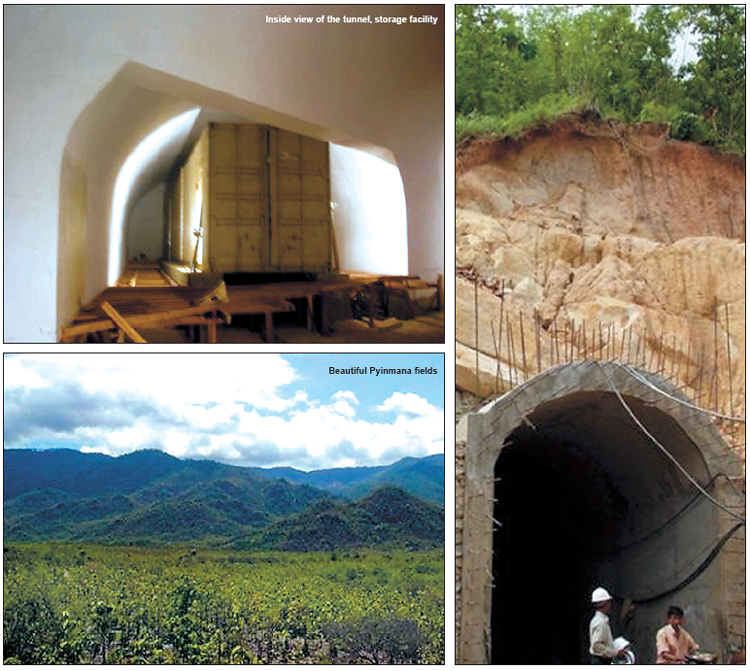
burma-tunnels.jpg

Missiles and weapon technology, counterfeiting money and cigarette smuggling, front companies and restaurants in foreign countries, labor export to the Middle East – North Korea has been very innovative when it comes to raising badly needed foreign exchange for the regime in Pyongyang. But there is a less known trade in service that the North Koreans have offered to its foreign clients: expertise in tunneling. A fascinating new glimpse of this business has now been offered in secret photos from Burma obtained by this correspondent.

The photos, taken between 2003 and 2006, show that while the rest of the world is speculating about the outcome of long-awaited elections in Burma, the ruling military junta has been busy digging in for the long haul – literally. North Korean technicians have helped them construct underground facilities where they can survive any threats from their own people as well as the outside world. It is not known if the tunnels are linked to Burma’s reported efforts to develop nuclear technology – in which the North Koreans allegedly are active as well. (See Burma’s Nuclear Temptation by Bertil Lintner, YaleGlobal, Dec. 3, 2008)

The photographs published here show that an extensive network of underground installations was built near Burma’s new, fortified capital Naypyidaw. In November 2005, the military moved its administration from the old capital Rangoon to an entirely new site that was carved out of the wilderness 460 kilometers north of Rangoon.

Meaning the “Abode of Kings,” Naypyidaw is meant to symbolize the power of the military and its desire to build a new state based on the tradition of Burma’s pre-colonial warrior kings. But underground facilities were apparently deemed necessary to secure the military’s grip on power. Additional tunnels and underground meeting halls have been built near Taunggyi, the capital of Burma’s northeastern Shan State and the home of several of the country’s decades-long insurgencies. Some of the pictures, taken in June 2006, show a group of technicians in civilian dress walking out of a government guesthouse in the Naypyidaw area. Asian diplomats have identified those technicians, with features distinct from the Burmese workers around them, as North Koreans.

This is quite a turn around as Burma severed relations with Pyongyang in 1983 after North Korean agents planted a bomb at Rangoon’s Martyrs Mausoleum killing 18 visiting South Korean officials, including the then-deputy prime minister and three other government ministers.

Secret talks between Burmese and North Korean diplomats began in Bangkok in the early 1990s. The two sides had discovered that despite the hostile act in the previous decade they had a lot in common. Both had come under unprecedented international condemnation, especially by the United States, because of their blatant disregard for the most basic human rights and Pyongyang for its nuclear weapons program. Burma also needed more military hardware to suppress an increasingly rebellious urban population as well as ethnic rebels in the frontier areas. North Korea needed food, rubber and other essentials – and was willing to accept barter deals, which suited the cash-strapped Burmese generals. “They have both drawn their wagons in a circle ready to defend themselves,” a Bangkok-based Western diplomat said. “Burma’s generals admire the North Koreans for standing up to the United States and wish they could do the same.”

After an exchange of secret visits, North Korean armaments began to arrive in Burma. The curious relationship between Burma and North Korea was first disclosed in the Hong Kong-based weekly Far Eastern Economic Review on July 10, 2003. A group of 15-20 North Korean technicians were then seen at a government guesthouse near the old capital Rangoon. The report was met with skepticism, especially because of the 1983 Rangoon bombings. But, when North Korean-made field artillery pieces were seen in Burma in the early 2000s, it became clear that North Korea had found a new ally – several years before diplomatic relations between the two countries were restored in April 2007.

“While based on a 1950s Russian design, these weapons (the field guns) were battle-tested and reliable,” Australian Burma scholar Andrew Selth stated in a 2004 working paper for the Australian National University. “They significantly increased Burma’s long-range artillery capabilities, which were then very weak.” Since then, Burma has also taken delivery of North Korean truck-mounted, multiple rocket launchers and possibly also surface-to-air missiles for its Chinese-supplied naval vessels.

Then came the tunneling experts. Most of Pyongyang’s own defense industries, including its chemical and biological-weapons programs, and many other military as well as government installations are underground. This includes known factories at Ganggye and Sakchu, where thousands of technicians and workers labor in a maze of tunnels dug under mountains. The export of such know-how to Burma was first documented in June 2006, when intelligence agencies intercepted a message from Naypyidaw confirming the arrival of a group of North Korean tunneling experts at the site. Today, three years later, the dates on the photos published today confirm the accuracy of this report. By now, the tunnels and underground installations should be completed, as would those near Taunggyi. This well-hidden complex ensures there is no danger of irate civilians storming government buildings, as they did during the massive pro-democracy uprising in August-September 1988. Sources say that the internationally isolated military junta may also consider these deep bunkers as their last repair in case of air strikes of the kind that the Taliban in Afghanistan or Saddam Hussein regime in Iraq endured.

It is not clear how much, or what, Burma has paid for the assistance provided by the North Korean experts, but it could be food – or gold, which is found in riverbeds in northern Burma. Or some other mineral. Burma, of course, is not the only foreign tunneling venture by North Korea.

In southern Lebanon following the 2006 war, Israel’s Defense Forces and the United Nations found several of the underground complexes, which by then had been abandoned by Hezbollah militants. By coincidence or not, these tunnels and underground rooms – some big enough for meetings to be held there – are strikingly similar to those the South Koreans have unearthed under the Demilitarized Zone that separates South from North Korea. Under small, manhole cover-sized entrances hidden under grass and bushes were steel-lined shafts with ladders leading down to big rooms with electricity, ventilation, bathrooms with showers and drainage systems. Some of the tunnels are 40 meters deep and located only 100 meters from the Israeli border. North Korea’s possible involvement in digging these tunnels is however, difficult to ascertain. According to Israeli investigative journalist Ronen Bergman, a senior officer in the Iranian Revolutionary Guards, who had defected to the West, revealed that, “thanks to the presence of hundreds of Iranian engineers and technicians, and experts from North Korea who were brought in by Iranian diplomats ?¶ Hezbollah succeeded in building a 25-kilometer subterranean strip in South Lebanon.”

Beirut sources suggest that it is more likely that Hezbollah has used North Korean designs and blueprints given to them by their Syrian or Iranian allies – both of whom are close to the North Koreans. (Both Iran and Syria have acquired missile technology from North Korea, and what was believed to be a secret nuclear reactor in Syria built with North Korean help was destroyed by the Israeli air force in September 2007.) Either way, North Korean expertise in tunneling has become a valuable commodity for export. And Pyongyang is flexible about the method of payment as long as it helps the international pariah regime.

Bertil Lintner is a Swedish journalist based in Thailand and the author of several works on Asia, including “Blood Brothers: The Criminal Underworld of Asia” and “Great Leader, Dear Leader: Demystifying North Korea under the Kim Clan.” He can be reached at [email protected] – Ed.

UPDATE: Burmese whistle-blowers sentenced to death
BBC
1/7/10

Two Burmese officials have been sentenced to death for leaking details of secret government visits to North Korea and Russia, the BBC has learned.

The officials were also found guilty of leaking information about military tunnels allegedly built in Burma by North Korea, a source in Burma said.

A third person was jailed for 15 years, the source added.

The military rulers in Burma (Myanmar) have so far made no public comments on the case.

The source told BBC Burmese that Win Naing Kyaw, a former army major, and Thura Kyaw, a clerk at the European desk of Burma’s foreign ministry, had been sentenced to death by a court in Rangoon on Thursday.

They were found guilty of leaking information about government visits to North Korea and Russia, which reportedly took place in 2008 and 2006.

The two men were also convicted of leaking details of a network of tunnels reportedly being built in Burma.

It is thought the tunnels were built to house communications systems, possible weapons factories and troops in the event of an invasion.

The third man, Pyan Sein, was given 15 years in prison on Thursday.

Burma still has capital punishment, but it has not carried out executions in recent years.

Share

Tunnels, Guns and Kimchi: North Korea’s Quest for Dollars – Part II

Thursday, June 11th, 2009

Yale Global
Bertil Linter
6/11/2009

BANGKOK: The global economic meltdown has claimed an unexpected victim: North Korea’s chain of restaurants in Southeast Asia. Over the past few months, most of them have been closed down “due to the current economic situation,” as an Asian diplomat in the Thai capital Bangkok put it. This could mean that Bureau 39, the international money-making arm of the ruling North Korean Workers’ Party – which runs the restaurants and a host of other, more clandestine front companies in the region – is acutely short of funds. Even if those enterprises were set up to launder money, operational costs and a healthy cash-flow are still vital for their survival. And, as for the restaurants, their main customers were South Korean tourists looking for a somewhat rare, comfort food from the isolated North of the country. The waitresses, all of them carefully selected young, North Korean women dressed in traditional Korean clothing, also entertained the guests with music and dance.

But thanks to the global economic crisis, not only has the tourist traffic from South Korea slowed, the fall in the value of won has also reduced their buying power. The South Korean won plummeted to 1,506 to the US dollar in February, down from 942 in January 2008. No detailed statistics are available, but South Korean arrivals in Thailand – which is also the gateway to neighboring Cambodia and Laos – are down by at least 25 percent.

Though staunchly socialist at home, the North Korean government has been quite successful in running capitalist enterprises abroad, ensuring a steady flow of foreign currency to the coffers in Pyongyang. North Korea runs trading companies in Thailand, Hong Kong, Macau and Cambodia, which export North Korean goods – mostly clothing, plastics and minerals such as copper – to the region. At the same time, they import various kinds of foodstuffs, light machinery, electronic goods, and, in the past, dual-purpose chemicals, which have civilian as well as military applications. Those companies were – and still are – run by the powerful Daesong group of companies, the overt arm of the more secretive Bureau 39.

North Korea embarked on its capitalist ventures when, in the late 1980s and early 1990s, the country was hit by a severe crisis caused by the disruption in trading ties with former communist allies. More devastatingly, both the former Soviet Union in 1990 and China in 1993 began to demand that North Korea pay standard international prices for goods, and that too in hard currency rather than with barter goods. According to a Bangkok-based Western diplomat who follows development in North Korea, the country’s embassies abroad were mobilized to raise badly needed foreign exchange. “How they raised money is immaterial,” the diplomat says. “It can be done by legal or illegal means. And it’s often done by abusing diplomatic privilege.”

North Korea’s two main front companies in Thailand, Star Bravo and Kosun Import-Export, are still in operation. In the early 2000s, Thailand actually emerged as North Korea’s third largest foreign trading partner after China and South Korea.

Bangkok developed as a center for such commercial activities and Western intelligence officers based there became aware of the import and sale of luxury cars, liquor and cigarettes, which were brought into the country duty-free by North Korean diplomats. In a more novel enterprise, the North Koreans in Bangkok were reported to be buying second-hand mobile phones – and sending them in diplomatic pouches to Bangladesh, where they were resold to customers who could not afford new ones. In early 2001, high-quality fake US$100 notes also turned up in Bangkok and the police said at the time that the North Korean embassy was responsible as some of its diplomats were caught trying to deposit the forgeries in local banks. The North Korean diplomats were warned not to try it again.

The restaurants were used to earn additional money for the government in Pyongyang – at the same time, they were suspected of laundering proceeds from North Korea’s more unsavory commercial activities. Restaurants and other cash-intensive enterprises are commonly used as conduits for wads of bills, which banks otherwise would not accept as deposits.

For years, there have been various North Korean-themed restaurants in Beijing, Shanghai and other Chinese cities. But the first in Southeast Asia opened only in 2002 in the Cambodian town of Siem Reap. It became an instant success – especially with the thousands of South Korean tourists who flocked to see the ancient ruins of Angkor Wat. It was so successful that Pyongyang decided to open a second venue in the capital Phnom Penh in December 2003. A fairly large restaurant in the capital’s Boulevard Monivong, which offered indifferent Korean staple kimchi and other dishes and live entertainment by North Korean waitresses, closed earlier this year for lack of business.

In 2006, yet another Pyongyang Restaurant – as the eateries were called – opened for business in Bangkok. It was housed in an impressive, purpose-built structure down a side alley in the city’s gritty Pattanakarn suburb, far away from areas usually frequented by Western visitors but close to the North Korean embassy and the offices of its front companies in the Thai capital. This was followed by an even grander restaurant in Thailand’s most popular beach resort, Pattaya, which was also housed in a separate building with a big parking lot outside for tour buses. A much smaller Pyongyang restaurant opened in Laos’s sleepy capital Vientiane, but that one became popular not with South Korean tourists, but with Chinese guest workers and technicians. The Vientiane restaurant may be the only North Korean eatery that is still in operation.

After years of watching North Korea’s counterfeiting and smuggling operations, the United States began tightening the screws on Pyongyang’s finances in September 2005. This occurred after Banco Delta Asia, a local bank in Macau, was designated as a “financial institution of primary money-laundering concern.” The bank almost collapsed, and North Korea’s assets were frozen. The money was eventually released as part of an incentive for North Korea’s concession in the Six-Party talks and returned to North Korea via a bank in the Russian Far East. But, coupled with UN sanctions, the damage to North Korea’s overseas financial network was done – including the ability of Pyongyang’s many overseas front companies to operate freely. For example, the two-way trade between Thailand and North Korea peaked at US$343 million in 2006 – but then began to decline. It was down to US$100 million in 2007, and US$70.8 million in 2008.

Now with North Korea conducting a second nuclear test and firing off missiles, Washington has raised the possibility of the re-listing of North Korea as a state that supports terrorism. If that were to happen, many private companies would become hesitant to deal with Pyongyang and its enterprises for fear of being blacklisted by the US Treasury.

With its various money-making enterprises coming unstuck, Pyongyang is increasingly under pressure. The worldwide financial crisis has already put North Korea in a tight corner. There was never anything to suggest that the money earned by North Korea’s economic ventures abroad were to be used for social development at home, or to be spent on basic necessities such as putting food on the tables of the country’s undernourished people. Now, there won’t even be food for sale to South Korean tourists in the region.

Share

Inter Korean trade falls in 2009

Tuesday, June 9th, 2009

According to Yonhap:

Trade between South and North Korea plunged nearly 25 percent in the first four months of this year amid growing tensions on the Korean Peninsula, a report showed Tuesday.

Inter-Korean trade amounted to US$426.35 million during the January-April period, down 24.8 percent from $566.92 million a year earlier, according to the report by the Korea Customs Service.

The decline comes as tensions mounted after North Korea fired a rocket on April 5, prompting the U.N. Security Council to unanimously condemn the move. The North responded by kicking out outside nuclear inspectors and quitting six-party denuclearization talks.

Trade between the two Koreas, which amounted to $328.65 million in 1999, surged more than five-fold to $1.79 billion in 2007 when leaders from the two sides met for the second time. Last year, trade inched up to $1.82 billion.

Experts say that trade is expected to fall further in months to come as tensions are still running high after the North conducted its second nuclear test last month in defiance of repeated warnings by the international community and recently sentenced two U.S. journalists to 12 years in a labor camp for illegally entering the country.

In addition, we pointed out earlier this month that the South Korean government had barely touched the funds it appropriated for inter-Korean projects in 2009.

Finally, although inter-Korean trade has floundered this year, the DPRK’s trade volume reached a record US$3.8 billion in 2008, due largely to its trade with China.  

Read the full Yonhap story here:
Inter-Korean trade tumbles amid growing tensions
Yonhap
Koh Byung-joon
6/9/2009

Share