Benjamin Katzeff Silberstein
I’ll try to gather some of the many stories on the impact of sanctions on the North Korean economy in this post, starting with the one below from Reuters (with my annotation in brackets, [BKS]):
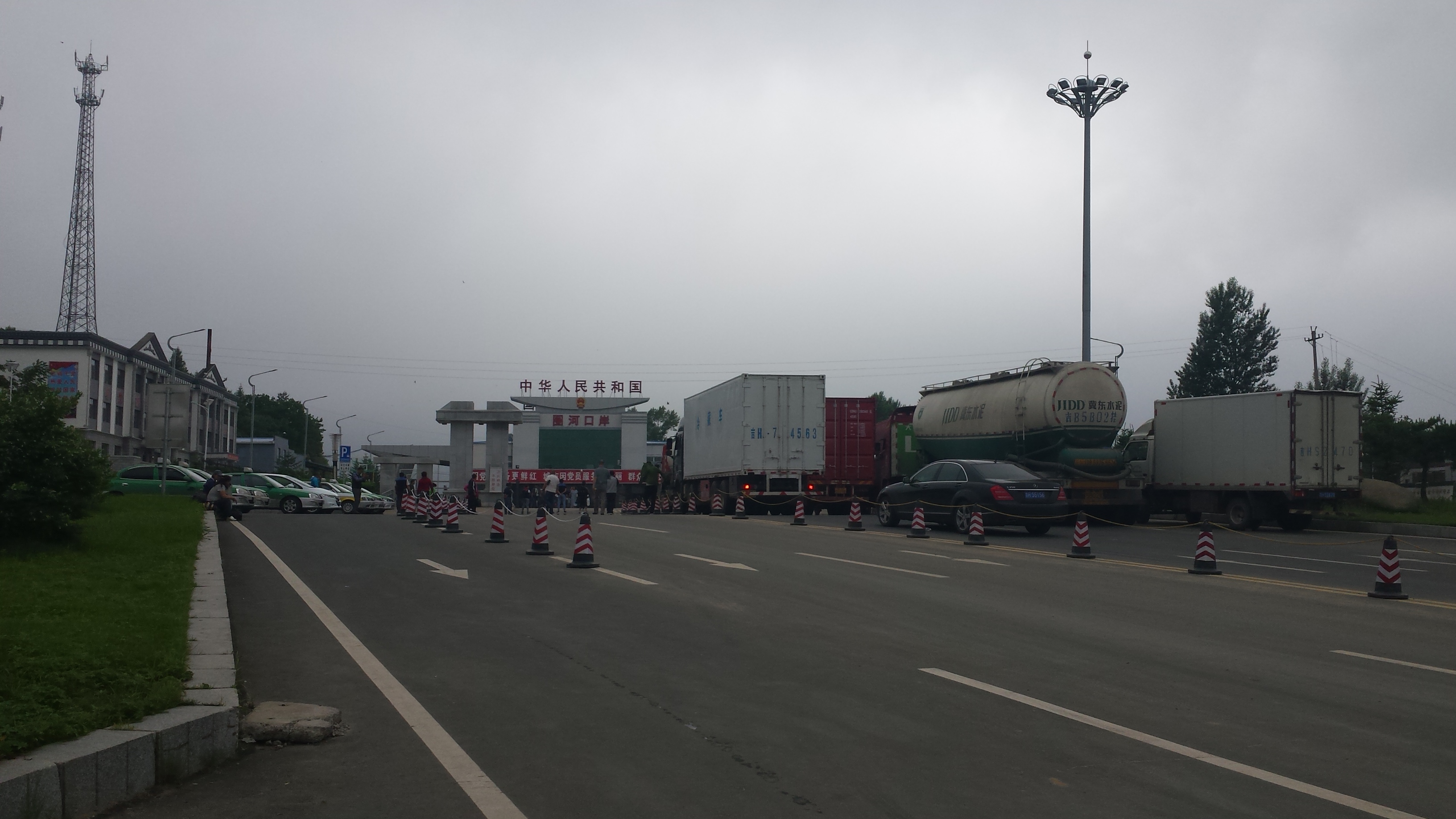
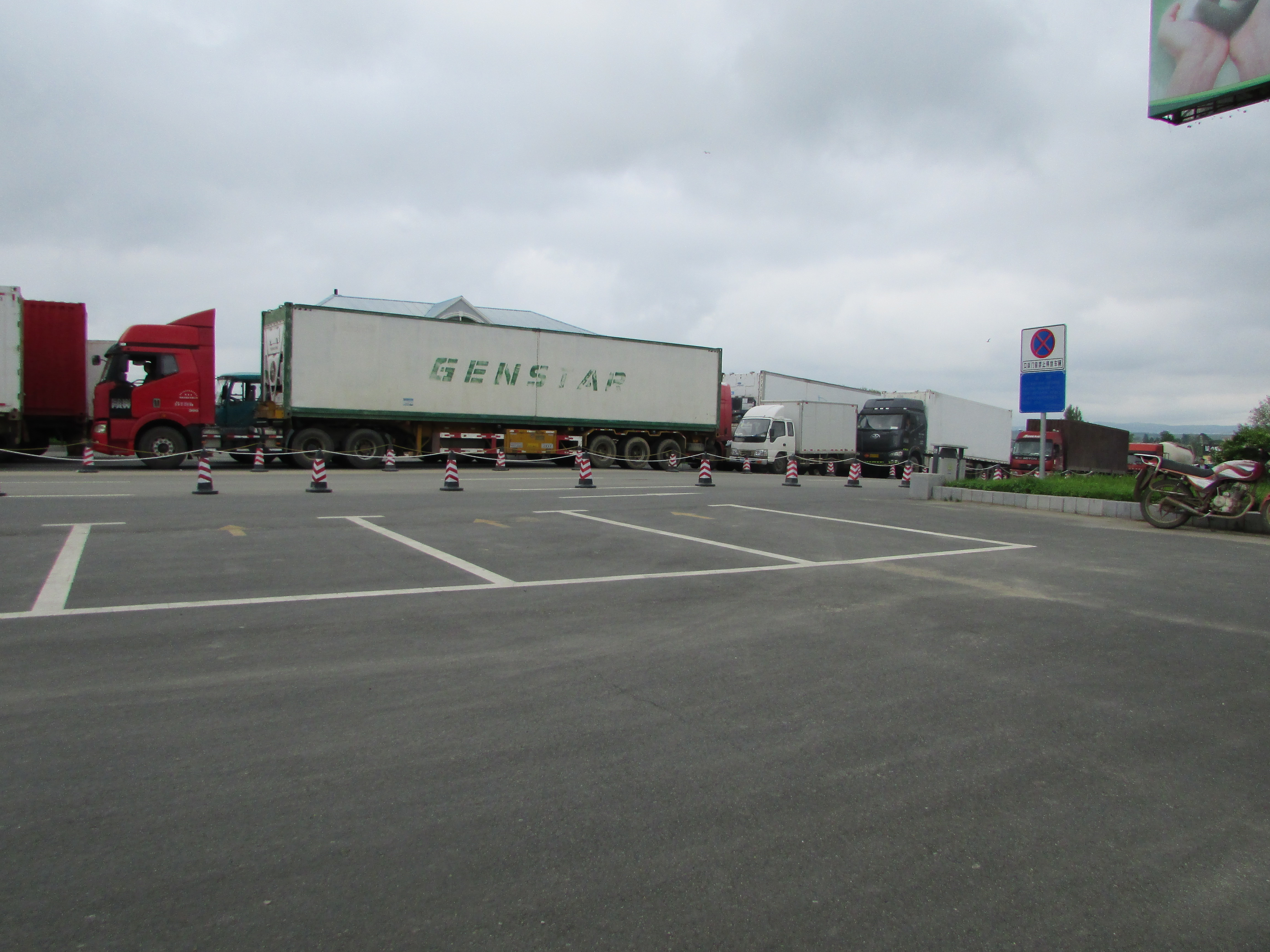
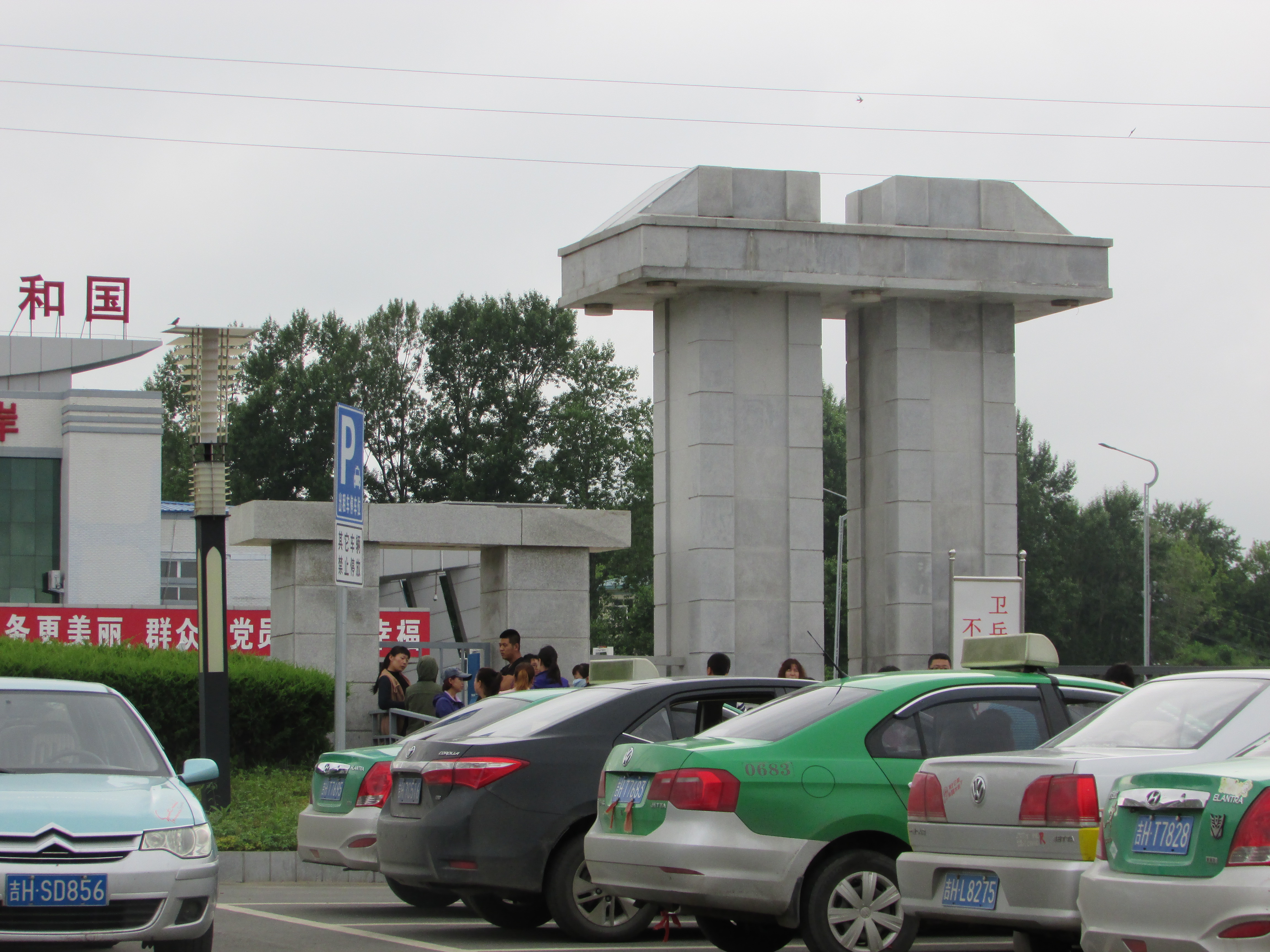
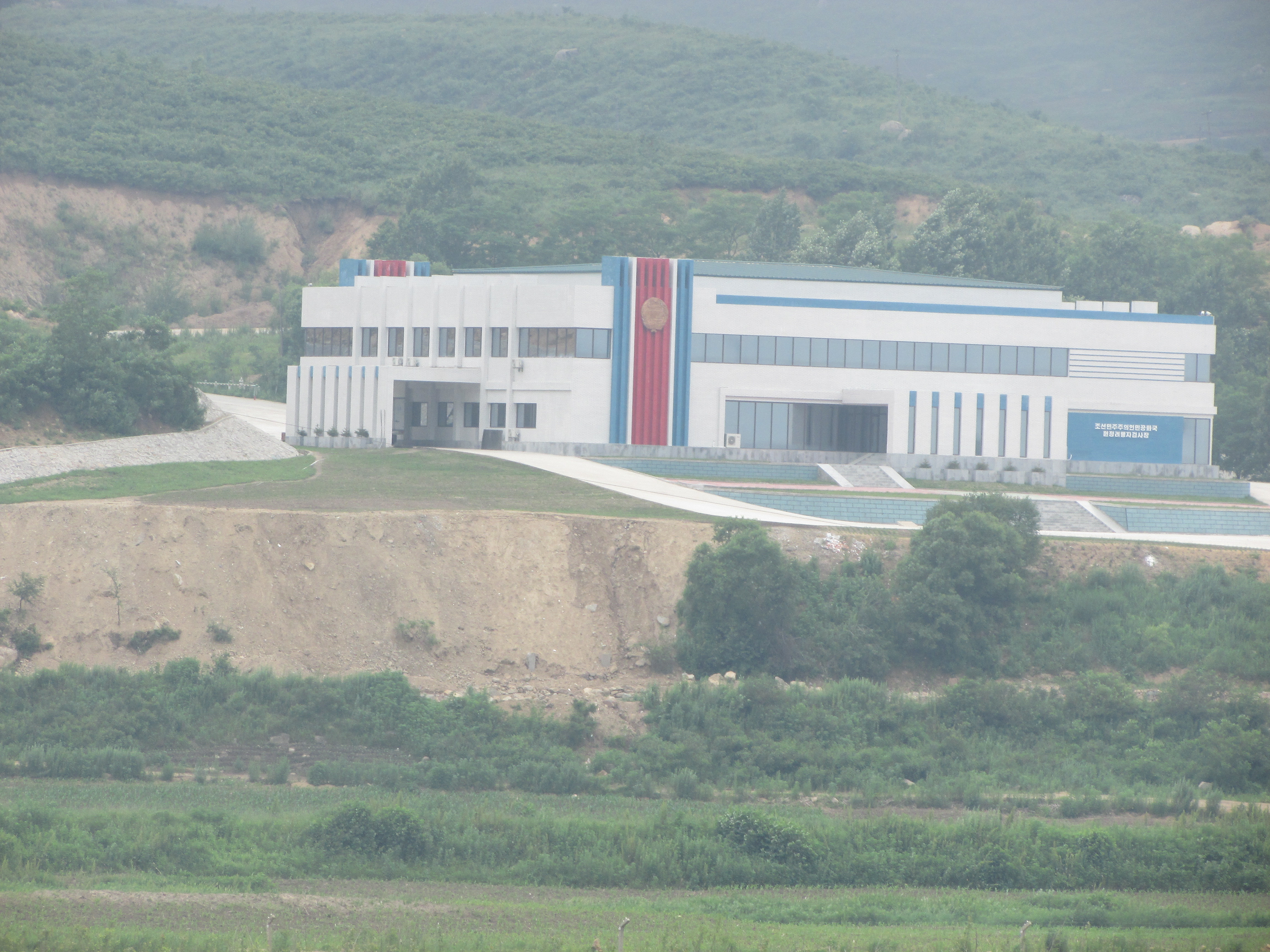
DANDONG, China (Reuters) – The United Nations may have failed to slow North Korea’s weapons programs, but the country’s economy is already showing signs it is feeling the squeeze from the ongoing clampdown on trade, including a curb on fuel sales by China.
The latest sanctions agreed on Monday by the UN Security Council ban the export of textiles from North Korea, one of its few substantial foreign currency earners. They also capped imports of oil and refined products, without imposing the full ban the United States had sought.
Chinese traders along the border with North Korea and some regular visitors to the isolated country said scarcer and costlier fuel, as well as earlier UN sanctions banning the export of commodities such as seafood and coal, are now taking a toll.
“Our factory in North Korea is about to go bankrupt,” said an ethnically-Korean Chinese businessman in Dandong who sells cars refurbished at a factory in North Korea. He declined to be identified due to the sensitivity of the situation.
[My emphasis: Sanctions may target the regime first and foremost, but civilians certainly do not go untouched by them./BKS]
“If they can’t pay us, we’re not going to give them goods for free,” he said, referring to his North Korean customers.
A trader at another auto-related businesses in Dandong said cross-border trade had been hurt over the past few years, which he attributed to sanctions and less access to petrol. Several Chinese traders told Reuters the sanctions had stymied North Korean businesses’ ability to raise hard currency to trade.
“Last month sales were really bad, I only sold a couple of vehicles,” said the Chinese trader who sells new trucks, vans and minibuses to North Korea. “In August last year, I sold tens of vehicles and I thought that was bad.”
On top of the sanctions, some traders said Chinese officials have stepped up efforts to curb smuggling across the border, a key source of fuel in the northern parts of North Korea.
[Question is: for how long will these efforts last? /BKS]
And Chinese bank branches in the northeast have curtailed doing business with North Koreans, according to branch staff [BKS emphasis].
FUEL PRICES SURGE
Still, North Korea has made strides in increasing its economic independence and not all traders or observers agreed the international pressure was having a major economic impact.
Many residents, long accustomed to restrictions and shortages, were most concerned about the risk of already tight fuel supplies being cut further, said Kang Mi-jin, a North Korean defector in Seoul who reports for the Daily NK website.
“If the U.S. were to say they plan to bomb Pyongyang, North Koreans wouldn’t care less. But if China says they are considering slashing oil exports to North Korea because of missile or nuclear tests, North Koreans would absolutely freak out,” she said.
[BKS emphasis.]
Reuters reported in late June that state-run China National Petroleum Corp (CNPC) had suspended sales of gasoline and fuel to North Korea over concerns it would not get paid, and Chinese customs data showed that gasoline exports to the North had dropped 97 percent from a year earlier.
Petrol and diesel prices in North Korea surged after the cut and have almost doubled since late last year. In early September, petrol cost an average of $1.73/kg, compared with 97 cents last December, according to data from the defector-run Daily NK.
“The cost of living has gone up, the price of petrol has risen and there are fewer cars on the streets,” a foreign resident of the North Korean capital told Reuters. The only thing that had become cheaper was coal, he said, after China banned North Korean coal imports earlier this year.
Some of the scarcity of oil products and higher prices may have been caused by hoarding in anticipation of a clampdown on supply.
[Hoarding does seem like a likely culprit judging from the price trend from late spring this year. Basically, none of the current measures are ones that North Korea likely didn’t expect. /BKS]
North Korea canceled an air show scheduled for this month in the coastal city of Wonsan, citing “current geopolitical circumstances”. Several Chinese traders said they believed it was because the military is saving aviation fuel.
The new UN resolution imposes a ban on condensates and natural gas liquids, a cap of 2 million barrels a year on refined petroleum products, and a cap on crude oil exports to North Korea at current levels.
OIL NOT BOMBS
North Korea uses far less crude than during its industrial heyday in the 1970s and 1980s, according to the U.S. Energy Information Administration. After cut-price supplies from China and the Soviet Union ended following the Cold War, consumption dropped from 76,000 barrels per day in 1991 to an estimated 15,000 last year, according to the EIA.
[Oil consumption is already relatively low — key point. /BKS]
The use of small-scale solar has become widespread in the North, with many apartment balconies dotted with panels providing power for cooking and lighting.
China has not disclosed crude exports to North Korea for several years but industry sources say it supplies about 520,000 tonnes of crude a year to North Korea through an aging pipeline.
The pipeline already operates at the minimum level for which the waxy crude from China’s Daqing oil fields can flow without clogging, according to a senior oil industry source.
Chun Yung-woo, a former South Korean envoy on the North Korean nuclear issue, said the North could endure for a year or two without oil imports.
“North Koreans are so used to living in harsh economic conditions that they would just get by for at least one year even if the oil ban is adopted, rationing the existing stockpile among top elites at a minimum level and replacing cars, tractors, equipment with cow wagons, human labor etc,” he said.
“They would also manage to produce oil from whatever resources are available, whether it be coal, trees or plants.”
Full article:
As North Korea girds for latest sanctions, economy already feels the squeeze
Sue-Lin Wong
Reuters
2017-09-13
This last point is extremely important: the weakness of the North Korean economy is also its strength. It is still highly underdeveloped and also resilient because so much of it functions on ad-hoc, creative solutions. That’s not to say that current sanctions (if fully enforced — a big “if”) may come to hurt the economy and society if pressure is continued over a longer stretch of time, but they’re unlikely to be completely crippling right away.
(UPDATE 2017-09-26): Added below is some Daily NK coverage from last week on consequences inside North Korea and for North Koreans of the current economic pressure. On September 13th, they reported that large numbers of North Korean workers returning home from China had been spotted at the Dandong railway station:
Daily NK has received photos of North Korean workers waiting to board trains home at Dandong’s railway station (Liaoning Province) on the morning of September 4. They were reportedly working at a cold storage facility in China but having failed to have their contracts extended, have had no choice but to return home.
“Every day, groups of North Korean workers are returning to their country via Dandong railway station due to the sanctions. The Chinese factory owners used to prefer North Korean workers because of the cheaper wages, but now they are employing Chinese workers even though their wages are higher,” a source familiar with North Korean affairs in China told Daily NK.
North Korean trading companies were previously using a system to dispatch workers to overseas factories for three to five year intervals, with an extension of the contracts or the signing of new ones upon expiration of the original contract. Officially, the companies are required to recall workers whose contracts have ended and dispatch new workers, but many workers have been extending their stays in exchange for bribes given to the company managers.
The Chinese factories benefit from a cheap labor force, so the extensions were easily accepted in the past.
However, these factories have recently ceased extending labor contracts and issuing new ones with North Korean trading companies following the adoption of new UNSC sanctions.
Daily NK previously reported that a large number of Chinese factories announced that they will no longer extend labor contracts for North Korean workers due to the sanctions.
As a result, the North Korean authorities are keen to find alternative routes to earn foreign currency and have instructed some workers to look for other ways to earn foreign currency rather than return home after their period of dispatch.
Daily NK also reported that at least some North Korean workers in Dandong (Liaoning Province) have managed to find work at nearby restaurants and hotels.
North Korean workers are often repatriated after an extended period of overseas dispatch, as the regime considers them more likely to learn about the external world and attempt defection. But as the regime has become desperate in its attempts to earn foreign currency, it has started encouraging these workers to extend their stays.
Full article:
Dandong railway station packed with North Korean workers returning home
Kim Ga Young
Daily NK
2017-09-13
Gas prices in North Korea have been skyrocketing for several months, and the rate of the increase has gone up during the current crisis, Daily NK reports:
At the beginning of this month, gasoline prices in North Korea’s capital city of Pyongyang began to sharply rise. Now, oil prices in other regions of the country have started climbing as well. This news was ascertained and delivered to Daily NK on September 7 by inside informants on the ground in North Korea.
After the UN Security Council adopted another round of international sanctions against North Korea (Resolution 2371) on August 5, there were no major price fluctuations. However, oil prices did start to rise in certain regions after the North conducted its sixth nuclear test earlier this month.
According to the inside sources, one kilogram of gasoline rose from KPW 18,000 in Pyongyang at the beginning of September to KPW 23,000 on September 7th. Diesel prices also exceeded the KPW 12,000 mark.
Asked about these quickly elevating prices during a phone conversation with Daily NK a source in Pyongyang said, “Gasoline prices started to rise at the end of August to KPW 18,000, and then jumped up to KPW 20,000 at the beginning of September. As a result of this increase, motorbikes disappeared from the streets of Pyongyang. The presence of taxis and cars is down by at least half. The streets are totally empty.”
“Some autobike drivers are concerned because the gas price jump will make it harder for them to make a living transporting people and goods,” the source added. “The possibility is large that related industries will also be hurt by the price increase.”
There are signs that the gasoline price increase is also affecting areas far from the capital city, such as Hyesan City, Ryanggang Province. A source from that region said, “The cost of gasoline in Hyesan increased to KPW 21,600 per kilogram.” As recently as the third week of August, the price was at a mere KPW 12,050. Towards the end of the month, it climbed to KPW 14,400, and then kept climbing in September.
The source added, “Gas prices are also rising in rural areas of the country. Some areas feature gas prices approaching the price in Hyesan, and others have surpassed that. Merchants are baffled because the price dipped and then rose suddenly.”
Gas prices in North Korea jump on rumors of possible embargo
Kang Mi Jin and Kim Ga Young
Daily NK
2017-09-15
(UPDATE 2017-09-18): Anna Fifield reports in the Washington Post on the textile exports ban and its impact on North Korea’s female population in particular:
There are few areas in the North Korean economy, outside its nuclear weapons program, that could be called booming. But the garment industry has been one of them.
Over the past few years, North Korea has been sending increasing numbers of seamstresses to China to sew clothes for international buyers, and it also has been encouraging the expansion of the garment industry at home.
There are factories around the country producing suits, dresses and children’s clothes — almost all of which are labeled “Made in China.”
That should all theoretically come to an end now, after the U.N. Security Council unanimously decided last week to prohibit North Korea from exporting labor and textiles, adding to existing sanctions on coal, iron ore and seafood.
“Today’s resolution bans all textile exports,” Nikki Haley, the United States’ ambassador to the United Nations, said Monday when the resolution passed. “That’s an almost $800 million hit to its revenue.”
North Korea exported about $725 million worth of clothing last year, according to South Korea’s trade-promotion agency, making it a significant source of income for the cash-strapped country.
Adding textiles to the sanctions list means that more than 90 percent of North Korea’s publicly reported exports last year are now banned, Haley said. Coal, iron ore and seafood exports were prohibited in a previous resolution.
While diplomats have been describing the ban as being on “textiles,” economists say it should more accurately be called a “garment” ban. North Korea does not export bolts of fabric but instead produces labor-intensive articles of clothing.
“When you make simple clothes like T-shirts, the machinery is important. The labor is not so important. So it makes no sense to do things like this in North Korea,” said Paul Tjia, a Dutch consultant who helps businesses operate in North Korea, especially in the garment industry.
“But for garments that require a lot of manual work, like bras or winter sports clothes, it makes a lot of sense to make those in North Korea, because the price-to-quality ratio is very attractive,” said Tjia, who most recently went to Pyongyang in May.
[…]
Although China supported the new U.N. resolution, its implementation of previous sanctions has been spotty at best, analysts say.
But if Beijing is serious about stopping North Korea’s exports of apparel and workers to sew garments in Chinese factories, it would have a significant impact on the North’s economy, said Marcus Noland of the Peterson Institute for International Economics.
“The reason that this is important is not only because apparel exports are a significant number, but because it’s the one non-resource area that’s really growing,” Noland said, differentiating apparel exports from mineral exports such as coal and iron ore. “So it’s not just the static number that’s important. It’s the fact that this sector was emerging as an area of comparative advantage.”
[…]
Previously, governments had stressed that the sanctions were targeting the regime and were aimed at cutting off its access to the money or equipment it needed for its nuclear weapons program.
This effort to shut down North Korea’s garment industry is one that will have wide-reaching ramifications across North Korean society.
“Assuming that the ban is enforced, it will have a huge impact,” said Abrahamian, who visited North Korean garment factories several times while working for Choson Exchange, an NGO focused on business training for North Koreans.
“Tens of thousands, possibly even hundreds of thousands, of North Koreans are employed in this industry, and 98 percent of them are women. That’s the demographic that’s clearly going to suffer as a result of this,” he said.
Full article:
Ban on North Korean clothing exports will hurt women the most, experts say
Anna Fifield
Washington Post
2017-09-17
A few days after the sanctions were adopted that limit oil exports to North Korea, Daily NK interviewed a North Korean merchant working in China, who said he was basically out of work:
Mr. A: In broad strokes, I’d say at least 80% of us North Korean merchants in Dandong were stomping our feet and complaining that we have no work now as soon as the new sanctions were released. Joint ventures with Chinese firms are blocked, bank accounts are blocked, and use of North Korean laborers is limited. These were all important sources of money for us. There is no work left for us to do.
DNK: And the work that you were doing has effectively gone down the drain?
Mr. A: Yes. Recently, some of the projects that we have been proposing to the Chinese side have been rejected.
DNK: This happened to you personally?
Mr. A: I have mostly earned money by acting as an intermediary connecting North Korean and Chinese merchants. I charged a commission for playing this role. But if demand decreases for this service, there’s nothing I can do. I also used to take the profits I earned to purchase things that North Koreans need, such as materials, but now that has also become quite difficult to do.
The fall harvest is approaching in North Korea, which means that threshers and other agro materials are needed, but because of these sanctions, the work has dried up and I can’t buy them. I think this will have an effect on the size of the fall harvest.
Reacting to sanctions, N. Korean merchant in China: ‘We have no work’
Kim Chung Yeol
Daily NK
2017-09-18
Bloomberg wrote last week (2017-09-15) on the smuggling of fishery products in the wake of the sanctions on these goods:
In the fishing grounds where the Yalu River opens up to the Yellow Sea, Chinese and North Korean trawlers intermingle as they search for crabs, conch and yellow clams.
Drifting among them are Chinese boats called “mother ships” that act as floating middlemen, offering dollars, renminbi and even goods like cigarettes for the latest catch, according to traders who have been aboard the vessels. One of them, who called himself Mr. Du, said the seafood is then taken ashore to China and sold in wholesale markets, where it all gets mixed together.
The practice is just one form of smuggling along China’s 1,350-kilometer (840-mile) border with North Korea, roughly the distance from Paris to Rome. Locals use boats, cars, trucks and several rail lines to carry everything from diesel fuel to silkworms to cell phones back and forth across the Yalu.
[…]
For China, implementing sanctions is a tricky balance. It wants North Korea to stop doing anything that leads the U.S. to bolster regional defenses that could also be used against China. At the same time, authorities have long feared that a collapse of the regime in Pyongyang could destabilize China’s northeastern region and bring U.S. troops to the banks of the Yalu.
[…]
hile the latest penalties will take effect from Oct. 1, a ban on North Korean seafood passed a month ago — taking away roughly $300 million in revenue each year — came fully into force only on Sept. 5. Interviews along the border last week with dozens of traders, wholesalers, smugglers, former local officials and foreign diplomats showed that fresh North Korean seafood was still available even as China visibly stepped up enforcement.
China’s border with North Korea stretches from the industrial town of Dandong north to the town of Hunchun, near where the countries converge with Russia. Along the route, police and military have increased patrols and set up checkpoints to inspect vehicles.
Foreign affairs offices for the Dandong and Hunchun city governments didn’t respond to faxes seeking comment on efforts to stop smuggling. Foreign Ministry spokeswoman Hua Chunying told reporters in Beijing on Friday that China was opposed to North Korean violations of sanctions and would continue to strictly implement UN resolutions.
In Hunchun, dozens of seafood wholesalers had closed after the earlier sanctions took effect. Chinese authorities seized shipments of North Korean squid at the border, according to Shi Haiyan, a shopkeeper at Quanhe Port, which sits on a river linked with the Sea of Japan.
“The sanctions are strict now — seafood can’t come through at all,” the 34-year-old said last week.
Even so, restaurants in Hunchun were still selling North Korean crabs and conch. The goods are harder to find but still available, according to a shop owner who asked to be identified only by his family name, Lyu.
The situation was similar in Dandong, the biggest Chinese city along the border and the center of the country’s trade with Kim’s regime. Dandong is home to a pipeline that regularly supplies oil to North Korea — a crucial supply source that was exempted from the new sanctions.
The city of 2.4 million people has several bridges that cross the Yalu, one of which is inoperable because North Korea hasn’t built a road linking to it. Another one bombed out during the Korean War attracted Chinese tourists singing Communist songs about defeating America.
Hundreds of cars and trucks traverse the main Friendship Bridge each day, including many North Korean drivers looking to fill up with petrol. Getting across has become harder after the latest round of sanctions came into effect, according to Wang Lisheng, 64, a former county official from nearby Hekou village who used to trade metals with North Korea.
At Dong Sheng, Dandong’s main seafood market, four traders said last week they could still source the city’s signature yellow clams from North Korea even though supplies had dropped. Ha Wei, 38, said the price of dried clams had risen 20 percent to 30 yuan ($4.6) per half kilogram (1.1 pound) since the sanctions took effect.
Still Demand
About 40 kilometers away at the Yellow Sea Seafood Products Market, a larger complex where hundreds of workers sift through freshly unloaded seafood that is then shipped throughout China, multiple traders told Bloomberg they also were still able to procure goods from North Korea.
“We still have North Korean goods but much less in the last week after sanctions,” said Xu E, 44, a conch trader.
Mr. Du, who described how smugglers bring North Korean seafood into China, has been running goods across the China-North Korea border for the past 20 years. He’s been detained in North Korea several times, including once when he was fed only carrots for three days before being released.
In the 1990s, he said, border smugglers regularly dealt everything from coal to diesel to North Korean brides. He avoided trading guns, drugs or people — things that could earn him a prison sentence instead of a fine. Despite the risk of violating sanctions, he said, the easy money will continue to attract smugglers on the border.
“As long as there’s demand, smugglers will keep coming,” Du said. “No matter how hard Beijing tries.”
Full article:
Smuggled North Korea Clams Show China’s Struggle to Stop Kim
Bloomberg News
2017-09-15
(UPDATE 2017-09-19):
DailyNK has published several stories in the past few days on the dire impact that sanctions and tensions are having on the economy. News of sanctions implementation by China, it seems, are impacting North Korean market prices in dire ways:
This upsurge in prices began to occur before the United Nations unanimously passed its latest round of sanctions. Security Council Resolution 2375 – which passed on September 11 – contains some of the strictest provisions yet, including a ban on importing North Korean textiles and a restriction of exports to North Korea to just 30% of current levels. However, since the cost of goods increased prior to the UN’s adoption of 2375, analysts are wondering what lies behind the jump.
According to inside sources, the cost of one kilogram of rice was about KPW 5,800 at the end of last month in Pyongyang, South Pyongan Province Sinuiju City, and Ryanggang Province Hyesan City. On September 5th, the prices passed the KPW 6,000 mark and have continued to slowly rise. After the North’s nuclear test, gasoline prices rose sharply around the country. Rice and other grains followed suit in due course.
Insiders located in the border regions near China – which have long served as hubs of trade and smuggling – are also sensing the climbing prices. A source from Ryanggang Province explained to Daily NK on September 11, “When we heard about economic sanctions in the past, there were merely slight increases in the cost of rice, but now we are seeing a different kind of effect.”
She continued, “Even though we are currently at the height of the corn harvest season, corn is nonetheless selling for KPW 2,700 per kilogram, [it sold for just KPW 1,900 per kg at the end of August]. Merchants haven’t been overly concerned until now, but now that we see corn prices increasing during the harvest season, it seems clear that the economic situation will continue to deteriorate.”
Witnessing the cost of diesel and gasoline spike upwards, some merchants have predicted that this will cause the price of other products to raise as well, and have therefore responded by reducing the number of products available for sale. By doing so, they hope to be able to sell at a higher price later. This reduced supply, in turn, has itself pushed prices up.
Also, as reports and rumors from the outside world penetrate further into North Korea, more and more people are coming to realize that North Korea’s closest friends, especially China, are meaningfully participating in the sanctions. This information also helps to push prices up.
A poor yield of corn this year is also playing a role. Severe droughts in the spring have hurt bottom line harvests of grains such as corn.
North Korean traders are doing their utmost to maintain contact with the outside world so they can ascertain information about how the international situation will affect their livelihood. The source explained, “Residents who trade with Chinese merchants are trembling with fear because they are worried that the goods they deal in will become restricted or the prices will rise.”
The residents are especially concerned because prices are rising for both food products and other daily necessities.
In a telephone call with Daily NK on September 10, a source from Kangwon Province said, “Spring water was selling for KPW 500-600, but it’s risen by about KPW 500. At this time of year, a portion of tofu on the expensive end would sell for KPW 1,100, but now it’s going for KPW 1,300.”
It is also possible that the gasoline price rise is partially due to an effort by the authorities to restrict supply in order to ration. Kim Jong Un, sensing an impending reduction in trade and gasoline supply, might have begun to store up food and oil in military and private warehouses–behavior that would certainly block up market-based distribution networks.
What explains the recent rise in the cost of goods in North Korea?
Kang Mi Jin
Daily NK
2017-09-19
Daily NK continues to cover the volatile gasoline prices in North Korea, reporting some consequences for the market for gas coupons:
“As fuel prices have been fluctuating, gasoline coupons have become popular items in Pyongyang’s black markets. The merchants who previously bought dozens of coupons have started offering them for sale as the prices began to rise,” a source familiar with North Korean affairs in China told Daily NK on September 20.
According to the source, gasoline can be purchased for the same price at the time that the coupon was issued. For example, if a 15 kg gasoline coupon was previously purchased for 30 USD, the same amount of fuel can be obtained even if the price rises suddenly to 35 USD. In this way, the dealers can make a profit by selling the coupon for 32 USD.
“The coupons are especially popular when the gasoline prices are unstable. The merchants are selling the coupons on the black markets as the fuel prices rise,” the source said.
Originally, gasoline coupons were issued from North Korea’s central government organizations and were sold to officials or foreign embassy staff in Pyongyang. But now the foreign currency earning companies are issuing the coupons themselves. The authorities have actively encouraged new strategies to earn foreign currency.
These foreign currency earning companies are said to be profiting from the fluctuating fuel prices, regardless of efforts to limit the sales of coupons.
“If the authorities move to restrict the sales of coupons, the companies will just sell the coupons on the black market. Despite strong sanctions being imposed on fuel, the major companies that are still holding a large amount of fuel become more powerful in times of fuel crisis,” a source in South Pyongan Province explained.
“Even the Pyongyang cadres have no choice but to purchase coupons on the black market.”
For these reasons, she said, most of the gasoline coupons are often valued at their equivalent in USD.
“Recently, people have been able to use the gasoline coupons for their USD value at restaurants and stores. They can even exchange the coupons for money. It has become a common practice to provide gasoline coupons to officials in Pyongyang as a bribe,” she concluded.
Volatile gasoline prices in Pyongyang
Seol Song Ah
Daily NK
2017-09-25