Archive for the ‘Civil society’ Category

Tunnels, Guns and Kimchi: North Korea’s Quest for Dollars – Part II

Thursday, June 11th, 2009

Yale Global
Bertil Linter
6/11/2009

BANGKOK: The global economic meltdown has claimed an unexpected victim: North Korea’s chain of restaurants in Southeast Asia. Over the past few months, most of them have been closed down “due to the current economic situation,” as an Asian diplomat in the Thai capital Bangkok put it. This could mean that Bureau 39, the international money-making arm of the ruling North Korean Workers’ Party – which runs the restaurants and a host of other, more clandestine front companies in the region – is acutely short of funds. Even if those enterprises were set up to launder money, operational costs and a healthy cash-flow are still vital for their survival. And, as for the restaurants, their main customers were South Korean tourists looking for a somewhat rare, comfort food from the isolated North of the country. The waitresses, all of them carefully selected young, North Korean women dressed in traditional Korean clothing, also entertained the guests with music and dance.

But thanks to the global economic crisis, not only has the tourist traffic from South Korea slowed, the fall in the value of won has also reduced their buying power. The South Korean won plummeted to 1,506 to the US dollar in February, down from 942 in January 2008. No detailed statistics are available, but South Korean arrivals in Thailand – which is also the gateway to neighboring Cambodia and Laos – are down by at least 25 percent.

Though staunchly socialist at home, the North Korean government has been quite successful in running capitalist enterprises abroad, ensuring a steady flow of foreign currency to the coffers in Pyongyang. North Korea runs trading companies in Thailand, Hong Kong, Macau and Cambodia, which export North Korean goods – mostly clothing, plastics and minerals such as copper – to the region. At the same time, they import various kinds of foodstuffs, light machinery, electronic goods, and, in the past, dual-purpose chemicals, which have civilian as well as military applications. Those companies were – and still are – run by the powerful Daesong group of companies, the overt arm of the more secretive Bureau 39.

North Korea embarked on its capitalist ventures when, in the late 1980s and early 1990s, the country was hit by a severe crisis caused by the disruption in trading ties with former communist allies. More devastatingly, both the former Soviet Union in 1990 and China in 1993 began to demand that North Korea pay standard international prices for goods, and that too in hard currency rather than with barter goods. According to a Bangkok-based Western diplomat who follows development in North Korea, the country’s embassies abroad were mobilized to raise badly needed foreign exchange. “How they raised money is immaterial,” the diplomat says. “It can be done by legal or illegal means. And it’s often done by abusing diplomatic privilege.”

North Korea’s two main front companies in Thailand, Star Bravo and Kosun Import-Export, are still in operation. In the early 2000s, Thailand actually emerged as North Korea’s third largest foreign trading partner after China and South Korea.

Bangkok developed as a center for such commercial activities and Western intelligence officers based there became aware of the import and sale of luxury cars, liquor and cigarettes, which were brought into the country duty-free by North Korean diplomats. In a more novel enterprise, the North Koreans in Bangkok were reported to be buying second-hand mobile phones – and sending them in diplomatic pouches to Bangladesh, where they were resold to customers who could not afford new ones. In early 2001, high-quality fake US$100 notes also turned up in Bangkok and the police said at the time that the North Korean embassy was responsible as some of its diplomats were caught trying to deposit the forgeries in local banks. The North Korean diplomats were warned not to try it again.

The restaurants were used to earn additional money for the government in Pyongyang – at the same time, they were suspected of laundering proceeds from North Korea’s more unsavory commercial activities. Restaurants and other cash-intensive enterprises are commonly used as conduits for wads of bills, which banks otherwise would not accept as deposits.

For years, there have been various North Korean-themed restaurants in Beijing, Shanghai and other Chinese cities. But the first in Southeast Asia opened only in 2002 in the Cambodian town of Siem Reap. It became an instant success – especially with the thousands of South Korean tourists who flocked to see the ancient ruins of Angkor Wat. It was so successful that Pyongyang decided to open a second venue in the capital Phnom Penh in December 2003. A fairly large restaurant in the capital’s Boulevard Monivong, which offered indifferent Korean staple kimchi and other dishes and live entertainment by North Korean waitresses, closed earlier this year for lack of business.

In 2006, yet another Pyongyang Restaurant – as the eateries were called – opened for business in Bangkok. It was housed in an impressive, purpose-built structure down a side alley in the city’s gritty Pattanakarn suburb, far away from areas usually frequented by Western visitors but close to the North Korean embassy and the offices of its front companies in the Thai capital. This was followed by an even grander restaurant in Thailand’s most popular beach resort, Pattaya, which was also housed in a separate building with a big parking lot outside for tour buses. A much smaller Pyongyang restaurant opened in Laos’s sleepy capital Vientiane, but that one became popular not with South Korean tourists, but with Chinese guest workers and technicians. The Vientiane restaurant may be the only North Korean eatery that is still in operation.

After years of watching North Korea’s counterfeiting and smuggling operations, the United States began tightening the screws on Pyongyang’s finances in September 2005. This occurred after Banco Delta Asia, a local bank in Macau, was designated as a “financial institution of primary money-laundering concern.” The bank almost collapsed, and North Korea’s assets were frozen. The money was eventually released as part of an incentive for North Korea’s concession in the Six-Party talks and returned to North Korea via a bank in the Russian Far East. But, coupled with UN sanctions, the damage to North Korea’s overseas financial network was done – including the ability of Pyongyang’s many overseas front companies to operate freely. For example, the two-way trade between Thailand and North Korea peaked at US$343 million in 2006 – but then began to decline. It was down to US$100 million in 2007, and US$70.8 million in 2008.

Now with North Korea conducting a second nuclear test and firing off missiles, Washington has raised the possibility of the re-listing of North Korea as a state that supports terrorism. If that were to happen, many private companies would become hesitant to deal with Pyongyang and its enterprises for fear of being blacklisted by the US Treasury.

With its various money-making enterprises coming unstuck, Pyongyang is increasingly under pressure. The worldwide financial crisis has already put North Korea in a tight corner. There was never anything to suggest that the money earned by North Korea’s economic ventures abroad were to be used for social development at home, or to be spent on basic necessities such as putting food on the tables of the country’s undernourished people. Now, there won’t even be food for sale to South Korean tourists in the region.

Share

North Korean footballers in Europe

Saturday, May 16th, 2009

(Big hat tip to Werner who located this information)  For some time now now, DPRK football players have been earning hard currency and training with European pro-football teams.
 
– Choe Myong Ho (in Russian: Tsoi Min Ho) is playing for the Russian Premier League’s team Krylia Sovetov Samara–which has a player from both North and South Korea (read more here)
 
– Hong Yong Jo is playing for Russia’s Rostov:

Hong plays his club football at FC Rostov in the Russian First Division, following a short spell with Serbian outfit FK Bezanija. Unlike those days at his first club April 25 of Pyongyang, for whom he scored 41 goals in four seasons, Hong has had to fight for his place in the European leagues while frequently flying back home to join the national team for their South Africa 2010 qualifiers. The time change and distance has to cover is considerably greater than those of team-mates An Yong Hak or Jong Tae Se, who ply their trade in Korea Republic and Japan respectively.

There has, in fact, been signs of fatigue: Hong was uncharacteristically unimpressive during the UAE game and he was replaced in the 71st minute. His substitute Kim Kum Il made an instant impact with a neat through ball that resulted in Korea DPR’s opening goal. But it took only four days for Hong to redeem himself, winning and converting a crucial penalty against Korea Republic (FIFA.com).

– Pak Chol Ryong and Kim Kuk Jin are playing for FC Concordia Basel (2nd Swiss division).  Read more in German here.
 
Additionally, two DPRK women football players are training with the FFC Turbine Potsdam (a leading German women’s team from Potsdam). The players, Jon Myong Hwa and Kim Un Hyang, are both from the 2008 FIFA women’s championship team.  The managers of the German football club said that they did not actively seek out the North Korean players, but rather they were approached by a North Korean who has been living in Cologne for several years who asked Potsdam to invite the women players to train with them. (Read more in German here).
 
Also, the DPRK men’s national team is attending a training camp in Switzerland right now. (Read more in German here).  Last week they played a friendly match against FC Concordia Basel (2nd division) and lost (Read more in German here)

Share

Hoiryeong Students Causing Furore

Wednesday, April 29th, 2009

Daily NK
Moon Sung Hwee
4/29/2001

As a result of a first-of-its-kind refusal to sign an army enrollment petition, students soon to graduate from a middle school in Hoiryeong, North Hamkyung Province have been ordered by the Party to work on collective farms for life.

Furthermore, during this process the parents of some of the students protested after the children of government officials in Hoiryeong were granted exemptions from the same order.

The incident occurred at the Osanduk Middle School in early February. The Army Mobilization Department had urged graduating middle school students to sign the “People’s Army (KPA) Enrollment Petition,” stressing that “America and South Chosun puppets are taking provocative wartime measures.”

An enrollment petition requests a signature agreeing to “voluntary enlistment in the KPA for the security of the fatherland.” In the past, North Korean authorities forcefully carried out “voluntary” petition movements for youths between ages 17 and 35; however, since the reform of its military service law in 2003 the country has had compulsory military service. Thus, in practice the voluntary enrollment petition is a purely ceremonial expression of patriotism.

A source from North Hamkyung Province explained the background to the incident:

Although signing the enrollment petition has nothing to do with enlisting in the army itself, students worried whether they would have to enter the army immediately after submitting the petition. Moreover, they had heard a rumor that if they went to the army late then they would have to suffer deadly hard military service and subsequent malnutrition.

Both official class and lower class students fought each other so as not to sign it first. Ultimately, due to this factional conflict, all the students passed the submission deadline.

Then the fights among the students continued through February 16th, the birthday of Kim Jong Il, becoming a serious political issue. Not one Osanduk Middle School graduating student had signed the petition, which had had to be completed before the Dear Leader’s birthday. The fact that the school is located in Hoiryeong, the hometown of Kim Jong Il’s mother Kim Jong Suk, also contributed to the incident’s being turned into a political one.

The incident having been reported to the Party, all officials, including teachers, the principal, vice-principal and the manager of the Kim Il Sung Socialist Youth League, were laid off for “failing to properly educate students.” Then the higher authorities, invoking the duty of correcting societal law and order, ordered the dispatch of approximately 120 students who were expected to graduate on March 8th to countryside farms. In North Korea, being dispatched to collective farms is treated as de facto banishment into exile.

In North Korea, once one does not complete his military service or is sent to a collective farm, he/she will be deprived of all opportunities for advancement, including entry into the Party or university. Further, due to the pre-modern societal system which considers one’s family background in all things, the advancement of family members and children are also affected.

With the incident growing out of control, the parents in the official class objected. In particular, at the time of Kim Jong Il’s visit to Hoiryeong on February 24th, one Mr. Han, the manager of the Hoiryeong Basic Food Factory who was accompanying the General, requested that his son be removed from the list of banished students and allowed into the KPA. In North Korea, people who have met Kim Il Sung or Kim Jong Il are entitled to a “special reception” and are eligible for all kinds of societal privileges.

Meanwhile, other officials mobilized networks of relatives residing in Pyongyang and/or offered bribes to help their children. Ultimately, the Party in Pyongyang absolved eight students of responsibility and gave consent for them to enter the KPA.

Subsequently, the parents of those students who remained destined for collective farms immediately went to the Party in Hoiryeong and began protesting.

The source explained, “Recently in Hoiryeong people have been buzzing about this issue. They have been saying with sarcastic pessimism, ‘It is better that those who are fed by the regime go to the Army. Our children from no-good family backgrounds only go to the Construction Corps.’” The Construction Corps is known to be a hard military service assignment.

He also added, “With negative sentiment rising, the following decrees have been issued by the Party of Hoiryeong, ‘Strengthen ideological reeducation projects through the People’s Unit and Union of Democratic Women meetings’ and ‘Rein in your tongue to stop the spread of groundless rumors.’”

Meanwhile, the source also wryly noted, “While parents have tried to get their children excused by doing the rounds of officials, the students who received the banishment have been rejoicing, saying, ‘We thank the General for allowing us not to go to the Army.’”

He concluded in exasperation, “In the past, one who was banished to a collective farm could not even raise his head in public, but the graduating students from Osanduk Middle School have been acting as if they are generals returning from a victorious campaign.”

According to the source, the mentality of the younger generation in North Korea is that instead of wasting away for ten years in the Army, they would rather make money. Then, they can get away from the collective farm with the money they earn during that time.”

Share

Art in the DPRK

Wednesday, April 22nd, 2009

The Art Newspaper  published an interesting piece on how artists are trained and art is produced in the DPRK.

On artistic training:

All DPRK artists are members of state-run studio complexes where the art is actually created, and every artist has a formal ranking. These start at level C, move up through B and A, followed by “Merited Artists”, then “People’s Artist”. There are around 50 “Merited Artists” still working today and perhaps 20 “People’s Artists”, the best known being Son U Yong, Kim Chun Jon, Jong Chang Mo, Li Chang and Li Gyong Nam. Almost all artists working in oil and brush-and-ink are men but there are exceptions—for example Kim Song Hui, well known for her brush-and-ink work, is also a People’s Artist. There is also the Kim Il Sung Prize but artists normally have to be at least over 50 to receive this highest accolade, the most famous recipient being Jong Yong Man.

The top art institute is the Pyongyang University of Fine Art with various sections: brush-and-ink, oil, sculpture, ceramics, mural painting and industrial arts. Young artists are selected from around the country and if they are judged sufficiently skilled they will study here. Pyongyang University requires a minimum of five years study: at the moment there are 7-10 students studying oil painting and around 20 studying Korean brush-and-ink painting. In total there are around 150 students a year in the fine art department. Students enjoy class outings to local factories and much time is devoted to object and life drawing although not with nude models but, for example, girls in swimming costumes.

After finishing university the students are selected by various art studios—the Paekho or Central Art Studio, the Songhwa established in 1997 for retired artists, and the most active studio-compound, the Mansudae in Pyongyang.

On artistic style:

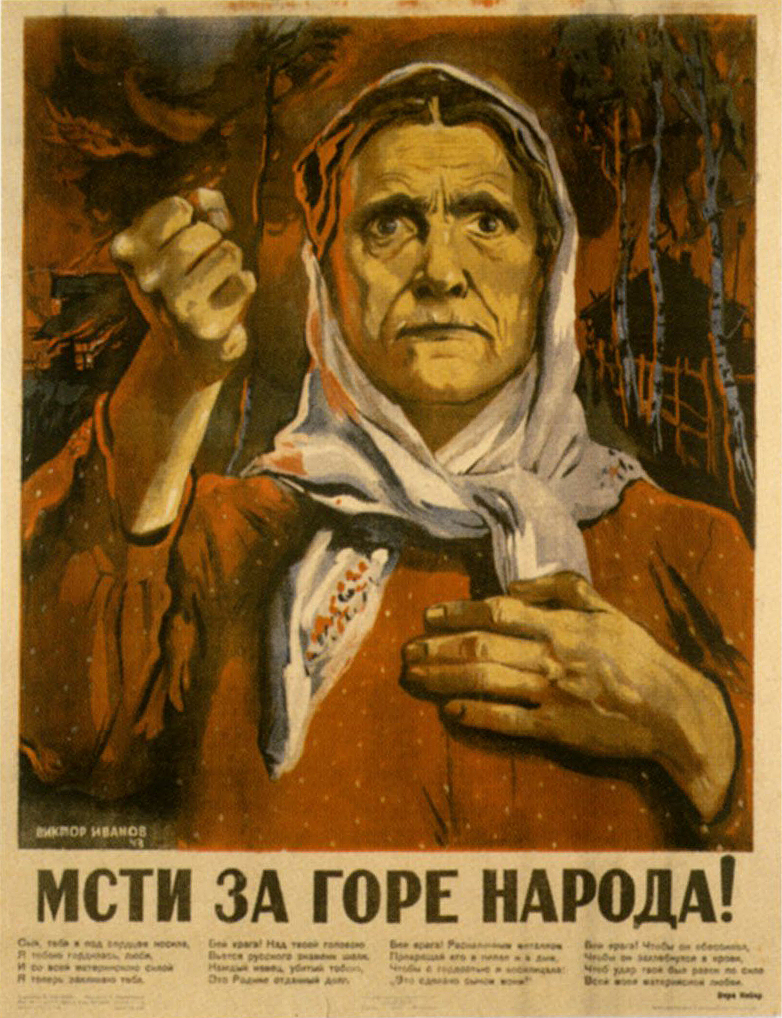
The art itself looks like classic Social Realist propaganda, that Beaux Arts technical tradition received through Russia, maintained by the Soviet Union and now, with the transformation of China, only being practised in North Korea, unchanged for more than 50 years. Abstract painting does not exist as it is deemed bourgeois and anti-revolutionary, and if some representational art can be purely aesthetic without political overtones, many landscapes do portray places of the revolution or of political significance.

Obedience to the ideology and excellence in its clear communication to others are what matter rather than any individual glory. This ensures an anonymity to much DPRK production that only its cognoscenti can penetrate. Experts can not only assign an artist’s name to a work, they can also determine whether it is an “original” or one of endless “copies” of an image.

Ever since the founding of the state in 1948, certain themes have maintained their place in the officially approved iconography of the “Fatherland” and it is hard to establish which artist first produced a specific image and when. These same images can be reproduced countless times over the decades. Thus much detective work is required to trace the origin of an image, the only real source being the annual “Yearbook” cataloguing official production.

As [Nick] Bonner explains: “The skill level is very high in academic drawing and painting, but the production is massive and it’s hard to find ‘pure’ pieces, you have to know the provenance or where things were first found.” Indeed, even the museums display copies, ostensibly to “preserve” the quality of the originals kept in storage.

More information on the Mansudae Art Company:

Here visitors, especially foreign tourists, are welcome to see the artists working in their small studios, watch the instructional video on the operation of the company, and buy some work from the large gift shop. Prices at the very top end for a “People’s Artist” can reach as high as €15,000, the favoured currency for all foreign transactions.

Woodblocks are a North Korean speciality, though nowadays they have been almost entirely replaced by lino prints with an attractive rich ink finish. The first ever exhibition of such prints in the United States, loaned from Bonner’s collection, opened last year at New York’s Korea Society, which is currently touring through the country. Initial editions are often very small, less than ten, but if the image proves popular the lino is either re-cut by the same artist or by a “copy” artist and signed by him.

At Mansudae there are also small-scale ceramic sculptures available, naturally of a propagandist nature, as well as more classical ceramics. There is even a startlingly realistic sculpture, reminiscent of Duane Hanson, of North Korea’s most famous ceramicist Uchi Soun (1919-2003) and examples of his widely-exhibited work for as much as €10,000 a pot. There are also striking large-scale figurative watercolours on paper and the highest-quality work, local ink paintings called “Chosonhwa”, some of which will be “thematic art” on revolutionary themes, as each artist will produce at least one a year for the state to show his support for the country. Mansudae employs some 150 of these ink-artists, compared with perhaps 60 oil painters. With some 1,000 members Mansudae produces at least 4,000 top level original works a year, though it also has a factory-style section producing copies for western hotels. Employees, who work a five day eight-hour week, are paid, dependent on level, at a similar rate to the national average, €35 a month for a worker and €70 for a technician.

More information on art in the DPRK: 

1. The Paekho Art Studio has partnered with Felix Abt to sell their art internationally.  Their web page is here.   The Mansudae Art Studio also launched a web page (click here).

2. Nick Bonner has a huge collection of North Korean art.  I have seen quite a bit of it, and it is impressive.  He also sells North Korean art through the Pyongyang Art Studio.

3. There are a couple of books on North Korean Art.  They are very different: North Korean Posters: The David Heather Collection and Art Under Control in North Korea.

4. (h/t Werner) The Mansudae Overseas Development Group, which has been building monuments and buildings across the developing world (mostly in Africa) is part of the Mansudae Art Studio.  

Read more below:
Inside the Democratic People’s Republic of North Korea
The Art newspaper
Adrian Dannatt
3/18/2009

Share

North Korea’s revolutionary operas

Wednesday, April 22nd, 2009

I was looking at the Koryo Tours web page and found the following information on North Korea’s revolutionary operas:

In the DPRK there are five revolutionary operas, all created in the early 1970s, which have been termed in North Korea as ‘immortal classics’.  In order of production date these are; Sea of Blood, The Flower Girl, A True Daughter of the Party, Tell O’ the Forest! and The Song of Mt. Kumgang. These operas are still performed to this day and on the occasions that performances take place it is even possible for tourists to attend the shows, the performing language is of course Korean but when foreigners are in attendance English language supertitles are beamed onto a wall beside the stage so that the narrative can be followed by visitors. All operas are full-scale, large cast efforts with amazingly high production values and these 5 shows have sustained their popularity over the decades. All of them of course contain strong political messages that reflect the issues concerning the country at the time of their writing up until the present day and people of all ages attend the shows frequently. For complete information on what comprises and constitutes a Revolutionary Opera and what characteristics and values it must have then there is only one book to read; On the Art of Opera by Kim Jong Il.

I have posted descriptions of the five operas below (each also from the Koryo Tours web page):

(more…)

Share

Day of the sun: propaganda time

Tuesday, April 14th, 2009

UPDATE: Here is a photo of the fireworks show

April 15 is the biggest holiday in North Korea–it is Kim Il sung’s birthday.  I thought this would be a good opportunity to post some good old fashioned communist propaganda which I found on the Korean Friendship Association web page.  

The film is called Always Together, and it is in Russian, which gives it that socialist je ne sais qua.  Another important thing to note is that although the film appears to be about Kim Il sung it is really about Kim Jong il and how is is the legitimate successor to his father. 

Those interested in North Korean propaganda will be surprised to see how many classic propaganda images are taken from this video.

Part 1, Part 2, Part 3, Part 4, Part 5, Part 6, Part 7, Part 8, Part 9.

Share

US religionists perform at Pyongyang Friendship Festival

Sunday, April 12th, 2009

UPDATE:  According to the band (via Christian Post):

“Made many friends. We performed twice and were awarded for the performance of Lifesong,” he added Monday. “We also recorded the Korean song, White Dove, in their studio in Pyongyang.”

ORIGINAL POST: According to the Christian Post:

Contemporary Christian band Casting Crowns will again participate in North Korea’s annual Spring Friendship Arts Festival but this time won’t be the only U.S. Christian group there performing.

The Grammy Award-winning band will be joined by the Annie Moses Band (AMB), a five-sibling ensemble whose ages range from ten to 24.

“In early December we received an official invitation from the North Korean government to perform in the Spring Friendship Arts Festival,” AMB lead vocalist and violinist Annie Wolaver told The Christian Post on Friday.

“We have been praying for many years that the Lord would open doors for us to tour overseas. We had some grand visions of playing Celtic jigs in the Scottish highlands, but instead He opened a door that was entirely unexpected,” she reported.

Two years ago, Casting Crowns was invited to perform at the 25th Annual April Spring Arts Festival with help from Global Resource Services (GRS), which has worked in the Democratic People’s Republic of Korea – the official name of North Korea – for more than a decade.

The annual Spring Arts Festival reportedly emphasizes artistic exchange and promotes peace and good will.

According to GRS, the band was well received and even drew praise from the vice chairman of the festival, Jang Chol-sun, who expressed his hope that groups like GRS, Casting Crowns and the people of North Korea can work together to bring unity and peace.

Here is a web page by Jason Carter who performed in this show some years ago.

Read the full article here:
Casting Crowns to Return to North Korea for ‘Friendship’ Festival
By Josh Kimball
Christian Post
4/10/2009

Share

Friday Fun: Tourism, humor, and keeping up with the Joneses

Thursday, April 9th, 2009

Tourism:
koryotourslogo.jpgKoryo Tours has notified the world that the DPRK will be putting on the Arirang Mass Games again this summer.  American tourists will be allowed to attend–click here to book your tourMost other passport holders can opt for a longer visit–click here to check out the dates and locations.   I saw the mass games in 2005, and it is something I will never forget.


Humor:

Someone posted a North Korean comedy routine on Youtube.  If you have ever wondered if North Korean women wear Kim Jong il jumpers, consider the question resolved…though I am still not sure how funny it is.

dprkstandup.JPG

PART 1, PART 2

My local Korean language expert cannot understand the dialect over the audience noise and the music, so if any viewers out there know what it is about, please post in the comments below.  Here is an older post of North Korean (and other communist) jokes.

Keeping up with the Joneses:
The Guardian published a humorous comparison between the North and South Korean ambassadors in London.  Check out the PDF here.

Share

Western apparel popular in DPRK

Tuesday, March 31st, 2009

(Hat tip to Gavin) A reader recently visited the DPRK and took these pictures of children playing in Pyongyang.  There was no shortage of Western brands on display:

bmw.JPG weetbix.JPG

puma.JPG snoopy.JPG

Pictured above: BMW, Ronaldo, Weetbix (Weetabix), Puma, and Snoopy  

Thanks to entrepreneurial Chinese and DPRK merchants, Western brands are getting their foot in the door with some free advertising.  If BMW keeps up this covert strategy they might be able to knock Mercedes out of the top position some day!

Share

Satellites and salads as the DPRK moves toward construction of a strong and powerful nation

Thursday, March 26th, 2009

Institute for Far Eastern Studies (IFES)
NK Brief No 09-3-26-1
2009-03-26

North Korea has given notice that it will launch a rocket to place its ‘Kwangmyongsong 2’ satellite into orbit some time between the 4th and 8th of next month. The Choson Sinbo, the newspaper run by the pro-Pyongyang ‘General Association of Korean Residents in Japan’, carried an article emphasizing that the launch of the satellite will be an important step in the construction of a ‘Strong and Prosperous Nation’ by the year 2012.

The article, carrying the title, “Dream,” stated that “those who are clamoring that a missile and a satellite are the same” were trying to “steal away even the right to space development.” The paper went on to state that the children of North Korea would not have their dream of freely traveling to space “snatched away,” that the young would take delight in picking out the Kwangmyongsong 2 amongst the stars in the night sky, and that the next generation would further advance the North’s space exploration, “not as a dream, but as a reality,” insisting that Pyongyang is planning the launch of a satellite, not a missile.

On a less controversial note, North Korea’s online magazine “Uriminjokkiri (Our Nation by Itself)” announced on March 21 that renovations have been completed on eighteen restaurants in Pyongyang’s most famous dining district. Many areas of Pyongyang have been getting facelifts as the country prepares for 2012 celebrations of the creation of a Strong and Prosperous Nation in the year marking the 100th anniversary of the birth of Kim Il Sung. The website stated, “The interiors and exteriors of eighteen restaurants have been renovated and vanguard operating equipment has been installed.” It reported that the work was expected to take 2-3 years, but all renovations and upgrades have been made in the dining areas, kitchens, and storefronts in only 12 months. The restaurant district, near the Koryo Hotel and the (North) Korean Workers’ Party offices, is home to Pyongyang’s most exclusive restaurants, and offers a wide variety of dining experiences. 

Share

An affiliate of 38 North