Archive for the ‘Organization and Guidance Department’ Category

Jang Song Taek rumored to be in control

Sunday, November 9th, 2008

This seems speculative to me, however, the Daily Telegraph (London) is reporting that Kim Jong il’s brother in law, Jang Song Taek, is operating as the de facto decision-maker in the DPRK:

“Chang Sung Taek is now in control and is leading North Korea,” said Choi Jin Wook, of the (South Korean] government-affiliated Korea Institute for National Unification in Seoul. “Other important figures consulted him, even when Kim Jong Il was OK. He will keep Kim Jong Il’s policy line even if he dies.”

Apart from his family connection to Mr Kim, Mr Chang is a cosmopolitan among North Korean cadres whose career bounced back from the brink of disaster just two years ago.

According to South Korea’s ministry of unification, he was educated at an elite school in Pyongyang, and married Mr Kim’s younger sister, Kim Kyong Hui, after studying in Moscow for three years.

He rose through the hierarchy to become head of the most powerful bureau of the Korean Workers’ Party’s, the “organisation and guidance department”. His older brother was the army general responsible for the defence of the capital itself.

In 2002, two years after a historic summit meeting between North and South, he led a delegation of senior officials on an unprecedented tour of South Korean industrial sites.

The most senior North Korean defector to the South, the former chief ideologue, Hwang Jang Yop, spoke of him as a potential successor to Mr Kim after a coup, and said that he was especially close to Kim Jong Nam, the dictator’s eldest son.

Perhaps because of his growing influence, Mr Chang was abruptly purged in 2004, and sent into internal exile. He reappeared in 2006 and last year a new and powerful post was created for him: head of the Party’s “administrative department”, in charge of the courts, the prosecutors, and the police – including those responsible for internal spying.

And in related news, it appears that the French doctor contacted by Kim Jong Nam (Kim Jong il’s eldest acknowledged son) did in fact visit Pyongyang, although he denies seeing Kim Jong il:

Japanese television identified a French brain surgeon who had recently visited Pyongyang – although he denied having treated Mr Kim. The Government has angrily denied that anything is wrong with him, and has released several photographs of him attending public events, none of which have quelled the growing consensus that he is ill.

If all this is true, and that is a big “if”, then this would seem to indicate that Jang and the Workers Party are set to lead the country when Kim finally reaches a stage where he is unable to make decisions.  

Read more here:
North Korea ‘is being run by Kim Jong Il’s brother-in-law’
Daily Telegraph
Richard Lloyd Parry
11/8/2008

The Relationship between the Party and the Army under the Military-First Policy

Tuesday, October 21st, 2008

Daily NK
Choi Choel Hee
10/21/2008

With Kim Jong Il’s condition an issue, there has been a lot of talk about North Korea’s government system in the post-Kim Jong Il era.

Due to the strengthened military influence caused by the military-first policy, one prediction is that a military-based collective leadership system may take power after Kim Jong Il.

However, a defector who used to be a high-ranking official in North Korea pointed out that this prediction comes from an incorrect understanding about the relationship between the Party and the military.

Hwang Jang Yop, who is a former Secretary of International Affairs of the Workers’ Party, has said that not military authorities but the Party would likely grasp power after Kim Jong Il’s death.

I. Chosun (North Korea) People’s Army Is the Army of the Party

According to the Regulations of the Workers’ Party, the Chosun People’s Army is defined as “the revolutionary military power of the Workers’ Party.” Separate from the regular chain of command in the Army, Party members are assigned to each unit to command them. That is, there are two command structures: a military chain of command and the Party’s organizational system.

The People’s Army is controlled by the Party Committee of the Chosun People’s Army under the Military Committee of the Central Committee of the Workers’ Party. The chief secretary of the Party Committee of the Chosun People’s Army is Cho Myung Rok, who also holds the position of Director of the General Political Bureau of the Ministry of the People’s Armed Forces. His roles are to inform the Army of the Party’s instructions and regulations and to monitor and supervise the Army to make sure it adheres to the Party’s will and regulations.

At the same time, the highest political apparatus in the military, the General Political Bureau, is under surveillance of the Guidance Department of the Central Committee of the Party. Therefore, a Vice-Director of the Guidance Department of the Central Committee presides over the military while the military command system is always subordinate to the Party command system.

Regarding this relationship between the Party and the military, Hwang Jang Yop, the former Secretary of International Affairs of the Party, gave as an example “the Sixth Corps’ Coup d’état case,” and said that, “The suspected leaders of the coup were shot at once in a hall. The figure who ordered and carried out the massacre of the conspirators was Kim Young Choon, the Vice-Director of the National Defense Commission, but the political manager behind everything was Jang Sung Tae, Director of the Ministry of Administration, one of the departments under the Central Committee of the Party. This implies that there are different management systems overseeing the military — those of the military itself and those of the Party.”

II. The Right of Personnel Management and of Inspection Over the Military

The reason why the Director of the Guidance Department holds such a powerful influence is that the Director has the right to manage personnel and inspect the military.

Even the right to implement personnel management within the Army goes to the Secretariat of the Central Committee of the Party. The members of the Secretariat are the Director of the Ministry of the People’s Armed Forces, the Army Chief of Staff, the Director of the General Political Department, the Director of the Operations Department, and, in some cases, the commander of the Defense Security Command of the Army is included.

The Guidance Department of the Party maintains the right to inspect the Army. The scariest inspections for the military are the ones by the Guidance Department. On a rumor that the Guidance Department is coming, a few military officials are usually purged.

The fact is well known that Kim Jong Il himself also holds power over the military through controlling the Guidance Department.

The posts in charge of the military within the Guidance Department are the No. 13 Life Guidance Department and the No. 4 Cadre Department. Department #13 directly controls and instructs the operations of the Army Committee of the Central Committee of the Party and General Political Department of the Party.

III. Department #13 and Department #4 of the Guidance Department

The roles of these two departments are to monitor how well the Army follows the ideology and the leadership of Kim Jong Il, and whether or not party organizations and political organizations within the Army are operated well by the Party leadership. The Army Committee of the Party and the General Political Bureau doesn’t have the authority to make decisions, so it has to consult with Department #13 before taking action.

The Vice-Director of the Guidance Department is in charge of Department #13. The offices of Department #13 are located in the building of the Ministry of the People’s Armed Forces due to its association with the General Political Department of the People’s Army.

It also oversees the Army Committee of the Central Committee, the General Political Department, and the Army Committee. Department #13 participates in the major military meetings including the ideological struggle meeting. It hosts an annual fifteen-day-long Guidance Department lecture of the Party for military officials.

The No. 4 cadre department has the final say over personnel matters regarding high military officials. Officials whose rank is higher than brigadier general must be approved by the Guidance Department. After the Guidance Department signs off, posts and military title can be granted by the order of the supreme commander of the People’s Army. Therefore, the Guidance Department of the Party holds absolute control over the Army through exercising its right of personnel management of the officials.

Kim Jong Il’s Ten Principles: Restricting the People

Monday, October 13th, 2008

Daily NK
Namgung Min
10/13/2008

The Chosun (North Korean) Workers’ Party controls and restricts all types of people: from party members to non-members, from the upper-class to the proletariat.

As the Party rules over the state, it coerces people to follow not the socialist constitution of the DPRK, but the party’s Ten Principles for the Establishment of the One-Ideology System (hereafter referred to as the Ten Principles).

The Ten Principles that the Party uses to restrict the people are something that everyone born in North Korea has to memorize and follow at home, work and school for their whole life.

The framework for the Ten Principles was laid by Kim Jong Il in his role as Party Secretary. Later he declared the principles throughout North Korea in February, 1974.

With the Ten Principles Kim Jong Il set standards for North Koreans’ daily lives and their daily activities.

Supervision and Restriction through Regular Party Evaluation Meetings

The Party’s regular evaluation meetings are the tools most typically utilized to monitor all affairs related to the work and personal lives of Party members.

According to Article 8, Section 5 of the Ten Principles, party members are required to “actively attend the Party’s regular evaluation meetings that are held every other day or every week in order to train oneself to become a revolutionary and to continuously rebuild oneself through criticism using the standards of the Leader’s teaching and the Party’s policies as a guide.”

During the regular evaluation meetings, first members within a certain period of time are to confess flaws and mistakes they or others made in their work or personal lives; what they said and did; and, one’s ways of thinking. Then they criticize themselves and one another.

These evaluation meetings are held weekly. There also are monthly and quarterly evaluation meetings, which vary in subject and scope.

If one tries to hide or minimize one’s mistakes during these evaluation meetings, then the level of criticism gets stronger.

“You can pass an evaluation meeting safely only when you seem to be repentant by showing tears and exaggerating even when the flaws are not that serious,” explained Mr. Kim, who defected in 2006.

The quarterly meetings sometimes last a half a day or a day.

Especially after reciprocal criticisms during the evaluation meetings, upper-level cadres of the Party submit the results to Kim Jong Il or the Guidance Department of the Central Committee of the Party for review. Later, the results of the evaluation are announced to the people involved.

The evaluations (similar to a South Korean court decision) can result in comparatively light sentences such as a warning, a severe warning or suspension of one’s qualifications. However, at times, severe punishments are given out such as mining work, farm labor without pay, suspension of one’s titles, banishment to remote regions, or referral to the National Security Agency. If charged and prosecuted, one may be sentenced to intensive labor or re-education camps.

Supervision through Various Forms of Guidance and Education

The Workers’ Party supervises and restricts the people by brainwashing them using various forms of instruction and lectures.

According to Article 4, Section 5 of the Ten Principles, everyone must “attend meetings, lectures and lessons without missing any to learn the Great Father Kim Il Sung’s revolutionary ideology and actively study the rules for more than two hours everyday.”

The mandatory Saturday meetings in particular are known to be the basic brainwashing tool; they are thoroughly prepared by the Propaganda and Agitation Department and involve lectures and documentary film lessons.

The brainwashing process that North Koreans have the hardest time with is the catechetical lessons.

The catechetical lessons take the form of a competition and include preliminary, semi-final and final rounds. During these lessons, all cadres, party members and residents have to memorize more than 100 pages of “catechetical lesson material” that have been prepared by the Propaganda and Agitation Department without getting one word wrong.

The catechetical lesson material includes Kim Il Sung and Kim Jong Il’s works, the Ten Principles for the Establishment of the One-Ideology System, Juche ideology and related philosophical issues, documents that praise the morals and majesty of Kim Il Sung and Kim Jong Il, and various poems and songs praising the Kims.

The groups or individuals that win the competition get awards like a television and honor. But those who do not claim victory become the targets of criticism by the organizations to which they belong and the Party apparatus for slacking on studying ideology.

Restricting People Through Various Organizations

In North Korea, all people who are not part of the Workers’ Party must be mandatorily restricted by the Party’s quasi-governmental organizations.

Such organizations include the Kim Il Sung Socialist Youth League, the General Federation of Trade Unions of North Korea, the Union of Agricultural Working People, the Union of Democratic Women the and Korean Children’s Union.

The Kim Il Sung Socialist Youth League (the Youth League) is the biggest and most active political group, the only non-party member group for young people, and includes working youths, students, and military men.

The Youth League, by restricting the ideological culture and organized groups of all youths, monitors any changes in the society’s way of thinking that may happen with the change of generations. It also organizes all youths to be actively involved in production, construction and military service.

The Youth League plays the important role of restricting any form of opposition groups or actions among the youths of North Korea.

Youth League members who have reached the age of 30 but have not joined the Party must join the General Federation of Trade Unions, if one is a laborer or low-ranking manager, the Union of Agricultural Working People if one is a farmer, or the Union of Democratic Women if one is a housewife.

These workers’ organizations are managed by the work departments of the committees and the Central Committee of the Party.

Therefore, non-Party members in North Korea receive double supervision–from the organizations they belong to and from their workplace.

The Chosun Workers’ Party has been strictly restricting and supervising its people for 63 years, which is the period of disgrace of the Kim Il Sung and Kim Jong Il dictatorships.

Know the Party before Getting to Know Kim Jong Il

Wednesday, October 8th, 2008

Daily NK
Namgung Min
10/8/2008

As rumors regarding Kim Jong Il’s illness surfaced during North Korea’s 60th anniversary celebrations, opinion was divided on whether the military or the Party will rise in power post-Kim Jong Il.

It is true that the power of the military rose post-Kim Il Sung, according to the “military-first” political line. The National Defense Commission (NDC) began leading various agencies and councils, and came to hold greater power because Kim Jong Il was introduced as the National Defense Commission Chairman during North-South Summits.

Thus, the National Defense Commission under military-first politics began to appear to be North Korea’s sole power base, as news on general-level promotions was released publicly by the National Defense Commission.

However, despite military-first politics, it remains the Chosun (North Korea) Workers’ Party that fundamentally controls the North Korean regime. Therefore, in order to understand the North Korean regime, one must understand the Chosun Workers’ Party.

Upcoming October 10th is the founding anniversary of this most important of organizations. The eyes of the world are focused on whether Kim Jong Il will appear on this day or not.

Therefore, it is time to closely examine what the Chosun Workers’ Party does and how it controls the North Korean regime.

The Korean Workers’ Party claims to be the direct heir to the North Korean Branch of the Chosun Communist Party that was established during “The Chosun Communist Party Convention of Leaders and Devotees of the 5 Northwest Provincial Party Committees” held on October 10th, 1945. Hence the founding date is October 10th. In April, 1946 the name was changed to the North Chosun Communist Party, which then became the Chosun (North Korean) Workers’ Party after being merged with Chosun New People’s Party in August of the same year.

North Korea is operated under the leadership of the Chosun Workers’ Party, as previously seen in other socialist countries; the nation’s power is concentrated in the Party. This implies that as the Party controls the country, the country is evolving into a socialist society and from there into a communist society.

The Workers’ Party, venerable as it is, not only holds the highest position of authority in North Korea but thus stands above other national agencies, organizations or the military.

I. The positions and roles of the Chosun Workers’ Party

The positions and roles of the Workers’ Party are described in detail in the “Rules and Regulations of the KWP,” “Ten Principals for the Party’s Unique Ideological System” and the “Socialist Constitution of North Korea.”

It is written in Article 11 of the Socialist Constitution, amended in 1998, that “The DPRK shall conduct all activities under the leadership of the Workers’ Party.” Furthermore, the Workers’ Party is stated to be an organ that controls other agencies and organizations as the highest revolutionary organization leading all other working organs.

However, the socialist constitution and the rules of the Party are only for the purpose of propagating the notion of the rationality and legitimacy of North Korea abroad while concealing a dictatorship. The reality within North Korea is completely different from the actual contents of the constitution.

In actuality, the socialist constitution and the rules and regulations of the Party defines that all sectors such as government, military, administration, judiciary, and even public prosecutor’s office are led by the Party, while being utilized as the apparatus for Kim Jong Il’s Stalinist dictatorship. That is, the regulations recognize the Party’s leadership of the country and simultaneously state that the Party can only be operated and led by Kim Il Sung and Kim Jong Il.

The Workers’ Party in legal terms is an organ that guides North Koreans, but in reality it is only an organ under the iron command of the supreme Leader. Therefore, the Leader stands in the highest position, above the Party, nation and sovereign organs.

II. The structure and functions of the Chosun Workers’ Party

The utmost decision-making organ of the Workers’ Party is the National Party Congress.

According to the rules and regulations of the Party, all decision making of the Party regarding policies, strategies, and tactics should be passed through the National Party Congress. However, in actuality the Party Congress only rubber stamps the decisions that were already made by the Central Committee of the Party.

It is theoretically a ground rule that the Party Congress meets once every 5 years. The first congressional meeting was held in August 1946, the Congress met for the 6th time in October 1980, but has failed to meet since; 28 years. The fact that the Congress is not meeting regularly signifies that the regime system is not operating according to accepted principles of socialist states in the past.

If the Congress fails to meet, the Central Committee of the Party functions as the highest decision-making organ. The Central Committee should meet and discuss issues once every 6 months.

During these meetings, the General Secretary, committee members and the Presidium of the Politburo and committee members of the Central Committee of the Party should be elected. The Central Committee also has the authority to organize the Secretariat and the Central Military Commission.

However, even these twice annual meetings have not been held since the 21st meeting of the 6th cohort in 1993. When the meetings are not held, then the Politburo needs to take authority. However, the Secretariat of the Central Committee, whose General Secretary is currently Kim Jong Il, currently does so.

The highest organ in a communist society is officially the Presidium of the Politburo. In North Korea, Kim Jong Il is the only left in the presidium after the deaths of Kim Il Sung and Oh Jin Woo. This is why North Korea is sometimes called a totalitarian state. In the Chinese government, the Politburo presidium is properly functioning and decisions are made here. From a “democratic” perspective, the Chinese Communist Party and the Chosun Workers’ Party are completely different.

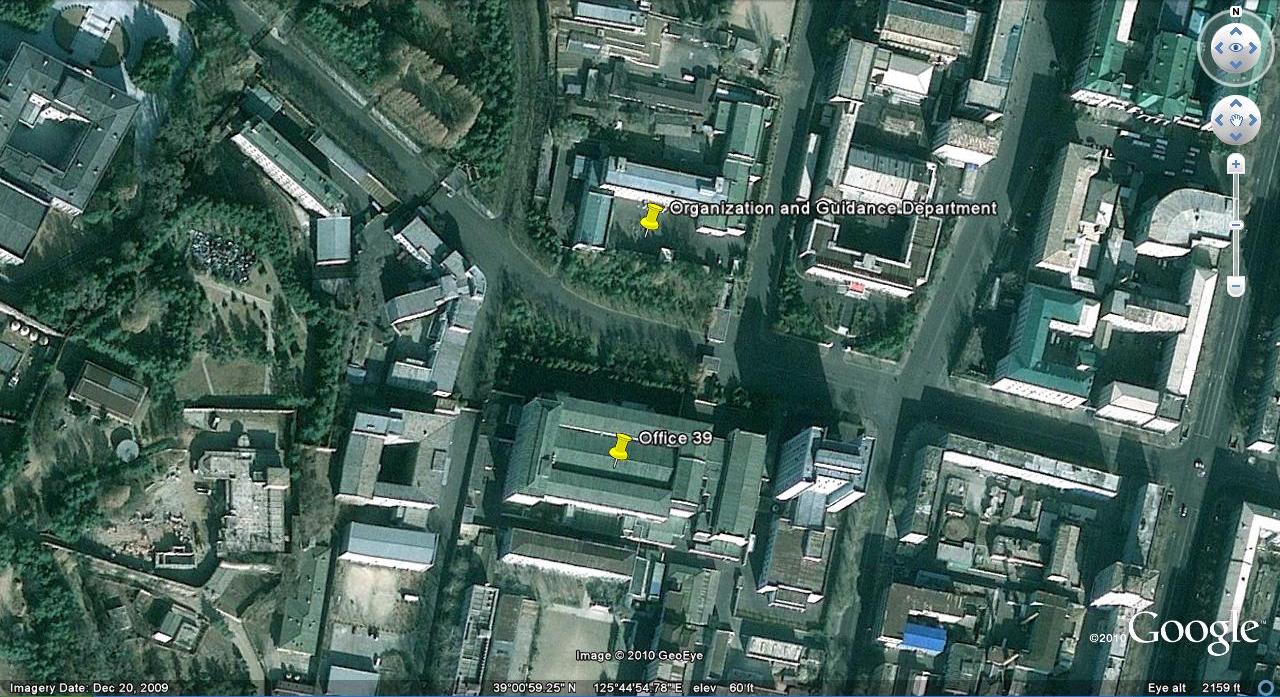
In any case, within the Secretariat of the Central Committee there are specialty departments such as the Guidance Department, Propaganda and Agitation Departments, and the United Front Department, and it also includes departments that supply secret funding to Kim Jong Il such as the 38th and 39th Departments.

The provincial organs of the Party consist of party committees of provinces, cities and counties that even include the most basic low-level party committees such as elementary party committees and sector party committees.

The structure of the Workers’ Party can also be divided into permanent party organs and temporary collective leadership groups. The permanent party organs include all members who work in any specialty departments, from the Central Committee down to low-level provincial party organs. Temporary collective leadership groups signify councils of high-level or low-level leaders of the central and provincial organs, made to implant permanent authority within the society through various meetings.

There are approximately 4,000,000 members of the Workers’ Party, including Kim Jong Il, high-level officials to low-level members, and figures from the legislature, judiciary, and the administration.

III. Main Departments and Their Roles

The main government complex of the Central Committee of the Worker’s Party is located in Changkwang-dong, Joong-district of Pyongyang. There are many buildings in the complex which include Kim Jong Il’s personal office and most of the Central Committee departments.

The second government complex is located in Junseung-dong, Moranbong-district of Pyongyang. The Social Culture Department, United Front Department and Operations Department are included in this complex.

The Workers’ Party has placed all specialty departments under the authority of the Secretariat, to function as restriction and guidance on all areas of the party members, citizens and North Korea. There is a Guidance Department that observes party members then there are other departments that exercise political functions.

The Guidance Department actualizes party guidance and restraint within communities. The department functions as Kim Jong Il’s right hand and as the core department by restraining the lives of all officials, members and citizens within the party.

The Guidance Department sub-divides into the inspection department, official department, party-member registration department, administration department and a communication department that allows direct reports regarding any incident or accident. The Guidance Department also manages the judiciary and the public prosecutor’s office.

The inspection department is responsible for inspecting any anti-party, non-party, undisciplined or unreasonable activities that develop within the regime or leadership of the Party and report to Kim Jong Il. The Guidance Department inspection section is strictly separated from other departments and North Korean party members or officials are all fearful of it.

There are approximately 20 specialty departments such as the Propaganda and Agility Department, the 38th and 39th Departments to supply fund to Kim Jong Il, the United Front Department dealing with South Korea, the International Department, the Science Education Department, and the Operations Department that carry out political activities.

Currently the Korean Workers’ Party is in the middle of the process of replacing 1st or 2nd generation leaders with 3rd or 4th generation, often more practical, personnel.

N.Korea’s Leading Apparatchiks

Thursday, September 18th, 2008

Choson Ilbo
9/18/2008

Gen. Hyon Chol-hae, the 74-year-old deputy director of the general political department of the North Korean People’s Army (KPA) has been North Korean leader Kim Jong-il’s most frequent companion on official occasions. Hyon has accompanied Kim, who is said to be recovering from a stroke, on 32 occasions this year.

In analysis of senior North Korean officials who have accompanied Kim on his inspections of various facilities until Aug. 14, Hyon was followed by Gen. Ri Myong-su (71), director of the administrative department of the National Defense Commission (29 occasions); Kim Ki-nam (82), director of the propaganda department of the North Korean Workers’ Party (KWP) (22 occasions); Pak Nam-gi (74), director of the planning and fiscal affairs department of the KWP (10 occasions); Kim Jong-gak (62), first vice-director of the KPA’s general political department, Pak To-chun, chief secretary of the WPK Jagang Provincial Committee, Kim Kyok-sik, chief of the KPA general staff (seven occasions); Jang Song-taek (62), director of the administrative department of the KWP (five occasions); and North Korea’s first vice foreign minister Kang Sok-ju (67) (five occasions).

During these inspections, Kim has given instructions to military officers, government officials and plant managers. The more often these elderly men accompany Kim, the closer the Unification Ministry, which carried out the analysis, considers them to the North Korean leader. Hyon, Ri, Kim and Pak ranked first through fourth in 2007 as well

Song Dae-sung, a senior researcher at the Sejong Institute, said there is no big change in the ranking order of those closest aides to Kim Jong-il, who are assisting Kim on his sickbed or governing North Korea on his behalf.

Hyon Chol-hae
The KPA’s general political department, which Hyon controls as deputy director, is in charge of the entire KPA organization. A graduate of the Mangyongdae Revolutionary School, which families and descendants of the anti-Japanese partisans attend, he controls the school’s graduates, most of whom serve in the military. During the Korean War, he was Kim Il-sung’s bodyguard. He accompanied Kim junior on his visit to China in 2001.

Hyon stood on the platform alongside other North Korean leaders during a military parade on North Korea’s 60th anniversary on Sept. 9. According to analysts, normally only vice marshals or higher-ranking military officers are allowed to stand on the platform, and Hyon, a general, was an unprecedented exception.

Suh Jae-jean, director of the Korea Institute for National Unification, said, “It seems that Hyon Chol-hae is currently running North Korea behind the scenes. He is expected to play a leading role in laying the foundation for the post-Kim Jong-il era according to Kim’s wishes.” The institute says Hyon also has connections with Kim’s second son Jong-chol (27).

Ri Myong-su
Ri is director of the administrative department of the National Defense Commission, North Korea’s de facto supreme leadership. As the NDC’s administrative department director, he controls inspection and intelligence activities within the KPA. Until last year, he was under Kim Jong-il’s direct command as the director of the KPA’s operations department.

Ri emerged as a strongman in the process of Kim’s succession to power in the 1970s, by displaying loyalty to him. He has been Kim’s second most frequent companion since 2003.

Ryu Dong-ryeol, a researcher at the Police Science Institute, said, “Hyon and Ri directly report to Kim Jong-il.”

Kim Ki-nam
Kim is a well-known figure in South Korea since making an unannounced visit to the Seoul National Cemetery when he was in Seoul as the chief of a North Korean delegation to a “Unification Festival” marking Liberation Day on Aug. 15, 2005. He is Kim’s mouthpiece as secretary for propaganda for the KWP Central Committee. He was the editor-in-chief of the Rodong Shinmun, the organ of the KWP Central Committee, in 1976. In 1985, he was appointed director of the propaganda department of the KWP Central Committee.

Lee Ki-dong, a senior researcher at the Institute for National Security Strategy, said, “Kim Ki-nam will be in charge of publicizing at home and abroad Kim Jong-il’s decision about a successor.”

Pak Nam-gi
Pak is in charge of North Korea’s economy. Since 1976, he has worked as an economic expert as vice chairman of the State Planning Commission, the agency that controls North Korea’s planned economy.

As the first vice-director of the KPA’s general political department, Kim Jong-gak is in charge of propaganda within the military. Kim Kyok-sik assumed the post as the chief of KPA general staff in April last year, and Pak To-chun has served as the chief secretary of the KWP Jagang Provincial Committee since 2005.

Jang Song-taek, Kim Jong-il’s brother-in-law, fell out of favor with Kim in May 2004. But he came back in 2006 and has since controlled powerful agencies such as the Ministry of Public Security and the State Security Department, and prosecutors’ offices. He is reportedly close to Kim’s eldest son Jong-nam (37).

Kang Sok-ju played a major role in reaching the U.S.-North Korean Geneva Agreement in 1994.

DPRK anti-corruption drive: purge, policy change, or both?

Thursday, February 21st, 2008

A little over a week ago, the North Korean government announced an anti-corruption campaign in two agencies: the United Front Department and the National Economic Cooperation Council

As I said then, these sorts of campaigns have nothing to do with making the bureaucracy more accountable or responsive to public demands, but are political maneuvers to prevent “rents” or funds from being channeled to uses that lie outside the leadership’s control (or some faction of the leadership).  In other words, they are regime enhancing (like a purge).

Today, the Daily NK offers a scenario whereby this anti-corruption drive might be a necessary precondition for a drastic policy change: 

The fact that the Guidance Department is involved in the current investigation may be a sign that Kim Jong Il is trying to rebuild the party so that he can change the focus of policy from the military to economic matters. Kim Jong Il has already created a militarily powerful country by acquiring nuclear weapons. Now he wishes to improve other areas.

Within the context of the anti-corruption campaign, today’s Daily NK does a wonderful job identifying the specific agencies involved in reorganizing the DPRK’s levers of power:

The Defense Security Command of the [Korean] People’s Army and the National Security Agency are also launching inspections, but these kinds of inspection are limited. A Defense Security Command investigation can inspect military organizations, local party organizations and individual cadres, but it cannot investigate party branches in the capital and the National Security Agency. At the same time, the National Security Agency’s investigators cannot access the party organizations in Pyongyang, the military and the Defense Security Command.

However, the Guidance Department’s inspection can examine every organization including party organizations in Pyongyang, the Defense Security Command, and the National Security Agency. [A Guidance Department investigation requires Kim Jong Il’s direct authorization. It is often said that if one is the target of such an investigation, one stands little chance of reprieve.]

There are only two known examples of a Guidance Department-led investigation in North Korean history. The first was the investigation of the National Security Agency in February, 1984. […] The second case occurred in 1997 and was known as the Shimhwajo case, resulting in the hushed-up removal of many of Kim Il Sung’s close associates. This inspection was approved by Kim Jong Il and was operated by Jang Sung Taek, Kim’s brother-in-law and the First Vice-Director of the Guidance Department. Through the investigation, thousands of high officials who followed Kim Il Sung were punished, expelled, secretly executed, or sent to prison camps.

To read about another similar change in the balance of power in the DPRK, read the rest of the story here:
Inside the North Korean Shake-up
Daily NK
Moon Sung Hwee
2/21/2008

Succession - A Dictator’s Dilemma

Wednesday, January 17th, 2007

Nautilus Institute
Bryan Port
1/17/2007

North Korea’s recent nuclear test clearly demonstrates that the Korean peninsula is the crux of Asian Security. The Democratic People’s Republic of Korea (DPRK), North Korea’s official name, poses a range of challenges. Though the nuclear challenge appears to be the most extreme and urgent, developments in the DPRK could lead to violent conventional military spasms or humanitarian disaster, each with consequences as grave as those posed by DPRK weapons of mass destruction (WMD). Regardless of the challenges, Korea’s future has significant ramifications for the balance of power in East Asia and by extension on American security and prosperity. One day, DPRK leader Kim Chong-il will pass the keys to the kingdom and the nuclear launch codes to a successor. Kim’s choice and how he goes about the succession process will impact East Asia for decades and consequently requires significant consideration in US strategic planning.

Effective foreign policy requires an in depth understanding of the historical, social, and cultural context of other nations, their leaders, and their people. Though the DPRK is opaque, much is known about its history and even its people. From what we know we can develop significant insight. However, the balance of what we don’t know requires that we conduct considerable alternative analysis to define a range of possibilities to facilitate effective planning and policy development. Alternative analysis is imperative regarding the succession issue. Though it is nearly impossible to confidently predict who Kim will choose to succeed him, much less the successor’s prospects, analysts can define a range of plausible scenarios which can play a positive role in strategic planning, and leave the US a fighting chance of avoiding strategic surprise.

DPRK CONTEXT. Before analyzing scenarios for DPRK leadership succession, one must first consider the context and circumstances of the DPRK. The dearth of information available on the DPRK and its leaders can lead analysts to over emphasize a given aspect of the DPRK and through this narrow prism turn the DPRK into a caricature. We commonly see this in how the media and others portray Kim Chong-il. Analysts are also at risk of mirror imaging or applying one’s own cultural and historical frames of reference to the DPRK.

The DPRK is a deeply stratified society. An individual’s place in DPRK society is based largely on one’s family history (Songbun) and political reliability. Those with blood connections to Kim Il-sung or those who fought with Kim Il-sung against the Japanese (partisans), and their offspring, comprise the majority of the DPRK’s elites. It is rare for someone without this background to ascend to elite status in the DPRK. Some may gain a certain level of stability, power, or privilege, for example members of the military or scientists, however without the right bloodlines they will not climb to the pinnacle of power in the DPRK.

Despite its societal stratification, there is a shared societal and historical perspective that must be taken into account when thinking about North Korea or North Koreans. Understanding what the DPRK is, or understanding its leaders, requires placing oneself in the historical mindset of a North Korean. The DPRK is the most Orwellian society the world has ever known. The DPRK is not a communist nation; certainly not in the sense of Marx or the perversion of Marx that was the Soviet Union. North Korea has never known a pluralistic political system, much less democracy.

For nearly its entire history Korea has been a feudalistic society, constantly on the edge of survival at both the societal and individual level. Korea has been under constant threat of invasion. Koreans have struggled merely to subsist, with bouts of hunger or famine a common occurrence. Even in South Korea, stability, to say nothing of prosperity, is a recent development. It is only in the last 20 to 30 years that South Korea moved beyond its history.

Even for the most elderly of today’s North Koreans, the historical context is Japanese colonization, Korean War, emerging totalitarian state under Kim Il-sung, relative stability, Kim Chong-il’s accession to power, famine, and economic depression. North Koreans lack outside information and thus lack the basis for comparative thought about their society. Of course, comparative thought about politics presumes the freedom, sustenance, energy and time required to engage in political thought or activity. Only the elite in the DPRK are positioned to have the luxury of political thought, and they are the stakeholders in the current system.

Though it is difficult to understand from an American perspective, many in the DPRK, including its leaders, do genuinely fear the United States and for that matter other foreign powers including Japan and perhaps even China. This is based on Korea’s history of being subject to multiple foreign conquests and leads to the desire for self-sufficiency. Kim Il-sung very effectively manipulated this historical perspective and Kim Chong-il continues to do so.

DPRK CIRCUMSTANCES. The DPRK is in dire straights. A crumbling infrastructure, local ad hoc solutions to problems and corruption are the common denominators of government, economy, and society. Resources, privileges and even security are obtained through barter or by outright buying the services of a corrupt official. Almost everyone is corrupt from the lowest private in the Army to the senior members of the Korean Workers Party.

The DPRK remains a pervasive police state with a population that lacks even the most rudimentary elements of a functioning civil society. Though corrupt, the security services are powerful. While individuals within the security services are “for hire,” when the regime is threatened the security services can mobilize quickly and effectively against individual or group opposition, real or perceived.

Still, KCI cannot take for granted the continued effectiveness or loyalty of the security services. Although Kim has multiple security services to perform checks and balances, eventually the deterioration of ideological integrity, to say nothing of ruinous state of physical infrastructure and corruption, are emboldening entrepreneurial security personnel. More mischief is possible, and emboldened individuals are more likely to seek out other like-minded individuals, at first for profit, and then perhaps for power.

At this point it appears that members of the security services are happy to simply use and abuse their positions to survive, or in the case of senior members enrich themselves. However, the security services as a whole, and their individual members, will face tough questions about their futures deriving from succession. Some may still consider a successor in ideological terms. Is the successor worthy? Pure enough? Others may consider the successor in terms of their position in the security services and the maintenance of their privileged positions in society. Is the successor capable enough? Will they be demoted or purged? How the security services react to the successor issue will be a key determinant to the successful installation of a successor, and ultimately the stability of the DPRK.

DPRK ELITES. North Korea’s elites face a paranoid, schizophrenic existence. This is not to suggest that KCI, or other DPRK elites, suffer from mental disease. Though it is not unreasonable to believe that like people everywhere, even leaders, that some North Korean leaders suffer from mental illness. Rather, elites in the DPRK have much to loose in the event of political change and corresponding to the stakes are at best anxious and likely paranoid about maintaining their positions. The only person who is secure in his position in the current regime is Kim Chong-il.

Chang Song-taek is married to Kim Chong-il’s younger sister Kim Kyong-hui. Until 2003, Chang was considered the second most powerful man in the DPRK, and held the title of first deputy director of the Organization and Guidance Department. In 2003 KCI had Chang arrested. No one is certain as to the reasons for Chang’s fall from power, but speculation exists that Chang had been too overt in his support of Kim Chong-il’s oldest son, Kim Chong-nam, in the race for succession. Even though Chang has been rehabilitated and returned to a position of power, his situation shows that no member of the DPRK elite is secure. The security apparatus is ever present and mistakes often lead to a concentration camp or death.

North Korea’s elites face incredible challenges and pressure. They must at once protect their own interests and also take actions that preserve the regime, which is the source of their relatively privileged existence. These two goals are often at odds, and may even be mutually exclusive. North Korean elites must apply the filter of Juche ideology to their actions and/or be prepared to explain or justify actions in ideological terms.

Elites in the DPRK share in common with elites everywhere a calculating nature and wish to position themselves and their allies to survive and prosper in the future. For this reason, it is imperative for elites in the DPRK to analyze the succession issue, and conduct their affairs so as to maintain favor with KCI, but also be at the vanguard of a successor’s regime.

Some elites may reach the conclusion that Kim Chong-il’s successor has little chance of consolidating power. Such a determination requires not only confidence in predicting who KCI will choose, but also mandates determining who will be powerful enough to supplant the successor. Following is the even trickier task of currying favor with KCI, the individual they believe KCI will choose to succeed him, and the individual who they believe will actually take power.

At the top of the elite and the pinnacle of the succession issue is Kim Chong-il. Almost all of the analysis of the succession issue assumes that Kim will choose a successor and that it will be one of his sons. However, Kim has surprised us in the past and will likely do so again. Before moving on to consider a range of options available to KCI in terms of choosing a successor, it would help to more specifically consider the context and circumstances of Kim Chong-il.

KIM’S CONTEXT AND CIRCUMSTANCES. Even though we are not really able to understand how KCI views the world, we can roughly understand the context and circumstances in which KCI exists. Kim presides over a failed, if not collapsed, state. While North Korea’s military remains intact, it is not the existential threat to South Korea that it once was. Kim’s security services are effective, perhaps too effective. Kim must have multiple security services, not to produce the best intelligence or efficiently secure the state, but to watch one another.

China, North Korea’s one remaining ally of any significance, supports the DPRK for negative reasons. China doesn’t want to deal with the humanitarian consequences of a complete DRPK collapse. KCI and other DPRK elites must consider that China has significant potential to play an active role in the DPRK’s succession dilemma, and has ample motive to do so. Still, China is unlikely to be overt and direct in the application of its influence, knowing that doing so could prompt a backlash. However, China can indirectly bring its influence to bear on who KCI chooses as successor by providing access to resources and senior Chinese leaders to select North Korean elites. It is also likely not lost on DPRK elites that China has the capability to more directly intervene in North Korean politics should its vital interests be threatened.

South Korea is in much the same position as China in that it does not wish to deal with the humanitarian consequences of a complete DPRK collapse. However, South Korea has a significant financial stake and also a much more “personal” stake in the DPRK’s future. Collapse or violent military spasm on the part of the DPRK will be hugely costly to the South both in financial and human terms. Due to North Korea’s desperate situation, one cannot rule out that the DPRK could lash out, but truly North Korea’s only effective remaining leverage is the gun it holds to its own head (collapse) and the nuclear tipped missiles it claims to point elsewhere.

Although other countries disagree with US policy toward the DPRK, this does not mean they support the DPRK. Unfortunately for Kim, Japan, the one country that is most able to help the DPRK in the short term with cash and resources, is not inclined to do so for a variety of reasons, including the DPRK nuclear and missile threat to Japan, DPRK international criminal activity, and past DPRK abductions of Japanese citizens. About the only thing that may motivate Japan to reconsider its stance is the prospect of normalizing relations in the near-term to pay out its World War II reparations prior to a collapse of the DPRK to avoid potentially more responsibility in the event of a collapse and absorption of the North by the South.

KCI likely understands the Chinese, Japanese and South Korean perspective. Thus KCI likely appreciates not only the dire domestic straights of the DPRK, but also its grim international position.

NOT HIS FATHERS SON. Though Kim Il-sung (KIS) is not the man that DPRK propaganda portrays him to be, and though he is guilty of horrible crimes against humanity, Kim Il-sung did fight the Japanese and suffered in doing so. Through cunning and calculation, as well as brutality, KIS led the DPRK into existence. For much of the first half of its existence, the north outperformed the south. After the Korean War, life improved for many North Koreans under KIS and there was relative peace and the possibility of future prosperity. Still in spite of his power and the genuine love and respect of many in the DPRK, Kim Il-sung spent the better part of 20 years preparing to transfer power to KCI.

Kim Chong-il lacks the credibility and stature of his father. KCI never served in the military, much less fight in a war. Though he has displayed cunning and brutality, he did not overcome challenges on par with those faced by his father. Instead, whether it was completely his fault or not, since KCI assumed power in 1994, the DPRK has suffered military decline, economic failure, famine, and even in at least one case, organized resistance from the segment of society it most relies on, the military.

KCI faces significant challenges with respect not only to the succession issue, but generally with respect to running the DPRK. Conventional analysis assesses that KCI will choose a successor and that he will choose his second son Kim Chong-ch’ol. There is nothing that starkly contradicts the conventional wisdom, however, there is nothing that boldly confirms it either.

CONVENTIONAL WISDOM. There are three acknowledged sons of Kim Chong-il. In order from oldest to youngest, KCI’s sons are Kim Chong-nam, Kim Chong-Ch’ol, and Kim Chong-un. The conventional wisdom holds that KCI will opt for one of his sons to succeed him, probably Kim Chong-ch’ol (KCC).

Until embarrassing his father in 2001 by being arrested in an attempt to visit Tokyo Disneyland, KCI appeared to favor Kim Chong-nam, even though there were few outward signs that a formal succession process had begun. Kim Chong-un is not considered a serious contender, if for no other reason than his age and the presence of two older brothers.

In the past year or so Kim Chong-ch’ol (KCC) has emerged as the front-runner. Indicators include Workers Party of Korea Central Committee Secretariat Instruction No. 0101 (Reported in South Korean Weekly Chosun magazine March 2006). According to this instruction, Kim Chong-ch’ol is the party’s nerve center.

There are several reports, conflicting in detail, but consistent in stating that KCC occupied a formal government position and that he has advanced to a more senior position. Pins and portraits of KCC have appeared, and the KWP has issued instructions on their wear and display. Additionally, some of KCC’s associates accompanied KCI on trip to China to observe economic development, and KCC himself has been in Europe on official business.

Even if KCI has resolved to anoint KCC as successor, that is not a guarantee that the succession itself will go smoothly or that KCC will be able to consolidate power. Many segments of the power elite will view KCC as weak. So long as Kim Chong-il remains a force to be reckoned with, opposition to KCC as successor would be controllable. However, as Kim becomes infirm or dies, challenges to KCC will mount. This will force KCC to share power or do the bidding of factions whose support he requires, presumably the security services or military.

Knowing that KCC may or will not be able to go it alone, KCI may opt to install KCC as ruler of the DPRK, but only as a front man for others who will actually wield power. There may be liberal elements of the power elite who favor Chinese like reform. Should they support KCC, they might be able to begin reviving the DPRK, particularly if they are willing to take steps to gain legitimacy in the international community. On the other hand, factions of the DPRK elite pessimistic about their status in a reformed DPRK, concerned that KCC is too weak to control factions hostile to them, or critical as to KCC’s ability to control the country as could seek to overthrow KCC or force him to keep the DPRK on its present course.

There are other mo[r]e Machiavellian possibilities. KCI may be using KCC to flush out dissent, in effect using KCC as a lightening rod. Due to Kim’s advancing age, questionable health, and the poor condition of the DPRK, many elites are likely questioning their future prospects in terms of not only prosperity, but also basic stability and even survival. At some point, for example if KCI should become infirm or seriously ill, the concerns of the DPRK elite could reach a tipping point. It would be prudent to flush out the most disaffected among the North Korean elite now, rather than later. To this end KCC could serve as a useful target and distraction.

ALTERNATIVE ANALYSIS. KCI in his switch from Kim Chong-nam to Kim Chong-ch’ol demonstrated that he is flexible with respect to his choice of successor and has not taken any irreversible steps in designating KCC as successor. However, this will be the 2nd succession in the DPRK and thus there is little ground to talk about patterns or precedent. Conventional wisdom has often not held when analyzing the DPRK, making alternative analysis imperative.

It is important to remember that Kim Il-sung (KIS) spent 20 years preparing for KCI to assume power, and still upon Kim Il-sung’s sudden death in 1994 it took several more years for KCI to consolidate power. Between KCI’s health and the challenges faced by the DPRK it is not at all certain that KCI has 20 years to lay the foundation for one of his sons to assume power, assuming that this is what KCI actually intends and that it is possible to accomplish another hereditary transfer of power.

If not Kim Chong-Ch’ol then who? What other options are there for KCI? Is the choice entirely Kim Chong-il’s to make? KCI lacks the stature of Kim Il-sung and the DPRK faces significant challenges. Even Kim Il-sung faced resistance in installing his son as ruler. KCI will face challenges greater than those faced by his father, and from a weaker position in terms of his credentials, the current situation in the DPRK, and his very legitimacy.

North Korean society is still rooted in Confucian values, even though those values are distorted by North Korea’s ideology (Juche). Thus other Kim family members warrant consideration, including Kim Chong-il’s daughter Kim Sol-song, his half brother Kim P’yong-il, and Chang Song-t’aek or Chang’s children.

Kim Sol-song is Kim Chong-il’s daughter by Kim Yong-suk (Kim Chong-il’s official wife and the only one recognized by Kim Il-sung). There are reports that she currently handles important aspects of her father’s life, including his personal security. Even if not succeeding KCI she could act in a powerful supporting role, even key decision making role, to Kim Chong-ch’ol, or other successor.

Kim P’yong-il is KCI’s half brother. By some accounts, Kim P’yong-il is everything that KCI is not. P’yong-il was an active duty military officer that had genuine respect from many in the military. It is not entirely clear how KCI edged him out as successor, but it is conceivable that Kim Il-sung favored KCI, viewing P’yong-il as a threat. It is also likely that P’yong-il is not ruthless enough to rule the DPRK. Since 1988 P’yong-il has served in a series of ambassadorships, primarily in Europe.

Bearing in mind the North Koreans mindset, P’yong-il would make a good transitional figure. He carries the Kim name, and perhaps continuity with Kim Il-sung’s interrupted dreams for the DPRK. While he would certainly face opposition from segments of the elite, P’yong-il has a huge advantage in that he would likely garner the support of the military. There is a good chance based on his personal background that P’yong-il would change the course of the country. Of course KCI won’t choose P’yong-il, but in the event that Kim fails to entrench a successor, waits too long, or simply does not choose, P’yong-il becomes viable for segments of the elite concerned about their future status.

Chang Song-t’aek is married to Kim Chong-il’s sister Kim Kyong-hui and has powerful family ties to the military. Though recently purged and rehabilitated, Chang has been and is now again a powerful player in the DPRK. Even if he is unlikely to succeed KCI, Chang can still influence the succession issue. KCI might have purged Chang due to Chang’s view on the succession issue, but a rehabilitated Chang will likely not have changed his mind on the subject, but now knows to be more careful.

Chang’s children carry as much of Kim Il-sung’s blood as the children of KCI. There are not presently any signs that Chang’s children are under consideration, at least as far as KCI is concerned. However, they are out there and should KCI loose control over the process, or should other alternative scenarios play out, Chang’s children are viable alternates, particularly as a figure head for a king maker.

BEYOND FAMILY. There are other forces beside Confucianism at work in the DPRK, thus requiring consideration of other succession scenarios including king maker/power sharing, alternate successors, and even that Kim may have no intention of choosing a successor.

Realizing that any one individual is not likely to be powerful enough to rule, KCI may intend to set up a kingmaker(s) to support his successor. KCI may even prefer that his successor require behind the scenes support. If his chosen successor will be too weak to supplant him, KCI can be confident that he can continue to exercise power out front or behind the scenes until his death. Further, KCI could co-opt some of the most effective challengers to his successor and reward them for present good deeds, helping to ensure loyalty.

It is conventional wisdom that KCI desires to anoint one of his sons, or at least a relative, as the next leader of the DPRK. What if he doesn’t? There are scenarios where it is not beneficial to KCI to see one of his blood relatives assume power.

KCI is almost certainly aware that his sons might not be competent enough or ruthless enough to run the DPRK. Even if KCI is still alive and active, he may be unable to stave off his opponents once a successor is appointed or operating. This could have dire consequences for KCI.

History weighs heavily on the minds of dictators, and the fate of other dictators, such as Romanian leader Ceausescu or Cambodia’s Pol Pot likely weigh on Kim’s mind. KCI could seek a successor with the requisite competence to ensure that he doesn’t meet a similar fate. This may lead Kim to choose someone other than his sons. Such a choice, though not comporting well with Confucian values, might ultimately serve KCI well.

Moving further along the spectrum of alternative analysis, what if the most prudent move for KCI is to not name a successor at all. The mere act of naming a successor creates a focal point for opposition. Ironically, at the same time, naming a successor could also set of[f] infighting to curry favor with the chosen successor at Kim’s expense drawing from Kim’s power base. Those patient and shrewd enough could hold fast making a power play at a point in time where KCI is weakening, but the successor is not strong enough to consolidate power.

Alternative power bases might not matter if the successor is not competent enough to consolidate power. The weakened state of the DPRK and Kim’s lack of legitimacy compared to his father could lead Kim to plan to die in office or abdicate at some point to avoid empowering and facing potential adversaries while still in office; something which could lead to his own demise.

One final possibility deserves consideration. KCI could die suddenly as did his father. For the US and the DPRK’s neighbors, the key concerns remain the same and center on DPRK WMD and the possibility of extreme instability that could result in outward military spasms or complete collapse.

Under a sudden death scenario, whatever steps had been made toward anointing a successor may not matter. Opponents to KCI’s choice may likewise be neutralized. It could all boil down to which of the key players learns of KCI’s death first, and whether or not they can control the news, acting quickly to capitalize on their first mover’s advantage. A particularly ruthless individual could quickly act against the key players most threatening to them, changing the whole power dynamic, regardless of whether they are ultimately successful in assuming power. It is difficult to analyze what KCI might do in terms of a deliberate succession process. It is close to impossible to analyze how a sudden death scenario would play out.

The recent nuclear tests serve to highlight the importance of the succession issue to the US and the DPRK’s neighbors. While external reasoning may have lead KCI to test a nuclear device, it is more likely that internal considerations are driving decisions not only on WMD development, but also on the issue of leadership succession in the DPRK. It is even possible that KCI conducted the nuclear test to shore up his legitimacy by doing something his father never managed to accomplish. Possibly due to concerns over succession or just internal dynamics, KCI may also have conducted the tests to strengthen his domestic powerbase and position with the military.

No matter what KCI decides in terms of succession, the consequences could include a twenty something year old leader with nuclear weapons or a collapsed state ultimately resulting in a re-unified nuclear Korea. Regardless of how the succession issue plays out, Korea will continue to be integral to US and East Asian security and prosperity.

Two Pillars of the North Korean Regime, Information Politics and the Reign of Terror

Monday, October 17th, 2005

Daily NK
Han Young Jin
10/17/2005

Many people wonder about how North Korea is maintains despite the chronic food crisis and many other difficulties it suffered for a long time.

In South Korea, people would have organized more than a dozen of popular riots.

What would be behind the silence in North Korea? The answer is the notorious two pillars in North Korea, information politics and the reign of terror.

The National Security Agency in North Korea is the core agency for information politics. Since the Chief of Agency Lee Jin Su died in August, 1987, no other head of the agency was appointed. The role was taken over by Jang Sung Taek, #1 vice director of Organization and Guidance Department, and Kim Young Ryong, the former National Security Agency #1 Director (deceased in 1998).

Kim Jong Il directs the agency himself, making them believe his right over the agency is that the agency is for the security of the Supreme Commander, which is himself.

There are about 50,000 employees under the National Security Agency and its branch offices. It is estimated that about 20,000 are directly involved in the information activities. This means there is one agent per 1,000 North Koreans.

The security agents secure their sources individually, train them and collect information in their secret places. Even among the peers and friends, all the people mistrust each other because they do not know who the sources are for the agents.

According to the agency principles, even among agents have double or triple layers of supervision. One of the main reasons why the anti-regime force did not become active remains in this very system of mistrust

The North Korean regime, through the collective living style, ▲encourages mutual criticism and self criticism and increases mistrust among them, ▲The agents keep watch of the people and arrest them, ▲ the safety agency (police) make sure people do not meet in group through the people’s department. This is the reality of North Korea.

Securing Sources, Training in Secret Places

Security sources and training is done according to the characteristics of the agent. The agency runs secret places especially for training.

In November 12, 1992, Kim Jong Il changed the name of the National Security Agency to the National Safety and Security Agency and ordered to strengthen the training in crack down the anti-party, anti-revolution forces.

It was in 1993 when such secret places were made. It was of course made in top secret. Those involved in building such secret places believe they must be apartments for high level officials, such as honorary revolutionists of the independent movement (against Japan) or war heroes. However, these “luxurious apartments” were for the people receiving training, who spend ten to fifteen days there.

Because there is danger of discovery of identification, only one person is trained at a time. Those who leave home for the training their wives they are leaving for work.

Training is done directly by the secretary of the agency or designated security agents. They give off the belief, saying, “With the trust of the Great Commander, 00 (name of the trainee) is to engage in the national security activities.”

The agent provides professional training to the trainee such as how to approach the targets, inducement to conversation, such reporting. After the training, they are sent back to their workplaces.

The persons in charge of the secret places are selected among the sources, and he is to cut of all the contact to the outside world. Looking at expensive cars going in and out of a remote place, people are only wonder about what kind of house it would be.

Even the Former Detention Camp Prisoners and Wanderers Selected

The security agents have their own ways of contacting each other such as leaving memos under a rock, between a crack on factory walls, or inside a rotten tree trunk. The agents even select former prisoners and wanderers as one of their sources, but they are not given the special training session.

This is because only through such sources information about anti-regime or anti-party forces could obtained. The agents use both credence and threat to manipulate their sources. Sometimes, they used to give compensation as much as 100Won (in 1990, average worker’s monthly wage was 70Won), but after the food crisis, such cash awards stopped altogether.

There also exist some conflicts between the agents and the sources. In local place, one of the sources asked his agent to issue him a travel permit. When he could not, the source spread a rumor that “the National Security Agency has less power than the Safety Agency” which made a big issue in the region.

There is no compensation for providing high level information while people get arrested for ambiguous things they commit, so the people who were selected as sources become distressed. Recently, there is an increase of the people who prefer to not cooperate with the agents.

Also it is known that the information agents (sources) and the security agents together take advantage of their status. The sources report the security agents of the people who do business with prohibited goods such video tapes from another country, and they make benefit themselves by confiscating of all such goods.

NK’s Chang Song-taek Ousted Completely: Intelligence Sources

Tuesday, September 27th, 2005

Korea Times
Park Song-wu
9/27/2005

The Pyongyang regime has described Chang Song-taek, North Korean leader Kim Jong-il’s former right-hand man, as a “tree’’ that is now cut off, sources well-informed of the North’s power structure in Seoul said on Tuesday.

Chang, Kim’s brother-in-law and a confidant until purged in late 2004 for an alleged bid to enhance his power, was predicted to return to the Workers’ Party because the Dear Leader, 63, reportedly has a limited number of associates to rely on.

But such a possibility looks slim now as Kim has apparently changed his mind, according to sources in Seoul.

“(Chang) was predicted to make a comeback in the past because he was such a close confidant (of Kim Jong-il),’’ the Yonhap news agency quoted a source as saying. “But now almost all the people who, for example, have simply eaten naengmyon (or Korean cold noodles) together in the Yokryukwan restaurant (in Pyongyang) have been expelled to local areas. The likelihood of Chang’s comeback is near zero now.’’

Chang was formerly vice-director of the party’s exceptionally powerful bureau _ the Organization and Guidance Department. High-profile defector Hwang Jang-yop once described him as the “No. 2 man’’ in North Korea.

Now Ri Che-kang (phonetic), new vice-director of the potent department, is known to be in charge of removing Chang and his close allies from the political scene.

The intended purge of Chang, 60, is allegedly a result of his efforts to promote Kim Hyong-nam, an illegitimate son of Kim Il-sung, the founding father of North Korea, as a contender to Kim Jong-il.

Kim Hyong-nam, 33, was adopted at birth by a sibling of Chang, according to a country report on North Korea by the Economist Intelligence Unit.

The expulsion process resembles one that took place in the 1970s when the Pyongyang regime underwent a power struggle during which “side branches’’ of Kim Il-sung were trimmed away.

At that time, the regime purged Kim Il-sung’s uncle Kim Young-ju as well as others, including the leader’s second wife Kim Song-ae (phonetic) and her children. In 1976, Kim Young-ju disappeared from the political scene and did not re-appear until 1993 when he returned to the Party Central Committee.

Chang is reportedly in a bad state of health now. Even if Kim Jong-il reinstates him, he is unlikely to return to the party. Sources in Seoul predicted that the most likely scenario is that Chang will be named an ambassador _ a job which cannot influence domestic politics.

Kim Jong-il has not yet decided who will succeed him, even though his own ascension to power was carefully prepared over more than 20 years.

There are three known rival candidates for the succession _ all Kim Jong-il’s sons, by two mothers, neither of whom he married.

The eldest, Kim Jong-nam, 34, was reportedly the favorite until 2001 when he was caught visiting a theme park in Japan on a false passport, embarrassing the Pyongyang regime.

Kim Jong-nam’s two rivals are his younger half-brothers _ Kim Jong-chol, 24, and Kim Jong-woon, 22. Kim Jong-il is said to favor Kim Jong-woon, as the more manly of the two, the country report said. Their mother, Ko Young-hee, a former dancer who became his consort, died of cancer in 2004.

Her death triggered numerous media reports predicting an imminent power struggle in the Pyongyang regime, which is described by the Western media as a “Communist dynasty.’’