Archive for October, 2011

Korean revolutionary history museum under renovation

Tuesday, October 11th, 2011

UPDATE 1 (2012-1-13): A reader sent in a picture taken from the recently published Architekturführer Pjöngjang (Order from Amazon here, and more on the book here and here). The book was published in May 2011, but inside is a picture containing the already renovated Mansu Hill Revolutionary History Museum.  You can see the picture here:

The caption on the photo reads  ”Wall painting of Pyongyang from a birdseye view in the Paektusan Institute (photo taken 2007)”.

Thanks to a reader for sending this to me!

ORIGINAL POST (2011-10-11): A recent visitor to the DPRK took the following picture of the Korean Revolutionary History Museum on Mansu Hill:

See original photo here.  If you compare it with the photo I took in 2004, you can see that there appears to be some serious renovations going on:

I wonder what new revolutionary feats are being added to the museum’s displays?

Additionally, the Kim Il-sung statue is no longer under wraps, so it appears that it was covered for its protection from construction debris, not because it was being altered in any substantial way.

Share

2011 DPRK emigration statistics

Sunday, October 9th, 2011

UPDATE 4 (2011-10-9): According to Yonhap, only 20 North Korean defectors are working as public servants in South Korea:

Only 20 North Korean defectors work as public servants in South Korea, an opposition lawmaker said Sunday, the latest sign that North Koreans are struggling to join mainstream South Korean society.

The figure represents just a small fraction of the more than 22,000 North Korean defectors in South Korea.

In June, Cho Myung-chul, a former economics professor at the North’s elite Kim Il-sung University, was appointed to lead a government body in charge of educating citizens on unification with North Korea.

Cho is the first North Korean defector to become a senior government official in South Korea.

Nineteen others work in the Unification Ministry, which handles inter-Korean affairs, in the Seoul Metropolitan Government, and in Incheon city, as well as in Gyeonggi Province, which surrounds Seoul, according to Park Joo-sun of the opposition Democratic Party.

Separately, 38 North Korean defectors are temporary workers in the central and local governments under a program aimed at expanding employment of North Korean defectors, Park said, citing the Unification Ministry.

A recent survey showed the unemployment rate of North Korean defectors stood at 9.2 percent, about three times higher than that of other South Koreans.

UPDATE 3 (2011-9-23): Yonhap reports that DPRK student defectors increase 3.5-fold since 2006:

A total of 1,681 elementary, middle and high school students fleeing from the communist country reside here in 2011, up 235.9 percent from 475 in 2006, according to the report by the education ministry and submitted to parliament for a regular audit.

Elementary school students accounted for 60.7 percent of the defector students below college level, followed by high school students with 22.2 percent and middle school students with 17.1 percent, the report showed.

The total number of North Koreans defecting to the South surpassed the 20,000 mark in November last year for the first time, almost double from around 10,200 in 2006, according to the Unification Ministry data.

Meanwhile, the dropout rate of North Korean defectors in schools here has gradually decreased over the past few years, from 10.8 percent in 2007 to 6.1 percent in 2008 to 4.7 percent in 2010, according to the report, a sign that efforts to help support young North Korean defectors paid off.

Reasons for their withdrawal from the regular schooling include adjustment failure, responsibilities for housework and taking a school qualification exam instead of completing high school for entering college, the report showed.

UPDATE 2 (2011-9-19): Yonhap reports that 378 N. Korean defectors under protection of S. Korea’s overseas missions.  According to the report:

“As of the end of July, a total of 378 North Korean defectors are under the protection of overseas missions and the ministry is working with relevant nations and international organizations to swiftly transfer them to South Korea,” the ministry said in a report to the National Assembly.

The number of defectors arriving in South Korea via its diplomatic missions totaled 2,423 last year, 2,927 in 2009, 2,089 in 2008, 2,544 in 2007 and 2,018 in 2006, according to the report.

From January to August this year, 1,797 defectors arrived in the South via the diplomatic missions, it said.

UPDATE 1 (2011-7-4): According to Yonhap:

The number of North Korean defectors to South Korea has exceeded 1,400 [1,428] in the first six months of the year, up 14 percent compared to the same period last year, a government official here said Monday.

The Choson Ilbo also reports on the emigration numbers:

The Unification Ministry on Monday said 52 percent of the 1,428 North Koreans who came to South Korea in the first half of this year took a year or less to complete the journey, significantly more than the 30 percent in 2009 and 39 percent in 2010.

After a sudden 19-percent drop last year, the number of North Koreans who come to the South is growing again. It steadily increased until 2009 to hit 2,927. But amid growing unrest, the regime cracked down on defectors and it seems asked China to help. But the Chinese crackdowns simply hastened defectors’ move to South Korea, so the figure skyrocketed again this year and is likely to exceed 3,000 by the end of this year, according to the ministry official.

Meanwhile, 47 percent of the new arrivals in the first half of this year had family members already living in the South, up from 36.4 percent from last year. Those who were accompanied by their families also took up a bigger share with 49 percent, up 10 percent from last year. The official said the reason is that many whole families are escaping as they see no hope in the isolated country and plan to go to South Korea from the start. “It’s not just because of economic hardship,” he added.

There are a total of 21,788 North Korean defectors in the South, of whom 75 percent are between the age of 20 and 49, and 72 percent women.

ORIGINAL POST (2011-6-13): According to KBS:

The number of North Korean defectors who entered South Korea this year numbered around eleven-hundred at the end of May.

This is up 14 percent from the same time last year.

A Unification Ministry official on Monday told reporters that the rise is considered unusual given the North has tightened border security.

Read the full story here:
Seoul says flow of N. Korean defectors likely to continue
Yonhap
2011-7-14

No. of NK Defectors who Enter S.Korea Rises 14%
KBS
2011-6-13

Share

Jordanian bank tied to DPRK illicit weapons trade

Friday, October 7th, 2011

UPDATE (2011-10-10): According to the Jordan Times, the Bank denies any involvement:

The Arab Bank on Sunday stressed that it has never dealt with the government of North Korea or Tanchon Bank, which the US has accused of being the primary financial agent behind Pyongyang’s weapons programmes. “Based on a review of its customer account and transaction records, Arab Bank does not believe that it has conducted business with the government of North Korea or Tanchon Bank,” a spokesperson from the Arab Bank said.

In a diplomatic cable sent by the US State Department to the US embassy in Amman in August 2007, officials warned that the Arab Bank could be unwittingly assisting proliferation-related transfers between Iran, Syria and North Korea. “We are concerned that Iran, Syria and DPRK [Democratic People’s Republic of Korea] proliferation entities are using the Arab Bank network to process what may be proliferation-related transactions,” read the cable, released by WikiLeaks on its website at the end of August and viewed by The Jordan Times.

According to the cable, the US knew that as of 2007, North Korea’s Foreign Trade Bank mission in Tripoli, Libya (FTB Libya) had expanded its role in North Korea’s banking network and was helping Tanchon Commercial Bank, the banking arm of North Korea’s primary weapons trading firm, KOMID, to move funds from both Syria and Iran.

It added that in 2007, FTB Libya provided assistance to Tanchon in making remittances from funds from the sale of unspecified, probably proliferation-related goods in Syria.

“Our information indicates that Tanchon is establishing this new arrangement because Tanchon could no longer remit funds through a route it had previously used. FTB Libya arranged remittance routes for Tanchon from Syria and other locations via intermediary banks… We have information that Tanchon’s financial transfers are conducted surreptitiously by using either aliases or front companies,” the US State Department said in the cable.

The US reportedly claimed that the transfers, which were probably proliferation-related, occurred inside the Arab Bank network and involved both Arab Bank branches and the Arab Tunisian Bank, of which, according to the US, the Arab Bank is a 64.2 per cent stakeholder.

“By processing these transactions, Arab Bank could be unwittingly assisting proliferation-related activities,” read the cable.

In the cable, the State Department called on Jordan to maintain vigilance with regard to Syrian, Iranian and North Korean financial transactions in its jurisdiction to prevent these countries from using deceptive financial practices to further their proliferation-related activities, urging appropriate authorities to investigate such transactions.

The Arab Bank spokesperson told The Jordan Times that the bank has not found any records indicating that Jordanian government officials provided it with information concerning surreptitious efforts by North Korea to move funds through its network.

Citing the cable’s reference to “deceptive financial practices” by North Korea, the spokesperson emphasised that without knowing the details of these efforts by North Korea to conceal its financial transactions, it is not possible for Arab Bank or any other bank to address these allegations with any more specificity.

“As noted in the US State Department cable, Arab Bank is one of the ‘most respected banks in the Middle East’, with a network that spans 30 countries and five continents. The bank maintains a state of the art compliance programme, works closely with banking regulators in all countries where it operates, and has a long history of providing safe and secure banking services,” the spokesperson stressed.

A US embassy official in Amman told The Jordan Times last week that the embassy’s policy is not to comment on WikiLeaks cables.

ORIGINAL POST (2011-10-7): According to the Wall Street Journal:

As it sought to stop North Korea from spreading its nuclear technology, the U.S. uncovered signs in 2007 that the country was channeling funds through a major Middle Eastern bank based in Jordan, one of its closest regional allies, according to diplomatic cables posted online by document leaking website WikiLeaks.

In the cables, viewed by The Wall Street Journal, U.S. officials warned their counterparts in Jordan that North Korea was using Amman-based Arab Bank PLC to receive money from Syria and Iran, circumventing international sanctions.

The U.S. has said, apart from the cables, that it believes Syria purchased North Korean nuclear technology, including a nuclear reactor that Israel bombed in 2007. The U.S. also believes that Iran has acquired long-range missiles from North Korea.

“We are concerned that Iran, Syria, and DPRK [North Korea] proliferation entities are using the Arab Bank network to process what may be proliferation-related transactions,” read an August 2007 cable from the U.S. State Department to the U.S. Embassy in Amman.

The warnings provide a rare glimpse into U.S. efforts to stop North Korea from spreading arms and nuclear technology to its enemies. U.S. officials have said as recently as last month that North Korea is still aggressively establishing a network of front companies through which to secretly sell its weapons and evade sanctions.

“U.S. efforts have helped to spur isolation, but I think there is still a cat-and-mouse aspect to North Korean illicit financial activity,” Juan Zarate, a White House counterterrorism official until 2009, said Thursday.

In the cables, the U.S. said it was concerned that North Korea helped one of its lenders, Tanchon Commercial Bank, which it describes as the “primary financial agent behind the DPRK’s weapons programs,” to funnel money from Syria and Iran through Arab Bank.

The governments of Syria, Iran and North Korea didn’t respond to calls and emails requesting comment. A spokeswoman for the Jordanian Embassy in Washington declined to comment.

The cables said those transactions “have occurred through Arab Bank PLC, one of the oldest and most respected banks in the Middle East.”

Arab Bank said it didn’t believe it had processed any North Korean funds. “Based on a review of its customer account and transaction records, Arab Bank does not believe that it has conducted business with the government of North Korea or Tanchon Bank,” the bank said.

“In addition, Arab Bank has not found any records indicating that government officials provided information to the bank concerning surreptitious efforts by North Korea to move funds through its network,” it said.

The U.S. cables, which were posted at the end of August, suggest that Arab Bank may have processed the purported North Korean transactions unwittingly. They say that Tanchon was conducting its financial transfers surreptitiously using aliases and front companies.

In interviews, current and former U.S. officials said warnings such as those reported in the cables aren’t unusual and don’t indicate that they viewed Arab Bank as a particular cause for concern.

The bank was fined by U.S. banking regulators in 2005 for lacking adequate safeguards to stop money laundering and terrorist financing. Since then, a U.S. official said, Arab Bank has taken major steps to shore up its internal controls and has emerged as one of the more responsible lenders in the region.

The cables don’t say how large the purported transactions were, or their purpose. Nor do they say what, if anything, was done after the warnings.

Arab Bank is facing several civil lawsuits in a New York federal court dating to 2004 that allege it knowingly helped fund Palestinian terrorist attacks. The suits, brought by family members of those killed or injured in the attacks, allege the bank acted as a conduit for money from Saudi donors that went to families of suicide bombers and terror groups, a charge the bank denies.

In a statement, Arab Bank said it complies with banking laws in all 30 countries where it does business, including the U.S. “The bank abhors terrorism and has not done business with terrorists or terrorist organizations designated by these countries,” it said.

Jordan has interceded on Arab Bank’s behalf in the suits, arguing that the bank is being unfairly punished for failing to turn over what it says are confidential client records. In a November 2010 court brief, Jordan said a set of legal sanctions imposed by the U.S. judge hearing the case could destroy the bank. Because Arab Bank was a crucial cog in the regional economy, that outcome would be “potentially calamitous” for the economies of the Middle East, the brief said.

The appeals court has called a hearing on Nov. 14. However, Arab Bank has asked for it to be postponed as its lawyer cannot make it that day due to a conflict with another case.

While the leaked cables show the U.S. had concerns about illicit money transfers at Arab Bank two years after the 2005 punishment, they also include a U.S. expression of support for the bank. In a July 2008 cable, the U.S. Embassy in Amman said it saw no reason why the U.S. shouldn’t provide financing for Arab Bank and two other Jordanian financial institutions.

“The embassy does not have any information that these banks or their investors have known ties to terrorists, money laundering, corruption, or violations of the law,” it stated.

According to UPI:

A bank in Jordan, a strong U.S. ally in the region, may have unknowingly moved cash for the North Koreans to finance illicit weapons programs, cables suggest.

Sensitive cables distributed by WikiLeaks and reviewed by The Wall Street Journal suggest Jordan’s Arab Bank PLC was used by North Korea to get money from Syria and Iran to help with its proliferation activity.

An August 2007 cable from the U.S. State Department to Washington’s embassy in Amman expressed concern “that Iran, Syria and DPRK (North Korea) proliferation entities are using the Arab Bank network to process what may be proliferation-related transactions.”

Arab Bank, in a statement published by the Journal, said it “does not believe” it carried out business with the North Koreans. The bank was fined in 2005 by U.S. banking regulators for not having mechanisms in place to prevent money laundering and terrorist financing, the newspaper adds.

The cables suggest the Jordanian bank processed the North Korean activity without knowing about it.

The International Atomic Energy Agency, at its regular summer meeting with the board of governors in Vienna, expressed concern about the Syrian, North Korean and Iranian nuclear programs.

I have created  a wikileaks story index which you can see here.

Read the full stories here:
Cables Say Syria, Iran Illegally Moved Cash to North Korea
Wall Street Journal
Thomas Catan
2011-10-7

Jordanian bank tied to illicit weapons?
UPI
2011-10-7

Share

Japan arrests North Korean on charges of illegal export

Wednesday, October 5th, 2011

Pictured above: An American-made, petrol-guzzling Hummer H2 (MSRP 2008-$53,286; 10 mpg-US;24 L/100 km; 12 mpg-imp) in the parking lot of (I believe) the Yanggakdo Hotel in Pyongyang in September 2010.  The photo comes from here.

UPDATE 2 (2011-10-5): Accoridng to the Mainichi Daily News:

A man standing trial for illegally exporting luxury foreign cars to North Korea was a spy attempting to acquire foreign currency under the guise of a businessman, police allege.

An Sonki, 71, a North Korean resident of Japan, is being tried at the Tokyo District Court on charges of violating the Foreign Exchange Law for exporting three foreign luxury cars to North Korea in 2008.

An traveled to North Korea and China on 40 occasions over the past five years. He is believed to have worked as a broker between North Korea’s state-run companies and foreign firms, while ostensibly working for an electricity-affiliated company in Tokyo almost every day. He managed his own trading company, whose nominal president was a South Korean resident of Japan whom he was acquainted with.

The Metropolitan Police Department (MPD)’s Public Security Bureau had kept track of An since the 1990s because An invited North Korean trade missions to Japan and visited the North Korean passenger-cargo ship Mangyongbong while it was docked at a port in Japan.

The MPD launched a criminal investigation into the illegal export case in June and found that An belonged to a spy agency under the Korean Workers’ Party. An reportedly received instructions from the secretive agency by calling it about once a week from a public telephone.

The MPD also confiscated dozens of contracts and planning documents from locations linked to An. The documents pertained to joint crab and shrimp fishing with Russian companies; the processing and selling of kimchi with Vietnamese companies; scrapping and repairing of ships with Japanese and Chinese companies; cable copper trading with Zambian companies; and importing matsutake mushrooms and snow crabs to Japan.

An’s activities were apparently aimed at brokering joint ventures between North Korean state-run companies and foreign companies, as well as bringing supplies to North Korea. Investigators suspect that An was helping with North Korea’s acquisition of foreign currency and the improvement of power supply in the North.

An was reportedly living a frugal life, renting a six-tatami mat apartment room without a bathroom for 40,000 yen a month. The apartment was not equipped with an air conditioner or television. There was hardly any living ware in the apartment, except for a rice cooker and a compact refrigerator. His lunch box he brought to his company contained only rice and pickled vegetables. He always wore a suit, which was left by a deceased acquaintance. He rarely contacted his separated wife and child.

“I never thought of my own interests but acted in accordance with the agency’s instructions,” An was quoted as telling investigators.

An has not revealed much about the flow of his money. Investigators confiscated 1 million yen in cash and wads of receipts from traveling abroad, but the origin of those funds is unknown.

“His activities are shrouded in mystery. We suspect that the importance of secret agents like him has been increasing in North Korea, which is under economic sanctions,” said a senior MPD official.

During the first hearing of the trial on Sept. 9, An demanded that all charges in the indictments be withheld. How much of his secret activities will be revealed depends on the questioning of the defendant during the ongoing trial.

UPDATE 1 (2011-7-7): According to the Mainichi Daily News:

A North Korean man under arrest for illegally exporting luxury foreign cars to Pyongyang by way of South Korea allegedly disguised the cars as destined for foreign embassies, it has been learned.

An Sonki, 71, a North Korean resident of Tokyo’s Bunkyo Ward, was earlier arrested by the Metropolitan Police Department (MPD) on charges of violating the Foreign Exchange Law for exporting luxury foreign cars to North Korea from Kobe in 2008 under the instruction of the Workers’ Party of Korea’s undercover agency.

According to the latest revelations, the North’s undercover agency instructed An to make the Indian Embassy in Pyongyang one of the final destinations of the exported cars apparently to prevent South Korean authorities from uncovering irregularities when the cars went through the South. The MPD is trying to work out all the facts of the case.

An is suspected to have exported three fancy foreign cars to Pyongyang on two separate occasions in 2008, ferrying the cars from Kobe Port. The export was undertaken by a Tokyo-based trading company called “Godo Holdings,” which is effectively managed by An. The MPD suspects that An is a North Korean agent.

According to the MPD’s Public Security Bureau, An had declared to Japanese customs that the consignee of the luxury cars was a delivery company in Seoul. However, the vehicles were ultimately shipped to North Korea by way of the South, where the items were re-registered as transit cargo. It is believed that the cars were declared as destined for the embassies when they cleared South Korean customs.

Investigators have confiscated from An’s home documents that described a plan to make the Indian Embassy and a Middle Eastern embassy in Pyongyang the final destinations of the cars.

“I was told to make the embassies the nominal destinations of the cars,” An was quoted as telling investigators.

Investigators have also confiscated a North Korean passport, a seal with the name of the undercover agency engraved, as well as a document describing a plan to establish routes to distribute the North’s agricultural and marine products to Japan, the United States and Europe. It has also emerged that An had traveled to South Africa in order to procure rare metals, according to investigators.

An reportedly belonged to a section of the North’s undercover agency that was in charge of Japan.

More on the interesting business dealings of the North Korean embassy in India below.

ORIGINAL POST (2011-6-21): According to KBS:

Japanese police have arrested a North Korean citizen on charges of selling luxury foreign cars to the North through South Korea.

Japanese media said that the North Korean man, who resides in Tokyo and was identified only by his surname “Ahn,” is charged with violating Japan’s foreign currency law.

Ahn is accused of illegally exporting three used Mercedes-Benz cars to North Korea without the Japanese government’s permission. The cars were shipped to the communist country from Japan’s Kobe port via South Korea’s Busan and Incheon between September and December 2008.

This is the first uncovered illegal export scheme to use South Korea as a stopover between Japan and North Korea. China is generally the popular channel for illegal exports between the two nations.

Japanese police also believe that Ahn is a North Korean spy.

Back in May, the DPRK detained two Japanese men for drug smuggling in Rason, and North Korean Embassy officials in India came under investigation for involvement in a luxury car smuggling case worth W100 billion (US$1=W1,091).

Read the full story here:
Japan Arrests N. Korean on Charges of Illegal Export
KBS
2011-6-21

Share

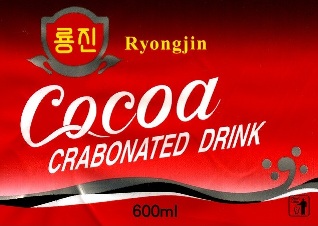
DPRK courting Coca Cola?

Wednesday, October 5th, 2011

Pictured above, the DPRK’s local cola logo. Image source here.

UPDATE 1: Stephan Haggard believes this is a non-story.

ORIGINAL POST (2011-10-5): According to Forbes:

Global capital is an inherently lonely trade, but as Gabriel Schulze ambles into the conference room of Yanggakdo International Hotel, a towering edifice separated by a ring of water from the rest of Pyongyang, the most impenetrable capital in the world, it’s hard to imagine a more isolated business meeting.

“We warmly welcome you, the Coca-Cola delegation, with Mr. Schulze as your leader,” says Park Chol Su, the president of North Korea’s Taepung International Investment Group, singling out the 6-foot-7 American from his entourage of four people. “I hope this will be a good opportunity to make progress in the relations between the U.S. and Korea.”

Why is a U.S. businessman in Pyongyang pitching America’s most iconic consumer brand to the world’s most inhospitable marketplace? Because, surprisingly, the Democratic People’s Republic of Korea is ready to buy, and eager enough to flex its atrophied capitalistic muscles that it let a FORBES reporter follow along–and record everything–as the Coca-Cola discussions heated up.

Park says his Taepung Group, established by Kim Jong Il himself, wants to bring market principles to a planned economy, even down to setting what price a bottle of Coke made in Pyongyang would go for–sort of. “Costs are based on the demands of the market, but we will respect your price,” Park tells Schulze’s delegation. “If the price is too high, it will be restricted.”

North Korea, the most hidebound and repressive of socialist states, is slowly inviting not only China but also the wider Western World to invest in its near-moribund economy. Officials claim the country is open for business with outsiders, and that the political stripes of the investors do not matter as much as the money in their pockets and the willingness to deal. Chinese companies have signed a number of multimillion-dollar deals to extract resources and build and repair infrastructure, such as making port improvements in the northeastern region of Rason and paving a road from there to the Chinese border. Taepung also claims to have inked billiondollar contracts, including one to develop a huge coal mine, but those deals haven’t been nailed.

American signature brands may actually be most welcome, despite or perhaps because of decades of propaganda casting the U.S. as the devil incarnate. Pyongyang’s economic representatives made clear in this and other meetings, with focus and determination, that they want Yum Brands to open up KFC franchises.

Extreme wishful thinking though this may be, it’s linked to a planned ten-year revamp of the North Korean economy to expand national GDP from a meager $30 billion last year to $1 trillion by 2020. (The country can’t even feed its people; there is severe malnutrition in the countryside.) That all but impossible goal cannot be approached without an unshackling of enterprise, which may never occur, and massive help from the outside world, which may never come. The expression “reform and opening,” so familiar in China, is not yet politically acceptable language in Pyongyang. But North Korea’s courtship of the West has begun.

“Coke is strategic. I hope that Coke will serve as a bridge for relations between the two governments,” says Park, a slight man with a toothy smile and a taste for liquor, over a traditional Korean hot pot lunch and beer. Then, perhaps, sanctions could be lifted and more substantial investments could follow. “The door will be open to the whole world, not only China–even the U.S., even Western countries.”

But so far the West hasn’t come calling. North Korea remains in the dysfunctional totalitarian grip of Kim Jong Il. The regime is a defiant nuclear provocateur linked to proliferating weapons, drugs and counterfeit cash abroad, while operating a terrifyingly effective police state at home. Western companies will require more than the usual amount of persuasion. They will want something the North Koreans can’t possibly provide: a blessing from the White House.

That’s where Gabriel Schulze, scion of the Newmont Mining fortune, with a prospector’s taste for risk and opportunity, comes in. He has been surveying this forbidden market on the strength of informal connections to Coke and one of its bottlers, SABMiller, without either company’s toplevel approval–a Cold War-style mission that affords the higher-ups plausible deniability.

SABMiller sent a regional executive, at Schulze’s invitation, to the May meeting with Taepung Group, adding in a statement for this story, “We have no plans to invest in North Korea.” Coke turned down a request from Taepung Group (via Schulze) to visit this summer, and distanced itself from the remotest hint of soft-drink summitry with this statement: “No representative of the Coca-Cola Co. has been in discussions or explored opening up business in North Korea.”

Coke’s skittishness is striking from a company with a history of selling into almost any market–including such villainous or pariah states as Hitler’s Germany in the 1930s, Franco’s Spain and Pyongyang’s historical sponsors, China and the Soviet Union, in the 1980s (though Pepsi got to the Soviet Union first). North Korea is one of the last frontiers. “That is your task, to become a pioneer,” says Jang Gwang Ho, the senior North Korean official in the coterie greeting Schulze’s group.

Tall, blue-eyed and devout, Schulze is full-blooded pioneer. The great-great-grandson of Newmont founder William Boyce Thompson, he runs a family investment office out of Beijing, Schulze Global Investments, which specializes in China and difficult emerging markets.

While he has close ties to Republicans in U.S. politics, Schulze’s forays abroad, such as a cement plant in Ethiopia, are far from conservative. Schulze Global seeks “double bottom-line returns,” he says, profiting while helping poor emerging markets develop. Bringing Coke to North Korea would be historic, but he knows engagement with Pyongyang might be seen as a folly back home, both financially and politically.

“We understand that there’s a high likelihood that there could be all sorts of trouble and that we could end up losing money,” Schulze tells me after his trip. “There’s a lot of [U.S.North Korea] mistrust, there’s a lot of gamesmanship, and for us it’s not about pretending that that’s not there. We’re not in a little bubble of happiness.”

Would it even be legal for Coca-Cola to do business in North Korea, given international and U.S. sanctions? Those sanctions have proven to be narrow and permissive in practice, and there is no stricture against soft drinks (a sip of CocaCola is already imported, mostly from China, and sold to the few with disposable hard currency).

Hundreds of foreign businesses, most of them Chinese, have come into North Korea despite cautionary tales of investments gone bad, of officials changing the terms or the rules, soliciting bribes, demanding substantially higher payments or expropriating joint ventures.

And these businesses have made money. In a 2007 survey of 250 Chinese operations in North Korea, scholars Stephan Haggard and Marcus Noland found 88% saying they could turn a profit. (A majority also reported paying bribes.) Enterprises routinely encounter difficulties, yet many persist, hopeful for economic liberalization.

At least one American investor has profited in North Korea as well: Schulze Global. Three times in 2008 it made loans of hundreds of thousands of dollars to mining companies to buy equipment and expand, and each was repaid. This summer Schulze lent an additional $1 million to finance a North Korean conglomerate’s purchases of corn to feed its workers. (He consulted with sanctions lawyers in America before making the loans and has filed notices with the U.S. Treasury Department.)

“That opened the doors” to the Coke project, Schulze says. Making the world’s favorite carbonated beverage in Pyongyang would be quite another matter, though. The country still operates on a planned economy and has difficulty even manufacturing plastic bottles and cans. The government barters for sugar from Castro’s Cuba and would probably have to import steel to build a Coke factory. And although the estimated per capita income is $1,200 a year, the Coke factory’s workers would be paid barely more than a dollar a day (low wages are a key selling point to foreign investors). Further, the nation is plagued with persistent food shortages that force the regime to rely on international aid. Does a country this poor have consumers for the iconic American drink?

The answer is yes, at least in the capital. Home to the privileged upper crust, or an eighth of the nation’s 24 million people, Pyongyang has a visibly robust elite economy. The city’s wide Stalinist thoroughfares, bereft of private automobiles five years ago, are now filled with tens of thousands of foreign cars, including American and Japanese brands.

Mobile phone use is common, with more than 300,000 accounts in the capital using the 3G network built by Egyptian telecom Orascom. That includes some of the city’s traffic women, famous for white gloves and powder-blue uniforms. With traffic lights now doing most of their work for them, one was spotted on the sidewalk jabbering into her cellphone.

The city’s new Pothonggang Department Store was fully stocked with imported fare to be had at prices in North Korean won that are affordable only at the black-market exchange rate (2,500 won to the dollar at the time, compared with the official rate of 100 won). Name brands like Heinz Ketchup (the equivalent of $4 a bottle), Mars bars (a little more than $4 per bag) and all manner of high-end liquors and cigarettes are on offer, usually imported from Europe or Asia. On another floor you can find imported sweaters, dresses and shoes.

The checkout lines run briskly in midafternoon, the shopping done mostly by women, many of them likely the wives of government officials and army officers. (Kim Jong Il showcased the store with a visit in December.) Out on the streets the proles shop for snacks and locally made sodas–typically fruity concoctions in glass bottles–at hundreds of kiosks throughout the city, mostly priced at the black market rate of 20 cents to 40 cents.

Those prices would be 25 times higher at government exchange rates and thus out of reach for almost all North Koreans on their official salaries–but hard currency is flowing into the capital, “through this and that channel,” Jang says, and is spent. “Although officially they are not receiving the salaries from the government in hard currency, they have! So they like to spend the hard currency for their children because the children like to drink the Coke,” he explains.

Jang, of course, is not a commoner or for that matter a typical North Korean apparatchik. He speaks fluent if idiosyncratic English, was educated partly in the U.K. and is married to a doctor. First vice president of Taepung Group, he has a dual appointment on a government body overseeing economic development. Over two days of meetings Jang exudes an almost relaxed air of detachment. He typically parries questions with humor and stories while puffing on Dunhill cigarettes and flashing a Longines watch. (The president of Taepung, Park Chol Su, is a Chinese national, chosen in part for his Chinese contacts and experience.)

Do North Koreans like to drink beer? asks Anton van Heerden, a South African who runs SABMiller’s Asian supply chain. Yes, especially a growing cadre of retirees. “I can see so many old men, over 60, normally in the evening if we look around the city, they are making a queue to buy the beer,” Jang says, adding with a laugh: “There are crazy people! A lot of people drink the beer–30 bottles in the evening! I don’t know how.”

Friendly though they are with Schulze, Jang and Park both make clear that they answer to a higher power, the leader they refer to only as “the top man,” “the General” or the “Dear Leader”: Kim Jong Il. Park was born to Korean parents in northeastern China in 1959, as Kim Il Sung’s regime recovered from the Korean War. Park built relationships with North Korean officials by selling them much-needed gasoline in the 1990s. He is a salesman again, puffing up his chest as he blusters about the will of the General to change North Korea’s economy, led by his Taepung Group.

Parse the bombast and you get a rare glimpse inside the complexities of power relationships. Park says he has never met the top man and instead takes his instructions from a close Kim confidant, 73-year-old Kim Yang Gon, who is chief of the United Front Department, an intelligence arm of the Korean Workers’ Party, and chairman of the Taepung Group. Still greater power at Taepung likely lies with another member of the board of directors, Kim Jong Il’s brother-in-law Jang Song Taek, who as vice chairman of the National Defense Commission is considered North Korea’s second-most-powerful man. The National Defense Commission, chaired by Kim Jong Il, is also Taepung’s controlling shareholder.

To some Western analysts the tight control of Taepung signals that Kim’s coterie is not an agent of change and reform but precisely the opposite–a means to tighten its grip over the North Korean economy. The reasoning: Kim wants Taepung to bring in multibillion-dollar deals for resources, power plants, ports and roads, they say, so that he and his cronies can control the spoils.

Schulze hears the skeptics. But he notes that a Coca-Cola investment would be far more symbolic than lucrative. The total ante probably wouldn’t exceed $10 million (with Schulze Global’s share at $2 million)–tiny by comparison with some resource deals. He also argues that the only realistic way to engage with North Korea is precisely through those in power. “People say this is the leadership looking to benefit itself, and I would say yes, that is absolutely true.” But, he adds, “it doesn’t negate the fact that selfish ambition can still drive positive change and development, particularly in the economy, which can make a real difference in the lives of North Koreans.”

His groundwork laid in North Korea, Schulze will continue his quixotic quest to lobby not only Coke but also Capitol Hill and the Obama Administration. He is, in a way, following in the footsteps of his great-great-grandfather Thompson, the mining magnate. Thompson shocked his friends in the business establishment when, after returning from Russia after a trip in the fall of 1917, he urged that the U.S. and Britain engage with the new communist regime there to moderate the impulses of Lenin and Trotsky. No one, obviously, followed that advice.

Read the full story here:
Invading North Korea
Forbes
Gady Epstein
2011-10-5

Share

DPRK announces 2nd renovation in Mansudae area of Pyongyang

Tuesday, October 4th, 2011

UPDATE 6 (2011-10-4): According to the Daily NK:

Progress on the project to build 100,000 homes in Pyongyang is moving forward rapidly in at least one location: central Changjeon Street. According to a source from the city who spoke with The Daily NK yesterday, “There are around 30,000 homes being constructed along Changjeon Street, and the shells have almost all gone up.”

Changjeon Street is in the heart of Pyongyang, near well-known spots such as Mansudae Assembly Hall and the giant bronze statue of Kim Il Sung. The authorities are known to be focusing the state’s limited power on construction in this area, with the intention of completing at least the most visible part of planned projects ordered for the commemoration of the 100th anniversary of Kim Il Sung’s birth in April, 2012.

North Korea is understood to have invited a number of foreign dignitaries to witness several big events it has planned for next April, including the Spring Friendship Art Festival and the April 15th ‘Day of the Sun’ birthday celebrations. In that context, completing construction along Changjeon Street is a natural priority.

Changjeon Street was apparently given a further boost following the visit of Kim Jong Il to China in May. Kim was reportedly struck by the inadequacy of Pyongyang when held up against major cities in China, and called for improvement.

The authorities thereafter ordered that the skeletons of homes on Changjeon Street be completed by the anniversary of the Party foundation, which falls on October 10th. According to the source, “The pace of construction has picked up since the authorities ordered that the building frames be completed by October 10th.”

“They started work on a 40-storey building at the end of May, and now are up to the 35th storey. They are using a waterproofing agent that causes the cement to dry quickly, which means they sometimes get through three floors a day,” he continued.

Rodong Shinmun, the Party mouthpiece publication, described the renewed pace of operations on Changjeon Street last Thursday, stating proudly, “The blinding pace of the audacious construction offensive, paying no heed to night or day, has allowed for the construction of the framework of a 40-floor high-rise residential building in no time at all.”

Similar progress is being seen on road extensions and beautification projects nearby. The source said, “Road extension projects have been completed, including that of the road in front of the Botong River and Pyongyang Gymnasium. They’ve put flower beds by the side of the road and the whole area is now in a very good state.”

However, the fixation with construction on Changjeon Street is leading to accidents there, the source added, noting, “Because they only pressure us to speed up and don’t say anything about safety, there have been frequent incidents of workers falling.”

It is also causing other projects in the city to lag far behind. According to the source, “The authorities are doing renovations on houses along the main roads, but only painting and sprucing up the areas which can be seen. The buildings along Tongil, Hyungsaesan and Yongseon Streets were all demolished in 2009, but as yet there is no sign of progress from the company which has been tasked with the construction work.”

UPDATE 5 (2011-6-8): According to the Daily NK:

Finally, yesterday’s Rodong Shinmun, citing a statement from Kim Jong Il himself, went on to remind the people, “Construction in Pyongyang is not simply an issue of operational economics regarding the formation of roads and construction of homes, it is an important political issue related to the prestige of Socialist Chosun and dignity of the Kim Il Sung Motherland.”

This kind of propaganda push is aimed at ensuring the people are cogent of fact that modern buildings are being constructed by the authorities; an attempt to bring to life ongoing propaganda about the strong and prosperous state, which inside sources suggest is viewed with considerable public cynicism.

According to the Chosun Shinbo piece dated June 23rd, the construction at Mansudae is set to include a complex of 14 new apartment buildings, including North Korea’s tallest at 45 floors, a school, nursery and other public buildings. Elsewhere, there is a plan to pull down older construction in Mansu-dong and replace it with a park, and another to put up a modern cylindrical and square apartment building in the vicinity of Pyongyang Students’ and Children’s Palace.

Meanwhile, all the talk of modernity fits well with efforts to promote the youthful vigor of successor Kim Jong Eun, especially as it surrounds the statue of Kim Il Sung on Mansudae Hill, which is itself said to be undergoing a facelift.

In yesterday’s piece, Rodong Shinmun went on, “According to the Party’s grand capital construction plan, a fire of new Pyongyang creation is blazing violently in the ongoing Mansudae area construction,” adding, “According to this warlike strategy, in a short time, less than a month after it began, the groups taking part in the construction had achieved innovative results, digging the vast foundations of the new homes and laying the concrete.”

However, rumor has it that the reality does not meet the heights of this official propaganda, with the authorities having only managed to construct some 500 new residences in the period to the end of 2010.

UPDATE 4 (2011-6-8): KCTV has braodcast new footage of the construction zone and explained what a few of the new buildings will be.  I have uploaded the particular video clip to YouTube, and you can watch it here.

Below are screen shots.  In the picture on the left, we can see that many of the older buildings in the area have already been removed and holes have been dug for the new foundations.  In the picture on the right we can see another conceptual shot of the area from the other side of the Taedong River.

UPDATE 3 (2011-6-8): According to the Pyongyang Times:

A huge construction project has been undertaken to renew the looks of the Mansudae area of Pyongyang on the occasion of the 100th birthday of President Kim Il Sung (April 2012) as part of the grand capital construction plan of the Workers’ Party of Korea.

The project includes the construction of modern dwelling houses and a monumental structure in the area in central Pyongyang where the statue of President Kim Il Sung stands and the development of parks in the surroundings to meet the requirements of the new century. It will be a big stride forward to building Pyongyang magnificently as the world-level city.

The ground-breaking ceremony took place on May 22.

It brought together Premier Choe Yong Rim, Minister of the People’s Armed Forces Kim Yong Chun, Vice-Premiers Jon Ha Chol and Ro Tu Chol, officials from ministries, national agencies and municipality and tens of thousands of builders.

Premier Choe Yong Rim made a keynote speech.

He noted that leader Kim Jong Il saw that monumental structures were built everywhere in the capital to glorify the President’s revolutionary exploits for all ages. He then referred to the facts that the leader initiated the construction of Changgwang and Kwangbok Streets and other large projects and led them in the van to bring about a radical turn in building the capital and improving the people’s livelihood.

He said that under his wise guidance modern houses including those in Mansudae Street and at the foot of Haebang Hill, cultural and public service facilities, parks and recreation grounds were built in recent years and gigantic housing development and city landscaping projects are now dynamically pushed forward in Pyongyang.

More recently the leader suggested the development of the Mansudae area and took drastic measures to push the project from design to mobilizing the builders and supply of materials, he noted, and added that all the officials and builders should be well aware of the importance and significance of this construction, strictly observe the instructions of the designs, building operations and construction methods and work hard to create a new building speed.

He stressed the need to finish the construction of houses in Ryongsong, Sopho and Ryokpho areas in time together with the construction in the Mansudae area.

He called on the whole Party, the entire nation and all the people to turn out to support the construction in the Mansudae area.

He was followed by other speakers.

UPDATE 2 (2011-6-3): KCNA has finally published a story about the new construction in the Central District:

There started the project to build on the best level the Mansudae area in Pyongyang where President Kim Il Sung’s statue stands in the run-up to the centenary of his birth.

A monumental edifice, high-rise apartment houses, skyscraping buildings, public buildings and cultural and service facilities will appear as required by the new century in the vast area covering dozens of hectares where its old appearance will be no longer to be seen.

A new street will make its appearance as required by the modern sense of beauty, completely free from the existing mode of urban construction.

It will be unique in the formative artistic representation of architecture and the whole area will turn into a huge park. This is a new idea in the lay-out of the street in the area.

A round-shape big people’s theater will spring up in the area of Mansu-dong.

Trees of good species and flowering plants will be planted in the more than ten hectare area around the theater facing the Mansudae Assembly Hall. Promenades and public service facilities will keep in good harmony.

The height of the high-rise apartment houses to be built in the area covering hundreds of thousands of square meters in Kyongsang-dong, Jongro-dong and Taedongmun-dong is expected to gradually increase and twin tower buildings will be concentrated in the area near the Changjon Intersection so that one can enjoy a bird-eye-view of rhythmic distribution of huge buildings on the street.

A catering street will rise to face Okryu Restaurant and public buildings and cultural and service facilities of unique styles will be distributed to the convenience of the residents. They will be decorated with peculiar street lamps and diverse lights.

What draws attention in the lay-out of the streets is the fashionable appearance of high-rise and skyscraping apartment houses of peculiar styles, a harmonious combination of circular, semi-circular and angle style architecture.

The houses will have de luxe flats which will meet the cultural need of Pyongyangites.

When the construction of the Mansudae area completed, it will best match the monumental edifices including the Chollima Statue, the Tower of the Juche Idea, the Monument to Party Founding, the Grand People’s Study House and the Moranbong Theater and structures in the era of the Workers’ Party including An Sang Thaek, An Sang Thaek Street, Munsu, Mansudae and Changwang streets. This will change the appearance of the capital city beyond recognition.

Conceptual images of the construction area can be seen below.

UPDATE 1 (2011-5-24): In the comments, a reader points out a photo by a recent visitor to Pyongyang.  See a LARGE version of the photo here. The photo (2011-4-24) shows that renovation of the Mansudae area began over a month ago.  As of April 24, area families and all of their belongings had already been relocated (to where?); shops had been closed and emptied; and building destruction had begun.

ORIGINAL POST (2011-5-23):

The May 22 episode of the DPRK’s evening news (via elufa.net) featured a ground-breaking ceremony for a re-development project in the Mansudae area of Pyongyang’s Central District (만수대지구, 중구 역). You can see a clip of the evening news broadcast (with English translation) here.

I used the project overview map in the evening news to map out the construction area on Google Earth:

In Jongro-dong (종로동) the Pyongyang School Children’s Palace (평양학생소년궁전) will be spared destruction, but the exclusive Kumsong Middle School No. 1 next door (굼성제1 중학교–not to be confused with the Kumsong School in Mangyongdae) looks like it will be torn down.

In Mansu-dong (만수동) we will see the destruction of the historical Changjon Primary School (평양창전소학교) and the DPRK’s central bank.  Maybe the central bank will get a home in the new facilities, but I have no idea.

In Kyongsang-dong (경상동) the Pyongyang Kyongsang Kindergarden (for musically gifted youngsters) as well as the Pyongyang Children’s Department Store will be torn down.  These too may receive  a new home in the reconstructed neighborhood facilities.

Additional information:
1. This project comes immediately after the first Mansudae Area redevelopment project near the Potong Gate (just to the west of this one).  Read about the first Mansudae Street renovation project here.

2. This residential construction project, though unlikely to be completed by April 2012, is probably part of the DPRK’s 2012 Kangsong Taeguk (강성대국) campaign.  As part of the campaign, Pyongyang is to receive 100,000 new housing units.  Read more about 2012 construction projects herehere, and here.

3. One report says that the KPA has been put in charge of the DPRK’s renovations.

4. Pyongyang just held an architecture exposé.  See some of the work here.

5. These projects appear to be priorities as well.

Share

DPRK expanding Chinese tourism to Kumgang

Monday, October 3rd, 2011

According to Yonhap:

North Korea is expanding travel routes between China and its scenic resort in Mount Kumgang, a source familiar with the North said Monday, indicating Pyongyang’s continued efforts to earn much-needed cash from Chinese tourists.

The new routes will include extra flights from Chinese cities to Mount Kumgang on North Korea’s east coast, in addition to trains and expressways linking Beijing to the mountain resort via Pyongyang, the source said on condition of anonymity.

The move comes after North Korea recently ran a trial cruise from its northeastern port city of Rajin to Mount Kumgang.

The source also said more than 100 Chinese tourists traveled to the resort on a five-day itinerary at the end of last month.

By the end of this month, North Korea is planning to launch a tour program to Mount Kumgang from China’s northeastern city of Harbin, although it is not clear whether the flight will land in Pyongyang or at a military airport on the mountain, the source said.

North Korea is reported to be considering converting a military airfield near the resort to a civilian airport to facilitate travel to the area.

“Starting with Harbin, (North Korea) plans to operate flights for Mount Kumgang from 16 cities across China, including Beijing, Shenyang and Guangzhou,” the source said.

“They also plan to attract Chinese visitors by opening a railway and expressway linking Beijing, Pyongyang and Mount Kumgang,” the source added, saying the first train tour on the route will likely be in April.

The move comes amid a dispute over the handling of South Korean assets at the resort. Seoul halted an inter-Korean joint tour program to the resort in 2008 following the shooting death of a South Korean tourist in the area.

In protest, North Korea recently expelled South Korean workers from the resort and vowed to legally dispose of all South Korean assets there. The tour program had served as a cash cow for the impoverished North.

South Korea has asked foreign countries not to invest or engage in tourism activities at the resort in a bid to protect its property rights there.

Previous posts on Kumgang here.

Read the full story here:
N. Korea expands travel routes for Chinese tourists: source
Yonhap
2011-10-3

Share
