Archive for the ‘Aviation’ Category

N. Korean airline to be used to ferry S. Korean tourists to Mt. Paektu

Sunday, December 16th, 2007

Yonhap
12/16/2007

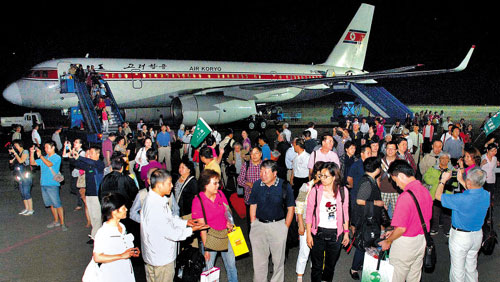
North Korea’s state-run airline is likely to be used to ferry South Korean tourists to the North’s Mount Paektu, a government official said Sunday.

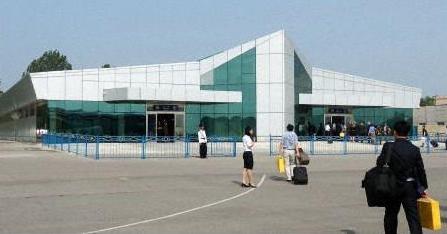
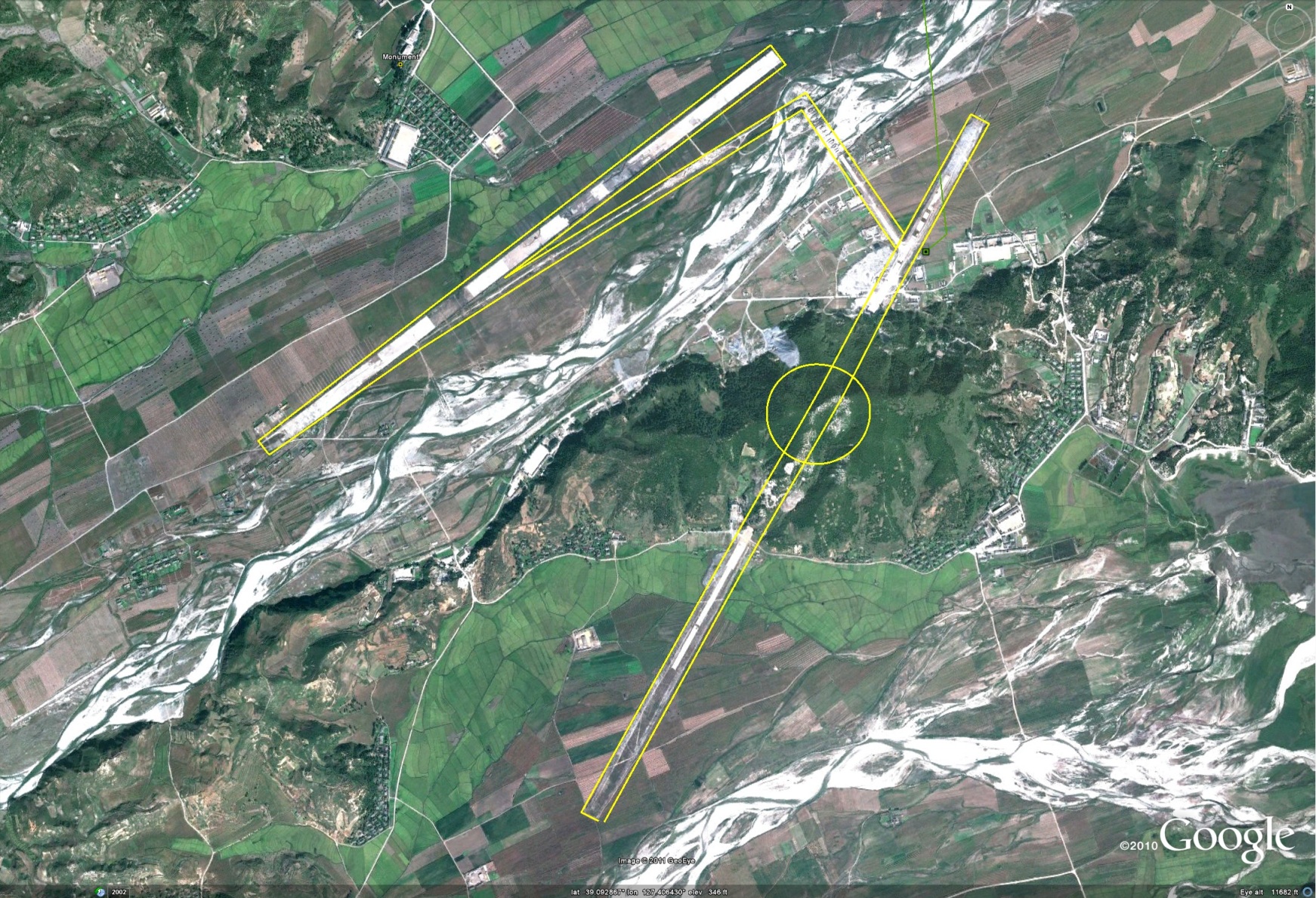
The official, who declined to be identified, said Air Koryo planes may be used to carry tourists, owing to concerns about safety related to Samjiyeon Airport, about 30 kilometers southeast of the mountain.

He did not elaborate on the nature of safety concerns, but said it may be inappropriate for South Korean flag carriers like Korean Air and Asiana to use the airport.

Tours to the 2,744-meter-high mountain, held sacred by many Koreans, are the result of the summit meeting between South Korean President Roh Moo-hyun and North Korean leader Kim Jong-il in early October.

He added that flights would probably use Seoul’s Gimpo International Airport, fly over Gangwon Province, head out into the East Sea before turning north toward Mount Paektu, on the North Korea-Chinese border.

The official said Gimpo has been selected as it can easily handle greater numbers of people than provincial air terminals, and the high level of airport security that can be maintained.

Hyundai Asan, which is responsible for organizing tours to North Korea, said direct flights linking Gimpo and Mount Paektu should begin in May, 2008.

The company currently organizes tours to Mount Geumgang on the east coast, and the historic city of Kaesong just north of the demilitarized zone separating the two Koreas on the west coast.

North Korea Google Earth (Version 7)

Friday, December 14th, 2007

The most authoritative map of North Korea on Google Earth
North Korea Uncovered v.7
Download it here

koreaisland.JPGThis map covers North Korea’s agriculture, aviation, cultural locations, manufacturing facilities, railroad, energy infrastructure, politics, sports venues, military establishments, religious facilities, leisure destinations, and national parks. It is continually expanding and undergoing revisions. This is the sixth version.

Additions to the latest version of “North Korea Uncovered” include: A Korean War folder featuring overlays of US attacks on the Sui Ho Dam, Yalu Bridge, and Nakwon Munitians Plant (before/after), plus other locations such as the Hoeryong Revolutionary Site, Ponghwa Revolutionary Site, Taechon reactor (overlay), Pyongyang Railway Museum, Kwangmyong Salt Works, Woljong Temple, Sansong Revolutionary Site, Jongbansan Fort and park, Jangsan Cape, Yongbyon House of Culture, Chongsokjong, Lake Yonpung, Nortern Limit Line (NLL), Sinuiju Old Fort Walls, Pyongyang open air market, and confirmed Pyongyang Intranet nodes.

Disclaimer: I cannot vouch for the authenticity of many locations since I have not seen or been to them, but great efforts have been made to check for authenticity. These efforts include pouring over books, maps, conducting interviews, and keeping up with other peoples’ discoveries. In many cases, I have posted sources, though not for all. This is a thorough compilation of lots of material, but I will leave it up to the reader to make up their own minds as to what they see. I cannot catch everything and I welcome contributions.

Kwangmyongsong satellite

Sunday, November 18th, 2007

From Wikipedia:

kwangmyongsong.jpgKwangmyŏngsŏng (”Bright Light Star”) was an artificial satellite claimed to have been launched by North Korea in 1998. There is some doubt as to whether the satellite existed at all. Many North Korea observers believe the story of a satellite launch was invented to allay the international outrage that followed North Korea’s test-firing of a Taepodong-1 ballistic missile, which crossed over Japan before crashing into the Pacific Ocean. NORAD were unable to detect the satellite visually, by radar, or pick up its radio signals. It is thought that, if there had truly been an attempt to launch a satellite, the third stage failed to fire and it was placed into an orbit from which it decayed very quickly.

The official Korean Central News Agency announced on September 1, 1998, that the satellite had been launched at 3:07 UTC on August 31 from a launch site in Musudan-ri, Hwadae-gun, North Hamgyong Province by a Taepodong-1 rocket. This was followed by a video of the launch, images of the purported satellite, and an animation of the satellite in orbit. The photographs showed a satellite similar to the first Chinese satellite, Dong Fang Hong I, itself very similar to Telstar 1.

According to the North Korean media it completed its hundredth orbit on September 13, 1998, and was in an elliptical orbit with a perigee of 218.82 km and apogee of 6,978.2 km with a period of 165 minutes and 6 seconds. It was also reported to be transmitting the melody of “Song of General Kim Il-sung” and “Song of General Kim Jong-il” and the Morse signals “Juche Korea” at 27 MHz.

The satellite has since featured prominently in North Korean propaganda, such as the mass gymnastics.

Another source here, and YouTube.

Google Earth North Korea (version 6)

Sunday, November 11th, 2007

The most authoritative map of North Korea on Google Earth
North Korea Uncovered: Version 6
Download it here

kissquare.JPGThis map covers North Korea’s agriculture, aviation, cultural locations, manufacturing facilities, railroad, energy infrastructure, politics, sports venues, military establishments, religious facilities, leisure destinations, and national parks. It is continually expanding and undergoing revisions. This is the sixth version.

Additions to the newest version of North Korea Uncovered include: Alleged Syrian nuclear site (before and after bombing), Majon beach resort, electricity grid expansion, Runga Island in Pyongyang, Mt. Ryongak, Yongbyon historical fort walls, Suyang Fort walls and waterfall in Haeju, Kaechon-Lake Taesong water project, Paekma-Cholsan waterway, Yachts (3), and Hyesan Youth Copper Mine.

Disclaimer: I cannot vouch for the authenticity of many locations since I have not seen or been to them, but great efforts have been made to check for authenticity. These efforts include pouring over books, maps, conducting interviews, and keeping up with other peoples’ discoveries. In many cases, I have posted sources, though not for all. This is a thorough compilation of lots of material, but I will leave it up to the reader to make up their own minds as to what they see. I cannot catch everything and I welcome contributions.

Direct flights for tours of N. Korea’s Mount Paekdu to start in May: report

Saturday, November 3rd, 2007

Yonhap
11/3/2007

Direct flights that will allow tourists from South Korea to visit Mount Paekdu in North Korea will begin in May, Pyongyang’s official state-run news agency said Saturday.

The Korean Central News Agency (KCNA) said the deal was reached in talks between Hyundai Group chairwoman Hyun Jung-eun and representatives of the North’s National Economic Cooperation Federation.

The tours were agreed upon at the summit meeting between South Korean President Roh Moo-hyun and North Korean leader Kim Jong-il early last month. Seoul had previously provided materials to repair an airfield near the mountain.

Foreign visitors to Mount Paekdu, whose 2,744-meter peak is the highest on the Korean Peninsula, usually climb the mountain from the Chinese side, although the mountain is a popular tourist destination for foreign tourists in North Korea. Koreans traditionally consider Mount Paekdu a sacred mountain.

The KCNA report also said Hyundai will start tours of Kaesong, an ancient Korean capital, in early December.

Hyundai Asan, a affiliate of the the business group, runs the Kaesong industrial complex that is home to about 50 South Korean companies producing clothes, shoes, watches and kitchen appliances.

The inter-Korean complex 60 kilometers northeast of Seoul is hailed as the crowning achievement of the historic first-ever inter-Korean summit in 2000. It has played a key role in expanding two-way economic exchanges from just $300 million in 1999 to $1.35 billion last year.

The North Korean news agency said Hyun and Hyundai Asian president Yoon Man-joon met with Kim Jong-il.

The two senior executives are expected to return to South Korea later in the day.

Oil price ‘grounds’ N Korea fleet

Sunday, October 28th, 2007

BBC
10/28/2007

North Korea has been forced to ground a fleet of Soviet-era military planes because of the high oil price, South Korea’s Yonhap news agency reported.

Fuel is being diverted for other training flights, Yonhap quoted a military source as saying.

The Antonov An-2 biplanes - of which North Korea’s air force is thought to have about 300 - are able to drop special forces behind enemy lines.

The planes, which can cruise below radar, carry some 12 soldiers.

North Korea’s impoverished economy has suffered from energy shortages for years, and rising oil prices have made the situation worse.

Low speed

The Antonov, designed and built in the Soviet Union, first flew in 1947, and is still used by a number of military and civilian operators around the world.

The plane is useful in special forces operations because of its extremely low minimum speed - it can fly as slowly as 48km/h (30mph) without stalling, according to aviation experts.

North Korea’s air force fields hundreds of aircraft, but the vast majority are ageing Soviet models - such as the MiG 21 fighter - or Chinese copies outclassed by more modern aircraft fielded by the US, South Korea or Japan.

North and South Korea are still technically at war as a peace accord to bring an end to the 1950-53 conflict has never been signed.

Reports cite high cost of North business

Wednesday, October 10th, 2007

Joong Ang Daily
Limb Jae-un
10/8/2007

Days after both Koreas vowed to heighten cooperation, a lawmaker said yesterday in a report that the Kaesong Industrial Complex, the experimental site combining South Korean technology and North Korean labor, has been unprofitable so far.

In addition, the Ministry of Construction and Transportation said in a report yesterday that repairs to the airport on Mount Paektu will cost 280 billion won, or $304 million.

One of the agreements signed at the inter-Korean summit Thursday calls for allowing South Korean tourists to visit the scenic mountain on the Korea-China border.

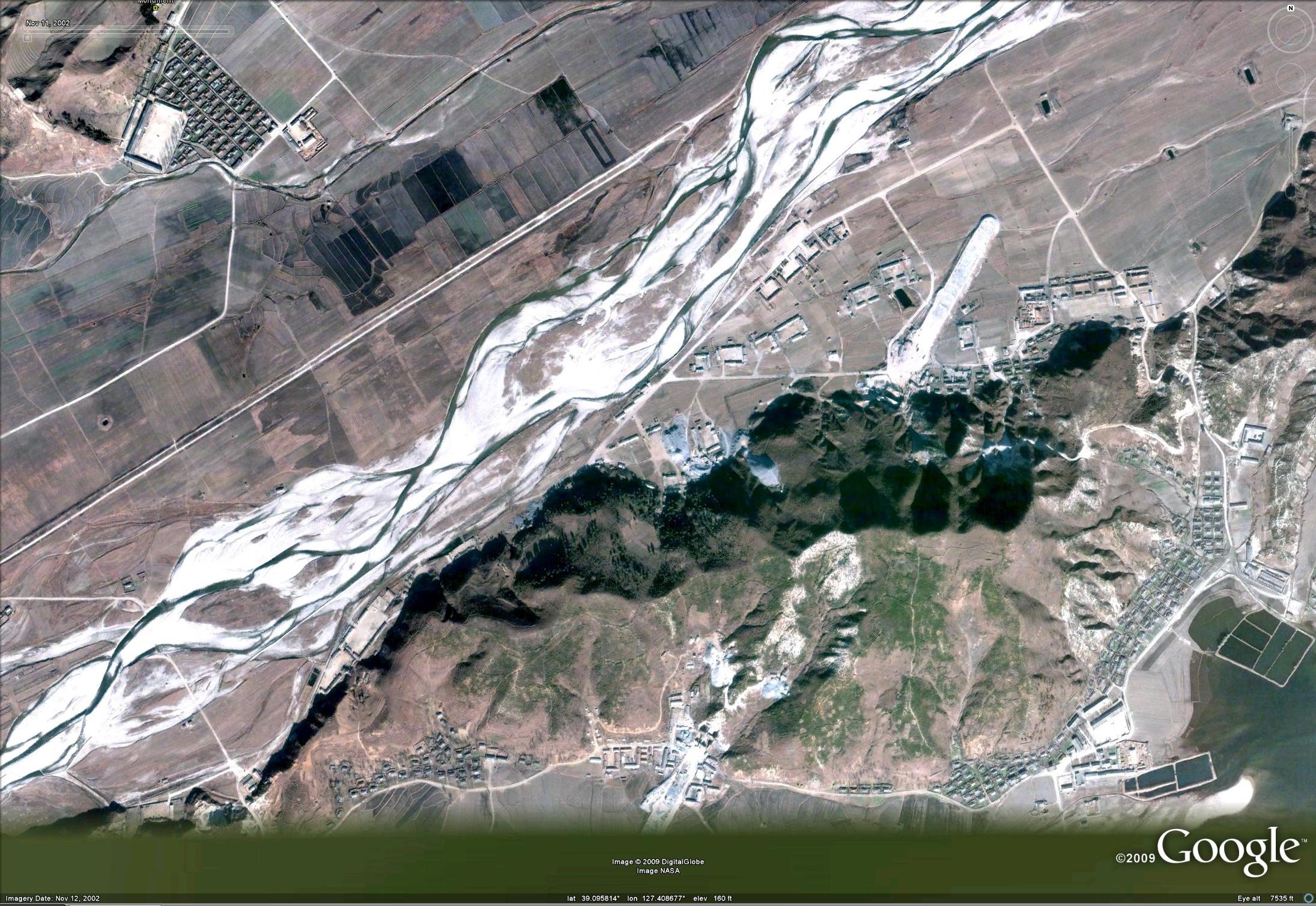
“In terms of the runway length, Samjiyon Airport can accommodate large airplanes, such as a Boeing 747, but the condition of the airport is bad,” said an official of the construction ministry, who asked for anonymity. The airport, located on a plateau 1,000 meters, or 3,280 feet, above sea level, needs advanced navigation facilities, he said.

Despite the optimistic discussions during last week’s summit, inter-Korean economic cooperation has so far had dismal results, according to a report from Grand National Party Representative Lee Han-koo. Thirteen out of 16 companies operating at the Kaesong Industrial Complex are currently in the red, he said. Their debt is four times higher than their assets, he said. The combined assets of the 16 companies is only 4.5 billion won and their average annual sales is 790 million won.

“The biggest problem of the economic cooperation is that the relevant information has been held back from the public,” Lee said.

Meanwhile, a top European official said North Korea must go through serious reforms to become a viable investment destination for Europe.

North Korea is unattractive for Europe because “the conditions for investment are not safe enough and the regulatory environment is not predictable,” Guenter Verheugen, the EU Industry and Enterprise Commissioner, said in an interview with The Associated Press on Saturday.

North Korea on Google Earth

Saturday, October 6th, 2007

Version 5: Download it here (on Google Earth) 

This map covers North Korea’s agriculture, aviation, cultural locations, manufacturing facilities, railroad, energy infrastructure, politics, sports venues, military establishments, religious facilities, leisure destinations, and national parks. It is continually expanding and undergoing revisions. This is the fifth version.

Additions to the latest version of “North Korea Uncovered” include updates to new Google Earth overlays of Sinchon, UNESCO sites, Railroads, canals, and the DMZ, in addition to Kim Jong Suk college of eduation (Hyesan), a huge expansion of the electricity grid (with a little help from Martyn Williams) plus a few more parks, antiaircraft sites, dams, mines, canals, etc.

Disclaimer: I cannot vouch for the authenticity of many locations since I have not seen or been to them, but great efforts have been made to check for authenticity. These efforts include pouring over books, maps, conducting interviews, and keeping up with other peoples’ discoveries. In many cases, I have posted sources, though not for all. This is a thorough compilation of lots of material, but I will leave it up to the reader to make up their own minds as to what they see. I cannot catch everything and I welcome contributions.

I hope this map will increase interest in North Korea. There is still plenty more to learn, and I look forward to receiving your additions to this project.

First air route planned between two Koreas

Friday, October 5th, 2007

Joong Ang Daily
Ser Myo-ja and Kim Han-byul
10/5/2007

Thank you for flying, we’ll be landing in North Korea soon.

That announcement could be heard on a regular basis as the inter-Korean summit agreement laid out the groundwork for the first regular air route between North and South Korea.

Passengers will be allowed to fly from Seoul to an airport on Mount Paektu, on the North Korea-China border, according to the deal.

President Roh Moo-hyun and North Korean leader Kim Jong-il said the new air route is intended to boost inter-Korean tourism to the mountain. In 2005, Kim promised such a program to Hyundai Asan Chairwoman Hyun Jeong-eun during her visit. With cooperation from the Korea National Tourism Organization, Hyundai Group’s North Korea business arm began preparing for it, although nothing substantial now exists.

Standing 2,744 meters (9,002 feet), Mount Paektu has been worshiped by Koreans throughout history as the place of their ancestral origin, according to the foundation legend.

“The air route will be the starting point for new aviation cooperation between the two Koreas,” said Ahn Byung-min, a North Korea expert at the Korea Transport Institute. “The runway of Samjiyon Airport in the mountain has been repaired a bit, but other facilities, including the terminal, need more work.”

Since Kim’s promise to Hyun, the South has provided material to repair the military airport, located 1,300 meters above sea level.

Hyundai Asan welcomed the agreement yesterday, saying it has already researched various tour packages and promotional strategies. The company said it will consult with the government to expedite the beginning of the tour.

Tourism industry sources said tourists take no trips in the winter. So if everything somehow came together and the airport was fully upgraded, the earliest the trip could be offered is next spring.

Yun Chi-sul, owner of the travel agency Mount Paektu.com, said, “May is still wintertime on Mount Paektu. Some trips have been canceled even in early June.” He has sold tour packages to the North Korean mountain since 1998 by using routes from China.

South Korea’s two major airlines, Korean Air and Asiana, also welcomed the news, expecting increased demand. About 100,000 South Koreans visit the mountain via China each year by using air and car routes to the mountain. Direct air travel is expected to cut the travel time to about an hour.

The Ministry of Construction and Transportation said more detailed agreements need to be worked out between the two Koreas for the flights to actually be operated. Whether the North will allow a plane to fly above its inland areas or force it to detour above the Yellow Sea is still unclear.

Roh and Kim also agreed yesterday to send inter-Korean cheer teams to the 2008 Beijing Olympics via the Gyeongui Line, which links Seoul and Shinuiju in the North. It will be the first non-ceremonial use of the restored inter-Korean railroad, the leaders said.

“We will have to wait and see how far the railroad can be used for the travel,” said Ahn, of the Korea Transport Institute. “The North probably will feel a burden in allowing a civilian train from Seoul to run through the entire country.” The train trip from Seoul to Beijing will be 1,614 kilometers (1,002 miles).

The 518.5-kilometer-long Gyeongui Line, completed in 1906, was severed during the Korean War. The two Koreas agreed to restore the railroad in 2000 at the ministerial talks, and the South has spent 545.4 billion won ($588.7 million) for railroad construction, including 180.9 billion won worth of material and equipment sent to the North. After several setbacks, the two Koreas tested the restored railroad on May 17 of this year.

Inter-Korean Projects to Cost Over $ 11 Bil.: Report

Friday, October 5th, 2007

Korea Times
10/5/2007

More than $11 billion is needed to implement cross-border business projects that the leaders of the two Koreas agreed to at the historic summit this week, a local research institute estimated Friday.

Wrapping up a three-day summit, the second one since 2000, South Korean President Roh Moo-hyun and North Korean leader Kim Jong-il on Thursday agreed to a number of inter-Korean business projects.

According to Hyundai Research Institute, the development of a special economic zone in Haeju, the North’s western port city, will cost about $4.6 billion. Around $2.5 billion will be spent to finance the expansion of an industrial complex in the North Korean border city of Kaesong.

A project to build leisure facilities around Mount Baekdu is expected to cost $1.3 billion, the research institute said.

The estimated cost, when it is financed over five years, is equivalent to 8.75 percent of the North’s gross domestic income, and 0.25 percent of the South’s gross domestic product, Hyundai Research said.

The two leaders called for rapidly expanding the South-supported industrial park in the North’s border town of Kaesong and launching cross-border freight transportation via an inter-Korean railway between the South’s Munsan and the North’s Pongdong.

The two Koreas also agreed to jointly repair and maintain the North’s dilapidated expressway linking Kaesong and Pyongyang, as well as the North’s railway between Kaesong and Sinuiju on the North’s western Chinese border.

As part of a bilateral agreement to boost relations in tourism, history, language, education, culture, sport and art, the Koreas agreed to open a direct air route between Seoul and Mount Paekdu, allowing South Koreans to tour the scenic North Korean mountain on the North’s northern border with China.

The research institute, meanwhile, projected that the North would get $138 billion worth of economic benefits and the South $4.8 billion should the inter-Korean business projects be implemented as planned.