Rice prices in North Korea’s markets are reportedly on a downward trend. It was originally expected that the sanctions implemented by the international community would lead to inflation due to trade reductions, but a year after the sanctions were implemented, prices have instead fallen due to the steady development of marketization and active trade with China.
According to recent findings by Daily NK, rice is trading at 4,000 KPW (per kg) in Pyongyang, 3970 KPW in Sinuiju, North Pyongan Province, and 4190 KPW in Hyesan, Ryanggang Province. This represents an approximate 1,000 KPW reduction from a year ago (Pyongyang 5019 KPW, Sinuiju 4970 KPW, Hyesan 4980 KPW).
A source in North Hamgyong Province told Daily NK on January 30, “I know that China donated a large amount of rice after the flood damage in September last year. I also heard that rice farming in North and South and Hwanghae Provinces and South Pyongan Province went well.”
The price of rice in Hoeryong City (North Hamgyong Province), which suffered severe flood damage last year, is at approximately 3,600 KPW. “Rice was about 5,000 KPW in January, but prices have fallen now, so women preparing for the New Year’s holiday were fairly pleased,” she said.
“Rice prices have also been slowly dropping since the end of last year at the Pyongyang markets and reached 4,000 KPW this year. Traders (who purchase products to sell elsewhere) lining up at the market entrance to buy rice coming in from the countryside are saying that the amount of rice circulating in the markets has definitely increased compared to January last year,” a source in South Pyongan Province said.
“Rice prices in most markets in Pyongyang are declining, with more than 70% of rice being imported from China. People usually mix Chinese rice with Korean rice because Chinese rice is too dry (as if it has been in storage for a year), unlike the sticky Korean type.”
VOA (Voice of America) reported on January 26 that North Korea’s total rice imports from China amounted to 4.2 million tons last year (2016), a 2.4-fold increase over the previous year (2015). This statistic was put forward by Kwon Tae Jin, Director of East Asia Research at the GS&J Institute, citing an analysis of data published by China’s General Administration of Customs.
Sources within North Korea have consistently pointed out that revitalized market activities have played a role. “In the past (Kim Jong Il’s time), rice prices increased whenever the regime cracked down on market activities, but people are now able to do business without many restrictions. In the current situation, it’s unlikely that the price will suddenly jump,” a source in Ryanggang Province said.
Market stability has been a hallmark of Kim Jong Un’s rule and is thought to be reducing backlash from the general public as their quality of life improves.
However, the ongoing decline in rice prices is likely to lead to livelihood instability for farmers. If rice prices fall while the prices of other commodities (Chinese imports) remain the same, issues are likely to arise.
“The prices of commodities other than rice have mostly increased. As a result, a growing number of farmers are worrying that they will be unable to survive on farming alone,'” the Ryanggang-based source said.
Read the full story here:
Rice prices on steady decline Daily NK
Kang Mi Jin
2017-2-6
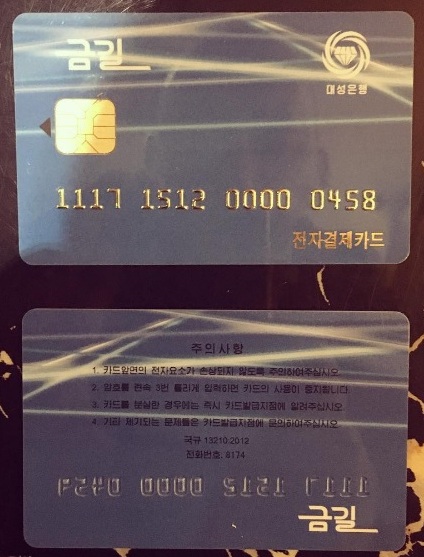
The front of the card contains the brand name, logo (a diamond?), sponsoring bank name, and the phrase “electronic payment card”. I spoke with James Pearson at Reuters about the 16 digit number, and based on his research it does not appear to be directly related to the Foreign Trade Bank (FTB). Mr. Cockerell reports on his Instagram page that the card uses the same retail payment equipment as the Narae Card (which is controlled by the FTB), so that means the two banks (Daesong and FTB) have an established clearing mechanism to settle electronic balances (Q: Are other NK banks using this same equipment/part of the same network?). FTB is supposedly the official repository of the state’s hard currency reserves for the purposes of managing foreign trade and domestic hard currency transactions for imported goods, though it apparently does not have a monopoly on individual/company hard currency accounts. Daesong Bank (Taesong) is has been linked to the KWP’s Office 39.
The back of the card reads:
주의사항 (Caution)
1. 카드앞면의 전자요소가 손상되지 않도록 주의하여주십시오.
Be careful not to damage the chip on the front of the card
2. 암호를 련속 3번 틀리게 입력하면 카드의 사용이 중지됩니다.
The card will stop working if you enter the wrong password 3 times.
3. 카드를 분실한 경우에는 즉시 카드발급지점에 알려주십시오.
If you lose the card, immediately notify the branch that issued the card.
4. 기타 제기되는 문제들은 카드발급지점에 문의하여주십시오.
For any other issue, consult the branch that issued the card.
This card is apparently for hard currency purchases only, and it was launched in early 2016. It is functionally the same as the Golden Triangle Bank Electronic Payment Card, Jonsong Electronic Payment Card, KoryoBank Electronic Payment Card, Narae Electronic Payment Card, Ryugyong Commercial Bank Electronic Payment Card, and Sowol Electronic Payment Card.
I should also mention that none of these are “debit cards” since they are not linked with a specific checking (demand) deposit. These are pre-pay cards only. These cards are essentially private digital currency issued by an established bank. The bank maintains control of the hard currency used to top off the cards, which it uses to generate income (float), while the card holder gains the convenience of not having to carry cash, which does offer some security from petty crime, but makes retail transactions more observable to security agencies.
Treasury Takes Actions To Further Restrict North Korea’s Access to The U.S. Financial System
6/1/2016
Action Responds to the Threat that North Korea Poses to the Global Financial System; the United States Calls on International Partners to Similarly Takes Steps toward Severing Banking Relationships with the Dangerous Regime
WASHINGTON – Today, the U.S. Department of the Treasury announced a Notice of Finding that the Democratic People’s Republic of Korea (North Korea) is a jurisdiction of “primary money laundering concern” under Section 311 of the USA PATRIOT Act. Treasury, through its Financial Crimes Enforcement Network (FinCEN), also released a notice of proposed rulemaking (NPRM) recommending a special measure to further isolate North Korea from the international financial system by prohibiting covered U.S. financial institutions from opening or maintaining correspondent accounts with North Korean financial institutions, and prohibiting the use of U.S. correspondent accounts to process transactions for North Korean financial institutions.
Section 311 gives the Secretary of the Treasury the authority to identify a foreign jurisdiction to be a primary money laundering concern. Once identified, the Secretary can require U.S. financial institutions to take appropriate countermeasures. The special measure proposed in today’s NPRM would impose the most significant measure available to the Secretary under Section 311.
“The United States, the UN Security Council, and our partners worldwide remain clear-eyed about the significant threat that North Korea poses to the global financial system. The regime is notoriously deceitful in its financial transactions in order to continue its illicit weapons programs and other destabilizing activities,” said Adam J. Szubin, Acting Under Secretary for Terrorism and Financial Intelligence. “Today’s action is a further step toward severing banking relationships with North Korea and we expect all governments and financial authorities to do likewise pursuant to the new UN Security Council Resolution. It is essential that we all take action to prevent the regime from abusing financial institutions around the world – through their own accounts or other means.”
Reasons for This 311 Determination
Treasury is taking this action consistent with the North Korea Sanctions and Policy Enhancement Act, enacted on February 18, 2016, which requires Treasury to determine within 180 days whether reasonable grounds exist for concluding that North Korea is a jurisdiction of primary money laundering concern, and if so, to propose one or more special measures. In addition, the United Nations Security Council adopted Resolution 2270 on March 2, 2016, which in part requires UN Member States to sever correspondent banking relationships with North Korean financial institutions within 90 days of the adoption of the resolution.
North Korea is proposed for action under Section 311 because (1) North Korea uses state-controlled financial institutions and front companies to conduct international financial transactions that support the proliferation and development of WMD and ballistic missiles; (2) North Korea is subject to little or no bank supervision anti-money laundering or combating the financing of terrorism (“AML/CFT”) controls; (3) North Korea has no diplomatic relationship, and thus no mutual legal assistance treaty, with the United States and does not cooperate with U.S. law enforcement and regulatory officials in obtaining information about transactions originating in or routed through or to North Korea; and (4) North Korea relies on the illicit and corrupt activity of high-level officials to support its government.
Impact of the 311 Notice of Finding and the NPRM Special Measure
While current U.S. law already generally prohibits U.S. financial institutions from engaging in both direct and indirect transactions with North Korean financial institutions, this NPRM, if finalized, would require U.S. financial institutions to implement additional due diligence measures in order to prevent North Korean banking institutions from gaining improper indirect access to U.S. correspondent accounts. While North Korea’s financial institutions do not maintain correspondent accounts with U.S. financial institutions, North Korean financial institutions frequently conduct transactions on behalf of the North Korean government and state-controlled corporations. The NPRM, if finalized, would prohibit the use of third-country banks’ U.S. correspondent accounts to process transactions for North Korean financial institutions.
Treasury Department officials said they are moving to ban non-U.S. banks and entities from processing dollar transactions on behalf of North Korea, an arrangement known as a U-turn, in a move to block its international trade.
…
China is by far Pyongyang’s largest trading partner, and Chinese firms could be caught in the crosshairs, according to current and former U.S. officials.
…
Zhu Haiquan, the spokesman for China’s embassy in Washington, repeated Beijing’s warnings against what it considers “unilateral sanctions taken by any country.”
He added that “we should avoid any move that may further aggravate tensions” on the Korean peninsula, and said “the unilateral sanctions must not affect and harm the legitimate rights and interests of China.”
…
U.S. officials were pleased that China agreed in March to support the new U.N. sanctions, which could significantly impair North Korea’s ability to generate hard currency and ship its exports.
Still, U.S. officials have voiced skepticism that Beijing would significantly punish Pyongyang, a longtime ally. China has rebuked North Korea in the past for its nuclear and missile tests, only to increase investment and trade with the country.
The issue is likely to be among the topics discussed when Messrs. Kerry and Lew meet top Chinese officials in Beijing for the Strategic and Economic Dialogue, a series of annual bilateral meetings.
As a practical matter, that would largely affect Chinese banks, which facilitate North Korea’s financial transactions with Beijing, its largest trading partner. It could also affect some institutions in the nominally autonomous Chinese regions of Macau and Hong Kong, as well as in Singapore, where Pyongyang has often gone to hide the true nature of its banking activities, and to pay for missiles, nuclear fuel and the huge infrastructure it has built around those programs.
…
It is hard to assess how much the action will hurt North Korea. Such sanctions against financial institutions doing business with Iran proved effective because Tehran had billions of dollars in monthly oil and other energy exports that could be choked off; North Korea has none. Oftentimes Pyongyang deals in cash. Until a few years ago it was one of the largest counterfeiters of $100 bills. But that once-lucrative fraud was largely cut off by the redesign of the $100 bill.
…
Banks in the United States are already prohibited from doing business with financial institutions in North Korea. But the recommended rules would require them to perform additional due diligence to ensure they are not inadvertently transacting with North Korean financial institutions or the Pyongyang government through shell companies or other fictitious entities.
The First Plenary Session of the 7th Central Auditing Commission of the Workers’ Party of Korea was held on May 9.
The event was attended by the members of the Party Central Auditing Commission who have been elected at the Seventh WPK Congress.
There was an election of the chairman and vice-chairman of the Party Central Auditing Commission.
Choe Sung Ho was elected chairman with Pak Myong Sun as his deputy.
According to the Ministry of Unification, the Party Central Auditing Commission, as its name suggests, inspects the party’s financial management.
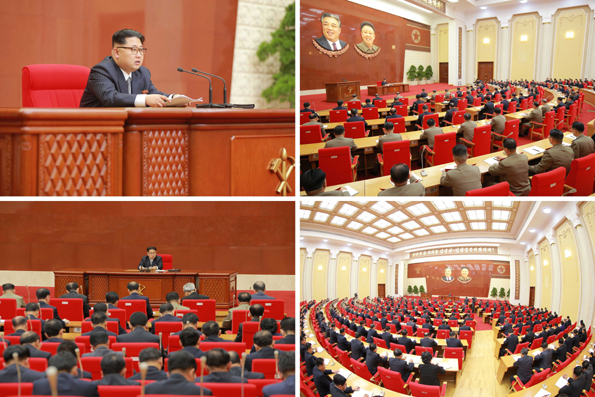
This is interesting because this story originated in KCNA, though no pictures were released. However, the KCNA story was picked up by the Pyongyang Times, and this second version does contain pictures indicating that Kim Jong-un ran the meeting (See pictures at the top), even though he is not mentioned in the text of the article.
I am not sure of the meeting room location or where the Auditing Commission is physically located, but the meeting did not take place in Conference Hall No. 1 next to the Central Committee Building, Kim Jong-un’s official office.
Kim’s meeting at the Auditing Commission has not been reported in the Rodong Sinmun, the KWP newspaper, to the best of my knowledge.
The cheap and fast analysis suggests that as this is Kim Jong-un’s first committee meeting following the party congress, he is making a priority of understanding/controlling party finances in an effort to be a more assertive party leader (he was just named party chairman after all). Following a thorough party audit, Kim will be in a better position to allocate party financial rents to key supporters as well as to critically engage other cadres over party operations.
The 9th plenary meeting of the 13th Presidium of the Supreme People’s Assembly (SPA) of the DPRK took place at the Mansudae Assembly Hall Wednesday.
The plenary meeting was attended by members of the SPA Presidium.
Officials concerned were present there as observers.
Discussed at the meeting were review of the implementation of the state budget for Juche 104 (2015) of the DPRK and the state budget for Juche 105 (2016).
A report was made at the meeting.
According to the report, the state budget for last year was correctly carried out.
The plan for state budgetary revenue was over-fulfilled 1.3 percent or an increase of 5 percent over the previous year.
The plan for local budgetary revenue was fulfilled at 113.8 percent while that for state budgetary expenditure was carried out at 99.9 percent.
15.9 percent of the total expenditure was allocated for national defence while 47.5 percent for building an economic power and the improvement of the standard of people’s living.
Investment in the fields of science and technology showed a 4.7 percent increase over that last year.
36.6 percent of the total expenditure was earmarked for cultural construction including education, public health, sports and literature and arts.
The state budgetary revenue for this year is expected to go up 4.1 percent out of which transaction revenue will hold 3.3 percent, the revenue from the profits of state enterprises 4.5 percent, the revenue from the profits of cooperative enterprises 1.5 percent, that from real estate rent 4 percent, that from social insurance 1.1 percent, that from the sale of properties and price difference 2.5 percent and other revenue 1.3 percent. The revenue from economic trade zone is expected to grow 4.1 percent.
Out of the state budgetary revenue the national budgetary revenue will account for 76.8 percent while that from local areas 23.2 percent.
The state budgetary expenditure is expected to go up 5.6 percent over last year out of which 4.8 percent will go to industries, 4.3 percent to agriculture, 6.9 percent to fisheries, 13.7 percent to capital construction and 7.5 percent to forestry.
It was decided to increase expenditure in the field of science and technology 5.2 percent, the field of education 8.1 percent, the field of public health 3.8 percent, the field of sports 4.1 percent and the field of culture 7.4 percent.
15.8 percent of the total expenditure will be spent for national defence.
A large amount of educational aid fund and stipends will be sent for the education of Korean children in Japan.
A decision of the Presidium of the SPA “On approving the review of the fulfillment of the Juche 104 (2015) state budget of the DPRK” and a decree of the Presidium of the SPA “On the Juche 105 (2016) state budget of the DPRK” were adopted at the meeting.
It has been almost two weeks since the enforcement of new sanctions imposed by the United Nations Security Council (UNSC), and so far North Korea’s domestic economy seems calm. Following the sanctions, North Korea has been preparing for the 7th Party Congress in May with its 70-day campaign (or ‘speed battle’). In order for the people to focus on the preparation, the government has reduced the business hours of markets and has begun controlling the street markets (i.e., ‘grasshopper’ markets).
In particular, it was expected that the sanctions would reduce the inflow of goods into the country which would then lead to a rapid rise in market prices and exchange rates, but so far the market prices appear to have remained relatively stable. According to the Daily NK, a South Korean online newspaper reporting on North Korea, 1kg of rice is selling for 5,100 KPW, 5,150 KPW, and 5,080 KPW in Pyongyang, Sinuiju, and Hyesan, respectively. These prices are relatively similar to the prices prior to when the sanctions were in full effect (i.e., 5,100 KPW in Pyongyang and Sinuiju, and 5,260 KPW in Hyesan).
The exchange rate appears no different. One US dollar exchanges for 8,150 KPW in Pyongyang, 8,200 KPW in Sinuiju, and 8,170 KPW in Hyesan. The rate has been only slightly reduced compared to the rate prior to when the sanctions were put in place (i.e., 8,200 KPW in Pyongyang, and 8,290 KPW in Sinuiju, and Hyesan).
The reason for the stability in the market and the exchange rate is because even though the market hours have been reduced due to the 70-day campaign, the markets actually are running better than before and in some regions the price has gone down for some goods, presumably because some of these items that were exported in large scale via China have been circulated in the North Korean domestic market.
Also, aside from the underground resources (i.e., minerals) — the sanctioned items that used to account for most of the exports — other goods are still sold accordingly, which helps in stabilizing the market. Furthermore, the improvement of the domestic market cannot be taken lightly when considering the stability of the markets. In other words, unless markets are completely closed, people in North Korea wouldn’t consider it an issue.
Meanwhile, despite the international community’s sanctions against the country, including that of the UN Security Council, North Korea is claiming overproduction in areas such as electrical power and minerals in the run-up to the Seventh Party Congress in May. The North Korean propaganda media ‘DPRK Today’ has mentioned about production and the country’s success in confronting the imposed sanctions.
More specifically, since the initiation of the 70-day campaign last month (February 23rd), in order to boost economic success, Namhung Youth Chemical Complex has reportedly turned out 60% more fertilizer; Pyongyang Railway Bureau increased the traffic by 40%; Ryongyang Mine increased its production of magnesite by 20%; and 2.8 Jiktong Youth Coal Mine produced 7,200t beyond its quota. In addition, Kim Jong Suk Textile Mill reportedly has seen more than 40 labors complete the plan for the first half of the year, while Baekdu Hero’s Youth Power Plant has reached 37,000m2 in dam construction. Previously on March 3rd, the Korean Central Broadcasting radio reported that many of the production targets for February in the national economy have been surpassed.
North Korean leader Kim Jong-un is pushing for a plan to officially introduce a tax system for the first time in 42 years. The Communist state has not had a such a system since 1974, when it was abolished by the Supreme People’s Assembly.
According to a source familiar with the situation inside North Korea, Pyongyang is preparing to revive the tax system ahead of the ruling Workers’ Party convention in May in response to decreasing national finances, squeezed by sanctions from the international community.
After North Korea conducted its fourth nuclear test on Jan. 6 and subsequent long-range missile launch on Feb. 7, the United Nations Security Council unanimously adopted the toughest sanctions to date in an attempt to curb cash from flowing into North Korea.
“The central government will grant economic autonomy to local merchants, in exchange for collecting bills for utilizing land, water and electricity,” the source said.
He added that the North will expand the number of private merchants and the North’s private markets, jangmadang, and officially levy taxes on usage for factories and companies.
Under the new tax system, North Korea will collect individual income tax from the emerging donju, a term assigned to the country’s nouveau riche that literally means “master of money,” who have amassed sizable wealth through the private market.
The individual income tax rate has not yet been decided, though it is likely that it will be higher than the last 1.8 percent tax rate from 1974, particularly considering the rise in merchants.
The push for a tax system was Kim Jong-un’s idea, according to experts on North Korea, who said the young leader felt uneasy about the fact that his country didn’t have a tax system when he took power.
North Korea’s abolishment of taxes in 1974 was largely a propaganda move, intended to demonstrate the country’s superiority over other nations. However, although the country did not officially have a tax system, the impoverished state still collected a number of fees from its people in place of corporate and value-added taxes.
“North Korean professors at Kim Il-sung University and other experts have recently been studying the state’s tax system,” said Lim Eul-chul, a professor of North Korean studies at Kyungnam University. “North Korea will use the term ‘usage fee’ rather than ‘tax’ as it sees the tax system as a vestige of capitalism.”
Read the full story here:
Pyongyang considers reinstating its tax system Joongang Ilbo
Ko Soo-suk
2016-3-16
North Korea spent nearly a quarter of its gross domestic product on the military on average between 2002-2012, making the communist nation the world’s No. 1 in terms of military expenditures relative to its GDP, according to U.S. data.
According to the State Department’s World Military Expenditures and Arms Transfers 2015 report, the North’s military expenditures averaged about US$4 billion a year. That accounts for 23.8 percent of the country’s average GDP of $17 billion during the period.
Oman was a distant second on the list, spending 10.9 percent of its GDP on the military, followed by the African nation of Eritrea with 8.6 percent and Saudi Arabia with 8.2 percent. South Korea ranked 48th with 2.5 percent.
In absolute terms, however, the North’s annual military spending during the period ranked only 36th in the world, while South Korea’s ranked 11th, spending an average $26 billion. The U.S. was by far the world’s No. 1 with $656 billion a year on average, way ahead of runner-up China’s $88.5 billion.
In 2012 alone, the U.S. military expenditures amounted to $724, while China’s totaled $12.6. North Korea’s 2012 military spending came to $3.85 billion, while South Korea’s expenditures totaled $31.9 billion, according to the report.
North Korea also ranked first in the number of troops relative to population, with 1.17 million troops. The number also represented the third largest after China’s 2.21 million and the United States’ 1.41 million. South Korea ranked seventh with 679,000 troops.
The U.S. was by far the biggest arms exporter in the world, selling an average $102.4 billion worth of weapons to foreign countries a year during the period. Russia came next but trailed with only $6.8 billion worth of exports.
North Korea ranked 27th on the list, with $100 million of annual arms exports. But Pyongyang’s arms exports accounted for 10.2 percent of its total exports, making the country the No. 1 in terms of the proportion of weapons to total exports. (Yonhap)
Read the full story here:
North Korea spends quarter of GDP on military from 2002-2012: U.S. data Yonhap (via Korea Herald)
2016-1-4
UPDATE 35 (2015-12-14): Hopes fading on June 28 Measures. According to the Daily NK:
In contrast to the increasing amount of crops being grown on small plots of land by individuals, the harvests from collective farms in North Korea are said to be declining.
A source from South Pyongan Province who recently spoke with our Daily NK reporter expressed the viewpoint that attempts by the regime to pass farming policy that would increase the amount of food harvested and distributed to individuals from collective farms have had “no substantive effect.”
Sources in North Pyongan Province and North Hamgyong Province corroborated this news.
The amount of food harvested this year from the collective farms has “once again fallen short of expectations,” he said, adding that the farmers who work on them have criticized the orders coming down from the authorities, saying that “if we do things the way they want us to, it’s not going to work.”
Although the regime has forced people to mobilize, the source asserted that farm yields are not increasing. So, then, “the best thing to do would be to further divide the land up among individuals,” he posited.
Our source wondered if individual farms were not more successful because each person tending them personally grew and watered their plants. Currently, farmers must follow directives regarding the amount of water they can use on collective farms. He warned that if the system is not completely overhauled, crop yields will fail to improve.
In 2012, the North Korean government passed the ‘June 28th Measures,’ part of a “new economic management system in our own style.” This reduced production units on cooperative farms from groups of 10-25, to smaller factions of 4-6 members. as part of the reforms stipulated in the ‘June 28th Measures.’ On paper, the state receives 70% of the target production, with farmers receiving 30% and any surplus if targets are exceeded.
In practice, however, things appear to be different. After its implementation in a number of regions, “the production rate on collective farms remained low and the policy was unable to achieve meaningful results,” the source said, adding that many worry these reforms will take the same path as the ‘July 1st Economic Management Reform Measures of 2002,’ which fizzled out after approximately three years.
“Although the the North’s official propaganda contends that the measures taken regarding the collective farms are scientifically based, in actuality, it’s just working the mobilized even harder,” the source alleged.
“Each time a policy stumbles a bit, the people immediately think back to the last time a similar policy was implemented and anticipate yet another failure. We cannot believe in these policies that just sound good on paper anymore, and people are speaking out in favor of actual scientific and technical farming strategies.”
Two years have passed since Kim Jong Un’s announcement that the people would no longer have to tighten their belts, yet “the people have yet to see a policy directive issued that is related in any way to this promise,” he said.
“In fact, it is common for people to say among themselves that Kim Jong Un ‘should know what he’s doing by now.'”
UPDATE 34 (2015-7-16): A new IFES report indicates that the DPRK has made progress in reducing the size of sub-workteam units, but they are experiencing secondary problems related to the transition:
North Korea Seeks Supplementary Measures for the Field Responsibility System
North Korea has been promoting the “field management system” as a part of its agricultural reform. Nevertheless, drawbacks exist, and it is trying to overcome shortcomings in the process by blending the new system with the advantages of collectivism.
In the past, farmers were able to follow the technical guidance of skilled workers. But since the implementation of the “field management system,” many are struggling to keep up with the advanced modern technology and agricultural methods.
As a result, North Korea is engaging in training and education programs for farmers to raise their skill level to that of skilled workers by encouraging the collective farming method of communal sharing of labor.
North Korea’s Rodong Sinmun reported on July 10 that, “in the current reality with the implementation of the ‘field management system’, it is impossible to farm with limited technical capabilities.”
The field management system under the bunjo management system (or the subworkteam management system) divides the work unit consisting of 10–25 people into smaller units of 3–5 people, responsible for farming a smaller field. This is virtually a preliminary stage which could lead toward private farm ownership.
The field management system expanded countrywide after Kim Jong Un’s rise to power. It is considered to have contributed in part to the increase of agricultural production.
The newspaper cited pesticide as one example of the problem. In the past, spraying pesticides were for skilled workers; but in recent years, ordinary farmers are responsible for spraying pesticides on their own. However, from lack of experience, many farmers struggled with proper handling of pesticides and ended up wasting them or damaging their crops.
The newspaper, however, also introduced the story of jujube cooperative farms in Anak County of Hwanghae Province, praising one farm’s success in planting rice seven days earlier than planned, despite the adverse weather conditions.
Reportedly, the farmers at this cooperative farm underwent training in modern agricultural technology for 30 minutes every morning.
Another problem pointed out is that because the skill level of every farmer differs, some farmers may mistime rice planting during the planting season. In the past, task teams were formed based on skill level and could eliminate the discrepancies between farms; under the new system, problems are inevitable. Accordingly, it is reported that Anak County jujube cooperative farms are collectively helping each other to overcome this shortcoming.
The newspaper stressed that “when all farmers claim ownership of their field and subworkteam, one can create innovation in the farming operations.” Thus, the North Korean authorities are encouraging “collectivism” to overcome the limitations of the “field management system.”
Despite Drought Last Year, Food Production Increased Due to Field Responsibility System
North Korea experienced its biggest drought in 100 years last year. However, North Korea claims that this did not affect its food production. North Korean authorities are claiming the main factor behind the increased food production is the will of farmers to produce more after the expansion of the “field management system,” or pojon tamdangje.
In an interview with the weekly newspaper, Tongil Sinbo, Chi Myong Su, director of the Agricultural Research Institute of the Academy of Agricultural Sciences of the DPRK commented, “the effectiveness of field management system (pojon) from cooperative farm production unit system (bunjo) is noticeable and succeeded in increasing grain production despite the adverse weather conditions.”
The field management system under the bunjo management system or the subworkteam management system divides the work unit consisting of 10-25 people into smaller units of 3-5 people, responsible for farming a smaller unit of a field. This is a measure to increase the “responsibility and ownership of farmers.”
From the July 1st Economic Management Improvement Measures enforced in 2002, the autonomy of cooperative farms and enterprises expanded. The “field management system” was piloted from early 2004 in Suan, North Hwanghae Province and Hoeryong, North Hamgyong Province, but was suspended soon afterward. However, this system is reported to have been implemented widely after the first National Conference of Subworkteam Leaders in the Agricultural Sector was held in Pyongyang in February 2014.
Economic principles behind the field responsibility system are stated as, “under the sub-work team structure, a smaller subworkteam consisting of 2 to 3 families or 3 to 4 people depending on the scale and means of production, is responsible for a specific field or plot (pojon) from planting to harvest stage to inspire farmers with enthusiasm for production by distributing the shares of production in accordance with the output of production planning.”
The newspaper added, “Despite the adverse weather conditions last year, the high grain yield was possible due to implementation of scientific farming methods and field management system to increase enthusiasm of farmers,” and “based on this experience, many cooperative farms across the country will expand subworkteam management system to field management system.”
Director Chi stated, “Since the field management system was implemented, farmers’ labor capacity increased to 95 percent. The planting time for corn and rice that took 20 to 30 days in the past is shortened to 10 to 15 days. In the autumn season, grain threshing that took 50 days is now only taking 10 days. This is changing the farming landscape.”
In addition, the distribution shares for farmers increased as well as the state’s procurement last year. This is attributed to “socialist distribution principles that distributed grains produced to farmers in-kind based on their efforts after excluding a specified amount of grain procured by the state.”
He added, “There are quite a number of farming households that received several decades worth of distribution after a year of farming. There is an increasing number of families with growing patriotism to increase the amount of grain procurement to the state.”
From 2012 onward, a number of sources both outside and inside of North Korea have reported a gradual implementation of agricultural reforms not dissimilar to those adopted by China in the late 1970s. Supposedly, farmers now get to keep a larger share of their harvests—perhaps as much as 60 percent—and agricultural work teams have been reduced in size to increase their production incentives. Seasoned North Korea watcher Andrei Lankov buoyed the rumors last November, when he claimed that the country had not only implemented such reforms, but had done so with considerable success. He wrote that North Korea had increased its food production in 2013 to such an extent that could nearly “feed itself” that year without international assistance.
…
First, international estimates of North Korea’s food production showed that it did not suddenly increase in 2013, the year after the reforms were supposedly introduced.
The World Food Programme (WFP) and Food and Agriculture Organization (FAO) typically send experts into the country each year to survey conditions for food production and to estimate its food needs.[1] While Pyongyang did not admit a surveying team in 2014, WFP/FAO Food and Crop Assessments from previous years show a clear pattern: North Korea’s food production was increasing well before rumors of economic reforms began to pour out from its borders. According to the assessments of the past few years, food production began to increase in 2010, going up by approximately 3 percent.[2] In 2011 it continued to climb by about 8 percent. The growth trend continued in 2012, when food production was estimated to have increased by another 10 percent.[3] Likewise, in an estimate for 2013, the WFP/FAO noted an increase for the third year in a row, a development that had been unprecedented for many years, and concluded that the gap between North Korea’s food need and its production was the smallest in many years.[4]
However, harvest yields in North Korea now appear to have stalled after getting better for some time.[5] According to a recent analysis by the FAO, food production stagnated in 2014, putting an end to the trend of the three preceding years.[6] If Pyongyang has in fact reformed its approach to agriculture, the reported changes do not seem to be doing that much good. Lankov recently admitted in a new piece that the alleged reforms have now stalled or were perhaps reversed, but he has not backtracked on his claim that they worked when they were being implemented.
UPDATE 31 (2015-5-27): According to Cao Shigong a member of the Korean Peninsula Research Society, Chinese Association of Asia-Pacific Studies, in the PRC’s Global Times:
A series of proactive measures to adjust economic policies and expand exchanges with foreign countries recently adopted by North Korea have drawn widespread attention. The moves aim to help the country escape the long-lasting economic woes, improve the nation’s political and social stability, and promote economic cooperation within the region. Therefore, they deserve welcome and encouragement. However, it is inappropriate to regard these measures as a signal of overall reforms or a starting point of further opening-up.
North Korea is always reluctant to label its measures for economic development as “reform and opening-up.”
To begin with, China’s implement of reform and opening-up is based on absolute disapproval of the mistaken route that deemed class struggle as the guiding principle. Yet North Korea, as a hereditary regime, does not allow any doubt or modification of its former leaders’ ideologies and political lines such as juche (“self-reliance”) and songun (“military-first”).
Besides, China’s reform has broken the traditional planned economy and set up a market-oriented socialist economy with the coexistence of other diverse forms of ownership, especially allowing the development of private business. But North Korea still cleaves to its old beliefs that planned economy and the public ownership of the means of production are the key characteristics of socialism, and that if they are changed, socialism will be lost.
In addition, as a big country, China enjoys strong tolerance and endurance. Even it is wide open to the world, under the pressure over intruding foreign cultures and values, it can still safeguard its political and social stability. North Korea, however, will find it hard to do the same if it opens up like China, against the backdrop of US hostility, the north-south divide, and fierce competition over systems.
Consequently, North Korea took the measures of “our-style (North Korea-style) socialism” and corresponding “reforms,” including the 7.1 Economic Management Improvement Measures, 6.28 Economic Reform Measures and 5.30 Measures. Though similar to the reform and opening-up of China, they have their own distinguished features.
For instance, the country initiated “land contracts,” yet did not end cooperative farms; it encourages its business to be flexible, yet without changing the way their property is held; it established special economic zones and economic development zones, but with focusing on advantageous areas and corridors.
The basic features of North Korean “reform” measures are improving the policy flexibility, introducing new management styles, and bringing the function of the market into full play, without changing its fundamental system. The country also introduces and utilizes foreign capital under the control of the government. Apparently, these practices stem from the nation’s domestic conditions.
It is generally acknowledged that North Korea’s reform measures have achieved initial success. North Korean economy has recorded positive growth for three consecutive years, with its domestic markets and consumption becoming more active and the strain on food and living supplies eased.
On the other hand, confrontation between North and South Korea is rumbling on, and the arrangements around the only industrial complex between the two sides, the Kaesong Industrial Region, is constantly encountering conflict, which has made business people skeptical about economic collaboration with North Korea. Especially as North Korea keeps conducting nuclear tests, it remains hard for it to break the sanctions and isolation from the international community.
All these factors prove the uncertainty of North Korea’s economic reforms. Hence, media and scholars should be reminded to deliver accurate and comprehensive information over North Korea to the world, in order to prevent giving misleading impression or weakening the risk awareness of investors, causing irreparable losses as a result.
Read the full story here:
North Korean economic reforms tightly tied to domestic conditions Global Times
Cao Shigong
2015-5-27
Among some of the experimental farms in North Korea operating under policies implemented from the “June 28th Measures,” announced by the state in 2012, Daily NK has learned that some failing to reach the state-mandated output goal, even if for reasons out of their control, are subject to incur a hefty debt as a result.
“From the beginning of last year, in Kim Jong Suk County [formerly Sinpa County], Yangkang Province, the Sinsang-ri cooperative farm production unit [bunjo] system began operating on a trial basis,” a source in Yangkang Province reported to Daily NK on December 4th. “One family–or three, four close farm workers–operating as a group, receive 3000 pyeong [1 square meter is equal to 0.3025 pyeong] of land to work.”
North Korea, through the establishment of a “new economic management system in our own style”, reduced production units on cooperative farms from groups of 10-25, to smaller factions of 4-6 members as part of the reforms stipulated in the “June 28th Measures.” The state receives 70% of the target production, with farmers receiving 30% and any surplus if targets are exceeded.
Most residents were eager, albeit cautious, about the policy’s implementation, as the amount of production going to farmers would rise. The Chosun People’s Army took direct responsibility for the management of food procurement and distribution during the food insecurity and famine of the 1990s, and this invariably left the farmers themselves with a vastly reduced share.
In the case of Kim Jong Suk County, production units have been divided into subdivisions tasked with handling one area: vegetables, husbandry, grains, etc. Naturally, grains fall under the remit of the largest number of workers, given their place as staples in the Korean diet. One cooperative farm production unit is given 1000 pyeong of paddies for rice and corn, and 2000 pyeong of fields to cultivate, earmarked for specific production output based on three tiers of soil quality.
However, the system is contingent on the vicissitudes of domestic conditions. “Because there was no drought last year and a steady supply of fertilizer, fulfilling the 70% requirement was relatively easy, the state’s food supply stabilized for the year, and those involved in the units were pleased,” the source explained.
This year, however, she noted that the devastatingly protracted drought, combined with a dearth of fertilizer, caused the crop yield per pyeong to plummet. Cooperative farms, instead of calibrating required allotments to reflect the changes, are demanding many of the production units to hand over 70% of the harvest, roughly 1.8t in the source’s region. If these units fall short of the target, they take on a debt to be rectified the following year.
Turning over 70% of the harvest in a year rife with natural disasters and lack of fertilizer has many of the residents involved overtaxed and without a viable solution. Many point out among themselves that this situation makes it implausible to work large plots of land when working even a small, individual plot proves burdensome.
Despite complaints and the poor conditions, most still maintain a fairly sanguine outlook on the system and hope it can progressively evolve. “Opinions on the bunjo system are somewhat mixed, but most just hope it continually shifts to a more autonomous structure,” she asserted.
Meanwhile, factories and enterprises rent land from collective farms and farm it as a sideline, then divide a proportion of the yield between workers. In this case, unlike the cooperative farm system, there is no predetermined output expectancy relative to pyeong; rather, based on production, the crop output is distributed under the 70:30 split.
UPDATE 29 (2014-11-30): Andrei Lankov, writing in Al Jazeera, informs us that the 6.28 Measures have been rolled out and resulted in significant gains in agricultural production:
The contents are revolutionary. It seems that, at long last, North Korea has decided to begin Chinese-style reforms. Marshal Kim Jong-un is obviously inclined to do what his late father, Generalissimo Kim Jong Il, was too afraid to, that is, to attempt to transform his country into a developmental dictatorship, largely similar to present-day Vietnam or China.
This decision did not come out of the blue. Indeed, it agrees very well with what Kim Jong Un and his advisers have quietly been doing over the last three years – albeit the slow-motion transformation of the country has attracted little attention from outside world.
The first significant step was the introduction of the so-called “June 28th Measures”. These measures were introduced in 2012, but only became fully into force in 2013. While on paper, they did not look that ground-breaking, they represent a sweeping reform of agricultural management in the North.
The “June 28th Measures” allowed North Korean farmers to create their own production teams of five or six people. It was not explicitly stated, but it was a signal that individual households should register as “production teams”. Such teams were given a plot of land, the assumption being that they would toil the same area for several consecutive years. The land technically remained under the jurisdiction of the state-owned and state-managed “collective farm”, but the produce would henceforth be split 70:30 between the state and the production team (ie the family). Up until then, North Korean production teams had been much larger, and all produce had to be submitted to the state in exchange for a fixed daily grain ration that was allocated to every farmer.
In essence, this reform marked a seismic shift: It marked the first step towards the reprivatisation of agriculture.
The “June 28th Measures” have worked out even better than North Korea’s leaders might have expected. The year 2013 (the first year that the reforms were fully in force) brought the best harvest that North Korea has seen in decades. The world media, predictably enough, missed the entire story, but in 2013, North Korea, for the first time since the late 1980s, produced almost enough food to feed itself. Even though there was a severe drought this year, the new system has seemingly proved its resilience, and initial reports about the harvest are also quite positive.
UPDATE 28 (2013-7-5): The Daily NK reports that the roll-out of the 6.28 Measures is causing some problems for local farmers:
Experimental farm policy changes are set to fail in the Hyesan region of Yangkang Province, Daily NK has learned, after totally unsuitable areas were designated for the experimental farming and some new tenets of agricultural policy stalled on the drawing board.
A source from Hyesan in Yangkang Province told Daily NK on the 5th, “Some areas of Hyesan were designated as places to implement the farm management improvement policy on an experimental basis, and additional manpower was brought in for those areas. However, the areas are on steep slopes or in places where the soil is full of rocks, so farming there is impossible.”
“Soldiers and shock troops are mobilized daily to do the farming work, but tractors and agricultural equipment can’t be used on the experimental fields, so it is just making everyone angry.”
“Despite the fact that things are like this, the [authorities] just keep going on about nothing being impossible if we attain the Marshal [Kim Jong Eun]’s ‘masikryeong speed’ and how we must fulfill the annual plan,” the source went on.
Sources say that the authorities have set in place the basis of a new agricultural management method, one that involves smaller work units (from 10-25 people down to 4-6 people) and a 70-30 split with the state in the distribution of output. Creating experimental areas for the implementation of the plan can be seen as marking the launch of the so-called ‘June 28th Policy.’ However, while farmers were excited by the plan in the beginning and harbored great expectations, the passing of time has undermined their interest.
The source said, “Initially, farm workers welcomed the fact that they would get paid out of production by the cooperative farm. They wanted to work hard. However, now everything has returned to how it used to be. The number of people losing hope for this cooperative farm is growing with the passing of time.”
Meanwhile, the idea of leasing land to non-farmers to cultivate has also fallen by the wayside. According to the source, “They don’t even mention that any more. Some cadres claim, ‘We’re going to do that from next year for sure,’ but nobody believes a word of it.”
UPDATE 27(2013-6-5): The Daily NK reports that the DPRK’s 6.28 Measures have been implemented (at least as they pertain to agriculture):
Inside North Korean sources have confirmed that collective farms are now offering part of their land to non-farmers in exchange for 30% of production derived from it, in effect renting farmland to private individuals.
A source from North Pyongan Province told Daily NK on the 5th, “Farms in Shinuiju have started authorizing private individuals to cultivate land owned by the farms. There’s a whole queue of people wanting to rent land and till it.”
“There is no limit on the amount of land that people can borrow from the farms,” the source went on. “The amount of land leased is decided according to the amount of labor that it is possible to commit to it. They have made it clear that if the harvest is worth a total of ten, then seven goes to the individual and three to the farm itself.”
It is easy to see why people are keen to get involved in this tenant farming method of agriculture; it appears to be more favourable to the farmer than the existing system. Currently, factories and enterprises rent land from collective farms and farm it as a sideline, then divide a proportion of the yield up between workers. However, by farming land individually, people can realize greater benefits from increased effort, providing an incentive to work harder and longer.
A source from North Hamkyung Province corroborated the story, saying, “Cooperative farms here are renting land to individuals and factories at 70-30. There are more individuals doing it than enterprises, and the amounts of land taken range from a few tens of pyeong at the smallest all the way up to half a jeongbo (1500 pyeong; one square meter is equal to 0.3025 pyeong).”
According to the source, people currently view this as one of their best chances to ease food insecurity problems in the absence of state distribution.
It is still unclear how much change has been made at state owned enterprises and within the party and state management bodies.
UPDATE 26 (2013-5-31):Associated Pressquotes DPRK economic official on new economic measures following the KWP/SPA meetings. Nothing, however, has appeared in the DPRK’s official domestic media:
“Last year, we studied reasonable economic management methods in different fields of economic work, and introduced it to some units on a trial basis,” Ri Ki Song, an economist from North Korea’s Academy of Social Sciences, told AP this week.
North Korea formally announced the policy, and its expansion to include factories and other enterprises, a day after holding a plenary session of the Central Committee of the Workers’ Party. Rodong Sinmun, the party newspaper, called it part of a “new strategic line.”
Ri, however, dismissed characterizations of the changes as reform.
What’s new, he said, is allowing managers to dole out goods and cash as incentives. In addition, after paying back investments provided by the state, managers can set their employees’ salaries and offer raises to those who help drive up production, he said.
The main goal: to encourage “greater profits” and solve North Korea’s chronic food shortage, Ri said.
He said North Koreans work hard, but the new incentives give them motivation to work even harder. “They are saying that higher salaries and shares will improve their life.”
Political and military expert Ralph Cossa, president of the Pacific Forum CSIS in Hawaii, noted that North Korea has rolled back past attempts at economic reform.
“The North Koreans have played reform games before and then just sort of pulled the rug out from under it,” he said. Cossa cited international aid groups as saying the military is pressuring farmers to donate their portion to the army.
…
This year, things are being managed differently, said Kim Jong Jin, deputy chairman of the farm’s managing committee.
He said the state provided the farm with the rice seedlings, which farmers are now transplanting to paddies by hand. Farmers are on smaller teams that have direct responsibility over their plots.
After the rice is harvested, farmers must “repay” the state for the seeds. At Tongbong that means giving the state about 193 kilograms of rice as payback for every 140 kilograms of seedlings they received.
But any surplus can be kept by the team to sell, barter or distribute – a change from past policies that required farmers to turn all harvests over to the state.
“This encourages enthusiasm for production and we get more of what’s produced,” Kim said.
Read the full story here:
NKorean farmers planting rice with profits in mind Associated Press
2013-5-31
UPDATE 25 (2013-5-13): Choson Sinbo reports official acknowledgement of economic adjustment measures. According to the Daily NK:
North Korean officials have formally acknowledged that some factories, enterprises and cooperative farms in the country have been experimenting with new economic management methods since last year. The comments, published in the Chongryon publication Choson Sinbo on May 10th, appear to partially confirm the existence of the “June 28th Policy,” which Daily NK reported on exclusively in summer last year.
Cabinet official Kim Ki Cheol and State Planning Commission Vice-director Ri Young Min note in the piece that some new economic measures have been adopted, but add that legal and institutional frameworks still require alteration if changes are to be expanded. However, their comments serve as official acknowledgement of experimental economic change.
According to the piece, Kim Jong Eun issued instructions to the Party Central Committee in April 2012 decreeing that the roles and responsibilities of lower economic officials should be expanded. However, Kim also said that changes must conform to socialist principles, raising questions about how far North Korea is willing to go in pursuing economic improvement.
…
The Choson Sinbo piece also confirms that the state is working to concentrate economic activities under the auspices of the Cabinet, which has been run since April this year by Pak Pong Ju, an official who played a key role in implementing the economic changes of July 2002.
“All problems that arise in the course of economic activities are focused on the Cabinet, and rules and regulations are being comprehensively established under the Cabinet’s unified leadership,” it states.
Read the full story here:
Cabinet Acknowledges June 28th News
Daily NK
Kim So Yeol
2013-5-13
UPDATE 24 (2013-4-23):Radio Free Asia reports that implementation of the 6.28 measures is underway in South Hamgyong Province:
The new system has been implemented from the beginning of this year, a source in South Hamgyong province told RFA’s Korean Service.
Under the reforms, as part of agricultural liberalization in North Korea’s rigidly planned economy, farm workers may keep up to 30 percent of their unit’s produce and are allowed to sell them at market prices, sources said.
Authorities have divided up the traditional collective farms and allocated fields to smaller group units.
“The North Korean government has been dividing collective farmland up into small units since [the beginning of] 2013,” the source said, speaking on condition of anonymity.
Some workers are hopeful that the changes could help ease the impoverished country’s food shortages, but others are unsure how much they will benefit, a source from South Pyongan province said, also speaking on condition of anonymity.
“Some people are excited, expecting there will be enough rice in North Korea,” he said, adding that there was “optimism” that the system will help boost food production.
“But some are skeptical, with a strong distrust in the government which has been conducting everything unsuccessfully,” the source added.
Management structure unchanged
The move to liberalize the agriculture sector is believed to be a policy initiative of North Korea’s young leader Kim Jong Un, who took over after his father, Kim Jong Il, died in December 2011 after initiating some economic reforms that failed to take off.
No major public announcement of the new policy has been made so far.
Sources said that a key stumbling block to the farm reforms is the management structures of the collective farms which remain unchanged since the policy was implemented.
The lack of change in the leadership system leaves farm workers “uncertain” how much of that 30 percent will go into their own pockets, they said.
For example, it remains unclear whether farm managers will receive their share of harvests from the 70 percent allocated to the state or the up to 30 percent portion that goes to workers, they said.
One source in China, which is North Korea’s main diplomatic and trading partner, said the system would make little difference to workers without a guarantee on the division of profits.
“It seems like the North Korean government wants to boost the motivation to work, but there is not much difference between the previous system and the new system unless they guarantee the autonomy of workers,” he said, speaking on condition of anonymity.
Read the full story here:
North Koreans ‘Skeptical’ of Collective Farm Reforms Radio Free Asia
Joon Ho Kim
2013-4-23
UPDATE 23 (2013-1-30): A recent story from the Daily NK offers a downside to possible agricultural policy adjustments:
The North Korean authorities are apparently proposing to reduce the size of hillside plots farmed privately from thirty pyeong down to ten (1 square meter is equal to 0.3025 pyeong), while all remaining acreage is meant to be handed over to existing cooperative farms.
A source from Hoiryeong in North Hamkyung Province told Daily NK on the 29th, “A cadre from the county Party Committee just told a packed meeting of the Union of Democratic Women that ‘the policy is that from this year all private plots of land are to be limited to ten pyeong, and the other twenty will be taken away and assigned to cooperative farms. That which is in the mountains will be used for planting trees’.”
The source continued, “We must also pay fifty won per pyeong in order to farm the ten pyeong that is allowed, and there will be severe penalties for transgressors,” before reiterating a common refrain in conversation with North Korean civilians: “The rations only last for three to four months anyway, so people have to live off their plots of land. Taking away their land is the same as taking away their food.”
From a state policy perspective, the step appears designed to refocus energies on cooperative farming activities, in the hope that this will increase the productive capacity of the official farming sector in an effort to attain the sort of production levels required for the implementation of the June 28th Policy of farming reforms announced domestically in July 2012. However, it is thought unlikely that this will come about, and, conversely, the source predicted that the measure, if widely implemented, would have a detrimental effect on overall output and decrease the amounts of grain entering markets.
Partly this is because, while people are not technically meant to hold more than 30 pyeong of private land, in reality many are cultivating more even than this; in many cases, more even than their formal work unit is responsible for. This is because only by farming soybeans, cabbage, radish and other agricultural goods are many able to eek out a secure living.
Read the full story here:
Farmers in a Muddle over Private Land Order Daily NK
Kim Kwang-jin
2013-1-30
UPDATE 22 (2012-11-15): Writing in 38 North, Randall Ireson offers a succinct, comprehensive assessment of the DPRK agriculture system and offers policy advice moving forward. See the full article here.
UPDATE 20 (2012-11-12):Chris Green at the Daily NK points out anecdotal evidence that economic policy changes are still underway in the DPRK:
As noted by Yonhap in an article yesterday, recent days have seen multiple uses of phrases including “new management method” in the North Korean media, lending weight to the suggestion that a number of new economic measures have already been put into practice.
For example, last week on the 7th, state domestic and international radio broadcaster Chosun Central Broadcast ran a recording of a meeting of forestry workers at the People’s Palace of Culture in Pyongyang.
During the event, which was attended by high regime officials including Cabinet Prime Minister Choi Young Rim, the manager of a wooden goods manufacturer in Hamheung declared, “I will keep updating our industrial strategy and tactics in accordance with the demands of the new economic management method and give our management substance in order that we may secure the greatest possible profit and raise the productivity of investment.”
The words raise the question of whether factories such as that of the manager in question are actually acting autonomously in terms of management decisions, rather than simply taking orders from agencies higher up the food chain. If so, it would imply the implementation of new economic rules.
On a similar note, a November 9th article carried as part of a series by the Chongryon publication Choson Shinbo under the title ‘The Road to Our-style Economic Revival’ noted the introduction of a “new management method” in a piece on how Pyongyang’s No.1 Department Store has been changing in order to improve customer service.
Choson Shinbo has a history of reporting North Korean economic changes first, including the July 1st Economic Management Improvement Measures of 2001, making it one outlet for North Korea news worth keeping an eye on.
Reviewing the anecdotal evidence for the introduction of new measures, Cho Bong Hyun of Industrial Bank of Korea’s research arm told Yonhap, “The phrase ‘new economic management method’ shows that the new economic management measures that they never officially revealed have already been implemented. If their confidence in the new economic system grows, they will doubtless begin to present them as the achievements of Kim Jong Eun.”
UPDATE 19 (2012-10-19): Contrary to other claims (below), CCTV (China) reports that the agriculture policy changes have been implemented:
North Korea’s new economic policy, otherwise known as the ‘June 28 Measure,’ was to go into effect from October 1, 2012 but it is reported that enforcement of various educational and action plans related to the new economic management measure was halted.
According to the Internet news agency, Daily NK, its sources inside North Korea informed that, “From this month, the authorities in charge of implementing various plans preparing for the new economic measures, suddenly stopped educational and other related programs without any notice.”
Starting this July, North Korea began to make announcement through the Third Broadcast, to educate and inform specific plans related to the new economic measure to the North Korean residents. The Third Broadcast is an internal cable broadcasting system usually used to deliver important message to its residents.
The main objectives for the new economic management improvement measures are to improve autonomy in the factories and cooperative farms and the food distribution system. However, speculations began to surface that the new economic policy will be postponed after the Supreme People’s Assembly was convened on September 25, with no mentioning of economic measures or laws, contrary to expectations.
Since the plans for the new economic policy was announced to the public, exchange rates and market prices began to soar, creating hyperinflation phenomenon.
If North Korea continues to postpone the economic improvement plan, is likely to lead to adverse consequences as it can amplify the anxiety amongst the residents and the market, as many were already skeptical of the new economic measures.
On the other hand, production units reveal of its preparatory actions toward the new economic policy. Each factories and companies are submitting production indexes to the senior departments under the Cabinet and receiving evaluations according to its reports. Some factories are switching operations after obtaining outside capital, while other insolvent companies were closed down.
One example is Chongjin chemical factory. After forming a joint venture company with China, it was renamed to Chongjin Paper Production Factory. With over 3,000 employees, it will become one of the top three companies in the Chongjin area — after Chongjin Steel Works and Kim Chaek Iron Works.
UPDATE 17 (2012-10-15): The Daily NK offers a scenario for why an adjustment in agricultural production incentives have not been implemented: a bad harvest has forced policy makers to reconsider allowing the cooperative farms to keep so much of their produce. According to the article:
A Hyesan-based source explained today, “Cooperative farm cadres are saying that none of the experimental farms will be given 30% of their production this year because it has become difficult to meet the target. They are saying that the harvest is not good and they need to feed the military as a matter of priority, so first they’ll guarantee the military rice then give the rest to the farmers.”
A Shinuiju source corroborated the story, saying that the authorities “haven’t said they are going to take all the production from the farms, but nobody actually thinks they are going to get very much. People who trusted the official words are feeling quite stupid, and nobody is working very hard.”
Back in July, each province designated a number of ‘model farms’ that were to be used to test the policy. These farms were supposed to receive their initial inputs of fertilizer and machinery from the state, and then be given 30% of their production in return.
“They are saying that the state does not have enough rice right now and that there is no choice but to give it to the military, so please try to understand,” the source said. “Farm workers, many of whom had been buoyed by talk of food distribution, are really disappointed, especially since prices are sky high in the market these days.”
However, the Hyesan source also said that a lot of people are prepared to wait and see until at least mid December, when harvest processing concludes and distribution can be finalized. “People assume that Kim Jong Eun won’t want to disappoint the people in his first year in power,” he explained.
UPDATE 16 (2012-10-9): The Daily NK reports that North Koreans are confused about what has happened to the new economic policies that were under discussion:
The North Korean authorities originally began to announce news of the new economic system domestically in July, outlining increasing managerial autonomy, changes to payment systems and new farm procurement regulations. There were even some less detailed announcements on North Korea’s fixed line ‘3rd Broadcast’ system, which is used to disseminate propaganda handed down from the very top of the Party.
However, late last month signs of abnormality began to appear. Although few local people thought the measures would be publicly adopted at the extraordinary session of the Supreme People’s Assembly on September 25th, the source said they didn’t expect all references to the policy to disappear.
According to the source, cadres suspect that the authorities are not yet prepared to roll out the policy in practice. Many are not surprised; they say it was impractical to expect the policy to be executed in just three months, given that the July 1st Economic Management Improvement Measures of 2002 took nine months to come to fruition after a policy statement was first issued by Kim Jong Il on October 4th, 2001.
The surrounding economic conditions are far from ideal, also. Since the announcement of the new economic measures, North Korea’s markets have been facing hyperinflation conditions rooted in a sky-high Chinese Yuan exchange rate.
However, it is still considered unlikely that the policy has been cancelled altogether, since that would carry heavy consequences for regime legitimacy. Also, the authorities have advertised the policy to the international community in a number of stories (though not in the state media), and it would not serve the regime’s purposes to lie openly about this particular issue.
In addition, it is actually extremely rare for the authorities to cancel a policy after it has been announced under any circumstances; in any case, sources continue to report that those agencies charged with preparing the implementation of the new economic measures are still operational. The current status of factories is being assessed by units dispatched by the Party and the Cabinet is issuing new production targets. Some factories are pursuing outside capital, and work to consolidate under-performing enterprises is ongoing.
One example is Chongjin Chemical Works. Recently, the factory entered a partnership with a Chinese firm and changed its name to Chongjin Paper Factory. The factory is one of Chongjin’s three major Level 1 enterprises, and has a workforce of 3,000. However, it had actually been offline since the 1980s.
If history is any guide, a session of the SPA is not a place where new economic policies are declared. Even though there have been some exceptions to this rule, like for instance the promulgation of the 1984 Joint Venture Law. Admittedly, at that time, the SPA was more important because had the job of approving the economic plans of the state. Such plans are a thing of the past now, and economic pronouncements have become significantly less common at SPA sessions.
Over the last three decades, nearly all important economic measures were not introduced at SPA sessions, and as a matter of fact were usually not mentioned at all.
Good examples are provided by what were arguably the two most important economic measures introduced by the North Korean government since the death of Kim Il Sung in 1994 – the economic reforms of 2002, and the currency reform of 2009.
The ‘First of July Economic Management Improvement Measures’ of 2002 were much overrated in the foreign media at the time, but nonetheless constituted the most radical attempt ever undertaken to reform the North Korean economy by Kim Jong Il and his advisors. The reforms legalized many market activities, provided industrial managers with significant autonomy in decision making, and also increased state procurement and consumer prices to levels comparable to the black market at the time (for example, one kilo of rice before the reform was officially priced at 0.08 won, after the reforms the price had been raised to 44 won – a near 500-fold increase).
The 2002 reforms were soon rolled back, but what is important here is the fact that the world was to learn about the reforms not when they were first introduced in July, but some two months later, when some mentions of the reforms began appearing in official publications. This might sound strange to a Western reader, but measures that significantly changed the economic life of the country remained unreported by the official media for a significant amount of time (and indeed were never fully explained).
The currency reform of 2009 presents us with an even more striking example of a well-arranged complete media blackout. The reform itself produced the greatest economic and social upheaval in North Korea since the famine of the 1990s. The North Korean populace was suddenly told that the currency they held was now null and void, and could be exchanged for new notes in limited amounts (usually only to the equivalent of few months of official salaries). At the same time, the use of foreign currencies was banned, and markets and state-run shops were closed. For a few months in early 2010, even members of the Pyongyang elite experienced difficulties in getting their daily rice. According to foreign observers in Pyongyang, popular discontent was palpable and for a brief while, a violent collapse of law and order appeared possible.
This dramatic upheaval of course was completely ignored by the North Korean media; TV, radio and newspapers failed to mention the fact that retail trade was at a complete standstill and the fact that a currency reform was underway. All information was provided to the average North Korea through the cable radio network – officially known as ‘radio number 3’, as well as through confidential letters sent to petty officials and bank clerks. North Korean media outlets also sometimes mentioned the currency reform – of course whilst extolling its alleged virtues – but in the domestic media references to the reform were a complete taboo.
UPDATE 14 (2012-9-28): The Daily NK reports that in addition to agriculture and industrial policy adjustments, it appears that the DPRK is planning to reorganize, “rationalize”, and possibly close, many state owned enterprises:
The central authorities are planning to merge uncompetitive factories and enterprises with stronger ones as North Korea prepares to embark on the full implementation of the so-called ‘June 28th Policy’, Daily NK has learned.
This process is being undertaken to give those enterprises that remain the best chance of competing under the new rules that are due to enter force in the coming days.
An overseas Chinese trader explained the situation to Daily NK on the 27th, saying, “A whole bunch of traders who were in China on business trips started rushing back to North Korea. They had heard that the authorities planned to rationalize the number of small and medium size enterprises so they headed back in a hurry to investigate for themselves.”
“The word is that they are going to get rid of those enterprises that don’t turn a profit for the people and aren’t helpful to the development of the country. A lot of these workers are getting calls from their companies and going back,” the source went on. “It’s meant to be about getting rid of weak and loss-making enterprises in advance of bringing in the new economic improvement measures.”
The latest moves form part of a process that began in mid-July, when Central Party teams made up of personnel from the department of the State Planning Commission responsible for production facilities, their provincial equivalents and the Central Prosecutors Office were dispatched to the regions to assess the state of existing production facilities. At that time, Daily NK reported that “Because it’s an inspection of production facilities, managers in charge of those facilities have also been called in [by the inspection teams].”
According to a second source, employees from companies slated for elimination are to be reassigned to the company merging with them. He explained, “Rather than simply get rid of enterprises and factories, they are trying to either merge them with bigger companies or with companies in the same sector.”
Although workers assigned to unproductive enterprises are understandably keen to move to a company with even a modest amount of potential, the state of the broader North Korean economy has nevertheless put most in a state of ‘50% anticipation, 50% fear’ over what will come next. At the time of writing, the price of rice has reached an outlandish 6700 won/kg even in Pyongyang itself, while also arriving at 7000 won in Onsung County and 6500 won in Hyesan, putting those people without foreign currency in a very difficult situation.
Another major problem is that while the official aim of the policy is to retain only those enterprises that are capable of implementing the tenets of the June 28th Policy effectively, only around 30% of North Korean enterprises are fully functioning, which means that there are around 70% in an uncompetitive condition. Therefore, it seems inevitable that some uncompetitive enterprises will have to be kept, and these are likely to be a drain on the economy in the short to medium term.
Not only that. In the words of the source, “For the workers from weak companies the opportunity to work for a bigger company in a better atmosphere is pleasing, but they also know that economic changes have never succeeded in North Korea, and in fact have periodically made things worse.”
UPDATE 13 (2012-9-23): The Associated Press (via Washington Post) offers on-the-record accounts by farmers in the DPRK talking about agriculture reforms:
North Korean farmers who have long been required to turn most of their crops over to the state may now be allowed to keep their surplus food to sell or barter in what could be the most significant economic change enacted by young leader Kim Jong Un since he came to power nine months ago.
The proposed directive appears aimed at boosting productivity at collective farms that have struggled for decades to provide for the country’s 24 million people. By giving farmers such an incentive to grow more food, North Korea could be starting down the same path as China when it first began experimenting with a market-based economy.
Two workers at a farm south of Pyongyang told The Associated Press about the new rules on Sunday, saying they were informed of the proposed changes during meetings last month and that they should take effect with this year’s upcoming fall harvest. The Ministry of Agriculture has not announced the changes, some of which have been widely rumored abroad but never previously made public outside North Korea’s farms.
Farmers currently must turn everything over to the state beyond what they are allowed to keep for their families. Under the new rules, they would be able to keep any surplus after they have fulfilled state-mandated quotas — improving morale and giving farmers more of a chance to manage their plots and use the crops as a commodity.
“We expect a good harvest this year,” said O Yong Ae, who works at Migok Cooperative Farm, one of the largest and most productive farms in South Hwanghae Province in southwestern North Korea. “I’m happy because we can keep the crops we worked so hard to grow.”
…
At cooperative farms across the country, the government doles out fuel, seeds and fertilizer, and farmers pay the government back for the supplies, said Kang Su Ik, a professor at Wonsan Agricultural University.
The farmers’ crops go into the Public Distribution System, which aims to provide North Koreans with 600 to 700 grams of rice or cornmeal a day. However, a persistent shortfall of more than 400,000 tons a year in staple grains has meant lower rations all around, according to the United Nations, which has appealed for donations to help North Korea make up for the shortage.
Under the previous system, each farmer could keep as much as 360 kilos of corn or rice a year to consume or sell at the market, in addition to what they grow in their own courtyards. The rest was turned over to the state to distribute as rations, Kang said.
The proposed changes would reverse the equation, challenging farmers to meet a state quota and then allowing them to do as they wish with the rest, including saving it for themselves, selling it at the local farmer’s market or bartering it for other goods.
Farmers also would have more control over tending their plots. At Migok, 1,780 farmers work in teams of about 100. In the future, sub-teams of about 20 to 30 farmers are expected to have more say in how to tend their crops, said Kim Yong Ae, who oversees the visitor’s center at Migok, where a patchwork of rice paddies stretches as far as the eye can see.
…
O, who lives with her rice farmer husband and two young sons in Migok’s Apricot Village, brightened up when she said the family expects a surplus this year. Migok was unaffected by the summer rains that destroyed farmland elsewhere in the country, and their private garden is bursting with fruit trees, vegetables and marigolds.
Still, she said they would probably donate their extra rice to the state anyway — an offering known in North Korea as “patriotic rice.”
UPDATE 12 (2012-9-19): The Korea Herald reports that Pyongyang is planning to loosen its control over some state-owned enterprises.
North Korea is moving to introduce a full-scale cash-payment system for transactions among light-industry state firms in the latest apparent move to revamp its planned economy, a source in the communist state said.
The measure, seen as aimed at boosting industrial efficiency by ensuring greater autonomy for non-backbone businesses, could pose risks by loosening the long-standing state control, analysts say.
The adoption of cash transactions marks a departure from the long-held “scriptural-money” system in which each firm uses an account in the central bank when it transacts with others to secure raw materials, electricity, machines and other means of production.
Cashless transactions were a useful tool for the authoritarian regime to keep track of the currency flow and companies’ business activities. Cash payments risk weakening state oversight, experts noted.
In its economic reform of July 2002, Pyongyang partially introduced cash transactions among companies in a controlled production-material exchange market. But the new measure seeks a full-scale adoption of cash payments, the source said.
…
“The change means a collapse of the long-held system in which the authorities provide all means of production to each firm. Kim Jong-un has no other option but to push for the urgent task of reviving the economy.”
The North is expected to apply the cash-payment system mostly to provincial firms that produce consumer goods, while keeping the old system for military, heavy-industry and chemical firms to keep its control over the strategically vital ones, the source said.
News reports suggest that the North will offer to each firm an “initial investment” to cover their production costs and allow each to determine its production items, price and selling methods.
The seemingly greater autonomy, however, reflects the degree of the North Korean authorities’ inability to sustain the planned economic mechanism with sources of external assistance seriously limited amid deepening isolation.
Experts are skeptical of the measures to give more autonomy to companies whose overall operation rate is said to stand at around 20-30 percent because of the regime’s failure to provide necessary means of production.
“At any rate, companies in the North are suffering with their operation almost at a standstill. The North, through the measure, aims to normalize their production function by offering more autonomy in their management,” said Kwon Young-kyong, professor at the state-run Institute for Unification Education.
“But the state has little cash (for the initial provision of capital to kick-start the firms). We still have to wait and see how the measure will unfold.”
Kim Joong-ho, senior researcher at the Export-Import Bank of Korea, also painted a negative outlook for the cash-payment scheme, underscoring that the North should first establish the necessary financial and monetary infrastructure.
“North Korea’s currency is now seen as a scrap of paper (due to a poorly managed currency value). Using cash is workable when there is trustable, stable financial, currency management apparatus. Thus there remain problems of practicality and efficiency,” he said.
“As evidenced in the 2009 devaluation of its currency, North Korea’s cash has lost its function to store fiduciary value. Meanwhile, people have also experienced the benefit and power of foreign currency, particularly Chinese yuan.”
The devastating currency reform three years ago was aimed at stemming the spread of marketplaces, which became rampant as the food rationing system failed to function following the severe famine, dubbed the “Arduous March,” in the mid-1990s.
Like other socialist states, North Korea has maintained a dual payment system ― cash in the form of monthly wage for regular people and scriptural money for inter-company transactions.
Scriptural money is aimed at preventing the state’s non-cash resources allotted for each firm from turning into cash, flowing into the household sector and complicating its control of the currency and overall economic activities.
The dual system has been crumbling as more firms use cash to secure means of production while the overall economic system is on the verge of collapse with the regime running out of monetary and material resources to maintain the planned mechanism.
What is crucial for its economic reestablishment, experts say, is that the North first establish a banking system, through which people can confidently store their wealth, with companies benefitting from the financial system through stable investment and other methods.
The North is set to hold a rare session of the rubber-stamp Supreme People’s Assembly next Tuesday during which some observers expect Pyongyang to announce new laws for its overall economic reform.
The level of the North’s possible reform is hard to predict, experts say, stressing that Pyongyang has repeated a pattern of employing what appear to be reform measures only to retract them when they were deemed to pose a threat to the dynastic regime.
Pyongyang’s desire for economic reform has been detected in a flurry of recent media reports and academic documents.
The front page of the Tuesday edition of the Rodong Sinmun, the daily of the North’s ruling Workers’ Party, was filled with economy-related articles while pushing the article on Kim Jong-un, first secretary of the party, to the second page ― an exceptionally unusual article arrangement.
Last month, the North introduced a set of research papers by its scholars concerning topics ranging from the state control over the financial sector to the importance of currency circulation. They raised the prospect for possible financial reform.
The paper by Kim Un-chol, professor at Kim Il-sung University, said, “The country should strengthen state control over the financial sector to achieve a more stable economic development.”
One of a number of sources inside North Korea confirmed to Daily NK over the weekend, “We have been told by the authorities that the economic management improvement measures known as the ‘6.28 Policy’ will be implemented from October 1st. They said in lectures delivered in enterprises and people’s units that the policy will be implemented along fixed legal and systemic lines.”
Given that the new measures will be implemented on October 1st, it is likely that the June 28th Policy will come to be known as the ‘October 1st New Economic Management Reform Measures’ in the same way as the July 1st Economic Management Reform Measures of 2002, which were branded the ‘October 3rd Policy’ until their implementation because October 3rd was the date upon which Kim Jong Il delivered his first statement on the issue to the Party.
The ‘June 28th Policy’ is seen by many analysts as an extension of the 2002 measures. Among its key tenets, agricultural producers are to receive 30% of production under the state plan plus any overproduction, while workers in small and medium-sized enterprises are to no longer receive state distribution, instead being paid entirely in cash.
However, the people of North Korea are concerned, the source explained, saying, “The truth is that they shut down the July 1st Measures after just 3 years, so people are feeling pretty anxious now.” Therefore, he added, “They are backing it up with legal measures to show that it will be applied consistently.”
The source explained that he assumes the authorities are using both education targeting all levels of the adult population and the application of legal and systemic modifications to try and ensure that the tentatively titled ‘October 1st New Economic Management Reform Measures’ succeed. However, if they are not followed by significant opening to the outside world and/or massive levels of external support, the source added that the chances of success will significantly diminish.
UPDATE 10 (2012-9-8):Andre Lankov argues that Pyongayng will take a stab at currency reform:
In late August, Kim Eun-chol, professor of economics at Kim Il Sung University, the country’s leading school, published a paper in which he emphasized the government’s duty to keep money supply under control. In July, North Korea’s major economic journal also stated that the amount of cash in circulation should be controlled by the state-run banks – for the sake of “further improvement of people’s living standards”, of course.
Taking into consideration how North Korean society is arranged (and the highly sensitive nature of the topic), one can be certain that neither publication reflects intellectuals’ pursuit of free, inquisitive minds, but rather hints at the ideas of Pyongyang decision-makers.
So, should we be prepared for another currency reform? It is too early to say, since there are valid argument both for and against such a dramatic action.
Like most communist countries, North Korea has an illustrious history of confiscatory currency reforms, the most recent of which occurred just three years ago. Currency reforms with “socialist characteristics” usually follow a similar pattern: One day, the lucky residents of the country where the reform is to take place are informed that their legal tender will, in a couple of days or weeks, become worthless and that only a limited amount of what they hold will be changeable into the new currency. Deposits in state banks are usually treated more leniently, but the exchange period is short and the average citizen finds himself facing numerous problems even when trying to exchange cash within the established tight limits.
In essence, such reforms lead to the nearly complete annihilation of privately held cash deposits and the dramatic decrease of money supply in the economy. Legal and semi-legal businesses within the private sector suffer most – many of them face bankruptcy. But such reforms help to curb inflation and reinforce the state’s leading role in the economy.
The last time the North Korean government implemented such a reform was in late 2009 (previous reforms took place in 1992, 1978 and 1959). However, the 2009 reform seemed to fail spectacularly to achieve its main putative objectives.
There were good reasons for this failure. Driven by rather obscure logic, North Korea’s state bankers decided that employees of state enterprises (that is, the vast majority of workers, at least on paper) would receive exactly the same nominal amount for their work. In other words, if say a steel worker received 3,000 won before the currency reform (a price of 1 kilogram of rice at the time), he would receive 3,000 won in the new currency as well. At the same time, the exchange rate of old to new currency was 100:1, so the plan was that the new wage would suffice to buy 100 kilos of rice. This amounted to an overnight 10,000% increase in wages and in effect a 10,000% increase in the money supply.
This policy unleashed an outbreak of rapid inflation and predictably, within less than a year, prices had returned to pre-reform levels. One can only wonder why reform planners failed to anticipate such a turn of events.
At the same time, the 2009 reform led to dramatic confrontations within North Korean society. Many private businesses were indeed hit hard, but the turmoil of late 2009 and early 2010 produced popular dissatisfaction on a scale unseen in North Korea since the late 1940s.
For a brief while, in January and February 2010, a major outbreak of public discontent seemed to be within the limits of possibility. It took special efforts to pacify the public (according to unconfirmed rumors, some top officials were made scapegoats and executed). It seems in fact that the authorities realized their mistake and for a brief while decided to leave the market and its traders alone.
But recent publications emanating from the North Korean propaganda apparatus seem to suggest that the idea of a currency reform has become a politically attractive policy measure once again. One should not be misled by the ostensibly “academic” credentials of the journals in which the articles on currency reform appeared: There is no such thing as independent academic research in North Korea when political economy is involved. This as an indication that reform is being prepared, or at least seriously discussed, in some quarters of the elite.
It seems that North Korea’s elite is worried about inflation, which has over the past two years been increasing steadily. Last summer, the average exchange rate was 2,500-3,000 won to the US dollar, while a kilo of rice would cost about 2,100-2,400 won. By last month, the exchange rate had topped 7,000 won to the dollar and the price of a kilo of rice was 6,000 won. In other words, within a year, prices nearly doubled while the won lost half of its value.
For North Korea’s decision-makers, this is clearly a worrisome trend. It might be even more dangerous because policymakers seem to considering economic reorganization, maybe even genuine economic reform. But an annualized inflation rate of 100% is not a great place to start a transformation, and something has to be done to curb this dangerous trend.
Since currency reform is a staple of government policy in North Korea, it has become a well-known and well-tested economic control measure. Therefore it is only natural that the top managers of the state economy are keen to launch a currency reform.
That said though, currency reform is a very risky thing. In 2010, in the aftermath of the 2009 reform, even North Korean officials sometimes spoke critically about the reform when talking to Western diplomats. Foreign students studying in Pyongyang were approached by North Korean students who expressed their angst about the currency reform. A military attache of one Western country (not exactly friendly from the North Korean point of view) told me that his opposite number said Pyongyang “doesn’t quite understand what it’s doing”. One can imagine how angry a military intelligence officer in one of the world’s most controlled societies has to be to share his frustration with an imperialist outsider.
The level of annoyance was truly unprecedented. For a brief while, in January and February 2010, a public disturbance, if not a revolution, appeared to be possible. It is not incidental that immediately after the reform, the Chinese – hitherto very careful when it came to North Korean issues – began to speculate almost openly about the possibility, probability and even inevitability of regime collapse in North Korea.
Therefore North Korea’s decision-makers are now facing a difficult choice: If inflation is left unchecked, it may well undermine their efforts to stabilize and transform the economy while also leading to popular discontent. On the other hand, another currency reform might provoke an outbreak of popular discontent on a hitherto unthinkable scale.
Reform clearly constitutes clear political risks, but judging by recent news, some people in the top leadership are desperate enough to consider the option again. It remains to see whether they will follow through on their words, and whether they will survive their experience.
UPDATE 9 (2012-9-4): Andrei Lankov, long a skeptic of the viability and possibility economic “reform” in the DPRK, wrote this article in the Washington Post and sent out these comments via email:
As some of you might know, I have recently published a piece at the ‘Washington Post’ where I outlined what seems to be going on in and around North Korea. However, stylistic requirements and various conventions precluded me from being quite as blunt as I would be in person.
Yesterday, when participating at an online discussion, I wrote a rather lengthy paper where the (essentially) same points were spelled out more bluntly. After some considerations I decided to send this letter to you, highly esteemed friend and colleagues.
• It seems almost certain that Kim Jong Un (and some people around him) really want to change things. There are too many signals, coming from too many directions to deny the fact that North Korea has begun to change, and as a matter of fact, with almost alarming speed. None of these signals in isolation are conclusive, but when taken together they little room for doubt.
• The ideal destination for Kim Jong Un, Chang Song Taek and co. is of course a Chinese-style ‘developmental dictatorship’. They want to build a North Korea which will combine an authoritarian political structure (presided over by them, needless to say) with a market economy (where the commanding heights will belong largely to the scions of the elite).
• For the outside world and for the average North Korean, the emergence of such a regime is clearly a welcome development. It will keep its nuclear weapons, but will be less willing to engage in provocative behaviour – like proliferation. North Koreans will still live under a dictatorship. But this dictatorship will necessarily be less repressive, giving people more individual freedom. And last, but not least, such a regime will deliver a dramatic improvement of living standards for almost everyone in the country
• Currently, the reforms are reversible. Kim Jong Un can change his mind or be overwhelmed by the conservatives. Nonetheless, I personally do not believe that backlash is very likely. The boy badly wants to make everybody happy.
• At the same, the above mentioned outcome – the emergence of a relatively stable, and economically successful developmental dictatorship in North Korea – is possible, and desirable, but not particularly likely to happen. As I have written countless times, Kim Jong Il did not council reforms because he always understood: in a divided country with such a huge economic divide between North and South, reforms are likely to become destabilizing. South Korea’s existence is the major reason why a developmental dictatorship in North Korea could not remain stable. These fears are seemingly not shared by Kim Jong Un and his advisors, but this does not mean these fears are unfounded.
• The probability of the success of reforms (‘success’ as defined as a stable and growing developmental dictatorship) appears even more problematic if we look at Kim Jong Un’s personality and his actions over the last few months. To cut to the chase, the fat boy is stupid. He does many things which are completely unnecessary and are potentially destabilizing. He should not endorse the American pop culture, and Micky ‘The Imperialist Rodent’ Mouse; he absolutely should not turn the front page of Rodong Shinmun into his wedding album (section on honey moon).
• Therefore, we should be ready for trouble. A reforming North Korea will likely be very unstable and might collapse. Worse still, collapse is likely to come with little to no prior warning. Media reports about reform are likely to produce the false and dangerous idea that North Korea is solving itself as a problem. This may just be the case, but it is much more likely not to.
• The coming crisis is likely to be violent and is fraught with many potential dangers. Among other things, it may provoke unnecessary confrontation between the US and China, it might also increase the possibility of proliferation. In short then, it is not going to be nice. Probably, the North Korean problem has never had a nice quick solution. The story was going to end badly anyway, however in light of recent changes, the ugly end seems to be closer than we expected…
Those are my politically incorrect and undiplomatic remarks.
UPDATE 8 (2012-9-4): This Daily NK article points out how past reforms led to improving economic conditions…which led the state to move in and expropriate the assets and dissuade individuals from partaking an .anti-socialist activities”. This would imply that any economic reform will not immediately bear fruit because people will not believe the policy is durable and investor horizons will be short.
UPDATE 7 (2012-9-4): The Asahi Shimbun reports that the 70/30 split in output that the state will offer collective farms (see below) will also apply to industrial organizations:
“(State-run enterprises and shops) will be allowed to reserve 70 percent of their profits, and 30 percent will go to the state,” said one North Korean government source.
…
“The authorities plan to start with (reforming) small enterprises this time to avoid a recurrence of the problems encountered [in 2002],” the researcher said.
UPDATE 6 (2012-8-31): The Daily NK reports that worries about the new 6.28 policies are causing a depreciation of the North Korean won and a rise in inflation:
The Chinese Yuan-North Korean Won exchange rate is exceedingly volatile these days even by North Korean standards.
Having struck a high point of 1,300 North Korean Won on the 27th, a 44% rise over the rate the previous week, by the afternoon of the 30th the exchange rate had lost some of that value, falling back to 1,100 won. Nevertheless, 1,100 won is still extremely high; the price of Yuan only topped 1,000 won on the 27th, though it subsequently fell back.
In line with the rising exchange rate, rice is currently selling at very high prices; approximately 6,500 Won in Hyesan, Yangkang Province yesterday. This is a huge increase; from 3,000 won/kg at the beginning of June to 4,000 won/kg at the beginning of August.
According to a source from the city, people cite the introduction of new economic management measures as the cause.
“People know that when new economic measures get announced, the prices of goods skyrocket,” she explained. “Among the economic measures there is both a dramatic rise in wages and the raising of prices to realistic levels, and as people are now learning about those so rice keeps going up.”
As a result of the rising price of rice, sellers are concerned at losing out even if they do sell, while buyers are leery about buying, preferring to fall back upon corn, which is 50% cheaper on average. As a result, sales of rice are flat.
The reason why news about new economic measures is able to inspire such volatility is that high rates of inflation also occurred on previous occasions when economic measures were implemented, noticeably the July 1st Economic Management Reform Measure of 2002 and the currency redenomination of November 2009. At this point, the source noted, people’s fears about the ‘June 28th Policy’ are greater than their expectations.
UPDATE 5 (2012-8-28): North Korea Intellectual Solidarity reports that monetary and financial institutions and organizations are being shaken up. According to Yonhap:
“North Korea is reinforcing the status of its central bank, while working on weakening the power of banks controlled by the military and the Workers’ Party of Korea,” a source familiar with the North told Yonhap News.
NK Intellectual Solidarity, a Seoul-based defectors’ group, last week reported Pyongyang is preparing a new economic organization with finance and accountant experts driven by the Cabinet, from earlier this month.
UPDATE 4 (2012-8-22): The Korea Herald reports on recent leadership changes:
Reports from state media show that the regime has promoted or reinstated in recent months the four technocrats who played a key role in an unsuccessful economic reform a decade ago ― Park Bong-ju [Pak Pong-ju], Ro Do-chul, Kwak Pom-ki and Chon Sung-hun.
Most significantly, Kim in July dismissed Ri Yong-ho, the military’s powerful general staff chief and one of Kim Jong-il’s closest aides. The National Intelligence Service ascribed the removal to his “uncooperativeness” toward the young Kim’s tighter reins over the military.
“Seizing control of the military, Kim is forecast to pursue a drastic economic reform and openness such as permitting private profit making in trade and commerce, expanding autonomy for businesses and reducing the basic unit of production in cooperative farms,” said Cheong Seong-chang, a senior research fellow at the Sejong Institute.
In July 2002, the so-called Big Four tried to relax the rigid command economy by dissolving the rationing scheme, allowing street markets, raising wages and prices and adopting incentives and graded compensation.
But the regime rolled back the ambitious program in the mid-2000s as it hiked prices and magnified the pains of the populace, instead of buoying markets and improving productivity. The technocrats were consequently demoted or disappeared from sight.
The North’s Supreme People’s Assembly last week reinstated Chon Sung-hun as a deputy premier. He was dismissed from the post in April 2009 but reportedly put back as metal industry minister in January this year.
Park Bong-ju, a symbol of economic reform, returned to the government in August 2010 and was elevated to light industry minister in April 2012. He served as prime minister from September 2003 to April 2007.
Ro Do-chul is one of the 11 vice premiers and has been serving Kim since he was designated as successor in April 2009. He also accompanied Premier Choe Yong-rim on his trip to China in November 2010, which was aimed at expanding bilateral economic cooperation.
Kwak Pom-ki is a former machine-building industry minister and maintained the deputy prime minister position for more than 11 years until June 2010. He became the Workers’ Party’s chief secretary of South Hamgyeong Province in April this year.
With the grand comeback, the four officials are expected to steer economic policymaking in line with Kim’s fresh guidelines unveiled on June 28.
Some observers even say that their reinstatement may help thaw frozen cross-border ties given their experience in inter-Korean projects. Chon visited Seoul in 2007 as head of the North’s delegation for a joint committee on economic cooperation, while Park led an inspection team that toured the South in 2002.
But the fundamental question is: Will it be different this time?
“It seems that a change is in sight from North Korea’s inner part,” said Chin Hee-gwan, a unification professor at Inje University in Gimhae, South Gyeongsang Province.
“I’d call it Kim Jong-un’s cultural revolution ― Kim is heavily focusing on the people’s livelihoods; and he is apparently interested in musical performances and public and cultural facilities among others.
“I was shocked and surprised watching Choe Ryong-hae, director of the General Political Bureau, walk around and inspect a theme park. Though things like Kim’s ‘musical politics’ or the June 28 measures are not entirely new and have been tolerated under the surface, it’s notable to see them institutionalized and nurtured.”
The regime appears to be phasing out its decades-old rationing system in favor of the so-called June 28 measures, which promise greater autonomy to farmers and businesses.
…
While acknowledging positive signals, experts caution against overanalyzing every move made by the unpredictable country.
“Both this personnel reshuffle as well as some other bureaucratic developments suggest a renewed interest in economic development as a policy goal,” said Marcus Noland, a deputy director and senior fellow at the Peterson Institute for International Economics, via email.
“One can make up reasons why things might be different this time: Kim Jong-un is more willing to pursue reforms than his father was; the people involved in the 2002 reforms learned lessons of at least what not to do; after 10 years of frustration, China will be more willing to help if North Korea shows some willingness toward change. (But) the proof of the pudding is in the eating.”
Brian Myers, an associate professor and chair of the international studies department at Dongseo University in Busan, pointed out that the hints have yet to bring about a fundamental policy shift toward economic reform.
“A lot of what Kim Jong-un is now being credited with was started under Kim Jong-il,” he told The Korea Herald via email.
“For fifteen years now the regime has been trying desperately to reconcile economic change with political changelessness. And the virtual impossibility of that task means we will continue seeing people get purged and reinstated, policies stopping and starting.”
UPDATE 3 (2012-8-16): Kim Kwang-jin writes in the Daily NK that certain state-owned enterprises will be ending certain forms of non-cash compensation for employees and moving towards purely monetary wages. According to the article:
A source from North Hamkyung Province revealed the news on the 15th, saying, “According to a Central Party policy that was conveyed to us on the 8th, the system of food distribution for the workers in some factories and enterprises is going to be abolished, and all distribution to them will then be made in the form of wages. The system of distribution for those work units under the state plan will be retained as-is, while only those units that are self-sustaining will move to a system of wages only.”
“Those units that are losing their food distribution system will receive big wage increases,” the source added. “However, it seems that there will be differences from factory to factory and even from job to job.”
North Korean enterprises are divided into eight levels, ranging from level one to level eight with a class of ‘special level’ enterprises as well. Each enterprise receives this designation based on an assessment of things including its role in the economy, productive capacity and size of workforce. Larger enterprises all fall between ‘special level’ and ‘level 3’, and are affiliated with the central authorities.
Those operating outside production plans ordered by the center have had the authority to deal with production and distribution autonomously since the 1970s. This self-sustaining system was designed to provide an incentive to produce, but also allowed the state to forgo responsibility for providing food and daily necessities by passing it on to provincial level entities.
This includes smaller light industrial enterprises with between 50 and approximately 500 employees between level 4 and level 7, and some workers in larger enterprises who are employed solely in the pursuit of tasks that are designed to earn money for the factory itself.
The fact that only ‘self-sustaining system’ factories or individuals within larger enterprises will move to this ‘all-wage system’ presents a threat to hopes of significant reform in North Korea. Indeed, the plan appears only to strengthen measures that first appeared as part of the July 1st Economic Management Reform Measure in 2002.
One defector who previously worked in one of North Korea’s ‘special level’ enterprises told Daily NK, “Take away military factories and most workers in major state enterprises, then the number of people working under the self-sustaining system is not large. Looked at as a percentage of the total production of all North Korean enterprises it cannot be more than 10% and it can’t be more than 20% of all workers, either.”
The source further reported that news of the measure is not impressing workers on the ground.
“I spoke to someone in Onsung County, and he told me that they are reviewing a 600% pay rise to replace food distribution. So, someone previously getting 2000 won would get 12,000 won, but that is still less than the price of 3kg of rice,” the source pointed out.
Another problem facing the new policy is the disharmony likely to be caused in enterprises where both types of employee is present, meaning that some will get food distribution while others will not.
UPDATE 2 (2012-7-24): Kim Kwang-jin writes in the Daily NK that the DPRK is carrying out inspections of complex enterprises (련학기업소) in preparation of the 6.28 Policy (described below):
The North Korean authorities have dispatched Central Party inspection teams to assess the state of production facilities at each factory enterprise in North Korea prior to the implementation of the ‘6.28 Policy’, the name for planned economic reform measures set to go into effect in October
A source from North Hamkyung Province revealed the information to Daily NK on the 23rd, explaining that the teams are made up of officials from the department of the State Planning Commission responsible for production facilities, their provincial equivalents and the Central Prosecutors Office. They are now in the process of assessing the production facilities at each factory enterprise.
The source said, “It’s a Central Party investigation of each factory enterprise before they bring in the new economic measures,” adding, “Because it’s an inspection of production facilities, managers in charge of those facilities have also been called in [by the inspection teams].”
Daily NK has obtained confirmation from other sources that the same types of assessment inspections are ongoing in both Hyesan in Yangkang Province and Shinuiju in North Pyongan Province.
The Central Party inspection teams are expected to follow-up their assessments by deciding what needs to be scrapped and what can be salvaged and reactivated, then reporting it all back to the State Planning Commission in order for decisions to be made on state investment.
The 6.28 Policy, or ‘On the establishing of a new economic management system in our own style’, should see the state making initial investments in industrial and agricultural facilities and inputs, then procuring production at market prices according to pre-set targets while allowing a percentage of target production plus any over-fulfillment to remain with the production unit for distribution and/or sale.
UPDATE 1 (2012-7-20): Writing at the Daily NK, Kim Kwang-jin writes about the implementation of a trial of the 6.28 policy:
A source from Yangkang Province told Daily NK today, “They have handed down the new policy to cooperative farms in Daehongdan, Kim Hyung Jik County [formerly Huchang County] and Kim Jong Suk County [formerly Sinpa County). They are providing new seed varieties, fertilizer, weeding implements and what-have-you, and say they will give 30% of the grain to the farmers.
“The state will take 70% of the target production and the farmers will get 30%, but if the farmers exceed the target then they get to keep the surplus,” the source then clarified, before adding a caveat, “Obviously, the key is the standard according to which the authorities set those targets.”
“The farmers in the three counties are excited about it now that they have heard that they will be able to get 30% of the production and even the surplus as well. So much so that they think some people who left for the cities will come back to the area,” he noted, adding that in Kim Jong Suk County they are already bringing in new agricultural machinery, which is being described as coming from Kim Jong Eun.
If the policy is implemented as stated, then the amount of production going to farmers should rise. This will be a welcome change for most; the Chosun People’s Army took direct responsibility for the management of food procurement and distribution during the food insecurity and famine of the 1990s, and this invariably left the farmers themselves with a vastly reduced share.
However, it is not just internationally that concerns over the viability of the measures being implemented are being raised.
Local people are not yet prepared to trust the authorities either, following a history of disappointments such as the 2009 currency redenomination. In consequence, many are reportedly looking upon the latest policy with skepticism; many expect the authorities to break their promises in one way or another, for example by taking more than 30% of production in order to feed the military.
“In 1985 I went to Kim Jong Suk County and tested some changes like this for myself,” Lee Min Bok, who was once an agricultural researcher in North Korea, explained, before emphasizing, “For as long as they don’t move to a fully private farming model it is very hard to imagine that they will improve production or obtain a significant surplus.”
ORIGINAL POST (2012-7-20): In the article below the Daily NK does a great job of explaining the purpose of the rumored new “6.28 Policy” on agriculture as well as the problems the state continues to face in trying to maintain a state-controlled collective agriculture and rationing system in concurrence with a growing “private”-market infrastructure. According to the article:
According to an inside source, the authorities recently notified local organs of the so-called ‘6.28 Policy’, which is entitled, ‘On the establishing of a new economic management system in our own style’.
The agricultural element of the policy, which is to be implemented in October, will reduce the size of the basic farming unit and bring state agricultural procurement prices up to ‘realistic’ levels.
In more detail, the plan will see the following measures implemented: ▲ the so-called “bunjo danwei” (the basic farming unit on a cooperative farm) will come down from its current scale of 10-25 members down to 3-4 members; and ▲ the state will procure its quota of production at market prices and deduct the cost of inputs; then, as is nominally true now, ▲ the unit which produced it will be free to deal with the remainder as it sees fit. Land and other inputs will be provided by the state.
According to Kwon Tae Jin of the Korea Agricultural and Rural Research Institute, the North Korean authorities are hoping that, “[The unit downsizing and realistic procurement pricing structure] will give each agricultural unit the motivation to produce and will cause overall state food production to rise, all while not destroying the fundamental cooperative agricultural method.”
Under the existing agricultural management system, provincial Agricultural Management Committees set output targets then submit them to the Ministry of Agriculture for approval. Once they have been approved, each production unit is handed down a quota. Thereafter, the value of inputs, land usage fees and other non-tax payments such as “military support” are deducted from production, and the producing unit is given the right to distribute the remainder as it wishes.
However, according to defectors with farm management experience, because the state sets prices for the inputs too high and procures unrealistic amounts at nominal fees, the leftover for the farmers themselves is usually highly inadequate.
Although realistic procurement pricing therefore sounds good for farmers, there are many seemingly insurmountable problems, If procurement starts happening at market prices rather than the minimal prices at which it occurs now, then distribution also has to happen at market prices or the state will not be able to cover its costs. But if wages for urban industrial workers are not raised to realistic levels then they won’t be able to afford the food, and the system will not work.
Conversely, if the food were to be sold at a subsidized price by the state, then the system wouldn’t last long because the state would be unable to sustain the budget deficits that this would entail.
The system will ultimately drive inflation, which will undermine the procurement pricing structure, forcing the authorities to either pay more for everything or to pay less than market prices. The latter would then drive producers to hide production from the state in order to get higher prices on the open market.
One defector who was a cadre with a farming management committee in North Korea pointed out to Daily NK that this was what happened before, when “in the mid- to late-2000s when the government was buying food at above state prices, farming regions lived more comfortably than urban areas. However, after a couple of years the state stopped being able to pay, and the measure fizzled out.”
One important aspect of the 6.28 policy that is unexplored in the article is the reduction of farm labor units to 3-4 people. This is tantamount to reducing work team units to single families. If individual families know that financial remuneration for their efforts on the cooperative farms will be captured entirely by the family unit (rather than by being split up among 2-4 families in the same work unit) they may be less inclined to shirk their labor responsibilities on cooperative farms.
One aspect of the DPRK’s agriculture “reforms” that I am interest to know more about is the effect of land rezoning on collective farm output. Access to enough data to do a scientifically rigorous regression is of course not possible, so those of you who have regular access to defectors and family members in the DPRK, please ask about the effects of land rezoning to village production in the DPRK. We should be able to get some good anecdotes on this anyhow.
The North Korean authorities officially determine product prices in North Korea. However, according to inside sources, these prices are being ignored more and more in favor of prices determined by market forces. Instead of official price designations, the authorities have posted ‘price ceilings,’ but they are not strictly enforcing them.
In a telephone conversation with the Daily NK on November 13th, a source from North Hamgyong Province said, “Official prices have almost completely disappeared from the markets. Reflecting this trend, even the market management offices located in each official marketplace are listing ‘price ceilings’ instead of official prices.”
Daily NK spoke with a source in South Hamgyong Province who confirmed this to be the case there as well.
“Furthermore, the price ceilings are being determined by the market rates, so the meaning of these regulations is fading. For example, if the going rate for rice at any given time is 5,000 KPW [0.58 USD] per kilogram, than the price ceiling would be set at something like 4,500- 5,000 KPW [0.52-0.58 USD],” she said.
“These ceiling prices are indeed posted, but they are not enforced. Ministry of People’s Safety [which act as the North’s police forces] officers are not able to command merchants to lower their prices. The atmosphere is such that if they even tried, they would likely be insulted and cursed at by the vendors.”
She added, “At the market, it has been quite some time since people realized that the official prices are meaningless. If a buyer asked a merchant for the official price of a given product, that merchant would likely to scold the buyer for not having proper control of his mental faculties.”
In a true indication that the national prices are being disregarded on a wide-scale level, even the authorities have shown signs that they are interested in understanding how market rates work.
For example, from Provincial People’s Committees, cabinet ministers are being kept abreast of the local market rate for product prices on a daily basis. “They are trying to understand the exact market prices for given quantities of goods like electronics and foodstuffs,” the source explained.
When asked to describe how ordinary North Korean folks were reacting to this news, she said, “People are saying things like, ‘The authorities explain that they want to understand rice prices so they can think of measures to improve the lives of the people, but that just makes us laugh. The best thing they can do to help is to stay out of the way.’”
Read the full story here:
Authorities tacitly recognize market-determined prices Daily NK
Lee Sang Yong
2015-11-16