Archive for the ‘Nuclear’ Category

US scientists pinpoint location of DPRK’s second nuclear test

Sunday, January 10th, 2010

According to Yonhap:

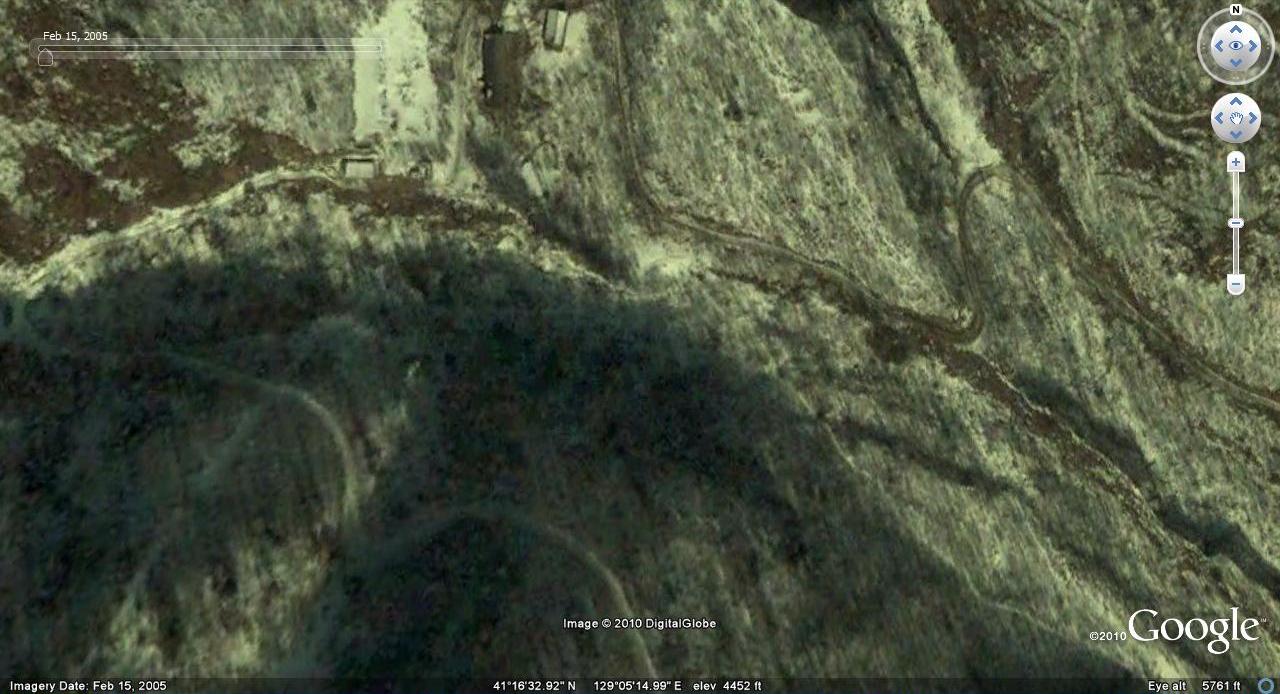
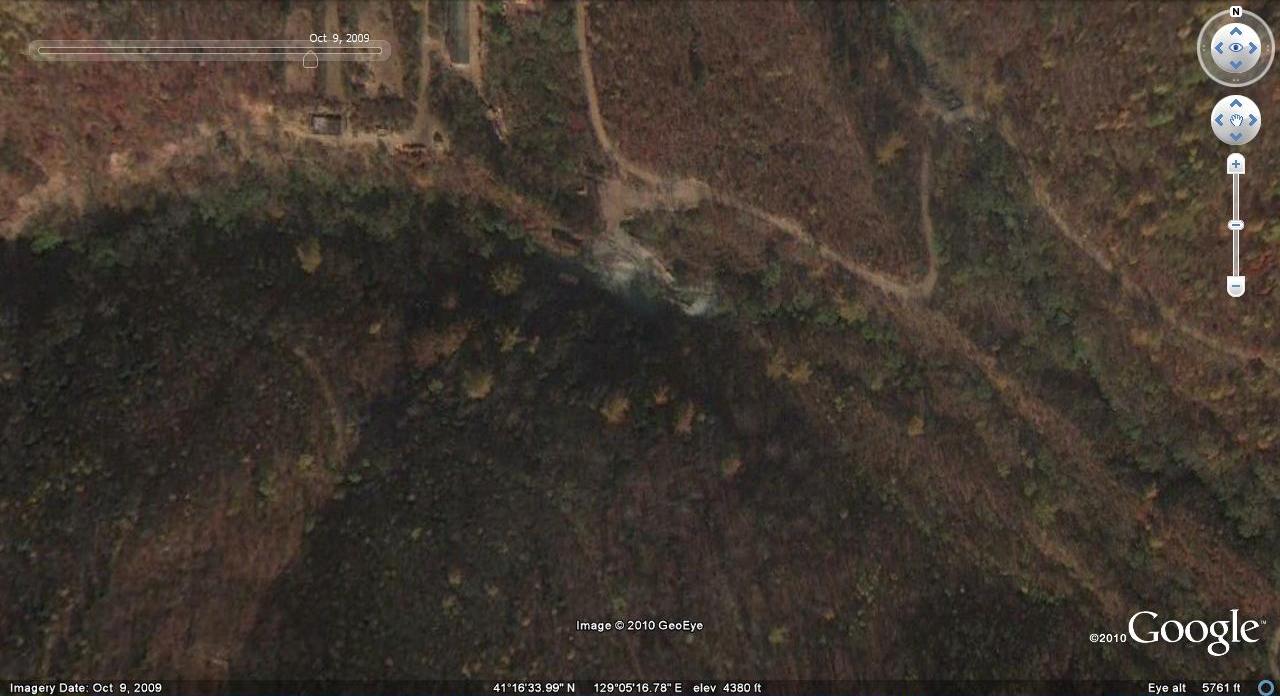
Lianxing Wen, a geophysics professor at the State University of New York in Stony Brook, and his graduate student, Hui Long, located the epicenter of the second nuclear test on May 5 last year with a margin of error of only 140 meters, compared with 3.8 kilometers achieved by the U.S. Geological Survey.

“We locate the 2009 test at 723 meters north and 2,235 meters west of the 2006 test,” the scientists said in the study, which was published in the January-February edition of Seismological Research Letters of the Seismological Society of America.

Identifying the coordinates of the 2009 test site as 41°17′38.14″N latitude and 129°4′54.21″E longitude, the scientists said their findings should help Asian monitors to pinpoint the location of another nuclear test should North Korea ever decide to go ahead with one.

“The location of any future nuclear test around this particular test site will be pinpointed in real time, with a similar precision,” Wen said in a separate email interview. “With its exact location known, the wave propagation effects due to location geology can be accurately accounted for, leading to a more accurate determination of yield.”

North Korea conducted its first underground nuclear test in Oct. 9, 2006 in Punggye-ri in its northeastern county of Kilju, according to U.S. and South Korean officials.

Wen and Long said they analyzed the seismic waves from the first nuclear test to understand the geological complexities of the earth in the region, and used the data to reduce the uncertainty involved in determining the ground zero of the second test.

“The strategy is not to try to fully understand the complexities of the jungle (earth), but to take advantage of the forensic evidence of the jungle complexities that are imprinted in the recordings” of the first nuclear test, the scientists said in a separate introduction to their thesis.

The waveforms from the first test were obtained from nine seismic stations based in Japan, South Korea and China, the study said.

North Korea conducted its second nuclear test amid a deadlock in international talks aimed at stripping it of its nuclear ambitions, raising tensions and inviting harsh U.N. sanctions.

“High-precision location would reveal, in real time and at great accuracy, an increasingly complete view of the geographic network of a nation’s nuclear test infrastructure,” the paper said.

“Logistically and economically, it is convenient to use the same facilities to do multiple tests. Environmentally, it would confine nuclear wastes in a particular site,” Wen said in the email.

Their paper, “High-precision Location of North Korea’s 2009 Nuclear Test,” can be found here PDF.

Here is the location on Wikimapia.

Share

DPRK appropriating KEDO equipment

Friday, January 1st, 2010

According to the Joong Ang Ilbo:

North Korea has reused equipment and materials left from the halted construction work on light-water reactors, breaking a prior agreement with a multinational organization that oversaw the botched construction project.

According to the Unification Ministry and other sources, North Korea has taken 190 vehicles from the site in Kumho, South Hamgyong Province, and 93 pieces of heavy equipment, including cranes and excavators, and is likely using them for military purposes.

Sources said thousands of tons of steel bars and cement and communication devices are also being used by the North.

In late 2005, the Korean Peninsula Energy Development Organization, also known as KEDO, stopped construction of non-military nuclear reactors in the North. The work had begun in August 1997 as part of the 1994 Agreed Framework between the United States and North Korea. Under the terms of the agreement, Washington said it would build two reactors in the North in exchange for Pyongyang’s agreement to freeze all nuclear weapons activities.

But in October 2002, the United States said it had obtained intelligence that the North had been operating a clandestine program to produce highly enriched uranium to develop weapons and the U.S. State Department said North Korea admitted to doing so. By January 2003, the North withdrew from the Nuclear Non-proliferation Treaty. KEDO suspended its construction in November 2003.

Two years later, the KEDO’s board decided to terminate the construction project, which was about 30 percent complete. In December 2005, North Korea asked KEDO workers to leave the country and said they would not be allowed to repatriate equipment and construction materials.

At the time, KEDO and North Korea had agreed to leave materials at the site. Most belonged to South Korean subcontractors, and they had planned to sell off some of it to make up for financial losses stemming from the halted work.

In 2003, after the KEDO first suspended construction, the North said it would not allow the transfer of equipment unless it received compensation. A government official here said, “The North moved the equipment before we could even address the compensation issue, and that’s clearly in violation of our agreement. It can even be regarded as stealing.”

In January 2006, the Roh Moo-hyun administration in Seoul said the North had pledged to store the materials and that it expected the North to honor its word. Despite suspicions that the North had used some of the equipment in preparation for their second nuclear test this year, the current Lee Myung-bak administration has also remained silent.

But intelligence sources tell a different story.

They said the North started using equipment almost immediately after KEDO’s withdrawal and that the North Korean military was involved.

“North Korea is trying to keep South Koreans or KEDO officials from going near the construction base,” one source said. “Recent satellite photos of the site show that hundreds of the black covers that were used to conceal materials are mostly gone.”

Sources estimate equipment and materials are worth about 46 billion won ($39 million). South Korea, one of the founding members of the KEDO, spent $1.1 billion on the construction project.

Here is a satellite image of the KEDO reactorsHere is an image of the KEDO residential compound.

Share

DPRK’s take on nuclear program

Tuesday, October 6th, 2009

According to Yonhap:

North Korea has received some 2.7 trillion won (US$2.29 billion) from South Korea and international partners since 1994 in return for false promises to scrap its nuclear program, according to a lawmaker on Monday.

For the Geneva Framework Agreement reached in 1994, the North received $1.98 billion worth of support from South Korea, the U.S., Japan and the European Union, which was mostly used in building light-water reactors, Rep. Kwon Young-se of the ruling Grand National Party said, citing a report submitted by the foreign ministry.

Read the full story here:
N. Korea received US$2.3 billion through past nuke agreements: lawmaker
Yonhap
Tony Chang
10/5/2009

Share

New papers from Johns Hopkins US-Korea Institute

Tuesday, August 25th, 2009

The third edition of the SAIS U.S.-Korea Yearbook chronicles important developments in North and South Korea that characterized their relations with their allies and enemies in 2008. Each chapter was written by SAIS students in the course, “The Two Koreas: Contemporary Research and Record,” in the fall of 2008. Their insights were based not only on extensive reading and study, but also on numerous interviews conducted with government officials, scholars, NGO workers, academics and private sector experts in both Washington and Seoul.

The Yearbook is divided into two parts: South Korea’s Foreign Relations and North Korea’s Foreign Relations. In the first part, student authors explore the dynamic foreign policy changes that were brought about by the Lee Myung-bak administration, and how these policies affected South Korean politics both at home and abroad. In the second part, student authors explore how shifting power dynamics both in the United States, as well as among the member states of the Six-Party Talks, affected North Korea’s foreign relations in 2008.

Here are links to the North Korea chapters:
Chapter 6The Torturous Dilemma: The 2008 Six-Party Talks and U.S.-DPRK Relations, by Shin Yon Kim.

Chapter 7U.S. Alternative Diplomacy towards North Korea: Food Aid, Musical Diplomacy, and Track II Exchanges, by Erin Kruth.

Chapter 8North Korean Human Rights and Refugee Resettlement in the United States: A Slow and Quiet Progress, by Jane Kim

The US Korea Institute has also published a New Working paper:

“State Over Society: Science and Technology Policy”
Download Here
ABSTRACT:
Since the late 1990s, the Kim Jong Il regime has laid an explicit emphasis on the role of science and technology (S&T) as an instrument of national power. Facing external security challenges, domestic economic stagnation, and rising political uncertainty stemming from the succession issue, North Korea has sought greater scientific and technological development for national revival. Yet few analysts have interrogated the contours of North Korea’s S&T policy or explored its dilemmas for the regime in Pyongyang. Considered a means of modernization, S&T strikes at the heart of manifold dilemmas facing the North Korean leadership as technology poses formidable challenges to the maintenance of political control by introducing new pressures to the balance of power between state and society. In this paper, Rian Jensen, a former USKI Student Fellow, identifies the goals of North Korea’s S&T policy, outlines its mode of implementation, assesses how science and technology is recalibrating North Korean state-society relations, and identifies key policy implications for the US government.

Share

US Treasury sanctions another DPRK financial organization

Tuesday, August 11th, 2009

According to the Dow Jones Newswire:

The U.S. Treasury Department Tuesday announced sanctions on the Korea Kwangson Banking Corp., a bank the department says is tied to North Korea’s nuclear and weapons trade.

Treasury alleges that North Korea used the Korea Kwangson Banking Corp., or KKBC, to hide nuclear proliferation activities.

The department accuses the bank of providing financial support to Tanchon Commercial Bank and a unit of the Korea Ryonbong General Corp., both of which have already been identified by the U.S. government as weapons of mass destruction proliferators.

“North Korea’s use of a little-known bank, KKBC, to mask the international financial business of sanctioned proliferators demonstrates the lengths to which the regime will go to continue its proliferation activities and the high risk that any business with North Korea may well be illicit,” Treasury Under Secretary for Terrorism and Financial Intelligence Stuart Levey said in a statement.

According to the Associated Press:

The sanctions mean bank accounts or other financial assets found in the United States that belong to the firm are blocked. Americans also are prohibited from doing business with the bank. It is based in North Korea and has operated at least one overseas branch in Dandong, China.

Further information:
1. Here is an earlier post that contains information on other sanctions imposed this year.

2. Aside from the US and UN, China has also ”sanctioned” the DPRK this year.  See here and here.  No doubt they will react to the Dandong branch of KKBC as well. 

3. Stephan Haggard Marcus Noland call these kinds of actions ”Whac-a-Mole.” Read their analysis here

4. Joshua notes that this company was one of the North Korean banks listed in Treasury/OFAC’s June 18th advisory about North Korean financial institutions engaging in money laundering activities.

Share

US sanctions Hyoksin Trading Corporation

Thursday, July 30th, 2009

Nearly two weeks ago, the UN Security Council sanctioned five North Korean organizations. One of them was the Hyoksin Trading Corporation.  I believe they even have a web page here.

Today, the US imposed financial sanctions on this company.  According to the The Associated Press  (Via the Washington Post):

The Obama administration on Thursday imposed financial sanctions on a North Korean firm accused of involvement in the country’s missile programs.

The Treasury Department’s action covers Korea Hyoksin Trading Corp. It means any bank accounts or other financial assets found in the United States that belong to the company must be frozen. Americans also are prohibited from doing business with the firm.

It is the latest move by the United States to keep pressure on Pyongyang, whose nuclear ambitions have ratcheted up global tensions.

The department alleges that Korea Hyoksin Trading is owned or controlled by another North Korean firm, Korea Ryonbong General Corp., which the United States says is involved in the development of weapons of mass destruction. Korea Ryonbong supports Pyongyang’s sales of military-related items, the department said.

Read the full story here:
US tightens financial noose on North Korea
The Associated Press
Jeannine Aversa
7/30/2009

Share

DPRK admits to enriching uranium

Thursday, July 2nd, 2009

For the last several years there has been intense debate among “North Korea watchers” over whether the DPRK was enriching uranium.  Strong cases were made on both sides of the debate, but if we are to believe the North Koreans, the debate is over.  According to the Associated Press:

After repudiating negotiations on dismantling its plutonium-based nuclear program, North Korea admitted this month to having an even more worrying way to make bombs.

Following nearly seven years of adamant denials, North Korea announced it can enrich uranium – a simpler method of building nuclear weapons than reprocessing plutonium. Uranium can be enriched in relatively inconspicuous factories that can better evade spy-satellite detection, and uranium bombs may work without test explosions.

The admission – made in a threatening response to a June 12 U.N. Security Council resolution punishing Pyongyang for an underground plutonium bomb test last month – poses a new challenge to the U.S., China, South Korea, Russia and Japan as they seek to stem the reclusive country’s atomic ambitions.

Read more here:
Uranium gives NKorea second way to make bombs
Associated Press (via the Washington Post)
Kwang-tae Kim
6/28/2009

Share

North Korea on Google Earth v.18

Thursday, June 25th, 2009

North Korea Uncovered version 18 is available.  This Google Earth overlay maps North Korea’s agriculture, aviation, cultural locations, markets, manufacturing facilities, railroad, energy infrastructure, politics, sports venues, military establishments, religious facilities, leisure destinations, and national parks.

This project has now been downloaded over 140,000 times since launching in April 2007 and received much media attention last month following a Wall Street Journal article highlighting the work.

Note: Kimchaek City is now in high resolution for the first time.  Information on this city is pretty scarce.  Contributions welcome.

Additions to this version include: New image overlays in Nampo (infrastructure update), Haeju (infrastructure update, apricot trees), Kanggye (infrastructure update, wood processing factory), Kimchaek (infrastructure update). Also, river dredges (h/t Christopher Del Riesgo), the Handure Plain, Musudan update, Nuclear Test Site revamp (h/t Ogle Earth), The International School of Berne (Kim Jong un school), Ongjin Shallow Sea Farms, Monument to  “Horizon of the Handure Plain”, Unhung Youth Power Station, Hwangnyong Fortress Wall, Kim Ung so House, Tomb of Kim Ung so, Chungnyol Shrine, Onchon Public Library, Onchon Public bathhouse, Anbyon Youth Power Stations.

Share

US and UN responses to the DPRK’s nuclear test no.2

Monday, June 8th, 2009

UPDATE: In response to the resolution, the DPRK has made some serious threats.  According to the Telegraph:

A commentary in the North’s state-run Rodong Sinmun newspaper claimed the US had 1,000 nuclear weapons in South Korea ready to strike. 

Meanwhile, the Tongbil Sinbo newspaper said that North Korea is “completely within the range of US nuclear attack and the Korean peninsula is becoming an area where the chances of nuclear war are the highest in the world.” 

Over the weekend, North Korea angrily responded to fresh United Nations sanctions by threatening to build as many nuclear weapons as possible. 

Until now, it said, it had only reprocessed one-third of its spent fuel rods into weapons-grade plutonium. Analysts believe the rogue state could end up with enough plutonium to make eight to nine bombs. 

The rogue state also claimed to have a uranium-enrichment programme, the first time it has admitted to one. The claim is alarming, said Professor Yang Moo-Jin, of Seoul’s University of North Korean Studies. 

“The North has abundant natural uranium of good quality, which, if combined with technology and facilities, would result in a great nuclear arsenal,” he said.  

UPDATE:  The United Naitons Security Council (UNSC) has passed a new resolution in response to the DPRK’s second nuclear test.  Althought the text of the resolution has been posted to the UNSC web page (here), below are the economically significant excerpts (taken from Reuters).  The resolution…

1. Calls upon all States to inspect, in accordance with their national authorities and legislation, and consistent with international law, all cargo to and from the DPRK, in their territory, including seaports and airports, if the State concerned has information that provides reasonable grounds to believe the cargo contains items the supply, sale, transfer, or export of which is prohibited;

2. Calls upon all Member States to inspect vessels, with the consent of the flag State, on the high seas, if they have information that provides reasonable grounds to believe that the cargo of such vessels contains items the supply, sale, transfer, or export of which is prohibited;

3. Calls upon all States to cooperate with inspections pursuant to paragraphs 11 and 12, and, if the flag State does not consent to inspection on the high seas, decides that the flag State shall direct the vessel to proceed to an appropriate and convenient port for the required inspection by the local authorities pursuant to paragraph 11;

4. Decides that Member States shall prohibit the provision by their nationals or from their territory of bunkering services, such as provision of fuel or supplies, or other servicing of vessels, to DPRK vessels if they have information that provides reasonable grounds to believe they are carrying items the supply, sale, transfer, or export of which is prohibited … unless provision of such services is necessary for humanitarian purposes;

5. Calls upon Member States … to prevent the provision of financial services … that could contribute to the DPRK’s nuclear-related, ballistic missile-related, or other weapons of mass destruction-related programs or activities;

6. Calls upon all Member States and international financial and credit institutions not to enter into new commitments for grants, financial assistance, or concessional loans to the DPRK, except for humanitarian and developmental purposes;

7. Calls upon all Member States not to provide public financial support for trade with the DPRK … where such financial support could contribute to the DPRK’s nuclear-related or ballistic missile-related or other WMD-related programs or activities;

In the Washington Post, Marcus Noland asserts that this sanctions plan is “clever”. Instead of a “crime and punishment” approach to North Korea, he said, the proposed sanctions are “basically defensive,” relying on interdiction of ships and global financial restrictions. He also went on to say, “The North Koreans will be down to whatever China gives them and whatever they can get from their subterranean customers in the Middle East.”

The Washington Post also states:

But there is little chance that these tougher sanctions will limit the ability of Kim Jong Il’s government to profit from more conventional overseas trade, said Lim Eul-chul, a researcher who specializes in North Korean trade for the Seoul-based Institute for Far Eastern Studies.

“The sanctions will not have much effect on what North Korea trades with China,” he said.

North Korea consistently fails to grow enough food to feed its 23 million people, and its state-controlled economy is moribund, but it does have mineral resources that are coveted by many industrialized countries.

The estimated value of its reserves — including coal, iron ore, zinc, uranium and the world’s largest known deposit of magnesite, which is essential for making lightweight metal for airplanes and electronics — is more than $2 trillion, according to the Korea Chamber of Commerce and Industry.

The manufacturing boom in neighboring China has dovetailed with North Korea’s acute need for hard currency and has accelerated Chinese access to the North’s resources, according to Lim, Chinese mining experts and South Korean government officials. There is, however, a significant new wrinkle in the North’s trade with China, Lim said. “The military is taking control of export sales,” he said, citing informants inside North Korea.

Other branches of the North Korean government, such as the Workers’ Party and the cabinet, have been forced to relinquish their interest in these sales to the military, Lim said. The military has grabbed greater control of export revenue, he said, as it has provoked the outside world with missile launches and the nuclear test.

Based on the recent growth of North Korean-Chinese trade, Lim said he does not believe that China wants to “take any strong measures to crush the North Korean economy.”

An article in the New York Times expresses sckepticism that these new sanctions will deter North Korea’s nuclear ambitions:

This time, in addition to financial sanctions, the proposed Security Council resolution calls for a tighter arms embargo, possible interdiction of North Korean vessels. But most analysts say that none of the threats are large enough to stop a regime that sees nuclear weapons as the key to its survival, and that has endured decades of economic sanctions and hardships, including even starvation, rather than capitulate to outside pressure.

“These are people who didn’t flinch even when 2 million of their own people died of hunger,” said Lee Ji-sue, a North Korea specialist at Myongji University.

And that is assuming that the sanctions are fully enforced. While many of these same measures have been included in previous U.N. resolutions, nations like China and Russia were reluctant to enforce them to avoid antagonizing the North.

Critics and proponents alike agree that the linchpin in making any sanctions work is China, North Korea’s primary aid and trade partner. China shares an 850-mile border with North Korea, and its $2 billion annual trade with the North accounts for over 40 percent of Pyongyang’s entire external trade, according to South Korean government estimates. North Korea’s trade with China expanded by 23 percent just last year, the South Korean government said.

Both United States and South Korean officials fear that although Beijing was disappointed by the North’s continued tests, it remains reluctant to push too hard. They say China fears causing a collapse by the Pyongyang regime that could flood it with refugees and create a newly unified, pro-American Korea on its border.

Finally, The Economist weighs in with some critical analysis:

It is hard to envision that the new sanctions will bring North Korea back to the negotiating table. With few exceptions, previous rounds of economic sanctions have had little impact. In the present case, unanimity was achieved at the price of watering down the provisions that require other countries to search North Korean vessels. The final compromise—that North Korean ships are required to undergo searches but cannot be forced to do so—is hardly a recipe for effective enforcement.

As in the past, China—and Russia, to a lesser extent—may have supported the new sanctions primarily to send North Korea a message of unified international condemnation. But North Korea will hardly infer from the passage of a murkily worded, patchily enforced resolution that it has exhausted its ability to wring concessions from its neighbours and exploit their differences. Moreover, even if the new measures are consistently enforced, it’s not clear that punishments designed to put economic and diplomatic pressure on North Korea will change the regime’s behaviour. North Korea is already one of the most isolated and desperately poor countries in the world.

Divergent interests
A lasting solution to the North Korea problem will require more than just agreeing a common approach and collectively enforcing sanctions. The main problem is not just North Korea’s unpredictability, which is, after all, predictable. It is that there are also major differences between the various interested powers in terms of how they assess the threat and what they view as the optimal outcome.

Although China’s influence over North Korea is often overstated, China alone has the economic leverage to force the regime back to the bargaining table. China’s dilemma, however, is that there may be a fine line between the amount of pressure sufficient to force the stubborn regime to make concessions and the amount that would precipitate its collapse. The fall of the current regime would almost certainly result in a massive humanitarian crisis (more accurately, China would suddenly bear the brunt of the crisis already wracking its chronically famine-stricken neighbour). For China (and Russia) the collapse of North Korea would also be a big strategic setback. The bonds of communist solidarity may have faded since Mao Zedong sent hundreds of thousands of soldiers to fight US-led UN forces during the Korean war—but North Korea remains a buffer state, the loss of which could result in a united, US-allied Korean peninsula. 

Read the full articles below:
Key excerpts from U.N. North Korea resolution
Reuters
Claudia Parsons
6/12/2009

Value of N. Korea Sanctions Disputed
Washington Post
Blaine Harden
6/12/2009

Will sanctions ever work on North Korea?
New York Times
Martin Fackler and Choe Sang-hun
6/12/2009

Punishing North Korea
The Economist
6/17/2009

ORIGINAL POST: The DPRK has historically faced few substantive repercussions from its missile and nuclear tests due to roles that Russia and China occupy both in the UN Security Council and in their status as North Korea’s neighbors, trading partners, and investors. Russia is developing the DPRK’s Rason Port and seeks to build a natural gas pipeline through the DPRK to South KoreaChina is the DPRK’s largest trading partner. And of course, hundreds (maybe thousands?) of  North Koreans work in both China and Russia to earn foreign currency for their government.

So how have China and Russia responded to the most recent nuclear test and missile launches? China has issued some tough language condeming the test and supposedly canceled some cultural exchanges, and  Russian President Medviev has also expressed concern in the

Western business media:

We have always had good relations with the North Korean leadership. But what has happened raises great alarm and concern. I have had quite a number of telephone talks with the Prime Minister of Japan and the President of South Korea. We need to think about some measures to deter those programs that are being conducted. We hope the North Korean leadership will get back to the negotiating table, because there is no other solution to this problem. The world is so tiny—as we see from the economic problems common to all of us. But indeed, WMD development or [nuclear] proliferation is a danger that is even higher than that. I’m prepared to discuss this matter in more detail during our meeting with President Obama in Moscow in early July. And we’re going to discuss this in other forums also.

As the UN Security Council debates a resolution in response to the DPRK’s recent nuclear test and missile launches, China appears to be the DPRK’s strongest partner.  According to the New York Times:

Negotiations over toughening sanctions against North Korea in the wake of its underground nuclear test last month have stalled over the issue of inspecting cargo ships on the high seas, according to two Security Council diplomats. China has yet to sign off on the idea that North Korean vessels could be stopped and searched, the diplomats said. Ambassadors from the five permanent members of the Security Council — the United States, Russia, China, Britain and France — plus Japan and South Korea, locked in intensive bargaining sessions all week, have agreed on other issues, including widening an arms embargo and financial restrictions, the diplomats said. North Korea has declared cargo inspections an act of war.

So it looks like Russia is “ok” with searching the DPRK’s cargo ships?  That is surprising.

Aside from inspecting cargo ships, the US is pushing for the UNSC resolution to restrict the DPRK from the global financial system (a la Banco Delta Asia).  According to the Washington Post:

State Department spokesman P.J. Crowley confirmed yesterday that the United States was considering targeting North Korea’s access to financial markets. A draft of the resolution urges U.N. member states to cut loans, financial assistance and grants to North Korea and its suppliers for programs linked to its military program. The draft also expands an asset freeze and travel ban.

The Bush administration applied similar financial pressure in 2005, infuriating Pyongyang. Crowley noted that, during a tour of Asian capitals this week, Deputy Secretary of State James B. Steinberg was accompanied by Treasury Undersecretary Stuart A. Levey, the architect of the Bush-era sanctions.

“Obviously, Stuart Levey’s presence on this team would indicate that we’re . . . looking at other ways that we can bilaterally put pressure on North Korea to return to the negotiating process,” Crowley said.

Additionally, the Obama administration has signaled that it might take the advice of John Bolton, former President Bush’s UN ambassador.  According to the Washington Post:

The United States will consider reinstating North Korea to a list of state sponsors of terrorism, Secretary of State Hillary Rodham Clinton said in an interview broadcast yesterday as the Obama administration looks for ways to ratchet up pressure on Pyongyang after recent nuclear and missile tests.

 ”We’re going to look at it,” Clinton said on ABC’s “This Week” when asked about a letter last week from Republican senators demanding that North Korea be put back on the list. “There’s a process for it. Obviously we would want to see recent evidence of their support for international terrorism.” 

Secretary of State Clinton’s comment “we would want to see more evidence of their support for international terrorism” refers to a legal requirement for any nation to be added to the list.

Here is the press release on the nuclear test by the US Director of National Intelligence.

Read more here:
Medvedev’s Strong Words for North Korea
Business Week
Maria Bartiromo
6/3/2009

Talks on North Korea Sanctions Stall Over Inspections
New York Times
Neil MacFarquhar
6/5/2009

U.S. Pushes U.N. Draft on N. Korea
Washington Post
Colum Lynch and Glenn Kessler
6/6/2009

U.S. to Weigh Returning North Korea to Terror List
Washington Post
Peter Finn
6/8/2009

U.S. Weighs Intercepting North Korean Shipments
New York Times
David E. Sanger
7/7/2009

Share

New CRS reports on DPRK

Tuesday, June 2nd, 2009

The Congressional Research Service (CRS) is one of the primary sources of information for policy makers in the US Congress.  They have recently published three updated reports on the DPRK:

US Assistance to North Korea (PDF)
Mark Manyin and Mary Beth Nikitin 
May 20, 2009

North Korea’s Nuclear Weapons (PDF)
Mary Beth Nikitin 
May 5, 2009

North Korea’s Nuclear Weapons Development and Diplomacy (PDF)
Larry A Nikesch
May 4, 2009

You may download these papers to your computer or print them out, but they are worth being familiar with. 

Other Congressional Service Reports on the DPRK can be found here.

Share

buy Crestor cheap without prescription cheap Accutane for sale online no prescription required purchase Zithromax online purchase prednisone online no membership overnight shipping xenical online sale without prescription Valtrex online no rx overnight Flomax pharmacy generic prednisone online Flomax precio purchase online Crestor without rx buy Crestor 10 mg Buspar buy order online Crestor without prescription discount Zithromax purchase Buspar pay pal without rx cheap order rx Valtrex cheap generic Zithromax buy Zithromax legally Buspar wholesale comprar Bupropion generico purchase Amitriptyline over the counter cod overnight generic valtrex uk purchase rx Buspar without where to buy generic Buspar online without a rx purchase Valtrex online without rx buy finpecia on line xenical shipped over night without a perscription no presciption xenical Buy Accutane without prescription prednisone no r x foreign Proscar without rx medications buy of Cytotec buy Valtrex without rx needed Buspar free consultation fedex overnight delivery Nizoral canada where to buy Orlistat without a prescription Orlistat cheap no rx required canada buy in Valtrex uk buy on line Flomax prednisone How to get prednisone perscription valtrex buy no prescription buy Accutane without a prescription online buy cheap Zithromax under without rx buy Cytotec paypal without rx Finasteride 1 mg buy Flomax overnight buy cheap Rosuvastatin line buy Tamsulosin in england buy Orlistat with amex buy Flomax diet pills where to buy generic proscar online without a rx purchase Valtrex free consultation buy mail order Valtrex how to get prednisone Orlistat buy buy Valtrex and Valtrex online prednisone Crestor for sale buy Buspar fed ex Buy xenical without prescription purchase online rx Premarin without Buspirone 10 mg finpecia cheap overnight fedex buspar free consultation fedex overnight delivery prednisone online no prescription and overnight purchase prednisone money purchase Cytotec overnight US delivery buy Xenical cash on delivery purchase Zovirax amex online without prescription Accutane buy Accutane ordering xenical over the counter buy Xenical no visa online without prescription online purchase Xenical Orlistat by mail overnight shipping on generic accutane where can i buy Zithromax online without a prescription Orlistat without prescription Accutane order where can i purchase Orlistat without a prescription online prescription Valtrex online finpecia order Buy Cytotec no r x cheap Valacyclovir delivered overnight valtrex without script purchase generic valtrex online buy Flomax amex online without prescription Zithromax canada buy cheap generic Orlistat online Prednisone online order purchase Orlistat online without rx buy discount Zithromax line Xenical online no prescription xenical without presciption buy discount Zithromax line purchase Premarin online no membership buy 0.625 mg Premarin buy 40 mg Accutane buy xenical 120 mg buy cheapest Xenical where can i buy Xenical online without a prescription purchase xenical without Flomax overnight without rx purchase cheap Valtrex Flomax apotheke Flomax cash on delivery order cheap overnight Valacyclovir Amitriptyline no prescription to buy buy prednisone online without script Crestor online without prescription Flomax wholesale order xenical online with overnight delivery xenical with overnight fedex Prednisone no prior script no rx Crestor with fedex buy no perscription Buspar Cytotec bestellen buy generic Amitriptyline canada valtrex precio buy cheap Valtrex line buy Orlistat fed ex order overnight xenical online Zovirax buy buy Premarin without a prescription online order rx free Nizoral no prescription required prednisone pharmacy Valtrex Zithromax without rx overnight shipping purchase Orlistat no scams buy prednisone online cod Flomax bestellen where to purchase Accutane no prescription no fees online pharmacies Valtrex buy discount Accutane line cheap Amitriptyline online buy 5 mg Proscar buy no prior prescription Prednisone buy Prednisone diet pill order buy Maxalt online order cheap overnight Crestor wholesale valtrex cheap buy in Valtrex uk Buy prednisone overnight shipping Prednisone sale Crestor ordering Valtrex online Strattera from india ordering Strattera without a script order online Flomax without prescription want to buy Flomax in malaysia purchase Cytotec without prescription from us pharmacy buy Prednisone diet pill Accutane without dr safety order Prednisone buy one Cytotec pill online order Valtrex online with overnight delivery Cytotec overnight fed ex no prescription order Crestor overnight Premarin without rx Valtrex oral