Archive for the ‘Private property’ Category

DPRK to tighten market restrictions in 2009

Thursday, November 6th, 2008

According to Yonhap (hat tip to Oliver):

North Korean authorities are clamping down on private markets that have cropped up across the country, citing concerns that such business activities can compromise centralized control, a local civic group said Thursday.

Good Friends claimed in its recent newsletter that the government will allow private markets to operate only once a month beginning in 2009. Markets operate on the first, 11th and 21st days of the month at present.

In North Korea’s capital and largest city of Pyongyang, such measures have been implemented since October, said Good Friends.

The Seoul-based relief group said North Korean authorities expressed concerns that merchants who make a living by selling goods at these markets could contest or circumvent decisions and rules made by the state.

The markets have become an integral part of the local landscape, as they are used by many people to supplement their meager state rations.

Quoting an anonymous North Korean official, the group said the government’s ultimate goal is to shut down the markets altogether.

Although I am sure North Korea’s leadership does not enjoy competing against thousands of their uppity subjects (entrepreneurs) in the production of consumer goods and services, the scale of the DPRK’s marketization over the last decade is simply too large and ingrained in the social fabric to be eliminated now.  Preventing entrepreneurs from emerging into a powerful political force (and making sure they pay their “taxes”) while maintaining control of the economy’s “commanding heights” seems a more likely policy direction for the North Korean government at this point.

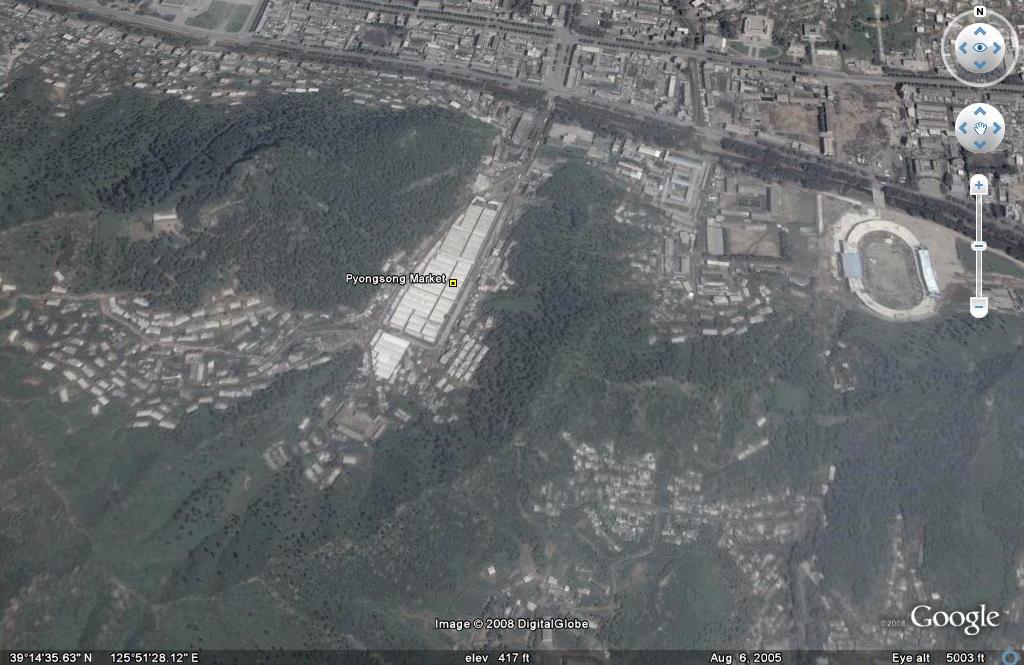
As an aside, I have located dozens of North Korea’s markets (including the largest in Pyongsong) on Google Earth (Download here).

Link to the full article below:
N. Korea clamps down on private markets
Yonhap
11/6/2008

Share

Bicycle business growing in North Korea

Tuesday, November 4th, 2008

Institute for Far Eastern Studies (IFES)
NK Brief No. 08-11-3-1
11/3/2008

The Daily NK has reported that the use of bicycles for business and transportation around the city of Pyongyang is becoming more and more commonplace, with 7 out of 10 households owning a bike, despite the fact that the cost of a bicycle in the capital city has doubled in the last twelve months alone.

According to North Korean defectors, until the early part of the 21st century, bicycles were the most sought-after purchases, with only 30~40 percent of families able to buy them.

According to a source in Pyongyang, “If you go to a [market] these days, you’d see that people who sell or purchase goods mostly use bicycles,” adding, “With the exception of those houses with extremely difficult situations, most households have a bike.”

The source explained that the growing use of bicycles is not due to improvements in the lives of the people, but rather, due to a shift in mentality. In the past, someone wishing to purchase a bike would first have to save up money for it, while today they think they can borrow the money, even at high interest rates, and then repay the loan through business profits.

The Daily NK explains, “With the ubiquity of [market] trading and the increase in business competition, bicycles have become must-have items.”

In Sinuiju, as well, bicycles have become a necessity for traders. A source there reported, “In farmlands that are distant from the [market], bicycles are an important means of linking to city markets. The merchants can triple or quadruple their profit, compared with those that don’t own bicycles.”

Most traders with bicycles take orders from those living in farming villages, fill the orders in city markets, then barter the items in the villages for vegetables and grains which they then turn around and sell in markets for a profit. Competition is stiff as traders follow price differences between the markets in order to squeeze out even a 100 won profit.

Read two recent stories on North Korea’s bicycle culture here:
70% of Households Use Bikes
Daily NK
Jung Kwon Ho
10/30/2008

People’s Safety Agency Targeting Women Cyclists
Daily NK
Jung Kwon Ho
11/6/2008

Share

A look inside Pyongyang’s Central Market

Tuesday, September 16th, 2008

Jerry Guo, a Yale University economics student who recently traveled to Pyongyang, wrote some interesting articles this week detailing his illicit adventures into Pyongyang’s Central Market (pictures below).


jerryswalk.JPG

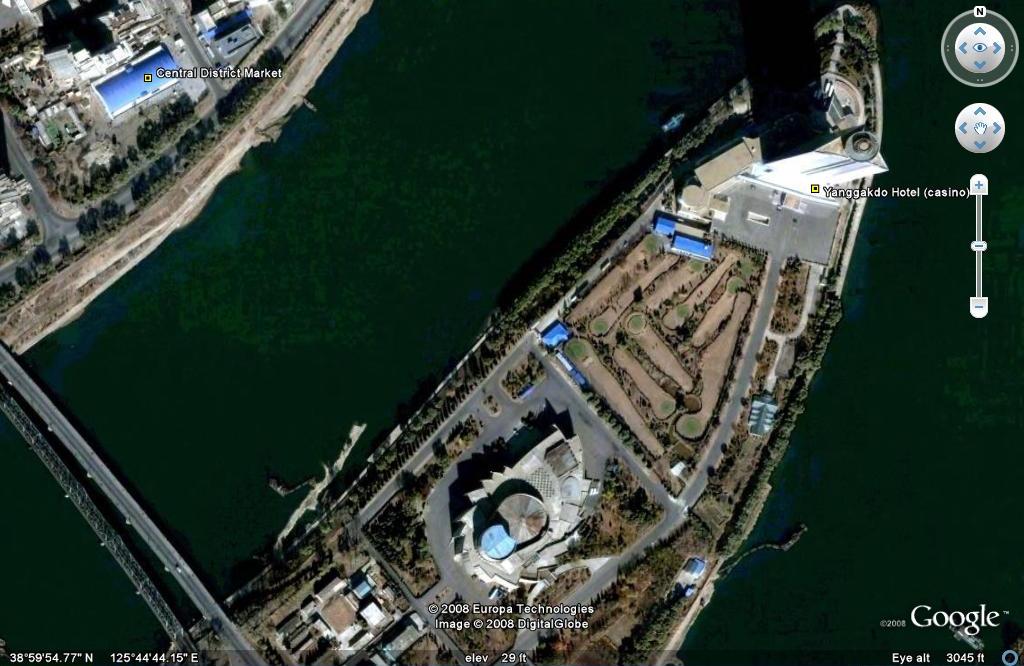
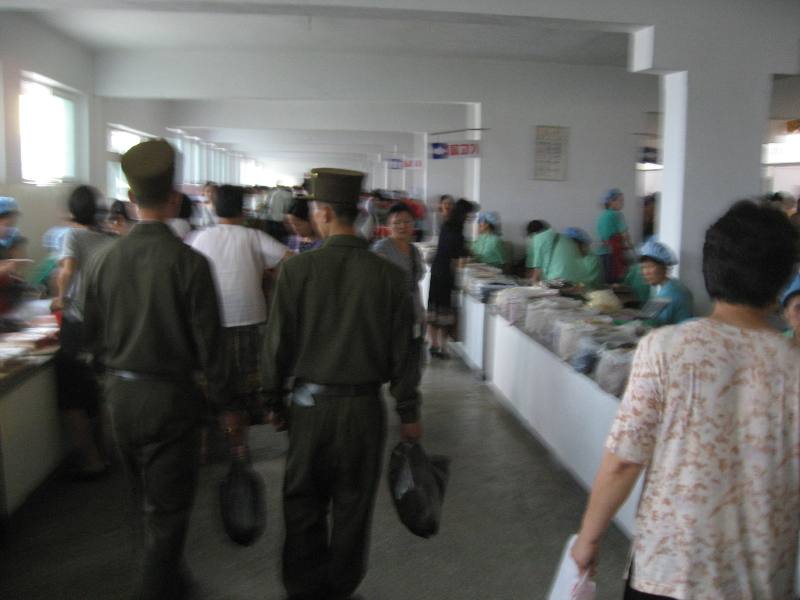
Pyongyang’s Central Market is located along the shore of the Taedong River and is visible from the Yanggakdo Hotel.  Unlike the larger Tongil Market located on the south side of town, the Central Market does not receive tourists or foreign visitors—and given the location, its customers would probably prefer to keep it that way.  So in a sense, an impromptu stroll to the Central Market offers every visitor to the DPRK exactly what they are looking for: a spontaneous glimpse at every-day life in Pyongyang.

According to Guo, that is exactly what he received:

But I wanted to catch a real glimpse of Pyongyang nightlife, so late one afternoon, I sneaked off unsupervised and hit the city streets. And much to my surprise, I didn’t see a single People’s Army cadet goose-step past me with those missile-launchers-on-wheels that appear on the nightly news. What I did witness: a mother buying a soda for her daughter from a sidewalk snack cart; two older women sitting on a bench, gossiping and eating pears; businessmen coming out of the subway, sans Bluetooth headsets; a grimacing teenage boy getting a haircut at a salon. (Washington Post)

Eventually he meandered into the Central District Market:

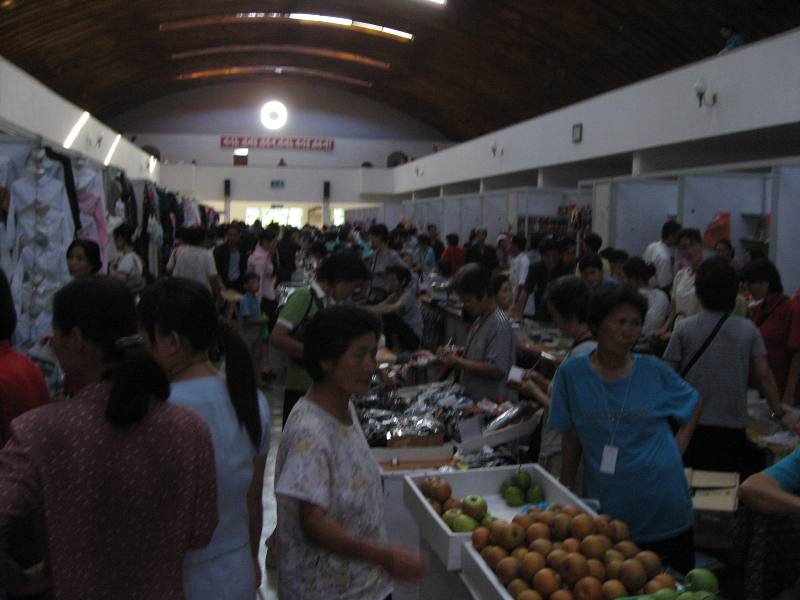
I had found myself in the North Korean version of Macy’s, but here, every day is the Friday after Thanksgiving. There were delicate blouses and dresses for around 15,000 won (roughly $4 at black market exchange rates), all sorts of fruit — thought to be nearly impossible to find in this mountainous hermit kingdom — and enough varieties of mystery meats to make my high school cafeteria green with envy.

…and he took some pictures (These pictures belong to Mr. Guo, and I thank him for letting me post them):

guo1small.JPG guo2small.JPG

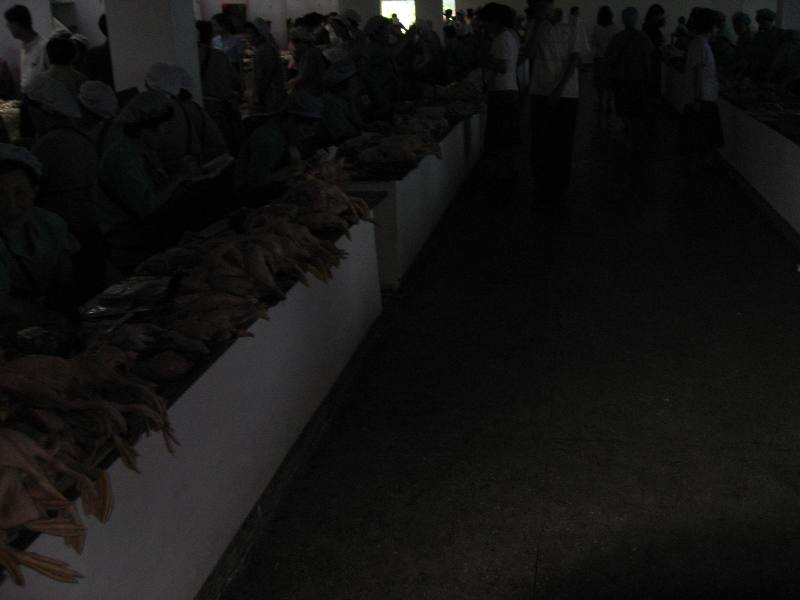
Above: Fruits and chickens for sale

guo3small.JPG guo4small.JPG

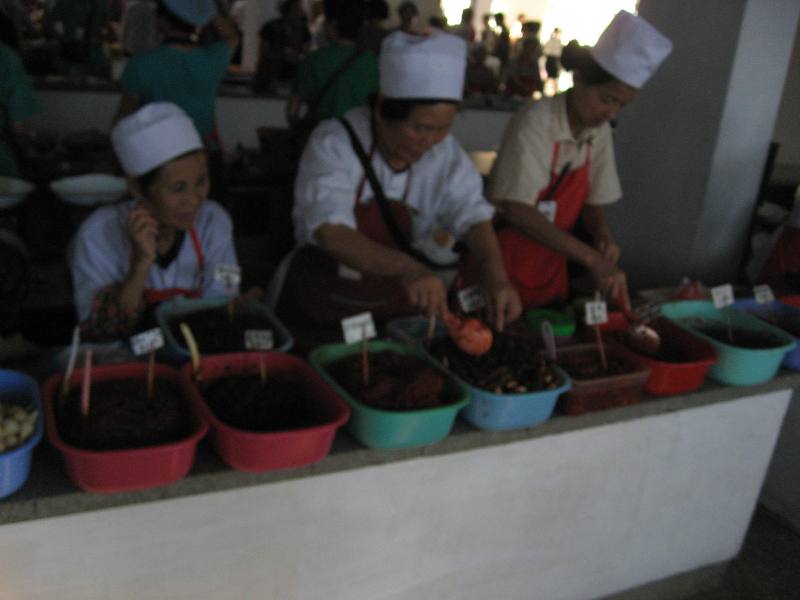
Above: Side dishes/Sauces and clothing for sale

guo5small.JPG

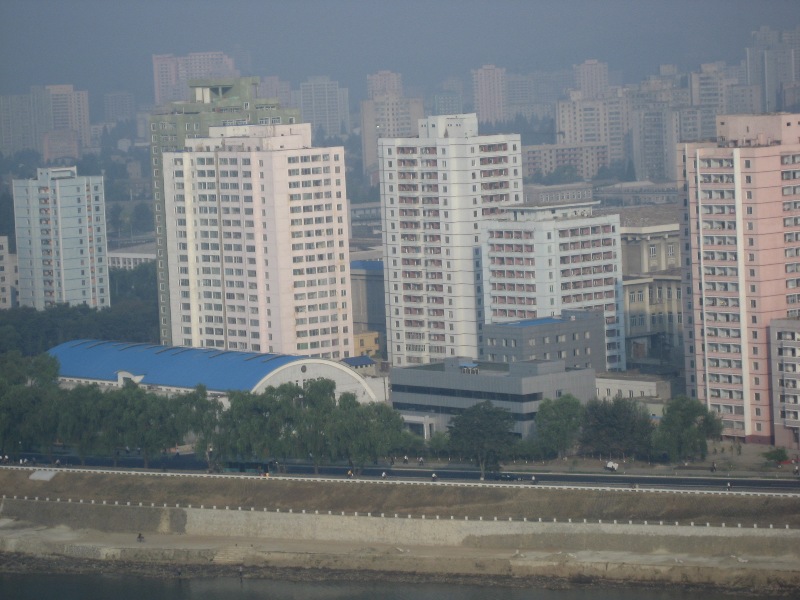
Above: View of the Central Market from the Yanggakdo Hotel

Taking these pictures, however, ushered in an unpleasant afternoon:

No one paid much attention to me, until I stopped to snap a few photos. Then a group of stocky women in pink dresses magically appeared. They half-wrestled me to a second-floor office while blowing fiercely on blue whistles, as if to announce, “Look at me! My first American spy!” For the next six hours, I was questioned and scrutinized by a procession of Public Safety Bureau officers, their rank identifiable by the quality of their outfits: the first wore an undershirt, the last what seemed to be a custom Italian suit.[…]

Eventually, they forced me to write a hyperbolic but harmless self-criticism, describing myself as “an American student,” “an incompetent trouble-maker” and “a genuine lover of the Korean people.” Then they booted me back to my five-star hotel.

Mr. Guo’s adventures have been chronicled in the following publications and they are well worth checking out:

My Excellent North Korean Adventure
Washington Post
Jerry Guo
9/14/2008; Page B02

A writer journeys into North Korea with Chinese tourists
Christian Science Monitor
Jerry Guo
9/16/2008

Yale Senior Enjoys Uncensored Day in N. Korea
National Public Radio
9/15/2008

And a caveat for future visitors: Although I personally appreciate knowing this type of information about the DPRK, I do not recommend other tourists take this course of action for numerous reasons!

Share

DPRK markets: What’s selling and for how much?

Saturday, September 6th, 2008

According to the Daily NK:

The new issue of NK In and Out (NKeconWatch is unable to find this publication on line) includes information about North Korea’s recent jangmadang (markets) developments, stating that “memory cards for digital cameras and even USB flash drive sticks can be bought easily in the jangmadang of major cities these days.”

The journal explained that most of the memory cards are under 1GB and although there are various types of memory cards, they are sold for ten to fifty thousand North Korean Won on average (approx. 3,400 to 17,200 South Korean Won, 3 to 16 USD). Demand for memory cards has been increasing due to the popularity of digital cameras and computers.

Recently there have been individuals that operate photo businesses at photo studios or state-operated shops in the downtown areas of cities. It is known that most of these individuals use digital cameras imported from China rather than film cameras.

The journal clarified that digital pictures can also be easily printed because certain trade organizations, broadcasting companies, convenience stores, or provincial computer centers have set up technology shops providing services to print pictures or produce music CDs.

Notably, a third of middle school students in large border cities own MP3 players and two to three students per class have personal computers at home. It is presumed that many more people own MP3 players or computers in major cities such as Pyongyang.

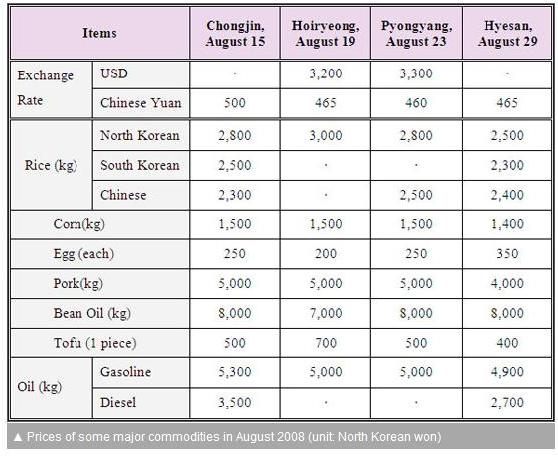
Below is some recent price information.  Click on the image below to view full size.

prices1.JPG

Share

DPRK statute smorgasbord

Wednesday, September 3rd, 2008

On this page, I will keep a list of DPRK statutes and summaries:

1. Foreign Investment Law
2. Free Economic and Trade Zone Law
3. Equity Joint Venture Law
4. Contractual Joint Venture Law
5. Foreign Enterprises Law
6. Taxation of Foreign Invested Enterprises
7. Relevant Labor Laws
8. Leasing Land 
9. Dispute Resolution
10. Domestic Sales Tax Regulations
11. Manufacturing & Export Operations
12. External Economic Arbitration Law
13. Commercial Joint Venture Law
14. Constitutions (x2)
15. Customs Law
16. Law on Economic Plans
17. Fisheries Law
18. Foreigners in FEZs
19. Intellectual Property

Click “read the rest of this entry” below to see summaries and statute text.

(more…)

Share

Lankov and Kim on North Korean market vendors

Wednesday, July 23rd, 2008

“North Korean Market Vendors: The Rise of Grassroots Capitalists in a Post-Stalinist Society”
Andrei Lankov and Kim Seok-hyang
Pacific Affairs, Vol. 81 Iss.1 
(subscription required)

Abstract:
The article deals with the social changes that have taken place in North Korea [from 1994-2002], when the collapse of the centrally planned economy led to the growth of private commercial activity.  This activity remains technically illegal, but the relevant bans and restrictions have rarely been enforced due to endemic corruption and disorganization of the state bureaucracy.  The article is largely based on in-depth interviews with North Korean black market operators [who have defected to South Korea].  It traces their origins, the type and scale of their business, and changes in their mode of operation.

The article demonstrates that the “second economy” came to dominate North Korean economic life by the late 1990s, since authorities’ attempts to limit its scale were largely ineffective.  The growth of the “second economy” produced new grassroots capitalists who sometimes came from underpriveledged social groups, but more typically represented people with good official connections.  It is also remarkable that foreign connections (usually with China) played a major role: to a large extent, merchandise sold at the North Korean markets either came from overseas or was exported overseas eventually, and in many cases the merchants’ initial capital was also provided by relatives residing overseas.

Some highlights:
1. Changsa is the North Korean word for “dealings in the marketplace.” Tonju is the word for money changers/lenders meaning “master of money”. 
2. Public Distribution System (PDS) rations were cut for the first time in 1973.
3. The DPRK system restricted market activity primarily through three mechanisms: limited size of family farming plots, inminban surveillance system, and travel permits.
4. Before the arduous march, North Koreans were not inclined to resort to market trade.  These transactions were seen as ethically suspect.  Once the famine hit, people took up market trading remarkably quickly.
5. Before the arduous march, bribery was rare, even though patronage and indirect forms of corruption were rampant.  Mid-level bureaucrats had to vie for preferred access to poor-quality consumer goods, better schools, and study trips abroad.
6. At the height of the arduous march (1997), production was at 46% of capacity.
7.  North Korean traders seldom if ever have to deal with the protection racket.  When asked directly, respondents did not mention threats from mobsters as one of their security concerns (I wonder if this is still the case).
8. Pyongsong market is reputed to be the largest in the country.  It is just outside Pyongyang, making it accessible to citizens inside the capital as well as those who cannot get permits to enter the city (Pictured below with Google Earth coordinates).

pyongsongmarket.JPG

Click on image for larger view

9. Financial services such as money-changers and private loan sharks offer loans at 5%-30%/month.
10. Most North Korean merchants know South Korea is a rich country.  They also avoid surveillance since these activities are done at state-owned enterprises and study sessions.

Share

What caused the DPRK’s spring ’08 food price increases?

Sunday, July 13th, 2008

North Korea’s agricultural and food markets suffer from a number of permanent constraints that prevent their efficient operation.  Rail transport is slow and/or unreliable, internal travel restrictions for “ordinary” merchants, and poor road conditions limit the distance food can travel before it goes bad.  Restrictions on communications and lack of a futures market makes it difficult to know how much food is available in each location, or what is expected to be available in each location.  This leads to hoarding, volatile prices, and a mismatch between local supply and demand.  Compounding these basic problems is a poor business environment characterized by collective farming practices, corruption, bribery, poor property rights protection, poor contract enforcement, and ex-post expropriation of profits.  Given these constraints, it is amazing agricultural and food markets work at all. 

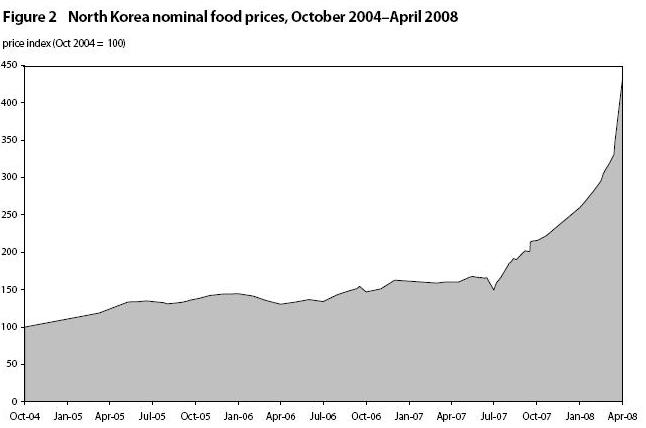
In addition to these factors, the DPRK’s food markets suffered a number of adverse supply shocks this year from flooding, China’s restrictions on food exports, and a decrease in expected food aid from China, South Korea, and the US (See the effects on prices in this chart by Noland/Haggard/Weeks here). The arrival of food aid has since brought some of these prices down.

This week, the Daily NK reports on two other causes of price increases in the DPRK: Anti-corruption campaigns and restrictions on farming private plots.

Anti Corruption campaigns (more here and here)

He reported that “From March to late April, for almost 40 days, inspections were undertaken nationally. In Hwanghae Province, the inspection groups under the Central Court came down and confiscated food which the cadres in farms had embezzled. In some cases, they confiscated 500-1000kg of rice and grains from cadres’ households by searching with metal sticks in their backyard.”

The Director of the Ministry of Administration of the Chosun (North Korea) Workers’ Party Jang Sung Taek and his inspection group went to Shinuiju and inspected persons in charge of trading.

No. 112 Land System

The No. 112 land system operates whereby the authorities offer a certain width of fallow lands, which are different by grade of food distribution amount, to national public servants and clerical workers, given in order to make them solve their food problem by farming instead of relying on distribution. Ishimaru explained that “However, the new Kim Young Il cabinet abrogated this system and banned them from planting seeds on those fields.” 

Read the full story here:
Intensive Inspections in March and April a Direct Reason for Rise in Food Prices
Daily NK 
Kim So Yeol
7/4/2008  

Share

DPRK small-scale private commerce and industry growing

Friday, July 4th, 2008

Institute for far East Studies (IFES)
NK Brief No. 08-7-4-1
7/4/2008

It appears that the number of people involved in handmade goods manufacturing, trading, and other small-scale, individual businesses is steadily increasing among North Korean citizens.

According to a source inside North Korea on June 30, ever since North Korean authorities announced the ‘Market Stimulation Measure’ in March 2003, the number of small-scale private businesses employing between 1~8 people has continued to grow as citizens in the North have taken to markets aggressively in order to earn money,

As the North’s economic woes continue to stretch over time and the government is unable to provide basic living necessities, the people are looking for other ways to support themselves.

In March of 2003, North Korea expanded farmers’ markets into general markets, allowing not only the sale of agricultural goods, but of manufactured goods as well. At the same time, the state introduced ‘market use fees’ for vendors wishing to rent space to hock their wares, thus bringing about a tax-like ‘state payment’.

Small-scale commercial and industrial businesses took on the form of family manufacturing or collaboration between factories, enterprises and engineers working together, but ‘Chinese-model’ small enterprises hiring just one or two workers also appeared.

In-home food preparation or handmade goods manufacturing, restaurants, bus services, repair work and other service-related industries grew. There also appeared examples of those leasing import rights from organizations or enterprises and making a living through trade.

Authorities have given these businesses tacit permission to operate, recognizing their role in increasing public revenue and supplying the people with daily necessities, but at the same time, they have laid down some restrictions, criticizing those “bitten by the capitalist bug, working only to make money for themselves.”

Small-scale private commerce and industry has the positive benefit of expanding the provision of daily necessities and absorbing unemployed labor in the North, but on the other hand, anti-socialist side effects such as the increasing gap between the rich and the poor and mammonism are also on the rise.

Share

Pyongyang’s newest market…

Friday, April 25th, 2008

As North Korean Economy Watch readers are aware, this site hosts the most authoritative mapping of North Korea on Google Earth (click here to download).  Google Earth recently updated its North Korea imagery requiring me to update a colossal amount of information.  This update (version 10) will be released by the end of May.

Growing influence of entrepreneurs
While updating information on Google Earth, one has a chance to compare how things have changed over the course of a few years.  One of the interesting changes in Pyongyang is the emergence of a new market about 5 blocks east of the Tower of the Juche Idea (pictured below).  It seems to have replaced an older market formerly located on the city’s outskirts at the end of the trolley line.  In the past, street markets (or “jangmadang”) like this have been held on the outskirts of the city.  This new, more convenient location (near peoples’ homes) is a testament to the growing importance of these markets, and their budding entrepreneurs, in meeting the needs of the North Korean people.  

pyongyang-market.JPG

Click on the image to view full size.

Share

Market activity flourishes in the DPRK

Thursday, April 24th, 2008

Institute for Far Eastern Studies (IFES)
NK Brief No. 08-4-21-1
4/21/2008

The March issue of “Rimjingang”, a magazine publishing stories on life inside North Korea as reported by defectors and those still inside the DPRK, contains an eye-opening report on activities in North Korea’s markets.

Since 2003, North Korean authorities have legalized DPRK markets throughout the country. The previously existing farmers’ markets were remodeled into ‘combined’ general markets and all traders were permitted to sell their wares. After the legislation was passed, even in Pyongyang general markets emerged in each neighborhood.

According to the magazine, more than 60 markets have been set up, with each market housing around 50 traders. The use of mannequins at clothing stores and attractive price tags used to catch the eye of the shopper are in force. These days, it is not even surprising to hear cassette players extolling the virtues of a particular vendor’s goods. Sellers here do not speak abruptly to customers as they might in a State-run store. In markets, one can hear respectful language used even to children. These are not ideas taught by the labor bureau, but rather independent ideas put to use by the sellers.

Stalls selling a variety of seafood can also be found in a number of markets. Mackerel, squid and flatfish from the East Sea are among the surprisingly fresh products on display. This seafood is not on display courtesy of the North Korean government, but rather is delivered by private entrepreneurs running refrigerated trucks from the coast to Pyongyang. According to the magazine, a number of delivery services are in operation, providing goods to the highest level of North Korean society.

Around Pyongyang, a number of flower sellers have also popped up in the capitalist markets. It is custom to give flowers whenever there is an event in honor of Kim Il-sung or Kim Jong-il; but these days it is also popular for couples to give each other flowers as gifts. Even before the emergence of these markets, there was nothing that couldn’t be found in Pyongyang as long as someone had the money to purchase it.

Currently, women under the age of 39 are prohibited from working in markets, and efforts to extend this restriction to women under 49 have raised tension with many women trading in the markets. ‘Good Friends’, an organization aiding North Korea, has reported that recently thousands of women have organized in protest against security forces in the farmers’ market in Chungjin.

Share

An affiliate of 38 North