Archive for the ‘National Defense Commission’ Category

North Korean minister sacked over Kim jibe: report

Thursday, January 18th, 2007

The Nation
1/18/2007

North Korea’s energy minister has been fired because he suggested that the power supply to leader Kim Jong-Il’s guesthouse should be diverted for public use, a Japanese newspaper said Thursday.

Ju Tong-il, minister of power and coal industries, was fired late last year by the leaders of the impoverished Communist state, the evening edition of the Mainichi Shimbun daily said in a story from Beijing.

“Our country’s energy situation is extremely severe,” Ju told a meeting of energy-related officials last spring, according to the daily, quoting unnamed sources close to the North Korean government.

“Or better yet, why don’t we get back electricity fed to the guesthouses of our general?” Ju reportedly suggesting, referring to Kim.

Ju later excused his remarks, saying: “I just wanted to express the fact that our domestic electricity condition is paralyzed.”

But he came under fire from leaders of the ruling Workers Party and was then dismissed, the daily said.

Agence France Presse

Golden Villas, Let’s Share Electricity!
Daily NK
Yang Jung A
1/19/2007

While North Korea’s electrical power supply worsens, North Korea’s Premier Park Bong Ju pushes for the expansion of energy supply and civil electrical support only to receive a personal punishment from authorities or in actual, his position changed.

“As a result of energy and other issues, Ju Dong Il, the Minister of the Electricity and Coal Industry was removed from his position” a Japanese newspaper “Mainichi” reported on the 18th, citing a source related to the North Korean government.

The Minister Ju was known for his proposal on energy made at a policy meeting early 2005 where a comment was made “The electricity situation in our country is seriously grave” and suggested “How about we redirect the electricity from our leader’s personal residence and use that.”

This proposal suggested that the electricity crisis be partly solved by redistributing some of the electricity supplying Kim Jong Il’s numerous personal villas throughout the nation, to much needed industries and homes.

As the Minister Ju realized his comments had set a predicament, he tried to justify himself stating “I simply wanted to express that the country’s electricity is in an immobilized state” but was known to have been reprimanded by the central authorities and his position changed. Since last October, the Ministry of the Electricity and Coal Industry had been separated to the Ministry of Electrical Industry and the Ministry of Coal Industry.

In the same month, Premier Park expressed his concerns on the export of coal to China at a trade conference saying “If this situation continues, our country will be faced with serious implications from the energy crisis. The people will be unable to use their central heating and industries will stop. It would be better to refrain from further exports.” The newspaper also mentioned that Premier Park had gone to the extent of submitting a proposal and that the ministry had even settled on the suspension of coal exports.

However, following the nuclear experiment, the National Defense Commission asserted that the acquirement of foreign currency was an absolute necessity in strengthening the military and strongly urged for the resumption of exports. In the end, the ministry’s decision was overturned and exports recommenced.

Though Premier Park has not yet been replaced, under the orders of authorities, he is known to be spending his time in self-discipline as “for now, revision is necessary.” Though Premier Park’s name is listed on the roll of honors, he has not been seen in the presence of Kim Jong Il. 

Mobile Phone Detectors, Borders Blocked

Thursday, January 18th, 2007

Daily NK
Han Young Jin
1/18/2007

In order to block an “open hole,” North Korean authorities have been installing mobile phone detectors on the northern border to prevent further defectors from leaving the country.

In a phone conversation with family in Hoiryeong, Kim Man Sung (55, pseudonym) a defector residing in Yangchon, Seoul discovered on the 15th “In the neighborhood of Hoiryeong, 6 mobile phone detectors have been installed” and that “if a phone call is received, the detectors activate within a minute and trace your whereabouts.”

In the past, if a person was caught being in contact with South Korea, they would receive punishment from the labor training camps and the matter was over. However, now the National Security Agency are going around saying “if you are caught using a mobile phone, you and all your family will be expelled from your village,” informed Kim. In spite of this, no one knows the make of the detectors set up along the border, nor its performance quality.

For the past 3 years Kim has acted as an intermediary for South Korean families and defectors in search of their relatives on location at the border. He said “Particularly because of intensified border controls, we are experiencing many difficulties.”

He said “Lately, whenever the police (officers from the Safety Agency) board the trains they conduct ‘fastidious inspections’ on city dwellers” and added “The Safety Agency incessantly inspects lodging facilities and motels regulating citizens that may be roaming near the border in attempt to contact their family.” It seems that the ‘fastidious inspections’ are being strictly enforced.

Since mid-December, North Korean authorities have established 5 united forces with the aim of conducting extensive control. These groups, the Party, National Security Agency, Safety Agency, prosecutors and military security will enforce action and punish boarder guards who receive bribes and help defectors.

As inspections tighten, the expenses of defectors secretly crossing to China has also increased. In the region of Hoiryeong, Musan, defecting to China would cost 400~500 yuan per person but now the disbursements have exceeded 1,000 yuan and in Haesan the price has even reached 2,000~3,000 yuan.

Recently, rather than receiving bribes from individual defectors, boarder guards have been reluctant to receive bribes from families. Though there is a possibility that individuals may return it is rare that families return and hence the greater investment lies on individuals. Also, if a defector is caught by Chinese police and repatriated, there is a possibility that the escape route will be discovered. In that case, the border patrol in charge of that region will be punished.

More recently, the National Security Agency has reinforced their efforts to catch defectors in China themselves. Kim informed, that the workers of restaurants and hotels in Yanji and Longjing in China, are all staff from the National Security Agency and that more than 90% of visitors to China are connected with the Safety Agency acting as “spies” with orders to aid the abduction of defectors.

Military influence broadens in Kim Jong-il’s North

Sunday, January 14th, 2007

Joon Ang Daily
Ser Myo-ja
1/4/2007

Since its founder Kim Il Sung’s death in 1994, North Korea’s political landscape has been transformed dramatically, and military officials have solidified their standing in the power elite of the communist country.

They have elbowed aside civilian politicians and bureaucrats, a new analysis shows, and the data confirm that the North’s “Military first” political slogan is much more than rhetoric.

In 1994, North Korea published a list of 273 people making up a committee to plan the founder’s funeral. That list also contained the seating order for those dignitaries at the funeral ― an accurate reflection of the pecking order in the North’s hierarchy at the time.

A JoongAng Ilbo special reporting team, its Unification Research Institute and Cyram, a research firm specializing in social network analyses, compared that 1994 rank order with data drawn from profiles of 324 North Korean figures provided by the Unification Ministry and the National Intelligence Service. The researchers ranked the top 50 North Korean figures after Kim Jong-il, the current leader and son of the late president, and compared that new list to the data from 12 years ago. The 2006 rankings took account of the officials’ titles and their roles, how often they have accompanied Mr. Kim on his frequent “site inspection” tours, seating charts and ranks announced by Pyongyang last year for several political events and evaluations by specialists in North Korean affairs.

“Kim Yong-nam is the official head of state in North Korea, but he acts as a subordinate to Kim Jong-il at public events,” said Chon Hyun-joon, a senior researcher at the Korea Institute for National Unification. “In order to find out who actually is capable of controlling people, money and policies in North Korea, we have to use a special approach.”

On the new list, Mr. Kim, whose official title is chairman of the National Defense Commission, sits atop the hierarchy. Jo Myong-rok, the first vice chairman of the defense commission, was ranked second and Kim Yong-nam, head of the Presidium of the Supreme People’s Assembly, was ranked third. The Supreme People’s Assembly is the North’s legislative body, but it normally delegates most of its power to the Presidium, a core group of elected members.

Jon Byong-ho, a Workers’ Party secretary, and Kim Il-chol, minister of the People’s Armed Forces, are ranked fourth and fifth. The Workers’ Party has been the only party in the North since 1948, except for a few parties that exist on paper as counterparts for foreign social democrats, for example. The Ministry of the People’s Armed Forces is responsible for the management and operational control of the North’s military. It is directly controlled by the National Defense Commission, which Kim Jong-il heads.

Kim Yong-chun, the Army chief of staff, was ranked seventh on the new list, followed by Pak Pong-ju, the premier.

Comparing the new rankings with the 1994 list, only two people ― Kim Jong-il and Kim Yong-nam ― kept their top-10 posts in 2006. Among the top 51, only 16 still remain in power.

The comparison showed a clear shift in the job titles represented in the elite. During the Kim Il Sung era, members of the politburo and Central Committee of the Workers’ Party, the cabinet, the military, the Supreme People’s Assembly and some other organizations were all represented in the power elite. With the party at the center, the officials were balanced, presumably in an effort to avoid concentrations of political power and possible threats to Kim Il Sung’s leadership.

But North Korea under his son is dominated by the “Dear Leader,” as North Koreans refer to him, and the National Defense Commission members.

Military officials surged to the top over the 12 years. On the 2006 list, the top 50 North Koreans after Kim Jong-il include 12 military men, up from five in 1994. Ri Yong-mu, the vice chairman of the National Defense Commission, was ranked ninth in 2006, climbing from 55th on the 1994 list. Mr. Kim’s three favorite generals, Hyon Chol-hae, Pak Jae-gyong and Ri Myong-su, were added to the new top-50 list. They have appeared frequently at Mr. Kim’s side on his inspection tours throughout the past year. In addition to the 12 flag officers, five other men in the top 50 are also involved in military matters.

In 1994, 25 Workers’ Party members were ranked among the top 50 leaders; that number increased to 27 in 2006. People in charge of party organization and propaganda were prominent on the list. North Korea appeared to have put lesser value on bureaucrats and economists as the Kim Jong-il regime has progressed. Eighteen bureaucrats and economic officials were on the 1994 roster, but the number dropped to six in the new list. In 1998, the North revised its Constitution, dropping vice presidents and the prime minister’s staff. That change could be one of the reasons for the relative scarcity of administrative officials on the new list.

Some analysts had a different interpretation: The lack of bureaucratic power officials in the list, they suggested, reflected Kim Jong-il’s priority of defending his regime rather than rebuilding the nation’s shattered economy.

North Korea watchers also said Mr. Kim runs the communist country by directly controlling the military, the party and the cabinet by stacking those institutions with people personally loyal to him. “Since 1998, Mr. Kim has issued orders under the title of the National Defense Commission, but Pyongyang-watchers were unable to confirm that he was actually presiding at the commission meetings,” said Chon Hyun-joon of the Korea Institute for National Unification. “The North’s power is concentrated in Mr. Kim alone, and there is a limit on how much authority he can exercise directly. In recent times, Mr. Kim appears to have handed over some of his powers to his closest confidants.”

The research also showed that a complex network of blood, school and career ties weaves the top 50 leaders together. Of the 50, at least 30 are members of that network; no information was available on the family, schools and careers of 11 of the other 20; at least some are probably bound up in that web.

“During the Kim Il Sung era, the official ranking showed the strength of each individual’s power,” said Hyon Song-il, a former North Korean diplomat who is now a researcher at the National Security and Unification Policy Research Institute. “In the era of Kim Jong-il, becoming his confidant means power.”

The North’s top 50 people include six of Mr. Kim’s family members. School ties among Kim Il Sung University graduates were also visible; 22 are alumni of the North’s prestigious school.

The 35 vacancies on the list between 1994 and 2006 were all filled by Kim Jong-il loyalists. Among the absentees, 16 either died of natural causes or were executed. Oh Jin-wu, known as Kim Il Sung’s right arm, and Ri Jong-ok, the North’s vice president, died naturally; So Kwan-hi, the party’s agriculture secretary, was reportedly executed in 1997, along with other officials, to appease anger over the famine of the late 1990s.

Hwang Jang-yop, who was ranked 26th on the 1994 list, defected to South Korea. Kim Chol-su, the 22nd most influential person in the North in 1994, was later identified as Song Du-yul, a scholar who is now a German citizen, by intelligence authorities and prosecutors in Seoul.

There is little room for women in the North’s elite, both in 1994 and 2006. In 1994, two women were among the top 50 officials, but the number fell to one in 2006. Kim Kyong-hee, the light industry department head of the Workers’ Party, is Mr. Kim’s younger sister.

‘Follow the leader’ in North jump-starts careers

Monday, January 8th, 2007

Joong Ang Ilbo
1/8/2007

North Korean leader Kim Jong-il has maintained his power since the death in 1994 of his father, Kim Il Sung, the communist country’s founder. A recent study showed that following in the footsteps and shadow of Kim Jong-il is the key to becoming a member of the reclusive regime’s elite. It pays to be a general as well, and being a member of Mr. Kim’s family by birth or marriage doesn’t hurt either.

The JoongAng Ilbo and Cyram, a specialist institute in social network analysis, studied the career backgrounds of the North’s 50 most influential figures after Mr. Kim and compared what took to become a member of that elite in 1994 and in 2006. The earlier ranking of the elite was based on the seating chart for Kim Il Sung’s funeral in 1994, a de facto ranking of its official hierarchy. That list was compared to a new 2006 list created as a result of the study.

For the new list, profiles of North Korean officials from the National Intelligence Service and the Unification Ministry were analyzed. The study also took account of seating charts and other rankings announced by Pyongyang last year to compile a list of the top 50 officials after Mr. Kim.

The study showed that in 1994, 29 of the 51 top leaders were members of the politburo, or executive organization, of the Workers’ Party. By last year, however, only eight of the 50 top officials were members.

“Since 1993, vacancies in the politburo after officials there died, were executed or defected have not been filled,” a South Korean intelligence official said. “Since then, the politburo has lost some of its power and the secretariat of the party has gained in influence.”

If a career with the party’s politburo no longer is a fast track to the elite group, it has been replaced by a military background as a way to the top. Among the top 50 figures on the 2006 list, 33 had career military experience, up from 21 in 1994. Of the 33 people, 14 worked with the Ministry of People’s Armed Forces and 10 were from the office of the Joint Chiefs of Staff.

A clear reflection of Mr. Kim’s “military first” policy, that favoritism toward the generals was also reflected in the number of visits he made to military units to boost their morale. Of the 192 site inspections by Mr. Kim in 2002, 34 were visits to military units. Last year, he conducted 104 inspections, and 65 were to meet with soldiers.

“Mr. Kim has emphasized a military-style governance in which the chain of command is clear, and military figures have been favored in his regime,” said Chon Hyun-joon, a senior researcher with the Korea Institute for National Unification.

Working on the National Defense Commission, headed by Mr. Kim, is probably the fastest way to join the power circle in the North these days, because it has taken over a lot of the influence that shifted first from the party politburo to the secretariat. The commission was established in 1972, and currently has seven members, including Mr. Kim, whose title is chairman of the group. After the North’s Constitution was revised in 1998, the commission became the nation’s highest governing body and the office of president, from whence Kim Il Sung governed, was retired.

Jon Byong-ho, for example, is ranked No. 5 on the new elite list (the ranking begins with Kim Jong-il in position No. 1. He is a member of the commission and the party’s military industry department director. He has worked there since 1990, when Kim Jong-il became the commission’s first vice chairman. “The core of the power clearly moved from the Workers Party’s politburo to the National Defense Commission, and the commission is a “must” ticket to punch for success,” said Kim Geun-sik, a North Korea-watcher at Kyungnam University.

Following the footsteps of Kim Jong-il can certainly help an ambitious North Korean’s career. Mr. Kim joined the organization and guidance department of the Workers’ Party in 1964, and worked in the propaganda and agitation bureau, the secretariat and the politburo on his way to the top. In the 1990s, he became the commander-in-chief of the North’s military and the chairman of the National Defense Commission, cementing his control over the military and the party.

According to the study, many people who have followed Mr. Kim’s career path have joined the North’s power elite. Those who served in the party’s organization and guidance department and the propaganda and agitation department are especially prominent.

Ri Je-gang, for example, followed a career path similar to Mr. Kim’s, and ranks 35th on the list. Mr. Ri participated in a Pyongyang city redevelopment project in the 1980s led by Mr. Kim, and earned the future North Korean leader’s trust. Jang Song-thaek, Mr. Kim’s brother-in-law, worked in the party’s organization and guidance department for 13 years. Kim Kuk-tae, the Workers’ Party secretary, is Mr. Kim’s Kim Il Sung university fellow alumnus, and he also served in the propaganda bureau with Mr. Kim.

The study also showed that there was a clear generational shift in the North’s power circle. During the Kim Il Sung era, an anti-Japanese guerrilla background was a prime resume-polisher for people who wanted to join the elite group. On the 1994 list, for example, seven were partisan fighters, but time has taken its toll. The 2006 list had only one such figure, Jo Myong-rok.

But links to that revolutionary glory are still present. “The children of the partisan fighters are enjoying the status of power elites in the North in their generation,” said Kim Yong-hyun, professor of North Korea studies at Dongguk University. Part of the reason is the educational privileges they were given. Only children of “fighters for the revolution,” a title bestowed on former partisans, are allowed to study at the prestigious Mangyongdae Revolutionary School.

The number of that school’s alumni on the list of the North’s highest-ranking officials grew from 10 in 1994 to 14 last year.

ROK scenario planning for DPRK power shift

Monday, December 18th, 2006

Donga
12/18/2006

North Korean Military: New Regime?  

If that happens, the report forecasts that the military is highly likely to control the government and independent units, such as the escort command, and the security command and the operation command will attempt to take control of the government by joining forces or individually.

Yesterday, Dong-A Ilbo obtained a report titled “North Korea’s Crisis Management System and Our Countermeasures” released by the information committee of the National Assembly. The report predicts that “we cannot rule out an abrupt collapse of the Kim Jong Il regime. But, given the neighboring countries do not have firm grounds for intervention, the fall of North Korea will happen gradually.” It was submitted to the committee on December 13 by three researchers of Peace Foundation, Cho Seong-ryeol, Kim Hak-rin and Kang dong-ho.

Kim Jong Il in Trouble in North Korean Emergency-

The report argues that a national crisis is likely to be caused when Kim Jong Il, the chief of the North’s Workers’ Party, the government and the military, is in trouble.

If that happens, the report forecasts that the military is highly likely to control the government and independent units, such as the escort command, and the security command and the operation command, will attempt to take control of the government by joining forces or individually.

In particular, it also expects Oh Geuk Ryeol, the 75-year-old operational director of the Workers’ Party who is considered to be the most powerful among Kim Jong Il’s cross associates, to act before others by utilizing his independent commanding authority and his elite unit equipped with advanced weapons.

The report says the first thing the North Korean military should do, after taking control, is to declare a national emergency in the name of the central military committee of the Workers’ Party, which is entitled to command and control all military power in the country according to Article 27 of the party rules. But the report also predicts that the national defense committee will be at the center of administration of power and that the new regime will maintain a group leader system temporarily.

Who Will Be the Acting Commander in Chief?-

According to the report, if the North engages in war with the outside world, the country is likely to shift an emergency control system with the commander in chief in its center, as it did during the Korean War.

Cho Myeong Rok, the 78-year-old director of the General Political Department of the Korean People’s Army, is highly likely to be appointed as a commander in chief by hierarchy. But, considering age and health, Kim Yeong Chun, the 70-year-old Chief of the General Staff of the Army responsible for military operation of the one million-strong forces, is the shoo-in, according to the report.

Establishment of the Succession System-

It has been analyzed that the establishment of a succession system is more urgent for Kim Jong Il than the overcoming of the economic crisis through reform and market opening or the formation of diplomatic ties with the U.S., since Kim is well aware that an emergency in the absence of the succession system will lead to a civil war.

For this reason, it says, chances are that Pyongyang will formalize the succession system internally in the first half of 2007, when internal cohesion following its nuclear test and the supportive atmosphere for the third-time succession of military authority to protect the vested interest of the “Military First politics” still remain.

The report also connects the gradual stabilization of the succession system and the resolution of the North’s nuclear problem. It estimates that Kim will demand approval of the succession system and massive economic assistance in return for denouncement of nuclear weapons, and that the Pyongyang-Washington ties will be normalized if Washington accepts the demand.

Korea Herald
12/18/2006

N.K. general to lead if Kim loses power

A top military commander is expected to take the reins in North Korea in the event its leader Kim Jong-il loses power during an emergency, a South Korean parliamentary report said yesterday.

The report on a possible North Korean crisis pinpointed General Oh Geuk-ryul, chief of central combat operations of the Workers’ Party, as the strongest candidate to take contingency leadership of the communist country.

The report was written by the Peace Foundation, a private think tank on security affairs commissioned by the National Assembly Intelligence Committee.

The report said if Kim loses control, it will trigger fierce power struggles among leaders of different military groups such as Kim’s security guard, the Army headquarters, the intelligence command and the combat operations department.

None of them are in position to take control of the entire military. Kim is known to have controlled all military forces through a system of checks and balances among the several independent military groups. Each separate group is directed by Kim, with no influence on one another.

Among the powerful candidates, Oh, 74, is expected to take the lead in mobilizing his well-trained soldiers equipped with the North’s most modern weapons systems, the report said.

In the event the North Korean crisis triggers intervention from outside forces, the new leadership could fall under Kim Young-chun, deputy marshal of the Korean Peoples’ Army, the report expected.

Kim, 69, is likely to lead the North’s military in fighting against any foreign interventionist forces although Cho Myoung-rok, another deputy marshal of the KPA, is higher in rank, it said. Cho, 77, was cited as weaker than Kim due to his age and suspect health.

The report also said Pyongyang’s crisis may lead to the development of a crisis management system instead of the collapse of the North Korean regime.

The new authority is expected to exercise a military-led collective leadership after invoking martial law throughout the country, it said.

With regard to the possibility of North Korean military aggression, a full-scale invasion of South Korea is unlikely to occur at the time of such a crisis although the North could trigger local conflicts in frontline areas, the report said.

The report advised that South Korea needs to prepare to deal with the North’s new leadership and to enhance military preparedness for any possible clashes.

DPRK security changing tactics?

Monday, September 18th, 2006

From the Daily NK:
9/18/2006

Mr. Choi, 47 years old, was an informant for DPRK National Security Agency (NSA)’s North Hamkyung regional office. I met him on Sept. 12th in Dandong city, Liaoning Province, China.

He told me about NSA agents’ ‘new propaganda tactics.’ The tactics was completely ‘new,’ even to me, a former North Korean refugee.

Choi said that ‘not a single North Korean resident trusts the state’ Since the North Koreans have been fooled by the government for too many times, hardly anyone believes in what they hear through Rodong Shinmum (the state newspaper), lecture of party officials, and idolization education, even if that is about resumption of ration, according to Choi.

Thus, Choi continued, North Korean authorities ordered the ‘security small group’ inside the NSA to conduct new type of activities. The small group used to inform popular attitude to the NSA.

However, its duty has now become to spread rumor among people to avoid popular unrest.

The full text of the interview is below.

- What is ‘security small group’?

“They are informants hired by the National Security Agency. Each city and provincial security agents secretly meet with some residents to allure them to report their neighbors’ activities in exchange of ‘benefits.’ Security agents try to make as many informants as possible.

The residents who are registered as informers watch and accuse each other. In so doing, atmosphere of distrust broadens. Those who have done a good job in accusing others are regarded as a ‘good citizen for the party and the late Kim Il-sung.’ As the number of informants increases, mutual watch among people strengthens. Usually what NSA agents have done is now a job of the ordinary people.”

- What is the ‘benefit’ from participating in those activities?
People can obtain travel permission easily from the NSA agents, and, by taking advantage of the NSA’s power, they also can ask for free time to do private business from their boss in company. Travel certificate and free time to do business are truly very attractive benefit for ordinary people.

And then, they, as informants, receive orders from security agents.

- What kind of orders is given to them?

For example, in many areas of (North) Korea including those of Sino-Korean border region, increased number of people deems defectors who went to South Korea as being lucky and even admirable. Although they can’t say that straightforwardly, most of them think so.

I found out when I came to China that all the residents in border area, party officials and even security agents live by the money the former North Korean defectors living South Korea send to them.

Over there (North Korea), people call the defectors as just ‘travelers to China.’ Right now, nobody can support their family without the former defectors in South Korea. That’s why we regard them admirable. Even though the state media call them traitors, no one thinks so.

The security small group’s duty is to tell other people that defectors are criminals.

It is more effective to use the informants in the small group than to depend on official propaganda. The members of the security small group exploit other people’s envy, or jealousy, of the defectors.

- The security group informants get benefit in their private business, but what about the advantages of the NSA agents?

They receive bribery from the participants of the security small group in exchange of business opportunity. The more the number of small group members, the greater the bribery agents receive. Corruption is now the most basic way of life in Korea. We can’t survive without corruption.

- In definition, doesn’t informant just mean somebody informs the agent?

That was the way it was in the 70s and 80s. These days, informants rely on propaganda rather than gathering and reporting information. If they do report other people’s illegal activities, every body in (North) Korea will be a criminal and traitor. Even the authorities are aware of this, so they use such new technique.

- Then who are watching the NSA agents?

They watch each other. For example, a while ago, there was an agent who robbed and killed three people in Gangwon Province. He was caught by other NSA agent.

- Who are being publicly executed in these days?

Most of them are executed for slaughtering a cattle or stealing electric wire. They are executed to threaten the other residents. All of them are common people without any power or wealth. Sometimes there are orders of public execution and, in other cases, public execution is prohibited. It is confusing.


DPRK tightening up Chinese border or vice versa?

Monday, August 21st, 2006

From the Joon Ang Daily:

Ties sour at North’s China border

Signs of discontent between those two closest of allies, China and North Korea, have begun to appear. Last month, despite Chinese urging, North Korea fired off a test salvo of seven missiles. Although the tests were generally considered to be a bid for international attention, they provided Japan with more domestic ammunition to change its constitutional bar on warfare as an instrument of national policy, a development China does not see as in its interests.

Some suggestions of those cooling ties can be seen in this Chinese border city. Recently, about 40 North Korean women were waiting in front of the customs office in preparation for returning to North Korea. One of the women said Chinese authorities had order the women, who had worked at a stuffed-toy factory, out of the country.

“We received a three-year approval originally to work there, but after less than a year we are going back,” the woman said. Customs officials said the women were working illegally, but other people here were skeptical. One noted that many Russians have no problems because of a lack of work papers. “When relations between China and North Korea were good, there were no problems,” one said. “These incidents are in line with the cooling ties in light of the North Korean missile launch.”

In all, about 300 North Koreans have been told to leave Dandung for their homeland. The head of a trading company here, who has been dealing with North Korea for 10 years, said another 300 North Koreans will be sent home from Dandung within a month.

A source in Beijing said the Labor Ministry headquarters told its subordinate offices earlier this month not to issue work permits to North Koreans who carry passports and visas issued to government officials. “In the past, these people were allowed to work, and given the fact that they already have a visa, this measure is probably a retaliatory move by Beijing,” this source said.

A South Korean trader with ties to the North and China said that custom checks at the border have been increased, resulting in longer delays in shipping goods. The Dandung Customs Office said concerns about drug trafficking was the reason for stepped-up measures, an explanation that some residents here say has no precedent.  

From the Daily NK:
8/17/2006

National Defense Commission’s Inspection Task Force Dispatched to Sino-Korean Border
By Kim Young Jin, Yanji of China
 
An inspection task force under the National Defense Commission (NDC) is deployed on the Sino-Korean border in order to review border security and to check defection from North Korea to China.

Kim Choon Il (a false name), a 36-year-old defector living in South Korea since 2003, said on Wednesday that in a telephone conversation with his family in North Korea on Tuesday, he was told that NDC’s inspection team came to the border area since the end of last July and inspection became much tighter.

Kim also said that the inspection task force, cooperating with local Workers’ Party office, National Security Agency, and police, blocked the Sino-Korean border.

This inspection task force is under the control of the highest state organ NDC, which surpasses the power of other previous inspection squads organized under the lesser authority.

Since the task force is directly responsible to Kim Jong Il, it is expected that the task force is granted some specific inspection guideline.

The NDC inspection squad was deployed after the UN resolution on North Korean missile crisis was passed. Also it was immediately after a flood killed thousands and created hundreds of thousands victims who lost their homes.

Dispatch of the inspection team is a measure against infiltration of outside ideology and culture and also to prevent massive defection due to recent internal and external crises.

North Korean authority sent a party inspection team to the border area in 1992 after China and South Korea normalized diplomatic relationship. Also, as the number of defectors increased since then, another inspection team under the combined control of five departments (army, security agency, prosecutor’s office, police and party) was sent.

NDC’s dispatch of an inspection task force represents the highest authority’s distrust of previous inspection teams’ activities. It’s been pointed out that due to corruption and bribery previous inspection squads were unable to root out crimes.

According to inside sources, NDC inspection task force’s primary mission is to thwart defection, leak of documents, infiltration of outsiders, guns trafficking and any other anti-socialist activities. It is confirmed that in Sino-Korean border area not only drug and counterfeit dollar bills but also guns and ammunition are smuggled.

The informant also reported that it is ordered illegal defectors and their families to be deported, and infiltrators from outside and missionaries to be executed publicly.

According to Han, a defector living in Inchon, South Korea, who is aiding North Korean refugee in China, among those who suffered flood, an increased number of them wants to escape to China or South Korea.

DPRK super notes are of super quality

Saturday, July 22nd, 2006

From the New York Times (via NK Zone):

The counterfeits were nearly flawless. They featured the same high-tech color-shifting ink as genuine American bills and were printed on paper with the same precise composition of fibers. The engraved images were, if anything, finer than those produced by the United States Bureau of Engraving and Printing. Only when subjected to sophisticated forensic analysis could the bills be confirmed as imitations.

Counterfeits of this superior sort — known as supernotes — had been detected by law-enforcement officials before, elsewhere in the world, but the Newark shipment marked their first known appearance in the United States, at least in such large quantities. Federal agents soon seized more shipments. Three million dollars’ worth arrived on another ship in Newark two months later; and supernotes began showing up on the West Coast too, starting with a shipment of $700,000 that arrived by boat in Long Beach, Calif., in May 2005, sealed in plastic packages and wrapped mummy-style in bolts of cloth.

In the weeks and months that followed, federal investigators rounded up a handful of counterfeiting suspects in a series of operations code-named Royal Charm and Smoking Dragon. This past August, in the wake of the arrests, Justice Department officials unsealed indictments in New Jersey and California that revealed that the counterfeits were purchased and then seized as part of an operation that ensnared several individuals accused of being smugglers and arms traffickers, some of whom were suspected of having connections to international crime rings based in Southeast Asia.

The arrests also prompted a more momentous accusation. After the indictments were released, U.S. government and law-enforcement officials began to say in public something that they had long said in private: the counterfeits were being manufactured not by small-time crooks or even sophisticated criminal cartels but by the government of North Korea. “The North Koreans have denied that they are engaged in the distribution and manufacture of counterfeits, but the evidence is overwhelming that they are,” Daniel Glaser, deputy assistant secretary for terrorist financing and financial crimes in the Treasury Department, told me recently. “There’s no question of North Korea’s involvement.”

Last September, the Treasury Department took action to signal its displeasure. The department announced that it was designating Banco Delta Asia, a bank in Macao with close ties to North Korea, a “primary money-laundering concern,” a declaration that ultimately led to the shutting down of the bank and the freezing of several key overseas accounts belonging to members of North Korea’s ruling elite. In a public statement, Treasury officials accused Banco Delta Asia of facilitating North Korea’s illicit activities by, among other things, accepting “large deposits of cash” from North Korea, “including counterfeit U.S. currency, and agreeing to place that currency into circulation.”

The counterfeiting of American currency by North Korea might seem, to some, to be a minor provocation by that country’s standards. North Korea, after all, has exported missile technology in blatant disregard of international norms; engaged in a decades-long campaign of kidnapping citizens of other countries; abandoned pledges not to pursue nuclear weapons; and most recently, on July 4, launched ballistic missiles in defiance of warnings from several countries, including the United States.

But several current and former Bush administration officials whom I spoke with several months ago maintain that the counterfeiting is in important ways a comparable outrage. Michael Green, a former point man for Asia on the National Security Council, told me that in the past, counterfeiting has been seen as an “act of war.” A current senior administration official, who was granted anonymity because of the sensitivity of relations between the United States and North Korea, agreed that the counterfeiting could be construed by some as a hostile act against another nation under international law and added that the counterfeits, by creating mistrust in the American currency, posed a “threat to the American people.”

Whether counterfeiting constitutes an economic threat, the issue of North Korean counterfeiting is aggravating diplomatic relations between the two countries. According to some analysts, the freezing of North Korea’s bank accounts helps explain the regime’s decision to launch its missiles on July 4. Bill Richardson, the governor of New Mexico and a former U.S. ambassador to the United Nations, visited North Korea last fall, not long after the Treasury Department’s crackdown. When I spoke with him in mid-July, he said that the missile launch was in part a protest of the department’s actions. “When I was in Pyongyang in October,” he said, “my interlocutor raised the counterfeiting issue and the freezing of the assets as a major irritant for the government.” He continued, “The counterfeiting issue, and the crackdown on Banco Delta Asia, is a major factor which is contributing to Kim Jong Il’s posturing.”

How much of a concern should the counterfeiting be? Is it worth adding the issue to an already volatile diplomatic situation? The current South Korean government, which has made détente with North Korea a centerpiece of its foreign policy, has shied away from an open confrontation with the regime over the issue. Even many American law-enforcement officials who are upset that North Korea is counterfeiting nonetheless question the view that the counterfeiting poses an urgent threat. In Congressional testimony delivered in April, Michael Merritt, deputy assistant director of investigations for the Secret Service, which is responsible for protecting the nation’s currency from counterfeiters, said that the supernote was “unlikely to adversely impact the U.S. economy based on the comparatively low volume of notes passed.”

The Bush administration, though, is taking a hard line. In response to a question after a speech in Philadelphia in December, President Bush himself suggested that counterfeiting is among the regime’s gravest affronts. “North Korea’s a country that has declared boldly they’ve got nuclear weapons,” he said. “They counterfeit our money. And they’re starving their people to death.”

Funny Money

In December 1989, while counting a stack of $100 bills, an experienced money handler in the Central Bank of the Philippines became suspicious about one bill in particular. It passed the usual tests for authenticity but still felt a bit odd. The bill eventually found its way to the offices of the United States Secret Service. All counterfeits sent to the Secret Service headquarters, in Washington, are examined under a microscope, scrutinized in ultraviolet light and otherwise dissected to reveal their flaws and shortcomings, as well as the printing techniques used in their manufacture. This information is then cross-checked with a database of all known counterfeits.

As the mystery note underwent the usual scrutiny, it became apparent that this was no ordinary counterfeit. For starters, it was printed on paper made with the appropriate mix of three-quarters cotton and one-quarter linen of real U.S. currency. Making secure paper with this mix requires a special paper-making machine rarely seen outside the United States.

In addition, the note was manufactured using an intaglio press, the most advanced form of currency-printing technology available. These intaglio presses are far more expensive than ordinary offset, typographic or lithograhic presses, which yield inferior counterfeits. An intaglio press coats the printing plates with ink, and then wipes the surface clean, leaving behind ink in the recesses of the engraving. The press then brings paper and plate together under pressure, so that the ink is forced out of the recessed lines and deposited on the paper in relief. While counterfeits made using the intaglio process had been seen on rare occasions before, this note surpassed all of them in the quality of the engraving.

As with other new species of counterfeits arriving in the offices of the Secret Service, the bill was given its own flat-file drawer and christened with a sequential number: C-14342. In time, its remarkable quality earned it its more informal honorific: the supernote. But as soon became clear, the supernote was merely one member of a family of counterfeit notes. Technicians at the Secret Service soon linked it to another intaglio note detected around the same time, C-14403. This counterfeit had a few defects that the note from the Philippines did not, suggesting it was manufactured before C-14342. Nonetheless, C-14342 was soon known by the name Parent Note 14342, or PN-14342.

The Secret Service has drawn up what looks like a genealogical chart of these and related bills, which agents showed me during a visit to their Washington offices this spring. The chart displays the many members of the supernote clan: C-21555, for example, the first “big head” $100 (so-called because of the design of the most recent U.S. bills), which was initially identified in London; and C-22500, a more recent arrival that appeared in Macao. The family, which now has 19 members and remains unparalleled even in the world of high-quality counterfeits, also includes two $50 notes: C-20000, a small-head supernote that appeared in Athens, in June 1995; and C-22160, a big-head version, first sighted in Sofia, Bulgaria.

Thanks to sophisticated tools, including mass spectroscopy and near-infra-red analysis, along with old-fashioned visual inspection, the labs of the Secret Service have established genetic links between the family members. These links are not a matter of resemblance so much as they are an indication of a common ancestry: the notes in the PN-14342 family have been created by an individual or an organization using the same equipment and the same materials, and most likely operating from a single location.

As the number of supernotes multiplied, the question arose: who created them? In theory, only governments can buy intaglio printing presses used for making money, and only a handful of companies sell them. Those facts alone pointed toward government involvement, but for some time there was no consensus as to which nation was behind the counterfeiting. Many of the supernotes surfaced in the Middle East, notably in the Bekaa Valley of Lebanon and in Tehran. In 1992, Bill McCollum, a Florida congressman and chairman of the House Task Force on Terrorism and Unconventional Warfare, issued a report accusing Iran of printing the supernotes. The report estimated that the value of supernotes in circulation might eventually approach “billions.”

The Secret Service, however, distanced itself from this accusation. In a letter written in 1995 in response to a Government Accounting Office report on counterfeiting overseas, the Secret Service called the task force’s allegations “unsubstantiated” and characterized its conclusions as being based on “rumor and innuendo.” In reality, evidence was pointing elsewhere.

A Picture Emerges

With a country as closed and secretive as North Korea, information about government activities is hard to come by. But in the late 1990’s, a new source of information arrived in the form of defectors. Starvation, corruption and desperation had prompted thousands of North Koreans, many of them government officials, to flee the country. In 1997, two high-ranking bureaucrats — Hwang Jang Yop, a former secretary of the North Korean Workers’ Party, and Kim Duk Hong, head of a government trading company — sought political asylum at the South Korean Embassy in Beijing. They were the most prominent officials to defect, but they were hardly alone: thousands of North Koreans have fled to South Korea. Many thousands more have escaped to China.

In the international intelligence community, vetting accounts from defectors about activities in North Korea soon became a specialty — as well as a necessity, for the accounts were not always reliable. Raphael Perl, an analyst at the Congressional Research Service who has written extensively on North Korea’s counterfeiting operations, told me that “a lot of defectors or refugees give us information, but they tell us anything we want to know. You have to question the reliability of what they say.”

Nonetheless, the most trustworthy of these accounts, when combined with more traditional intelligence sources, permitted a best guess of what might be happening in North Korea. And as far as counterfeiting was concerned, the picture that emerged suggested that moneymaking had long been a passion for the country’s dictatorial ruler, Kim Jong Il, dating back to the 1970’s, years before he took over the reins of power from his father, the country’s founder and first president, Kim Il Sung.

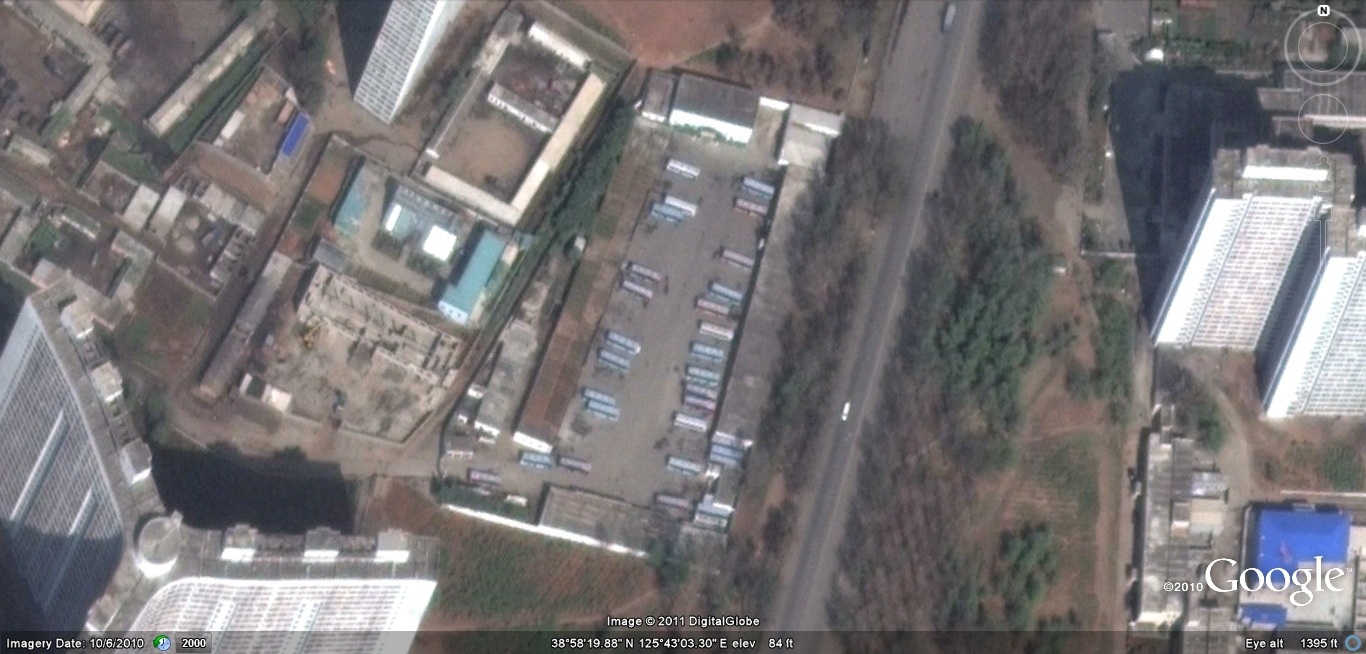
Today, on Changgwang Street in Pyongyang, the capital of North Korea, there is a barricaded compound of government buildings. Judging from satellite photos, these are unremarkable, rectangular structures that suggest no special purpose. Yet according to a North Korean specialist based in Seoul whom I spoke with recently, and who has interviewed many high-ranking North Korean defectors, including Hwang Jang Yop and Kim Duk Hong, these buildings are the home of Office 39, a government bureau devoted to raising hard currency for Kim Jong Il. (The specialist was granted anonymity because of the sensitivity of relations between North and South Korea.)

While the operatives of Office 39 may well direct legitimate enterprises, including the export of exotic mushrooms, ginseng and seaweed, a substantial portion of the office’s revenue comes from its involvement in illicit activities: drug manufacturing and trafficking, sales of missile technology, counterfeit cigarettes and counterfeit $50 and $100 bills. According to Ken Gause, director of the Foreign Leadership Studies Program at the CNA Corporation, a policy group in Virginia that consults on national-security issues, the activities of Office 39 overlap with those of two other offices that occupy buildings in the same complex. The first, Office 38, manages the money acquired by Office 39, he said, while the second, Office 35, handles kidnappings, assassinations and other such activities.

All three divisions employ the same narrow coterie of elites, and all answer directly to Kim Jong Il, who lives in a villa less than a mile away. The history of the operations of Offices 39, 38 and 35, Gause told me, closely follows Kim Jong Il’s own rise to power through the party apparatus. In the early 70’s, after helping his father purge the ranks of the Korean Workers’ Party of competing factions, Kim Jong Il assumed control of North Korea’s covert operations, mostly involving South Korean targets.

In the mid-70’s, according to defector accounts related to me by the North Korean specialist, Kim Jong Il issued a directive to members of the Central Committee of the Korean Workers’ Party instructing that expenses for covert operations against South Korea be paid for by producing and using counterfeit dollars. Officials in charge of the operation supposedly brought back $1 bills from abroad, bleached the ink and then used the blank paper to print fairly sophisticated counterfeit $100 bills — though nothing close in quality to a supernote. Many of these notes were later used by North Korean agents implicated in attacks on South Korean targets, like the operatives arrested for the bombings of a South Korean government delegation in Rangoon in 1983 and a Korean Airlines jet in 1987.

According to the same defector accounts, Kim Jong Il endorsed counterfeiting not only as a way of paying for covert operations but also as a means of waging economic warfare against the United States, “a way to fight America, and screw up the American economic system,” as the North Korean specialist paraphrased it to me.

In a similar vein, according to Sheena Chestnut, a specialist on North Korea’s illicit activities who has also interviewed several key defectors, counterfeiting was seen as an expression of the guiding idea of the regime: the concept of juche. Often loosely translated as “self-reliance” or “sovereignty,” the idea of juche entails an aggressive repudiation of other nations’ sovereignty — a reaction to the many centuries in which Korea capitulated to its larger, more powerful neighbors. “It appears that counterfeiting actually contributed to the domestic legitimacy of the North Korean regime,” Chestnut told me. “It could be justified under the juche ideology and allowed the regime to advertise its anticapitalist, anti-American credentials.”

By 1984, as North Korea’s planned economy began to fall apart, Kim Jong Il, who by that time was effectively running much of the government, issued another directive, according to the North Korean specialist, who told me he has obtained a copy of the document. It explained that “producing and using counterfeit U.S. dollars” was a means, in part, for “overcoming economic crisis.” The economic crisis was twofold: not only the worsening conditions among the general population but also a growing financial discontent among the regime’s elite, who had come to expect certain perquisites of power. Counterfeiting offered the promise of raising hard currency to buy the elite the luxury items that they had come to expect: foreign-made cars, trips for their children, fine wine and cognac.

Laundering, Wholesaling and Redesigning

Earlier this year, I visited David Asher, a former senior adviser for East Asian and Pacific affairs in the State Department and an outspoken critic of the North Korean regime. In late 2001, he explained to me, Assistant Secretary of State James Kelly asked him to study why the North Korean regime had not collapsed, given that the country’s economy had declined even further over the previous decade, with industrial output alone falling by as much as three-quarters. Former Communist countries had ended their subsidies, Kim Il Sung had died, the country was stricken by floods and famine and the food-distribution system had collapsed. (Party slogans betrayed more than a hint of desperation: “Let’s Eat Two Meals a Day” was one of the era’s more uplifting exhortations.) Yet Kim Jong Il, defying all expectations, managed to cling to power.

“How this was happening was perplexing, given the huge trade gap, even with adjustments for aid flowing into the country,” Asher recalled. “Something just didn’t add up. It didn’t account for why Kim was driving around in brand new Mercedes-Benzes or handing out Rolexes at parties and purchasing truly large quantities of cognac.”

As Asher and his colleagues began amassing intelligence, evidence of an array of illicit activities began surfacing — everything from ivory smuggling to the production of high-grade methamphetamine. And counterfeiting was at the core. “The more we found out about this counterfeiting of dollars, the more we thought it was outrageous,” Asher told me. These activities provided what Asher calls “an alternative framework for existence” and “the palace economy of Kim Jong Il.”

In the spring of 2003, the State Department established the Illicit Activities Initiative, an interagency effort designed to investigate and counter North Korea’s criminal activities, and appointed Asher coordinator. The department began to systematically collect a variety of forensic and other evidence gathered by its own investigators, the Secret Service and elements of the intelligence community linking North Korea to the supernotes. (Asher declined to comment on the nature of the evidence, most of which remains classified.)

In addition, the department put together circumstantial evidence of North Korean counterfeiting that had been accumulating for more than a decade. In 1994, for example, authorities in Hong Kong and Macao apprehended five North Korean diplomats and trade-mission members carrying about $430,000 in bills that turned out to be counterfeits of the supernote variety. Additional North Korean diplomats, including an aide close to Kim Jong Il who was attached to Office 39, were caught trying to launder millions of dollars worth of supernotes over several years, prompting an increased scrutiny of North Korea’s diplomatic and trading missions.

Thwarted, the regime seems to have changed tactics, harnessing new distribution networks and wholesaling the counterfeits to third parties who would funnel them to criminal gangs. In the late 1990’s, for instance, British detectives began tracking Sean Garland, the leader of the Official Irish Republican Army, a Marxist splinter group of the I.R.A. According to an unsealed federal indictment in Washington, Garland began working with North Korean agents earlier in the decade, purchasing supernotes at wholesale prices before distributing them through an elaborate criminal network with outposts in Belarus and Russia, as well as Ireland. (Garland denies the charges and is currently fighting extradiction to the United States from Ireland.)

Details of the actual manufacture of counterfeit notes also began filtering into the State Department, much of the information derived from defector accounts. According to similar accounts compiled by Sheena Chestnut and the North Korean specialist in Seoul whom I spoke with, the regime obtained Swiss-made intaglio printing presses and installed them in a building called Printing House 62, part of the national-mint complex in Pyongsong, a city outside Pyongyang, where a separate team of workers manufactures the supernotes.

In 1996, frustrated by the high-quality imitations of its currency in worldwide circulation, the United States government redesigned the money for the first time since 1928. Out went the old-fashioned symmetrical designs, replaced by the big-head notes. Almost everything about the new design was aimed at frustrating potential counterfeiters, including a security thread embedded in the paper, a watermark featuring a shadow portrait of the figure on the bill and new “microprinting,” tiny lettering that is hard to imitate. The most significant addition was the use of optically variable ink, better known as O.V.I. Look at the bills in circulation today: all 10’s, 20’s, 50’s and 100’s now feature this counterfeiting deterrent in the denomination number on the lower-right-hand corner. Turn the bill one way, and it looks bronze-green; turn it the other way, and it looks black. O.V.I. is very expensive, costing many times more than conventional bank-note ink.

A Swiss company named SICPA is the major manufacturer of O.V.I., and the United States purchased the exclusive rights to green-to-black color-shifting ink in 1996. Other countries followed, purchasing color-shifting inks of different colors for their own currency. One of the first countries to do so, interestingly enough, was North Korea, whose currency, the won, counterfeiters ignore. North Korea purchased O.V.I. from SICPA that shifts from green to magenta. For the purposes of counterfeiting American currency, it would be a smart choice: magenta is the closest color on the spectrum to black. “The green-to-magenta ink can be manipulated to look very close to green-to-black ink,” Daniel Glaser of the Treasury Department told me. “They took this stuff the same year we went to O.V.I.” According to Glaser, the North Koreans managed to fiddle with the new ink, obtaining an approximation of the O.V.I. on the bills.

Though there is some dispute on the timing, the first counterfeit big-head supernotes might have arrived on the market as early as 1998. Like the earlier generation of supernotes, the big-head imitations show an ever-growing attention to detail. “They would certainly fool me,” said Glaser, who points out that the “defects” of the supernote are arguably improvements. He recalled looking at the back of a $100 supernote under a magnifying glass and noticing that the hands on the clock tower of Independence Hall were sharper on the counterfeit than on the genuine.

From all accounts, superb quality is a feature of much North Korean contraband: methamphetamine of extraordinarily high purity; counterfeit Viagra rumored to exceed the bona fide product in its potency; supernotes. It’s an impressive product line for a regime that can barely feed its people. When I discussed this with Asher, he let out a sigh. “I always say that if North Korea only produced conventional goods for export to the degree of quality and precision that they produce counterfeit United States currency, they would be a powerhouse like South Korea, not an industrial basket case.”

The Threat

How many supernotes are in circulation, and what sort of provocation do they represent?

Most government officials interviewed for this story declined to give an estimate, but several, including Michael Merritt of the Secret Service, noted that his agency has removed $50 million worth of supernotes from circulation. That is a far cry from the “billions” predicted by Representative Bill McCollum’s task force in the early 1990’s, and while it may still sound like a lot, it is insignificant relative to the $12 trillion dollar American G.D.P.

When supernotes are discovered in a smaller foreign economy that makes use of American currency, they can cause a local crisis of confidence in the dollar (this has happened in Taiwan and Ireland, for instance). But in the United States, the economic threat is minimal. For this reason, many analysts, particularly those outside the administration, like Raphael Perl of Congressional Research Service, express concern about making the issue into a diplomatic crisis. Perl, who agrees that the North Koreans are behind the counterfeiting, told me that because American government officials often view the violation of the currency as “a matter of national honor,” there is “an emotional factor that could get blown out of proportion.” In the process, he argued, counterfeiting can become conflated with other, more pressing problems posed by the North Korean regime, like its nuclear threat.

This conflation may also be deliberate. According to Kenneth Quinones, who was the North Korea country director in the State Department in the 1990’s, hawks in the current administration may be trying to use the counterfeiting issue to impede negotiations with the regime over its nuclear program. Critics of this approach note that the freezing of the North Korean bank accounts took place in the same month that participants in the six-party talks, the multination negotiations over North Korea’s nuclear program, hammered out an agreement that the regime would abandon its nuclear-weapons program. North Korea soon reneged on its promise to abandon its nuclear program and has since refused to rejoin the talks until the United States lifts the designation on Banco Delta Asia. The hawks, Quinones told me, “are attempting to use these sanctions” to help “bring down the regime.”

The senior administration official interviewed for this article dismissed that claim. “The notion that there was a grand conspiracy by hard-liners is just wrong,” he told me. “It’s not accurate. This was done as a law-enforcement action by appropriate U.S. government agencies based on the facts of the case.”

Even if the counterfeiting is not worthy of being a diplomatic issue unto itself, the fact that North Korea is counterfeiting may still serve as a grim reminder of the difficulty of good-faith negotiations with North Korea. Just consider that the supernotes that were seized by law-enforcement officials in New Jersey and California arrived in the United States while the six-party talks were going on. Asher, for one, was stunned by the audacity of the regime. “If they’re going to counterfeit our currency the entire time they’re engaged in diplomatic negotiations, what does that say about their sincerity?” he asked me. “How can they want normalization with a country whose currency they’re counterfeiting? How can they expect it?”

However the diplomatic standoff is resolved, Asher said that he believes North Korea won’t continue to counterfeit much longer. Next year, the Bureau of Engraving and Printing is issuing an updated version of the $100 bills. The notes will be expensive to manufacture, requiring the purchase of a new set of presses at a cost that Asher estimated in the “hundreds of millions” of dollars. The Treasury Department characterizes the next generation of notes as part of a routine redesign that it will undertake on a regular schedule every decade. But Asher has no illusions as to the timing. “It might be a routine update,” he said, “but it’s a routine update that’s being instigated by one country: North Korea.”

Stephen Mihm teaches history at the University of Georgia. He is at work on two books about the history of counterfeiting in the United States, one to be published by Harvard University Press and the other by HarperCollins.

Are US economic restrictions hurting the DPRK?

Friday, April 21st, 2006

From the BBC:

A recent report for the US Congress estimated that $45m of the notes are in circulation worldwide. South Korean police this month uncovered a haul of 700 fake $100 bills. ”They’re about 95% identical to the real thing,” said Suh Tae-suk, South Korea’s leading expert on counterfeit currency, “but there’s a slight difference in the texture of the paper and the make-up of the chemicals, so experts can still spot them.”

Most of the notes are brought in from China; and organised crime networks are reported to be distributing them in Asia, and through Russia into Europe. American officials say they have no doubt the notes are manufactured in North Korea.   High-level North Korean defectors back up some of Washington’s claims that Pyongyang is involved in counterfeiting and other illicit activities.

One former North Korean diplomat painted a picture of cash-strapped embassies that are expected to finance themselves, and of diplomats racking their brains for new ways to raise money. He asked not to be identified because he had left family behind in Pyongyang, who he now considers hostages of the regime. “We were each given a quota of foreign currency that we had to raise each year to show our loyalty to the state,” he explained. “I was expected to produce $100,000 a year and remit it to a bank in China”.

The former diplomat, who has lived in Seoul since his defection, said a superior once handed him fake US bank notes, mixed in with the real thing, to conduct a trade deal in South East Asia. He said he raised money from kick-backs on trade deals, but would also smuggle gold and “currency by the kilogramme” in diplomatic bags.

And there were other scams: Trading in tax-free cars, smuggling liquor into Islamic countries, and trafficking horns and ivory out of Africa to sell to Chinese businessmen.

At the centre of much of the trade is North Korea’s top-secret Bureau 39, which defectors say was set up in the 1970s to create a personal slush fund for Kim Jong-il.

“Bureau 39 has a monopoly on earning foreign currency,” said Kim Dok-hong, who worked for 17 years alongside the bureau’s agents at the North Korean Workers’ Party Central Committee.   “Bureau 39 has a monopoly of trade in high-quality agricultural products like pine mushrooms and red ginseng. They also control the drug trade. Opium is produced across the country and then refined into heroin. Their other main role was distributing the supernotes,” he said.

North Korea denies the charges of counterfeiting.  It accuses the US of counterfitting its own currency and trying to blame the DPRK. 

North Korea has also asked the government of Switzerland to investigate the authenticity of a U.S. claim that Pyongyang secretly keeps US$4 billion in Swiss bank accounts, and then release a report on its findings.

The North Korean embassy in Switzerland sent a statement to Yonhap News Agency, branding the U.S. allegation a “conventional scheme to damage the image of our republic.”
North Korea has “made an official request to the Swiss government to investigate this matter and release the results of the probe on purpose to guarantee objectivity,” the statement said.

Interview with a Citizen of Chongjin City

Wednesday, December 28th, 2005

Daily NK
Kim Young Jin
12/28/2005

The DailyNK has reported North Korean news vividly with the help of the voices inside North Korea during the year 2005.

North Korea expressed farming as ‘the major front line for the construction of socialist economy’ in the joint new year editorial at the beginning of this year. In fact, it has made every effort to relieve its famine by mobilizing a number of people to farming for the entire year. In October, it also announced to its people that it would resume its ration system that had long been stopped.

The DailyNK met a citizen of Chongjin City of North Hamkyeong Province to fully grasp the recent situation of North Korea as a whole at this moment of seeing the old year out and the new year in. The interview is presented in the format of 10 questions and answers. The reader is expected to feel the reality of North Korea in mid-December, 2005 by reading the interview.

1.  How does the ration system work?
Workers in Giupso (State Owned Enterprise) receive a ration twice a month, the total ration being 700g a month. The government designated that the price of unglutinous rice is 46 won, while that of corn is 28 won. Those housewives who can work but stay home can buy 300g for 620 won. Children and the elderly, who are not able to work, can buy cereals at the government designated prices.

In short, the government has adopted a double price system. However, those who are rationed receive rice mixed with miscellaneous cereals whereas those who pay 620 won get unmixed rice.

Factories and Giupsos are assigned the farmland of No.112, and they have to produce cereals the quantity of which is equal to two month’s ration. In October, people were fully rationed, but since November, they have not been able to be fully rationed. People without the farmland of No.112 partly received their rations.

Additional question: What is the farmland of No.112?

It is a part of a cooperative farmland which is difficult to cultivate. Every factory and Giupso is assigned one. If a Giupso is influential, it is usually assigned a fertile land. It is so named because the policy was established on either November 2nd, last year or January 12th this year. I don’t remember the date.

2. How do people obtain their food if they are not fully rationed?
They get cereals in black markets. Transferring cereals in large scale is strictly prohibited, but people are selling them to acquaintances or under the cover of a bribe. Trading a large quantity of cereals is stealthily accomplished in a private home. Restaurants are also forbidden to sell processed cereals.

The price of rice has not risen. It ranges from 800 to 820 won ($0.4-0.41). The price of corn is 300 won ($0.15) while that of potatoes is 150 won ($0.075). Because people in Chongjin City do not enjoy eating corn, it is cheap here.

3. How are farmers rationed, and how much is the government’s purchasing price of cereals?
The farmland of No.112 is divided by fertility. The worst class is the 12th. 1,500 won ($0.75) is collected from 9,917.4 square meters of 12th class farmland as a tax. It can be payed with corn. 1kg of corn is bought for 24 won($0.012).

I heard a squad leader of a cooperative farm located near Chongjin say, “Every person on my farm was supposed to receive the prize of some 17,000 won ($8.5) because the government sent the prize to the farm for good farming, but the farm has not given the prize out to the people, saying that it would be a better idea for the money to be used to buy trucks and farm equipment, and thus people are full of complaints. The farm distributes ordinary rations to the workers.

4. What are people’s reactions to the resumption of the ration system like?
Most people are pessimistic about it. They grumble, “We do not understand why the government does not sell cereals indiscriminately. It has just made things complicated.” On the other hand, those who do not have a means of making a living hope for the ration system.

5. Do you have something to talk about regarding companies and work place lives?
In former years, there were people belonging to the circle called ‘the rest’ in companies. These people could do their own business by giving some part of their profits to their Giupso. However, all people are required to come to the Giupso to work these days. If there are some surplus workers, they are fired.

Since it was said that every Giupso should ration its workers, those who are not able to do their own businesses, especially women, have made every effort to be employed by a Giupso.

Rich people are not interested in companies, but the poor are full of complaints because ‘the rest’ circle was eliminated. The poor are getting much more interested in job opportunities.

6. As far as I know, the rate of factory operation is 20% or so. Has there been any changes recently?
No, there is almost no change in the rate. Earning foreign money is active, but I’ve never heard that those factories that had stopped before resumed its operation, or that they changed their business category to be operative.

7. Can you come up with a concrete example that shows that the status of partisans is getting lower?
Factories and Giupsos are reluctant to employ partisans because it is difficult to lay them off. If one says he is a partisan during a job interview, he will probably be turned down. Non-partisans are definitely preferred.

8. Is the control over people getting tighter?
The control in matters of food is getting tight. Because controlling restaurants and processed cereals has been getting tighter, more and more stalls are being emptied in markets, and the price of stalls is decreasing. A stall 50cm wide and 1.5m long for selling apparel can be bought for 120,000 won ($60).

Food for a family of 4 members costs 120-130 thousand won ($60-65) a month. The family also has to spend money for housing and clothing.

Additional question: I heard that even though many people are moving from one place to another, and a number of people dare to complain, punishments are getting weaker and weaker. Can you give me some examples regarding that?

The security agents say that they no longer arrest blasphemers. They even say that they will enforce laws on the basis of scientific evidences. (Blasphemers refer to those who blaspheme the system of the Kim Il Sung or Kim Jong Il regime.)

Punishments for defectors, radio listeners, and other such crimes are considerably moderated.

A neighbor in his 70’s was arrested due to his acquaintance’ betrayal. He revealed that he had been listening to the radio, but he was just called names during the investigation and criticized publicly in front of a crowd of people. That was the punishment. Even though blaspheming is said to be forgiven, you cannot call Kim Jong Il’s name. Maybe it would be okay for you to say South Korea is rich.

Additional question: Recently, it has been reported that Kim Jong Il ordered that torturing be checked and human rights be respected. Have you ever heard from security agents such a story or instructions?

No, I’ve never heard that.

Additional questions: Because punishments are getting moderated, what kind of countermeasures do North Korea take to protect the regime?

The National Security Agency is said to employ and use many informants. It lets people watch each other. According to one of my acquaintances, those who have an experience of escaping from the North are especially encouraged to watch each other.

9. How is the electric power supply like?
Electric power is supplied for 3 to 4 hours a day from 11 p.m. to 3 a.m. Middle class people usually have both a black and white TV set and a color TV set. They use only batteries for the black and white TV. Electric power supply is poor for winter. It starts getting better in the spring and is best in summer.

10. Recently, North Koreans are said to widely use horse-drawn or cow-drawn carriages. Is that true?
They are widely used for carrying cargo. They are seen even in urban cities. Recently, individuals or Giupsos are trading cows. The price of a cow in black markets range from 400 to 700 thousand won ($200-350). Recently, the price for using such a carriage is determined in relation to the distance instead of the weight it should carry. 3 to 4km costs 2,000 won ($1), while anything more than 5km costs 3,000 won ($1.5). The weight of the cargo usually does not exceed 700kg.

If one uses a truck, he must pay for the fuel in addition to the fee. 1kg of diesel costs 2,000 won ($1).